Nungwi Beach: Zanzibar's Northern Shore, Honestly Assessed
Nungwi Beach stretches roughly 3 km along the northern tip of Unguja, Zanzibar's main island. Unlike the tidal flats found on the east coast, the water here stays swimmable throughout the day, making it a reliable choice for those who want beach time without tide-watching. It draws a wide mix of travelers, from backpackers to honeymooners, and the surrounding village adds cultural texture that purely resort-focused beaches often lack.
Quick Facts
- Location
- Nungwi village, northern tip of Unguja (Zanzibar main island)
- Getting There
- Taxi or shared dala-dala from Stone Town; approx. 75–90 min by taxi, longer by dala-dala. No ride-hailing apps operate in Zanzibar.
- Time Needed
- Half day to full day; staying overnight allows you to experience sunset and the village atmosphere
- Cost
- Free public beach access. Beach club and resort facilities charge separately.
- Best for
- Swimming, sunset watching, water sports, and combining beach time with village exploration
What Makes Nungwi Different from Other Zanzibar Beaches
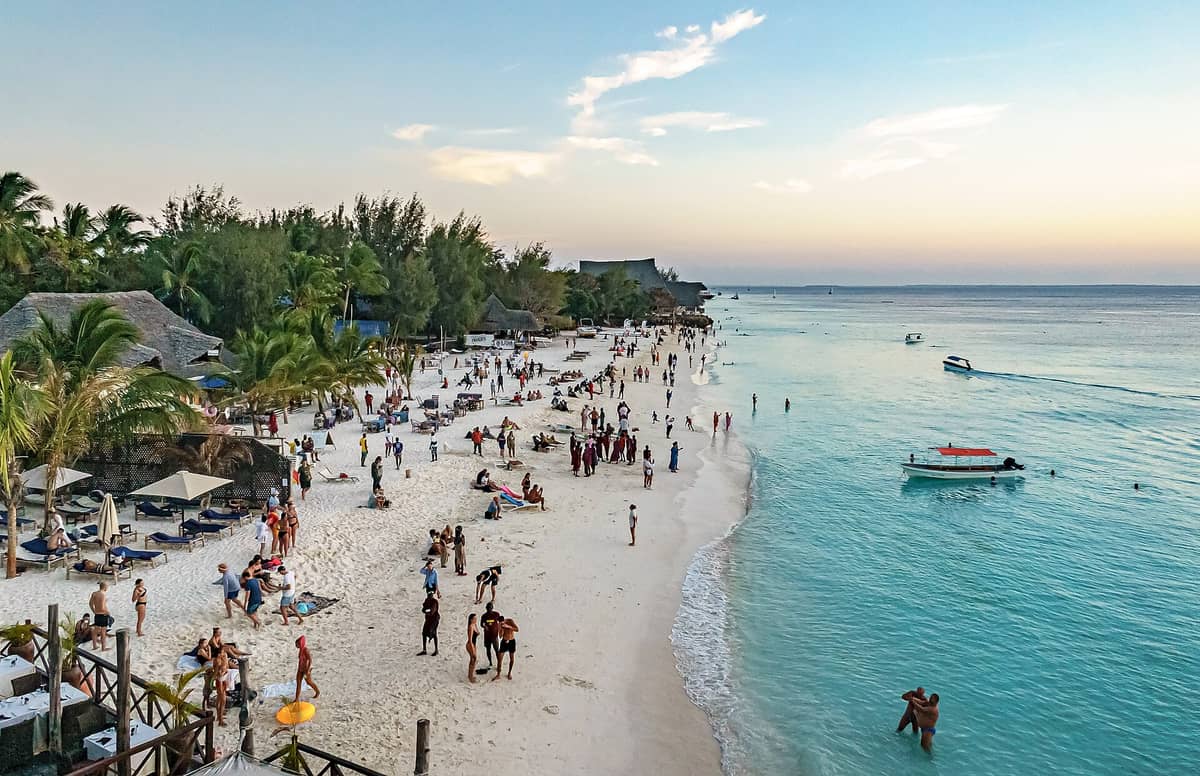
Most of Zanzibar's east coast beaches are famously tidal. At low tide, the sea retreats far enough to leave wide flats of exposed reef and sand, which means swimming is restricted to a few hours around high tide. Nungwi Beach, positioned at the island's northern tip where the Indian Ocean and the Zanzibar Channel meet, benefits from a tidal range that is significantly smaller. The water remains accessible for swimming during much of the day, though low tide can make swimming difficult in some sections. For travelers who want to swim spontaneously rather than consult a tide chart, this is a practical advantage that no amount of marketing copy can manufacture.
The sand is pale gold and soft underfoot, running for approximately 4 km in a gentle curve. The northern orientation means the beach catches consistent sea breezes, which keeps the heat manageable even at midday during the dry season. That said, direct sun between roughly 11am and 2pm is intense regardless of season, and shade is limited to the fringes near beach bars and resort umbrellas.
💡 Local tip
Bring your own reef-safe sunscreen. Many beach vendors and smaller hotels in Nungwi do not stock it, and the coral reef just offshore is worth protecting.
How the Beach Changes Through the Day
Early morning at Nungwi is the closest the beach gets to calm. Between around 6am and 8am, local fishermen push their ngalawa outrigger canoes into the water, and the smell of salt and woodsmoke drifts from the village behind. The light at this hour is flat and soft, turning the sea a pale turquoise that deepens as the sun rises. If you are a photographer, this is the window you want.
By mid-morning, resort guests begin arriving and the beach fills steadily. The western end, closest to the main cluster of hotels, becomes the most crowded. The beach east of the lighthouse promontory stays quieter for longer and is worth the short walk. Jet ski and boat operators set up along the central stretch, and the general noise level rises noticeably from around 9am onward.
Sunset is Nungwi's signature moment. Because the main beach faces northwest, it catches the spectacle as the sun drops toward the horizon. Beach bars fill up from around 5:30pm, and watching the sky shift from orange to deep red over the water while dhows sail past is genuinely atmospheric. It is also genuinely popular, so expect company. If you prefer to watch from a quieter spot, walk north toward the lighthouse promontory.
Tickets & tours
Live prices and dates from our booking partner. If you book, we may earn a commission at no extra cost to you.
Zanzibar catamaran and snorkelling tour to Mnemba Marine Park
From 114 €Instant confirmationFree cancellationNyerere National Park two-day safari with two game drives
From 866 €Instant confirmationFree cancellationSerengeti National Park private three-day safari from Zanzibar
From 2.144 €Instant confirmationFree cancellationZanzibar north coast sunset dhow cruise
From 42 €Instant confirmationFree cancellation
The Village Behind the Beach
Nungwi is not just a beach resort strip. The village itself has a working fishing community with roots that predate tourism by centuries. Dhow building is still practiced here, and the yards where craftsmen shape timber into traditional vessels are worth visiting in the morning when work is underway. The skill involved is considerable: these boats are built largely without modern machinery, using techniques passed down through generations.
Walking through the village alleys, you will find small guesthouses, local restaurants serving grilled fish and ugali, and the kind of ordinary daily life that disappears once a destination becomes fully resort-dominated. Nungwi is at a transitional point: tourism is significant, but the village has not yet been entirely absorbed by it. For more context on how traditional craftsmanship fits into the broader coastal culture, the guide to Nungwi's dhow building yards covers the practice in detail.
Dress modestly when walking away from the beach and into the village. Nungwi is a predominantly Muslim community and, while residents are accustomed to tourists, covering shoulders and knees shows basic respect. This matters more in the village itself than on the beach, where swimwear is standard.
Water Activities and What They Actually Cost
The calm, clear water at Nungwi supports a range of activities. Snorkeling is accessible directly from the beach, though the most interesting reef sections require a short boat trip. Operators line the central beach and offer excursions to nearby reefs, sandbanks, and Prison Island. Prices are negotiable and should be agreed in advance; rates quoted to tourists are typically higher than what locals pay, and bargaining firmly but politely is expected.
Diving is popular, with several PADI-certified dive centers operating in Nungwi. The waters around the northern tip of Unguja include reef walls, coral gardens, and occasional pelagic species. For those interested in what the underwater environment looks like across the wider region, the Zanzibar diving guide provides depth on sites and operators. Day trips to the famous Mnemba Atoll can be arranged from Nungwi, though it is a longer boat ride than from Matemwe on the northeast coast.
ℹ️ Good to know
If you are offered a dolphin swim tour departing from Nungwi, note that the main dolphin-watching area around Kizimkazi is in the far south of the island. Journey times are long and the experience is highly variable. The turtle sanctuary within Nungwi itself is a shorter, more reliable wildlife encounter.
The Mnarani Natural Aquarium and Turtle Sanctuary
On the western edge of Nungwi, a natural tidal pool has been converted into a sea turtle sanctuary run by the local community. Green and hawksbill turtles are kept in the pool during their rehabilitation and released when ready. It is a small operation, not a polished attraction, and that is partly what makes it worthwhile. Admission fees go toward the sanctuary's upkeep and the wages of local staff. The Mnarani Turtle Sanctuary is walkable from the main beach and takes around 30 to 45 minutes to visit properly.
Getting to Nungwi: Practical Details
Nungwi sits at the northern tip of Unguja, approximately 60 km from Stone Town by road. The drive takes around 75 to 90 minutes by private taxi under normal conditions, though road quality and traffic near Stone Town can extend this. Shared dala-dala minibuses connect Stone Town with Nungwi, sometimes involving transfers, and cost a fraction of taxi fares, but journey times are longer and schedules are unpredictable. Agree taxi fares before departure; there are no meters, and prices vary significantly. No ride-hailing apps operate reliably in Zanzibar.
Travelers coming directly from the airport can negotiate a taxi transfer to Nungwi from Abeid Amani Karume International Airport (ZNZ), which is approximately 5 to 7 km south of Stone Town. Agree the fare at the taxi stand rather than accepting the first price offered. For a broader picture of how to move around the island, the guide to getting around Zanzibar covers all transport options clearly.
When to Go and Who Should Think Twice
The dry season from roughly June through October brings reliable sunshine, lower humidity, and consistent trade winds that make beach conditions excellent. December through February is also generally dry and warm, though it is peak tourist season and Nungwi fills accordingly. The two rainy seasons, the long rains around April to May and shorter rains in November, can bring overcast skies and intermittent heavy showers. The beach does not close, and many visitors find the shoulder months offer acceptable weather with meaningfully lower prices and fewer crowds.
Travelers looking for complete seclusion will likely find Nungwi disappointing. It is one of the most visited beaches on Unguja, and the central stretch in particular feels crowded during peak months. Those seeking a quieter beach atmosphere with more authentic village surroundings might consider Kendwa, a short distance along the coast, or the more remote east-coast villages. Similarly, travelers with mobility limitations should note that the beach has soft, uneven sand with no paved access paths and no formal accessibility infrastructure.
Families with children generally find Nungwi's calm, swimmable water well-suited to young swimmers, and the turtle sanctuary appeals to most kids. Solo travelers, particularly women, report that beach vendors and boat operators can be persistent. Firm but polite refusals work; engaging too long with sales pitches tends to encourage rather than discourage follow-up.
⚠️ What to skip
Petty theft on the beach increases after dark. Leave valuables in your accommodation, and be cautious walking away from lit areas at night, particularly along the quieter stretches of sand.
Insider Tips
- Walk east toward the lighthouse in the morning when it is quieter, and return along the beach rather than the road — the light on the water changes noticeably between 7am and 9am and is worth the extra time.
- Local restaurants just inside the village, a two-minute walk from the beach, serve grilled fish and rice at prices significantly lower than beachfront bars. Ask at your guesthouse for current recommendations, as turnover is high.
- If you want a dhow sunset cruise, book directly with the operators at the dhow yards rather than through hotel reception — the price is usually lower and the boats are the same.
- The turtle sanctuary pool is most active during feeding time in the late afternoon. Ask locally what time feeding is scheduled on the day you visit, as it is not fixed.
- For the quietest stretch of Nungwi Beach, walk past the cluster of main resort hotels toward the eastern end near the lighthouse. The sand is the same quality but the density of sunbeds and vendors drops sharply.
Who Is Nungwi Beach For?
- Swimmers who want reliable water depth regardless of tidal timing
- Couples combining beach relaxation with sunset watching over the Zanzibar Channel
- Travelers who want a beach base with genuine village character nearby
- Snorkelers and divers using Nungwi as a northern base for reef excursions
- Families with children comfortable in calm, shallow-to-moderate water
Nearby Attractions
Other things to see while in Nungwi:
- Mnarani Marine Turtles Conservation Pond
Set in a natural tidal pool carved into coral rock at the northern tip of Nungwi Beach, the Mnarani Marine Turtles Conservation Pond is a working rescue and rehabilitation project that has operated since 1993. It offers visitors a rare, close-up encounter with green and hawksbill turtles, including Critically Endangered hawksbills, while supporting genuine conservation work on the island.
- Nungwi Dhow-Building Yards
On the eastern shore of Nungwi, craftsmen still shape wooden dhows by hand using techniques passed down across generations. The Nungwi Dhow-Building Yards offer one of the most authentic and unhurried cultural encounters on the island, where the smell of fresh timber and the sound of hand tools replace any trace of a tourist script.
Planning a trip? Discover personalized activities with the Nomado app.