Mnarani Marine Turtles Conservation Pond: Zanzibar's Northern Turtle Sanctuary
Set in a natural tidal pool carved into coral rock at the northern tip of Nungwi Beach, the Mnarani Marine Turtles Conservation Pond is a working rescue and rehabilitation project that has operated since 1993. It offers visitors a rare, close-up encounter with green and hawksbill turtles, including Critically Endangered hawksbills, while supporting genuine conservation work on the island.
Quick Facts
- Location
- Northern end of Nungwi Beach, near the lighthouse, Nungwi, Zanzibar
- Getting There
- Roughly 10-minute walk from Nungwi's tourist centre toward the lighthouse; no public transit to the gate
- Time Needed
- 45–90 minutes
- Cost
- USD 10 per person (non-residents); verify current rate before visiting
- Best for
- Families, wildlife enthusiasts, snorkelers, responsible tourism travelers
What the Mnarani Marine Turtles Conservation Pond Actually Is
The Mnarani Marine Turtles Conservation Pond is not an aquarium or a theme-park exhibit. It is a working rescue and rehabilitation facility set inside a natural tidal pool in coral rock at the far northern edge of Nungwi Beach, a short walk from the old lighthouse that gives the site its name: "Mnarani" translates from Swahili as "place of the lighthouse." The project has been operating since 1993, making it one of East Africa's longer-running marine turtle conservation initiatives.
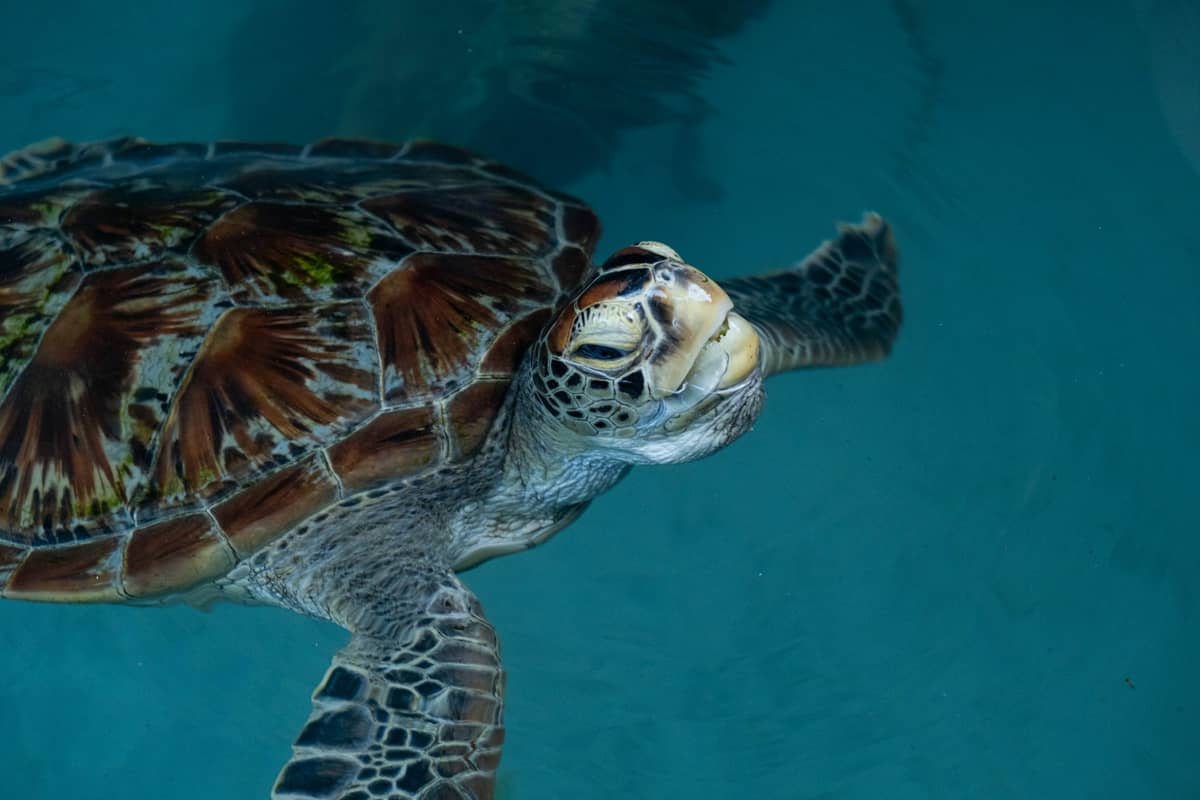
The pool itself is formed by the surrounding coral shelf, which means tidal water circulates naturally through the enclosure. Green turtles (Chelonia mydas) and hawksbill turtles (Eretmochelys imbricata) rest and rehabilitate here before release. Some individuals in the pond are recovering from injury or entanglement; others were collected as hatchlings and are raised to a size at which they have a better survival rate once returned to open water. The distinction matters: this is conservation infrastructure, not a permanent turtle residence.
ℹ️ Good to know
Green turtles are classified as Least Concern and hawksbill turtles as Critically Endangered on the IUCN Red List. The Mnarani pond focuses on rehabilitation and hatchling rearing rather than indefinite captivity, and entry fees directly fund the project's running costs.
The Visiting Experience: What You See and Feel
Arriving at Mnarani from Nungwi's main tourist strip involves a 10-minute walk along the beach toward the lighthouse headland. The terrain shifts as you leave the resort zone: the sand becomes coarser, fishing boats are pulled up on the shore, and the coral rock shelf juts above the tideline. The entrance to the pond is modest, marked by a small gate rather than any elaborate signage.
A wooden pier extends out over part of the lagoon, giving visitors an elevated view down into the clear, green-tinted water. Depending on the time of day and tide, you can see multiple turtles gliding slowly near the surface or resting on the sandy bottom. The largest individuals are sometimes surprisingly big, with shells that can exceed 80 centimetres. The water clarity is generally good, particularly in the morning before afternoon wind picks up surface chop.
The site is quiet by Nungwi standards. You are not competing with beach crowds or amplified music. The dominant sounds are wind, water movement through the coral, and the occasional explanations from staff who work on-site. Those staff interactions are worth pursuing: the rangers and caretakers who manage the pond can explain which animals are newly arrived, which are close to release, and what the primary threats to turtle populations look like in local waters.
💡 Local tip
Morning visits (09:00–11:00) tend to offer the best water clarity and the most active turtles. By early afternoon, light angle can create surface glare over the lagoon.
Tickets & tours
Live prices and dates from our booking partner. If you book, we may earn a commission at no extra cost to you.
Zanzibar catamaran and snorkelling tour to Mnemba Marine Park
From 114 €Instant confirmationFree cancellationNyerere National Park two-day safari with two game drives
From 866 €Instant confirmationFree cancellationSerengeti National Park private three-day safari from Zanzibar
From 2.144 €Instant confirmationFree cancellationZanzibar north coast sunset dhow cruise
From 42 €Instant confirmationFree cancellation
Historical and Conservation Context
Marine turtles have long been hunted in Zanzibar's coastal waters, with both meat and shell historically traded. The establishment of the Mnarani project in 1993 came at a point when local turtle populations had declined sharply, partly due to direct harvest and partly due to fishing gear entanglement and coastal habitat loss. The site sits within the broader conservation landscape of Zanzibar's northern coast, an area where fishing communities and marine wildlife have coexisted, and sometimes conflicted, for generations.
The pond's location near the lighthouse headland is not incidental. The northern tip of Unguja island sees significant boat traffic, and the waters around Nungwi are an important corridor for marine life moving between the open Indian Ocean and the shallower reef systems further south. For more on the ecological pressures on Zanzibar's reefs, the Zanzibar coral reefs guide covers the broader picture of reef conservation around the island.
The project is small-scale by international standards, which is both a limitation and a strength. It does not have the resources of a large research institution, but it maintains a direct relationship with the local fishing community and operates in a genuinely meaningful ecological context rather than as a tourist spectacle detached from real conservation pressures.
How to Get There and Practical Logistics
The Mnarani pond sits at the northern end of Nungwi Beach, close to the lighthouse. From the heart of Nungwi village and its hotel strip, the walk takes roughly 10 minutes along the beach at low tide or along the coastal path when the tide is in. There is no dedicated public transport to the entrance gate; visitors staying in Nungwi walk, while those coming from elsewhere will need a taxi, tuk-tuk, or dala-dala to Nungwi first.
If you are based in Stone Town and considering this as a day trip, it is a roughly 1.5-hour journey by shared minibus (dala-dala) or faster by private taxi. Combining Mnarani with other Nungwi sights, such as the dhow-building yards a short distance along the coast, makes sense logistically and turns the trip into a half-day.
- Opening hours: daily 09:00–18:00 (verify locally before visiting, as these can change)
- Admission: USD 10 per person for non-residents (confirm current rate on arrival)
- No formal booking required; walk-in visits are standard
- Bring cash in USD or Tanzanian shillings; card payment availability is not confirmed
⚠️ What to skip
Ticket prices and opening hours reported here are based on available information and may have changed. Confirm both before making the walk, particularly if visiting outside peak season.
Photography, Swimming, and What You Cannot Do
Photography of the turtles from the pier and pool edge is generally welcomed. The tidal pool is clear enough for reasonable shots in good light, and the turtles are accustomed to human presence, so they are not skittish. A polarising filter on a camera lens, or simply positioning yourself with the sun behind you, helps eliminate surface glare. Wide-angle shots from the pier can capture scale, while a zoom or telephoto lens lets you isolate individual animals without leaning over the rail.
In terms of physical interaction with the turtles: do not touch them, even if they surface close to you. This is a rehabilitation facility, not a petting pool, and minimising human contact is part of the animals' preparation for return to the wild. Flash photography close to the water is also worth avoiding. These are not rigid rules posted at every corner, which is why it matters to apply common sense and follow the guidance of on-site staff.
Some visitors ask whether swimming or snorkeling is possible in the tidal pool itself. This is not permitted within the conservation enclosure. The waters just outside the coral headland offer snorkeling, and Nungwi's reef is accessible from the beach, but that is a separate activity from the pond visit.
Honest Assessment: Is It Worth Visiting?
At USD 10 and under two hours, Mnarani represents good value for anyone with a genuine interest in marine wildlife and conservation. The experience is more authentic than a resort's managed turtle encounter and more educational than a beach tour where turtles appear incidentally. You leave with a clearer sense of the pressures these animals face and the practical mechanics of helping them.
That said, it is not a dramatic spectacle. If you are primarily looking for immersive underwater encounters with turtles, snorkeling around Mnemba Atoll or a dive at one of the reef sites covered in the Zanzibar diving guide will deliver a more visceral experience. The pond visit is better understood as a conservation stop with educational value rather than a wildlife spectacle.
Families with children tend to find it particularly engaging precisely because the scale is manageable: the pond is contained, the turtles are visible from above without snorkeling gear, and the on-site staff can answer a child's questions directly. That combination is harder to replicate in open-water turtle encounters.
Visitors who are already staying in Nungwi and have a free morning will find this a natural complement to beach time. Those making a dedicated trip from Stone Town or the east coast should weigh the travel time against their priorities. If marine conservation is a genuine interest, the journey is justified. If the turtle aspect is incidental, your time may be better spent elsewhere.
Insider Tips
- Visit at or just after opening (09:00) for the best water clarity and fewest other visitors. By mid-morning, group tours from the larger Nungwi resorts often arrive together, which compresses the pier and viewing area.
- Talk to the on-site staff rather than just walking the pier and leaving. They can tell you which turtles are close to release, explain the difference between species in the pool, and give context that no signage provides.
- Bring a polarising filter for your camera or smartphone lens adapter. The tidal pool's surface can create significant glare from mid-morning onward, and a filter makes the difference between seeing the turtles clearly or photographing reflections.
- Wear shoes with grip for the walk to the entrance, especially at high tide when the coastal path involves some coral rock footing. Flip-flops work on Nungwi's main beach stretch but become awkward near the headland.
- Combine the visit with the dhow-building yards nearby, where traditional wooden boats are still constructed by hand on the beach. Both sites together create a coherent half-morning that covers both natural history and living maritime craft tradition.
Who Is Mnarani Marine Turtles Conservation Pond For?
- Families with children who want wildlife interaction without open-water snorkeling requirements
- Travelers with a specific interest in marine conservation or sea turtle ecology
- Nungwi-based visitors looking for a purposeful activity beyond beach and pool
- Responsible tourism travelers who want entry fees to support active conservation work
- Photographers looking for close-up marine wildlife shots in accessible, calm conditions
Nearby Attractions
Other things to see while in Nungwi:
- Nungwi Beach
Nungwi Beach stretches roughly 3 km along the northern tip of Unguja, Zanzibar's main island. Unlike the tidal flats found on the east coast, the water here stays swimmable throughout the day, making it a reliable choice for those who want beach time without tide-watching. It draws a wide mix of travelers, from backpackers to honeymooners, and the surrounding village adds cultural texture that purely resort-focused beaches often lack.
- Nungwi Dhow-Building Yards
On the eastern shore of Nungwi, craftsmen still shape wooden dhows by hand using techniques passed down across generations. The Nungwi Dhow-Building Yards offer one of the most authentic and unhurried cultural encounters on the island, where the smell of fresh timber and the sound of hand tools replace any trace of a tourist script.
Planning a trip? Discover personalized activities with the Nomado app.