Nungwi Dhow-Building Yards: Zanzibar's Living Maritime Tradition
On the eastern shore of Nungwi, craftsmen still shape wooden dhows by hand using techniques passed down across generations. The Nungwi Dhow-Building Yards offer one of the most authentic and unhurried cultural encounters on the island, where the smell of fresh timber and the sound of hand tools replace any trace of a tourist script.
Quick Facts
- Location
- Eastern beach, Nungwi, northern Unguja (Zanzibar)
- Getting There
- Taxi or dala-dala from Stone Town to Nungwi (approx. 1.5–2 hrs), then walk to the eastern shore
- Time Needed
- 45 minutes to 1.5 hours
- Cost
- No formal admission fee; guided tour costs extra if arranged locally
- Best for
- Culture seekers, photographers, travelers interested in craft and maritime history
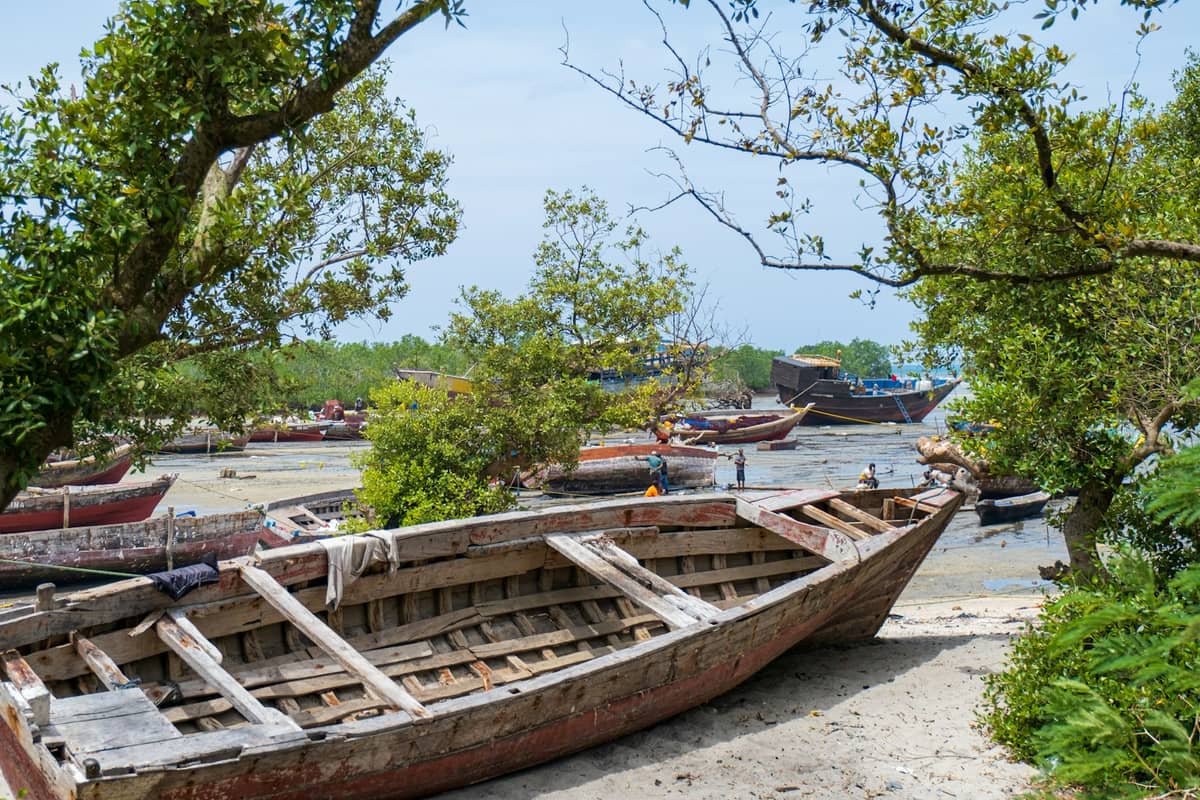
What the Nungwi Dhow-Building Yards Actually Are
The Nungwi Dhow-Building Yards are a working set of open-air boatyards on Nungwi's eastern beach where local craftsmen construct traditional wooden dhows entirely by hand. This is not a heritage museum or a staged demonstration. The boats being built here will go to sea. Fishermen commission them, and the craftsmen who build them have typically learned the trade from fathers or uncles, with no formal training manual in sight.
Dhows are the defining vessel of the western Indian Ocean. For centuries, they carried spices, ivory, enslaved people, and trade goods along routes connecting East Africa, Arabia, and the Indian subcontinent. The design varies by region, but the Zanzibar dhow is typically a plank-built wooden hull, broad-beamed relative to its length, and fitted for a lateen or triangular sail. A medium-sized fishing dhow runs roughly 6.5 metres long by 2.5 metres wide. At Nungwi, you can see multiple vessels at different stages of construction at the same time.
💡 Local tip
Morning is the most active time in the yards. Arrive before 10:00 a.m. to catch the full rhythm of work: sawing, planing, and caulking happen simultaneously, and the craftsmen are less likely to be on a break.
The Sensory Experience: What You See, Hear, and Smell
Coming around the headland from Nungwi's western resort beach, the atmosphere changes quickly. The sand on the eastern side is firmer and darker, dotted with fishing nets, upturned canoes, and the hulking skeletons of dhows in progress. The air carries the sharp, resinous smell of freshly cut timber mixed with the salt of the channel.
The sound of the yards is what sets the pace. Hand adzes bite into curved timber. Mallets drive caulking cotton into hull seams. The yards are known for traditional hand tools, though the available sources do not establish that no power machinery or pneumatic tools are used. Conversation happens in Swahili, and the rhythm of the work creates an almost meditative backdrop that feels nothing like the resort beach a few hundred metres away.
The boats themselves demand attention up close. Hull planks are shaped by eye and experience, bent into curves that would challenge a precision workshop. Frames and ribs interlock without the benefit of modern adhesives or metal connectors in the traditional sections. Watching a craftsman read the grain of a plank before deciding where to cut is one of those small moments that reminds a traveler how much knowledge exists outside formal institutions.
Tickets & tours
Live prices and dates from our booking partner. If you book, we may earn a commission at no extra cost to you.
Zanzibar north coast sunset dhow cruise
From 42 €Instant confirmationFree cancellationZanzibar catamaran and snorkelling tour to Mnemba Marine Park
From 114 €Instant confirmationFree cancellationNyerere National Park two-day safari with two game drives
From 866 €Instant confirmationFree cancellationSerengeti National Park private three-day safari from Zanzibar
From 2.144 €Instant confirmationFree cancellation
How It Changes Through the Day
The yards are most productive and atmospheric in the morning. By around 7:00 a.m., work is typically underway. Light from the east catches the pale wood shavings and throws long shadows across the hulls, making this the best window for photography without harsh midday contrast. The craftsmen are focused and the energy is steady.
By late morning, the heat builds and the pace slows. Workers take breaks in the shade of partially completed hulls, and the yards take on a quieter quality. This is actually a good moment to approach and observe without feeling like an intrusion. Midday can feel oppressive on the open beach with limited shade, so plan your timing accordingly.
In the late afternoon, light softens and activity often picks up again briefly before the day ends. The yards are generally active during daylight hours, though no official schedule is published. If you arrive close to dusk, the working day is likely finished. There are no floodlights, no evening activity.
⚠️ What to skip
There is no confirmed official opening schedule. Reports suggest activity from approximately 9:00 a.m. to 5:00 p.m. on most days, but this is a working yard, not a ticketed attraction. Activity varies with the season, the phase of individual boat projects, and weather.
Historical and Cultural Context
Nungwi has long been a major dhow-building village on Unguja. Its position at the northern tip of the island places it within Zanzibar’s maritime network. The village's identity has been shaped by maritime work for generations, which is why the boatyards feel embedded rather than preserved. This is not a craft kept alive for tourists. It is still commercially viable. For deeper context on how the sea has shaped Zanzibar's culture and economy, the Zanzibar Swahili culture guide covers the Indian Ocean trade networks that made these craft traditions essential.
The dhow's design is not static. Nungwi craftsmen have incorporated practical modifications over decades, including outboard motor fittings, while retaining the fundamental hull geometry that makes these boats seaworthy in Indian Ocean conditions. The result is a working tradition that adapts without disappearing, which makes it more interesting than a frozen heritage demonstration would be.
Nungwi village also sits close to other points of cultural and natural interest on the northern tip of the island. The Mnarani Turtle Sanctuary is within walking distance and provides an ecological counterpart to the maritime heritage of the boatyards. Combining both into a single morning gives a layered picture of how Nungwi's community relates to the sea.
Getting There and Getting Around the Site
Nungwi is roughly 56 kilometres north of Stone Town. The most practical options are a private taxi, which takes around 1.5 hours depending on road conditions and driver route, or a dala-dala shared minibus, which is cheaper but slower and less predictable in timing. Getting around Zanzibar explains both options in detail. Agree any taxi fare in advance and confirm the destination as the eastern beach or fishing side of Nungwi, not the resort strip, to avoid being dropped at the wrong end of the village.
Once in Nungwi, the boatyards require a short walk to the eastern shore. The terrain is soft sand with no paved path, no ramp, and no formal access infrastructure. Wheelchair access is not feasible in any practical sense. Wear flat, secure footwear rather than sandals with straps that collect sand, and bring water, since there are no refreshment vendors directly at the yards.
There is no admission fee to observe the yards. No ticket booth, no turnstile. If you want context and access beyond the perimeter, arranging a guide through your accommodation in Nungwi or Stone Town before arrival is the most reliable approach. An informed local guide can make introductions, translate conversations with craftsmen, and identify what stage of construction each vessel has reached, which makes the visit considerably richer.
Photography and Visitor Etiquette
The yards are visually striking but not a photo set. Craftsmen are working, and the site belongs to them, not to passing visitors. Before pointing a camera at individuals, make eye contact and ask permission, either verbally or through a gesture. Many craftsmen are accustomed to visitors and will agree; some will decline. Accept either answer without pressure.
For the boats themselves, early morning light from the east creates the most interesting conditions. Wide shots that capture scale work well, since some hulls tower above standing visitors. Close detail shots of joinery, tools, and timber grain reward a patient eye. Midday light is flat and harsh. Avoid standing inside a boat under construction without explicit invitation.
ℹ️ Good to know
A small tip or purchase from any informal vendors nearby is a courteous gesture in a community that receives visitors without a formal revenue mechanism. It is not required but is generally appreciated.
Who Will Get the Most From This Visit
Travelers who enjoy watching skilled work at close range, who find satisfaction in understanding how things are made, and who are comfortable with informal, unscripted encounters will find the boatyards genuinely absorbing. It pairs naturally with a broader exploration of Nungwi, which includes Nungwi beach to the west and the fishing village life that unfolds on the eastern shore throughout the day.
Travelers focused purely on beach relaxation, or those who need structured, guided environments to feel comfortable, may find the open-ended nature of the yards unsatisfying. Children can enjoy the spectacle of large boats being assembled, but the soft sand, heat, and lack of shade or facilities make it difficult with toddlers. For a Nungwi itinerary that balances beach time with cultural visits, the one week in Zanzibar itinerary offers a practical structure.
Insider Tips
- Ask your hotel or guesthouse in Nungwi to recommend a specific local guide rather than accepting a stranger's approach on the beach. A guide with genuine relationships in the village opens doors that casual wandering does not.
- The eastern beach is also an active fishing landing site. If you arrive at the right moment, you may see boats returning and catches being sorted, which layers another dimension onto the maritime picture.
- Bring cash in small Tanzanian shilling denominations. There is nothing to buy at the yards themselves, but having local currency on hand for tips, water from a nearby shop, or a guide payment makes the logistics easier.
- The yards can be combined efficiently with a visit to the Mnarani Turtle Sanctuary in the same morning. The yards can be combined with a visit to the Mnarani Turtle Sanctuary; check the local route and walking time before setting out.
- If you see a freshly caulked hull being sealed with black pitch, stop and watch. The pitch-sealing process is one of the most visually dramatic stages of construction and takes place relatively rarely within the overall build timeline.
Who Is Nungwi Dhow-Building Yards For?
- Cultural travelers who prioritize authentic working-craft traditions over staged heritage experiences
- Photographers looking for strong natural light, texture, and human-scale subject matter in the morning hours
- History enthusiasts interested in the Indian Ocean trade networks that shaped Zanzibar's identity
- Independent travelers comfortable navigating informal sites without ticketing or official visitor infrastructure
- Visitors to Nungwi who want a genuine counterpoint to the resort beach scene on the western side of the village
Nearby Attractions
Other things to see while in Nungwi:
- Mnarani Marine Turtles Conservation Pond
Set in a natural tidal pool carved into coral rock at the northern tip of Nungwi Beach, the Mnarani Marine Turtles Conservation Pond is a working rescue and rehabilitation project that has operated since 1993. It offers visitors a rare, close-up encounter with green and hawksbill turtles, including Critically Endangered hawksbills, while supporting genuine conservation work on the island.
- Nungwi Beach
Nungwi Beach stretches roughly 3 km along the northern tip of Unguja, Zanzibar's main island. Unlike the tidal flats found on the east coast, the water here stays swimmable throughout the day, making it a reliable choice for those who want beach time without tide-watching. It draws a wide mix of travelers, from backpackers to honeymooners, and the surrounding village adds cultural texture that purely resort-focused beaches often lack.
Planning a trip? Discover personalized activities with the Nomado app.