Darajani Market: Stone Town's Living, Breathing Food Market
Darajani Market, also known as Marikiti Kuu or the Great Market, is a principal market in Stone Town. Dating to 1904, it draws fishermen, spice traders, and local shoppers every morning in a scene that has changed little in over a century. Entry is free, and an hour here tells you more about Zanzibari daily life than any museum.
Quick Facts
- Location
- Darajani Street / Creek Road, Stone Town, Zanzibar City
- Getting There
- Walkable from central Stone Town; taxis available from any point in the old city
- Time Needed
- 45 minutes to 2 hours, depending on how long you linger
- Cost
- Free entry; budget extra for purchases or a guided tour
- Best for
- Food lovers, photographers, culture seekers, early risers
What Darajani Market Actually Is
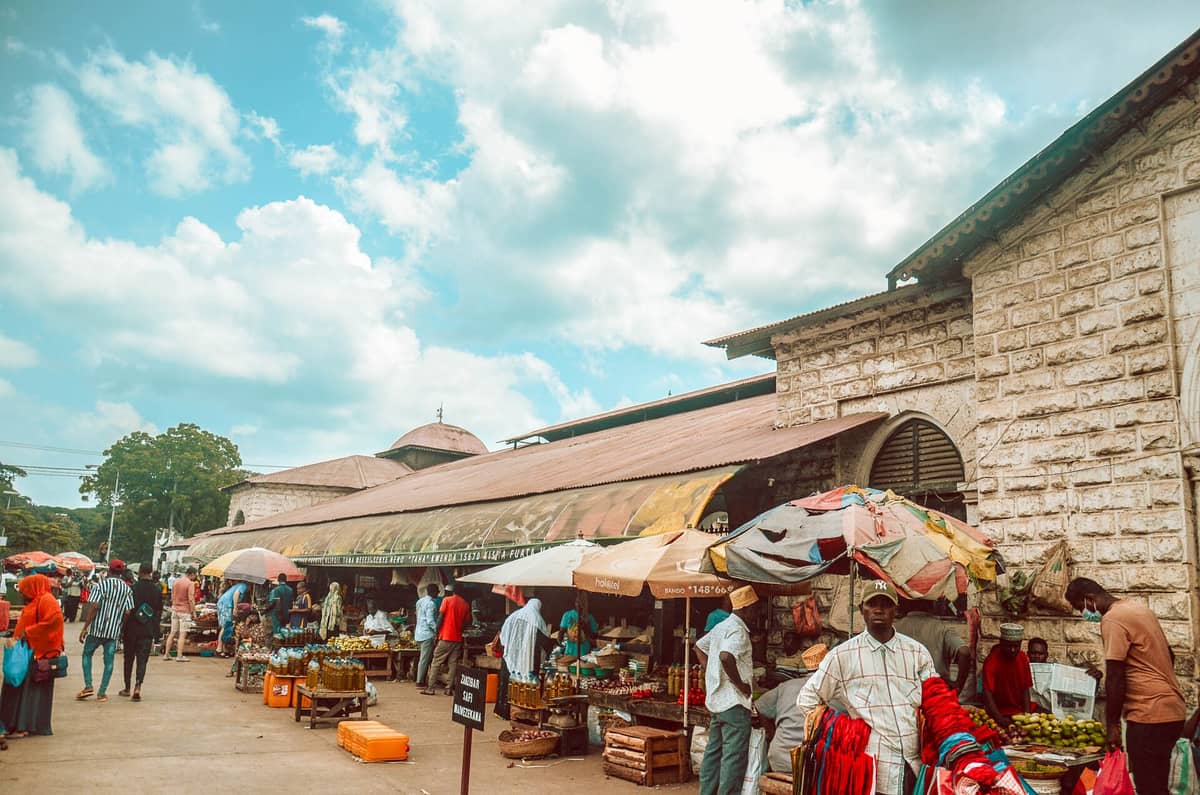
Darajani Market is Stone Town's principal public market, a working hub of commerce that has occupied the same corner of Creek Road since the 1880s. The covered market building itself was constructed in 1904, and its iron-framed roof and open-sided layout have remained largely intact since. This is not a tourist market. There are no mass-produced souvenirs here, no touts waving at passing minibuses. What you get instead is an unfiltered cross-section of Zanzibari daily life: fishermen arriving before dawn with the night's catch, vegetable sellers arranging aubergines and bitter melons in geometric rows, and spice merchants whose stalls smell of cloves, cinnamon, and dried chili simultaneously.
The market is also known locally as Marikiti Kuu, meaning the Great Market, a name that gives you a sense of how central it is to Stone Town's economic and social fabric. Formally, it sits on Darajani Street at the edge of the historic quarter, at the point where the old city meets the more modern commercial strip along Creek Road. That location makes it both accessible and slightly apart from the maze of Stone Town's inner lanes.
💡 Local tip
Arrive between 6:30 a.m. and 8:30 a.m. for the fish section at full activity. By mid-morning the best cuts are gone, and the pace drops significantly.
How the Market Divides Itself
The market organizes itself into rough zones, though the boundaries are fluid and shift with the seasons and the day. The covered hall at the center concentrates the fish and meat sections. Here the air is dense with salt and the particular sharpness of fresh seafood: whole red snapper, octopus laid out flat on wooden boards, barracuda in long silver rows. The sounds are constant, a mix of Swahili bargaining, the thud of cleavers, and the scrape of ice being shoveled across concrete.
Around the covered structure, open-air stalls spread into the surrounding streets. Fruit and vegetable sellers dominate the eastern approach: green jackfruit, breadfruit, cassava, and seasonal produce that changes month to month. Spice stalls cluster near the covered building's perimeter, selling whole and ground cloves, cardamom pods, turmeric root, and mixes labeled as pilau masala or biryani spice. These are not pre-packaged tourist versions but the actual cooking ingredients used by families across Stone Town. Prices are considerably lower than at the spice-tour plantations outside the city.
The market also has a section selling household goods, fabric, and secondhand clothing that most visitors walk straight past. If you have time, it is worth exploring. The fabric stalls stock kanga and kitenge cloth at prices that reflect local demand rather than tourist assumptions. For context on how these markets fit into the island's wider Swahili identity, the Zanzibar Swahili culture guide offers useful background before your visit.
Tickets & tours
Live prices and dates from our booking partner. If you book, we may earn a commission at no extra cost to you.
Zanzibar catamaran and snorkelling tour to Mnemba Marine Park
From 114 €Instant confirmationFree cancellationNyerere National Park two-day safari with two game drives
From 866 €Instant confirmationFree cancellationSerengeti National Park private three-day safari from Zanzibar
From 2.144 €Instant confirmationFree cancellationZanzibar north coast sunset dhow cruise
From 42 €Instant confirmationFree cancellation
Morning, Midday, and Late Afternoon: How the Market Changes
Darajani operates on a natural rhythm that rewards visitors who pay attention to timing. The early morning, from roughly 6:00 a.m. to 9:00 a.m., is when the market is at its most intense. The fish section is fully stocked, the sellers are energized, and the lanes between stalls are thick with buyers who are there to get the best before supplies run out. If you want to photograph the market at its most visually compelling, this is the window. The light entering through the open sides of the covered hall creates contrast between the bright exterior and the darker interior, with shafts of morning light crossing the fish displays.
By mid-morning, around 10:00 a.m., the pace relaxes noticeably. The fish section begins to thin out as the better stock sells. Vegetable sellers are still active, and the spice stalls remain open, but the urgency is gone. This quieter period is often better for conversation with sellers who have more time to talk. Note that on Fridays, activity winds down around midday as many Muslim traders close for prayers. The market reopens in the early afternoon but the atmosphere is notably different, less stocked, more subdued.
Late afternoon brings a secondary flurry of activity as people stop on their way home. Street food vendors become more prominent at this hour, selling cassava chips, grilled corn, and coconut-based snacks. Stalls hours vary by individual trader, and there is no fixed closing time for the market as a whole, though most sections are winding down by late afternoon.
The History Behind the Building
The market's origins go back to the 1880s, a period when Zanzibar City was one of the most commercially active ports on the East African coast. The covered building erected in 1904 reflected the ambitions of the Zanzibar Sultanate and the practical needs of a city that depended on trade for almost everything. The iron framework and corrugated roof were common to colonial-era market construction across East Africa, designed for ventilation and rain protection rather than aesthetic effect. The structure has been patched and modified over the decades but its core form is recognizable from photographs taken a century ago.
Darajani sits at the boundary between Stone Town's historic lanes and the more recently developed commercial zone, a location that reflects how the city grew outward from its old core. The market's position along Creek Road, which follows what was once a tidal creek separating Stone Town from the mainland of Unguja, places it at a historically significant threshold. To understand more about how the city's built environment evolved, the Stone Town architecture guide gives the urban context that makes places like Darajani make sense.
Practical Walkthrough: How to Navigate the Market
Getting to Darajani is straightforward. From anywhere in central Stone Town, the market is reachable on foot in under fifteen minutes. Walk toward Creek Road and look for the covered iron-roofed structure on the left as you approach from the historic lanes. There are no entrance gates and no admission fee. You walk in from any side.
Inside, move slowly and stay to the side of main lanes when possible, especially in the fish section where trolleys and handcarts move through constantly. The ground in the fish hall can be slippery from water and ice; wear closed shoes rather than sandals. The market has crowded areas and uneven surfaces throughout, which makes it difficult for visitors with mobility limitations. Strollers and wheelchairs will struggle particularly in the inner sections of the covered hall.
Bargaining is normal for non-food items like spices and cloth. For fresh produce and fish, prices are typically fixed by what the seller paid at wholesale. Asking the price first and not picking up items unless you intend to buy is standard practice here. Many sellers speak basic English, particularly those in the spice section who are accustomed to visitors. Having small Tanzanian shilling notes is useful; US dollars are widely accepted in Zanzibar generally, but some market sellers prefer local currency for small transactions.
⚠️ What to skip
Avoid placing your camera in the face of sellers or buyers without a nod of acknowledgment. The market is a working place, not a photographic set. A simple greeting in Swahili (Habari? or Hujambo?) usually opens the door to willing subjects.
Darajani pairs well with a broader Stone Town walking route. The market is a natural starting point for a morning walk that moves through the historic quarter toward the waterfront. For a structured approach, the Stone Town walking guide maps a logical sequence that includes the market alongside the area's other key landmarks.
Spices, Food, and What to Buy
Zanzibar's reputation as the Spice Island is not just tourism branding. The archipelago was one of the world's leading clove producers for much of the nineteenth and twentieth centuries, and that agricultural identity persists in markets like Darajani. At the spice stalls here you can buy cloves, vanilla pods, cinnamon sticks, black pepper, dried turmeric, and mixed spice blends at prices that reflect actual local use. Buying here rather than from a souvenir shop or spice tour simply makes economic sense.
For visitors interested in the island's spice history in more depth, the Zanzibar spice tour guide covers the plantation experiences that show how these products are grown, which makes a visit to Darajani a natural complement before or after.
The market also sells fresh coconuts, which vendors will open for you on request. Local snack foods appear more frequently in the late afternoon. If you are serious about Zanzibari food culture, the produce here tells a more accurate story than any restaurant menu: the seasonal rhythms, the staple ingredients, what is cheap this week and what is scarce. Ugali maize flour, dried fish, bitter lemon, green mangoes, and cassava in multiple forms all appear regularly.
Who Will Love It, and Who Might Not
Darajani Market is genuinely rewarding for travelers who are comfortable in busy, unscripted environments. If you like wandering, observing, and finding your own way through a place without signage or guides, this is an excellent stop. Food writers, photographers with patience for candid work, and anyone interested in everyday East African commerce will find the market absorbing.
Those who find crowds or strong smells uncomfortable will have a harder time, particularly in the fish and meat sections of the covered hall. The smells there are authentic and powerful, and the close quarters with unfamiliar cuts of meat can be startling if you are not prepared. Travelers who prefer curated, climate-controlled environments, or who are looking primarily for souvenir shopping, are likely to be disappointed. The market does not cater to visitors; it simply tolerates them, which is arguably part of its appeal.
Insider Tips
- The best spice deals are at the stalls along the outer perimeter of the covered hall, not the ones closest to the main entrance who price for tourist foot traffic. Walk deeper into the market before buying.
- If you want to buy fresh octopus or fish to cook, go before 8:00 a.m. and ask sellers directly what came in that morning. Fresher stock is kept behind the display, not on the front board.
- Friday mornings are quieter than weekdays due to prayer schedules, but that can actually be an advantage if you want space to look around without the weekday rush.
- The kanga cloth stalls on the market's outer edges sell authentic printed fabric at a fraction of what curio shops in the tourist lanes charge. Bring measurements if you want cloth cut to size.
- A short walk from Darajani along Creek Road in the early morning puts you in the middle of local commuter life in a way that few parts of Stone Town replicate. The contrast with the quieter tourist-facing lanes is striking.
Who Is Darajani Market For?
- Food travelers who want to understand Zanzibari cooking at its source
- Photographers looking for candid, documentary-style images of everyday life
- Budget-conscious shoppers after genuine spices, fresh produce, or local fabric
- Visitors who want cultural depth beyond Stone Town's historic monuments
- Early risers who want to experience the city before the tourist day begins
Nearby Attractions
Other things to see while in Stone Town:
- Forodhani Gardens
Forodhani Gardens is a seafront park in the heart of Stone Town that doubles as Zanzibar's most celebrated street food market after dark. By day it's a quiet refuge of sea breezes and colonial-era architecture; by evening, dozens of grills and lantern-lit stalls transform it into the social and culinary center of the old city.
- Freddie Mercury Museum
Opened in 2019 on Kenyatta Road in Stone Town's Shangani quarter, the Freddie Mercury Museum occupies the building associated with his childhood. It is a small but carefully assembled tribute to his life, his music, and his largely overlooked Zanzibari origins — making it one of the most personally resonant stops in all of Stone Town.
- Hamamni Persian Baths
Built for Sultan Barghash between 1870 and 1888, the Hamamni Persian Baths were once the grandest public bathhouse in Zanzibar. Today the ruins stand as one of Stone Town's most atmospheric historic sites, offering a quiet counterpoint to the neighborhood's busier attractions.
- House of Wonders (Beit al-Ajaib)
The House of Wonders, known in Arabic as Beit al-Ajaib, is the most architecturally ambitious building on Zanzibar's waterfront. Partially collapsed in 2020, it remains one of the most photographed facades in Stone Town and a landmark that every visitor to the area will pass.
Planning a trip? Discover personalized activities with the Nomado app.