Hamamni Persian Baths: Stone Town's Royal Hammam Frozen in Time
Built for Sultan Barghash between 1870 and 1888, the Hamamni Persian Baths were once the grandest public bathhouse in Zanzibar. Today the ruins stand as one of Stone Town's most atmospheric historic sites, offering a quiet counterpoint to the neighborhood's busier attractions.
Quick Facts
- Location
- Hamamni Street, Stone Town, Zanzibar City
- Time Needed
- 30–45 minutes
- Cost
- Approx. US$3–5 per person (verify locally; prices vary by source)
- Best for
- History lovers, architecture enthusiasts, slow travelers
What the Hamamni Persian Baths Actually Are
The Hamamni Persian Baths are the remains of a 19th-century royal hammam commissioned by Sultan Barghash bin Said, ruler of the Zanzibar Sultanate. Construction took place between 1870 and 1888, placing the baths firmly within the sultanate's peak period of architectural ambition. The name itself is instructive: 'Hamamni' translates from Swahili as 'place of the baths,' and the street that runs past the entrance takes its name from this structure.
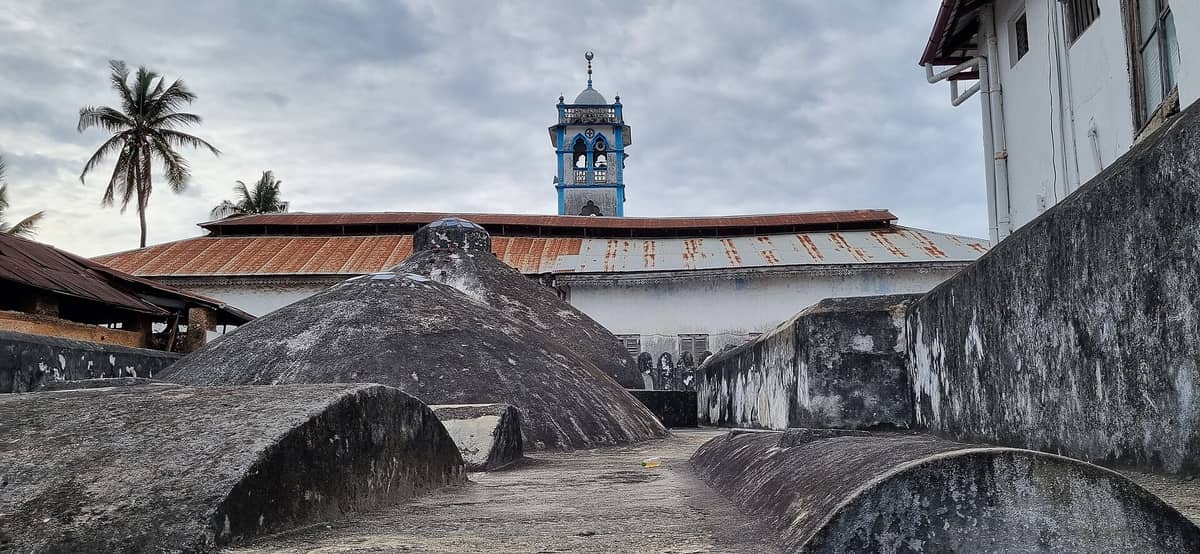
The baths stopped functioning around 1920, and what remains today is a roofless shell of plaster, stone archways, and sunken bathing pools. That description might sound underwhelming, but the physical space communicates scale and intention in a way that photographs rarely capture. These were not modest facilities. They were built to impress, serving both hygienic and social functions for the Omani Arab ruling class that shaped Stone Town's identity.
ℹ️ Good to know
If the entrance gate on Hamamni Street appears locked, check with the Cultural Arts Centre directly opposite. Staff there can sometimes assist with access.
The Architecture and What You Can See Inside
Walking through the entrance, you move from the noise of Stone Town's lanes into a space that feels almost contemplative. The interior is organized around a series of interconnected chambers, each serving a different bathing function in the traditional hammam sequence: undressing room, warm room, hot room, and cooling area. The separation of these zones is still legible in the stonework, even without roof or furnishings.
Persian-influenced decorative details survive in the plasterwork around the arches and in the geometric patterning near the bathing niches. Sunlight enters from above through the open roof, which, unintentionally, creates dramatic light effects in the morning hours that no interior lighting could replicate. The floors are worn smooth, and the bathing pools, though long empty, retain their carved stone edges.
The baths sit within Stone Town's dense urban fabric, a UNESCO World Heritage Site since 2000. The broader architectural context matters here: Hamamni is one of several surviving structures that reflect Omani, Persian, Indian, and European influences layered across centuries of Indian Ocean trade. For a deeper look at this architectural heritage, the Zanzibar Stone Town architecture guide provides useful background before or after your visit.
Tickets & tours
Live prices and dates from our booking partner. If you book, we may earn a commission at no extra cost to you.
Zanzibar catamaran and snorkelling tour to Mnemba Marine Park
From 114 €Instant confirmationFree cancellationNyerere National Park two-day safari with two game drives
From 866 €Instant confirmationFree cancellationSerengeti National Park private three-day safari from Zanzibar
From 2.144 €Instant confirmationFree cancellationZanzibar north coast sunset dhow cruise
From 42 €Instant confirmationFree cancellation
How the Experience Changes by Time of Day
Morning visits, particularly between 9:00 a.m. and 11:00 a.m., offer the best combination of light and quiet. The low sun angle throws the arch shadows across the stone floors at a slant, and foot traffic is minimal. You can move through the chambers slowly and actually absorb the spatial logic of the place without competing for attention with tour groups.
By midday the site becomes noticeably warmer. Because much of the structure is open to the sky, there is limited shade, and the pale stone radiates heat. This is not a place to linger at 1:00 p.m. in the dry season. Late afternoon brings softer light and a slight cooling breeze that filters through the surrounding lanes, but it also brings more visitors as Stone Town's walking crowd picks up.
💡 Local tip
Arrive between 9:00 and 10:30 a.m. for the best light and the fewest people. Bring water; there is no shade or refreshment available inside.
Historical Context: Sultan Barghash and the Zanzibar Sultanate
Sultan Barghash bin Said ruled Zanzibar from 1870 to 1888, and his reign represents one of the most architecturally productive periods in the island's history. He was responsible for commissioning several of Stone Town's landmark structures, including the House of Wonders, while also overseeing major infrastructure improvements such as a piped water system. The baths fit into this pattern of modernization: a ruler demonstrating sophistication and civic ambition through public works.
The timing of the baths' construction overlaps with growing British pressure on the Zanzibar Sultanate, particularly regarding the slave trade. The 1873 Slave Trade Treaty between Britain and Sultan Barghash effectively ended the public trade, and this political context shadows any visit to Stone Town's historic sites. The nearby Slave Trade Museum addresses that history directly and is worth combining with a visit to Hamamni.
The baths ceased operation around 1920, following the end of the sultanate's political independence and the transition to British colonial administration. By that point the social infrastructure that supported a hammam culture had shifted, and the building was no longer maintained for its original purpose. Its survival is partly due to the durability of the construction and partly to its integration into the surrounding urban fabric, which made demolition inconvenient.
Getting There and Practical Walkthrough
The baths are located on Hamamni Street in the heart of Stone Town. Stone Town is compact and best navigated on foot; the lanes are too narrow for vehicles in most areas. From Forodhani Gardens on the waterfront, the walk takes roughly 10 to 15 minutes through the old town's interior streets. Navigation apps work reasonably well in Stone Town, though the labyrinthine layout means occasional dead ends.
If you are planning a systematic walk through Stone Town, Hamamni fits naturally into a half-day route that takes in the House of Wonders, the Old Dispensary, and the carved wooden doors that line many of the area's lanes. The Stone Town walking guide maps out a logical sequence.
Reported admission prices range from US$3 with a local guide to US$5 per person for independent entry. These figures come from travel sources rather than an official website, and prices in Zanzibar's heritage sites can change without advance notice. Confirm the current rate at the entrance. The reported hours are daily from 9:00 a.m. to 6:00 p.m., but again, verify locally before building your schedule around these times.
⚠️ What to skip
There is no official website for the Hamamni Persian Baths, and reported prices and hours vary across sources. Treat all figures as approximate and confirm on arrival.
Who Will Get the Most from This Visit — and Who Might Not
Travelers with a genuine interest in Islamic architecture, Indian Ocean history, or the mechanics of pre-modern urban life will find Hamamni rewarding. The site asks something of you: it rewards imagination and context more than spectacle. If you've read a little about the sultanate's history beforehand, the empty chambers become considerably more legible.
Visitors expecting a polished museum experience should adjust expectations. There are no interactive displays, no interpretive panels of significant depth, and no climate control. The site is a ruin, not a restoration. Travelers who need shade, seating, or accessible pathways will find the visit difficult, as the interior involves uneven stone surfaces and no dedicated accessibility infrastructure is reported.
Families with young children may find 30 minutes here is the practical limit, and that's fine. Hamamni works well as a short stop within a longer Stone Town walk rather than as a standalone destination requiring significant travel time to reach.
Insider Tips
- If the main gate is locked when you arrive, knock and wait, or cross to the Cultural Arts Centre opposite — staff there are often able to help with entry or direct you to whoever holds the key that day.
- A local guide hired at the entrance (reportedly around US$3) typically adds genuine value here, since the site lacks interpretive signage. Their knowledge of the bathing room sequence and the sultanate's social history transforms the ruins from confusing stonework into a legible space.
- The carved plasterwork is most visible in the angled morning light. Bring a phone or camera with a good low-light mode; the interior shadows can be deceptive to auto-exposure systems.
- Combine this with the Slave Trade Museum and the House of Wonders on the same morning. All three are walkable from each other and together form a coherent picture of the 19th-century Zanzibar Sultanate.
- Dress conservatively for Stone Town in general. Lightweight long trousers or a skirt and covered shoulders are appropriate, and they also protect against sun exposure inside the roofless structure.
Who Is Hamamni Persian Baths For?
- History and architecture enthusiasts with an interest in the Zanzibar Sultanate and Indian Ocean trade routes
- Slow travelers who want depth over volume and are happy spending time with a single, quiet site
- Photographers looking for atmospheric stonework, arch shadows, and texture without crowds
- Anyone building a comprehensive Stone Town walking itinerary across a half-day
- Travelers who've already done the main waterfront sites and want to move deeper into the old town's interior
Nearby Attractions
Other things to see while in Stone Town:
- Darajani Market
Darajani Market, also known as Marikiti Kuu or the Great Market, is a principal market in Stone Town. Dating to 1904, it draws fishermen, spice traders, and local shoppers every morning in a scene that has changed little in over a century. Entry is free, and an hour here tells you more about Zanzibari daily life than any museum.
- Forodhani Gardens
Forodhani Gardens is a seafront park in the heart of Stone Town that doubles as Zanzibar's most celebrated street food market after dark. By day it's a quiet refuge of sea breezes and colonial-era architecture; by evening, dozens of grills and lantern-lit stalls transform it into the social and culinary center of the old city.
- Freddie Mercury Museum
Opened in 2019 on Kenyatta Road in Stone Town's Shangani quarter, the Freddie Mercury Museum occupies the building associated with his childhood. It is a small but carefully assembled tribute to his life, his music, and his largely overlooked Zanzibari origins — making it one of the most personally resonant stops in all of Stone Town.
- House of Wonders (Beit al-Ajaib)
The House of Wonders, known in Arabic as Beit al-Ajaib, is the most architecturally ambitious building on Zanzibar's waterfront. Partially collapsed in 2020, it remains one of the most photographed facades in Stone Town and a landmark that every visitor to the area will pass.
Planning a trip? Discover personalized activities with the Nomado app.