Slave Trade Museum & Anglican Cathedral: Zanzibar's Most Sobering Historical Site
Built directly on the site of Zanzibar's main slave market, Christ Church Cathedral and its East Africa Slave Trade Exhibition form the most historically significant stop in Stone Town. This is not a comfortable visit, and it is not meant to be.
Quick Facts
- Location
- Mkunazini, Stone Town, Zanzibar City
- Getting There
- Walkable from anywhere in Stone Town; taxis may not reach the entrance due to narrow lanes
- Time Needed
- 1 to 2 hours
- Cost
- Approx. US$5 per person (verify locally; not an official tariff)
- Best for
- History travelers, educational visits, architecture, those exploring Zanzibar's colonial and slave-trade past
- Official website
- www.zanzibaranglican.or.tz/worship
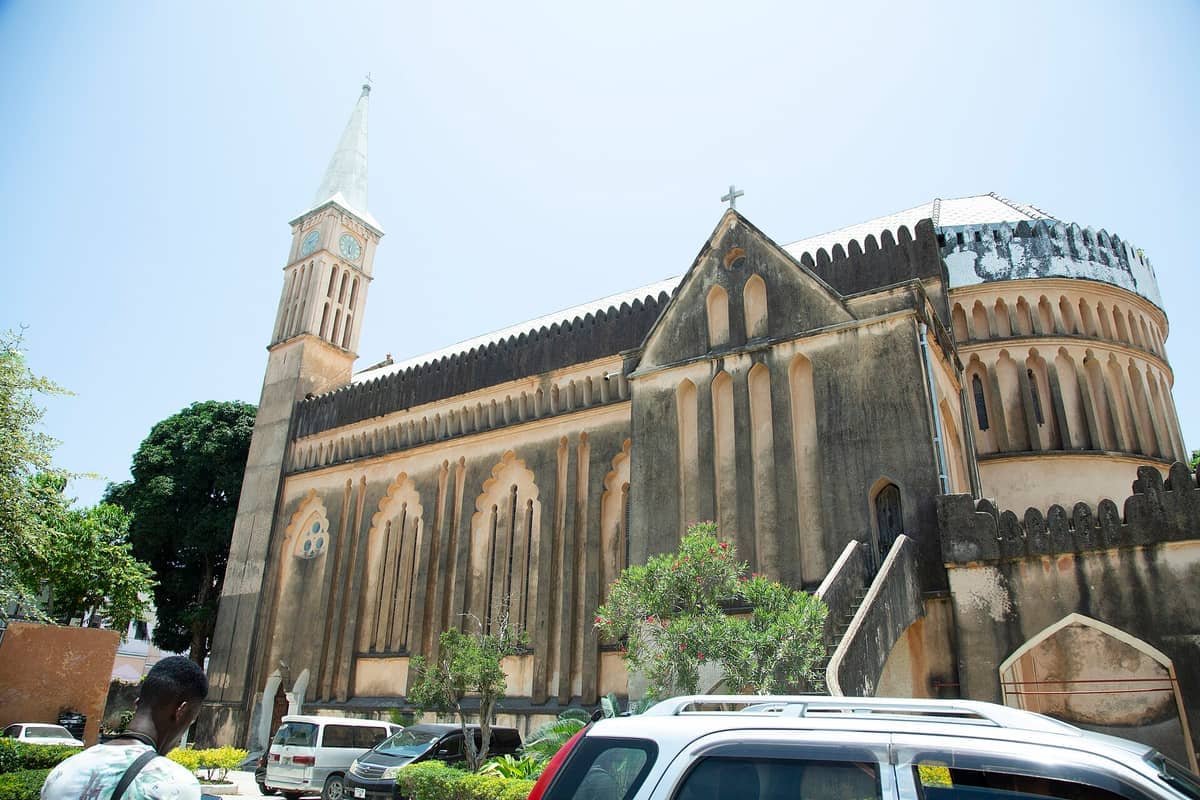
What This Place Actually Is
The site formally known as Christ Church Cathedral, often called the Anglican Cathedral or the Slave Trade Museum, sits at one of the most historically loaded addresses in East Africa. The cathedral’s construction began in 1873, the year Sultan Barghash closed Zanzibar’s slave market. The timing was deliberate: the church was raised on the market’s footprint, and according to the Zanzibar Diocese, its altar stands at the site of the whipping post used to test enslaved people before sale.
In the adjacent compound, the East Africa Slave Trade Exhibition and two original holding chambers occupy the basement of a nearby building, where enslaved people were kept before being sold. These are not reconstructions. The chambers are original structures, low-ceilinged and airless, and they communicate what no panel of text can fully convey about the conditions endured there.
ℹ️ Good to know
Visitor hours and admission fees are not confirmed by the Diocese; check locally before visiting. Sunday services may affect visitor access to the cathedral interior, so plan around service times.
The Slave Chambers: What You Will See Underground
Entering the holding chambers is the part of this visit that stays with people long after they leave Stone Town. A narrow staircase descends into low, stone-walled chambers where enslaved people were held before sale. The walls are original coral stone. There is no ventilation beyond what existed in the 19th century. On humid mornings, the air inside is noticeably heavy. There is no ventilation beyond what existed in the 19th century. On humid mornings, the air inside is noticeably heavy.
Iron chains are fixed to the walls, and interpretation panels provide context without overcrowding the space with text. The chambers are deliberately spare. Some visitors find the brevity of the display more powerful than a heavily curated exhibition would be. Others find they need more historical grounding before entering, which is worth considering if you have not already read about the broader slave trade that passed through Zanzibar.
For fuller context on Zanzibar's role in the East African slave trade before or after your visit, the Zanzibar slave history guide covers the wider geography and timeline in detail.
⚠️ What to skip
The underground chambers are accessed via a steep, narrow staircase and have very low ceilings. Visitors with mobility difficulties, claustrophobia, or those who use wheelchairs may not be able to access this part of the site. The above-ground exhibition areas are more accessible.
Tickets & tours
Live prices and dates from our booking partner. If you book, we may earn a commission at no extra cost to you.
Zanzibar catamaran and snorkelling tour to Mnemba Marine Park
From 114 €Instant confirmationFree cancellationNyerere National Park two-day safari with two game drives
From 866 €Instant confirmationFree cancellationSerengeti National Park private three-day safari from Zanzibar
From 2.144 €Instant confirmationFree cancellationZanzibar north coast sunset dhow cruise
From 42 €Instant confirmationFree cancellation
The Cathedral: Architecture and Symbolism
Above ground, Christ Church Cathedral is the architectural centerpiece. Its Gothic nave and whitewashed exterior look conspicuously European against the low-rise Swahili skyline of Stone Town, which was the point. The building was designed to be visible and declarative. The clock tower, one of the most recognizable features of the Stone Town skyline, was completed in 1883, after the original construction.
Inside, the cathedral has a working congregation and holds regular services. The stained glass windows and wooden pews are features of the interior. Look at the altar carefully: the Diocese notes that it stands on the site of the whipping post, which gives the act of worship here a layer of historical intentionality that few churches anywhere in the world can claim. Look at the altar carefully: the Diocese explicitly notes that it marks the location of the whipping post, which gives the act of worship here a layer of historical intentionality that few churches anywhere in the world can claim.
The overall building is modest by European cathedral standards, which is part of what makes it feel honest rather than triumphalist. It was built with local materials and local labor, and it functions as a parish church as much as a memorial site.
The cathedral's exterior is one of the most photographed elements in Stone Town's architectural landscape. If the broader built environment of the area interests you, the Stone Town architecture guide provides context on the layers of Omani, Indian, and British influence visible across the district.
How the Visit Changes by Time of Day
Arriving at opening time, around 08:00, gives you the chambers and cathedral compound largely to yourself. The light is cooler, the lanes outside are quiet, and the gravity of the place is easier to sit with when it is not shared with a large group. By mid-morning, tour groups from cruise ships and resort buses begin arriving, and the chambers in particular become crowded and loud in a way that undercuts the experience.
Midday visits are the busiest period. If you can only visit between 11:00 and 14:00, manage expectations: you will share the space, guides will be competing for attention, and the heat in the compound is significant. Late afternoon, from around 15:30 onward, the crowds thin and the light on the cathedral's exterior becomes warmer. Check locally for the chambers’ closing time.
💡 Local tip
Come before 09:30 if you want meaningful time in the slave chambers without tour group crowds. Bring water. The compound has little shade and Stone Town's humidity is substantial even on cool days.
Getting There and Navigating Stone Town
The cathedral is located in the Mkunazini area of Stone Town, near the junction of Creek Road and Sultan Ahmed Mugheiri Road, formerly New Mkunazini Road. Stone Town's street network was not designed for vehicles: the lanes are narrow, and taxis or tuk-tuks may drop passengers at the nearest accessible point. Do not expect to be delivered to the door by car.
On foot, the cathedral is reachable from any part of Stone Town. If you are staying near Forodhani Gardens or the waterfront, the walk takes around ten to fifteen minutes through the old town's core. Use the clock tower as a landmark once you are nearby.
Stone Town is best explored on foot, and the cathedral pairs well with other stops in the historic district. Nearby, Hamamni Persian Baths and the Old Dispensary offer different windows into the same 19th-century era. For a structured route around the area, see the Stone Town walking guide.
Who This Site Is For, and Who Should Skip It
This is not a site that rewards casual interest. If you are in Stone Town for a half-day between beach days and want a quick look at something historical, you will find the experience more confronting than expected and possibly leave without the context to process it. The exhibition works best for visitors who arrive with some prior knowledge of the Indian Ocean slave trade and the role Zanzibar played in it through the 18th and 19th centuries.
For travelers who take history seriously, especially the history of colonialism, forced migration, and the mechanics of the trade itself, this is one of the most important sites in East Africa and absolutely worth prioritizing. It is not comparable to a standard heritage museum. The physical experience of the chambers is direct in a way that reading about the trade is not.
Families with older children and teenagers can find this a meaningful visit if they frame it in advance. Very young children are unlikely to engage with the exhibition content, and the underground chambers are unsuitable for strollers.
Insider Tips
- The guides stationed inside the compound are knowledgeable and can add significant depth to the chamber visit, but their services come at a separate cost. Agree on a fee before you begin if you want a guided explanation.
- If you visit on a Sunday, the cathedral may be partially or fully closed to tourists during morning services. Call ahead or plan to arrive after midday on Sundays.
- Photography is generally permitted in the outdoor compound, but ask before photographing inside the chambers. Some visitors treat the space as a memorial rather than a photographic subject, and exercising discretion here is appropriate.
- The site is close to Darajani Market, one of Stone Town's most active local markets. Visiting both on the same morning gives you a striking contrast between the economic life of modern Stone Town and the economic logic that once made the slave market the most important node in the Indian Ocean trade.
- Wear light, breathable clothing. The compound has very little shade, and the underground chambers, though cooler in temperature, are humid and airless in a way that can be disorienting after a few minutes.
Who Is Slave Trade Museum & Anglican Cathedral For?
- History and heritage travelers seeking primary sites, not just museum reconstructions
- Travelers on a Stone Town walking itinerary who want to understand the city's 19th-century context
- Educational visits, including school groups and those researching East African history
- Architecture enthusiasts interested in the intersection of Gothic ecclesiastical design and Swahili urban fabric
- Anyone who has read about Zanzibar's slave trade and wants to stand in the place where it operated
Nearby Attractions
Other things to see while in Stone Town:
- Darajani Market
Darajani Market, also known as Marikiti Kuu or the Great Market, is a principal market in Stone Town. Dating to 1904, it draws fishermen, spice traders, and local shoppers every morning in a scene that has changed little in over a century. Entry is free, and an hour here tells you more about Zanzibari daily life than any museum.
- Forodhani Gardens
Forodhani Gardens is a seafront park in the heart of Stone Town that doubles as Zanzibar's most celebrated street food market after dark. By day it's a quiet refuge of sea breezes and colonial-era architecture; by evening, dozens of grills and lantern-lit stalls transform it into the social and culinary center of the old city.
- Freddie Mercury Museum
Opened in 2019 on Kenyatta Road in Stone Town's Shangani quarter, the Freddie Mercury Museum occupies the building associated with his childhood. It is a small but carefully assembled tribute to his life, his music, and his largely overlooked Zanzibari origins — making it one of the most personally resonant stops in all of Stone Town.
- Hamamni Persian Baths
Built for Sultan Barghash between 1870 and 1888, the Hamamni Persian Baths were once the grandest public bathhouse in Zanzibar. Today the ruins stand as one of Stone Town's most atmospheric historic sites, offering a quiet counterpoint to the neighborhood's busier attractions.
Planning a trip? Discover personalized activities with the Nomado app.