Sauti za Busara Music Festival: Stone Town's Annual Celebration of African Sound
Held each year in the historic heart of Stone Town, Sauti za Busara brings together artists from across Africa and the Indian Ocean region for several nights of live performance under open skies. It is one of the continent's most culturally distinctive music festivals, combining Swahili heritage with a genuinely pan-African lineup.
Quick Facts
- Location
- Stone Town, Unguja (Zanzibar), Tanzania
- Getting There
- Stone Town is accessible by taxi or dala-dala from Abeid Amani Karume International Airport (ZNZ), approximately 20 minutes by car
- Time Needed
- 3 to 4 hours per evening; most visitors attend across multiple nights
- Cost
- Multiple pass types available; children under 12 admitted free with an adult. Check current pricing at busaramusic.org
- Best for
- Music lovers, cultural travelers, solo adventurers, couples, and families with older children
- Official website
- busaramusic.org
What Is Sauti za Busara?
The name says it plainly: Sauti za Busara translates from Swahili as "Sounds of Wisdom." Since its first edition, this annual music festival has grown into one of Africa's most respected live music events, drawing artists and audiences from across the continent and the wider Indian Ocean world. The 2027 edition marks its 24th year, a milestone that underscores how deeply the festival is woven into the cultural identity of Zanzibar and Stone Town specifically.
Unlike many international festivals built on foreign headliners, Sauti za Busara is deliberately and proudly African in its programming. The lineup spans taarab (Zanzibar's own classical vocal tradition), afrobeat, mchiriku, bongo flava, Congolese rumba, and styles from as far afield as West Africa and the Comoros Islands. The result is a lineup that can surprise even experienced world-music listeners.
To understand why the festival matters beyond the music, it helps to read about Swahili culture in Zanzibar and the layers of Indian, Arabic, African, and colonial influence that have shaped Stone Town over centuries. Sauti za Busara is, among other things, a living expression of that layered identity.
The Setting: Stone Town After Dark
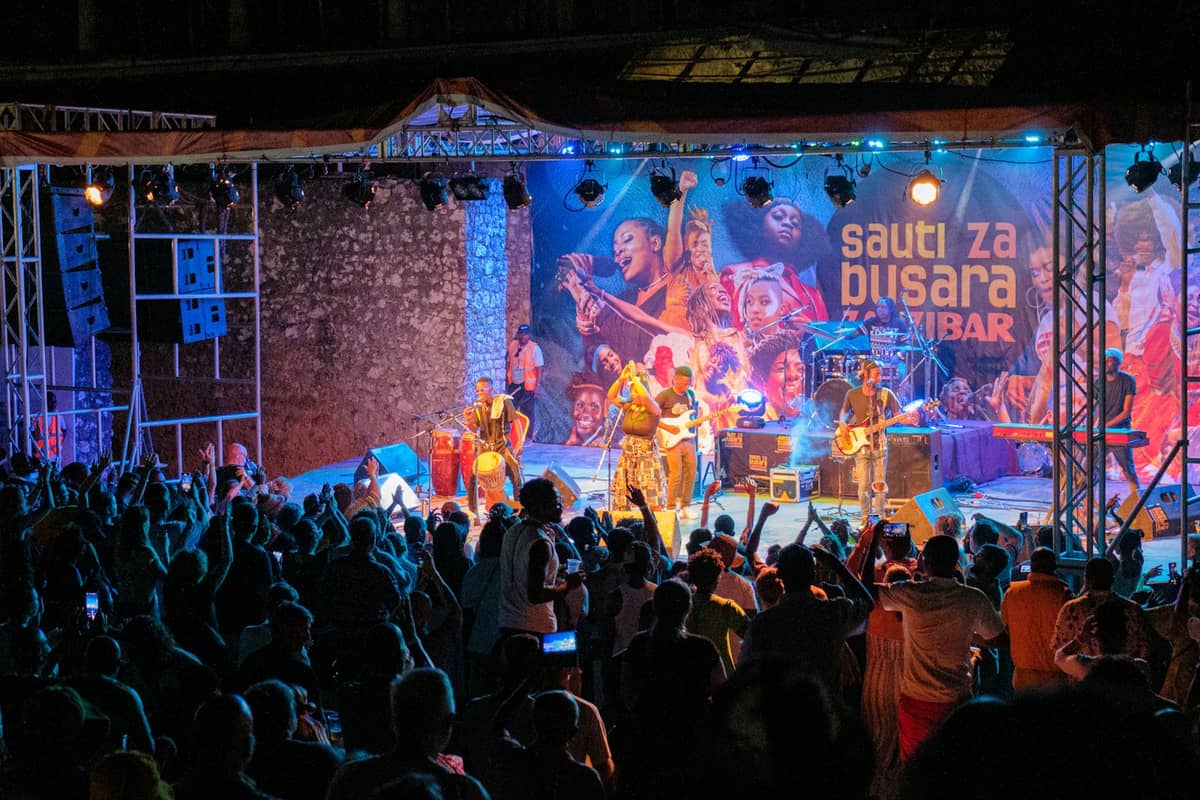
The venue shifts between editions, so confirm the specific location before you travel. The festival has historically used The venue shifts between editions, so confirm the specific location before you travel. The festival has historically used sites within or adjacent to Stone Town's UNESCO-listed historic quarter, and the architecture around the performance area is part of what makes the experience unusual. Coral-stone walls, carved wooden balconies, and the salt smell of the nearby sea form a backdrop that no purpose-built festival ground could replicate.
Main-stage performances run from 4:00 p.m. to 1:30 a.m., which means you move through at least two atmospheres in a single evening. Afternoon shows take place in warm, low light, with the crowd still loose and families in attendance. By 9:00 p.m., the crowd thickens, and the sense of occasion shifts. Some of the most electric moments happen between 10:00 p.m. and midnight, when the headline acts appear and the audience, a mix of locals, diaspora visitors, and international travelers, presses toward the stage.
💡 Local tip
Arrive early on at least one evening to catch afternoon acts, which are often underrated and far less crowded than the late-night headliners. The relaxed atmosphere before sunset is a genuinely different experience.
Stone Town at night is worth exploring beyond the festival perimeter. The narrow lanes around Forodhani Gardens fill with food vendors after sunset, and the walk back from the venue through the old quarter is one of those experiences that stays with you.
Tickets & tours
Live prices and dates from our booking partner. If you book, we may earn a commission at no extra cost to you.
Zanzibar catamaran and snorkelling tour to Mnemba Marine Park
From 114 €Instant confirmationFree cancellationNyerere National Park two-day safari with two game drives
From 866 €Instant confirmationFree cancellationSerengeti National Park private three-day safari from Zanzibar
From 2.144 €Instant confirmationFree cancellationZanzibar north coast sunset dhow cruise
From 42 €Instant confirmationFree cancellation
The Music: What to Expect from the Lineup
No two editions of Sauti za Busara have an identical feel, because the programming team consistently rotates in artists who are not yet on international radar alongside established names from the African continent. Taarab ensembles, some of them from Zanzibar itself, tend to anchor the program and are worth prioritizing even if the genre is unfamiliar. The sound is orchestral by regional standards: strings, brass, percussion, and call-and-response vocals in Swahili and Arabic-inflected melody.
The supporting stages and fringe events vary by year and sometimes include workshops, panel discussions on African music, and daytime performances. Check the official program at busaramusic.org once it is released, typically several weeks before the festival opens.
For travelers who are primarily beach-focused, it is worth being honest: if you are staying on the north or east coast, attending the festival requires a dedicated trip to Stone Town. That said, most travelers who make the journey consider it one of the highlights of their time on Unguja.
Tickets and Practical Planning
The festival offers multiple pass types, including options with VIP grandstand seating and access to dedicated facilities. Children up to age 12 are admitted free when accompanied by an adult. Ticket prices are not reproduced here because they change between editions; check the official ticket page at busaramusic.org for current pricing and pass categories before you book.
⚠️ What to skip
The specific venue is not named in the official 2027 ticket information. Confirm the performance site before you travel, as it has varied across recent editions.
The 2027 festival is scheduled for 19 to 21 March. March sits at the tail end of what is generally a good period to visit before the long rains arrive, but evening showers are possible. Bring a light layer for after midnight, when the sea breeze off the Indian Ocean makes the air noticeably cooler than it is inland.
If you are planning your wider Zanzibar trip around the festival, the best time to visit Zanzibar guide covers seasonal conditions in detail. For accommodation, Stone Town itself has a range of guesthouses and boutique hotels within walking distance of the festival zone, which removes the logistical headache of late-night transport across the island.
Getting to Stone Town from elsewhere on Unguja is straightforward by taxi or negotiated car hire. Public dala-dala minibuses serve routes around the island but are not recommended for late-night returns. For a broader overview of island transport, see the guide on getting around Zanzibar.
The Crowd and the Atmosphere
Sauti za Busara draws a genuinely mixed audience. Local Zanzibari families, mainland Tanzanians, East African visitors, European and American world-music enthusiasts, and members of the Swahili diaspora all share the same space. That diversity is one of the festival's quiet strengths: the experience does not feel like a cultural performance put on for outsiders, because the local audience is fully present and engaged.
The festival offers afternoon and early-evening sessions. Standard precautions apply when moving through Stone Town after midnight.
Travelers who find large crowds difficult or who are primarily interested in Zanzibar's beaches and reefs may find the festival peripheral to their interests. If that sounds like you, there is no shortage of other things to see in Stone Town: the House of Wonders and the historic Slave Trade Museum offer very different but equally significant encounters with this city's past.
Photography and Practicalities on the Ground
Photography policies vary by artist and zone; always check signage at the venue entrance and follow the direction of security staff. The combination of low stage lighting and moving performers in the evening sessions is demanding for phone cameras, but the warm afternoon light during the 4:00 p.m. to 6:00 p.m. window produces good results even with a basic smartphone.
Food and drink are available within the festival grounds, typically including grilled meats, pilau rice, and local soft drinks. Prices are higher than street food outside the venue, which is standard for ticketed festival events. If you want to eat before entry, the lanes around Stone Town's market quarter offer better value and a more local experience.
ℹ️ Good to know
Comfortable, closed-toe shoes are worth choosing over sandals for evening sessions. The ground in older Stone Town venues can be uneven, and late-night crowds compress quickly near the stage.
Accessibility information on the official ticket page is limited to VIP grandstand seating and VIP restrooms. If you require step-free access or have specific mobility needs, contact the festival organizers directly at busaramusic.org well in advance of your visit, as venue layouts differ from year to year.
Insider Tips
- Buy tickets before you arrive in Zanzibar. The festival does not always sell out, but popular pass categories can run low, and buying on arrival wastes time you could spend exploring Stone Town.
- The daytime program, which sometimes includes workshops and fringe performances, is listed separately from main-stage acts. Check the full program schedule on busaramusic.org once it is published, not just the headline names.
- If you are staying outside Stone Town, book accommodation in the old quarter for at least two nights during the festival. Returning across the island after 1:00 a.m. by taxi is expensive and harder to arrange than it sounds when you are tired and the roads are unlit.
- Taarab sets sometimes run long and without a strict end time. If you have a strong interest in the genre, position yourself near the stage well before the listed start and stay through the full performance rather than moving between stages.
- Dress in light, breathable fabric for the afternoon sessions and bring a thin layer for after 11:00 p.m. The sea breeze that makes Stone Town pleasant during the day becomes noticeably cool once the sun has been down for several hours.
Who Is Sauti za Busara Music Festival For?
- Music lovers with an interest in African and Indian Ocean sounds beyond mainstream genres
- Cultural travelers who want to experience Stone Town as a living city rather than a historic set piece
- Solo travelers looking for a structured social environment that makes meeting people easy
- Couples combining a beach holiday with a meaningful cultural event
- Families with children over 8 who can handle a late evening and a mixed, energetic crowd
Nearby Attractions
Other things to see while in Stone Town:
- Darajani Market
Darajani Market, also known as Marikiti Kuu or the Great Market, is a principal market in Stone Town. Dating to 1904, it draws fishermen, spice traders, and local shoppers every morning in a scene that has changed little in over a century. Entry is free, and an hour here tells you more about Zanzibari daily life than any museum.
- Forodhani Gardens
Forodhani Gardens is a seafront park in the heart of Stone Town that doubles as Zanzibar's most celebrated street food market after dark. By day it's a quiet refuge of sea breezes and colonial-era architecture; by evening, dozens of grills and lantern-lit stalls transform it into the social and culinary center of the old city.
- Freddie Mercury Museum
Opened in 2019 on Kenyatta Road in Stone Town's Shangani quarter, the Freddie Mercury Museum occupies the building associated with his childhood. It is a small but carefully assembled tribute to his life, his music, and his largely overlooked Zanzibari origins — making it one of the most personally resonant stops in all of Stone Town.
- Hamamni Persian Baths
Built for Sultan Barghash between 1870 and 1888, the Hamamni Persian Baths were once the grandest public bathhouse in Zanzibar. Today the ruins stand as one of Stone Town's most atmospheric historic sites, offering a quiet counterpoint to the neighborhood's busier attractions.
Planning a trip? Discover personalized activities with the Nomado app.