Paje is Zanzibar's kitesurfing capital, a southeast-coast village where a shallow reef-protected lagoon draws wind-sport enthusiasts from around the world. Behind the beach, a low-key fishing village carries on its own pace, giving the area a dual character that few other spots on Unguja can match.
Paje sits on Zanzibar's southeast coast, where a wide reef lagoon and reliable trade winds have turned a quiet fishing village into the island's leading kitesurfing destination. The result is a neighborhood that operates on two speeds at once: watersports energy by day, easy beach-bar rhythm by night, with a lived-in local core that keeps things grounded.
Orientation
Paje occupies a stretch of Unguja's southeast coast, roughly midway between the island's southern tip and the village of Bwejuu to the north. To the south, the village runs into Jambiani without a hard boundary, the two communities blending together along the same coastal road. The beach itself faces east, opening onto a wide tidal lagoon protected by an offshore reef, which keeps the inshore water shallow and flat, a key reason kite schools cluster here rather than anywhere else.
The most useful landmark for orienting yourself is the main roundabout at the center of the village, where the road from Stone Town and Zanzibar's airport meets the north-south coastal road that runs toward Michamvi and, further along, toward Jambiani. Almost everything in Paje is within easy walking distance of this junction. The beach road runs east from it toward the water, and the kite schools, guesthouses, and beach bars are clustered along the shoreline in both directions.
For travelers planning their movements around Unguja, Paje sits about 55 kilometers by road from Stone Town and roughly 50 kilometers from Abeid Amani Karume International Airport. The nearby village of Jambiani is a short ride south and shares a similar beach character, while the Jozani Chwaka Bay National Park lies about 20 kilometers inland and northwest, making it a practical day trip from Paje.
Character & Atmosphere
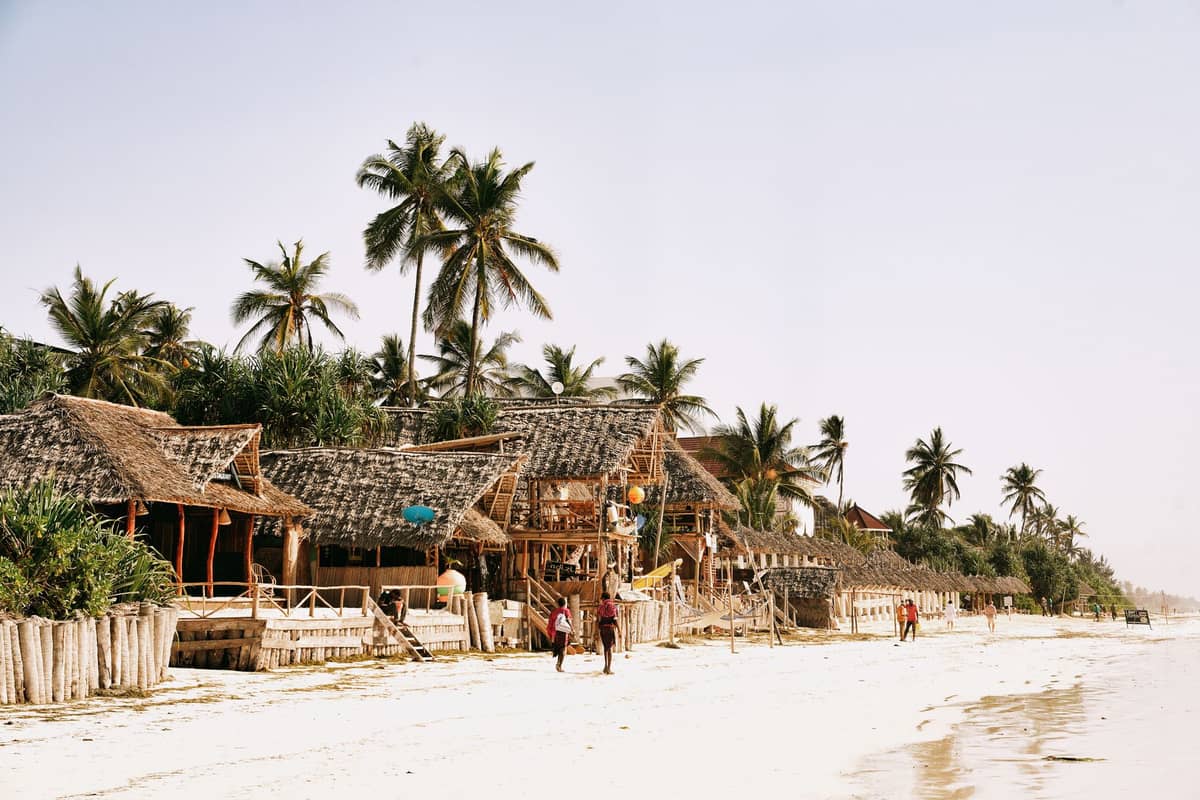
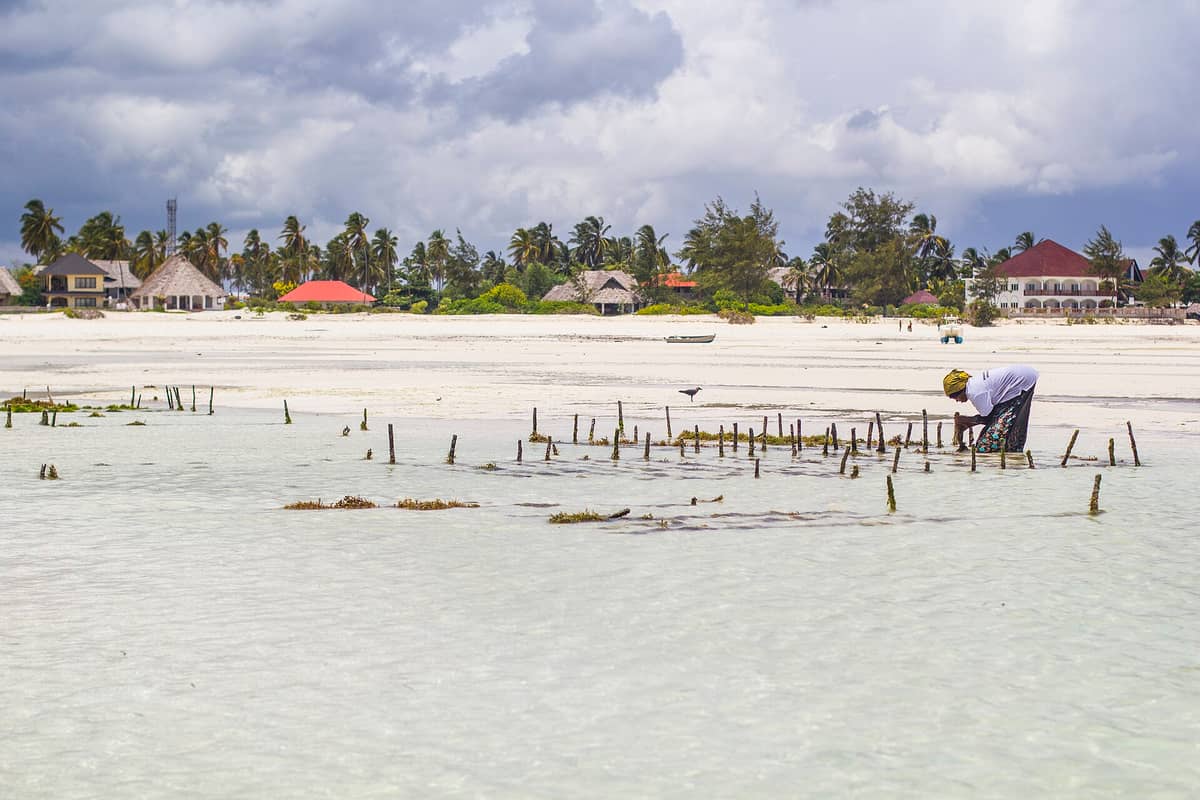
Early mornings in Paje belong to the fishermen. Before the sun is fully up, wooden outrigger canoes are already being pushed out through the shallows, and the beach has a quiet, purposeful quality that feels nothing like the tourist strip it becomes a few hours later. The light at this hour is flat and silver, the tide often far out, exposing wide stretches of reef flat where women from the village gather seaweed for farming, a practice that has been part of this coastline's economy for decades.
By mid-morning, the wind picks up, and with it comes the sound that defines Paje: the hum and snap of kite lines, the rush of boards skimming across the lagoon, instructors calling out to students chest-deep in turquoise water. The beach fills with kite gear, and the schools run sessions through the afternoon when the trade winds are at their most consistent. The atmosphere is sporty and social, with a strong international mix of travelers who have come specifically for the wind.
Late afternoons slow down considerably. The wind drops, the kites come down, and the beach transitions into a more relaxed mode. Bars set out sunbeds, the smell of grilled seafood drifts from beach kitchens, and the light turns amber over the lagoon. This is one of the better stretches of Unguja's coast for sunset watching if you are facing east, you are not watching the sun set into the water, but the low evening light across the reef flat and the silhouettes of dhows is genuinely striking. After dark, Paje has a handful of bars and beach parties, but it is not a nightlife destination in the way the north coast around Nungwi is. Nights here are mellow by comparison.
ℹ️ Good to know
Paje's dual character is worth understanding before you book. The section of beach closest to the kite schools is active and social, with regular noise from instructors and equipment. If you want a quieter stretch, look for accommodation north or south of the main kite zone.
The fishing village itself, set back slightly from the beach road, operates with almost no awareness of the tourist economy on its doorstep. Children head to school in the morning, the mosque calls prayers five times a day, and small shops sell everyday goods to local families. Wandering a few streets inland from the beach gives you a quick sense of how Paje actually lives, and it is worth doing once if only to remind yourself that the guesthouses and kite schools occupy a narrow coastal strip within a much larger community.
What to See & Do
Kitesurfing is the dominant activity and the main reason most visitors choose Paje over other parts of the coast. The lagoon's shallow, flat water makes it well suited to beginners, and the consistent southeast trade winds that blow from roughly June through October create near-ideal conditions. Several established kite schools operate along the beach offering lessons, gear rental, and courses of varying lengths. If you are already an experienced kiter, Paje is simply a good place to clock hours on the water. For more context on wind sports here, the Zanzibar kitesurfing guide covers conditions, seasons, and what to expect.
Non-kiters have more to work with than it might first appear. Paje Beach itself is wide, white, and easy to spend a day on even without getting in the water. At low tide, the reef flat stretches out for hundreds of meters and is worth walking for the marine life left behind in tidal pools, though reef shoes are strongly advised as the surface is uneven and can be sharp in places. Snorkeling is possible at the reef edge when the tide is in, though visibility and coral health vary.
Kitesurfing lessons and rentals from multiple schools along the main beach strip
Stand-up paddleboarding and windsurfing during calmer wind conditions
Reef flat walking at low tide, best done with proper reef shoes
Seaweed farm visits arranged through local guides or guesthouses
Day trips to Jozani Chwaka Bay National Park for red colobus monkeys and forest walks
Snorkeling excursions to the outer reef, bookable through beach operators
Day trips from Paje are straightforward to organize. Jozani Chwaka Bay National Park is the most popular, home to Zanzibar's endemic red colobus monkeys and a mangrove boardwalk. Trips to Stone Town are also common, with most guesthouses able to arrange shared or private transfers. For a broader look at excursions across the island, the day trips from Zanzibar guide covers the main options.
Eating & Drinking
Paje's food scene is compact but covers the basics well. The majority of options cluster along the beach road and the shoreline itself, ranging from simple beach cafes and guesthouses serving Swahili-influenced meals to slightly more polished restaurants aimed at longer-staying visitors. Seafood dominates, as you would expect on the coast: grilled fish, calamari, prawns, and octopus cooked in coconut-based sauces are common across most menus. Prices are moderate by Zanzibar standards, though they have crept up as the kite tourism economy has grown.
For locally-influenced cooking, look for guesthouses and small restaurants that serve daily specials rather than fixed tourist menus. Pilau rice, urojo (a spiced Zanzibar soup), and grilled lobster when in season are worth seeking out. The Zanzibar food guide gives useful context on what to order and what to avoid island-wide.
Drinking options range from beach bars serving cold Kilimanjaro or Safari lager through the afternoon to cocktail-focused spots that come alive in the early evening. The bar scene is relaxed and social, driven largely by the kitesurfing crowd who tend to know each other from the water. There are occasional beach parties, particularly around full moon periods, but these are nowhere near the scale of events on the north coast. If nightlife is a priority, Paje will likely feel quiet.
💡 Local tip
If you are self-catering or watching your budget, the small shops near the central roundabout stock basics, and fresh catch is sometimes sold directly on the beach by local fishermen in the early morning. Prices are a fraction of what restaurants charge.
Getting There & Around
From Abeid Amani Karume International Airport, Paje is approximately 50 kilometers by road, typically a 60 to 90 minute drive depending on traffic and road conditions. Taxis from the airport are the most straightforward option: agree the fare before you get in, as meters are not used. From Stone Town, the journey is similar in length. For a full overview of transport logistics across Unguja, the getting around Zanzibar guide is a practical starting point.
Dala-dala minibuses connect Paje to Stone Town and serve the southeast coast corridor, including stops toward Jambiani and north toward Michamvi. Fares are low, but the buses run on no fixed schedule and can be crowded and slow. They are a viable option for budget travelers who are not in a hurry. Boda-bodas (motorcycle taxis) operate locally and are useful for short hops between Paje and neighboring villages.
Within Paje itself, the settlement is compact enough to cover on foot. The beach road, the kite schools, the central roundabout, and the main cluster of guesthouses are all walkable from each other. If you plan to explore the wider southeast coast, renting a bicycle or scooter from a local operator is the most flexible and affordable option. Ride-hailing apps do not operate reliably in Zanzibar, so do not plan your transport around them.
⚠️ What to skip
The road from Stone Town to Paje passes through Jozani forest and several small towns. It is a single carriageway in mixed condition. Night driving can be unpredictable due to poor roadside lighting and pedestrians walking along the road. If arriving late, book a pre-arranged transfer rather than relying on an ad-hoc taxi from the airport.
Where to Stay
Paje has a solid range of accommodation, heavier on guesthouses, mid-range lodges, and boutique properties than on large resort hotels. The kitesurfing economy has supported a crop of places that cater specifically to active travelers, offering equipment storage, early breakfasts, and beach-front locations within easy reach of the kite schools. For travelers choosing between southeast coast options, the where to stay in Zanzibar guide covers the full island picture and helps set expectations by budget and travel style.
The strip along the beach road between the central roundabout and the main kite zone is the most convenient location for anyone coming to kite, with schools, gear rental, and beach access all within a short walk. Properties slightly north or south of this core tend to be quieter and better suited to travelers who want beach life without the constant presence of kite gear and instructors. Budget guesthouses are concentrated in and around the village center, while the more polished boutique options tend to sit along the beachfront itself.
Paje is not a great fit for families with very young children, primarily because the active kite zone creates genuine hazards in the water and on the beach. Older children and teenagers who are interested in watersports are a different matter. Couples and solo travelers looking for a mix of activity and low-key beach time tend to find it a good match. If you are after the luxury resort experience with pools, spas, and full service, look further north toward Nungwi or Kiwengwa instead.
Honest Assessment: Is Paje Right for You?
Paje works best for a specific type of traveler: someone who wants active days on the water, a social beach scene, and enough local texture to feel connected to where they actually are. It is not the prettiest or most polished stretch of coast on Unguja, and the tourist infrastructure, while decent, is still in development compared to the north. If you are weighing Paje against the beaches around Nungwi or Kendwa, the key difference is wind: Paje has it reliably, the north coast less so.
Travelers who are not interested in kitesurfing or watersports will still find Paje pleasant, but it may feel like a place built around an activity they are not doing. In that case, the southern neighbor Jambiani offers a similar beach setting with a somewhat quieter, more village-oriented feel. For broader help deciding where to base yourself on the island, the is Zanzibar worth visiting guide and the Zanzibar budget guide are both worth reading before you commit.
On safety: Paje is generally considered safe for travelers, but standard caution applies after dark on unlit beach stretches. In the water, the main hazard is not the reef or the currents but the active kite zone itself. Keep clear of kite lines and the landing areas, especially as a swimmer or snorkeler. For a wider look at safety across the island, the is Zanzibar safe guide covers what you actually need to know.
TL;DR
Paje is Zanzibar's primary kitesurfing destination, built around a shallow reef lagoon on the southeast coast with reliable trade winds roughly from June through October.
Best suited to active travelers, kitesurfers, and those who want a beach base with social energy but without the scale of the north-coast resort scene.
The village has genuine local character beyond the tourist strip, including a fishing community, seaweed farming, and a recognizably Swahili rhythm to daily life.
Not ideal for families with very young children due to active kite zones, and not a strong fit for travelers prioritizing luxury resorts or nightlife.
Getting there requires a taxi or organized transfer of roughly 60 to 90 minutes from the airport; dala-dalas connect to Stone Town but run slowly and on no fixed schedule.
Zanzibar's beaches are not all equal. Tides, winds, crowds, and access vary dramatically between the north, east, and west coasts. This guide breaks down every major beach so you can pick the right one for how you travel.
Zanzibar's tropical monsoon climate shapes everything from beach conditions to hotel prices. This guide breaks down every month of the year so you can choose the right time for your trip — whether you're chasing perfect skies, dolphin season, or lower prices.
Zanzibar's main island is just the beginning. These day trips take you to pristine coral reserves, ancient ruins, wildlife sanctuaries, and remote beaches that reveal a completely different side of the archipelago. Here are the best excursions worth leaving your resort for.
Freddie Mercury was born in Zanzibar in 1946, and Stone Town still carries the traces of his early life. This guide covers the museum, the birthplace controversy, the Shangani heritage trail, and exactly what to expect when you visit.
From the airport taxi to a dala-dala rattling toward Nungwi, transport in Zanzibar requires some planning. This guide covers every option available on Unguja, with practical advice on costs, routes, and what to avoid.
Zanzibar attracts hundreds of thousands of visitors each year, and most have uneventful trips. But the island has real risks that travel blogs often downplay. This guide covers crime patterns, health hazards, common scams, transport dangers, and practical precautions so you can travel with clear eyes.
Zanzibar delivers a rare combination: a UNESCO-listed historic city, diverse coastlines, and Indian Ocean marine life, all within a few hours of mainland Tanzania. But it is not the right destination for everyone. Here is what you actually need to know before booking.
Seven days is enough time to experience Zanzibar properly — the historic labyrinth of Stone Town, the white-sand beaches of the north and east coasts, a spice tour through the island's interior, and the Indian Ocean reefs just offshore. This itinerary is built around realistic travel times, not a fantasy schedule.
Stone Town is one of East Africa's most historically layered urban environments, a UNESCO World Heritage Site where Swahili, Arab, Indian, and colonial influences converge in a single square kilometre. This self-guided walking tour covers the essential landmarks, practical logistics, and practical observations you need to explore it well.
Zanzibar packs an extraordinary range of experiences into a relatively small island. This guide covers the best things to do in Zanzibar across history, beaches, wildlife, food, and water sports — with clear advice on what's worth your time and what to skip.
Choosing where to stay in Zanzibar is the single most important decision of your trip. The island spans over 1,500 square kilometres, and the right base depends entirely on what you want: history, nightlife, reef diving, kite surfing, or pure seclusion. This guide breaks down every major area with a clear assessment of who each one suits.
Zanzibar's all-inclusive resort scene spans barefoot-luxury bungalows on the north coast to family-friendly complexes along the east. This guide breaks down what's genuinely included, which areas suit which traveler, and the pricing realities you won't find on most booking sites.
Zanzibar has a reputation as a luxury destination, but it is entirely possible to travel the island on a tight budget. This guide covers cheap transport, affordable places to stay, where to eat well for under $5, and which attractions are genuinely worth paying for.
Zanzibar's coral reefs rank among the Indian Ocean's most accessible and biodiverse. This guide covers the top snorkelling sites, what you'll actually see underwater, current pricing, the best seasons to go, and what responsible tourism looks like in practice.
Most travelers treat Zanzibar and Dar es Salaam as an either/or choice. They don't have to be. This guide breaks down exactly how to connect the two destinations, what to spend your time on in each, and how to structure the trip so neither feels rushed.
Zanzibar offers some of the Indian Ocean's most accessible reef diving, from the shallow coral gardens of Mnemba Atoll to the deeper, current-swept walls of Leven Bank. This guide covers the best dive sites, what to pay, when to go, and how to avoid the pricing traps that catch first-time visitors.
Zanzibar's cuisine is one of the most distinctive in East Africa, shaped by centuries of Arab, Indian, and Swahili influence. This guide covers the dishes worth seeking out, where to eat them, what to pay, and a few traps to avoid.
Zanzibar rewards the curious traveller. Beyond the famous beaches and spice tours, the island holds coral-cave slave history, crumbling sultan palaces, a centuries-old mosque, and a sandbank that appears from the sea at low tide. This guide covers the experiences most visitors never find.
Zanzibar delivers the kind of honeymoon backdrop that is hard to fabricate: white coral-sand beaches, warm turquoise water, historic Stone Town, and a spice-scented coastline. This guide covers where to stay, what to do, when to go, and what to watch out for so you can plan with confidence.
Three days in Zanzibar is enough to cover the island's highlights if you plan smart. This itinerary focuses on Stone Town, a spice tour, one great beach, and an island excursion, without wasting hours on unnecessary cross-island transfers.
December brings warm seas, festive energy, and the tail end of the short rains to Zanzibar. Here is what to honestly expect from the weather, where to spend Christmas and New Year, and how to avoid the peak-season pitfalls that catch first-timers off guard.
July sits in the heart of Zanzibar's dry season, making it one of the most popular months to visit. Here's what the weather actually looks like, what cultural events are happening, which beaches perform best, and what to plan ahead for.
Paje is one of the Indian Ocean's most reliable kitesurfing destinations, with two distinct wind seasons, a sheltered reef lagoon, and schools catering to every level. This guide covers the wind windows, tide realities, lesson costs, and practical logistics so you can plan a session that actually works.
Zanzibar delivers a rare combination: Indian Ocean beaches, rich Swahili culture, and some of East Africa's most impressive resort properties. This guide breaks down where to stay, what to expect at each price point, which coasts suit which traveler, and how to avoid the overpriced traps that catch first-timers.
From the fish stalls of Darajani to the grill smoke of Forodhani Gardens at night, Zanzibar's markets are among the most rewarding experiences on the island. This guide covers every major market, what to buy, what to skip, and how to navigate it all without overpaying.
Zanzibar after dark is more varied than most travelers expect. This guide breaks down where to go, what to expect, and how to make the most of evenings across Stone Town, Nungwi, Kendwa, and the southeast coast.
Zanzibar was the largest slave-trading port in East Africa. This guide covers the key sites, museums, and historical context that make Stone Town one of the most significant places to understand this chapter of world history — including what to expect, what gets glossed over, and how to visit responsibly.
Zanzibar rewards independent travelers with spice-scented alleys, turquoise reefs, and some of East Africa's most sociable guesthouses. This guide covers everything you need to plan a confident solo trip: the safest areas, realistic costs, cultural etiquette, and how to move around the island without a group.
A Zanzibar spice tour is one of the most rewarding half-days you can spend on the island, but the experience varies enormously depending on which farm you visit, which operator you book with, and what time of year you go. This guide covers all of it: the best farms near Stone Town, clear price breakdowns, seasonal considerations, and what separates a genuinely good tour from a rushed photo-op.
Stone Town's UNESCO-listed streetscape is one of the most architecturally layered urban environments in the Indian Ocean world. This guide breaks down the building styles, carved door traditions, construction materials, and cultural influences that shaped the historic quarter, with practical advice on what to look for and how to explore it.
Zanzibar's culture is one of the most layered in East Africa, shaped by centuries of Arab, Persian, Indian, and African exchange along the Swahili coast. This guide covers what to wear, how to behave, when to visit, and what most tourists overlook about life here.
Combining a Tanzania safari with a Zanzibar beach stay is one of the most rewarding travel itineraries in Africa. This guide covers the logistics, best timing, route options, costs, and common mistakes to avoid when planning your Tanzania and Zanzibar combo trip.
Zanzibar works surprisingly well as a family destination, but it takes some planning. This guide covers the best beaches, wildlife encounters, cultural experiences, and practical logistics for traveling with children on Unguja, the main island.