Paje Beach: Zanzibar's Kitesurfing Capital and Tidal Shoreline
Paje Beach stretches roughly 5 kilometres along Zanzibar's southeast coast, drawing kitesurfers, slow travellers, and anyone who prefers wide, quiet sand over resort-packed shores. Entry is free, the pace is unhurried, and the tidal flats change the landscape entirely every six hours.
Quick Facts
- Location
- Paje village, southeast coast of Unguja (Zanzibar main island), Tanzania
- Getting There
- ~1 hour by taxi from Stone Town; dala-dala shared minibuses also serve Paje (routes and schedules vary, confirm locally)
- Time Needed
- Half day to multiple days; most visitors stay at least one full day
- Cost
- Free entry. Kitesurfing lessons and gear rental are priced separately by local schools
- Best for
- Kitesurfers, budget travellers, couples seeking a quiet beach, travellers who want a real village atmosphere
What Paje Beach Actually Is
Paje Beach is a roughly 5-kilometre stretch of white sand on the southeast coast of Unguja, the main island of the Zanzibar archipelago. It is a public beach with no admission charge and no resort fence cutting it off from the village behind it. The shoreline sits within Paje village, a small, working community where fishermen still operate and local life continues visibly alongside the tourist economy.
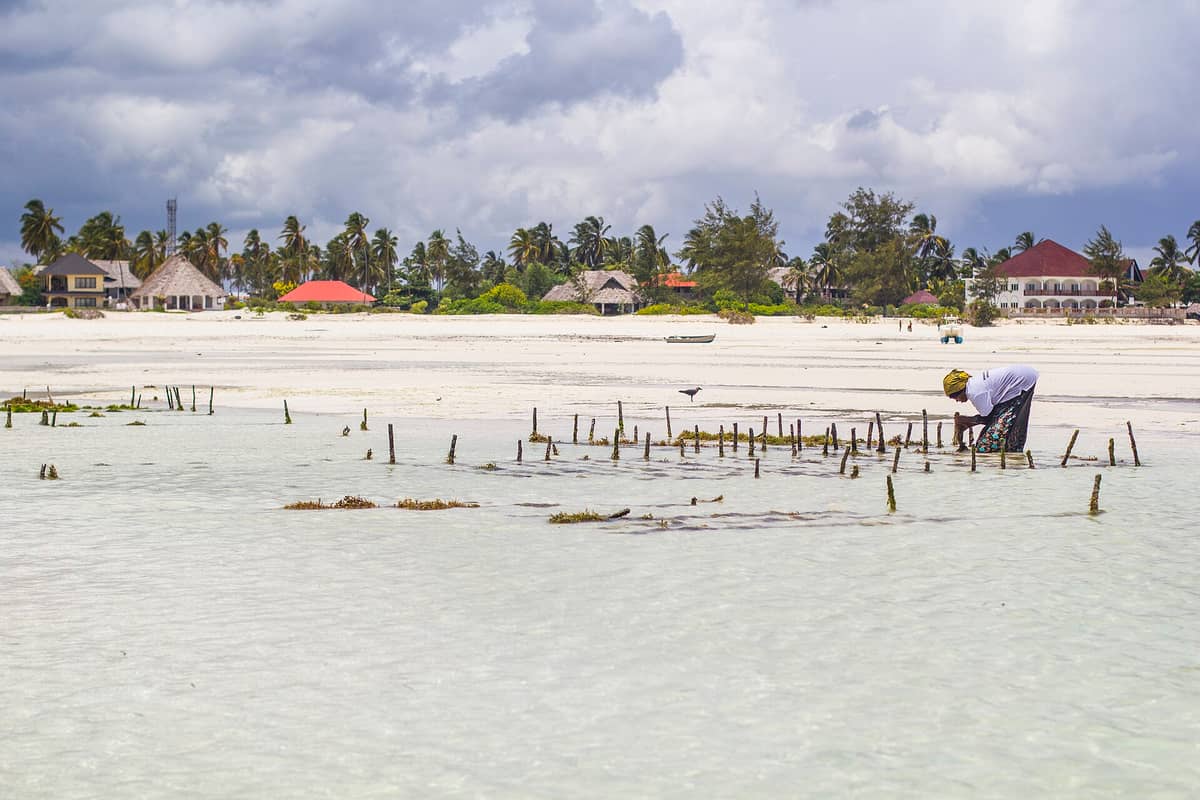
What sets Paje apart from Zanzibar's more photographed northern beaches is the tidal system. The Indian Ocean here retreats dramatically at low tide, exposing a vast plain of shallow, warm water over sand and seagrass beds that stretches hundreds of metres offshore. At high tide, the water returns and the beach becomes swimmable. Understanding this rhythm is essential to planning your time here.
ℹ️ Good to know
The tidal shift at Paje is significant: at low tide the sea may be ankle-deep for a long distance from shore. Check tide times before your visit if swimming is a priority. High tide is also the best time for photography near the water's edge.
Paje sits on the same southeast stretch as neighbouring Jambiani Beach, which lies a few kilometres to the south and shares a similar tidal character. Travellers who like one usually appreciate the other, though Paje has a more developed kitesurfing infrastructure and slightly more accommodation options.
The Kitesurfing Scene
Paje has become one of East Africa's most recognised kitesurfing destinations, and for clear reasons. The southeast trade winds, locally called the Kusi, blow reliably from June through October, producing consistent, side-onshore wind conditions across the shallow lagoon. During this season, the air above the beach is nearly always dotted with kites of every colour, from learners doing their first body drags in waist-deep water to experienced riders launching off small chop.
Several kitesurfing schools operate along the beachfront, offering instruction in multiple languages and renting equipment. Lessons are tailored to complete beginners and intermediate riders alike. If you have your own gear, the lagoon at low tide is one of the safer learning and practice environments you will find anywhere in the region. The flat water extends far enough that riders have room to make mistakes without reaching the shore too quickly.
Outside peak kite season, the winds shift. The northeast monsoon, called the Kaskazi, runs roughly from December through March and brings lighter, less predictable wind. Kitesurfing is still possible during this period but conditions are inconsistent. The shoulder months of April and May bring the long rains, when the beach is much quieter and some schools reduce operations. Visitors coming specifically to kite should target June to October.
💡 Local tip
Even if you have never tried kitesurfing, a beginner lesson at Paje is worth considering. The shallow, warm lagoon at low tide is one of the most forgiving environments for a first attempt anywhere on the East African coast.
Tickets & tours
Live prices and dates from our booking partner. If you book, we may earn a commission at no extra cost to you.
Zanzibar catamaran and snorkelling tour to Mnemba Marine Park
From 114 €Instant confirmationFree cancellationNyerere National Park two-day safari with two game drives
From 866 €Instant confirmationFree cancellationSerengeti National Park private three-day safari from Zanzibar
From 2.144 €Instant confirmationFree cancellationZanzibar north coast sunset dhow cruise
From 42 €Instant confirmationFree cancellation
How the Beach Changes Through the Day
Early morning at Paje is the calmest period. The light is soft and angled low over the water, and the beach belongs mainly to local fishermen returning from overnight trips and a few joggers or yoga practitioners from the guesthouses. The air smells of salt and seaweed, and if the tide is going out, the exposed tidal flats reflect the sky like a mirror. This is the hour when the beach feels most like itself, before the day's activity builds.
By mid-morning, especially from June through October, the wind picks up noticeably. Kite schools begin their sessions, and the sound of inflating kites and instructors calling out over the water becomes part of the ambient noise. The beach fills gradually with a mix of travellers from the guesthouses, kite students, and villagers going about their day. It is never the kind of crowd that makes you feel packed in.
Afternoons tend to be the windiest and the most active on the water. Photographers get some of the best action shots during this window, with kites backlit by the descending sun. Sunset at Paje is slower and quieter than at Nungwi or Kendwa to the north, partly because the southeast-facing shore means you are looking toward open ocean rather than directly at the horizon where the sun sets. The sky colours still reward staying on the beach until dusk.
Swimming, Seaweed, and the Tidal Flats
Swimming at Paje requires timing. At low tide, the water is simply too shallow for anything more than wading, and the seagrass beds underfoot can feel slippery and unfamiliar if you are not expecting them. At high tide, the water comes in properly and swimming is comfortable, though always check for kite activity before wading into the lagoon during kitesurfing hours.
Seaweed farming has been practised along this stretch of coast for decades. You will notice wooden stakes in the tidal flats marking the cultivation plots, and women working them during low tide, harvesting or replanting. This is not a tourist display but an active livelihood. The Jambiani seaweed farm nearby offers a more structured look at the practice if you want to understand it better. At Paje, you simply observe it as part of the environment.
The tidal flats themselves are ecologically interesting. Shorebirds pick through the exposed sand at low tide, and small crabs scatter if you walk out across the flats. Children from the village sometimes play football on the exposed sand, which gives the beach a lively, informal quality that purely resort beaches tend to lack.
⚠️ What to skip
The soft sand and uneven tidal flats are not wheelchair accessible. There are no formal accessibility facilities documented at Paje Beach.
Getting to Paje and Getting Around
Paje sits roughly an hour from Stone Town by taxi or private car. The road south follows the island's east coast and is in reasonable condition, though sections can become potholed, particularly after the rainy season. Agree the fare before departure if taking a taxi from Stone Town; fares vary and are not metered. Confirm current rates locally before your trip.
Dala-dala shared minibuses also serve Paje from Stone Town's Mwanakwerekwe area, though schedules are informal and journeys take longer than by private transport. If you are on a tight budget, this is a workable option; if you are carrying kitesurfing gear or luggage, a taxi or private transfer is more practical. For broader orientation on moving around the island, the guide to getting around Zanzibar covers the main options in detail.
Within Paje village, everything is walkable. The accommodation, restaurants, and kite schools are strung along or just behind the beachfront road. Bicycles and scooters can be rented locally for exploring the surrounding coast. Note that ride-hailing apps such as Uber do not operate in Zanzibar as of this writing; verify current availability before relying on any app.
Food, Accommodation, and the Village Atmosphere
Paje has accumulated a genuine range of places to eat and sleep without tipping into resort-town uniformity. Budget guesthouses sit alongside mid-range eco-lodges, and a handful of more polished boutique properties have appeared in recent years. The overall feel remains relaxed and unpretentious. Staying at least one night is worth it to experience the beach at its quietest hours and to catch different tide windows.
Food options in Paje range from simple beachside grills serving fresh fish and rice to more varied menus at the larger guesthouses. Prices are generally lower than in Stone Town or the northern beach resorts. For a deeper sense of what Zanzibari coastal cuisine involves, the Zanzibar food guide provides useful context on dishes and where to find them across the island.
The village itself is Muslim, as is most of Zanzibar's coastal population. Dress modestly when walking away from the waterfront, covering shoulders and knees. On the beach itself, standard swimwear is acceptable, but changing into cover-ups before walking into the village is both respectful and locally appreciated.
Who Should Skip Paje
Paje is not the right choice for everyone. Travellers who want guaranteed swimming at any hour of the day will find the tidal restrictions frustrating. Those expecting a polished resort experience with manicured gardens, a pool, and a beach bar every fifty metres will also be disappointed. The village infrastructure is functional but not luxurious, and power cuts are occasional.
If your priority is calm, sheltered water at all tide states and a livelier nightlife scene, the northern beaches are more suitable. Nungwi Beach stays swimmable through tidal shifts due to its different coastal geometry, and has more evening activity. Kendwa Beach is similarly accessible for swimming and hosts the well-known full moon parties if you are looking for that kind of energy.
Insider Tips
- Check tide tables for your dates before booking a day trip to Paje. Arriving at low tide when you planned to swim is a common disappointment that a quick online check prevents.
- The wind at Paje is typically strongest in the early-to-mid afternoon. If you want to photograph kites in action, position yourself with the sun behind you between roughly 2pm and 5pm during June to October.
- The stretch of beach north of the main kite school cluster tends to be quieter and less trafficked by learners. Walk ten to fifteen minutes north of the village centre and you will often find yourself nearly alone.
- Bargain gently but always agree your dala-dala drop-off point before boarding in Stone Town. Some drivers interpret 'Paje' loosely and may stop short of the beach itself.
- If you plan to walk the tidal flats, cheap rubber sandals from the village market protect your feet better than bare feet against hidden shells and stake edges from the seaweed farms.
Who Is Paje Beach For?
- Kitesurfers at any level, from first-timers to experienced riders seeking reliable wind
- Budget-conscious travellers who want a real beach experience without resort prices
- Travellers who want a working village atmosphere alongside their beach time
- Photographers interested in tidal flat landscapes, kite action, and Indian Ocean light
- Slow travellers happy to structure their day around tide windows rather than a fixed schedule
Planning a trip? Discover personalized activities with the Nomado app.