Jambiani Seaweed Farm: Walking the Tidal Flats with the Mwani Mamas
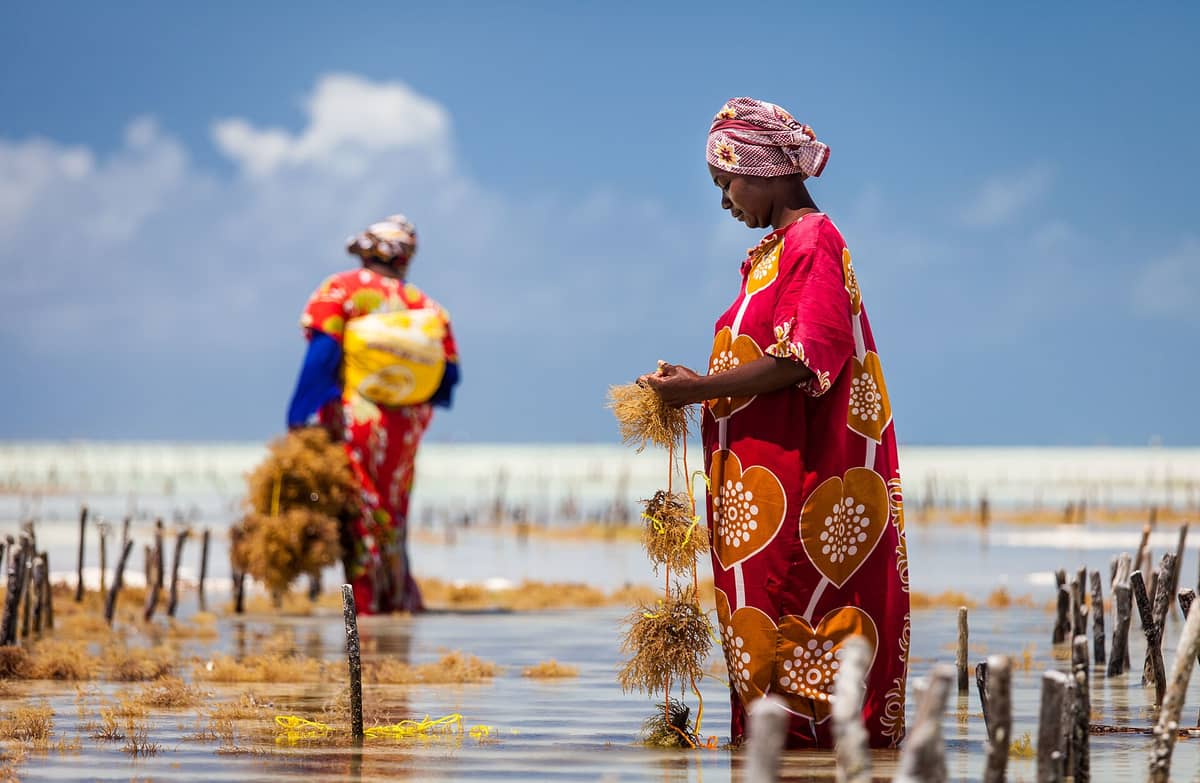
Along Jambiani's shallow east-coast shoreline, rows of seaweed lines stretch across the tidal flats tended by a cooperative of local women known as the Mwani Mamas. This is not a staged cultural display — it is a working farm that has shaped the village economy since 1989, and visiting it on a guided tour offers a grounded, unhurried look at coastal livelihoods that most beach holidays completely miss.
Quick Facts
- Location
- Jambiani, southeast coast of Unguja (Zanzibar's main island)
- Getting There
- Dala-dala from Stone Town toward Paje/Jambiani, or private taxi; no direct public route to the farm itself
- Time Needed
- 1.5 to 2.5 hours for a guided tour
- Cost
- Approx. USD 15 per person for a guided tour (verify current price locally)
- Best for
- Curious travelers, sustainable tourism advocates, families, photographers
- Official website
- http://www.mwanizanzibar.com
What the Jambiani Seaweed Farm Actually Is
The Jambiani Seaweed Farm is not a single fenced property with a ticket booth. It is a stretch of intertidal flats running along the east-coast shoreline of Jambiani village, where dozens of women farmers tend cultivation lines planted with tropical seaweed species, primarily Eucheuma cottonii. The lines are staked into the sandy seabed and submerged at high tide, so the entire operation is only visible and walkable during low tide. What you see is an intricate grid of ropes secured to the seabed, each section tended by an individual farmer who knows her plot by heart.
Commercial seaweed farming was introduced to the Jambiani and Paje area in 1989, and it transformed the economic options available to women in these coastal villages at a time when alternatives were few. Today the work is organized in part through the Mwani Zanzibar Centre, a cooperative initiative associated with the Mwani Mamas, whose guided tours give visitors direct access to the farmers themselves rather than a secondhand interpretation. Guided tours are listed at USD 15 per person, though prices should be confirmed locally before your visit.
⚠️ What to skip
The farm is only accessible during low tide. Before planning your visit, check the local tide schedule for Jambiani — this will dictate when your tour departs. Your accommodation or the Mwani Zanzibar Centre can advise on timing.
The Experience: Walking Across the Flats
At low tide, the lagoon in front of Jambiani retreats to reveal a wide, pale expanse of sand and exposed coral rubble. The air carries the faint mineral smell of the sea bottom, mixed occasionally with the sharp, oceanic scent of fresh seaweed. It is quiet in a way that the beach itself rarely is — no boat engines, no speakers, just the sound of shallow water moving around your feet and the voices of the women working their lines.
Walking out to the farms requires crossing damp sand and shallow pools, so footwear that can get wet is essential. The flats are not particularly rough underfoot, but they are uneven, and the footing changes with each tide. Women farmers wade through ankle-to-knee-deep water as a matter of course, tying fresh cuttings onto the ropes and checking the growth of their plants. On a guided tour, you walk alongside them rather than observing from a distance.
Your guide will typically explain the farming process from planting through to harvest, processing, and sale. Dried seaweed from Jambiani is exported for use in food products, cosmetics, and pharmaceutical manufacturing — a supply chain that starts with a woman kneeling in a few centimeters of warm Indian Ocean water. That context, once explained, changes how you see the whole scene.
Tickets & tours
Live prices and dates from our booking partner. If you book, we may earn a commission at no extra cost to you.
Zanzibar catamaran and snorkelling tour to Mnemba Marine Park
From 114 €Instant confirmationFree cancellationNyerere National Park two-day safari with two game drives
From 866 €Instant confirmationFree cancellationSerengeti National Park private three-day safari from Zanzibar
From 2.144 €Instant confirmationFree cancellationZanzibar north coast sunset dhow cruise
From 42 €Instant confirmationFree cancellation
How the Experience Changes by Time of Day
Morning low tides tend to be the most photogenic. The light is soft and angled, the tidal flat reflects the sky, and the women are usually working actively rather than wrapping up. The temperature is also kinder in the morning hours, particularly between June and October when Zanzibar's southeast trade winds keep things bearable. By midday, even with a sea breeze, standing on open sand with no shade becomes uncomfortable quickly.
Afternoon low tides can work well in the cooler dry season months, and the golden pre-sunset light near 5 p.m. creates dramatic photography conditions. However, afternoon tours depend entirely on whether the tide cycle aligns. On days when low tide falls at midday under the rainy season sun, even experienced visitors report that the heat cuts the experience short. Check, confirm, and dress accordingly.
💡 Local tip
Wear water-friendly sandals or old trainers you don't mind soaking. A light long-sleeved shirt keeps the sun off your arms and is also more respectful in a working fishing community. Bring a reusable water bottle — there is no shade on the flats.
Cultural and Economic Context
Seaweed farming arrived in Zanzibar through development programs that specifically targeted women in coastal communities, recognizing that the tidal flats were spaces men using boats largely ignored. The result was a female-dominated industry that gave women in villages like Jambiani an independent income stream for the first time. For many families, income from seaweed farming covered school fees, medical costs, and household expenses during decades when tourism was still intermittent.
The picture is not entirely straightforward, however. Seaweed farming is physically demanding, takes place in sun and seawater, and yields that have reportedly declined in some areas due to rising ocean temperatures. The Mwani Zanzibar Centre works partly to diversify income within the cooperative, including through tourism activities like these guided tours. Visiting is a small but direct form of economic participation. For broader context on how coastal communities shape and are shaped by the sea, the Menai Bay Conservation Area to the southwest deals with many of the same tensions between marine resource use and conservation.
Jambiani itself is one of Zanzibar's quieter east-coast villages, less developed than Paje to the north and more tightly connected to its fishing identity. If you are already staying in the area, the seaweed farm tour pairs naturally with exploring the village on foot. The Swahili coastal culture visible in Jambiani — the coral-and-lime architecture, the makuti-thatched roofs, the rhythms of prayer and tide — gives the farming visit additional layers of meaning.
Photography and Practical Walkthrough
The visual opportunities here are genuine and specific. The geometry of the farming lines against the pale sand reads beautifully from standing height. Portraits of the women working require permission and a degree of patience — it is worth asking your guide to facilitate introductions rather than photographing from a distance without context. Most of the women are accustomed to visitors and are open to interaction, but the courtesy of asking matters in a working environment.
Keep electronics in a dry bag or a sealed ziplock. You will be stepping through shallow water, and the combination of wet hands and an expensive phone is a familiar mistake. A wide-angle lens or phone camera works well for the expansive flat-landscape shots; a longer lens lets you capture detail on the seaweed lines without disturbing the work.
If you are combining this with other activities in the area, Jambiani Beach is directly adjacent and worth time before or after your farm walk. For a fuller day, some operators combine the seaweed tour with a village walk that takes in local coral houses, a school visit, and a cooking demonstration using seaweed-based recipes.
Getting There and Accessibility
Jambiani sits on the southeast coast of Unguja, roughly 55 kilometers from Stone Town by road. The most straightforward approach for independent travelers is a private taxi booked through your accommodation. Dala-dala minibuses from Stone Town do serve the Paje-Jambiani corridor, but the journey involves multiple transfers and can take two to three hours, which makes them impractical unless you are already comfortable with island transport. For a full overview of options, the getting around Zanzibar guide covers the tradeoffs between dala-dala, shared taxi, and private hire in practical detail.
Accessibility to the farm itself requires walking across uneven, wet tidal flats, with no paved or level path. This is not suitable for wheelchairs or for travelers with significant mobility limitations. The terrain is soft sand and shallow water, and it involves standing and walking for most of the tour duration. Children who are comfortable in shallow water and with getting their feet wet tend to enjoy it; very young children may need to be carried at points.
ℹ️ Good to know
To book a guided tour with the Mwani Mamas cooperative, contact the Mwani Zanzibar Centre directly or ask your accommodation to arrange it. Walk-in visits to the flats are possible at low tide, but a guided tour provides context and directly supports the cooperative.
Who This Is Not For
Travelers looking for a polished cultural experience with interpretation panels, café facilities, and air-conditioned transport will find the Jambiani Seaweed Farm underwhelming. There is no visitor infrastructure beyond the cooperative's tour itself. The setting is raw, the logistics are tide-dependent, and the value of the experience depends heavily on your willingness to engage with what you are seeing rather than photograph it and move on. If your Zanzibar itinerary is focused on beach clubs and resort amenities, this detour will feel like an effort.
Equally, travelers whose primary interest is beach and water activities may prefer to spend the low-tide window snorkeling or kitesurfing at Paje Beach just up the coast. The seaweed farm works best as a deliberate choice, not a box to check between swims.
Insider Tips
- Check the tide tables for Jambiani specifically, not the generic Zanzibar city tide data, as timings can differ by over an hour along the east coast.
- If you want a quieter experience, weekday mornings in the dry season (June to October) see fewer tour groups and the women are typically active on the flats rather than processing harvests ashore.
- Ask your guide about the dried seaweed products sold at or near the Mwani Zanzibar Centre — purchasing directly from the cooperative puts more money into the farmers' hands than buying the same items at a Stone Town souvenir shop.
- Combine the farm visit with a village walk through Jambiani's older coral-stone streets in the late afternoon, when the light is golden and the fishing boats return to the lagoon.
- Bring small bills in Tanzanian shillings or US dollars for any direct purchases from individual farmers — card payment infrastructure is not available on the flats.
Who Is Jambiani Seaweed Farm For?
- Travelers interested in sustainable and community-based tourism
- Photographers looking for distinctive, unhurried subjects beyond beach and wildlife
- Families with children aged 6 and up who enjoy hands-on, outdoor learning
- Anyone curious about how coastal economies actually function day to day
- Visitors with a longer stay who want depth beyond the standard Zanzibar highlights
Nearby Attractions
Other things to see while in Jambiani:
- Jambiani Beach
Jambiani Beach stretches roughly 6 kilometres along Unguja's southeast coast, where a working fishing village meets one of Zanzibar's most photogenic shorelines. The water stays shallow and warm for most of the tidal cycle, seaweed farmers work the flats at low tide, and the pace here is noticeably slower than at the island's northern resort hubs.
Planning a trip? Discover personalized activities with the Nomado app.