Princess Salme Museum: Stone Town's Most Personal Royal Story
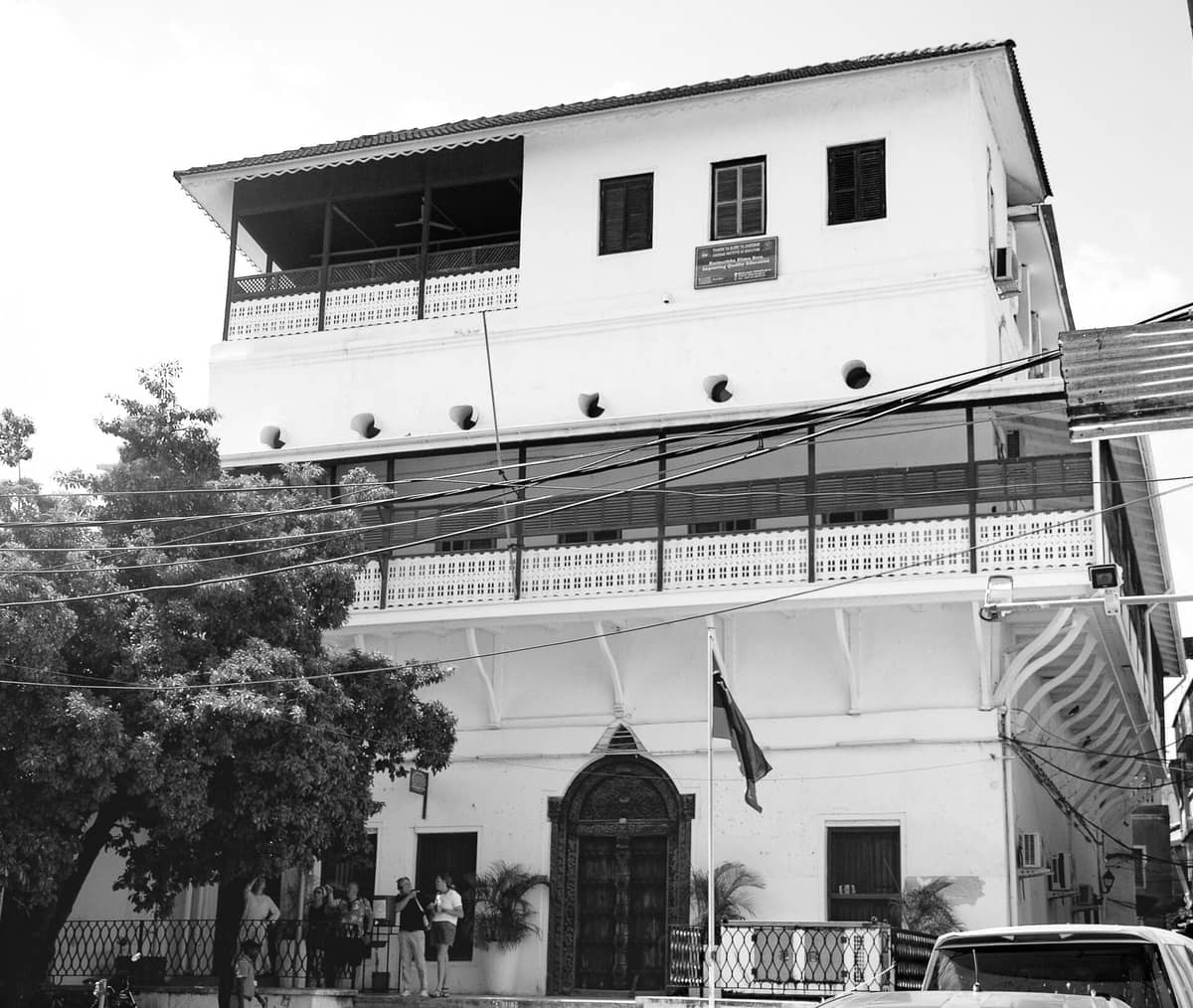
Tucked into a historic building on Hurumzi Street, the Princess Salme Museum tells the extraordinary life of a 19th-century Omani princess who fled Zanzibar, converted to Christianity, and wrote one of the Arab world's earliest women's memoirs. Small in scale but genuinely affecting, it is one of Stone Town's most thoughtful cultural stops.
Quick Facts
- Location
- 236 Hurumzi Street, Stone Town, Zanzibar (near Hotel Emerson)
- Getting There
- Walkable from the Stone Town ferry terminal; no direct dala-dala route needed
- Time Needed
- 45 minutes to 1.5 hours
- Cost
- Approx. US$5 self-guided, US$10 guided (verify locally; prices may differ)
- Best for
- History enthusiasts, readers, travelers interested in women's history and Swahili culture
Who Was Princess Salme, and Why Does She Matter?
Princess Salme bint Said was born in 1844, the daughter of Said bin Sultan, the powerful Sultan of Oman and Zanzibar who had made the island a hub of the Indian Ocean trade network. Her life was already unusual by the standards of 19th-century Arab royal society: she taught herself to read and write at a time when female literacy was exceptional among women of her class. But what made her story genuinely singular was what came next.
In the 1860s, Salme fell in love with a German merchant named Rudolph Heinrich Ruete, became pregnant, and fled Zanzibar by boat in 1866. She converted to Christianity, married Ruete in Aden in 1867, then settled in Hamburg and took the name Emily Ruete. Widowed just years later, she raised three children alone in Europe and eventually published her memoir, 'Memoiren einer arabischen Prinzessin' (Memoirs of an Arabian Princess), in 1886. It remains one of the earliest memoirs written by an Arab woman and a remarkable first-person account of 19th-century Zanzibar. The museum dedicated to her story sits within the same labyrinthine Stone Town streets where she spent her early life.
What the Museum Actually Contains
The Princess Salme Museum is compact, occupying roughly two rooms inside a historic Stone Town building. Do not arrive expecting a grand institution with climate-controlled galleries. What you find instead is something more intimate: personal artifacts, period photographs, reproductions of documents from Salme's life, and panels recounting her story in detail. The curated narrative moves chronologically, from her childhood in the Sultan's palace to her European years and eventual return visits to Zanzibar.
The guided tour, available for an additional charge, substantially deepens the experience. A knowledgeable guide can connect the objects and documents to broader currents of Zanzibari history, the Omani sultanate, and the social world Salme inhabited. For visitors with a genuine interest in the period, the guided option is worth it. Self-guided visitors will find the written panels informative, though the narrative density rewards slow reading rather than a quick scan.
💡 Local tip
Opening hours have been listed inconsistently across travel sources: some show Tuesday–Sunday 9am–5pm, others list weekday evening hours and weekend afternoon hours. Hours may also shift seasonally. Call ahead or ask at your accommodation before making a special trip.
Tickets & tours
Live prices and dates from our booking partner. If you book, we may earn a commission at no extra cost to you.
Zanzibar catamaran and snorkelling tour to Mnemba Marine Park
From 114 €Instant confirmationFree cancellationSerengeti National Park private three-day safari from Zanzibar
From 2.144 €Instant confirmationFree cancellationZanzibar north coast sunset dhow cruise
From 42 €Instant confirmationFree cancellationZanzibar Prison Island private tour
From 224 €Instant confirmationFree cancellation
The Building and Its Setting on Hurumzi Street
The museum occupies a building on Hurumzi Street, one of the more atmospheric lanes in Stone Town's upper residential quarter. This is not the tourist-heavy seafront strip around Forodhani Gardens. The streets here are narrower, quieter, and lined with the kind of carved wooden doors and crumbling coral-stone facades that define Stone Town's architectural character. The walk from the ferry terminal takes roughly 10 to 15 minutes on foot through a warren of alleys that are easy to get turned around in.
Hotel Emerson, a landmark boutique property, is very close to the museum and serves as a useful navigation anchor. If you are exploring the broader architectural heritage of the neighborhood, the museum visit pairs naturally with a stroll past Zanzibar's famous carved doors and the surrounding streetscape. The area around Hurumzi sees considerably less foot traffic than the waterfront, which contributes to the quieter, more contemplative atmosphere of the visit.
The building itself reflects the historic fabric of Stone Town: narrow doorways, steep internal stairs, and rooms that feel genuinely aged rather than reconstructed. One travel listing notes that the stairs and doorways may present challenges for visitors with mobility limitations, and that staff may assist, but step-free access is not confirmed. Factor this in if you have accessibility requirements.
How the Experience Changes by Time of Day
Morning visits, when the light in Stone Town's alleys is still cool and the streets relatively quiet, make for the most comfortable approach on foot. The surrounding neighborhood is peaceful at this hour, with the smell of spiced chai drifting from small tea stalls and the sound of calls to prayer lingering in the air. The museum itself is small enough that crowd dynamics rarely become an issue, but arriving outside the midday heat makes the walk there more pleasant.
Late-afternoon visits have their own appeal. The golden light on Stone Town's coral-stone walls during the hour before sunset is genuinely beautiful, and if you time the museum visit to finish around 5pm, you can walk down toward Forodhani Gardens as the food stalls begin setting up for the evening. The contrast between the quiet contemplation of the museum and the lively waterfront scene shortly after makes for a satisfying afternoon itinerary.
⚠️ What to skip
Stone Town's alleys are easy to navigate by GPS but can be genuinely confusing on the ground. Download an offline map before you go, or ask your accommodation to mark Hurumzi Street for you. Not all maps agree on alley names.
Situating Salme's Story in Zanzibar's Broader History
The 19th century was Zanzibar's most consequential era. Under Sultan Said and his successors, the island became the world's leading clove producer and the center of the East African slave trade, a history that Stone Town still carries in its stones. The Slave Trade Museum and the Mangapwani Slave Caves address the darkest dimensions of this period. The Princess Salme Museum sits at a different angle on the same era: it examines the interior world of the Omani elite who shaped and benefited from that order, through the eyes of a woman who ultimately rejected it.
Salme's memoir is historically valuable precisely because it is personal rather than political. She describes palace life, family relationships, the textures of daily existence, and the social codes that governed women of her class. Reading even excerpts before visiting the museum transforms the experience: the objects and photographs become anchored to a specific, articulate voice rather than floating in abstract historical context.
For travelers interested in the deeper layers of Swahili and Arab culture in Stone Town, the museum works well as part of a broader itinerary. Pair it with the House of Wonders for the sultanate's public face, and the Swahili culture guide for wider reading on what shaped this society.
Practical Details: Getting There, What to Bring, Photography
The museum is reached on foot from virtually anywhere in Stone Town. If you are arriving from the ferry terminal, head inland and uphill toward the Hurumzi area; most walks from the seafront take under 15 minutes. There is no dedicated parking nearby, and Stone Town's narrow streets make this irrelevant for most visitors anyway. Taxis and tuk-tuks can drop you at the edge of the pedestrian zone.
Admission prices reported in available sources range from approximately 10,000 TZS for self-guided entry to US$10 for a guided tour, but these figures are inconsistent across listings and may not reflect current rates. Bring both Tanzanian shillings and US dollars to cover your options, and confirm the price at the door.
Photography policies inside the museum should be confirmed with staff on arrival. The building's narrow rooms and natural lighting through carved window screens make for atmospheric images if photography is permitted. The carved doorway and exterior facade are worth photographing in their own right. Dress modestly, as you would throughout Stone Town: shoulders and knees covered is a sensible baseline in a predominantly Muslim neighborhood.
ℹ️ Good to know
If you want to get more from the visit, read at least a chapter of 'Memoirs of an Arabian Princess' before you go. Freely available in English translation online, it gives the objects in the museum a human voice they might otherwise lack.
Who Should Reconsider This Stop
The Princess Salme Museum is deliberately small and text-heavy. Travelers who prefer large, visually dramatic museums, or who find dense historical narrative exhausting after a morning of sightseeing, may feel the visit is over before it has fully begun. It is not the kind of attraction that impresses on spectacle alone: it rewards curiosity and prior interest in the subject. Visitors with significant mobility limitations should note the unverified accessibility situation and contact the museum in advance.
Travelers with children who are too young to engage with written panels and period photographs may find this a frustrating stop, though older children with an interest in history or storytelling can find Salme's life genuinely compelling. For family-focused itineraries, the broader Zanzibar with kids guide offers alternatives better suited to younger attention spans.
Insider Tips
- Read at least the opening chapters of 'Memoirs of an Arabian Princess' before visiting. The memoir is in the public domain and available free online. It transforms the museum from a collection of panels into a conversation with a specific, vivid person.
- The guided tour costs more but is worth it if you have genuine interest in the period. Guides can contextualize the exhibits within the broader political history of the Omani sultanate and Stone Town in ways the written panels do not.
- Opening hours are genuinely uncertain across sources and may shift seasonally or for private events. Ask your hotel to call ahead on your behalf the evening before you plan to visit.
- The Hurumzi Street area is a quieter, more residential part of Stone Town. Combine the museum visit with a slow walk through the surrounding alleys to see carved doors and coral-stone architecture without the crowds that gather near the waterfront.
- If you finish the museum around late afternoon, the walk down to Forodhani Gardens takes about 10 minutes and puts you there just as the evening food market begins setting up: a satisfying way to end a culturally rich afternoon.
Who Is Princess Salme Museum For?
- History enthusiasts with a specific interest in 19th-century East Africa and the Omani sultanate
- Readers and travelers interested in women's history and early memoir literature
- Visitors building a full-day Stone Town cultural itinerary who want depth alongside the major landmarks
- Solo travelers who appreciate quiet, contemplative museum spaces over crowded tourist attractions
- Anyone who has already read Salme's memoir and wants to stand in the context it describes
Nearby Attractions
Other things to see while in Stone Town:
- Darajani Market
Darajani Market, also known as Marikiti Kuu or the Great Market, is a principal market in Stone Town. Dating to 1904, it draws fishermen, spice traders, and local shoppers every morning in a scene that has changed little in over a century. Entry is free, and an hour here tells you more about Zanzibari daily life than any museum.
- Forodhani Gardens
Forodhani Gardens is a seafront park in the heart of Stone Town that doubles as Zanzibar's most celebrated street food market after dark. By day it's a quiet refuge of sea breezes and colonial-era architecture; by evening, dozens of grills and lantern-lit stalls transform it into the social and culinary center of the old city.
- Freddie Mercury Museum
Opened in 2019 on Kenyatta Road in Stone Town's Shangani quarter, the Freddie Mercury Museum occupies the building associated with his childhood. It is a small but carefully assembled tribute to his life, his music, and his largely overlooked Zanzibari origins — making it one of the most personally resonant stops in all of Stone Town.
- Hamamni Persian Baths
Built for Sultan Barghash between 1870 and 1888, the Hamamni Persian Baths were once the grandest public bathhouse in Zanzibar. Today the ruins stand as one of Stone Town's most atmospheric historic sites, offering a quiet counterpoint to the neighborhood's busier attractions.
Planning a trip? Discover personalized activities with the Nomado app.