Mangapwani Slave Caves: Zanzibar's Most Sobering Historical Site
Cut into coral rock about 20 km north of Stone Town, the Mangapwani Slave Chamber is a man-made underground cell used to conceal enslaved people after the 1873 abolition treaty. Compact, dark, and quietly devastating, it offers a confronting counterpoint to Zanzibar's coastal beauty and is one of the island's most important sites for understanding the full arc of the East African slave trade.
Quick Facts
- Location
- Mangapwani village, approx. 20 km north of Stone Town, Unguja
- Getting There
- Private taxi, hired car, or dala-dala toward Bububu then local directions; no direct public route — confirm locally
- Time Needed
- 1 to 2 hours, including both the natural cave and the slave chamber
- Cost
- Reported approx. US$5 (foreign adults), US$3 (children), TZS 3,000 (citizens) — unverified current prices; confirm on arrival
- Best for
- History seekers, educators, travellers wanting deeper context on Zanzibar's past
What Are the Mangapwani Slave Caves?
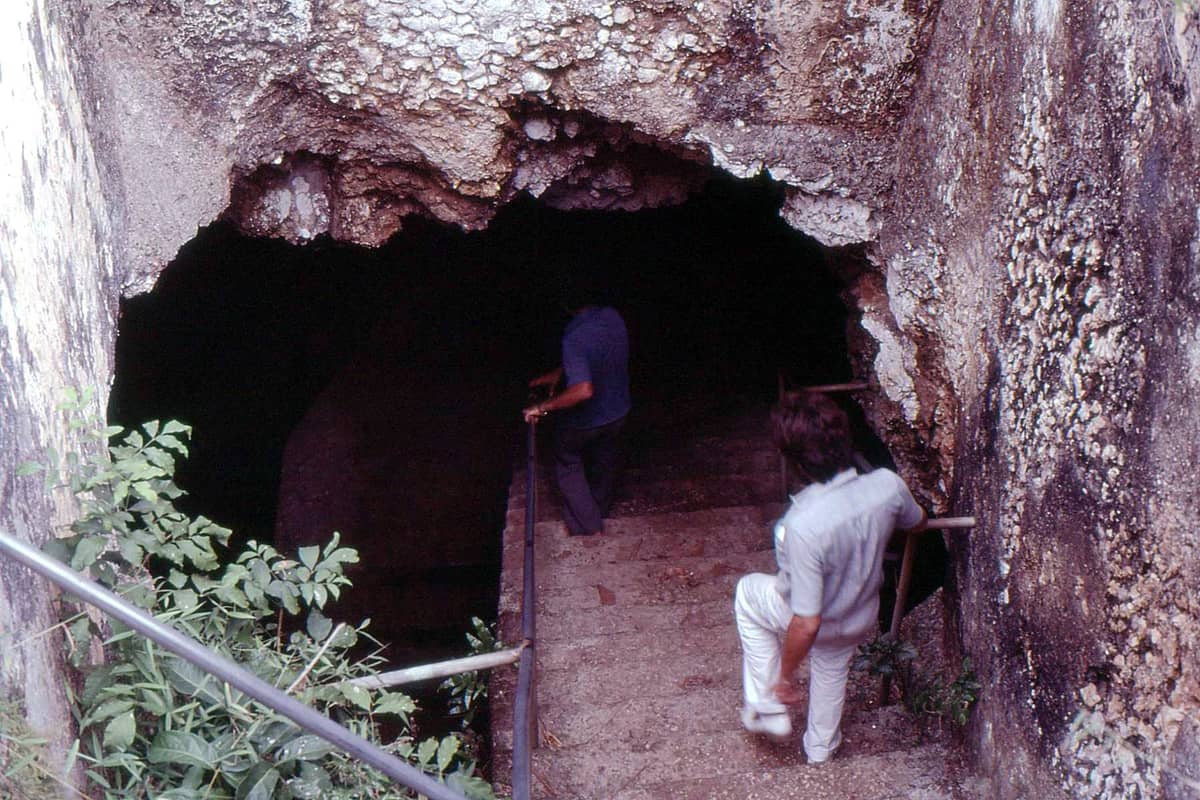
The Mangapwani Slave Chamber is a man-made underground cell carved into the coral rock of Zanzibar's northwest coast. It was built around 1880 by the trader Mohammed bin Nassor Al-Alwi, and its purpose was straightforward and grim: to hide enslaved people from British naval patrols after the 1873 Anglo-Zanzibari Treaty officially outlawed the slave trade. Illicit trafficking reportedly continued at this site until at least 1905, more than three decades after abolition.
The chamber itself measures approximately 3 metres wide, 14 metres long, and 3.5 metres deep. Those dimensions, read plainly on a page, give no real sense of what it feels like to descend into it. The air is noticeably cooler underground, the light drops away quickly, and the low ceiling and rough-cut walls close in around you in a way that is difficult to describe without sounding theatrical. It is not theatrical. It is simply what happens when you stand in the space where people were kept like cargo.
ℹ️ Good to know
There are two distinct features at Mangapwani: a natural coral cave (also sometimes called the slave cave, though its direct connection to the trade is disputed) and the man-made slave chamber used for concealment. Both are generally included in a single visit. The man-made chamber is the historically documented holding site.
The site sits within the broader history that is meticulously documented at the Slave Trade Museum in Stone Town. If you are building an itinerary around Zanzibar's slave history, the two sites complement each other directly: the museum provides the political and commercial architecture of the trade, while Mangapwani shows you the physical infrastructure used to evade accountability for it.
The Journey to Mangapwani
Getting to Mangapwani is part of the experience, and not always in a comfortable way. The route runs north from Stone Town along the coast road through Bububu and Chuini toward Bumbwini, then turns toward the shoreline via a narrow dirt road. The final approach is not well-signposted, and the road surface varies with the season. A private taxi or hired car is the most practical option for most visitors. Negotiate the fare in advance and ask the driver to wait, as there is no transport rank at the site.
Dala-dala minibuses serve the Bububu corridor from Stone Town, but the final stretch to the cave requires local directions and some walking. If you are comfortable navigating independently and have time, this is a reasonable option. If you are combining Mangapwani with other sites along the northwest coast, organising a half-day excursion through a Stone Town guesthouse or tour operator is often the most efficient approach.
💡 Local tip
Wear closed shoes with grip. The path down into the chamber involves uneven coral rock steps that can be slippery, particularly in humid conditions or after rain. A small torch or phone light is useful inside the chamber itself, as natural light does not penetrate fully.
Tickets & tours
Live prices and dates from our booking partner. If you book, we may earn a commission at no extra cost to you.
Zanzibar catamaran and snorkelling tour to Mnemba Marine Park
From 114 €Instant confirmationFree cancellationNyerere National Park two-day safari with two game drives
From 866 €Instant confirmationFree cancellationSerengeti National Park private three-day safari from Zanzibar
From 2.144 €Instant confirmationFree cancellationZanzibar north coast sunset dhow cruise
From 42 €Instant confirmationFree cancellation
Inside the Chamber: What You Will See
Visitors descend into the slave chamber via a narrow staircase cut into the rock. The chamber opens into a rectangular space with rough coral walls and a low ceiling. There are no exhibits inside the chamber itself, no panels or reconstructions. The site communicates almost entirely through its physical presence: the scale of the space, the darkness, the smell of damp stone, the knowledge of what it was used for.
A small stream runs through or near the chamber, which would have provided a water source for those held inside. That detail, when you are standing there, carries a particular weight. It means the chamber was designed to hold people for extended periods, not merely overnight. The practical logistics of concealment were thought through carefully by those who built it.
The nearby natural coral cave is a separate feature. It is a natural formation rather than a man-made structure, and while it is sometimes grouped into the same narrative, its specific documented role in the slave trade is less firmly established. It is worth visiting as part of the same stop, and the contrast between the natural cave and the deliberately engineered holding chamber is itself instructive.
⚠️ What to skip
Visitors with cardiac conditions or breathing difficulties should note that the descent involves steps into a confined underground space with limited airflow. If in doubt, check with a local guide before descending. The site has no formal accessibility infrastructure for visitors with mobility limitations.
Historical Context: Why This Site Matters
The 1873 treaty between Britain and the Sultan of Zanzibar Barghash bin Said formally prohibited the maritime slave trade and ordered the closure of Stone Town's main slave market. That market was demolished, and a cathedral now stands on its site. But abolition on paper did not end the trade in practice. Zanzibar had been the Indian Ocean's dominant slave-trading hub for centuries, and the economic structures built around that trade did not dissolve with a treaty signature.
Sites like the Mangapwani chamber were the physical answer to British enforcement. They allowed traders to continue operating by hiding enslaved people from coastal patrols. The trade reportedly continued at Mangapwani until 1905, more than three decades after the treaty. Understanding this gap between legal abolition and actual practice is essential context for visiting any of Zanzibar's slave history sites. The full history of the slave trade in Zanzibar involves layers of complicity, enforcement, and evasion that the Mangapwani chamber makes viscerally real in a way that text alone cannot.
The chamber is attributed specifically to Mohammed bin Nassor Al-Alwi, which gives the site a named historical actor rather than an anonymous past. That specificity matters. This was not an abstract system. It was built and operated by identifiable individuals with identifiable economic interests. Keeping that in mind while you visit changes how you process the experience.
When to Visit and What to Expect
Hours at the site are listed in some older sources as 8:30 to 10:30 and 13:30 to 17:30 daily, but this information dates to 2012 and should not be relied upon without local verification. Confirm current opening hours with your accommodation in Stone Town or with a local tour operator before making the trip. Arriving to find the site closed after a 20 km drive is a frustrating outcome that is easily avoided.
Morning visits suit the site well. The light on the approach road is more pleasant before midday, and the heat in the chamber itself, while cooler than outside, can feel more oppressive in the afternoon. Weekday mornings tend to be quieter than weekends. Group tours from Stone Town, which are common, typically arrive mid-morning, so visiting before 9 am or after 3 pm gives you more time alone in the space.
Admission fees reported in a 2022 source were approximately US$5 for foreign adult visitors, US$3 for children, and TZS 3,000 for Tanzanian citizens. These figures are not verified as current and may have changed. Bring small bills in both Tanzanian shillings and US dollars to cover the entry fee regardless of what currency is preferred on the day.
💡 Local tip
Photography inside the chamber is possible but challenging. The low light requires a phone or camera that handles darkness well, and flash photography, while technically feasible, feels tonally inappropriate to many visitors. Spend time in the space before reaching for a camera.
Fitting Mangapwani Into Your Zanzibar Itinerary
Mangapwani sits on the northwest coast, which means it pairs logically with Stone Town as a half-day extension. Many visitors combine it with the slave history sites in the city centre, including the Slave Trade Museum and the Old Dispensary, to build a coherent historical day. The drive along the coast road also passes through agricultural and fishing villages that offer an unreconstructed view of everyday Zanzibar life.
If you are planning a broader itinerary, the site works well as a morning stop before heading further north toward the beach resort areas. It is a different kind of travel day from a snorkelling trip or a spice farm visit, and it requires a different mental posture. Travellers who try to fit Mangapwani between two light tourist activities sometimes report feeling emotionally whiplashed. Give it space in your schedule.
For those building a focused itinerary around Zanzibar's complex history, the one-week Zanzibar itinerary offers suggestions for balancing historical sites with the island's other offerings without reducing either to a footnote.
Who Should Skip This Site
Travellers who are visiting Zanzibar purely for beaches and water sports may find the 40-minute round trip drive, combined with admission fees and the emotional weight of the site, difficult to justify against other options. That is a legitimate choice, though it is worth noting that this site represents something genuinely irreplaceable in terms of what it communicates about the island's history.
Children can visit, but parents should consider age and emotional readiness carefully. The site does not have graphic displays or graphic language, but the physical experience of the chamber itself is affecting in ways that are hard to prepare a young child for. Older children and teenagers who have some prior understanding of the slave trade's history tend to engage with the site meaningfully.
Anyone with significant mobility limitations should be aware that the chamber involves an uneven descent on coral stone steps with no handrails or accessibility infrastructure. The site as currently maintained does not accommodate wheelchair users or those with significant difficulty navigating stairs.
Insider Tips
- Confirm opening hours the day before with your hotel or a local tour operator. Published hours from older sources are unreliable, and the site is not in a location where showing up and waiting is a good strategy.
- The natural cave near the slave chamber collects water and is home to a small population of fruit bats. If you hear rustling in the upper reaches of the natural cave, this is why. The smell is noticeable.
- A local guide, rather than an independent visit, adds significant value here. The chamber itself has no interpretive panels, and a knowledgeable guide can contextualise the site within the broader history of the Arab slave trade and British enforcement efforts in ways that transform the experience.
- If you are driving yourself, the final dirt road to the site can become challenging after heavy rain. Check road conditions locally during the rainy season before attempting the approach in a standard vehicle.
- The site receives fewer visitors than Stone Town's slave history landmarks, which means you can often have the chamber to yourself for extended periods. This solitude is worth protecting: arrive outside peak group-tour windows if possible.
Who Is Mangapwani Slave Caves For?
- History and heritage travellers seeking concrete, physical engagement with Zanzibar's slave trade past
- Educators and students who want to understand how abolition treaties were systematically evaded
- Travellers who have already visited the Stone Town slave sites and want to go further into the subject
- Photographers interested in subterranean and low-light documentary work
- Anyone who wants to understand Zanzibar beyond its coastal tourist infrastructure
Planning a trip? Discover personalized activities with the Nomado app.