Mangapwani is a small coastal village on Zanzibar's northwest coast, about 20 to 25 kilometres north of Stone Town. It is best known for two historically significant sites connected to the island's slave trade, a natural coral cave, and a long beach that sees a fraction of the tourist traffic found at Nungwi or Kendwa. For travelers with an interest in Swahili Coast history or simply wanting a quieter stretch of shore, Mangapwani offers something genuinely different.
Mangapwani sits on Zanzibar's northwest coast where the tourist infrastructure thins out and the historical weight of the island becomes more tangible. The village is anchored by two of Zanzibar's most significant slave-trade sites and a coral cave, all set against a beach that remains quieter than the resorts further north. It is not an all-day destination for most visitors, but for those who make the trip, it reshapes how they understand the island.
Orientation
Mangapwani is located on the northwest coast of Unguja, the main island of Zanzibar, roughly 20 to 25 kilometres north of Stone Town. The road from Stone Town follows the northwest coast via Bububu, Chuini, and Bumbwini before turning toward the sea at Mangapwani. The village sits in a corridor between the coast road and the Indian Ocean, with the landmark sites spread along a short section of shoreline.
In terms of the wider island map, Mangapwani is south of Kendwa and Nungwi, the major resort areas at the northern tip, and north of Stone Town's urban limits. It occupies a stretch of coast that is distinctly rural: coconut palms, fishing boats pulled up on sand, and small clusters of village housing rather than hotel complexes. Visitors arriving from Stone Town will notice the shift from urban density to coastal quiet within about thirty minutes of leaving the city.
For travelers planning a broader trip around the island, Mangapwani fits naturally into a route that also takes in Stone Town to the south, and can be combined with a day heading further up to Kendwa or Nungwi on the same northward run.
Character & Atmosphere
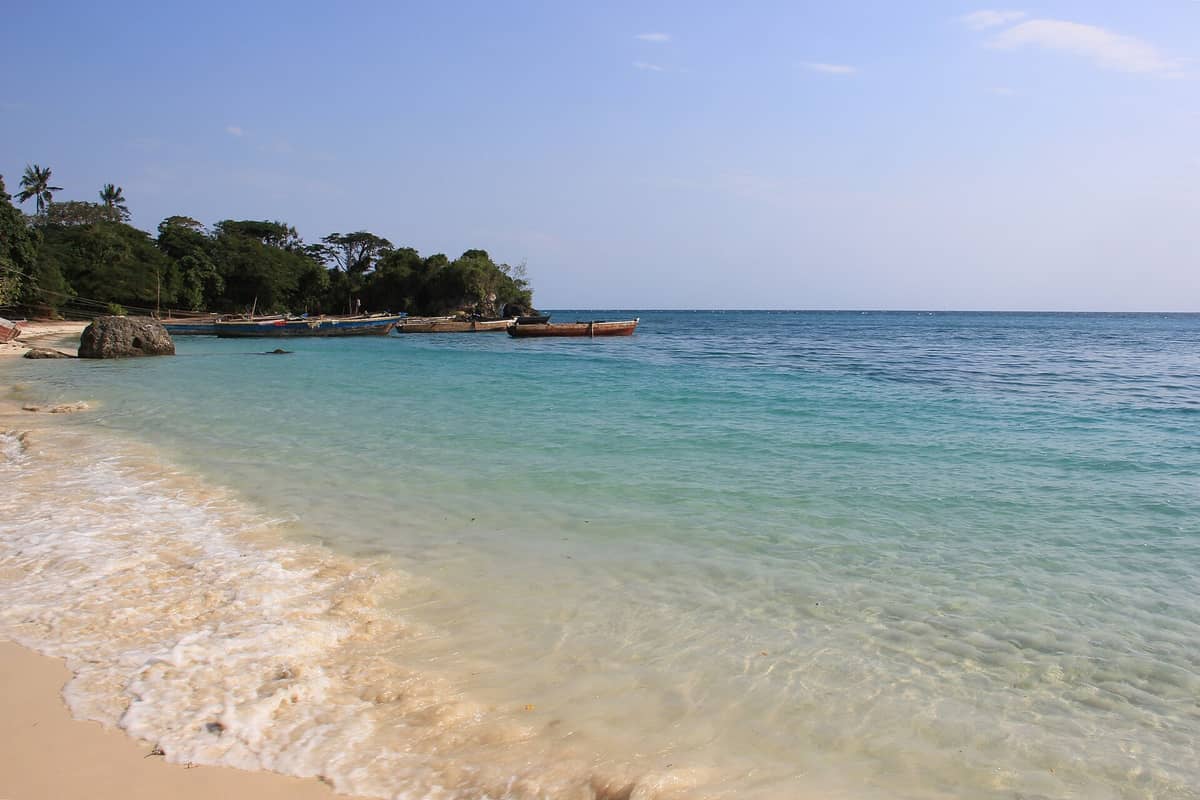
Mangapwani does not feel like a tourist village in the way that parts of Stone Town or the northern beach resorts do. In the early morning, the beach draws local fishermen rather than sunbathers, and the light is flat and grey before the equatorial sun asserts itself. Fishing boats sit at the water's edge, nets are spread for checking, and the smell of salt and seaweed comes in with the breeze off the channel. There is very little commercial noise at this hour.
By midday, when tour vehicles arrive from Stone Town, the atmosphere shifts slightly but never dramatically. The slave chamber and coral cave see a modest flow of visitors through the afternoon, and the beach is occasionally claimed by small resort groups, but the overall feeling remains low-key. The absence of beach vendors and touts is noticeable, especially for anyone who has spent time on the more visited stretches of the Zanzibar coast.
As the afternoon light softens and tour groups leave, Mangapwani reverts to its local rhythm. The beach takes on a different quality in the golden hour: the water in this part of the channel runs from turquoise to dark blue at the reef edge, and the lack of crowds makes it one of the more photogenic coastal moments on the northwest coast. After sunset, Mangapwani has almost no tourist-facing nightlife. The village is quiet and dark, and visitors who are not staying locally will already be heading back toward Stone Town.
ℹ️ Good to know
Mangapwani is primarily a half-day excursion from Stone Town rather than a base for a longer stay. Most visitors arrive by mid-morning, spend two to three hours at the historical sites and beach, then return south before late afternoon.
What to See & Do
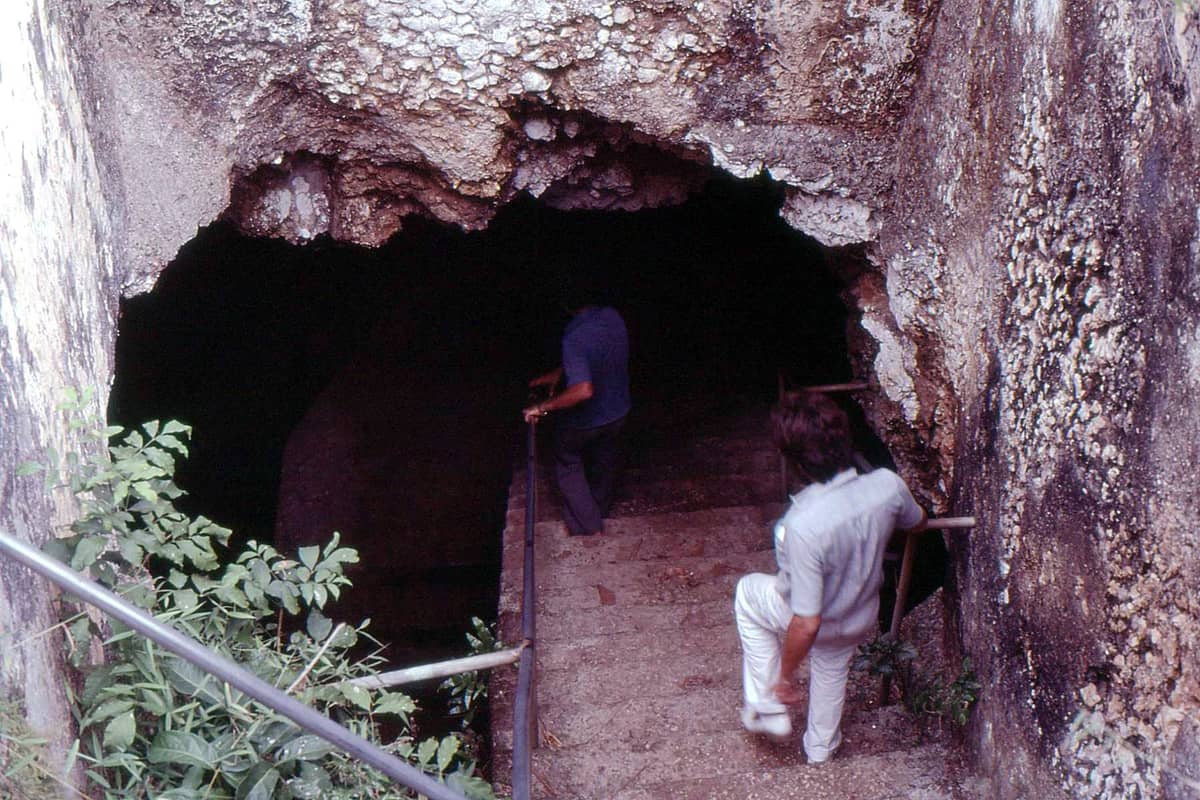
The two principal reasons to visit Mangapwani are its historical sites: the Mangapwani Coral Cave and the Mangapwani Slave Chamber. These are distinct and separate locations along the coast, and both are worth visiting if you are making the journey from Stone Town. The coral cave is a natural formation rather than a man-made structure, reached by a short path from the road. Inside, a pool of freshwater collects at the bottom, and the cave may have been used as a hiding place for enslaved people after the trade was officially abolished in 1873. The geology is striking on its own terms: the cave is formed from coral limestone, and the light filters down through a central opening in the roof.
The slave chamber, a short distance further along the coast, is a more deliberately confronting site. It is a small, low-ceilinged stone chamber cut into coral rock, used to hold enslaved people after the formal abolition of the slave trade in 1873, when the trade continued illegally. Standing inside the chamber, the dimensions make the historical reality physical in a way that reading about it does not. For travelers who want to understand Zanzibar's relationship with the slave trade more broadly, this site pairs well with the Slave Trade Museum and the Mangapwani Slave Caves entry in our attractions guide.
Beyond the historical sites, the beach itself is the main draw. Mangapwani Beach is wider and less manicured than the resort beaches further north, which is part of its appeal. The sand is pale and the water is generally calm on the western coast, where the channel provides more shelter than the exposed east coast. There is no public lifeguard service, and swimming conditions should be assessed on arrival, particularly with regard to tidal movement. For context on the broader range of coastal experiences available on the island, the best beaches in Zanzibar guide gives a useful comparison.
Mangapwani Coral Cave: Mangapwani Coral Cave: a natural freshwater cave, possibly used as a hideout during the illegal slave trade period
Mangapwani Slave Chamber: a preserved stone holding chamber from the post-abolition illegal trade period
Mangapwani Beach: a quieter stretch of northwest-coast shore suited to relaxed swimming and walking
Coastal walking between the cave and chamber sites: a short but rewarding route along the shoreline
💡 Local tip
Combine Mangapwani with a spice farm visit on the same day. Several operators run circuits that include both, which makes the most of the drive out from Stone Town and adds context to different aspects of Zanzibar's history.
Eating & Drinking
Mangapwani has very limited food and drink infrastructure by the standards of other Zanzibar visitor areas. There is no restaurant strip and no café culture to speak of. Some visitors find simple refreshments near the beach, particularly soft drinks and coconuts, but this is informal and not guaranteed to be available on every day or at every hour. One or two small establishments near the beach have served light meals and drinks to tour groups, but these should be treated as supplementary rather than planned stops.
Practically, the best approach is to eat in Stone Town before departure or after returning, and to carry water and snacks for the visit itself. If you are on a guided tour, the operator may include a meal stop at one of the beach lodges or hotels along the northwest coast corridor, which tend to offer simple grilled fish, rice, and local vegetables at reasonable prices.
For a thorough understanding of what to eat and where across the island, the Zanzibar food guide covers everything from Stone Town's Forodhani night market to the seafood restaurants up the coast.
⚠️ What to skip
Do not rely on finding food or drinking water at the cave and chamber sites themselves. Bring sufficient water for the visit, especially in the hot season. The walk between sites in midday heat is short but exposed.
Getting There & Around
The most straightforward way to reach Mangapwani from Stone Town is by taxi or private vehicle. The journey takes roughly 30 to 45 minutes depending on traffic leaving the city and road conditions on the northwest coastal route. Taxis can be negotiated in Stone Town for a return trip with waiting time, which is the most practical arrangement since there is no obvious reason to stay in Mangapwani after visiting the sites. Agree the full fare including waiting time before departure.
Daladalas from Mwanakwerekwe market are a budget option, but the journey can be slow; verify the current route and schedule locally before relying on public transport for this trip. The dala-dala will set you down on the main road rather than at the beach itself, requiring a short walk toward the coast. Verify the current route and schedule locally before relying on public transport for this trip.
Many visitors reach Mangapwani as part of an organised day tour from Stone Town. This often includes the historical sites alongside other northwest-coast stops, and is a practical way to cover the distance without arranging independent transport. For broader transport planning across the island, see the getting around Zanzibar guide.
Once at Mangapwani, the sites are navigated on foot. The coral cave and slave chamber are separate sites along the coast; check the distances and access route locally before planning to walk between them. There is no need for onward transport within the village itself. Note that there is no app-based ride-hailing operating reliably in Zanzibar at the time of writing, so do not plan to call a car remotely at the end of your visit.
Where to Stay
Mangapwani is not a significant accommodation hub. There is at least one beach lodge operating on this stretch of the northwest coast, which has historically catered to small groups and those wanting seclusion rather than resort facilities. Staying in Mangapwani itself makes most sense for travelers who want to be far from Stone Town's noise, have their own transport, and are comfortable in a very low-key environment with limited services.
For most visitors, particularly those on a one-week itinerary or shorter, Stone Town makes a better base for exploring the northwest coast. It offers significantly more accommodation choice, food options, and transport connections. The where to stay in Zanzibar guide covers the full range of options across the island, from Stone Town guesthouses to the northern beach resorts at Nungwi and Kendwa.
Travelers seeking a quiet northwest-coast stay with more infrastructure than Mangapwani offers will generally find better options a little further up the coast, where small boutique properties and budget guesthouses operate with more consistent services than what is available in the village itself.
Honest Assessment: Is Mangapwani Worth the Trip?
Mangapwani is not for everyone. If your priority is beach facilities, nightlife, water sports, or a wide choice of restaurants, this is not your destination. The village has none of those things. What it does have is historical depth and quiet, and for a certain kind of traveler, that combination is exactly the point.
The slave-trade sites here carry genuine weight that is harder to feel at a museum display. The chamber is small and dark and requires no imagination to understand what it was for. Visiting it alongside sites like the Slave Trade Museum in Stone Town provides a fuller picture of the geography of the trade, connecting the holding points inland and along the coast to the dhow routes that carried people away. For anyone following the broader arc of Zanzibar's history, the Zanzibar slave history guide is the right companion.
The beach is a genuine bonus. It is not the finest beach on the island in terms of sand quality, but its lack of crowds and its northwest aspect, which gives it calm water and pleasant afternoon light, make it a worthwhile stop if you are already at the historical sites. The coral cave is interesting regardless of its history; the geology alone justifies a look. Together, the three elements of cave, chamber, and beach make for a morning or early afternoon that feels substantively different from the more polished tourist circuits elsewhere on the island.
TL;DR
Mangapwani is a village on Zanzibar's northwest coast, about 20 to 25 km north of Stone Town, best reached by taxi or arranged tour in 30 to 40 minutes.
The two principal attractions are the Mangapwani Coral Cave and the Mangapwani Slave Chamber, both directly connected to the island's slave-trade history and distinct from one another in character.
The beach is quieter and less developed than the resort beaches at Nungwi and Kendwa, with no lifeguard service; swimming conditions should be checked on arrival.
Food and drink infrastructure is minimal; carry water and eat before or after the visit rather than relying on finding facilities at the site.
Best suited to history-focused travelers, those wanting an uncrowded beach stop, and visitors combining it with a Stone Town day trip or a spice farm visit; not suited to travelers seeking nightlife, restaurants, or beach facilities.
Zanzibar's beaches are not all equal. Tides, winds, crowds, and access vary dramatically between the north, east, and west coasts. This guide breaks down every major beach so you can pick the right one for how you travel.
Zanzibar's tropical monsoon climate shapes everything from beach conditions to hotel prices. This guide breaks down every month of the year so you can choose the right time for your trip — whether you're chasing perfect skies, dolphin season, or lower prices.
Zanzibar's main island is just the beginning. These day trips take you to pristine coral reserves, ancient ruins, wildlife sanctuaries, and remote beaches that reveal a completely different side of the archipelago. Here are the best excursions worth leaving your resort for.
Freddie Mercury was born in Zanzibar in 1946, and Stone Town still carries the traces of his early life. This guide covers the museum, the birthplace controversy, the Shangani heritage trail, and exactly what to expect when you visit.
From the airport taxi to a dala-dala rattling toward Nungwi, transport in Zanzibar requires some planning. This guide covers every option available on Unguja, with practical advice on costs, routes, and what to avoid.
Zanzibar attracts hundreds of thousands of visitors each year, and most have uneventful trips. But the island has real risks that travel blogs often downplay. This guide covers crime patterns, health hazards, common scams, transport dangers, and practical precautions so you can travel with clear eyes.
Zanzibar delivers a rare combination: a UNESCO-listed historic city, diverse coastlines, and Indian Ocean marine life, all within a few hours of mainland Tanzania. But it is not the right destination for everyone. Here is what you actually need to know before booking.
Seven days is enough time to experience Zanzibar properly — the historic labyrinth of Stone Town, the white-sand beaches of the north and east coasts, a spice tour through the island's interior, and the Indian Ocean reefs just offshore. This itinerary is built around realistic travel times, not a fantasy schedule.
Stone Town is one of East Africa's most historically layered urban environments, a UNESCO World Heritage Site where Swahili, Arab, Indian, and colonial influences converge in a single square kilometre. This self-guided walking tour covers the essential landmarks, practical logistics, and practical observations you need to explore it well.
Zanzibar packs an extraordinary range of experiences into a relatively small island. This guide covers the best things to do in Zanzibar across history, beaches, wildlife, food, and water sports — with clear advice on what's worth your time and what to skip.
Choosing where to stay in Zanzibar is the single most important decision of your trip. The island spans over 1,500 square kilometres, and the right base depends entirely on what you want: history, nightlife, reef diving, kite surfing, or pure seclusion. This guide breaks down every major area with a clear assessment of who each one suits.
Zanzibar's all-inclusive resort scene spans barefoot-luxury bungalows on the north coast to family-friendly complexes along the east. This guide breaks down what's genuinely included, which areas suit which traveler, and the pricing realities you won't find on most booking sites.
Zanzibar has a reputation as a luxury destination, but it is entirely possible to travel the island on a tight budget. This guide covers cheap transport, affordable places to stay, where to eat well for under $5, and which attractions are genuinely worth paying for.
Zanzibar's coral reefs rank among the Indian Ocean's most accessible and biodiverse. This guide covers the top snorkelling sites, what you'll actually see underwater, current pricing, the best seasons to go, and what responsible tourism looks like in practice.
Most travelers treat Zanzibar and Dar es Salaam as an either/or choice. They don't have to be. This guide breaks down exactly how to connect the two destinations, what to spend your time on in each, and how to structure the trip so neither feels rushed.
Zanzibar offers some of the Indian Ocean's most accessible reef diving, from the shallow coral gardens of Mnemba Atoll to the deeper, current-swept walls of Leven Bank. This guide covers the best dive sites, what to pay, when to go, and how to avoid the pricing traps that catch first-time visitors.
Zanzibar's cuisine is one of the most distinctive in East Africa, shaped by centuries of Arab, Indian, and Swahili influence. This guide covers the dishes worth seeking out, where to eat them, what to pay, and a few traps to avoid.
Zanzibar rewards the curious traveller. Beyond the famous beaches and spice tours, the island holds coral-cave slave history, crumbling sultan palaces, a centuries-old mosque, and a sandbank that appears from the sea at low tide. This guide covers the experiences most visitors never find.
Zanzibar delivers the kind of honeymoon backdrop that is hard to fabricate: white coral-sand beaches, warm turquoise water, historic Stone Town, and a spice-scented coastline. This guide covers where to stay, what to do, when to go, and what to watch out for so you can plan with confidence.
Three days in Zanzibar is enough to cover the island's highlights if you plan smart. This itinerary focuses on Stone Town, a spice tour, one great beach, and an island excursion, without wasting hours on unnecessary cross-island transfers.
December brings warm seas, festive energy, and the tail end of the short rains to Zanzibar. Here is what to honestly expect from the weather, where to spend Christmas and New Year, and how to avoid the peak-season pitfalls that catch first-timers off guard.
July sits in the heart of Zanzibar's dry season, making it one of the most popular months to visit. Here's what the weather actually looks like, what cultural events are happening, which beaches perform best, and what to plan ahead for.
Paje is one of the Indian Ocean's most reliable kitesurfing destinations, with two distinct wind seasons, a sheltered reef lagoon, and schools catering to every level. This guide covers the wind windows, tide realities, lesson costs, and practical logistics so you can plan a session that actually works.
Zanzibar delivers a rare combination: Indian Ocean beaches, rich Swahili culture, and some of East Africa's most impressive resort properties. This guide breaks down where to stay, what to expect at each price point, which coasts suit which traveler, and how to avoid the overpriced traps that catch first-timers.
From the fish stalls of Darajani to the grill smoke of Forodhani Gardens at night, Zanzibar's markets are among the most rewarding experiences on the island. This guide covers every major market, what to buy, what to skip, and how to navigate it all without overpaying.
Zanzibar after dark is more varied than most travelers expect. This guide breaks down where to go, what to expect, and how to make the most of evenings across Stone Town, Nungwi, Kendwa, and the southeast coast.
Zanzibar was the largest slave-trading port in East Africa. This guide covers the key sites, museums, and historical context that make Stone Town one of the most significant places to understand this chapter of world history — including what to expect, what gets glossed over, and how to visit responsibly.
Zanzibar rewards independent travelers with spice-scented alleys, turquoise reefs, and some of East Africa's most sociable guesthouses. This guide covers everything you need to plan a confident solo trip: the safest areas, realistic costs, cultural etiquette, and how to move around the island without a group.
A Zanzibar spice tour is one of the most rewarding half-days you can spend on the island, but the experience varies enormously depending on which farm you visit, which operator you book with, and what time of year you go. This guide covers all of it: the best farms near Stone Town, clear price breakdowns, seasonal considerations, and what separates a genuinely good tour from a rushed photo-op.
Stone Town's UNESCO-listed streetscape is one of the most architecturally layered urban environments in the Indian Ocean world. This guide breaks down the building styles, carved door traditions, construction materials, and cultural influences that shaped the historic quarter, with practical advice on what to look for and how to explore it.
Zanzibar's culture is one of the most layered in East Africa, shaped by centuries of Arab, Persian, Indian, and African exchange along the Swahili coast. This guide covers what to wear, how to behave, when to visit, and what most tourists overlook about life here.
Combining a Tanzania safari with a Zanzibar beach stay is one of the most rewarding travel itineraries in Africa. This guide covers the logistics, best timing, route options, costs, and common mistakes to avoid when planning your Tanzania and Zanzibar combo trip.
Zanzibar works surprisingly well as a family destination, but it takes some planning. This guide covers the best beaches, wildlife encounters, cultural experiences, and practical logistics for traveling with children on Unguja, the main island.