Kidichi Spice Farm & Persian Baths: Zanzibar's Overlooked Slice of Omani History
A few kilometers inland from Zanzibar's northern coast road, the Kidichi Persian Baths preserve a rare piece of Omani sultanate architecture, complete with decorative plasterwork and domed ceilings. Paired with a working spice farm, this site offers a quieter, more considered alternative to the busier spice tours closer to Stone Town.
Quick Facts
- Location
- Near Kidichi village, northeast of Zanzibar Town, Unguja island
- Getting There
- Head north from Zanzibar Town toward Bububu; turn right at the police station and continue roughly 4 km inland. Hire a dala-dala, taxi, or arrange through a tour operator.
- Time Needed
- 1.5 to 3 hours, depending on whether you include a guided spice walk
- Cost
- Admission fees not currently verified. Confirm prices locally before visiting. Spice farm walks may carry a separate guide fee.
- Best for
- History enthusiasts, architecture lovers, spice tour seekers, travelers wanting a crowd-free morning
What Kidichi Actually Is
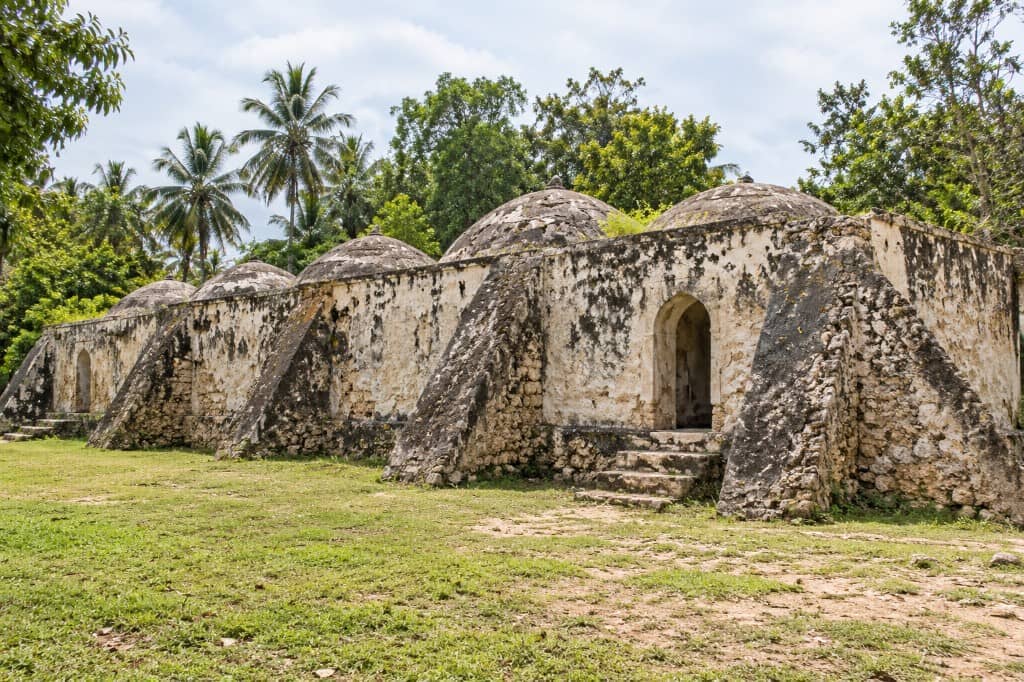
Most visitors to Zanzibar associate spice tours with a well-organized circuit of farms near the town of Kizimbani. Kidichi sits slightly apart from that circuit, and the distinction matters. The site combines a working spice and fruit garden with a notable surviving example of Persian-style bathhouse architecture in East Africa: the Kidichi Persian Baths, built in the 19th century during the height of Omani rule over the island.
The baths were associated with Shihrazad, a Persian wife of Sultan Sayyid Said, the Omani ruler who relocated his court to Zanzibar. A date inscription in the plasterwork reads 1247 AH, corresponding to 1832 CE, though some sources place construction later, in the mid-19th century. A date inscription in the plasterwork reads 1247 AH, corresponding to 1832 CE, though other sources give 1850 as the construction date. Either way, the structure predates many of the more celebrated monuments in Stone Town and survives in remarkably good condition given its age and the island's humid climate.
ℹ️ Good to know
Practical note: No official website exists for this site, and admission prices and opening hours are not reliably documented. Verify fees and access locally or through your accommodation before making the trip.
The Persian Baths: Architecture and Detail
The bathhouse itself is compact but densely detailed. The structure follows a hammam layout, with domed chambers, ventilation shafts, and decorative stucco relief work covering the interior walls. Dome thickness at the vent shafts is approximately 430 mm. Light enters through small oculi cut into the domes, casting shifting patterns across the plasterwork at different times of day.
The entrance vestibule is reached by descending two steps from ground level, which immediately signals the interior's insulating design. Inside, the air is cooler and carries the faint earthiness of old lime plaster. The decorative friezes along the upper walls blend geometric patterns with floral motifs, a style that reflects Persian and Omani influence rather than the Swahili architectural vocabulary seen throughout Stone Town's street facades.
For travelers already interested in Zanzibar's layered architectural heritage, the baths function as a counterpoint to the carved wooden doors and coral-stone townhouses documented in the Zanzibar Stone Town architecture guide. Where Stone Town shows the commercial and residential face of Omani rule, Kidichi reveals the private and ceremonial.
💡 Local tip
Photography tip: Arrive in the morning when angled light enters the dome oculi at a low angle, creating the clearest illumination of the plasterwork. By midday, the interior can feel flat and overlit.
Tickets & tours
Live prices and dates from our booking partner. If you book, we may earn a commission at no extra cost to you.
Zanzibar catamaran and snorkelling tour to Mnemba Marine Park
From 114 €Instant confirmationFree cancellationNyerere National Park two-day safari with two game drives
From 866 €Instant confirmationFree cancellationSerengeti National Park private three-day safari from Zanzibar
From 2.144 €Instant confirmationFree cancellationZanzibar north coast sunset dhow cruise
From 42 €Instant confirmationFree cancellation
The Spice Farm: What to Expect on the Walk
The spice garden surrounding the baths is the other half of the visit. Guides typically lead a circuit through plots of cloves, nutmeg, cinnamon, vanilla, cardamom, black pepper, and lemongrass, along with fruit trees including jackfruit, breadfruit, and ylang-ylang. The walk is sensory and interactive. Guides crush leaves between their fingers, invite visitors to smell raw spices on the plant, and offer small tastes where appropriate.
What separates Kidichi from the more frequented spice farms is scale and atmosphere. The crowds are smaller, sometimes nonexistent in the early morning. The vegetation is dense enough that the farm feels genuinely enclosed by greenery rather than staged for tourism. The tradeoff is that infrastructure is minimal: there is no cafe, no gift shop with air conditioning, and no printed guide map. Bring water.
If you want a broader picture of how the spice trade shaped Zanzibar's economy and identity, the Zanzibar spice tour guide covers the full context across multiple farms and historical sites.
How the Experience Changes by Time of Day
Morning visits, roughly 8 to 10 AM, offer the clearest light inside the baths and the coolest temperatures for the outdoor spice walk. Bird activity in the surrounding trees peaks early, and the farm smells sharpen when dew is still on the leaves. If you are coming from Stone Town, allow extra time for the drive north and inland; travel time depends on traffic and the exact route., making an early start entirely practical.
Midday is when the site is warmest and, paradoxically, often emptiest. Larger tour groups tend to move in mid-morning convoys, so arriving just after noon can mean having the baths almost to yourself. The trade-off is heat: the outdoor spice walk becomes uncomfortable in direct sun without a hat and water. The bathhouse interior offers genuine relief from the midday temperature.
Late afternoon light is soft and photogenic in the garden, but the baths interior loses its best illumination. Check locally whether the site remains accessible in late afternoon, since hours are not reliably documented and conditions can vary by season.
Getting There and Practical Logistics
Kidichi is located northeast of Zanzibar Town, about 4 km inland from the main northern coast road. The standard approach from Stone Town is to head north on the Bububu road and turn right at the police station, then follow the inland road for approximately 4 km. The baths sit just off a dirt road on the right side. The turn is easy to miss, and signage is inconsistent, so it is worth confirming the exact turn with a local driver or your accommodation.
Most visitors reach Kidichi by taxi or as part of an organized spice tour that combines multiple stops in a single circuit. Dala-dala minibuses run north from Zanzibar Town toward Bububu, but completing the final inland leg without a vehicle involves a significant walk on an unpaved road in open sun. For independent travelers, hiring a taxi for a half-day and combining Kidichi with nearby sites is the most efficient approach. See the getting around Zanzibar guide for current dala-dala route details and taxi negotiation advice.
⚠️ What to skip
The road leading to the baths is unpaved and can become muddy during heavy rain. If visiting in the long rains season (typically April to May), confirm the road is passable before booking a private taxi for a solo trip.
Historical Context: Omani Rule and What Kidichi Represents
The Omani Sultanate's influence over Zanzibar between the 17th and 19th centuries left a layered architectural and cultural legacy across Unguja. Sultan Sayyid Said's decision to make Zanzibar his primary seat of power in the 1840s accelerated construction of palaces, bathhouses, and administrative buildings that drew on Persian, Arab, and Indian design traditions simultaneously.
The Kidichi Persian Baths are one component of this legacy. Comparable in significance are the Hamamni Persian Baths in Stone Town, which were built slightly later and served a more public function. The Kidichi baths were private, built for the Sultan's wife, which explains their more refined interior decoration and secluded inland location. The contrast between the two sites illustrates how Omani elites used architecture to differentiate public ceremony from private life.
The same period that produced Kidichi also produced the slave trade infrastructure that shaped Zanzibar's economy and left a darker architectural record across the island. For travelers interested in the full sweep of this history, the Zanzibar slave history guide and the Slave Trade Museum in Stone Town provide essential context.
Who Should Skip This and Why
Kidichi is not the right choice if you are short on time and have not yet seen Stone Town. The baths are significant, but Stone Town's concentration of monuments, markets, and architecture delivers more per hour for a first-time visitor with limited days. Similarly, if the spice farm walk is your primary interest, the larger organized tours near Kizimbani offer more structured commentary and better visitor infrastructure.
Travelers with mobility limitations should note that the bathhouse entrance involves steps, and the farm paths are uneven. Wheelchair access has not been documented. The site may not be suitable for visitors who require flat, paved surfaces throughout.
Insider Tips
- Combine Kidichi with the Mtoni Palace ruins on the same half-day circuit. Both sites are north of Zanzibar Town, involve Omani-era history, and are rarely visited back-to-back by organized tour groups.
- Ask your guide to focus on the plasterwork inscription inside the baths. The 1247 AH date carved into the stucco is easy to overlook but anchors the entire structure to a specific moment in Zanzibar's political history.
- Wear shoes rather than sandals. The farm paths include tree roots, loose soil, and occasional puddles, and the vestibule steps can be slippery if recent rain has tracked moisture inside.
- Negotiate a full half-day rate with your taxi driver rather than paying per stop. Drivers familiar with the northern heritage sites can suggest a sensible sequence that avoids backtracking.
- If you are visiting during the dry season between June and October, the vegetation on the spice walk will be less lush but the paths will be easier and the heat more manageable. The green season produces a denser garden experience but requires waterproof footwear.
Who Is Kidichi Spice Farm & Persian Baths For?
- Architecture and history travelers who want to move beyond Stone Town's main circuit
- Couples or small groups preferring a quieter, less organized alternative to the major spice farm tours
- Photographers interested in interior architectural detail and natural light through dome oculi
- Travelers on a half-day who want to pair a cultural site with an outdoor sensory experience
- Those building a broader understanding of Zanzibar's Omani-era legacy across multiple sites
Nearby Attractions
Combine your visit with:
- Bwejuu Beach
Bwejuu Beach sits on Unguja's southeast coast, about 50 km from Stone Town, and delivers something increasingly rare on Zanzibar: a long stretch of sand without the resort crowds. The water is calm, the village is small, and the pace is slow. It suits travelers who want a beach day that feels like an escape rather than a performance.
- Cheetah's Rock Wildlife Sanctuary
Cheetah's Rock Wildlife Sanctuary is a small, guided wildlife experience on Unguja where visitors walk alongside rescued cheetahs, interact with servals, and meet a rotating cast of African species in semi-natural enclosures. It is expensive, deliberately exclusive, and unlike anything else on the island.
- Chumbe Island Coral Park
Chumbe Island Coral Park sits off Zanzibar's southwest coast and protects one of the Indian Ocean's most intact coral reef ecosystems. Reaching it requires advance planning, a boat transfer, and a genuine interest in marine conservation — but for the right traveler, nothing on the island compares.
- Kiwengwa Beach
Kiwengwa Beach stretches along Unguja's northeast coast, roughly 40 to 45 km from Stone Town. The beach is known for its wide corridor of white coral sand, shallow tidal pools exposed at low tide, and a pace that stays noticeably calmer than the busier resort clusters around Nungwi and Kendwa. It draws travelers who want Indian Ocean scenery without the midday noise.
Planning a trip? Discover personalized activities with the Nomado app.