Chumbe Island Coral Park: Zanzibar's Most Serious Marine Sanctuary
Chumbe Island Coral Park sits off Zanzibar's southwest coast and protects one of the Indian Ocean's most intact coral reef ecosystems. Reaching it requires advance planning, a boat transfer, and a genuine interest in marine conservation — but for the right traveler, nothing on the island compares.
Quick Facts
- Location
- Southwest coast of Unguja, reached by boat from Mbweni
- Getting There
- Boat transfer arranged through the park; departure point near Mbweni, south of Stone Town
- Time Needed
- Full day minimum; overnight stays available in eco-bungalows
- Cost
- Day visits are typically US$100 or more; a separate marine conservation levy also applies. Confirm current pricing with the park before booking.
- Best for
- Snorkelers, conservation-minded travelers, couples seeking seclusion
- Official website
- chumbeisland.com
What Chumbe Island Actually Is
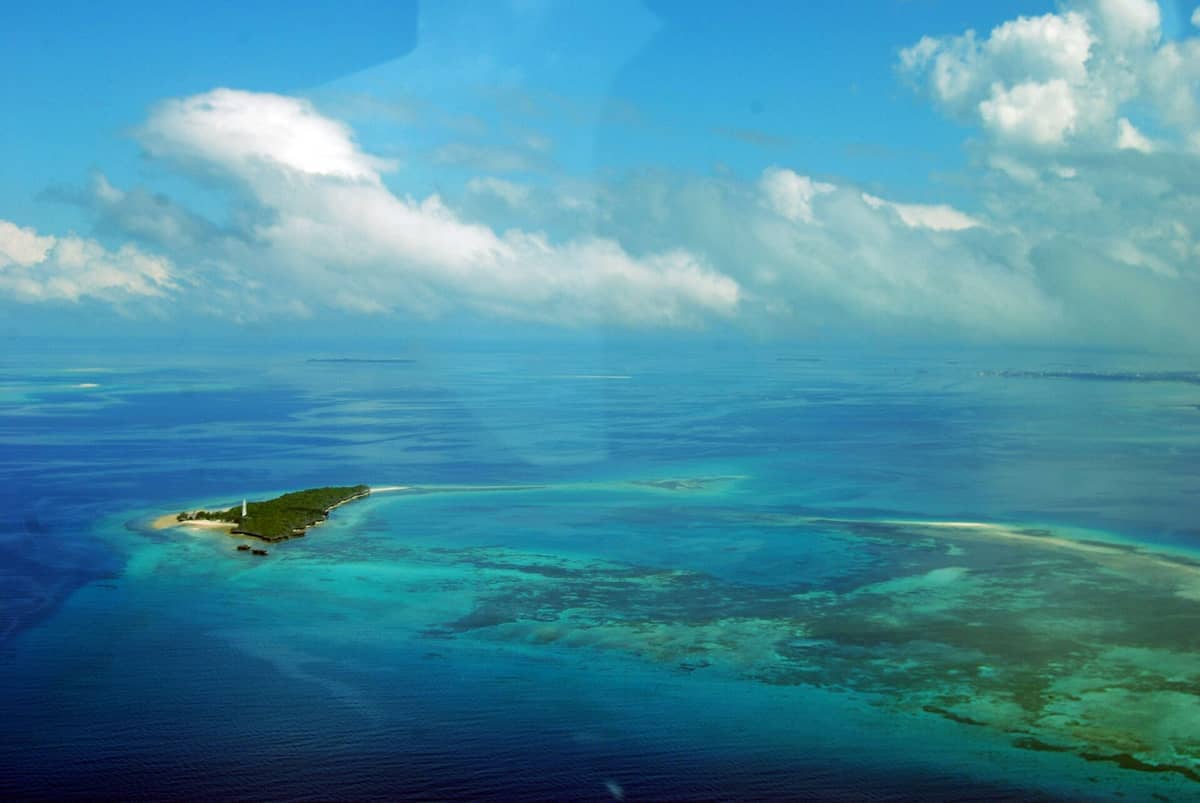
Chumbe Island Coral Park (CHICOP) is a privately managed marine protected area off the southwest coast of Zanzibar's main island, Unguja. It is not a resort in the conventional sense, and it is not a casual day-trip destination. The park was formally registered in Zanzibar in 1992, the reef sanctuary was gazetted in 1994 and the forest reserve in 1995, and the ecotourism operation opened in 1998, making it one of the earliest and most-cited examples of privately funded marine conservation in sub-Saharan Africa.
The island itself covers about 22 hectares. The marine reef sanctuary extends across roughly 30 hectares of shallow reef. Fishing has been prohibited in the sanctuary since gazettement, and the result is visible the moment you enter the water: coral cover and fish density here belong to a different category than most snorkel sites in Zanzibar. The reef is not overhyped by conservation standards. Researchers and park managers have documented unusually high coral biodiversity, including species that have disappeared from heavily trafficked reef systems elsewhere in the Indian Ocean.
ℹ️ Good to know
Operating dates can vary. Confirm availability directly with the park before booking travel.
Getting There: Logistics You Need to Know Before Booking
Access to Chumbe is not self-service. All visits, whether day trips or overnight stays, must be arranged through the park in advance. Boat transfers depart from Mbweni, a coastal area south of Stone Town. The crossing takes roughly 30 to 45 minutes depending on sea conditions. The park coordinates logistics once you have a confirmed booking, so the first step is contacting them directly through the official website.
There is no independent ferry or water taxi option. If someone is offering to take you to Chumbe without an official park booking, decline. The restricted-access model is not bureaucratic inconvenience — it is what keeps visitor numbers low enough to protect the reef.
For context on navigating Zanzibar's broader transport options once you're on the island, the getting around Zanzibar guide covers boat, taxi, and dala-dala logistics in practical detail.
⚠️ What to skip
Accessibility note: reaching the island involves a boat transfer, uneven forest trails, and eco-bungalows with ladder access. The site is not suitable for visitors with significant mobility limitations. Contact the park ahead of time if you have specific needs.
Tickets & tours
Live prices and dates from our booking partner. If you book, we may earn a commission at no extra cost to you.
Zanzibar catamaran and snorkelling tour to Mnemba Marine Park
From 114 €Instant confirmationFree cancellationNyerere National Park two-day safari with two game drives
From 866 €Instant confirmationFree cancellationSerengeti National Park private three-day safari from Zanzibar
From 2.144 €Instant confirmationFree cancellationZanzibar north coast sunset dhow cruise
From 42 €Instant confirmationFree cancellation
The Reef: What You Will See Underwater
The reef sanctuary wraps the western shore of the island and sits in shallow water — much of it accessible in depths of one to four meters, which makes it genuinely excellent for snorkeling rather than just diving. Visibility is typically strong in the dry season, with clear water allowing you to cover significant ground on a single breath. Early morning light, before the sun climbs too high, creates the best color contrast for observing coral formations.
Fish life is dense. The lack of fishing pressure over more than three decades means that species which are commercially targeted elsewhere — grouper, snapper, parrotfish — appear in numbers that can feel disorienting if you've spent time at more visited reef sites. Hawksbill turtles are resident in the area and regularly encountered by snorkelers along the reef edge.
The coral itself is the primary spectacle. Branching and table corals, sea fans, and encrusting species form a layered structure that gives the reef three-dimensional complexity. This is not a site where you float over bleached rubble and count the isolated fish. It is a functioning reef system, and the contrast with degraded sites is apparent even to non-specialists.
If you want to build context before visiting, the Zanzibar coral reefs guide explains what distinguishes protected reef systems from open-access sites across the archipelago.
The Island: Forest, Wildlife, and the Old Lighthouse
The terrestrial portion of Chumbe Island is a coral rag forest, a dry coastal forest type growing on raised ancient coral limestone. The habitat supports coconut crabs (Birgus latro), one of the largest land invertebrates in the world, as well as Aders' duiker, a small antelope that is among the rarest mammals on the East African coast. Walking the nature trails in the early morning or just before dusk gives the best chance of wildlife encounters. Midday is quiet and hot.
The island's disused lighthouse, built by the British in 1904, still stands and can be climbed for a view across the channel toward Zanzibar's southwestern shore. It is not a dramatic panoramic tower, but it provides useful orientation and a sense of the island's history as a navigation landmark on the coastal shipping route.
Day Visit vs. Overnight: Which Makes More Sense
Day visits allow you to snorkel the reef, walk the forest trails, eat lunch at the lodge, and return to Stone Town by afternoon. For most travelers, this is sufficient. The reef visit alone justifies the trip, and the logistics of a full day are manageable without an overnight commitment.
Overnight guests stay in eco-bungalows designed with rainwater collection, composting toilets, and solar power systems. The bungalows are architecturally distinctive, with open-air design that maximizes airflow while minimizing ecological footprint. Staying overnight has one specific advantage beyond the obvious: you can snorkel the reef at dawn, before any day-trip visitors arrive, in conditions of absolute quiet. If the budget allows and you value that kind of experience, the overnight option is genuinely different from a day visit rather than just a more expensive version of it.
💡 Local tip
Photography tip: bring an underwater camera or housing. The reef in the first two hours after sunrise offers the best light angle for shooting coral and fish. The surface glare is lower, and the water clarity tends to be at its sharpest before midday boat activity disturbs sediment near the shore.
Conservation Model and Why It Matters
CHICOP is frequently cited in conservation and development literature as an example of how private management of a marine protected area can succeed where government-only models have struggled. The OECD has documented the park's structure in reports on ocean policy. Revenue from tourism directly funds reef monitoring, local ranger employment, and education programs for Zanzibari school groups that visit the island at subsidized rates.
This context is worth understanding before you visit, not because it changes what you will see, but because it explains the park's rules and pricing. Visitor numbers are deliberately capped to limit reef impact. The cost of a visit reflects operational reality rather than luxury markup. You are not paying for a pool and a buffet. You are paying for one of the few reef systems in the western Indian Ocean where the coral is genuinely thriving.
For travelers interested in how Zanzibar balances tourism and ecological pressure more broadly, the Menai Bay Conservation Area represents a complementary model on the island's south coast.
Who Should Not Bother
Chumbe is a poor fit for travelers who are uncomfortable in the water, not interested in marine ecology, or looking for a beach day with food, drinks, and social energy. There is no beach bar. There is no beach in the conventional sense. The experience is fundamentally about the reef and the forest, not about relaxing on sand. If your Zanzibar trip is centered on beach resorts, Chumbe will feel austere rather than special.
Travelers with limited mobility will face genuine barriers: the boat crossing can be rough in certain sea conditions, the trails are uneven coral rag terrain, and the bungalows are not designed for step-free access. This is not something that can be reasonably worked around on arrival — contact the park in advance if you have questions.
If you're building a fuller itinerary around Zanzibar's marine attractions, the Zanzibar diving guide covers the main sites, operators, and what distinguishes them by reef quality and accessibility.
Insider Tips
- Book as far in advance as possible. Day-trip spots are capped, and peak-season dates fill quickly. Last-minute availability is rare.
- Use reef-friendly sunscreen, or none at all. The park provides reef-friendly sunscreen, and recommends a rash guard or long-sleeve swim top as additional UV protection.
- Ask specifically about the coconut crab walk with a ranger. These crabs are nocturnal and enormous, and an evening guided walk is one of the stranger wildlife encounters available in Zanzibar — not widely advertised.
- Sea conditions affect crossing comfort more than most sources acknowledge. If you are prone to seasickness, take precautions before boarding. The channel crossing on a rough day can be genuinely uncomfortable.
- Zanzibari school groups sometimes visit on weekday mornings. If you want the reef to yourself, ask when booking whether your visit date overlaps with an education program. Alternatively, snorkel during the school group's lunch break.
Who Is Chumbe Island Coral Park For?
- Snorkelers and underwater photographers seeking a high-quality, uncrowded reef
- Eco-conscious travelers who want their tourism spend to fund conservation directly
- Couples looking for genuine seclusion and an overnight experience outside the resort circuit
- Wildlife enthusiasts interested in rare species like coconut crabs and Aders' duiker
- Travelers combining a Zanzibar stay with serious interest in marine science or protected-area policy
Nearby Attractions
Combine your visit with:
- Bwejuu Beach
Bwejuu Beach sits on Unguja's southeast coast, about 50 km from Stone Town, and delivers something increasingly rare on Zanzibar: a long stretch of sand without the resort crowds. The water is calm, the village is small, and the pace is slow. It suits travelers who want a beach day that feels like an escape rather than a performance.
- Cheetah's Rock Wildlife Sanctuary
Cheetah's Rock Wildlife Sanctuary is a small, guided wildlife experience on Unguja where visitors walk alongside rescued cheetahs, interact with servals, and meet a rotating cast of African species in semi-natural enclosures. It is expensive, deliberately exclusive, and unlike anything else on the island.
- Kidichi Spice Farm & Persian Baths
A few kilometers inland from Zanzibar's northern coast road, the Kidichi Persian Baths preserve a rare piece of Omani sultanate architecture, complete with decorative plasterwork and domed ceilings. Paired with a working spice farm, this site offers a quieter, more considered alternative to the busier spice tours closer to Stone Town.
- Kiwengwa Beach
Kiwengwa Beach stretches along Unguja's northeast coast, roughly 40 to 45 km from Stone Town. The beach is known for its wide corridor of white coral sand, shallow tidal pools exposed at low tide, and a pace that stays noticeably calmer than the busier resort clusters around Nungwi and Kendwa. It draws travelers who want Indian Ocean scenery without the midday noise.
Planning a trip? Discover personalized activities with the Nomado app.