Bwejuu Beach: Zanzibar's Quietest Southeast Shore
Bwejuu Beach sits on Unguja's southeast coast, about 50 km from Stone Town, and delivers something increasingly rare on Zanzibar: a long stretch of sand without the resort crowds. The water is calm, the village is small, and the pace is slow. It suits travelers who want a beach day that feels like an escape rather than a performance.
Quick Facts
- Location
- Bwejuu, southeast coast of Unguja (Zanzibar main island), approximately 50–53 km from Stone Town
- Getting There
- Taxi or private transfer (~60–75 min from Stone Town); local dala-dala minibuses also serve the route — confirm current stops locally
- Time Needed
- Half day to full day
- Cost
- Free to access (public village beach)
- Best for
- Slow-travel beach days, couples, readers, snorkelers, travelers tired of resort strips
What Kind of Beach Is Bwejuu, Really?
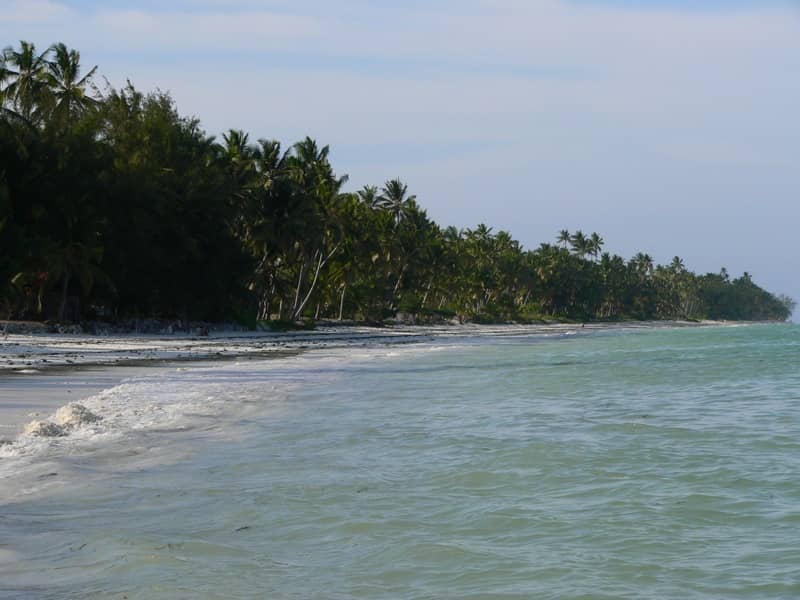
Bwejuu Beach is a public village beach on the southeast coast of Unguja, the main island of the Zanzibar archipelago. It sits within the same coastal stretch as Paje and Jambiani but draws significantly fewer visitors, which is precisely its appeal. The sand is pale and soft underfoot, and the Indian Ocean here is protected by an offshore reef that keeps the nearshore water calm for much of the day. At low tide, the reef shelf is exposed and you can walk surprisingly far out over shallow rock pools, spotting sea urchins and small fish trapped in the receding water.
This is not a beach built for entertainment. There are no water sports concessions lined up along the shore, no beach clubs pumping music, no sunbed attendants. What you get instead is space: long, uninterrupted stretches of sand where you might walk ten minutes in either direction before passing another tourist. The village of Bwejuu sits just back from the shore, so local life is close but not intrusive. Fishermen bring their outrigger canoes in during the late afternoon. Women from the village tend seaweed farms in the shallows at low tide. The rhythms here are determined by the tides, not the tourist calendar.
ℹ️ Good to know
Tide timing matters enormously at Bwejuu. At low tide, large areas of the reef shelf are exposed and shallow, making swimming difficult or impossible. Plan your beach time around high tide if swimming is the priority. Check a local tide table before you go — your accommodation can usually provide one.
Morning, Midday, and Late Afternoon: How the Beach Changes
Early morning is the best time to arrive if you want the beach to yourself. The light at this hour is soft and low, casting long shadows across the sand and turning the water a pale jade green. The air still carries some coolness from the night, and apart from the occasional local heading to the water's edge, you will likely have the shore to yourself for the first hour or two.
By midday, the sun is direct and intense. The sand reflects heat upward, and without the shade of palm trees along every section of the beach, prolonged exposure becomes uncomfortable quickly. A hat, reef-safe sunscreen, and a light cover-up are not optional. Most visitors retreat to the shade of a beachside guesthouse or café around midday and return in the late afternoon, when the light becomes golden and the temperature drops to something more reasonable.
Late afternoon is arguably the most rewarding time at Bwejuu. The fishing community becomes more active, dhows move along the horizon, and the sky shifts through amber and pink as the sun drops toward the west behind the island. Because the beach faces east, sunsets are not visible from the waterline, but the reflected light on the water during the last hour before dark is genuinely striking.
Tickets & tours
Live prices and dates from our booking partner. If you book, we may earn a commission at no extra cost to you.
Zanzibar catamaran and snorkelling tour to Mnemba Marine Park
From 114 €Instant confirmationFree cancellationNyerere National Park two-day safari with two game drives
From 866 €Instant confirmationFree cancellationSerengeti National Park private three-day safari from Zanzibar
From 2.144 €Instant confirmationFree cancellationZanzibar north coast sunset dhow cruise
From 42 €Instant confirmationFree cancellation
Getting to Bwejuu from Stone Town
Bwejuu is roughly 50 to 53 kilometers from Stone Town by road, and the drive takes approximately 60 to 75 minutes depending on the route and road conditions. The most straightforward option is a private taxi or organized transfer arranged through your accommodation. Agree the fare in advance; rates can vary, so confirm current pricing with your hotel or guesthouse before booking.
Local dala-dala minibuses also serve the southeast coast, though the route and drop-off points should be confirmed locally before relying on them. For travelers basing themselves in Paje or Jambiani, Bwejuu is close enough to visit by bicycle, scooter, or a short taxi ride. If you are planning a broader southeast coast day, you can combine Bwejuu with a visit to the Jambiani seaweed farm or the beach at Paje without significant backtracking.
💡 Local tip
If you are renting a scooter to explore the southeast coast independently, the road between Paje and Bwejuu is paved and manageable. Bwejuu to Jambiani continues along the same coastal road. This makes a satisfying half-day loop from any of the three villages.
Cultural Context: A Village Beach, Not a Resort Beach
Bwejuu is a working fishing village, and the beach is part of that community's daily life rather than a dedicated tourist facility. This distinction matters practically. Modest dress is appropriate when moving through the village or when the tide is low and you are closer to where local women are working in the shallows. Swimwear is generally fine once you are at the water's edge, but covering up when you step away from the beach is a sign of respect that is genuinely appreciated.
The seaweed farming you will see in the shallows at low tide is not decorative. Women from the village cultivate cottonii seaweed on rope lines anchored to the sandy bottom; it is a significant source of income in coastal communities across the southeast of Unguja. If you want to understand the practice more deeply, the Jambiani seaweed farm a short distance south offers organized tours with local guides.
Zanzibar's Swahili coastal culture gives the southeast its particular character: the architecture of the village, the call to prayer in the late afternoon, the rhythm of fishing tied to the tides. For travelers who want to understand this cultural layer more fully, the broader guide to Swahili culture in Zanzibar is worth reading before you arrive.
Swimming, Snorkeling, and What the Water Is Actually Like
The offshore reef that defines this stretch of coast creates calm, clear water inside the lagoon, but it also means the swimming experience is heavily tide-dependent. At high tide, the water is deep enough for comfortable swimming and the surface is glassy. At low tide, much of the nearshore area becomes shallow reef shelf, and walking on it without reef shoes risks cuts from coral and sea urchin spines.
Snorkeling is possible, particularly at higher tides, and the water clarity is good on calm days. However, Bwejuu is not considered a premier snorkeling destination compared to other sites around the island. Travelers specifically seeking exceptional reef life should consider a boat excursion to dedicated snorkeling spots rather than relying solely on the beach snorkeling here.
If diving is the goal, the southeast coast is not the primary diving hub. The main dive operations on Zanzibar are based in Nungwi and Kendwa in the north, and the renowned Mnemba Atoll is accessible from the northeast coast. For a comprehensive overview of dive sites and operators around the island, the Zanzibar diving guide covers the relevant logistics.
Practical Notes: What to Bring and What to Expect
There is no ticket, no entry gate, and no visitor center at Bwejuu Beach. Facilities are limited: a handful of small guesthouses and beachside cafés serve food and drinks, but do not expect a broad range of options, particularly outside peak season. Bring cash, as card payment is not reliably available at small village establishments.
Shade along the beach is uneven. Some sections have palm trees close to the high-tide line; others are fully exposed. A beach umbrella or UV-rated tent is useful if you plan to spend a full day. Reef shoes are strongly recommended for anyone who wants to explore the exposed reef shelf at low tide. There are no lifeguards.
Wheelchair access is not practical on this beach. The soft, deep sand along the shore and the lack of hard-surface paths or boardwalks make navigation very difficult for wheelchair users or those with significant mobility limitations.
⚠️ What to skip
There is no reliable shade infrastructure, no lifeguard service, and no formal first-aid point at Bwejuu Beach. Travelers with young children or anyone prone to heat exhaustion should plan accordingly: bring water, sun protection, and consider limiting midday exposure between roughly 11:00 and 15:00.
Photography at Bwejuu
The southeast coast light is cleanest in the first two hours after sunrise and the last ninety minutes before sunset. Early morning gives you soft, directional light on the water and empty sand — the conditions that produce the kind of travel photography that actually represents what the place looks like. The midday sun bleaches color from the water and creates harsh shadows, making it the worst window for photography.
Always ask permission before photographing local residents, especially women working in the seaweed farms. This is basic courtesy but it is also practically important: photographing without consent in a working village can cause genuine friction and reflects poorly on visitors as a whole.
Who Should Skip Bwejuu
Bwejuu is not the right choice for travelers who want a full suite of beach amenities: no jet ski rental, no beach bar with a DJ set, no organized water sports. If that is what you are after, the northern beaches at Nungwi or Kendwa are better equipped. Similarly, anyone prioritizing prime swimming conditions independent of tide timing will find the reef-dependent water at Bwejuu frustrating. Families with very young children who need reliable shallow, flat water for safe paddling should check tide schedules carefully before committing to a day here.
Travelers who are short on time and trying to see as much of the island as possible in three days may find Bwejuu less efficient than a better-developed beach that is easier to combine with other activities. A focused three-day Zanzibar itinerary can help you decide whether the journey to the southeast fits your schedule.
Insider Tips
- Time your arrival to coincide with high tide if swimming is the priority. The difference between a swimmable beach and an exposed reef flat is significant here, and it changes every day. Ask your accommodation for a tide chart the evening before.
- The section of beach south of the main village is quieter than the stretch directly in front of the more established guesthouses. A fifteen-minute walk south puts you well away from the modest foot traffic near the village center.
- Small beachside cafés will often let you sit in their shade and use their facilities if you order food or drink. This is worth knowing given the lack of public shade infrastructure — a coffee or fresh juice buys you a shaded table and a seat out of the sun.
- Bwejuu is close enough to Paje and Jambiani that combining all three in a single southeast coast day is realistic by scooter or bicycle. Paje's kite beach atmosphere is completely different from Bwejuu's quiet, which makes the contrast alone worthwhile.
- If you see fishing boats coming in during the late afternoon, it is often possible to buy fresh catch directly from the fishermen. What is available depends entirely on the day's catch, but it is a genuinely local transaction and the fish is as fresh as it gets.
Who Is Bwejuu Beach For?
- Travelers who want a beach day without resort infrastructure or crowds
- Couples looking for quiet, unhurried time on the water
- Photographers who shoot in the golden hours and prefer empty foregrounds
- Anyone on the southeast coast already based in Paje or Jambiani who wants a change of pace
- Slow travelers spending a week or more on the island who want to explore beyond the main tourist beaches
Nearby Attractions
Combine your visit with:
- Cheetah's Rock Wildlife Sanctuary
Cheetah's Rock Wildlife Sanctuary is a small, guided wildlife experience on Unguja where visitors walk alongside rescued cheetahs, interact with servals, and meet a rotating cast of African species in semi-natural enclosures. It is expensive, deliberately exclusive, and unlike anything else on the island.
- Chumbe Island Coral Park
Chumbe Island Coral Park sits off Zanzibar's southwest coast and protects one of the Indian Ocean's most intact coral reef ecosystems. Reaching it requires advance planning, a boat transfer, and a genuine interest in marine conservation — but for the right traveler, nothing on the island compares.
- Kidichi Spice Farm & Persian Baths
A few kilometers inland from Zanzibar's northern coast road, the Kidichi Persian Baths preserve a rare piece of Omani sultanate architecture, complete with decorative plasterwork and domed ceilings. Paired with a working spice farm, this site offers a quieter, more considered alternative to the busier spice tours closer to Stone Town.
- Kiwengwa Beach
Kiwengwa Beach stretches along Unguja's northeast coast, roughly 40 to 45 km from Stone Town. The beach is known for its wide corridor of white coral sand, shallow tidal pools exposed at low tide, and a pace that stays noticeably calmer than the busier resort clusters around Nungwi and Kendwa. It draws travelers who want Indian Ocean scenery without the midday noise.
Planning a trip? Discover personalized activities with the Nomado app.