Kiwengwa Beach: Zanzibar's Quiet Northeast Shore
Kiwengwa Beach stretches along Unguja's northeast coast, roughly 40 to 45 km from Stone Town. The beach is known for its wide corridor of white coral sand, shallow tidal pools exposed at low tide, and a pace that stays noticeably calmer than the busier resort clusters around Nungwi and Kendwa. It draws travelers who want Indian Ocean scenery without the midday noise.
Quick Facts
- Location
- Northeast coast of Unguja, ~40–45 km from Stone Town
- Getting There
- Private taxi or dala-dala from Stone Town; agree fare before departure
- Time Needed
- Half day to full day
- Cost
- No entry fee; public beach access
- Best for
- Tidal exploring, quiet swimming, beach walks
What Kiwengwa Beach Actually Looks Like
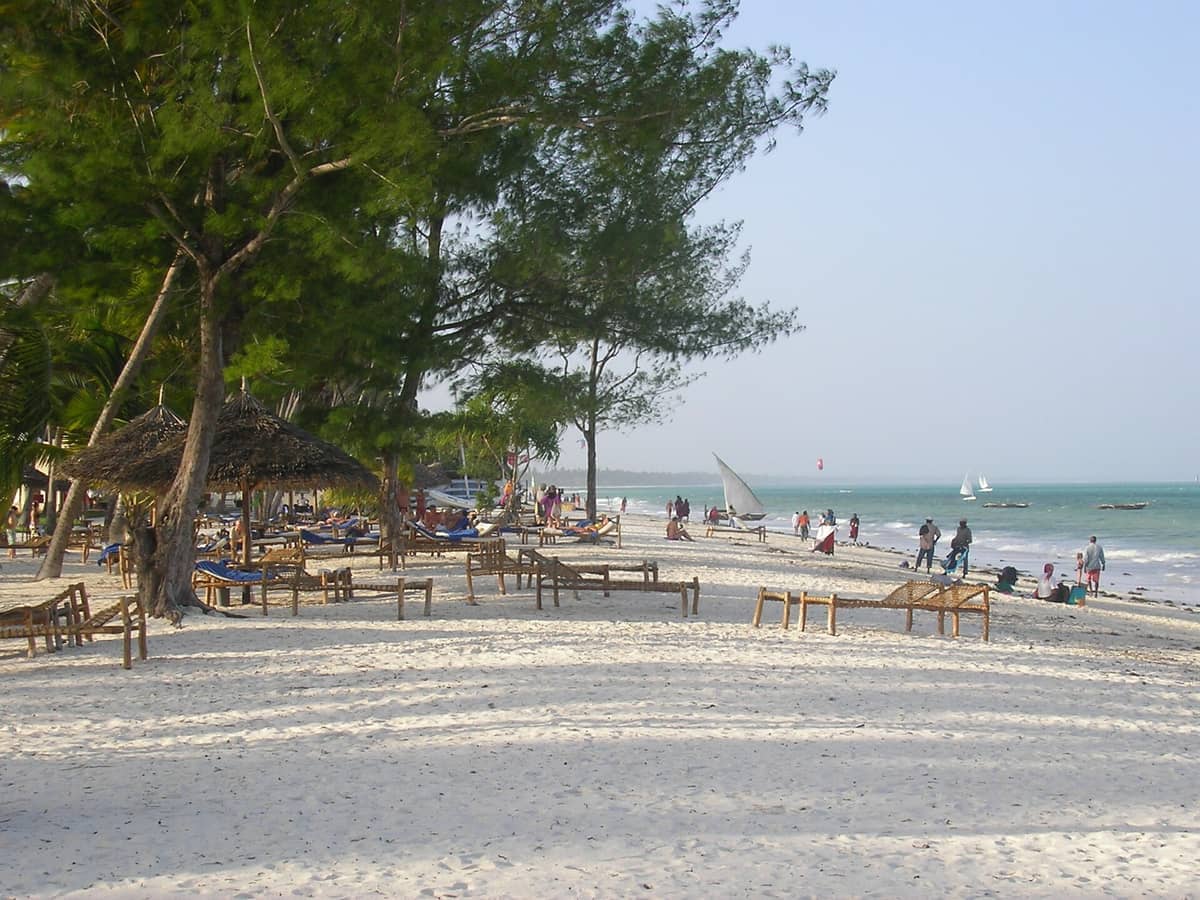
Kiwengwa Beach sits on the northeast flank of Unguja, where the coastline faces the open Indian Ocean and catches enough breeze to keep the air comfortable even at midday. The sand itself is the fine, powdery coral variety that defines the best of Zanzibar's east-facing shores: pale white in dry conditions, briefly amber-toned in the low morning light. The beach is wide rather than long in the compressed resort sense. At low tide, the shoreline expands considerably, revealing exposed sand flats and shallow channels that kids and tide-pool explorers find genuinely engaging.
The fringe of palms and casuarina trees along the upper beach provides real shade rather than the token strip you get at more developed stretches. There are no large promenades or paved boardwalks. What you get is an uncomplicated shoreline where the main activity is the water itself, or watching the light shift over the reef line offshore.
💡 Local tip
Time your arrival around low tide if tidal flat exploration interests you. The exposed flats extend the walkable beach significantly and small marine creatures become visible in the pools. Check local tide tables before you go, as the swing between high and low tide on this coast can exceed a meter.
How the Beach Changes Through the Day
Early mornings at Kiwengwa Beach are the quietest window. Local fishermen haul traditional wooden vessels in from night fishing before the sun climbs, and the light comes in low and golden from the east, making it one of the more photogenic hours regardless of the season. The smell at this hour is salt and seaweed, occasionally the faint char of a cooking fire from nearby village edges. Foot traffic is minimal.
By mid-morning, guests from the nearby resort cluster begin arriving. Kiwengwa has a concentration of large all-inclusive hotels behind the beach, which means that between roughly 10 am and 3 pm the sand sees its highest human density. Even so, it does not approach the volume you will encounter at Nungwi on a weekend. The water is generally calm enough for swimming at high tide, though wave conditions shift with the season. During the southeast monsoon (roughly June to October), wind and chop increase noticeably on this coast.
Late afternoons are underrated here. Most resort guests rotate back toward pools and bars after 4 pm, which leaves the beach to independent visitors and a sparser crowd. The light turns soft from around 5 pm onward, and because the beach faces broadly east-northeast, sunsets are not visible directly, but the sky does color in an interesting diffuse way. If you want the beach mostly to yourself and can only come for a few hours, late afternoon is consistently the better choice.
Tickets & tours
Live prices and dates from our booking partner. If you book, we may earn a commission at no extra cost to you.
Zanzibar catamaran and snorkelling tour to Mnemba Marine Park
From 114 €Instant confirmationFree cancellationNyerere National Park two-day safari with two game drives
From 866 €Instant confirmationFree cancellationSerengeti National Park private three-day safari from Zanzibar
From 2.144 €Instant confirmationFree cancellationZanzibar north coast sunset dhow cruise
From 42 €Instant confirmationFree cancellation
The Resort Question: Independent Visitors vs. All-Inclusive Guests
Kiwengwa Beach is partly shaped by the presence of a cluster of large all-inclusive resorts behind the dune line. This is worth understanding before you visit. The beach itself is public, and no resort can legally prevent access to the shoreline in Zanzibar. However, the facilities directly on the beach, including sunbeds, parasols, and beach bars, typically belong to the adjacent resorts and are intended for their guests.
Independent travelers visiting for the day should bring their own supplies. There are no established public beach bars or vendors along every stretch, and the food-and-drink situation varies considerably depending on which section of beach you access. If you are not staying at one of the resorts, plan accordingly: carry water, snacks, and sun protection. Shade from trees is available but not guaranteed at every access point.
If the all-inclusive atmosphere appeals to you, the Kiwengwa area is one of the better places on the island for it. For a broader look at how to choose a base on this coast, the Zanzibar all-inclusive resorts guide walks through the main options and what each part of the coast offers.
ℹ️ Good to know
Beach access is public and free. Sunbeds and resort facilities on the beach are reserved for hotel guests. Arrive self-sufficient if you are visiting independently.
Getting to Kiwengwa Beach
Kiwengwa is approximately 40 to 45 km from Stone Town by road. The drive takes between 45 minutes and over an hour depending on road conditions and traffic through the towns en route. Taxis are the most practical option for independent travelers and should be arranged with an agreed fare before departure. There is no meter system, and quoted prices vary, so confirm the amount clearly before setting off.
Dala-dala shared minibuses connect Stone Town to various points on the east coast, but routes and stop locations change and should be confirmed locally before relying on them for a specific beach access point. The dala-dala is significantly cheaper than a private taxi but involves longer travel times and may require a change partway. If you are staying elsewhere on the island rather than in Stone Town, a private transfer arranged through your accommodation is often the most straightforward option.
Kiwengwa sits on the same general northeast coast as Matemwe, which is a few kilometers further north. If you are planning multiple days on this part of the island, read about Matemwe Beach alongside Kiwengwa, since the two have different characters and choosing between them depends on what you want from the stay.
Swimming, Tides, and Water Conditions
The swimming at Kiwengwa is best evaluated against the tide. At high tide, the water comes in close to the beach and is generally calm enough for swimming over the sandy bottom. At low tide, the reef shelf is exposed and the water retreats significantly, which can make swimming impractical in some sections, though it opens up the tidal flats for walking and exploration. Understanding this cycle before you arrive makes a real difference to how you plan your time.
Snorkeling directly off the beach is possible in some areas, but Kiwengwa is not primarily a snorkeling destination in the way that Mnemba Atoll or Chumbe Island are. The coral close to shore has been affected by both bleaching events and anchor damage over the years. For dedicated underwater exploration, day trips to better-preserved reef systems are a more rewarding option.
The coral reef ecosystems around Zanzibar's east coast are detailed in the Zanzibar coral reefs guide if you want to plan a proper snorkeling or diving excursion while based in this area.
When to Visit and Weather Realities
The dry season from approximately June through October brings the most reliable beach weather across Zanzibar's east coast, including Kiwengwa. Wind is present and at times brisk during these months, which keeps temperatures comfortable but can stir up chop in the shallows. The water is clearer during the drier months than during the rain periods.
The long rains (roughly April to May) significantly affect beach visits. Roads to Kiwengwa can become difficult depending on conditions, and beach days are interrupted frequently by heavy downpours. The short rains around November are generally less severe but still unpredictable. December through March offers warm, calmer water and lower winds, which many travelers find ideal for swimming, though sea visibility for snorkeling is sometimes reduced after rainfall.
For a month-by-month breakdown of what to expect across Zanzibar, the best time to visit Zanzibar guide covers conditions across the island in practical terms.
⚠️ What to skip
During the southeast monsoon season (roughly June to October), east-facing beaches including Kiwengwa can experience strong winds and rough surf. Swimming conditions should be assessed on arrival rather than assumed.
Who Should Skip Kiwengwa Beach
Kiwengwa Beach is not the right destination for travelers who want a lively, social beach scene with reliable food vendors, beach bars open to all, and a built-in social atmosphere. That experience is better found at Nungwi or Kendwa, which have a developed independent visitor infrastructure. Kiwengwa's character is shaped largely by its resort guests, and the beach between those properties can feel surprisingly empty of services for day-trippers.
It is also not a strong choice for serious divers or snorkelers who want reef quality directly off the beach. The draw here is the setting: the breadth of the sand, the tidal drama, and the relative quiet compared to more commercially developed stretches. If that matches what you are after, it delivers. If you need more built-in convenience, plan your beach day somewhere else.
Insider Tips
- Check a tide table for the day of your visit before leaving your accommodation. Arriving at low tide with swimming in mind will leave you walking mud flats; arriving at high tide when you wanted tidal pool exploration means the pools are submerged. The two experiences are entirely different.
- The stretch of beach north of the main resort cluster is noticeably quieter than the sections directly in front of the hotels. If you arrive by taxi, ask to be dropped further along the road and walk down to the beach away from the resort frontage.
- Carry more water than you think you need. There are no guaranteed public refreshment points along the beach, and the sun on this coast is direct. One liter per person per two hours is a reasonable baseline in the dry season.
- If you are staying in Stone Town and want a full day at Kiwengwa, arrange your taxi the evening before and agree a return pickup time. Taxis waiting for you at the beach will charge for their time. A fixed round-trip price agreed in advance is usually more economical.
- Mornings between 6:30 and 8:30 am, before resort guests descend, are the most atmospheric window on the beach. The fishing activity, the low light, and the silence combine in a way that the rest of the day does not replicate.
Who Is Kiwengwa Beach For?
- Travelers based at Kiwengwa's all-inclusive resorts who want a resort beach of genuine quality
- Beach walkers who appreciate a wide, uncrowded shoreline over a social scene
- Families with children interested in tidal flat exploration at low tide
- Photographers drawn to early-morning light on an east-facing Indian Ocean beach
- Visitors who want a quieter alternative to Nungwi without driving to the south coast
Nearby Attractions
Combine your visit with:
- Bwejuu Beach
Bwejuu Beach sits on Unguja's southeast coast, about 50 km from Stone Town, and delivers something increasingly rare on Zanzibar: a long stretch of sand without the resort crowds. The water is calm, the village is small, and the pace is slow. It suits travelers who want a beach day that feels like an escape rather than a performance.
- Cheetah's Rock Wildlife Sanctuary
Cheetah's Rock Wildlife Sanctuary is a small, guided wildlife experience on Unguja where visitors walk alongside rescued cheetahs, interact with servals, and meet a rotating cast of African species in semi-natural enclosures. It is expensive, deliberately exclusive, and unlike anything else on the island.
- Chumbe Island Coral Park
Chumbe Island Coral Park sits off Zanzibar's southwest coast and protects one of the Indian Ocean's most intact coral reef ecosystems. Reaching it requires advance planning, a boat transfer, and a genuine interest in marine conservation — but for the right traveler, nothing on the island compares.
- Kidichi Spice Farm & Persian Baths
A few kilometers inland from Zanzibar's northern coast road, the Kidichi Persian Baths preserve a rare piece of Omani sultanate architecture, complete with decorative plasterwork and domed ceilings. Paired with a working spice farm, this site offers a quieter, more considered alternative to the busier spice tours closer to Stone Town.
Planning a trip? Discover personalized activities with the Nomado app.