Matemwe Beach: Zanzibar's Quiet Northeast Shore
Matemwe Beach sits on Unguja's northeast coast, where a shallow reef flat stretches far out to sea at low tide and the village behind the palms still moves at its own pace. It suits travelers who want genuine seclusion, good snorkeling access, and a window into coastal Swahili life without the resort-strip atmosphere found further north.
Quick Facts
- Location
- Matemwe village, northeast coast of Unguja, Zanzibar, Tanzania
- Getting There
- 60–75 min by taxi or hotel transfer from Abeid Amani Karume International Airport (ZNZ); dala-dala shared minibuses serve the northeast coast but schedules are irregular
- Time Needed
- Half day to full day; overnight stays reveal the best light and lowest tides
- Cost
- No verified beach admission fee; the shoreline is publicly accessible
- Best for
- Snorkelers, photographers, travelers wanting seclusion, couples
What Matemwe Beach Actually Is
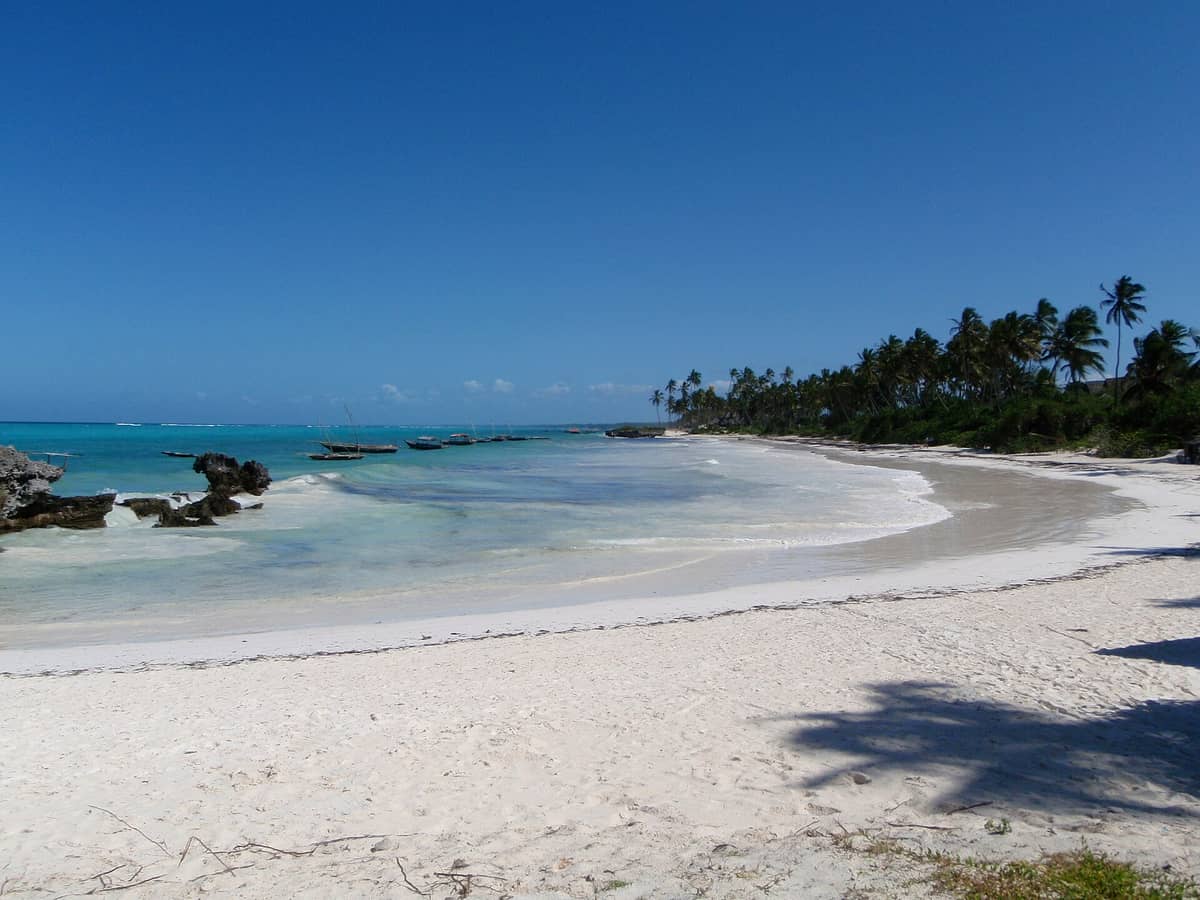
Matemwe Beach is a long stretch of white-sand shoreline backed by coconut palms and casuarina trees on the northeast coast of Unguja, the main island of the Zanzibar archipelago. Unlike the more developed strips at Nungwi or Kendwa in the north, Matemwe has no continuous line of beach bars or water-sports vendors. What it has instead is a fringing coral reef close enough to wade to at high tide and a tidal flat that extends hundreds of meters at low tide, exposing a landscape of coral rubble, sea grass, and small rock pools.
The beach belongs to Matemwe village, a working fishing settlement whose residents have lived off the reef for generations. Wooden outrigger dhows are pulled up on the sand between runs, and in the late afternoons fishermen sort their catch in small groups near the tideline. Seaweed farming, a significant livelihood for women in many east-coast communities, is practiced in the shallows here too. The presence of ordinary working life alongside tourism is part of what makes Matemwe feel different from the purpose-built resort stretches elsewhere on the island.
ℹ️ Good to know
The tidal range at Matemwe is significant. At low tide, the reef flat can be largely exposed, making swimming difficult or impossible in front of some properties. Check a tide table before planning a swim, and aim for the two to three hours around high tide.
How the Beach Changes Through the Day
Early morning at Matemwe is the most photogenic window on the beach. The light comes in low from the east, directly over the Indian Ocean, and the sand is often unmarked except for the trails left by crabs overnight. Fishermen are either heading out or returning, and the dhows catch the gold of the rising sun against the deeper blue of the offshore water. The air smells of salt and faintly of woodsmoke from cooking fires in the village. Temperatures are comfortable before 9 a.m., which is when serious walkers should be out.
By late morning, the heat builds quickly. Midday in Matemwe is not uncomfortable by equatorial standards, but the sand becomes genuinely hot underfoot and the flat light drains color from photographs. Most beach walkers take shelter in the shade of a lodge or the palms at this hour. The reef flat, if exposed at low tide, becomes a slow exploration zone for those willing to wear sandals and pick their way through the coral rubble looking at small fish trapped in pools.
Late afternoon brings the best combination of swimmable water (if the tide cooperates) and softer light. The ocean shifts through greens and blues as the sun angles lower, and the silhouettes of palm fronds against an orange sky are the image most people associate with this stretch of coast. Sunset here faces west over the island interior, not over the water, so the eastern horizon stays a deep blue while the sky above turns warm. It is quieter and more reflective than the famous sunset scenes at Nungwi.
Tickets & tours
Live prices and dates from our booking partner. If you book, we may earn a commission at no extra cost to you.
Zanzibar catamaran and snorkelling tour to Mnemba Marine Park
From 114 €Instant confirmationFree cancellationNyerere National Park two-day safari with two game drives
From 866 €Instant confirmationFree cancellationSerengeti National Park private three-day safari from Zanzibar
From 2.144 €Instant confirmationFree cancellationZanzibar north coast sunset dhow cruise
From 42 €Instant confirmationFree cancellation
The Reef and Snorkeling
The coral reef running parallel to Matemwe Beach is one of the main reasons travelers come this far up the northeast coast. At high tide, the reef edge is accessible by swimming from the shore or by a short boat ride, and visibility in calm conditions can be excellent. The reef hosts a range of hard and soft corals, with fish populations typical of an Indo-Pacific fringing reef including parrotfish, butterflyfish, and moray eels. Snorkeling quality varies by season and by exactly where along the beach you enter.
For more serious diving, Mnemba Atoll lies roughly three kilometers offshore from the Matemwe area and is considered one of the best dive sites in East Africa. Most lodges along the beach can arrange boat transfers to dive operators heading to Mnemba. See the Mnemba Atoll guide for what to expect from a day trip there, and the Zanzibar diving guide for operator details and seasonal conditions.
💡 Local tip
Bring your own snorkel mask if possible. Rental equipment quality from informal vendors on the beach is inconsistent. Lodges typically have better-maintained gear available for guests.
Matemwe Village and the Wider Area
Walking inland from the beach for even ten minutes puts you in a different world. The village of Matemwe has a small market area, a mosque, and the kind of street life that does not perform itself for visitors. Women carry baskets of seaweed from the flats, children are in school uniforms on weekday mornings, and the smell of grilled cassava and frying fish drifts from food stalls around lunchtime. Swahili is the language of daily life here; English is spoken at lodges but not reliably elsewhere.
The northeast coast of Unguja is also the closest point on the main island to some of Zanzibar's more intact coral reef ecosystems. Travelers interested in the broader conservation picture, including the island's coral reefs and marine protected areas, can find context in the Zanzibar coral reefs guide. For a fuller picture of the northeast coast and what other beaches look like in this part of the island, the place overview of Matemwe covers the area in more detail.
Getting There and Getting Around
Matemwe is approximately 60 to 75 minutes by road from Abeid Amani Karume International Airport (ZNZ) depending on traffic and road conditions. The most reliable option is a pre-arranged taxi or hotel transfer, with fares subject to negotiation. Dala-dala shared minibuses serve the northeast coast routes but schedules are irregular and the journey involves at least one change in Zanzibar Town; this is an option for flexible independent travelers but not practical if you are arriving with luggage and a tight schedule.
Once at Matemwe, the beach itself is walkable from any lodge along its length. For trips south along the coast toward Kiwengwa, or inland to a spice farm, taxis hired locally or through your accommodation are the standard approach. Ride-hailing apps used in many countries do not operate reliably in Zanzibar, so build in time to arrange transport in advance.
⚠️ What to skip
The road north along the northeast coast can be in poor condition in sections, particularly after heavy rain. Ask at your accommodation about current road conditions if you plan to travel to or from Matemwe during or after the rainy season.
Practical Considerations Before You Go
Matemwe Beach has no verified formal accessibility facilities. The soft sand and coral-rubble tidal flat make movement difficult for wheelchair users or visitors with limited mobility, and no boardwalks or adapted paths have been documented along this stretch of coast. Travelers with mobility requirements should contact lodges directly before booking, as individual properties vary in what they can offer.
There is no official beach admission fee at Matemwe. The shoreline is publicly accessible. Lodges and guesthouses are the primary infrastructure along the beach, and non-guests who want to use sunbeds or restaurant facilities at a lodge will typically need to purchase food or drinks. Budget travelers can access the beach freely and find some basic food options in the village.
Matemwe is quieter and more subdued than the northern beaches. If nightlife or a lively beach scene is part of what you are looking for, the northeast coast will feel too slow. The full-moon parties at Kendwa and the bar scene at Nungwi are a 40-minute drive away. For travelers weighing up which part of the island suits them, the where to stay in Zanzibar guide lays out the differences between coast areas in practical terms.
Photography on the beach is generally unrestricted, but pointing a camera at individuals in the village without asking first is considered rude and is likely to get a negative response. The same consideration applies to photographing women farming seaweed in the shallows. A short conversation and some acknowledgment before raising the camera will usually be met warmly.
Who Should Think Twice
Matemwe is not for everyone. Travelers who want reliable swimming at any hour of the day will be frustrated by the tidal constraints; the shallow reef flat is part of the beach's character, not a flaw, but it is a real limitation. Anyone expecting the density of facilities available at a resort-strip beach, including consistent food and drink options steps from a sunbed, will find Matemwe underdeveloped by comparison. Families traveling with young children should check the current tide schedule carefully, since a low-tide visit can mean a very long walk over sharp coral rubble to reach swimmable depth. A broader look at the island to find the stretch that fits your style is worth doing before booking; the is Zanzibar worth visiting overview addresses these trade-offs honestly.
Insider Tips
- Tide timing determines your experience more than any other factor. Download a tide app before you arrive and plan beach time around the two to three hours on either side of high tide. A low-tide arrival at the wrong season can leave you looking at half a kilometer of coral flat.
- The northern end of the Matemwe beach strip tends to have slightly deeper water at the reef edge and is the preferred entry point for snorkelers. Ask at your lodge which section of beach gives the shortest swim to the reef.
- Early-morning walkers sometimes spot hawksbill turtles coming off the reef into the shallows before the heat of the day. There is no guarantee, but the hours between 6 a.m. and 8 a.m. give the best odds.
- Lodges along the beach charge significantly different prices for essentially the same view. Smaller guesthouses on the southern section of the beach offer much lower rates than the boutique lodges to the north, with similar access to the shoreline.
- If you want to arrange a day trip to Mnemba Atoll, book at least a day ahead through your accommodation. Spots on dive boats fill up, and last-minute bookings from the beach are not always possible.
Who Is Matemwe Beach For?
- Snorkelers and divers using Matemwe as a base for reef and Mnemba Atoll trips
- Couples or solo travelers wanting a quiet beach without a party atmosphere
- Photographers drawn to the early-morning light and fishing dhow scenes
- Travelers interested in coastal Swahili village life alongside beach time
- Anyone who finds the north-coast strips at Nungwi and Kendwa too developed
Nearby Attractions
Other things to see while in Matemwe:
- Mnemba Atoll Marine Reserve
Mnemba Atoll Marine Reserve sits roughly three kilometers off Zanzibar's northeastern coast, surrounding a small private island with some of the most intact coral reef in East Africa. Snorkelers float above vast fields of hard coral while spinner dolphins arc through the shallows, and green turtles rest on the sandy bottom below. For anyone serious about marine life, this is the water they came to Zanzibar to find.
Planning a trip? Discover personalized activities with the Nomado app.