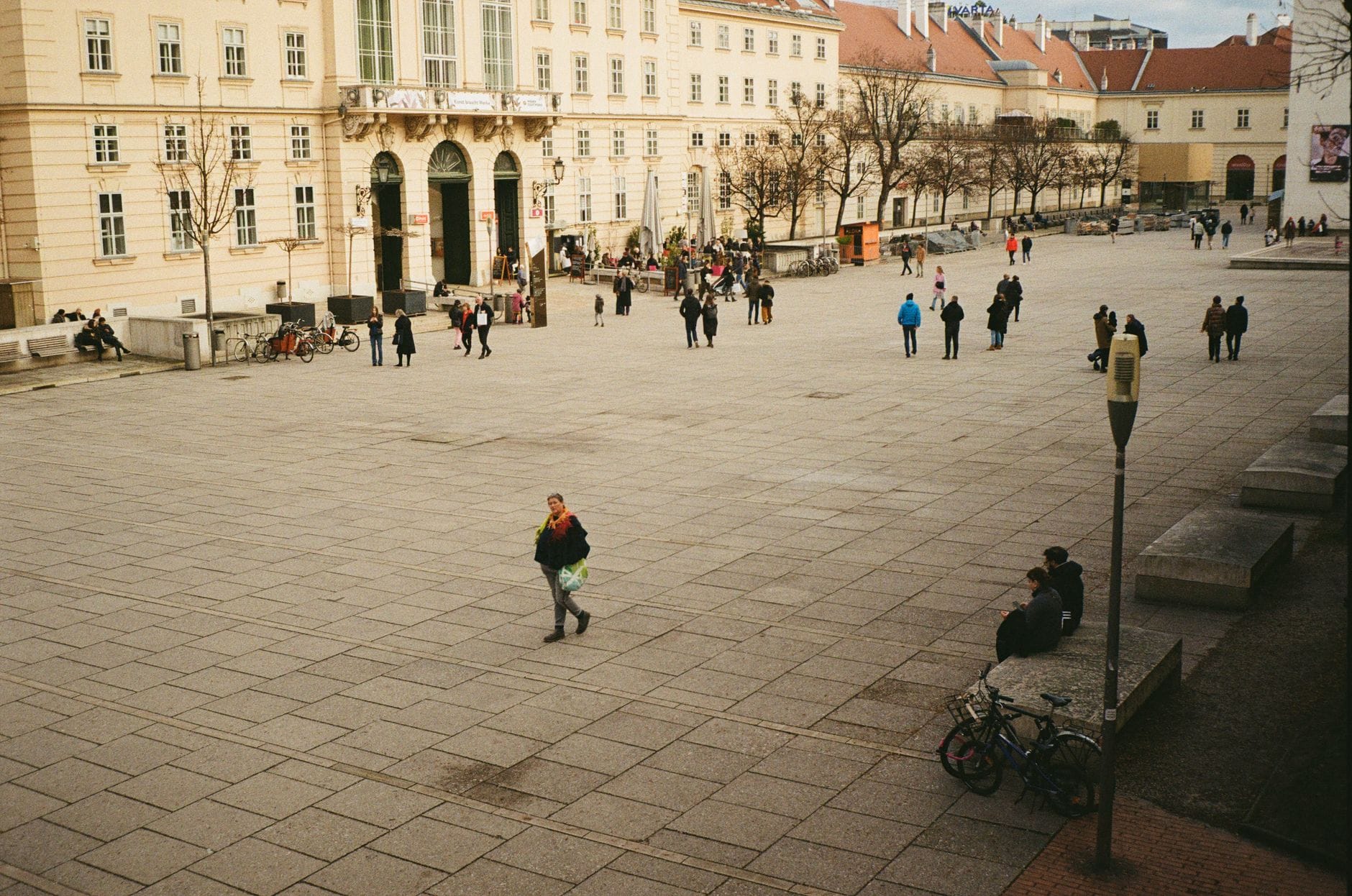
Vienna's MuseumsQuartier and Mariahilf stretch across the 6th and 7th districts, forming the city's most concentrated cultural corridor. One of Europe's largest arts complexes sits at the heart of the area, ringed by independent shops, neighborhood cafés, and some of Vienna's most livable residential streets.
Where imperial stables once housed the Habsburg cavalry, Vienna now keeps its most significant collection of modern and contemporary art. The MuseumsQuartier complex anchors the 7th district (Neubau), while the 6th district (Mariahilf) stretches south along Mariahilfer Straße, offering a sharper, more local version of the same creative energy. Together these two districts form one of the city's most rewarding areas to explore on foot.
Orientation: Where It Sits in the City
The MuseumsQuartier complex sits at Museumsplatz 1, in the 7th district, directly west of Maria-Theresien-Platz and the Kunsthistorisches and Naturhistorisches museums. From the Ringstraße, you pass between those two monumental buildings and arrive almost immediately at the MQ entrance gates. It is a twenty to twenty-five-minute walk from St. Stephen's Cathedral and less than five minutes from the Volkstheater.
The 6th district, Mariahilf, lies immediately south of Neubau, with the Gürtel forming its western edge and the Wienzeile along the Wien River marking its southern boundary. Its main artery, Mariahilfer Straße, is one of Vienna's principal shopping corridors and runs along the border area between the 6th and 7th districts. The Naschmarkt, Vienna's famous open-air market, begins just at the southern edge of Mariahilf, at the Linke Wienzeile.
Understanding this area means understanding its neighbors. To the east is the Innere Stadt, Vienna's historic 1st district. To the north and northwest lies the Alsergrund and Josefstadt territory. The Belvedere area sits to the southeast, making this zone a genuine crossroads for travelers moving between the city's main cultural draws.
Character and Atmosphere
Early on a weekday morning, the MuseumsQuartier's internal courtyards are almost silent. The large open spaces between the Leopold Museum and MUMOK catch the low light in a way that makes the limestone facades glow. A few locals cut through on their way to the U-Bahn, coffee in hand. The café terraces are just setting up. This calm rarely lasts past ten.
By midday, especially in spring and summer, the MQ courtyards become something between a town square and a cultural festival. The large open-air loungers that the MQ installs each season fill with students, families, and visitors from across Europe. There is a loose, democratic feeling to the space: galleries and concert halls share walls with outdoor bars and food stands, and nobody seems out of place whether they are heading to a Schiele retrospective or just meeting friends.
Move a few blocks south into Mariahilf and Neubau proper, away from Mariahilfer Straße, and the character shifts toward something quieter and more residential. Streets like Zollergasse and Bandgasse in Neubau have the relaxed rhythm of a neighborhood that has found its equilibrium: small bookshops, independent clothing stores, wine bars that fill up after eight. After dark, the side streets around Kirchengasse and Siebensterngasse attract a young, local crowd who prefer their evening unhurried.
ℹ️ Good to know
The MQ's public courtyards are accessible throughout the day without any ticket. They function as a genuine gathering point for Vienna residents, not just a forecourt to paid attractions. In summer, the complex runs an open-air program of film screenings, concerts, and markets.
What to See and Do
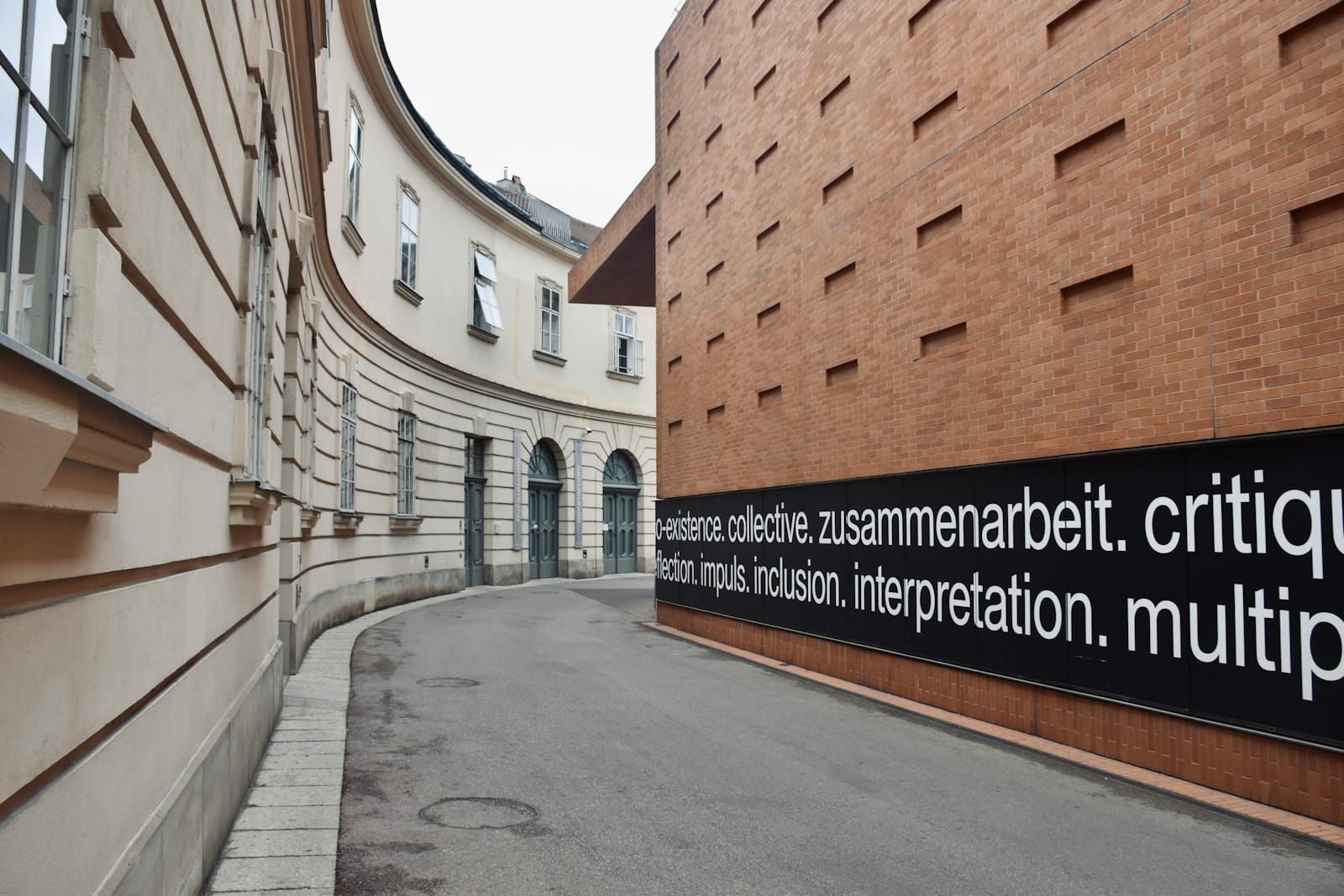
The MuseumsQuartier complex houses around 60 cultural institutions across roughly 60,000 square meters of converted Baroque court stables. The buildings were originally commissioned by Emperor Charles VI in 1723 as the imperial stables and were redesigned and expanded in 2001 into the cultural complex you see today. The combination of period Baroque facades with the clean white volumes of the modern museum extensions is genuinely striking, especially at the MQ's interior main courtyard.
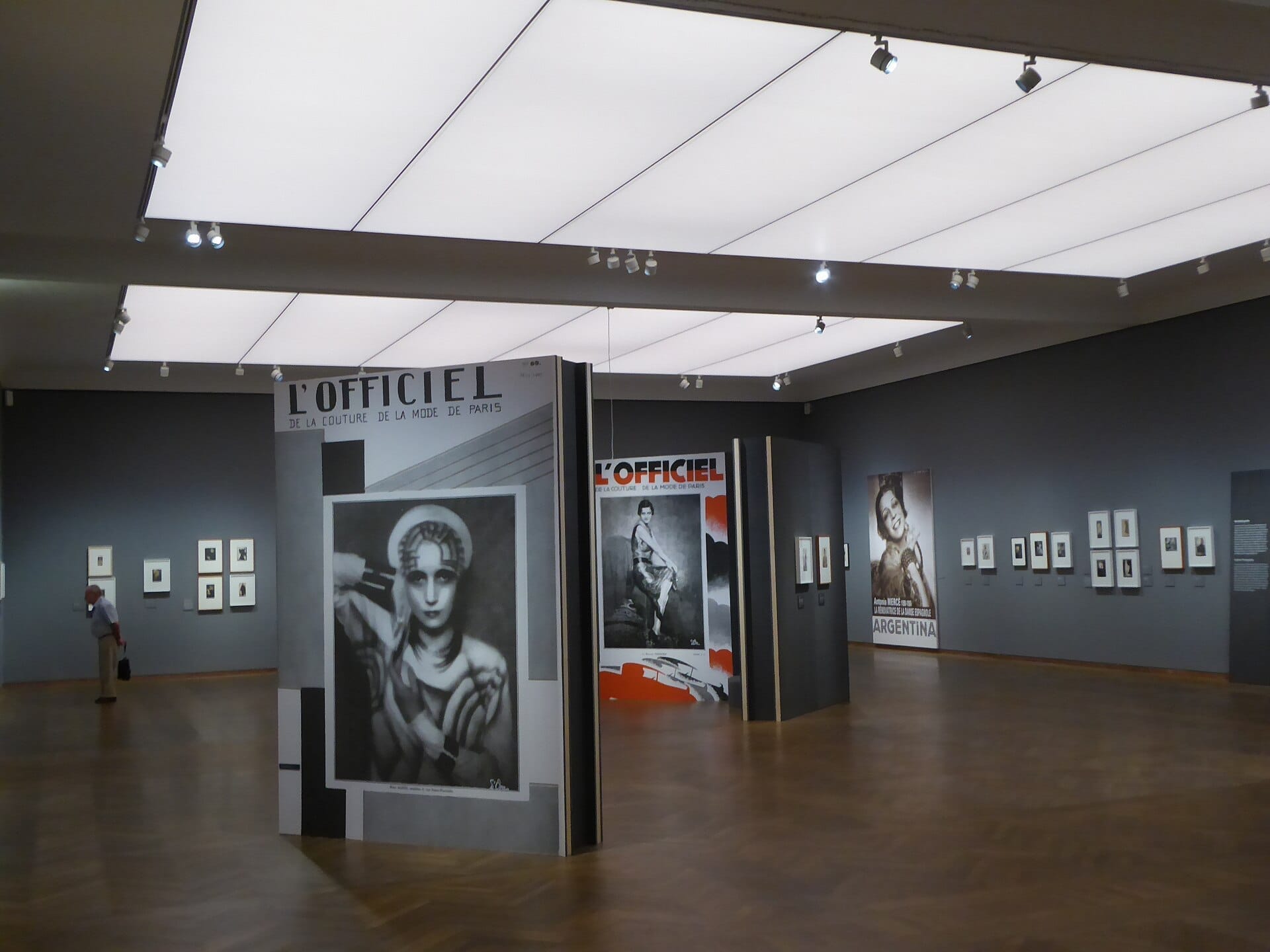
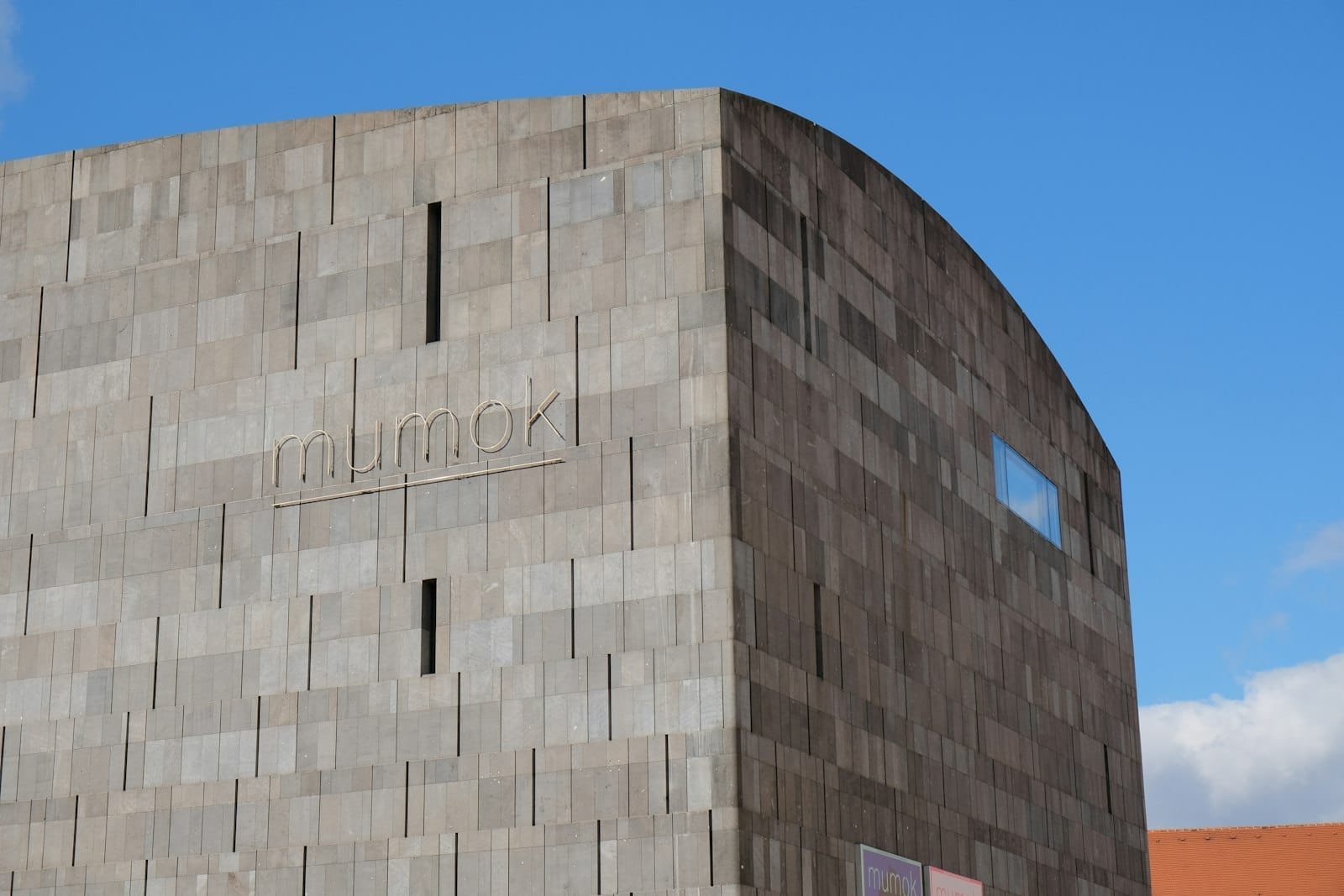
The Leopold Museum holds the world's largest collection of works by Egon Schiele, along with major pieces by Gustav Klimt, Oskar Kokoschka, and other Austrian modernists. The building's crisp white cube exterior stands in deliberate contrast to the Baroque stonework around it. Next door, MUMOK (Museum of Modern Art Ludwig Foundation Vienna) fills a basalt lava-clad building with one of Central Europe's most significant collections of 20th and 21st century art.
Leopold Museum: Schiele, Klimt, and Austrian modernism – allow at least two hours
MUMOK: Pop art, Fluxus, Nouveau Réalisme, and contemporary works
Kunsthalle Wien: Rotating contemporary art exhibitions in two venues (one inside MQ, one at Karlsplatz)
Architekturzentrum Wien: Permanent and temporary architecture exhibitions, strong on Viennese modernism
MQ courtyards: Free to enter, with seasonal outdoor programming and food vendors
Volkstheater: Major repertory theater at the northern edge of the MQ area
Mariahilfer Straße: Vienna's main pedestrianized shopping street, running through both districts
Just outside the complex's eastern gates, Maria-Theresien-Platz opens onto one of Vienna's grandest urban set pieces, with the Kunsthistorisches Museum on one side and the Naturhistorisches Museum on the other. Most visitors do not realize how short the walk is between these institutions and the MQ — it is less than three minutes through the gates. Combining a morning in the KHM with an afternoon in the MQ makes for an extremely full but coherent cultural day.
About ten minutes south on foot, the Naschmarkt stretches along the Wienzeile. The market operates Monday through Saturday and transitions from serious food shopping in the morning to a more tourist-oriented experience as the day goes on. Saturday mornings are the most atmospheric, when a flea market extends the stalls significantly westward.
Eating and Drinking
Inside the MQ complex itself, the options range from quick counter service for coffee and pastries to sit-down restaurants with full menus. The quality is consistently decent rather than exceptional; you are paying partly for the atmosphere of eating in a converted imperial courtyard. That said, the outdoor seating in the main courtyard on a warm evening is a real pleasure.
For serious eating, the neighborhoods immediately surrounding the MQ are more rewarding. Neubau's side streets have a higher concentration of independent restaurants per block than almost anywhere else in Vienna. The stretch around Lindengasse, Kirchengasse, and Stiftgasse covers everything from Vietnamese and Middle Eastern to Austrian-inflected bistros and natural wine bars. Prices tend to be mid-range: a proper sit-down dinner with drinks lands around 25 to 45 euros per person at most places.
Mariahilfer Straße itself is lined with chain restaurants and fast food that cater primarily to shoppers. The better eating is in the calmer cross streets running off the main road. The area around Barnabitengasse and Gumpendorfer Straße, in Mariahilf proper, has a small cluster of neighborhood restaurants and cafés that feel genuinely local.
Vienna's coffeehouse culture is well represented here. The districts have several traditional Kaffeehäuser alongside the newer specialty coffee wave. For a deeper look at how the coffeehouse fits into Viennese life, the Vienna coffeehouse guide explains the etiquette and hierarchy. The Naschmarkt edge, along Linke Wienzeile, has several café terraces that work particularly well in the afternoon light.
💡 Local tip
If you are visiting the MQ on a Saturday, combine it with the Naschmarkt flea market in the morning (it runs until roughly early afternoon). Walk south along Gumpendorfer Straße from the MQ area to reach the market in about twelve to eighteen minutes on foot.
Getting There and Around
The U-Bahn network has a dedicated Museumsquartier station that opens directly onto the MQ complex, historically served by line U2 but currently affected by long-term construction and line changes, so you should verify which line is running there before your visit. The U2/U3 interchange at Volkstheater puts you at the northern end of the area. Most journeys from the 1st district city center take under fifteen minutes by U-Bahn.
Trams are useful for moving along the Ringstraße corridor. Lines 1, 2, D, and 71 stop at Ring/Volkstheater, just northeast of the MQ. Tram 49 runs along Burggasse and Neustiftgasse into the 14th and 15th districts, making it useful for exploring further west. Bus lines 2A and 48A also serve the immediate area.
Walking from the 1st district is straightforward and takes around ten to twelve minutes from the Hofburg's western gates. The entire MQ and Mariahilf area is very walkable internally — the distance from the MQ's northern entrance to the Naschmarkt is about fifteen to eighteen minutes on foot. For more on navigating the city's transit network, the guide to getting around Vienna covers tickets, passes, and route planning in detail.
⚠️ What to skip
The U2 line is undergoing a significant extension project. Some stations and services may be affected during construction phases. Check the Wiener Linien website for the latest service information before planning your visit around specific U2 stops.
Where to Stay
This area suits travelers who want to be close to major museums without paying the premium of staying directly in the 1st district. Hotels around the MQ and along Mariahilfer Straße tend to offer better value than comparable properties in the Innere Stadt, while keeping you within a ten-minute walk or a single U-Bahn stop of the historic center. See the full Vienna accommodation guide for a complete district comparison.
Mariahilfer Straße itself can be noisy during shopping hours, and rooms facing the main street will get significant foot traffic noise well into the evening. Ask specifically for a courtyard-facing room if you are light-sensitive to street sound. The quieter side streets in Neubau — particularly north of Burggasse — offer smaller boutique properties with considerably less noise.
The area works particularly well for travelers who plan to spend multiple days in Vienna's museum landscape, or who want to explore the city on foot and by tram rather than staying closer to a single landmark. Families visiting with children will find the MQ's mix of cultural attractions and open courtyard spaces a practical base, since the complex itself offers programming aimed at younger visitors alongside the major gallery collections.
Honest Drawbacks
The MQ complex is extremely popular, and the main courtyard can feel genuinely overcrowded on summer weekends and during special events. If you want to visit the Leopold Museum or MUMOK without long queues, arrive when the museums open or book tickets in advance online. The courtyards stay busy until late on warm evenings, which is part of the appeal but also means the surrounding streets carry significant foot traffic until well past midnight.
Mariahilfer Straße itself, while useful, is an almost entirely commercial strip. It functions well as an orientation point and a transit corridor, but it lacks the architectural or atmospheric interest of other main streets in the city. The pedestrian zone is pleasant enough on a weekday, but weekend crowds and the concentration of chain retail make it feel closer to a shopping mall than a neighborhood street.
Travelers whose primary interest is imperial Vienna — the Habsburgs, Schönbrunn, the Hofburg — will find the 7th district slightly removed from that world in character, even if it is physically close. The Schönbrunn area and the 1st district have a more concentrated dose of imperial grandeur. This neighborhood rewards those who want both serious contemporary art and local urban life without needing every corner to be postcard-ready.
TL;DR
Best for: Art and museum enthusiasts, independent travelers who value local street life alongside major cultural institutions
Key institutions: Leopold Museum (world's largest Schiele collection), MUMOK, Kunsthalle Wien, Architekturzentrum Wien
Transit: U2 Museumsquartier and U2/U3 Volkstheater provide direct access; the whole area is walkable from the 1st district in under 15 minutes
Honest limitation: Mariahilfer Straße is useful but not atmospheric; MQ courtyards get crowded on summer weekends; some hotel rooms face noisy main streets
Skip it if: Your priorities are purely imperial Vienna or you want a quieter, residential base away from significant tourist foot traffic
Top Attractions in MuseumsQuartier & Mariahilf (6th–7th Districts)
Three days is enough to experience Vienna's imperial core, its greatest art museums, and its legendary coffeehouse culture — if you route each day by geography. This guide structures your visit around three logical zones: the historic Innere Stadt, the Belvedere and Naschmarkt corridor, and Schönbrunn with the Prater.
Vienna holds one of the densest concentrations of world-class museums anywhere in Europe, from imperial art collections built over centuries to cutting-edge contemporary spaces. This guide covers the essential institutions, what makes each one worth your time, and how to plan your visits efficiently.
Vienna rewards visitors in every season, but the experience varies dramatically depending on when you go. This guide breaks down the weather, crowd levels, pricing, and cultural calendar month by month so you can choose the timing that fits your priorities.
Vienna sits at the centre of Central Europe, which makes it one of the best bases on the continent for day trips. From the vine-covered slopes of the Wachau Valley to the baroque splendour of Salzburg, here is everything you need to plan a trip outside the city with confidence.
Vienna's public transport network is one of Europe's most efficient, covering the entire city with U-Bahn, trams, buses, and S-Bahn. This guide covers 2026 ticket prices, airport transfer options, night services, and everything you need to move around the city without a car.
Vienna delivers imperial grandeur at every turn, from Schönbrunn Palace and the Vienna State Opera to Michelin-starred restaurants and storied grand cafés. This guide covers everything you need to plan an indulgent 3-5 day stay, with practical guidance on where to splurge and what to skip.
Vienna rewards couples with imperial grandeur, world-class music, candlelit coffeehouses, and panoramic hilltop views. This guide covers the most romantic things to do in Vienna, from palaces and concert halls to wine taverns and riverside strolls.
Vienna rewards visitors who go beyond the postcard. This guide covers the top things to do in Vienna Austria — from Schönbrunn Palace and Klimt's 'The Kiss' to Naschmarkt and the city's underrated museum scene — with real prices, seasonal advice, and clear notes on what's worth your time.
Forty-eight hours is enough to experience Vienna's imperial grandeur, world-class museums, and legendary café culture. This itinerary cuts through the options and tells you exactly what to prioritize, in what order, and why.
Vienna International Airport (IATA: VIE) sits 18-20 km southeast of the city centre at Schwechat. This guide covers every transfer option in detail, from the 16-minute City Airport Train to pre-booked fixed-price transfers that often undercut metered taxis, plus everything you need to know before you land.
Vienna is one of Europe's great architectural cities, where Baroque palaces, 19th-century Historicist monuments, and Art Nouveau masterpieces exist within walking distance of each other. This guide takes you through the buildings that define the city's visual identity, from imperial grandeur to radical modernism.
Vienna's ball season transforms the city every winter into one of the world's great celebrations of formal dance. This guide covers everything from Opera Ball tickets and dress codes to affordable alternatives, so you can plan the right night for your budget and style.
Vienna transforms into one of Europe's most spectacular Christmas destinations from November through early January, with dozens of free markets spread across imperial palaces, Gothic squares, and cobblestone lanes. This guide covers the best markets, what to eat and drink, and the top nearby attractions to combine for a full festive day out.
Vienna's sacred architecture spans eight centuries, from Romanesque foundations to soaring Gothic cathedrals, opulent Baroque interiors, and one of the world's great Art Nouveau churches. This guide covers the essential churches across styles, with practical tips on what to see inside each one.
Vienna is the undisputed world capital of classical music, home to the Vienna Philharmonic, Vienna State Opera, Musikverein, and dozens of nightly concerts across palaces and churches. This guide covers every major venue, realistic ticket prices, seasonal highlights, and how to book without overpaying.
Vienna's traditional coffeehouses are UNESCO-recognised cultural institutions, not just places to drink coffee. This guide covers the best venues, what to order, typical costs, etiquette rules, and how to tell the genuine article from a tourist trap.
Vienna holds more Egon Schiele than anywhere else on earth. This guide covers the major museum collections, the art-world context that shaped him, and the biographical sites that trace his short, electric life in the city.
From the Hofburg to the Kapuzinergruft, the Habsburg dynasty left Vienna with one of Europe's most concentrated collections of imperial architecture, art, and ritual. This guide covers the key sites, historical context, ticket prices, and the best way to structure a full day in imperial Vienna.
Vienna rewards those who look beyond the Hofburg and Schönbrunn. These off-the-beaten-path experiences range from a private princely art collection to a cemetery full of composers, a hilltop vineyard trail, and a museum inside a WWII gun tower.
Vienna surprises most visitors with how much green space it packs within its borders. Between the forested hills of the Vienna Woods, the Danube's recreational islands, and 14 marked city hiking trails totaling over 240 km, the Austrian capital rewards anyone willing to lace up their shoes or rent a bike.
Summer in Vienna runs hot, loud, and remarkably free. From the Vienna Philharmonic playing open-air in Schönbrunn's gardens to lakeside swimming on the Old Danube, this guide covers every worthwhile summer activity, the major festivals with dates, and the honest truth about peak-season crowds.
Vienna in winter is cold, atmospheric, and surprisingly rewarding. From Christmas markets and imperial palace tours to world-class concerts and coffeehouse culture, this guide covers everything you need to plan a smart, enjoyable trip between November and March.
Gustav Klimt and the Vienna Secession transformed Western art in just a decade. This guide traces their legacy across the city, from the gold-domed Secession building to the museums, churches, and coffeehouses that shaped the movement.
Vienna after dark is more layered than its imperial reputation suggests. This guide breaks down the best bar districts, club zones, jazz venues, and classical nights out, with honest price breakdowns, seasonal advice, and the neighborhoods worth exploring beyond the tourist trail.
Vienna has a reputation for imperial grandeur and high prices, but a realistic daily budget of €50–80 covers accommodation, food, transport, and plenty of sightseeing. This guide breaks down exactly where your money goes, what you can skip paying for entirely, and how to get the most out of every euro.
Vienna is a city of palaces, with far more than the two famous names. From the sprawling Hofburg to the intimate Liechtenstein Garden Palace and the museum-filled Albertina, this guide takes you through the full sweep of Vienna's imperial and aristocratic architectural heritage.
The Vienna Pass promises free entry to 70+ attractions and hop-on hop-off buses, but it only pays off under specific conditions. This guide breaks down exactly who benefits, who overpays, and how to calculate your own savings before you buy.
The Sachertorte is Vienna's most iconic dessert, but not every slice is created equal. This guide breaks down the history, the competing originals, current prices, and where to actually eat chocolate cake in Vienna without overpaying or getting a subpar version.
Vienna's shopping scene ranges from Habsburg-era luxury arcades to independent boutiques in the 7th district and a sprawling open-air food market that has operated for over a century. This guide maps out every major shopping area by character, price point, and practical logistics.
The Vienna to Budapest train is one of Europe's most straightforward cross-border routes: direct, frequent, and genuinely fast. This guide covers ticket prices, how to book, which operators to use, whether a day trip is realistic, and how Budapest fits into a wider Central European itinerary.
The Vienna to Prague corridor is one of Central Europe's most traveled routes, with direct trains, budget buses, and flights all competing for your ticket. This guide breaks down real journey times, current price ranges, booking strategy, and which option actually gets you there fastest.
The Vienna to Salzburg route is one of Austria's most traveled corridors, with fast Railjet trains covering 249 km in as little as 2 hours 22 minutes. This guide covers every transport option, realistic fares, booking strategy, and how to structure a day trip without rushing.
The Wachau Valley is one of the most rewarding day trips from Vienna, combining a Baroque abbey, a ruined castle above the Danube, and one of Austria's finest wine towns. This guide covers the best route, transport options, seasonal cruise logistics, and what to skip so you can make the most of a single day.
The First District is Vienna's compact historic core, a UNESCO World Heritage site you can cross on foot in 20 minutes. This guide covers the full self-guided walking route, key landmarks, honest pricing, and practical tips for every season.
Vienna is one of the few world capitals with functioning vineyards inside its city limits. This guide covers the Heuriger tavern tradition, the best wine districts to visit, how to get there, what to drink, and what separates a genuine Buschenschank from a tourist-facing imitation.
Vienna is one of Europe's most underrated family destinations, with free museum entry for under-18s, affordable public transport for kids, and attractions that genuinely engage children of all ages. This guide covers the best things to do in Vienna with kids, from palace gardens and aquariums to hands-on science museums and a 127-year-old ferris wheel.
Vienna played a central role in both World Wars, first as the capital of the Austro-Hungarian Empire and later as a focal point of Nazi annexation and persecution. This guide covers the key historical sites, Holocaust memorials, and practical logistics for visiting them — along with the honest, complicated history that shaped modern Austria.
Vienna's food culture runs deep: centuries of imperial cooking, Central European comfort food, and a coffee house tradition unlike anywhere else. This guide covers the dishes you should actually order, where to find the best versions, realistic prices, and the misconceptions that trip up first-time visitors.
Vienna's 23 districts each offer a different pace, price point, and proximity to the city's top sights. This guide cuts through the noise to tell you exactly which neighborhoods suit first-timers, budget travelers, culture seekers, and those who want a more local experience — with practical advice on transport, pricing, and what to watch out for.