Vienna Self-Guided Walking Tour: The Historic First District (Innere Stadt)
The First District is Vienna's compact historic core, a UNESCO World Heritage site you can cross on foot in 20 minutes. This guide covers the full self-guided walking route, key landmarks, honest pricing, and practical tips for every season.
Tickets & tours
Live prices and dates from our booking partner. If you book, we may earn a commission at no extra cost to you.
TL;DR
- The Innere Stadt (1st District) covers under 3 km² and every major sight is within 20 minutes' walk of Stephansplatz.
- Start at Stephansplatz (U1/U3) and follow the route through the Graben, Hofburg, Ringstrasse, and Vienna State Opera. See our complete Vienna things-to-do guide for context.
- Most major sights are free to admire from outside; paid entries range from around €7 (cathedral tower) to €18+ for guided interiors.
- Avoid Sundays if you want cafes and smaller shops open; avoid August midday crowds around Stephansdom.
- The First District pairs naturally with a visit to the Innere Stadt neighborhood for deeper context on where to eat, drink, and stay.
Why the First District Is Perfect for Walking
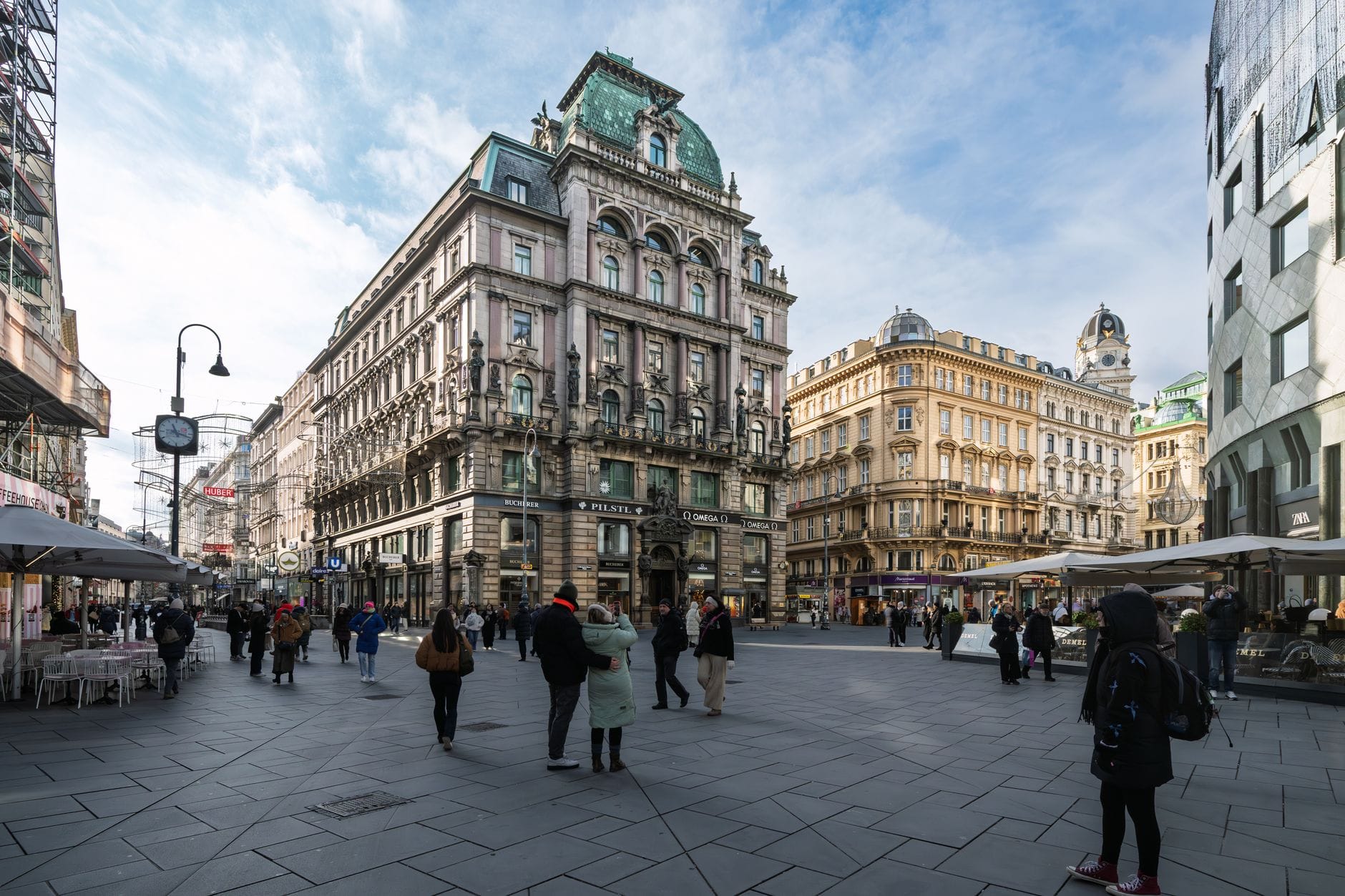
Vienna's Innere Stadt, officially the 1st Bezirk (postcode 1010), is the city's original settlement core. Until 1850, this compact area essentially was Vienna: the surrounding communities were only incorporated after the old city walls came down to make way for the Ringstrasse, the grand boulevard that now forms the district's outer boundary. That history gives the First District something rare in European capitals: an almost entirely walkable, logically arranged historic center where nearly everything of imperial significance is clustered within 15 to 20 minutes of each other on foot.
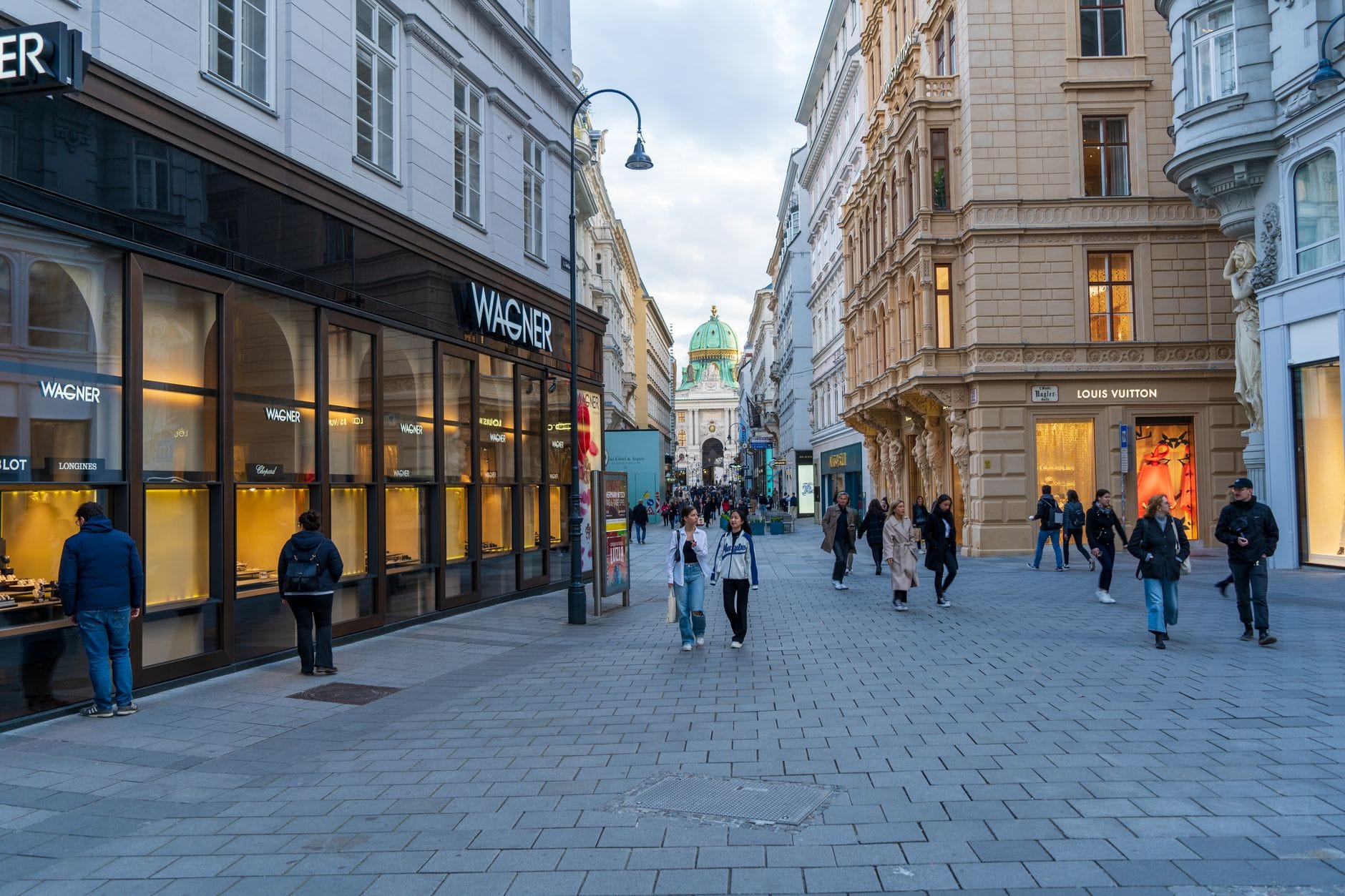
The district measures under 3 km² and is largely flat in its central streets, with no significant elevation changes on the main walking routes. Cobblestones are common on the older lanes, so comfortable shoes matter more than fitness level. The absence of through-traffic on many central streets (Graben and Kohlmarkt are pedestrian-only) makes the experience far more pleasant than self-guided walks in cities where you're constantly dodging cars.
In 2001, the historic center of Vienna including the Innere Stadt and the Ringstrasse ensemble was inscribed as a UNESCO World Heritage Site. That designation reflects what walkers actually feel here: an extraordinary density of Baroque, Gothic, and late-19th-century architecture within a single navigable area.
💡 Local tip
Start your walk at Stephansplatz (U1/U3 lines) rather than Karlsplatz. Emerging from the U-Bahn directly under the spire of St. Stephen's Cathedral is a genuinely striking arrival that orients you instantly and sets the tone for the whole route.
The Core Route: Landmarks in Logical Order
The most logical self-guided loop begins at St. Stephen's Cathedral (Stephansdom), proceeds west along the Graben to Kohlmarkt, then south into the Hofburg complex, continues along the Ringstrasse to the Vienna State Opera, and loops back via the Albertina and Augustinerstrasse. Total walking time, excluding stops, is around 90 minutes. With brief entry to a few key sites, budget a full half-day.
- St. Stephen's Cathedral (Stephansdom) The Gothic cathedral is Vienna's undisputed centerpiece. Entry to the nave is free; the South Tower stair climb costs around €7 and offers the best rooftop view in the First District. Arrive before 10:00 to avoid school groups and tour buses.
- Graben and Kohlmarkt These two linked pedestrian streets run west from Stephansdom toward the Hofburg. The Graben features the Baroque Plague Column (Pestsäule) and high-end retail. Kohlmarkt is narrower and leads directly to the Michaelertor, the ceremonial entrance to the Hofburg.
- Hofburg Palace The imperial palace complex is enormous and could occupy an entire separate day. On a walking tour, cross through the inner courtyard (In der Burg) and the Schweizerhof to appreciate the scale. The Sisi Museum, Imperial Apartments, and Imperial Treasury are paid attractions inside.
- Heldenplatz and the Ringstrasse Exiting the Hofburg toward Heldenplatz brings you to the grand equestrian statues and the view down the Ringstrasse. The Natural History Museum and Kunsthistorisches Museum face each other across Maria-Theresien-Platz, a short walk south.
- Vienna State Opera (Wiener Staatsoper) The Opera House anchors the southeast corner of the inner ring. Standing room tickets run approximately €13–18 and go on sale online at 10:00 on the day of performance. Even if you're not attending, the exterior is among the finest examples of neo-Renaissance architecture on the Ringstrasse.
- Albertina Museum At the corner of Augustinerstrasse and Operngasse, the Albertina closes the loop neatly. Its rooftop terrace offers an elevated view toward the Opera and back toward the Hofburg. Paid entry to the collection is worthwhile for graphic art enthusiasts.
If time permits, extend the loop north from Stephansdom through the narrow medieval lanes toward Judenplatz and Hoher Markt. These areas see significantly fewer tourists than the Graben axis and give a better sense of the district's medieval street plan. Judenplatz holds the stark Holocaust Memorial by Rachel Whiteread, one of the most powerful public monuments in the city.
⚠️ What to skip
The Fiaker (horse-drawn carriage) rides around the First District start at around €80 for 20 minutes. They are atmospheric, not practical, and operate primarily for tourists. The walking route covers more ground faster and at a fraction of the cost.
Getting There and Getting Around
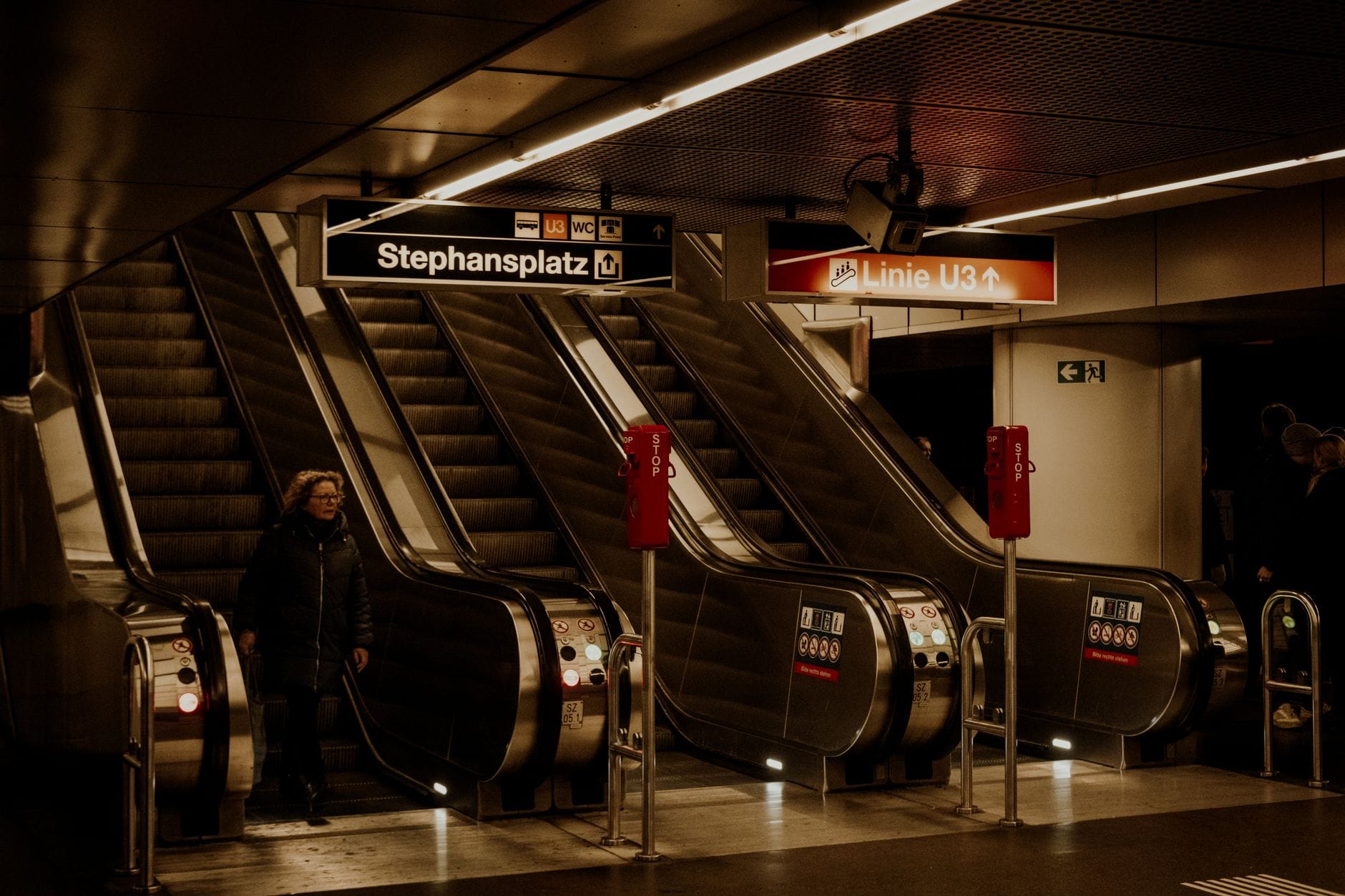
Stephansplatz station (U1 red line, U3 orange line) is the default arrival point for the walking tour. From the city's main railway stations, the U1 connects directly. From Vienna International Airport (VIE, about 18 km southeast), the City Airport Train (CAT) or the S-Bahn S7 line brings you into the city center; from Wien Mitte station, the U3 runs directly to Stephansplatz in about 4 minutes.
Once you're in the First District, public transport is largely unnecessary. Trams 1 and 2 circle the Ringstrasse if you want to skip a section, and the U-Bahn has additional stops at Karlsplatz (U1, U2, U4) and Schwedenplatz (U1, U4) at the district's edges. For full transport planning, the WienMobil app integrates real-time data across all Wiener Linien services. See our guide on getting around Vienna for detailed ticketing advice.
✨ Pro tip
A single-trip Wiener Linien ticket covers any direction for 30 minutes from validation, including transfers. If you're doing a full-day circuit of the First District and nearby museums, a 24-hour pass offers better value than buying individual trips.
Seasonal Conditions: When to Walk and What to Expect
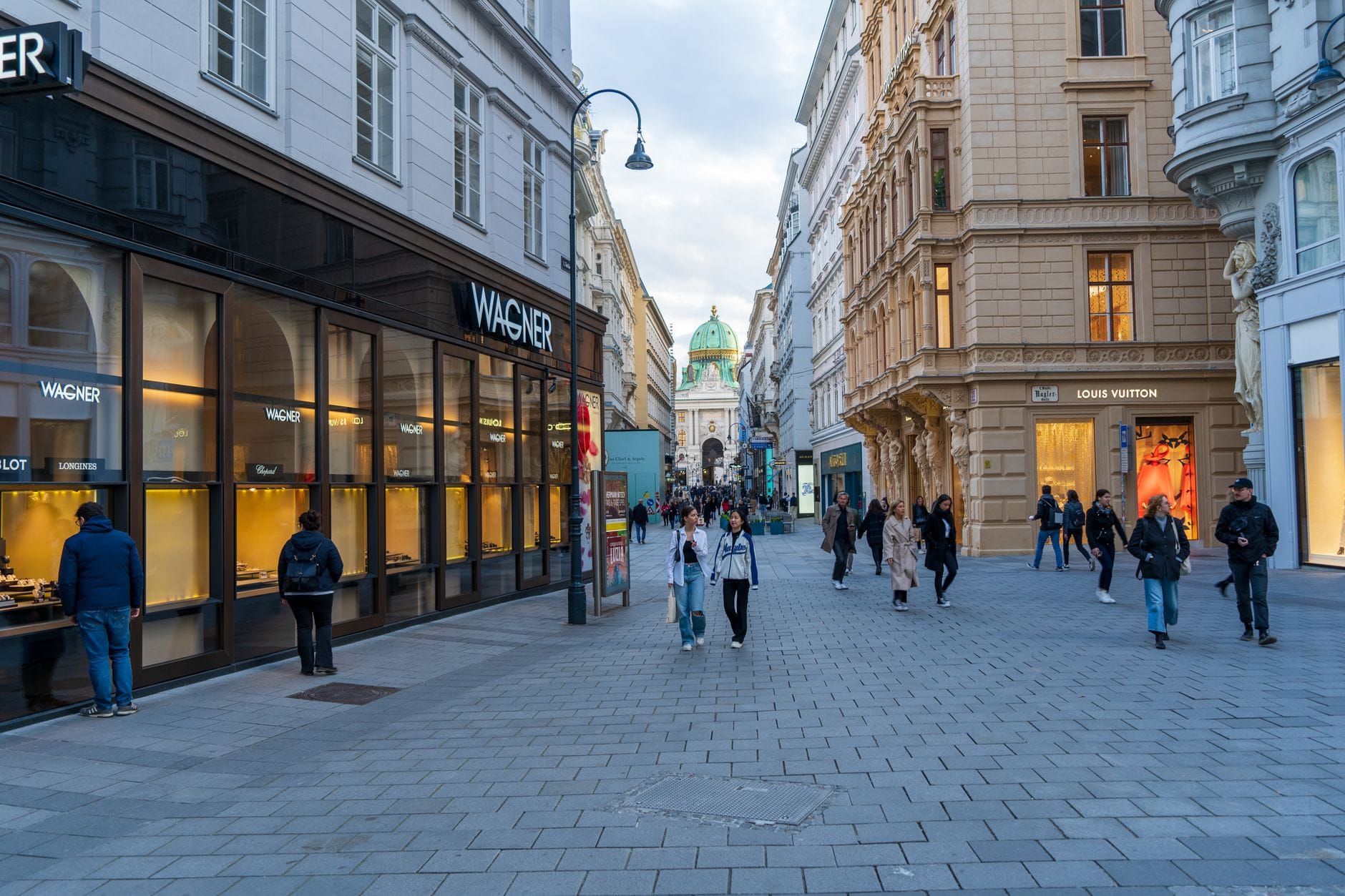
The First District rewards walking in almost any season, but conditions vary meaningfully. Spring (April to May) and early autumn (September to October) are the most consistently pleasant: temperatures typically range between 10°C and 20°C, daylight is generous, and the summer peak crowds have not yet arrived or have just receded. The outdoor café culture along Graben and in the courtyards is at its most agreeable.
Summer (June to August) brings the highest visitor numbers, with Stephansdom and the Hofburg exterior at their most crowded between 10:00 and 15:00. Start the walk before 9:00 or after 17:00 to avoid the worst congestion. Extended daylight hours (sunset after 20:30 in late June) allow for a genuinely beautiful evening circuit of the Ringstrasse. For everything to know about visiting in this season, see the Vienna in summer guide.
Winter walking is underrated. Snow on the Graben and the Gothic spires of Stephansdom creates a striking atmosphere, and the district's enclosed arcade passages (Durchhäuser) offer weather-free shortcuts between streets. The Vienna Christmas markets on Freyung and at the Rathausplatz (just outside the district) draw large crowds from late November through December 26. Expect early nightfall and occasional icy cobblestones in January and February.
- Best overall months: April, May, September, October
- Best for atmosphere without crowds: weekday mornings in March or November
- Most crowded period: July–August, especially 10:00–15:00 around Stephansdom
- Christmas market season adds charm but also significant pedestrian congestion along Graben
- Winter walking is viable year-round; pack for potential ice on cobblestones December–February
Beyond the Main Route: What Most Walkers Skip
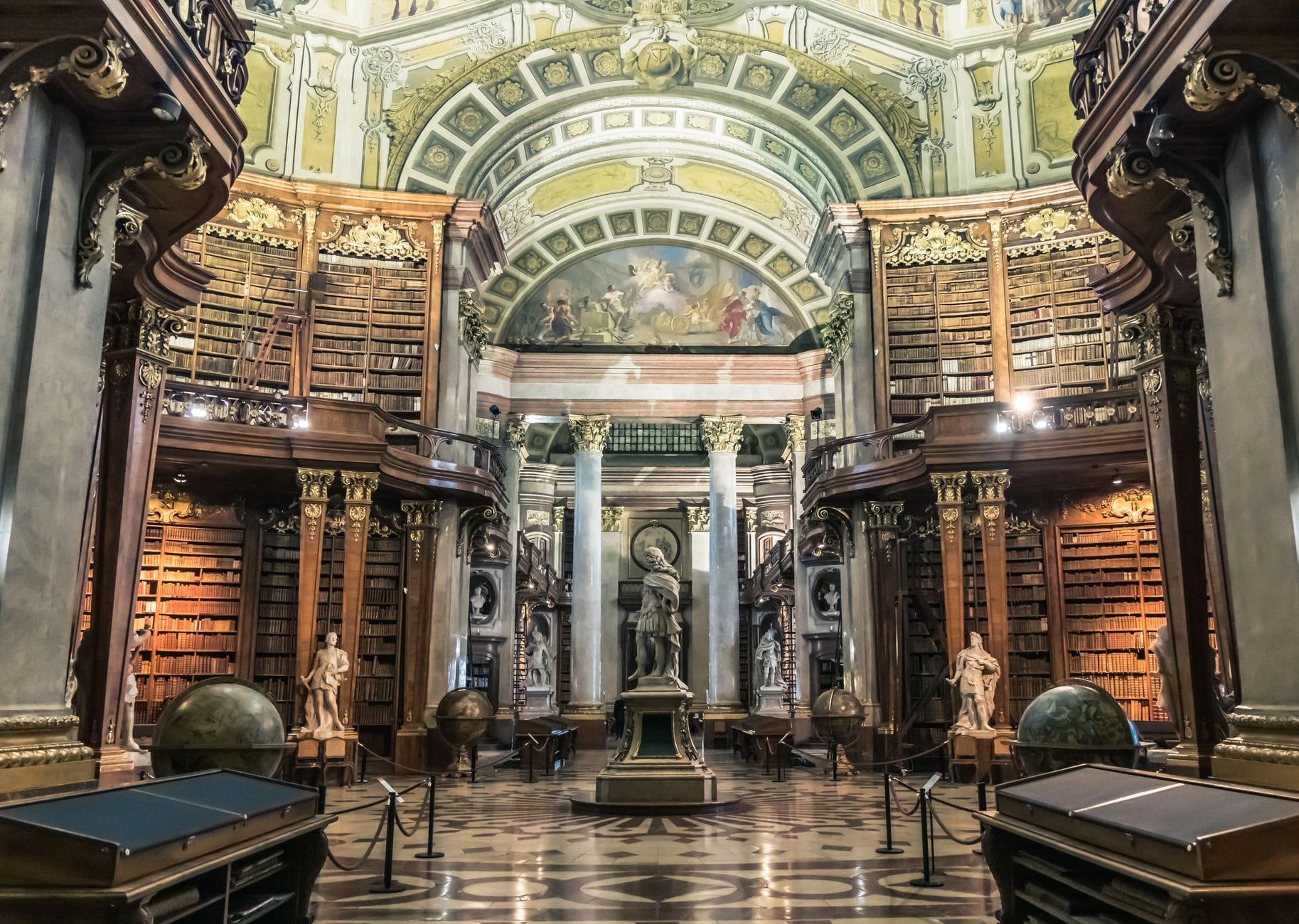
The Innere Stadt has a secondary layer of significant sites that rarely appear in 2-hour walking tour summaries. The Austrian National Library Prunksaal on Josefsplatz is one of the great Baroque library halls in Europe and is seriously undervisited. Entry costs around €10 and the hall itself takes only 20 to 30 minutes to appreciate properly.
The Kapuzinergruft (Imperial Crypt) on Neuer Markt holds the sarcophagi of 149 Habsburg rulers and family members, including Empress Maria Theresa and Emperor Franz Joseph. It is not grandiose from the outside, which is why many walkers pass it entirely. Entry is modest (around €8) and the crypt is rarely congested outside of peak summer afternoons.
The narrow lanes east of Stephansdom toward Domgasse and Blutgasse retain a medieval street scale that feels entirely different from the Baroque grandeur of the main axes. Mozarthaus Vienna on Domgasse 5 marks the apartment where Mozart lived from 1784 to 1787 and composed The Marriage of Figaro. It is a legitimate historic site, not a theme attraction, and the building itself is worth a look even if you skip the paid interior.
Practical Tips Before You Set Out
Comfortable, flat-soled shoes are essential. Many of the historic lanes use original cobblestones or uneven paving, and the walking distances add up quickly once you factor in interior visits. Standard sneakers work well; avoid heels or formal shoes unless you are heading directly to the Opera.
- Entry to St. Stephen's Cathedral nave is free; tower climb is around €7
- Vienna State Opera standing room tickets cost approximately €13–18, on sale at 10:00 on the day of performance at the box office or online
- The Hofburg's courtyard and Heldenplatz are free to walk through at any time
- Austrian National Library Prunksaal entry is around €10; closed Mondays
- Kapuzinergruft entry is around €8; verify current hours before visiting
- Emergency number across Austria: 112 (general); 133 (police); 144 (ambulance)
- Tap water in Vienna is safe to drink and notably high quality, sourced partly from Alpine springs
If you plan to visit multiple paid museums during your stay in Vienna, check whether the Vienna City Card or Vienna Pass offers savings over individual entry prices. For a focused walk of the First District's exterior landmarks only, no pass is needed.
ℹ️ Good to know
The official Vienna Tourist Board information office in the city center and a second office at Vienna Airport (Arrival Hall, 1300 Schwechat) provide free maps, current event listings, and transport advice. The WienMobil app (free) handles real-time public transport planning and accounts for construction or service disruptions.
FAQ
How long does it take to walk the Vienna First District?
You can cross the Innere Stadt in about 20 minutes at a brisk pace. A thorough self-guided walking tour covering the main landmarks (Stephansdom, Graben, Hofburg, Ringstrasse, Albertina) takes around 2 to 3 hours on foot without entering any paid attractions. Allow a full half-day if you plan to go inside St. Stephen's Cathedral, the Hofburg interior, or the Kapuzinergruft.
Where is the best starting point for a self-guided walk in Vienna's historic center?
Stephansplatz station (U1/U3) is the best starting point. You emerge directly in front of St. Stephen's Cathedral, which provides immediate orientation and is central to all subsequent landmarks. Alternatively, Karlsplatz (U1/U2/U4) works if you prefer to start from the Vienna State Opera end and walk north.
Is the First District walkable in winter?
Yes, and it can be particularly atmospheric in winter. The main pedestrian zones (Graben, Kohlmarkt) are well maintained, though cobblestone side streets can be icy in January and February. The enclosed Durchhäuser passages between streets offer weather-free shortcuts. The Christmas markets in late November and December add significant crowd density on Graben.
What is the most underrated sight in the Innere Stadt?
The Austrian National Library Prunksaal on Josefsplatz is genuinely undervisited despite being one of the finest Baroque interiors in Vienna. The Kapuzinergruft (Imperial Crypt) is also overlooked by many walkers, despite holding nearly 150 Habsburg sarcophagi including those of Franz Joseph and Empress Sisi.
Do I need to book anything in advance for a self-guided walk?
No advance booking is needed for exterior landmarks, the cathedral nave, or the Hofburg courtyards. If you want to climb St. Stephen's South Tower, tickets can be bought on the day. Vienna State Opera standing room tickets go on sale at 10:00 on the day of performance and can sell out quickly for popular productions; booking online that morning is advisable.
Tickets & tours
Live prices and dates from our booking partner. If you book, we may earn a commission at no extra cost to you.
Planning a trip? Discover personalized activities with the Nomado app.