Vienna's Architecture: The Essential Guide to Baroque, Ringstrasse & Art Nouveau
Vienna is one of Europe's great architectural cities, where Baroque palaces, 19th-century Historicist monuments, and Art Nouveau masterpieces exist within walking distance of each other. This guide takes you through the buildings that define the city's visual identity, from imperial grandeur to radical modernism.
Plan and book this trip
Tools from our partner Travelpayouts help you compare flights and hotels. If you book through them, we may earn a commission at no extra cost to you.
Flights
Hotels map
Few cities in the world compress so many distinct architectural eras into such a compact area. Vienna's historic centre layers Baroque imperial ambition, the monumental Historicism of the Ringstrasse, and the radical Art Nouveau of the Secession into a streetscape that reads like a textbook on European architectural history. The key thing to understand before you start exploring: these are three separate movements, not one continuous style. Baroque dominated the 17th and 18th centuries, the Ringstrasse was built in the second half of the 19th century using Historicist styles (Neo-Gothic, Neo-Renaissance, Neo-Baroque), and Jugendstil emerged around 1897 as a deliberate break from all of that. Our Innere Stadt walking tour covers many of these sites on foot, and the Klimt and Secession guide goes deeper on the Art Nouveau story. For context on the imperial families who commissioned much of what you will see, the Habsburg imperial history guide is essential reading.
💡 Local tip
The Ringstrasse is a public boulevard — walking its full circuit costs nothing. Tram lines 1, 2, and D cover major sections. Combine a tram ride with targeted stops at the buildings listed below.
Baroque Vienna: Imperial Palaces & Sacred Architecture
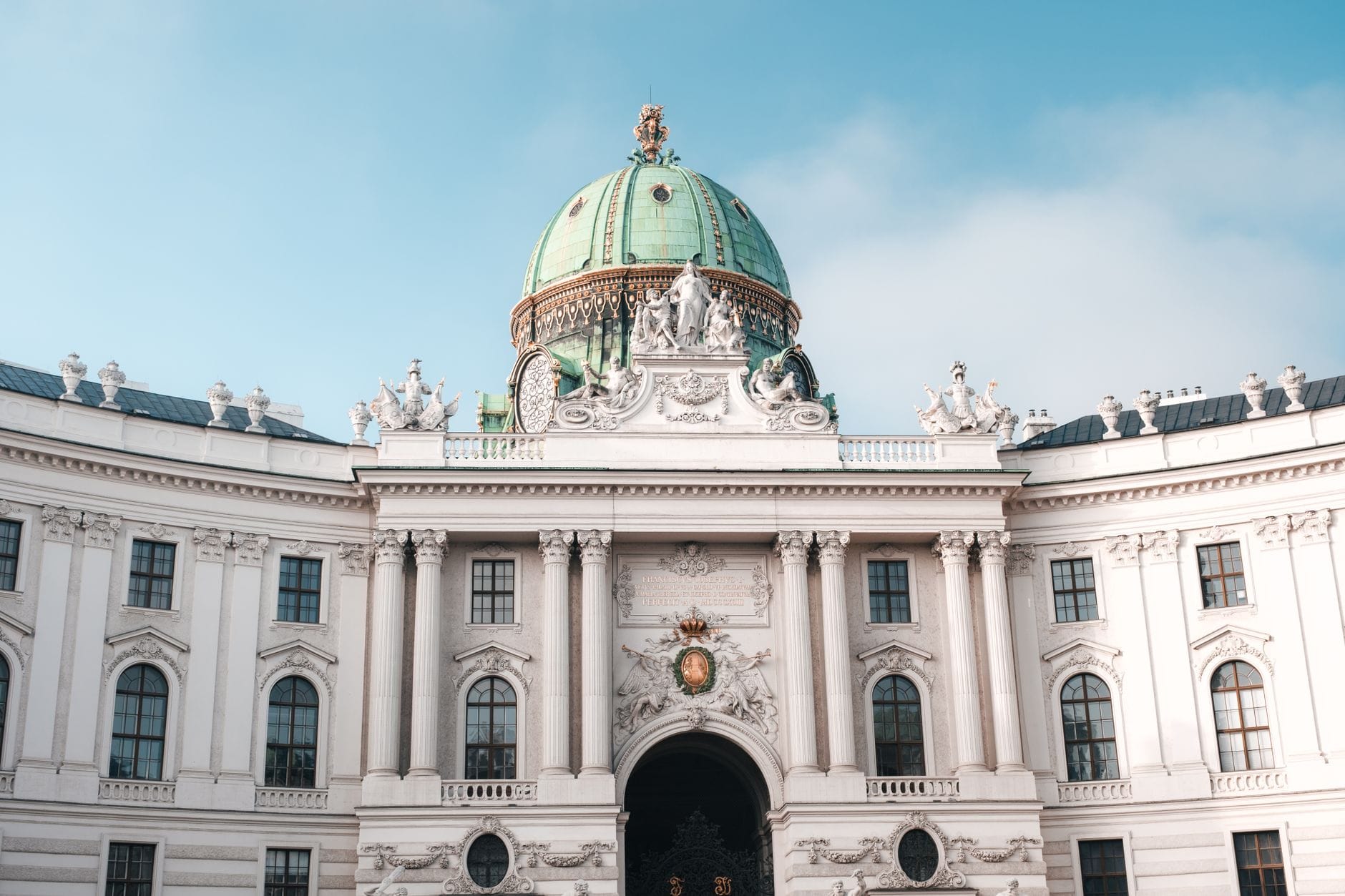
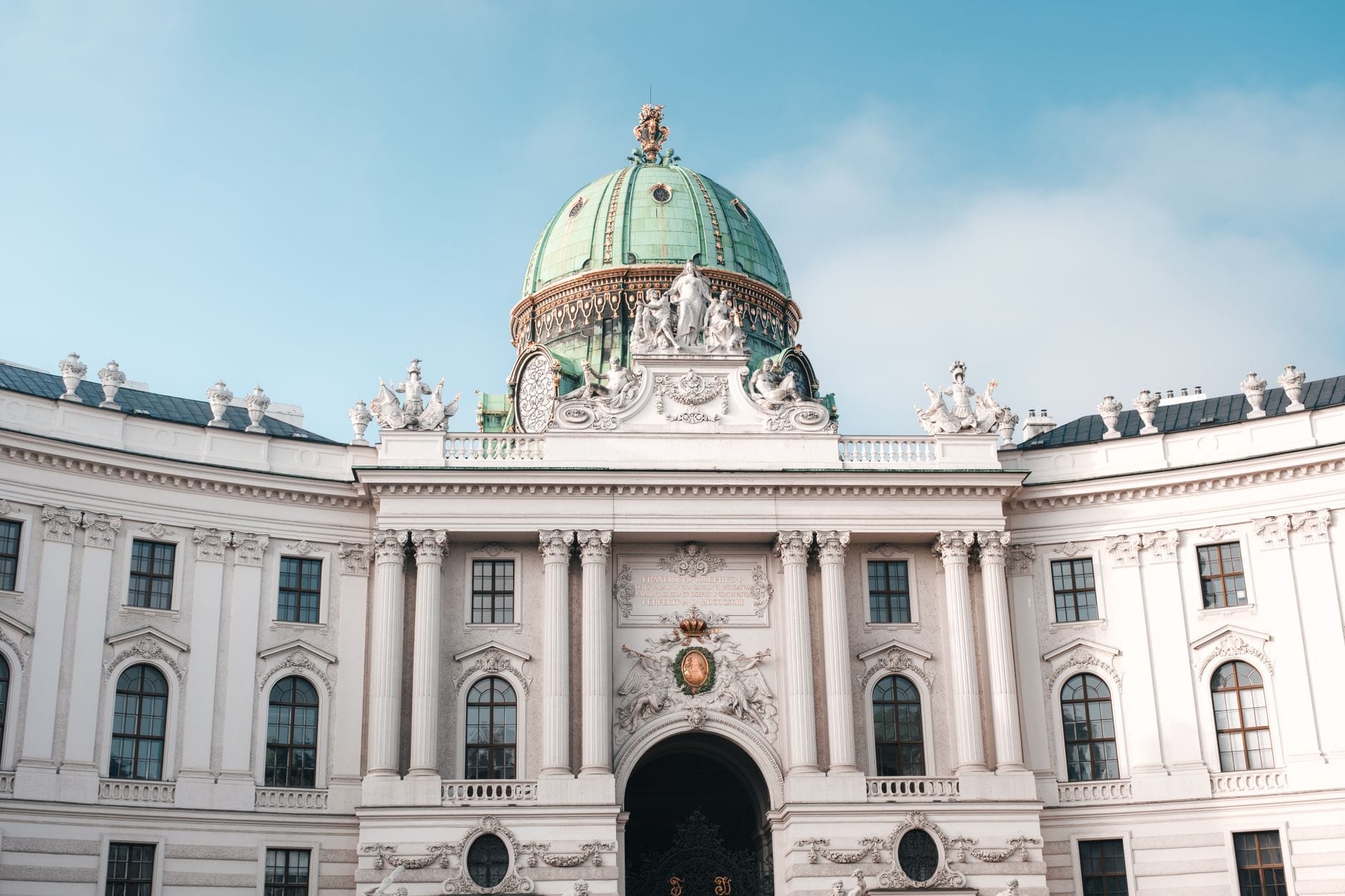
The Baroque era left Vienna with its most dramatic skyline elements: palace complexes built for emperors and princes, and churches whose domes still dominate the city's rooftops. The two key areas to focus on are the Innere Stadt for the Hofburg complex, and the Schönbrunn area for the summer palace. The Belvedere, covered in the next section, bridges Baroque and later periods beautifully.
1. Trace 600 Years of Habsburg Power at the Hofburg
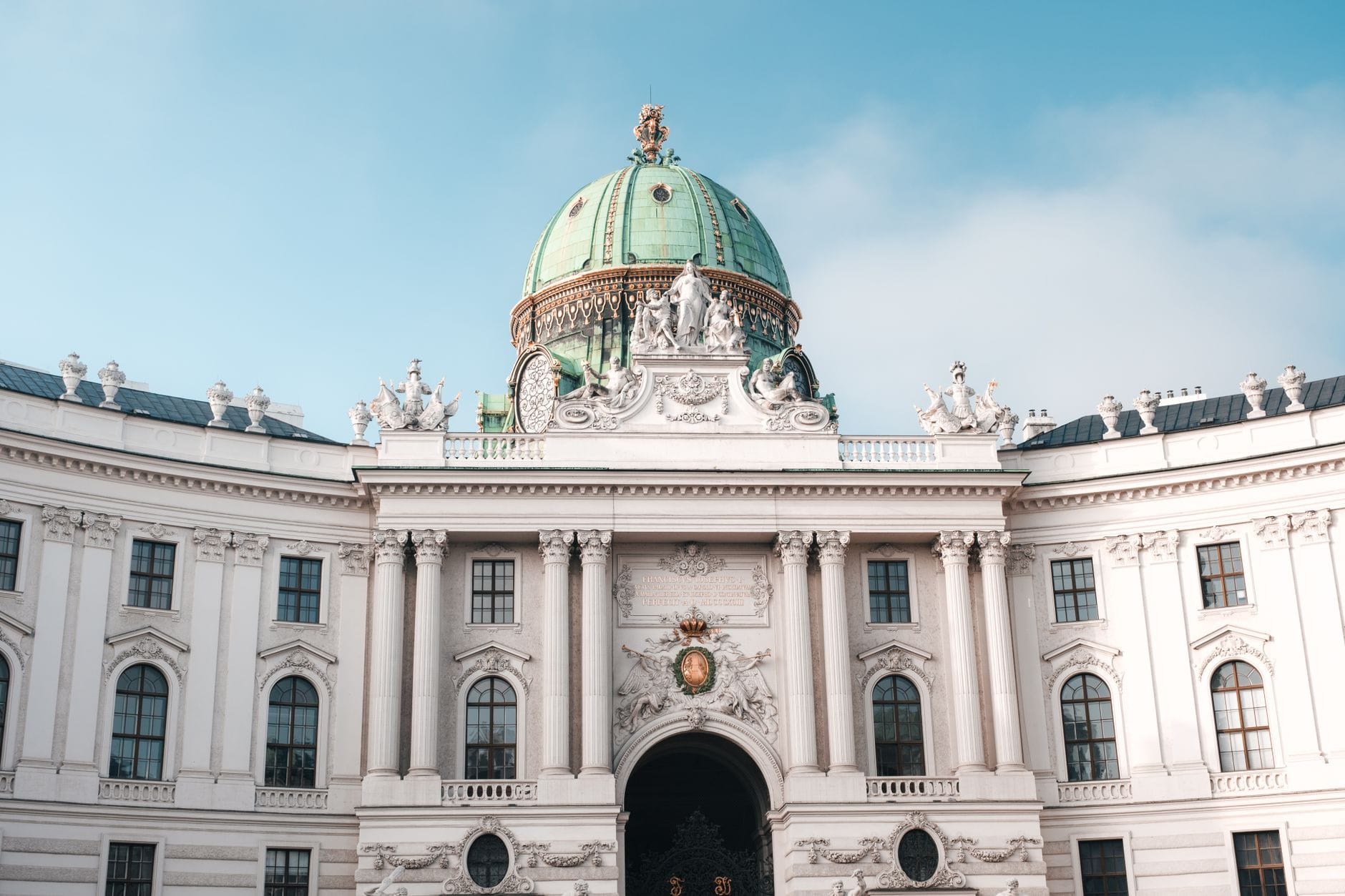
The Hofburg is not one building but a city within a city, accumulated over six centuries. Its wings range from Gothic origins to Baroque imperial halls to 19th-century Neo-Renaissance additions, making it the single best cross-section of Vienna's architectural history.
Explore1. Trace 600 Years of Habsburg Power at the Hofburg
The Hofburg is not one building but a city within a city, accumulated over six centuries. Its wings range from Gothic origins to Baroque imperial halls to 19th-century Neo-Renaissance additions, making it the single best cross-section of Vienna's architectural history.
Explore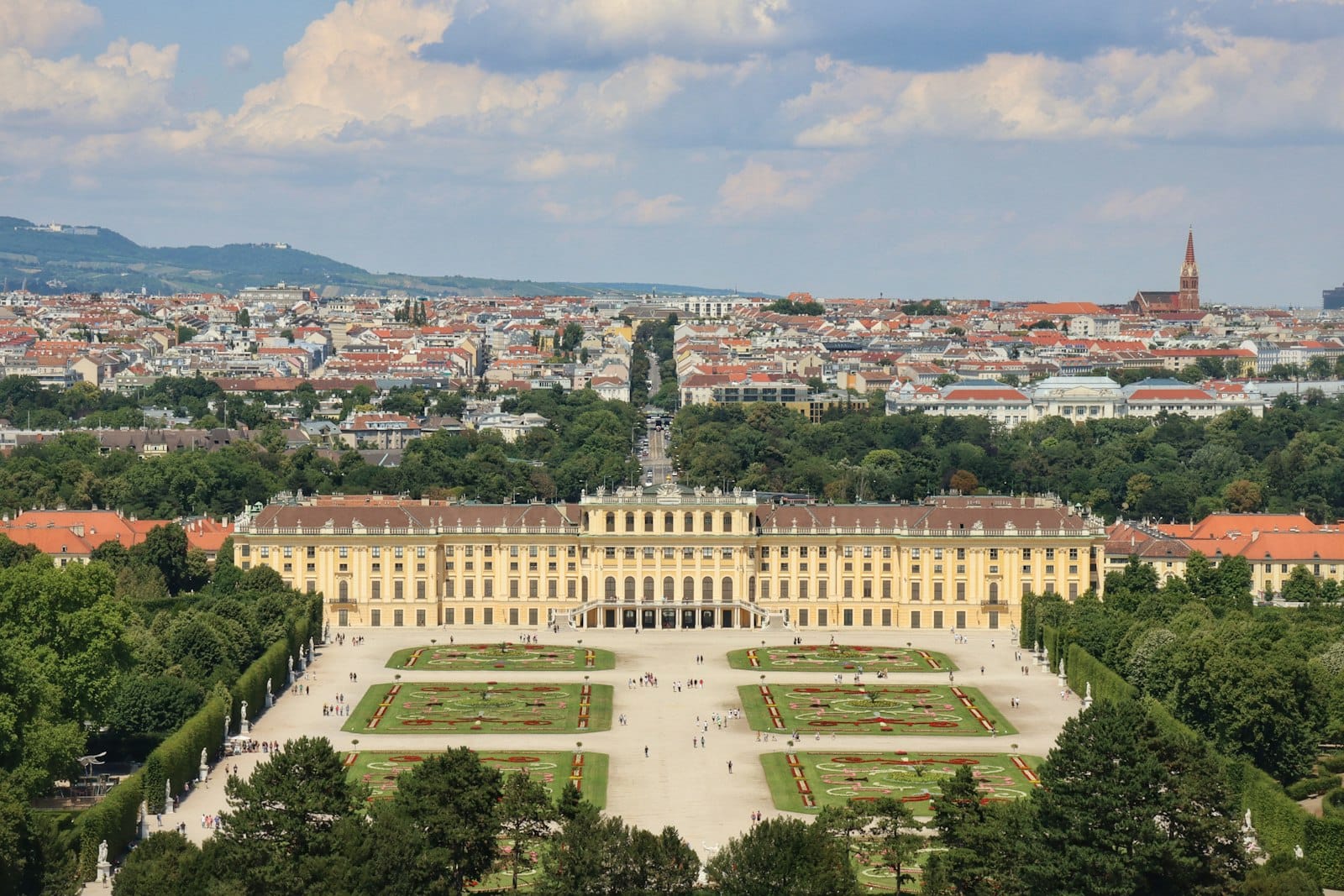
2. Study Baroque Palace Design at Schönbrunn
Built as the Habsburg summer residence, Schönbrunn's yellow facade and 1,441 rooms represent Austrian Baroque at its most refined. The palace's relationship with its gardens and the Gloriette on the hill above is a masterclass in Baroque spatial planning.
Explore2. Study Baroque Palace Design at Schönbrunn
Built as the Habsburg summer residence, Schönbrunn's yellow facade and 1,441 rooms represent Austrian Baroque at its most refined. The palace's relationship with its gardens and the Gloriette on the hill above is a masterclass in Baroque spatial planning.
Explore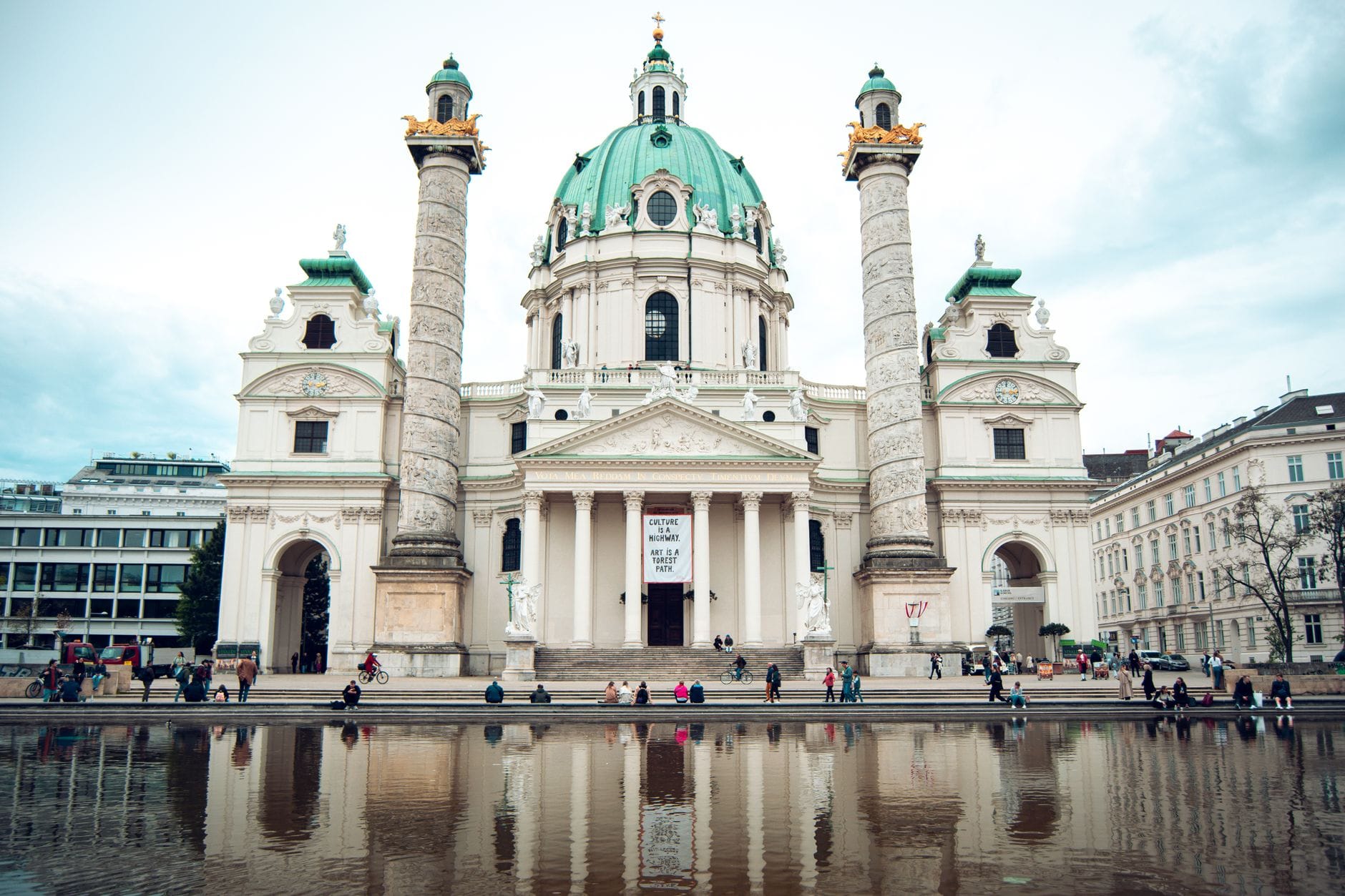
3. See Vienna's Finest Baroque Church at Karlskirche
Commissioned by Emperor Charles VI after a plague vow and completed in 1737, Karlskirche combines a classical portico with twin triumphal columns borrowed from ancient Rome and a magnificent oval dome. Take the panoramic lift inside to see the ceiling frescoes up close.
Explore3. See Vienna's Finest Baroque Church at Karlskirche
Commissioned by Emperor Charles VI after a plague vow and completed in 1737, Karlskirche combines a classical portico with twin triumphal columns borrowed from ancient Rome and a magnificent oval dome. Take the panoramic lift inside to see the ceiling frescoes up close.
Explore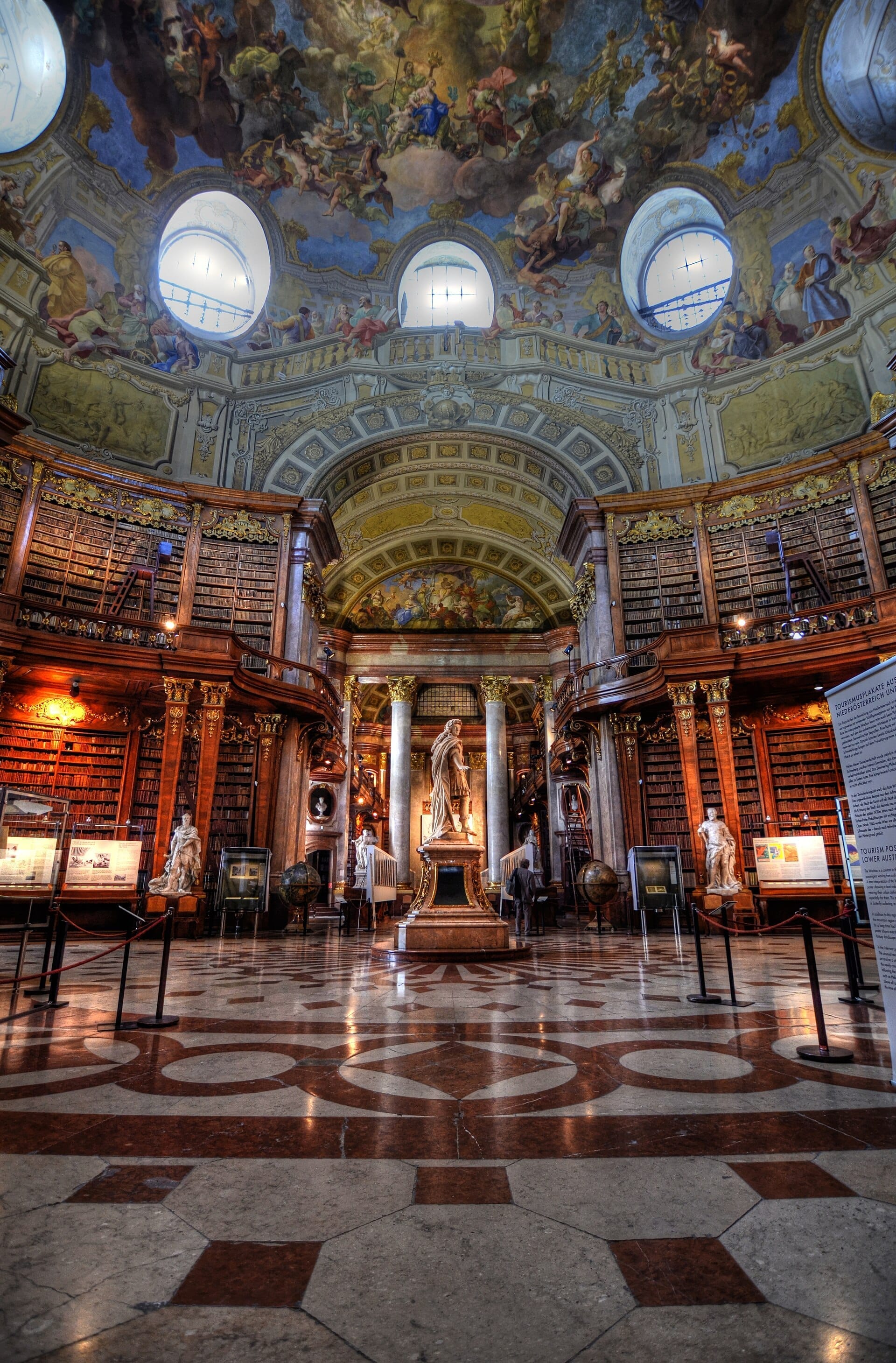
4. Step Inside the World's Most Beautiful Library Room
The Prunksaal State Hall, completed in 1726, is a Baroque interior of extraordinary ambition: frescoed ceilings, marble columns, 200,000 books in gilded shelving, and imperial globes. Fischer von Erlach designed it as a temple to knowledge, and it still reads that way.
Explore4. Step Inside the World's Most Beautiful Library Room
The Prunksaal State Hall, completed in 1726, is a Baroque interior of extraordinary ambition: frescoed ceilings, marble columns, 200,000 books in gilded shelving, and imperial globes. Fischer von Erlach designed it as a temple to knowledge, and it still reads that way.
Explore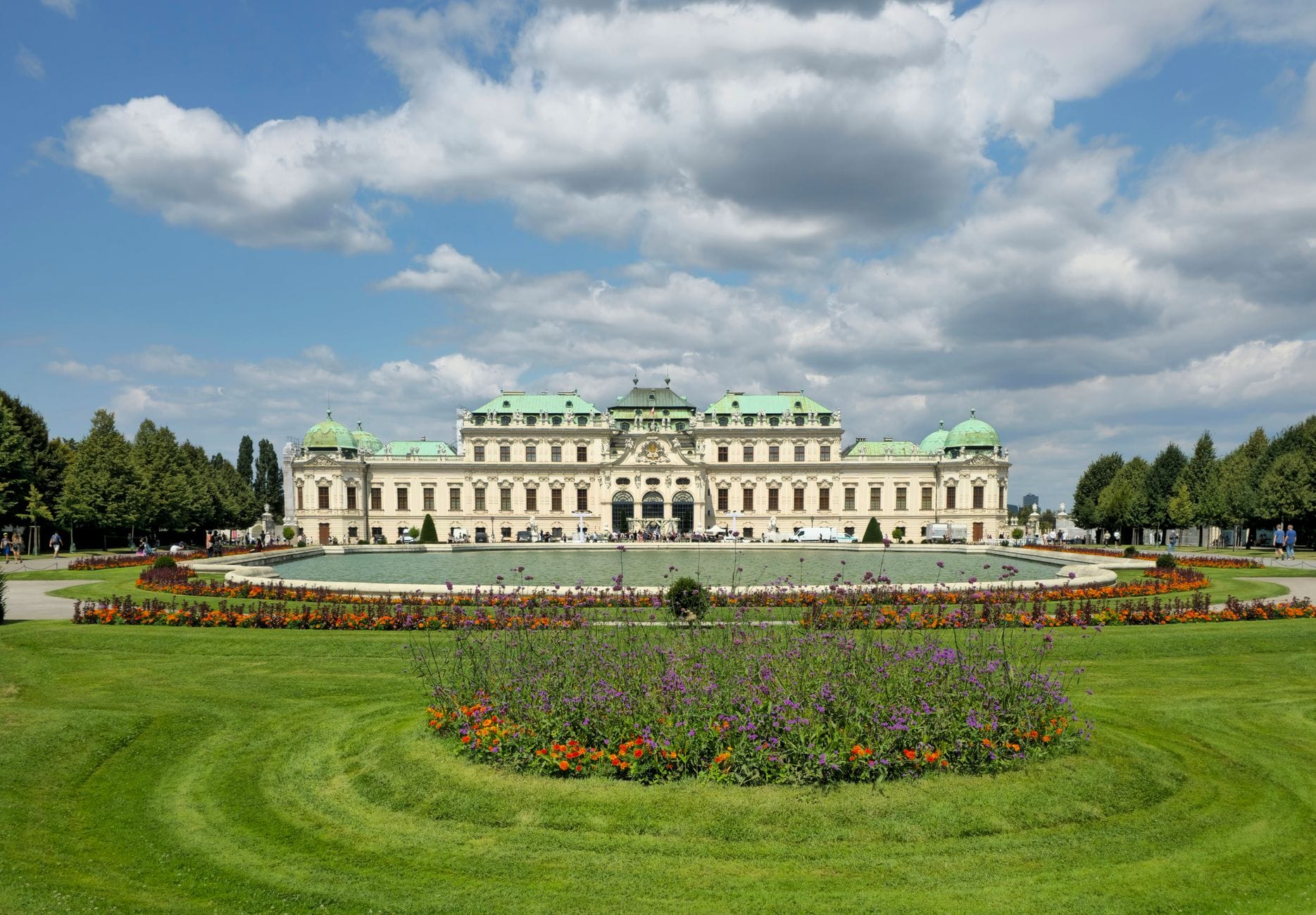
5. Admire Prince Eugene's Baroque Summer Palace at the Belvedere
Built between 1717 and 1723 for Prince Eugene of Savoy, the Upper Belvedere is one of the finest Baroque palace complexes in Central Europe. Its facade, gardens, and relationship with the Lower Belvedere form a complete Baroque landscape composition.
Explore5. Admire Prince Eugene's Baroque Summer Palace at the Belvedere
Built between 1717 and 1723 for Prince Eugene of Savoy, the Upper Belvedere is one of the finest Baroque palace complexes in Central Europe. Its facade, gardens, and relationship with the Lower Belvedere form a complete Baroque landscape composition.
Explore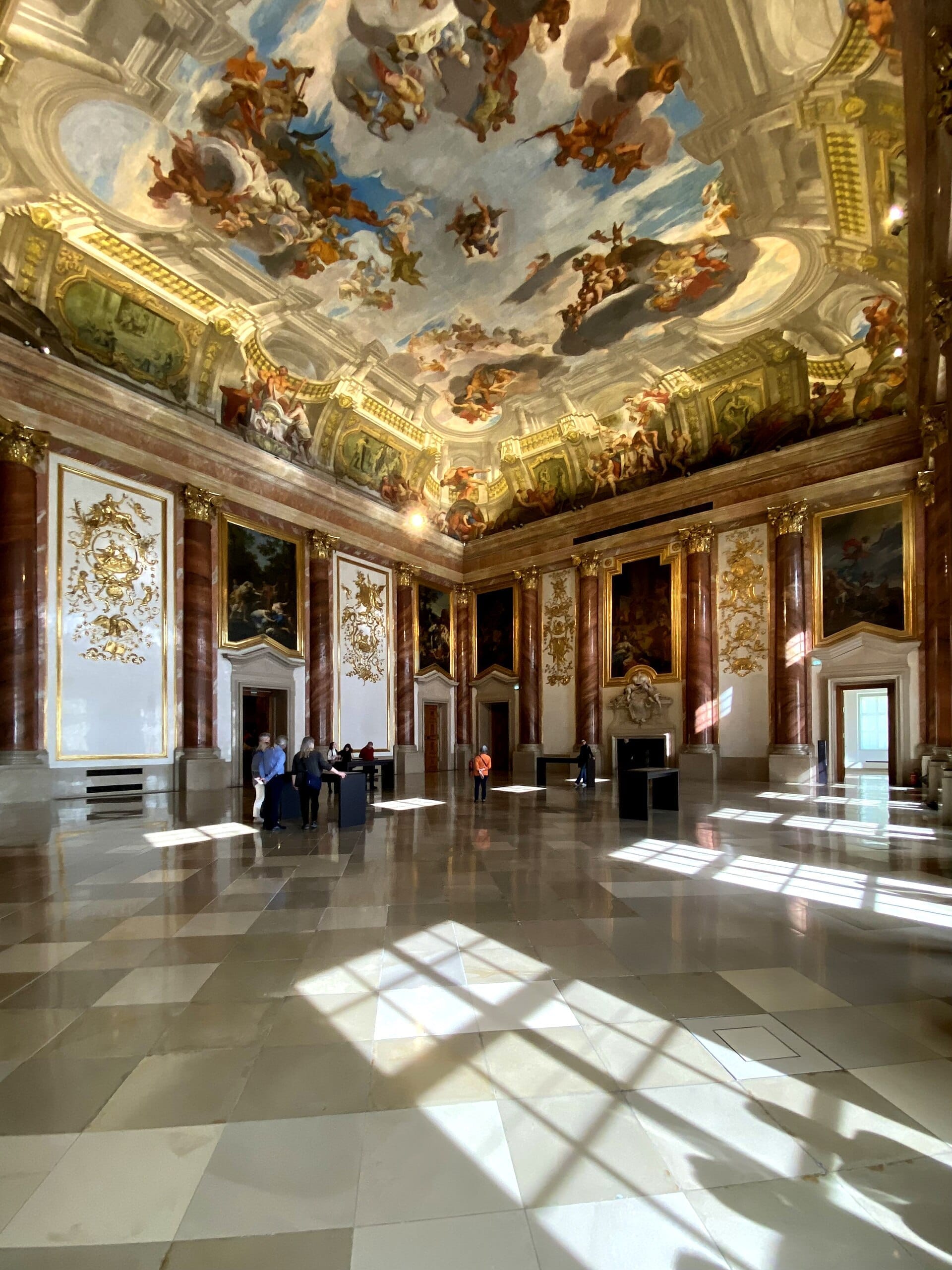
6. Discover the Liechtenstein Garden Palace, Vienna's Hidden Baroque Treasure
Built around 1700 and still privately owned by the Liechtenstein family, this palace in the 9th district is one of Vienna's finest early Baroque structures. It houses Raphael, Rubens, and Van Dyck, and sees far fewer visitors than the imperial palaces.
Explore6. Discover the Liechtenstein Garden Palace, Vienna's Hidden Baroque Treasure
Built around 1700 and still privately owned by the Liechtenstein family, this palace in the 9th district is one of Vienna's finest early Baroque structures. It houses Raphael, Rubens, and Van Dyck, and sees far fewer visitors than the imperial palaces.
Explore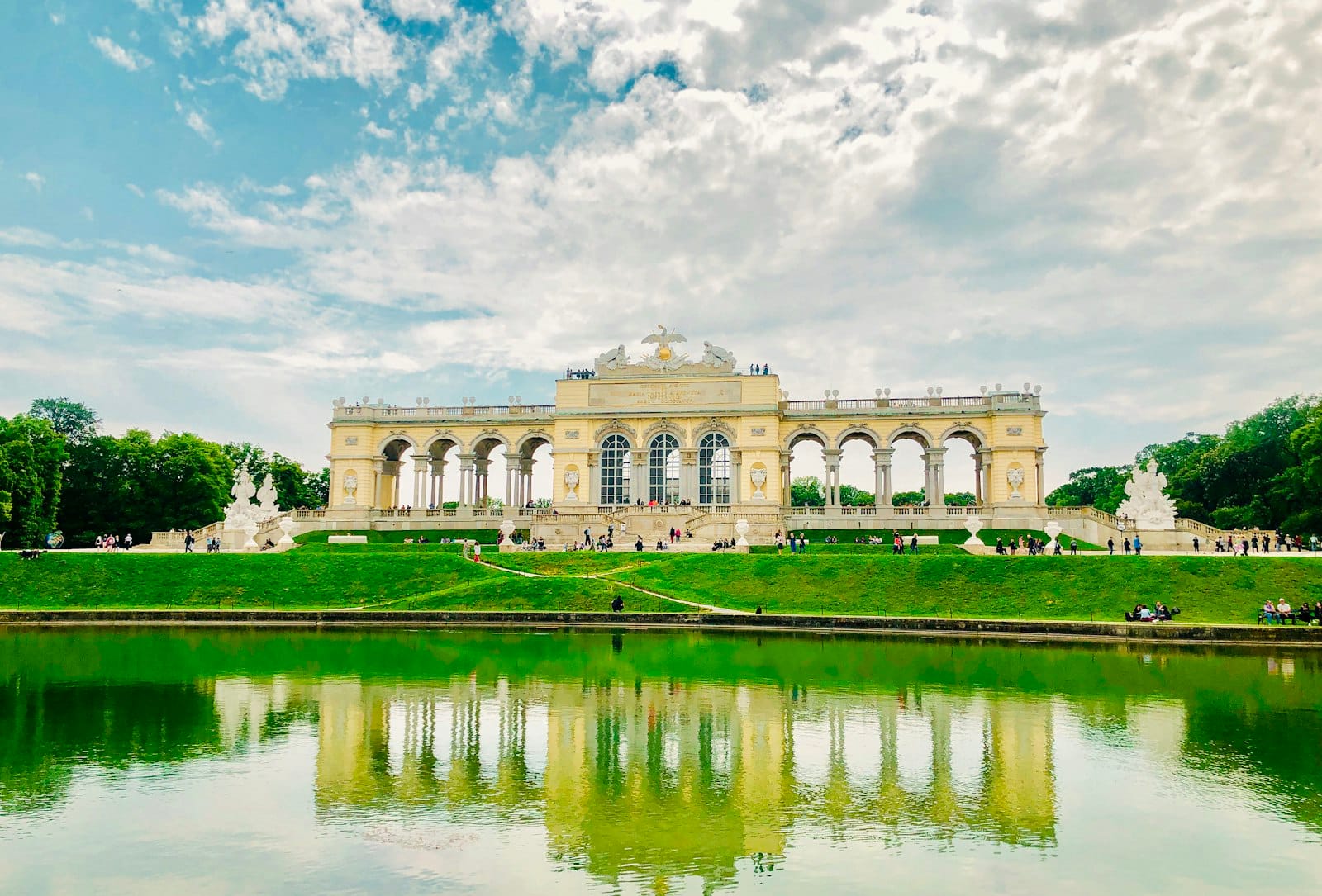
7. Climb to the Gloriette for a Perfect View of Baroque Geometry
The neoclassical colonnade crowning the hill above Schönbrunn was built in 1775 as a garden folly and victory monument. From here, the Baroque axis of the palace and its formal gardens below unfolds in a single panoramic view that explains exactly how Baroque design works.
Explore7. Climb to the Gloriette for a Perfect View of Baroque Geometry
The neoclassical colonnade crowning the hill above Schönbrunn was built in 1775 as a garden folly and victory monument. From here, the Baroque axis of the palace and its formal gardens below unfolds in a single panoramic view that explains exactly how Baroque design works.
Explore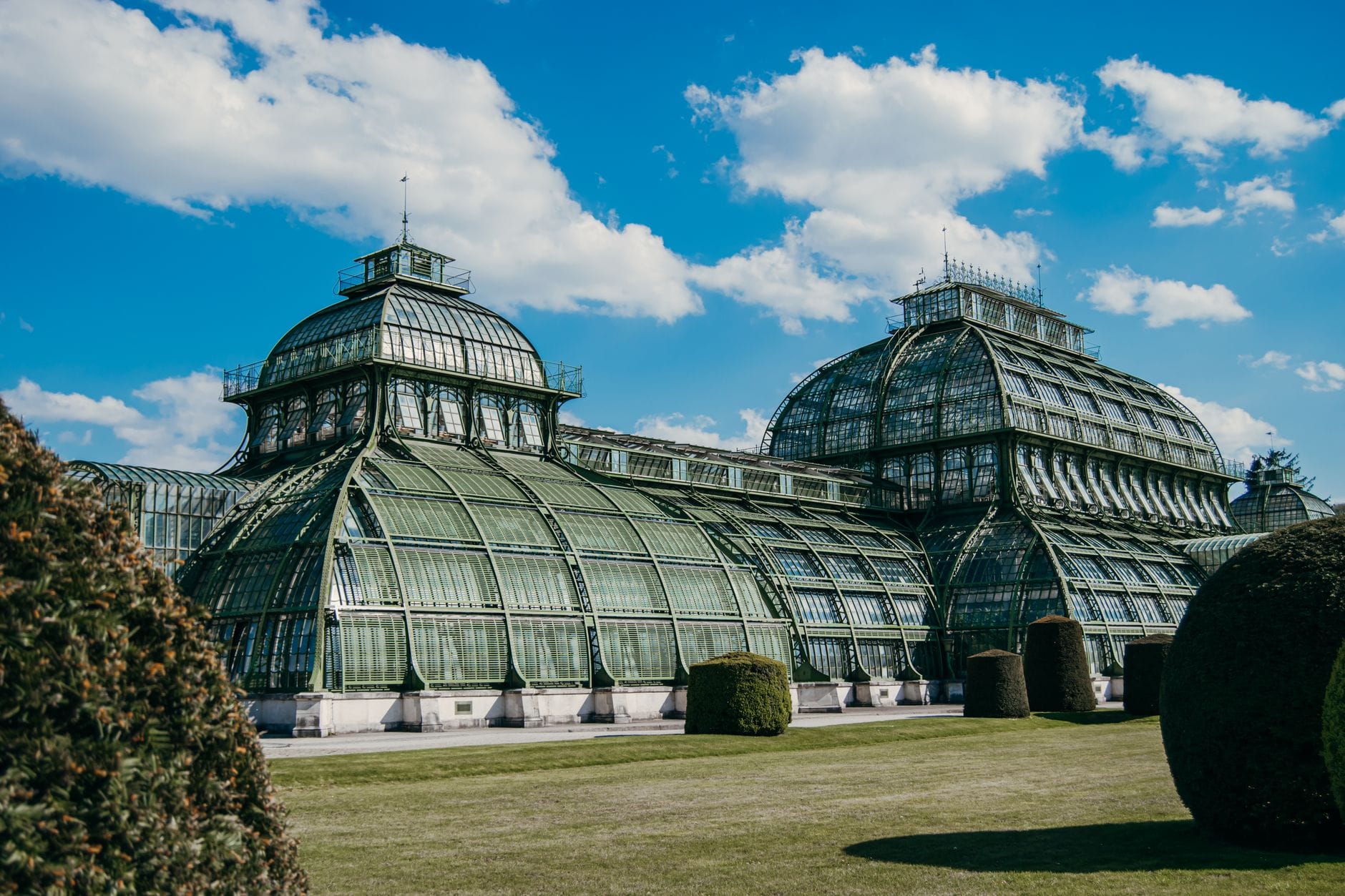
8. See How the Habsburgs Blended Architecture with Botany
The Schönbrunn Palmenhaus, completed in 1882, is a spectacular iron-and-glass greenhouse that shows how 19th-century engineering transformed garden architecture. Set against the Baroque palace, the contrast between the two eras is vivid and instructive.
Explore8. See How the Habsburgs Blended Architecture with Botany
The Schönbrunn Palmenhaus, completed in 1882, is a spectacular iron-and-glass greenhouse that shows how 19th-century engineering transformed garden architecture. Set against the Baroque palace, the contrast between the two eras is vivid and instructive.
ExploreThe Ringstrasse: 19th-Century Historicism at Monumental Scale
The Ringstrasse, built between the 1860s and 1890s under Emperor Franz Joseph, is the defining achievement of 19th-century Viennese urbanism. The boulevard itself is free to walk, and its buildings are best understood as a deliberate architectural programme: each major institution was assigned a historical style thought to express its civic function. Parliament got Greek Revival to evoke democracy; the Rathaus got Gothic to reference medieval civic tradition; the opera and museums got Renaissance to suggest cultural prestige. The important distinction for visitors: these buildings are not Baroque, even though they can look ornate. They are Historicist pastiches, consciously referencing earlier styles. For the full context of how to see this area efficiently, see our Vienna palaces guide.
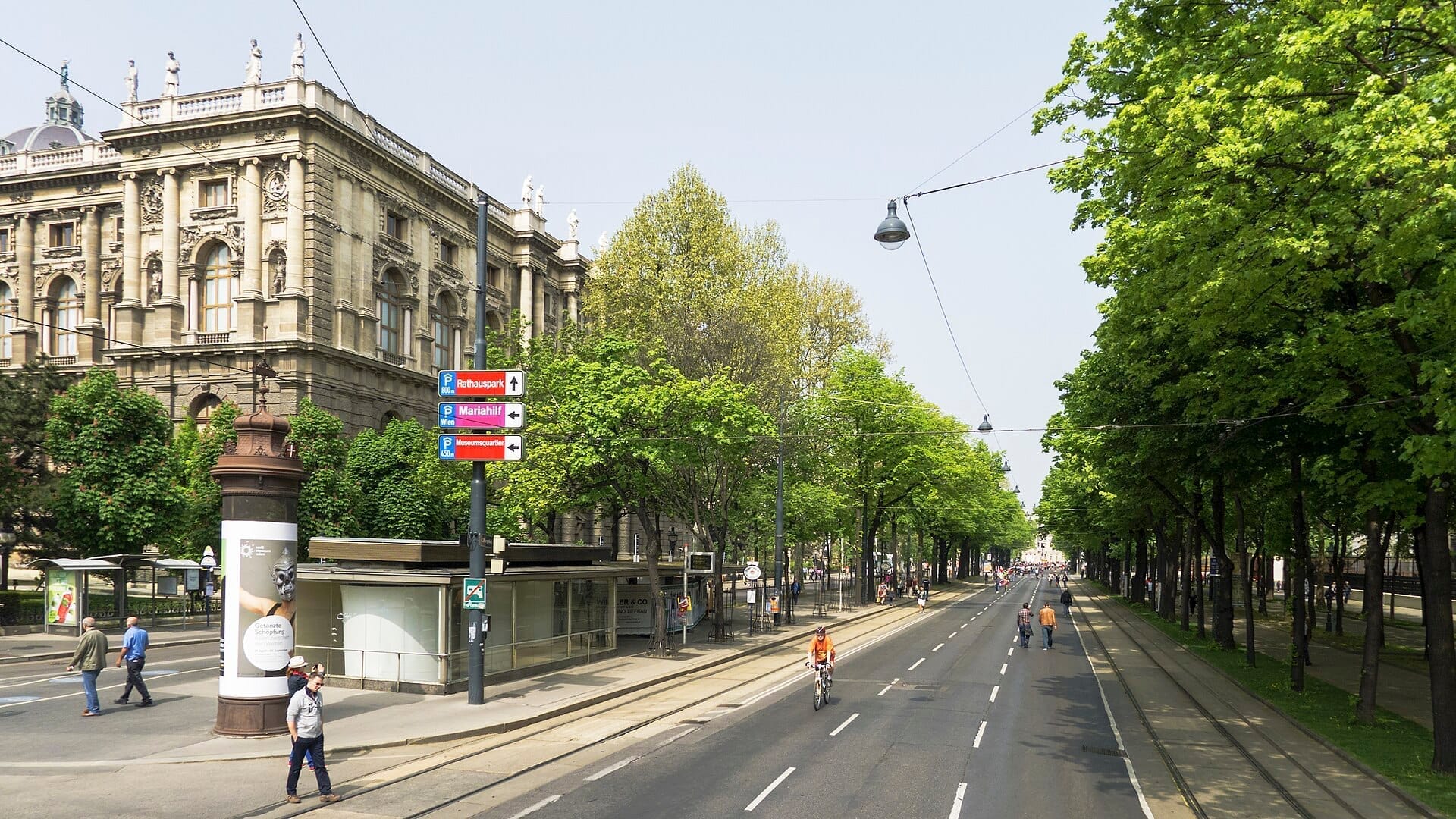
9. Walk the Ringstrasse, Europe's Greatest 19th-Century Boulevard
The 5.3-km Ringstrasse encircling the Innere Stadt is the core of any Vienna architecture visit. A single walk links the State Opera, Parliament, City Hall, Burgtheater, and twin museums in one unbroken sequence of monumental Historicist architecture, all built within a 30-year window.
Explore9. Walk the Ringstrasse, Europe's Greatest 19th-Century Boulevard
The 5.3-km Ringstrasse encircling the Innere Stadt is the core of any Vienna architecture visit. A single walk links the State Opera, Parliament, City Hall, Burgtheater, and twin museums in one unbroken sequence of monumental Historicist architecture, all built within a 30-year window.
Explore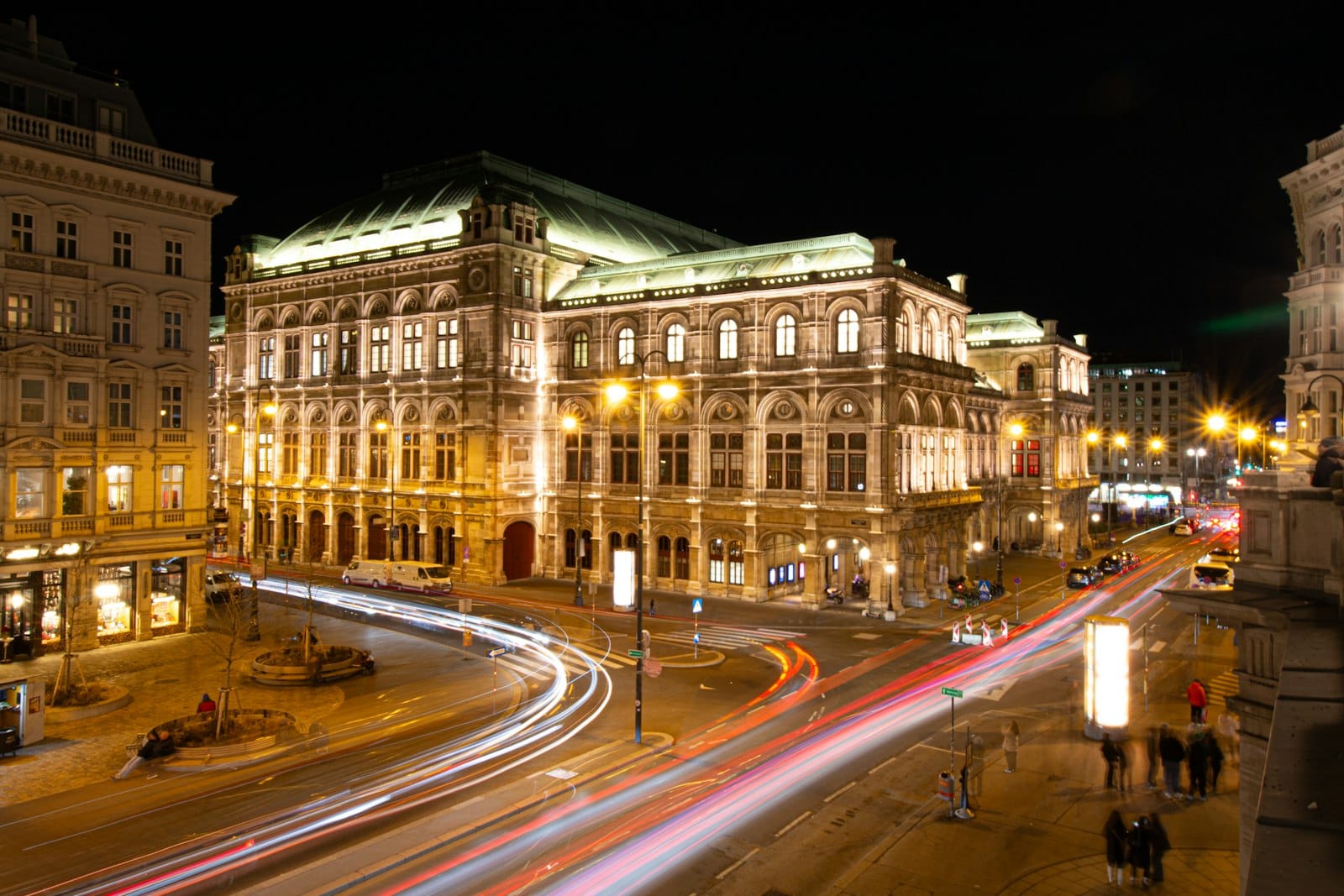
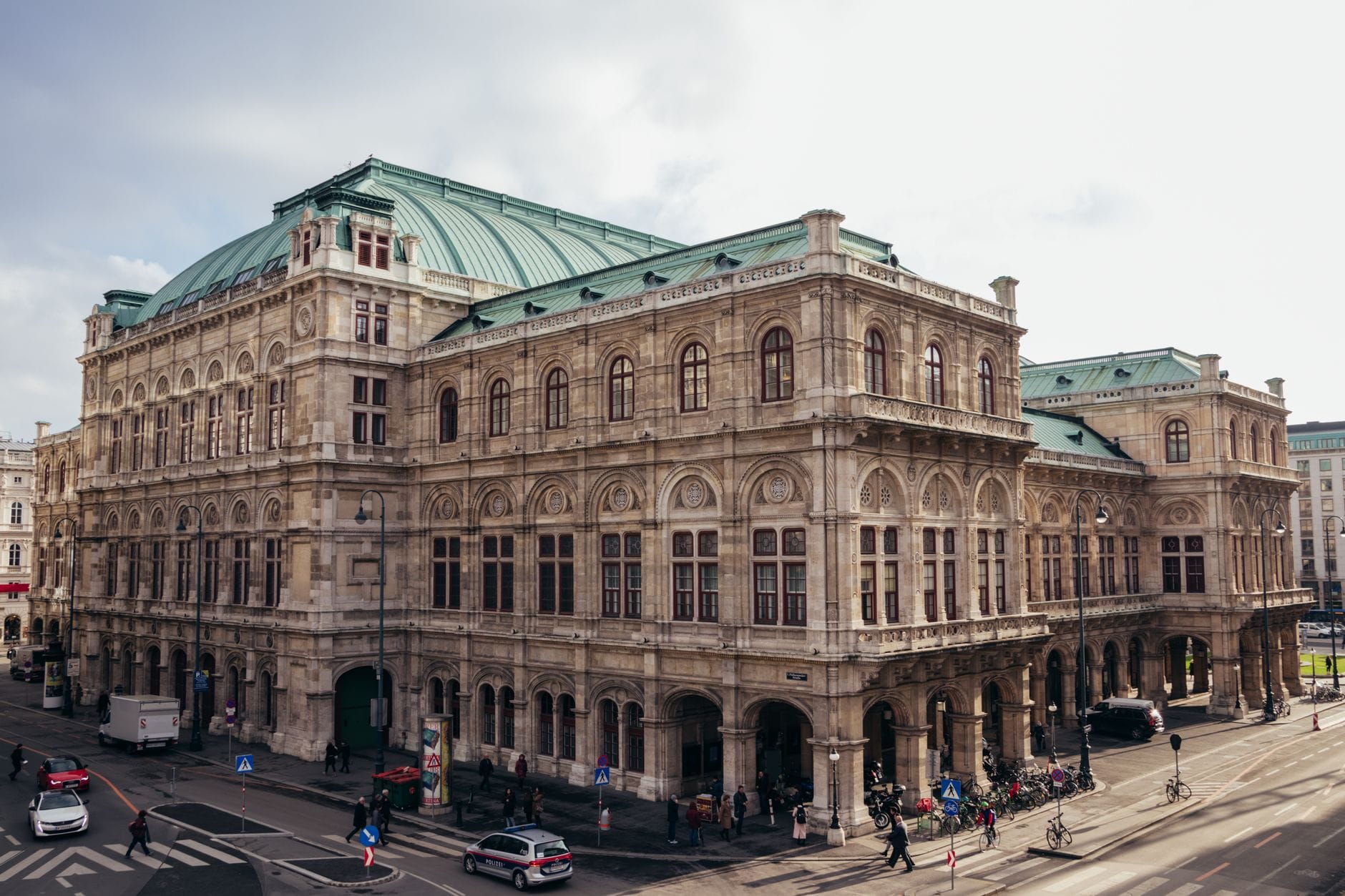
10. See the Ringstrasse's Neo-Renaissance Crown at the State Opera
Completed in 1869, the Wiener Staatsoper was the first of the great Ringstrasse buildings to open. Its Neo-Renaissance facade and opulent interior set the tone for everything that followed. Guided tours run regularly; standing-room tickets make the interior accessible on any budget.
Explore10. See the Ringstrasse's Neo-Renaissance Crown at the State Opera
Completed in 1869, the Wiener Staatsoper was the first of the great Ringstrasse buildings to open. Its Neo-Renaissance facade and opulent interior set the tone for everything that followed. Guided tours run regularly; standing-room tickets make the interior accessible on any budget.
Explore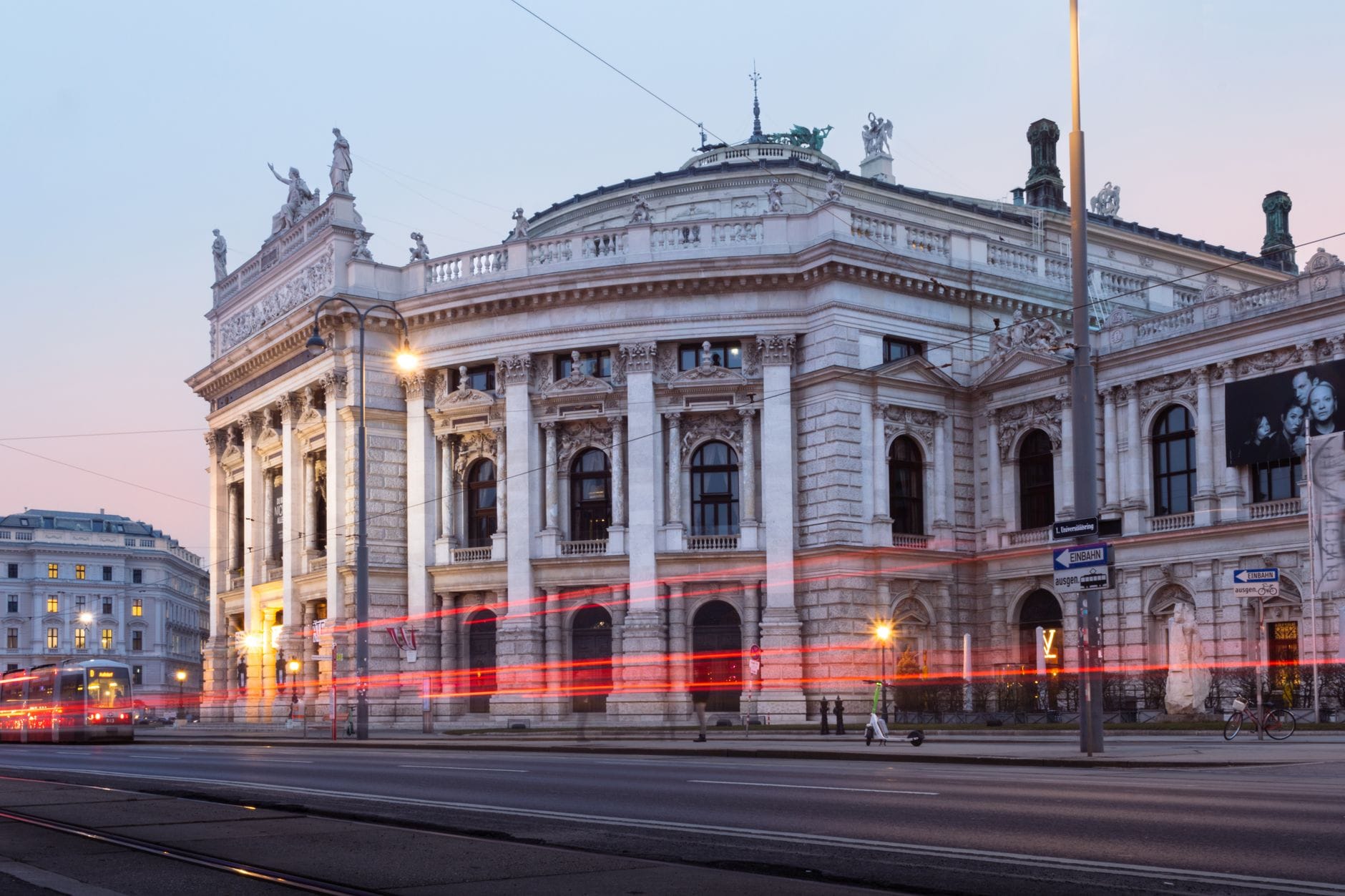
11. Examine Klimt's Early Work Inside the Neo-Baroque Burgtheater
The Burgtheater's Neo-Baroque exterior on the Ringstrasse is imposing, but the interior holds a surprise: the ceiling paintings in the two staircases were made by a young Gustav Klimt in 1888. Guided tours reveal both the architecture and this overlooked early commission.
Explore11. Examine Klimt's Early Work Inside the Neo-Baroque Burgtheater
The Burgtheater's Neo-Baroque exterior on the Ringstrasse is imposing, but the interior holds a surprise: the ceiling paintings in the two staircases were made by a young Gustav Klimt in 1888. Guided tours reveal both the architecture and this overlooked early commission.
Explore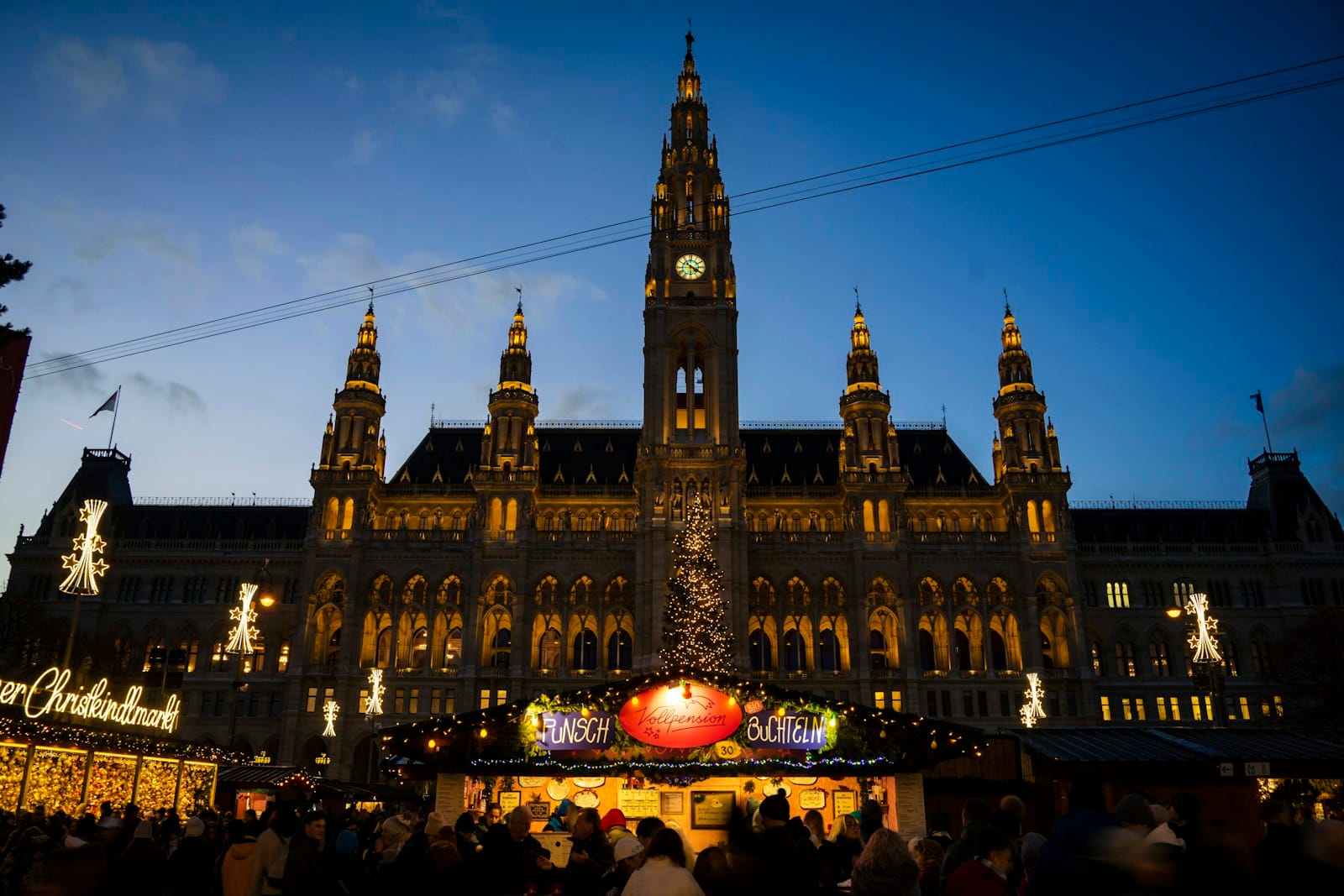
12. Look Up at the Neo-Gothic Rathaus and Its Famous Iron Knight
Vienna's City Hall deploys Flemish Neo-Gothic to evoke medieval civic pride, with a central tower topped by the 'Rathausmann' iron figure at 98 meters. The building faces the Burgtheater across the Ringstrasse in a planned urban set-piece that still impresses.
Explore12. Look Up at the Neo-Gothic Rathaus and Its Famous Iron Knight
Vienna's City Hall deploys Flemish Neo-Gothic to evoke medieval civic pride, with a central tower topped by the 'Rathausmann' iron figure at 98 meters. The building faces the Burgtheater across the Ringstrasse in a planned urban set-piece that still impresses.
Explore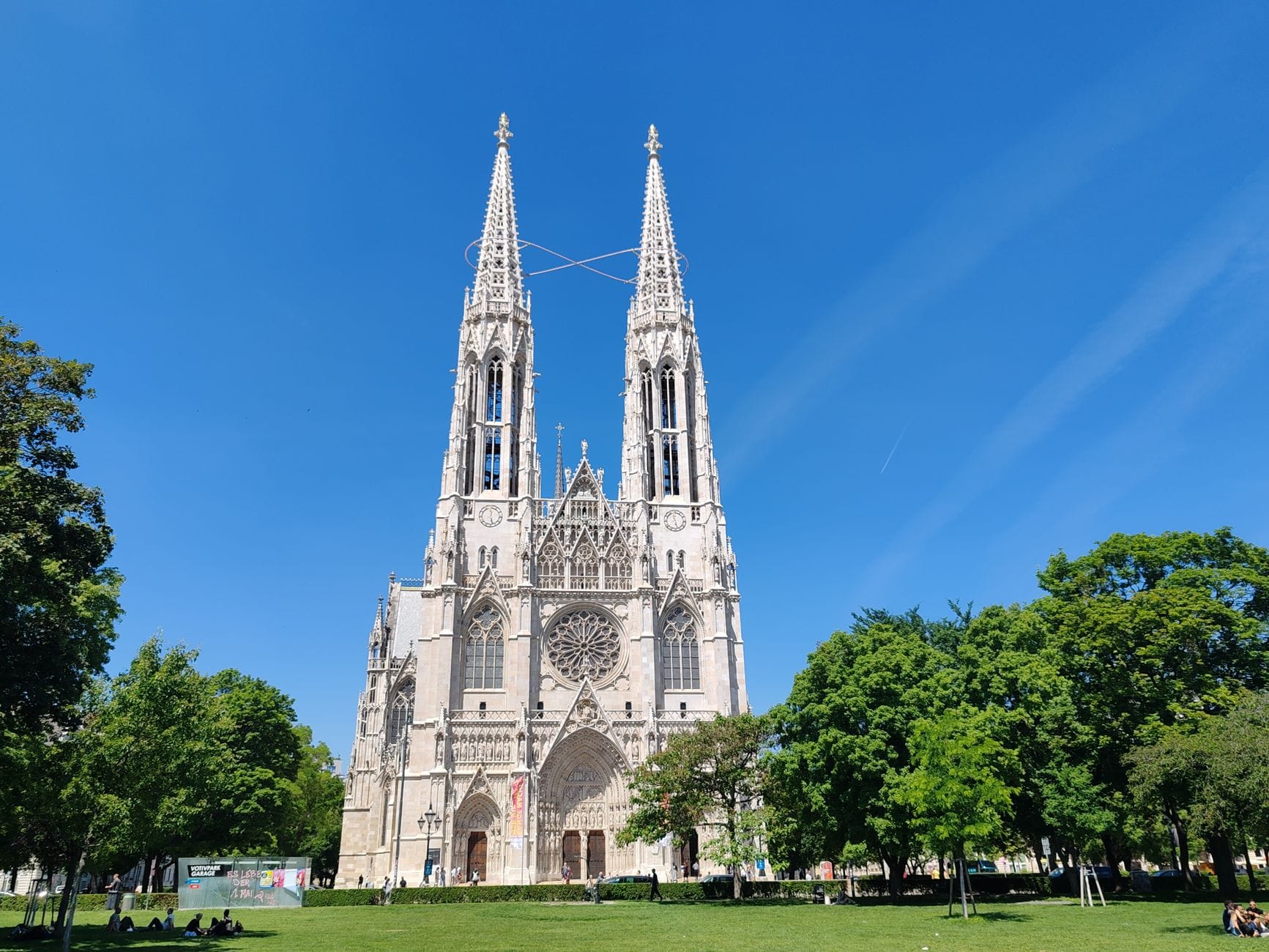
13. Study Neo-Gothic Detail at the Votivkirche's Soaring Twin Spires
Built from 1856 as a thanksgiving for Franz Joseph's survival of an assassination attempt, the Votivkirche's twin spires reach 99 meters and feature some of Vienna's finest Neo-Gothic stone carving and stained glass. It anchors the northern end of the Ringstrasse with real presence.
Explore13. Study Neo-Gothic Detail at the Votivkirche's Soaring Twin Spires
Built from 1856 as a thanksgiving for Franz Joseph's survival of an assassination attempt, the Votivkirche's twin spires reach 99 meters and feature some of Vienna's finest Neo-Gothic stone carving and stained glass. It anchors the northern end of the Ringstrasse with real presence.
Explore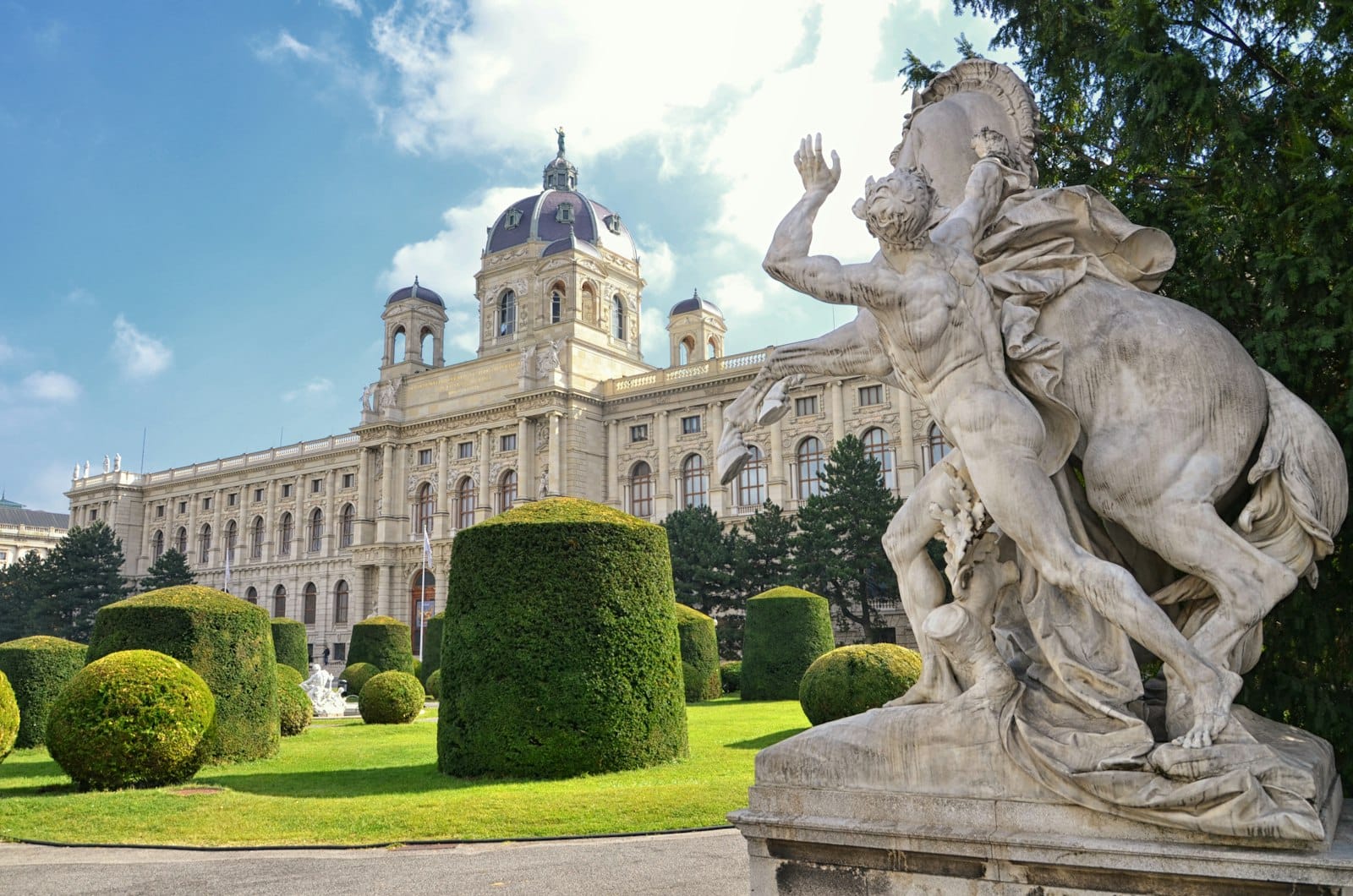
14. Enter the Ringstrasse's Greatest Interior at the Kunsthistorisches Museum
Designed by Gottfried Semper and Karl von Hasenauer and opened in 1891, the KHM's interior is as significant as its collections. The entrance hall, grand staircase, and octagonal dome are Neo-Renaissance architecture at its most confident. The paintings are extraordinary too.
Explore14. Enter the Ringstrasse's Greatest Interior at the Kunsthistorisches Museum
Designed by Gottfried Semper and Karl von Hasenauer and opened in 1891, the KHM's interior is as significant as its collections. The entrance hall, grand staircase, and octagonal dome are Neo-Renaissance architecture at its most confident. The paintings are extraordinary too.
Explore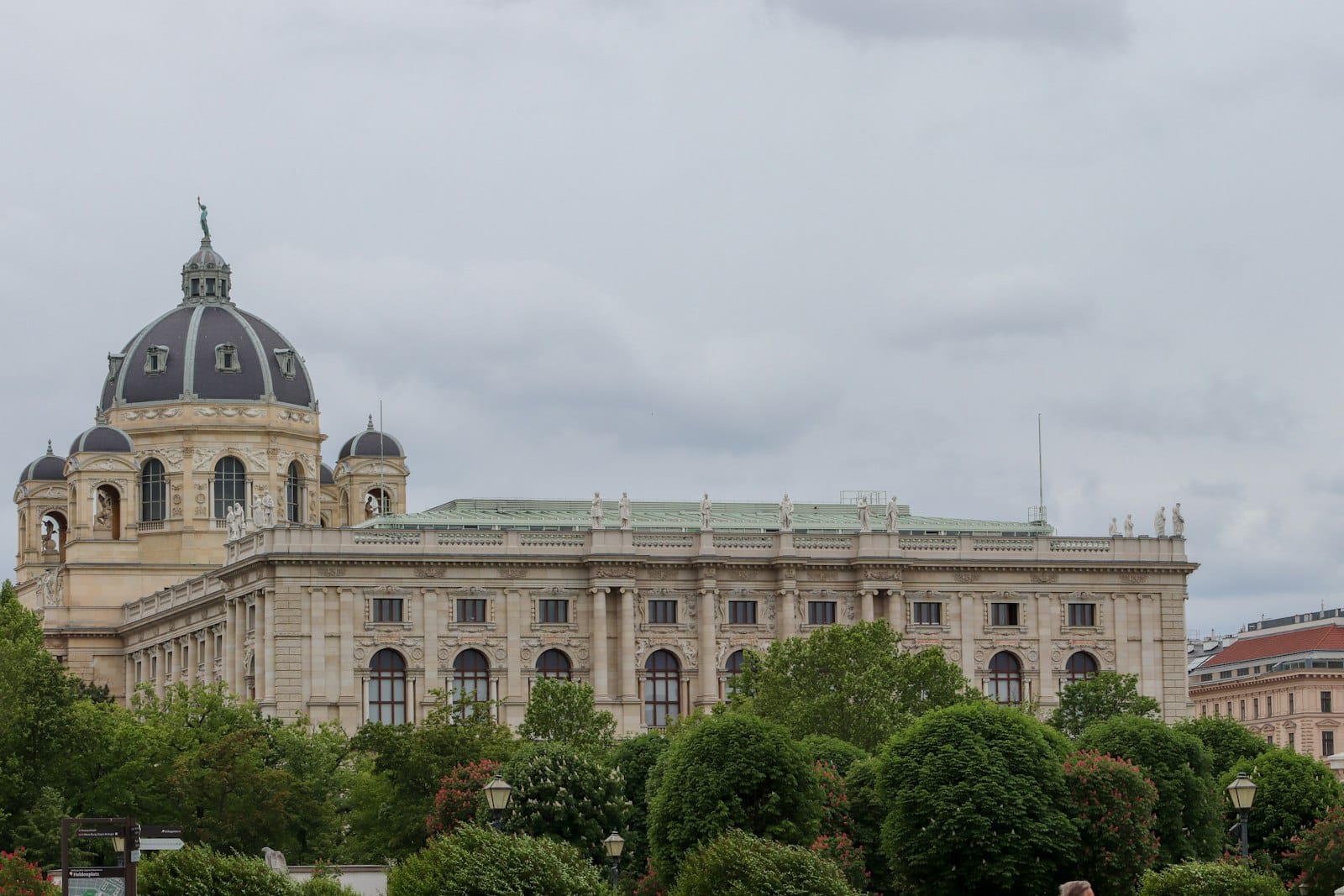
15. See the Ringstrasse's Perfect Twin at the Natural History Museum
The Naturhistorisches Museum mirrors the Kunsthistorisches Museum exactly across Maria-Theresien-Platz, the two buildings framing a central statue of Empress Maria Theresa. Together they form the most complete surviving example of Ringstrasse urban planning as a unified design.
Explore15. See the Ringstrasse's Perfect Twin at the Natural History Museum
The Naturhistorisches Museum mirrors the Kunsthistorisches Museum exactly across Maria-Theresien-Platz, the two buildings framing a central statue of Empress Maria Theresa. Together they form the most complete surviving example of Ringstrasse urban planning as a unified design.
Explore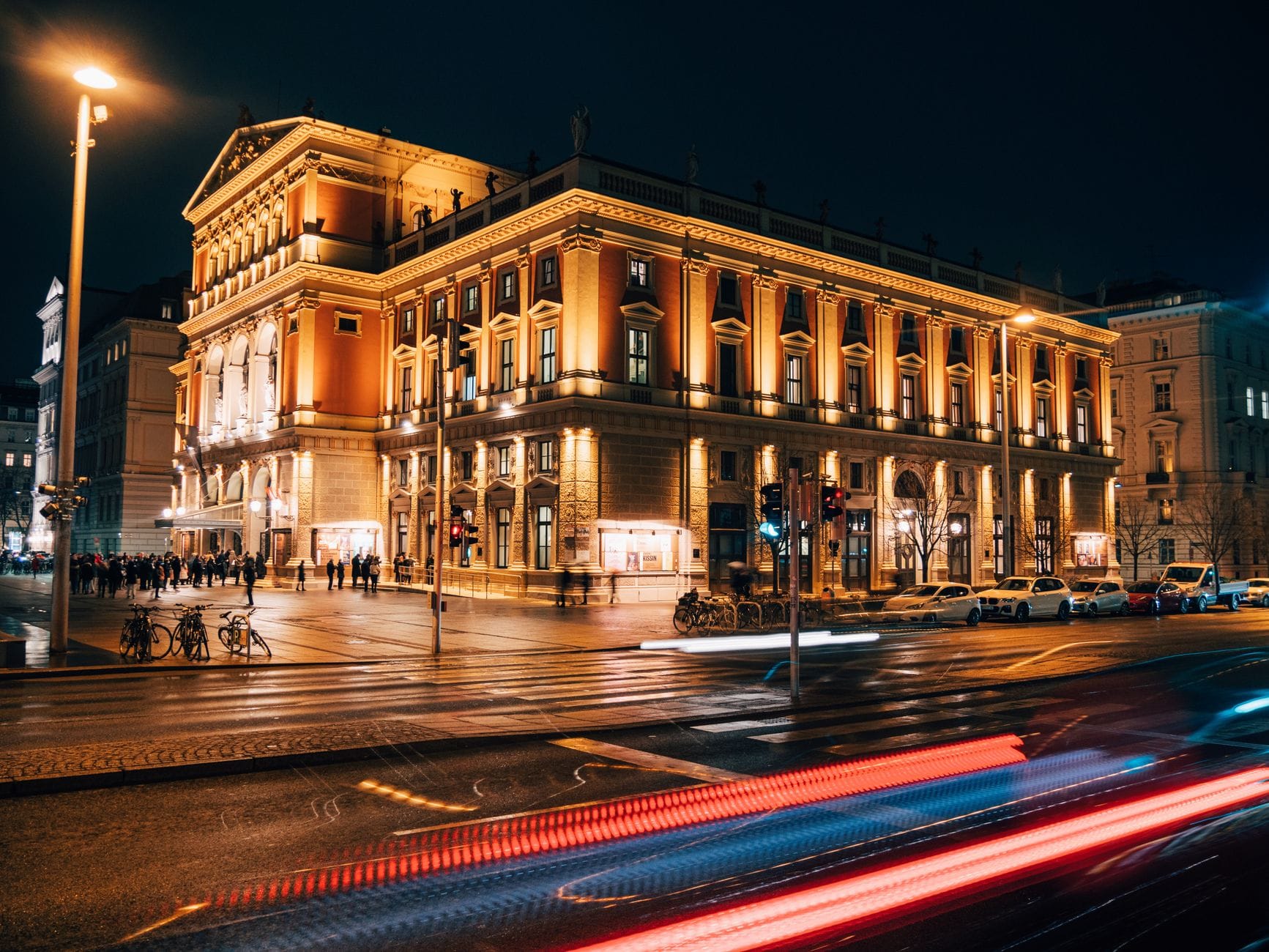
16. Hear Why the Musikverein's Golden Hall Is an Architectural Achievement
Theophil Hansen's Musikverein, opened in 1870, achieves something rare: a building whose interior acoustics are inseparable from its architecture. The coffered ceiling, terracotta caryatids, and narrow shoebox shape are not just decorative but functional. Guided tours explain both.
Explore16. Hear Why the Musikverein's Golden Hall Is an Architectural Achievement
Theophil Hansen's Musikverein, opened in 1870, achieves something rare: a building whose interior acoustics are inseparable from its architecture. The coffered ceiling, terracotta caryatids, and narrow shoebox shape are not just decorative but functional. Guided tours explain both.
ExploreArt Nouveau (Jugendstil): Vienna's Radical Turn
In 1897, a group of Viennese artists and architects formally broke from the conservative Historicist mainstream and founded the Secession. What followed over the next two decades was one of the most concentrated bursts of architectural innovation in European history. The key figures were Otto Wagner, who moved from Ringstrasse classicism to a stripped-down functionalism that prefigured modernism; Josef Maria Olbrich, who designed the Secession building itself; and Adolf Loos, whose austere Loos House on the Michaelerplatz was considered so scandalous it reportedly enraged Franz Joseph. The Klimt and Secession guide covers the artistic context in full detail.
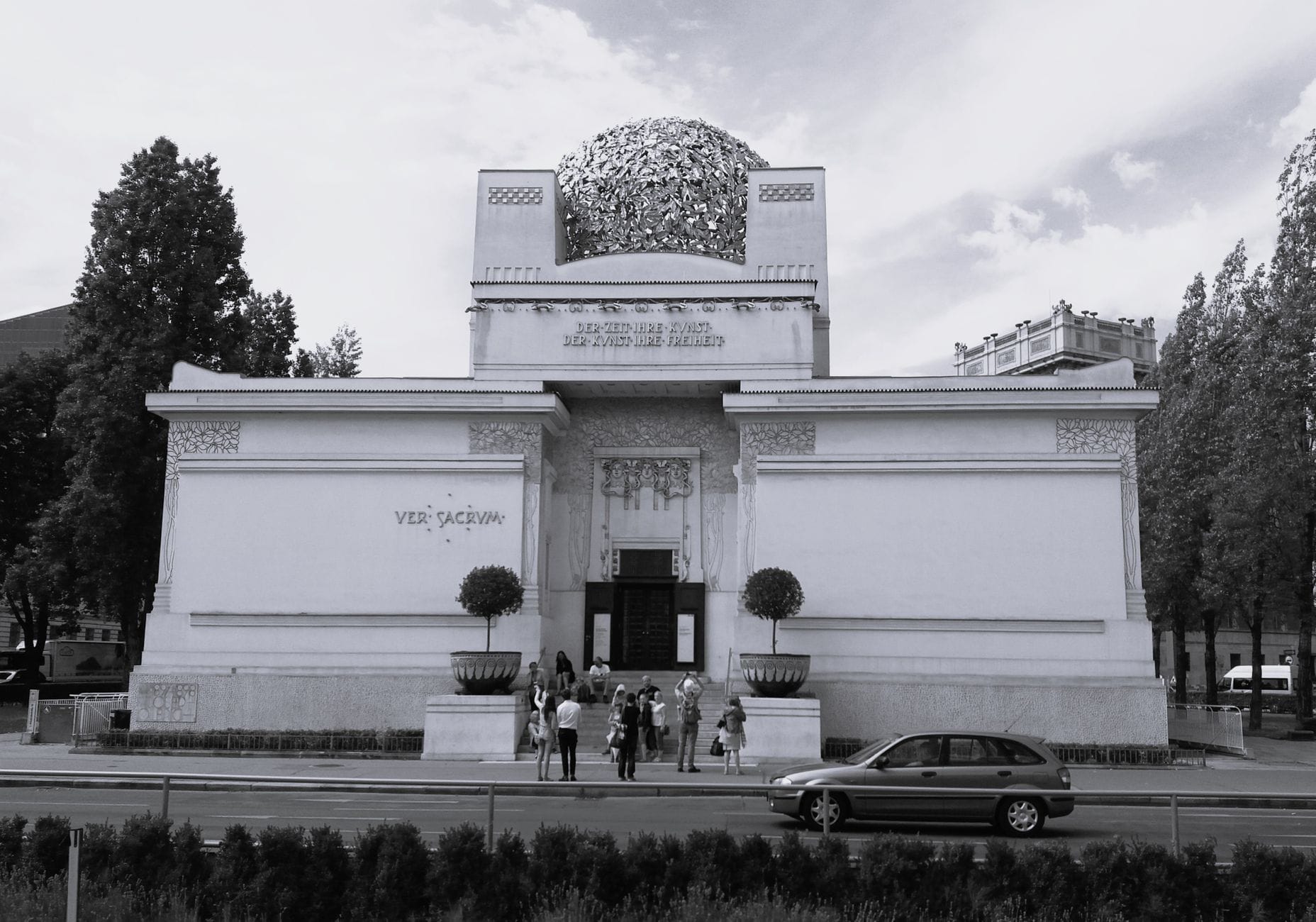
17. Start Any Art Nouveau Tour at the Secession Building
Josef Maria Olbrich designed this exhibition building in 1897 as a literal manifesto in architecture: its golden sphere of 3,000 gilded laurel leaves, stark white walls, and inscription 'To every age its art' announced a complete rejection of historicism. Klimt's Beethoven Frieze is in the basement.
Explore17. Start Any Art Nouveau Tour at the Secession Building
Josef Maria Olbrich designed this exhibition building in 1897 as a literal manifesto in architecture: its golden sphere of 3,000 gilded laurel leaves, stark white walls, and inscription 'To every age its art' announced a complete rejection of historicism. Klimt's Beethoven Frieze is in the basement.
Explore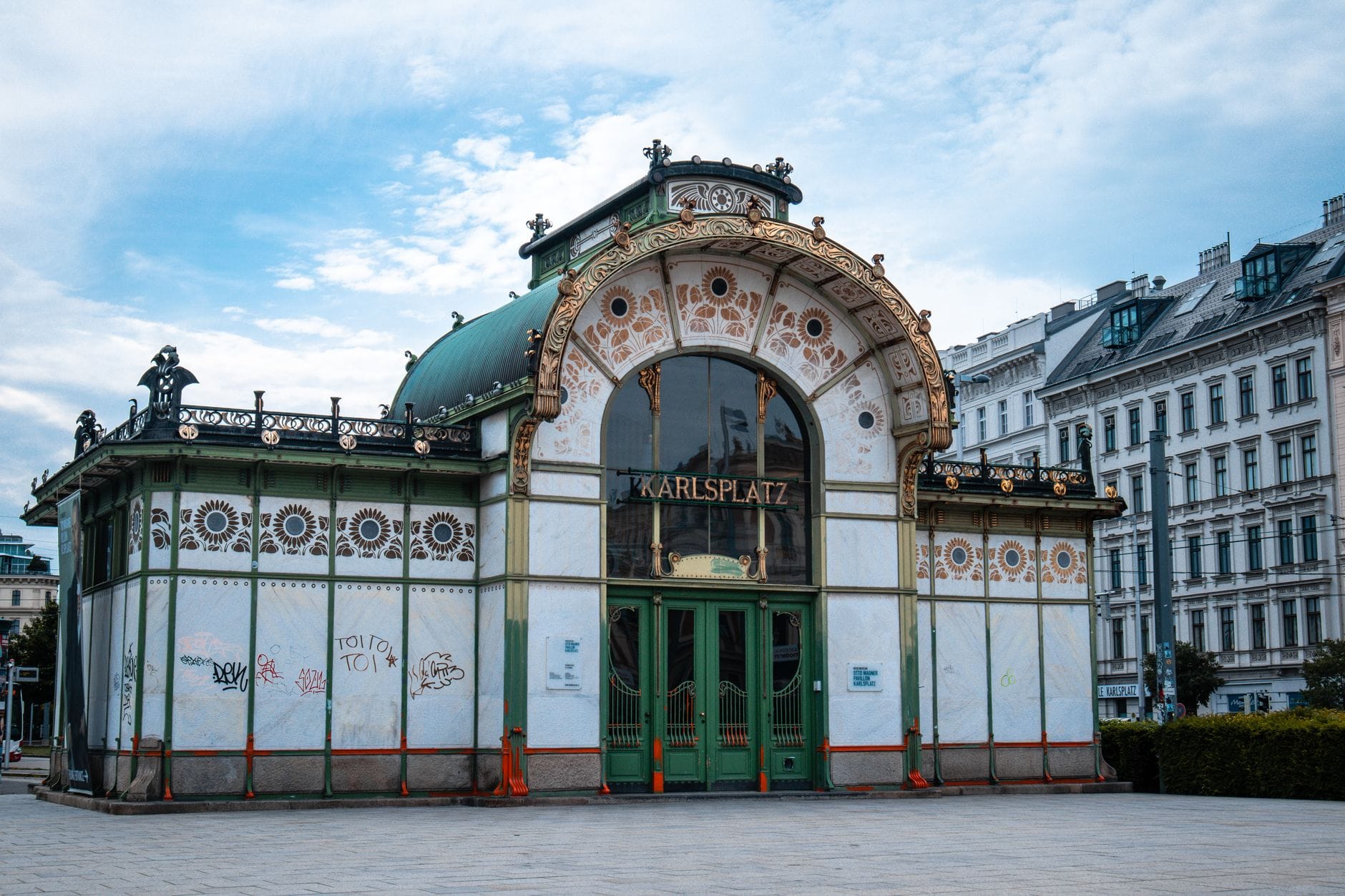
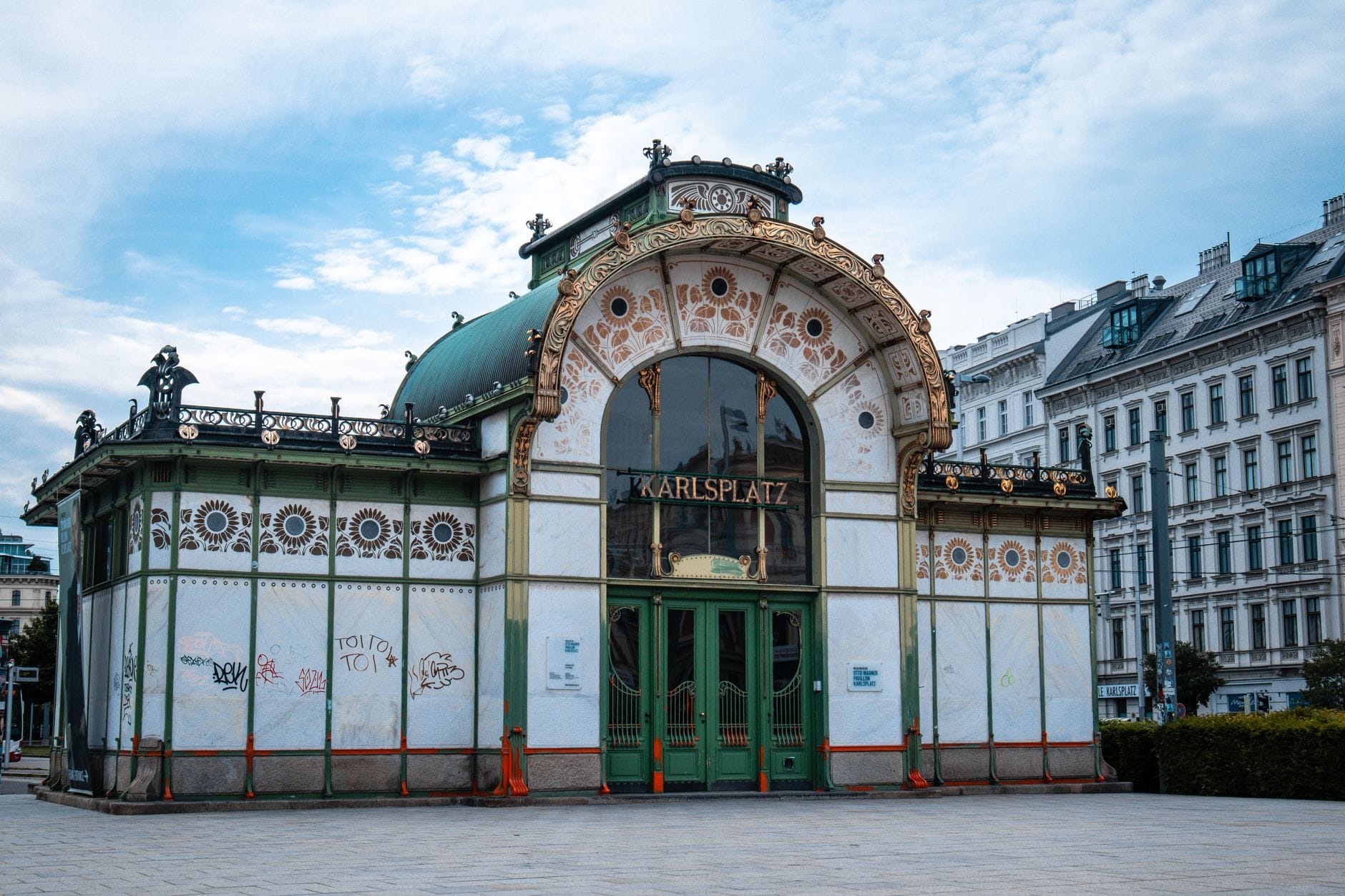
18. Study Otto Wagner's Jugendstil Perfection at Karlsplatz
These two metro pavilions from 1898 are among Vienna's most refined small-scale Art Nouveau structures. Wagner used white marble panels, green copper roofing, and gold sunflower ornament to demonstrate that functional infrastructure could also be beautiful architecture worth studying closely.
Explore18. Study Otto Wagner's Jugendstil Perfection at Karlsplatz
These two metro pavilions from 1898 are among Vienna's most refined small-scale Art Nouveau structures. Wagner used white marble panels, green copper roofing, and gold sunflower ornament to demonstrate that functional infrastructure could also be beautiful architecture worth studying closely.
Explore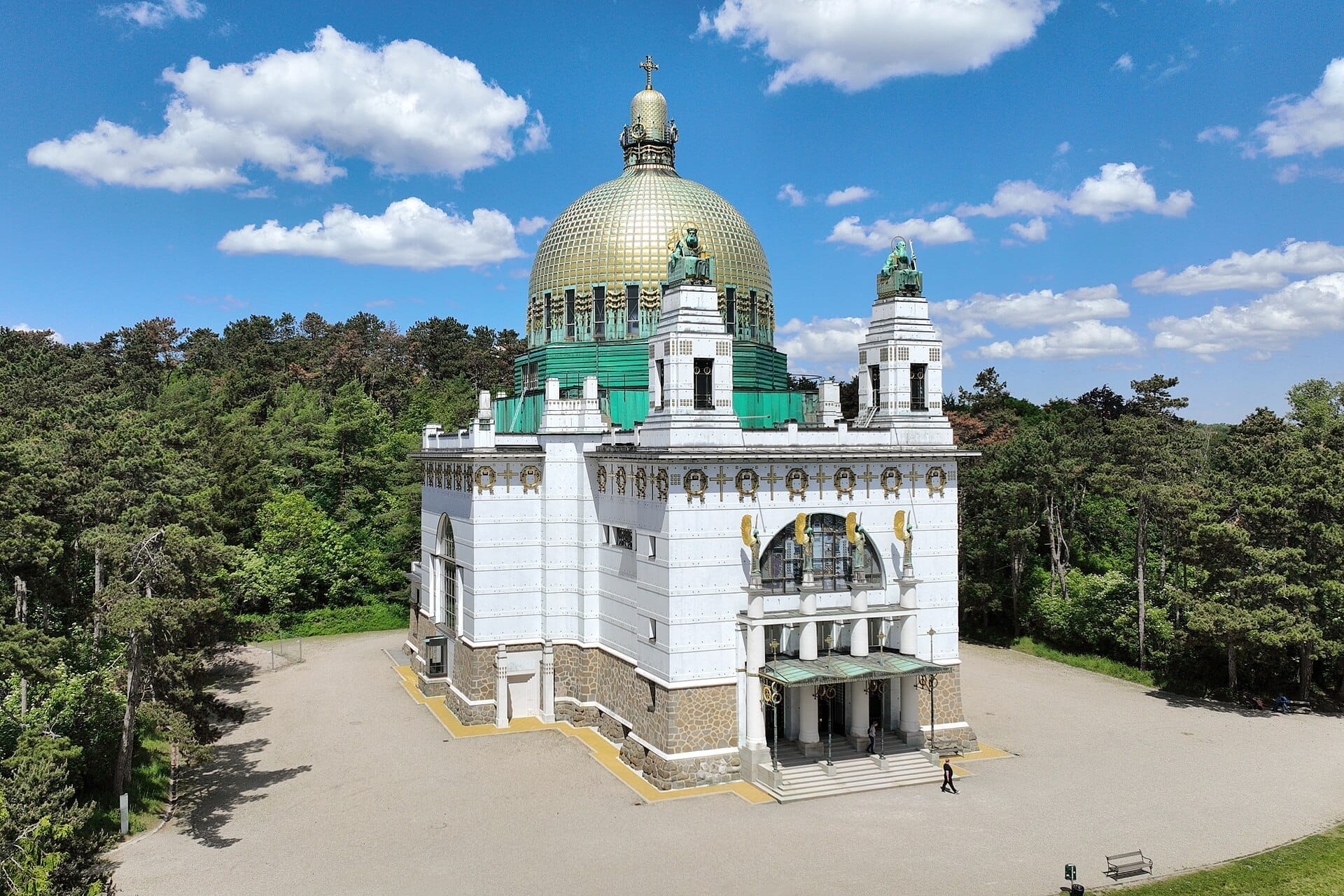
19. Make the Trip to Otto Wagner's Jugendstil Church at Steinhof
Completed in 1907, this church on the grounds of a psychiatric hospital is Otto Wagner's greatest building. Its copper dome, Kolo Moser stained glass, and rigorously logical interior show Jugendstil fully evolved into proto-modernism. It requires effort to reach but rewards it completely.
Explore19. Make the Trip to Otto Wagner's Jugendstil Church at Steinhof
Completed in 1907, this church on the grounds of a psychiatric hospital is Otto Wagner's greatest building. Its copper dome, Kolo Moser stained glass, and rigorously logical interior show Jugendstil fully evolved into proto-modernism. It requires effort to reach but rewards it completely.
Explore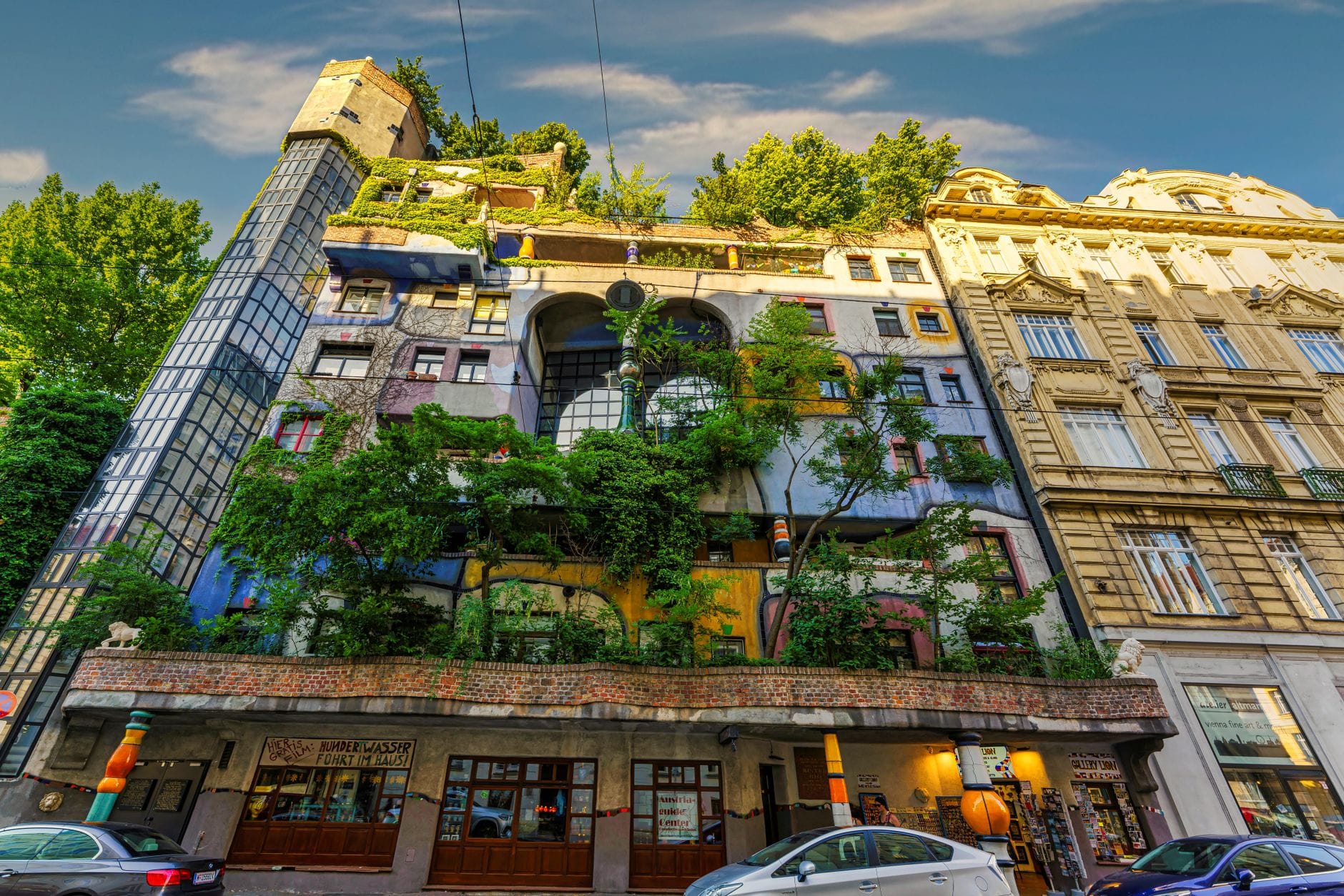
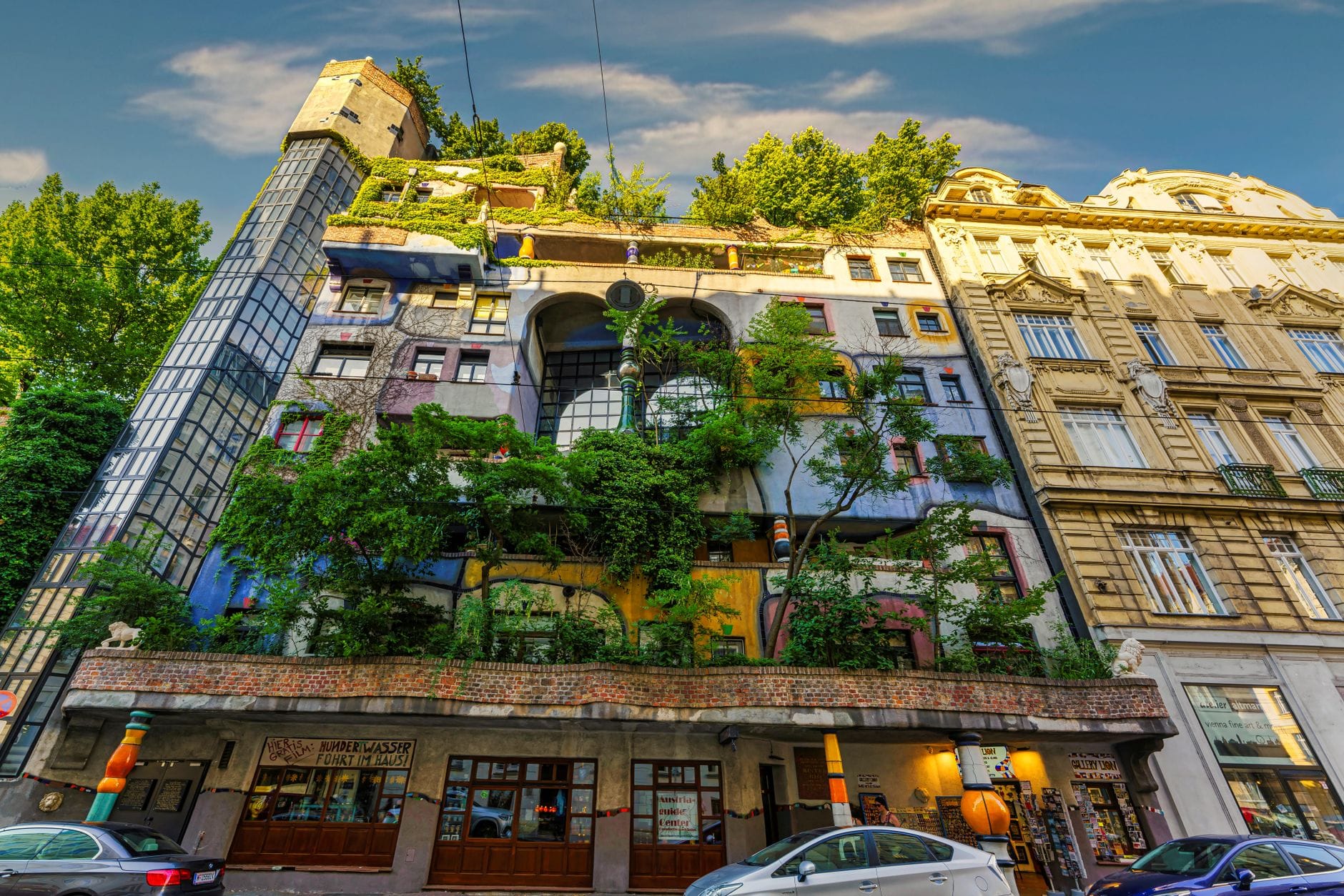
20. See Vienna's Most Eccentric 20th-Century Architecture at Hundertwasserhaus
Built in 1985, Hundertwasser's residential building is not technically Art Nouveau but shares its rejection of the straight line and industrial uniformity. The undulating facade, rooftop trees, and mismatched windows in the 3rd district remain Vienna's most photographed non-historic building.
Explore20. See Vienna's Most Eccentric 20th-Century Architecture at Hundertwasserhaus
Built in 1985, Hundertwasser's residential building is not technically Art Nouveau but shares its rejection of the straight line and industrial uniformity. The undulating facade, rooftop trees, and mismatched windows in the 3rd district remain Vienna's most photographed non-historic building.
Explore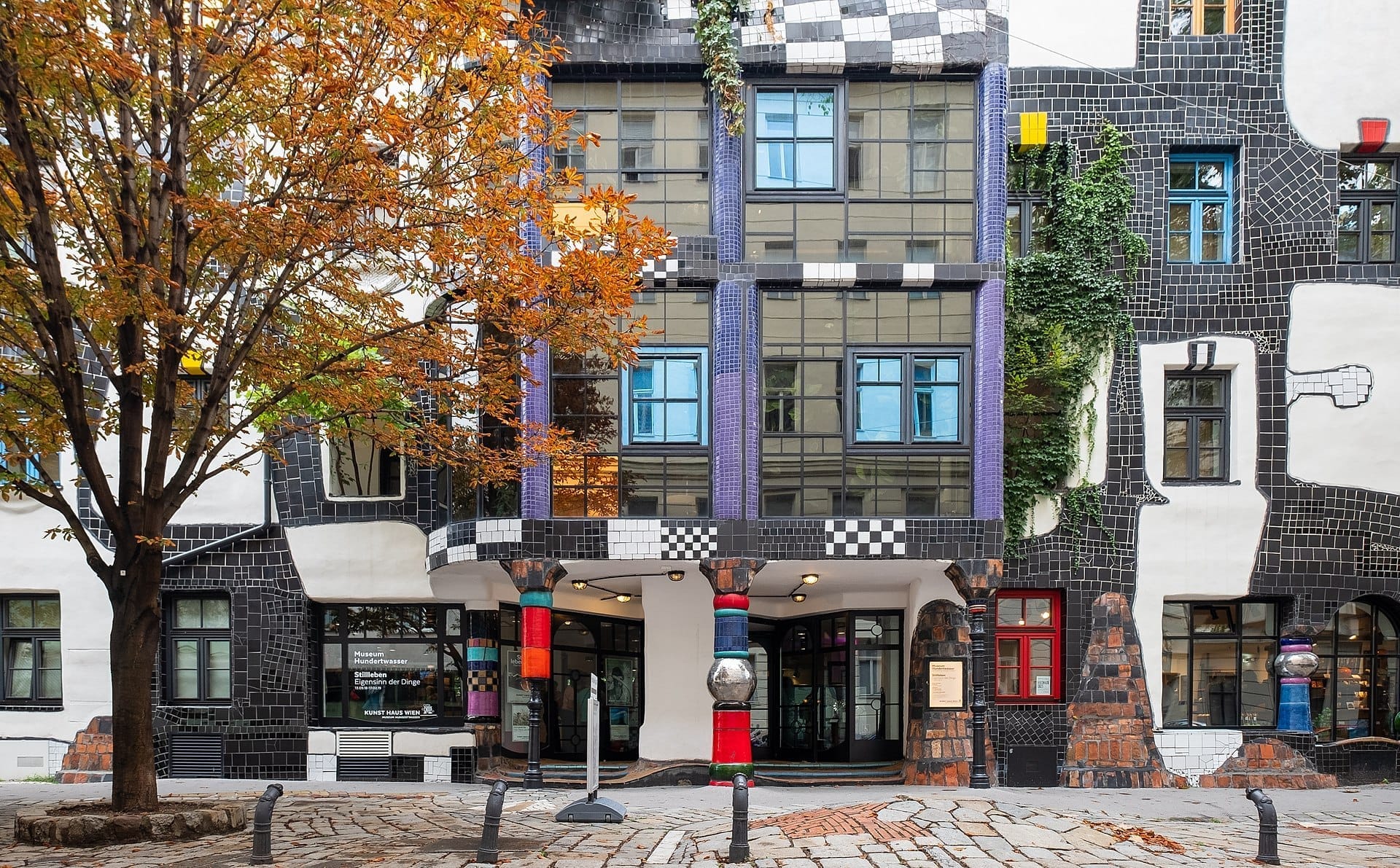
21. Understand Hundertwasser's Architecture Philosophy at Kunst Haus Wien
This museum dedicated to Hundertwasser is itself an architectural object, with irregular floors, planted roofs, and a facade of deliberate asymmetry. It provides the best context for understanding his ideas about organic architecture, just a few minutes' walk from the Hundertwasserhaus.
Explore21. Understand Hundertwasser's Architecture Philosophy at Kunst Haus Wien
This museum dedicated to Hundertwasser is itself an architectural object, with irregular floors, planted roofs, and a facade of deliberate asymmetry. It provides the best context for understanding his ideas about organic architecture, just a few minutes' walk from the Hundertwasserhaus.
Explore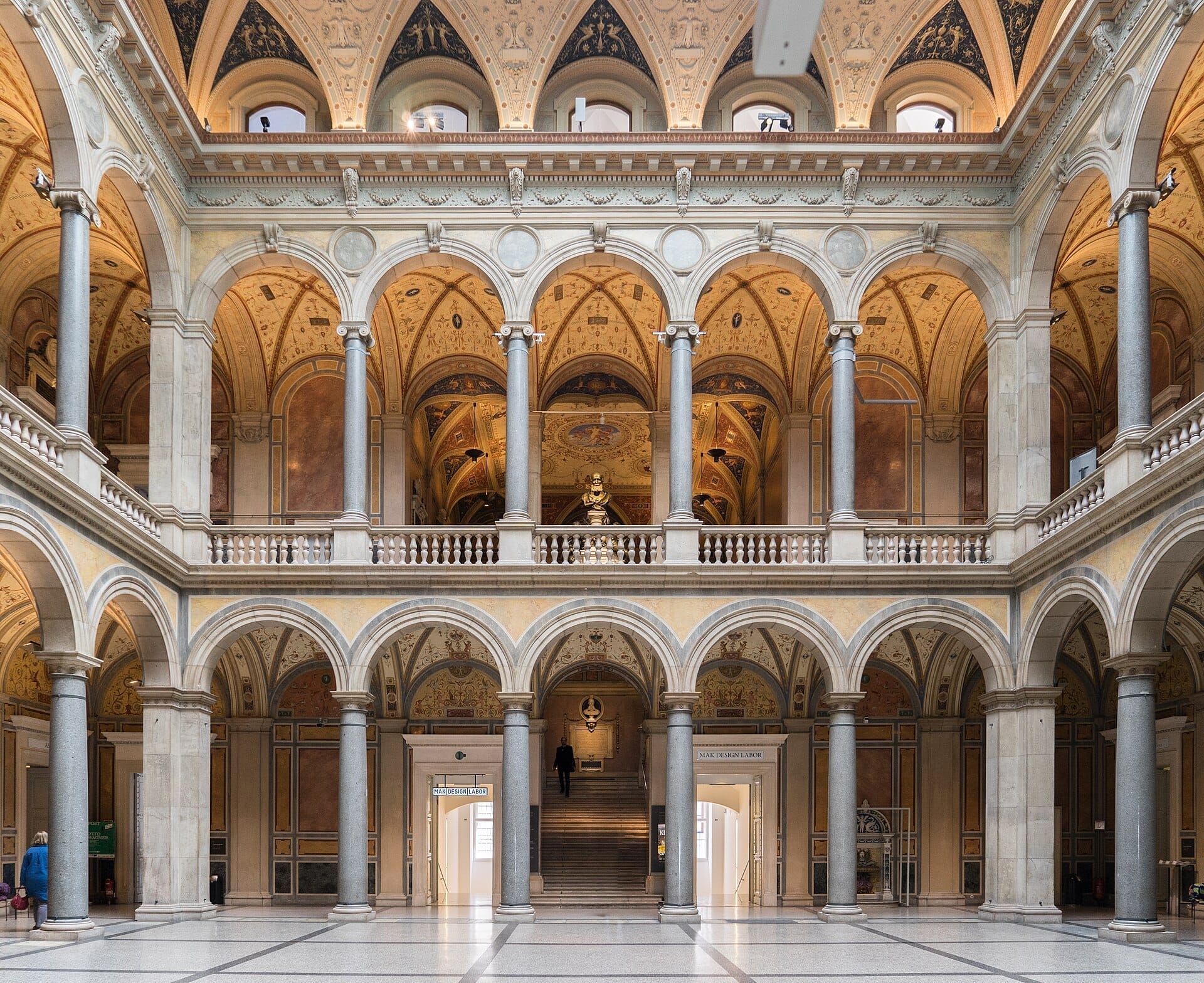
22. See Wiener Werkstätte Design at the MAK
The Museum of Applied Arts holds Vienna's finest collection of Wiener Werkstätte objects: furniture, textiles, glass, and metalwork by Josef Hoffmann, Koloman Moser, and their collaborators. The building itself, a Ringstrasse structure from 1871, provides an interesting counterpoint to its contents.
Explore22. See Wiener Werkstätte Design at the MAK
The Museum of Applied Arts holds Vienna's finest collection of Wiener Werkstätte objects: furniture, textiles, glass, and metalwork by Josef Hoffmann, Koloman Moser, and their collaborators. The building itself, a Ringstrasse structure from 1871, provides an interesting counterpoint to its contents.
ExploreArchitecture as Interior Experience: Great Rooms & Spaces
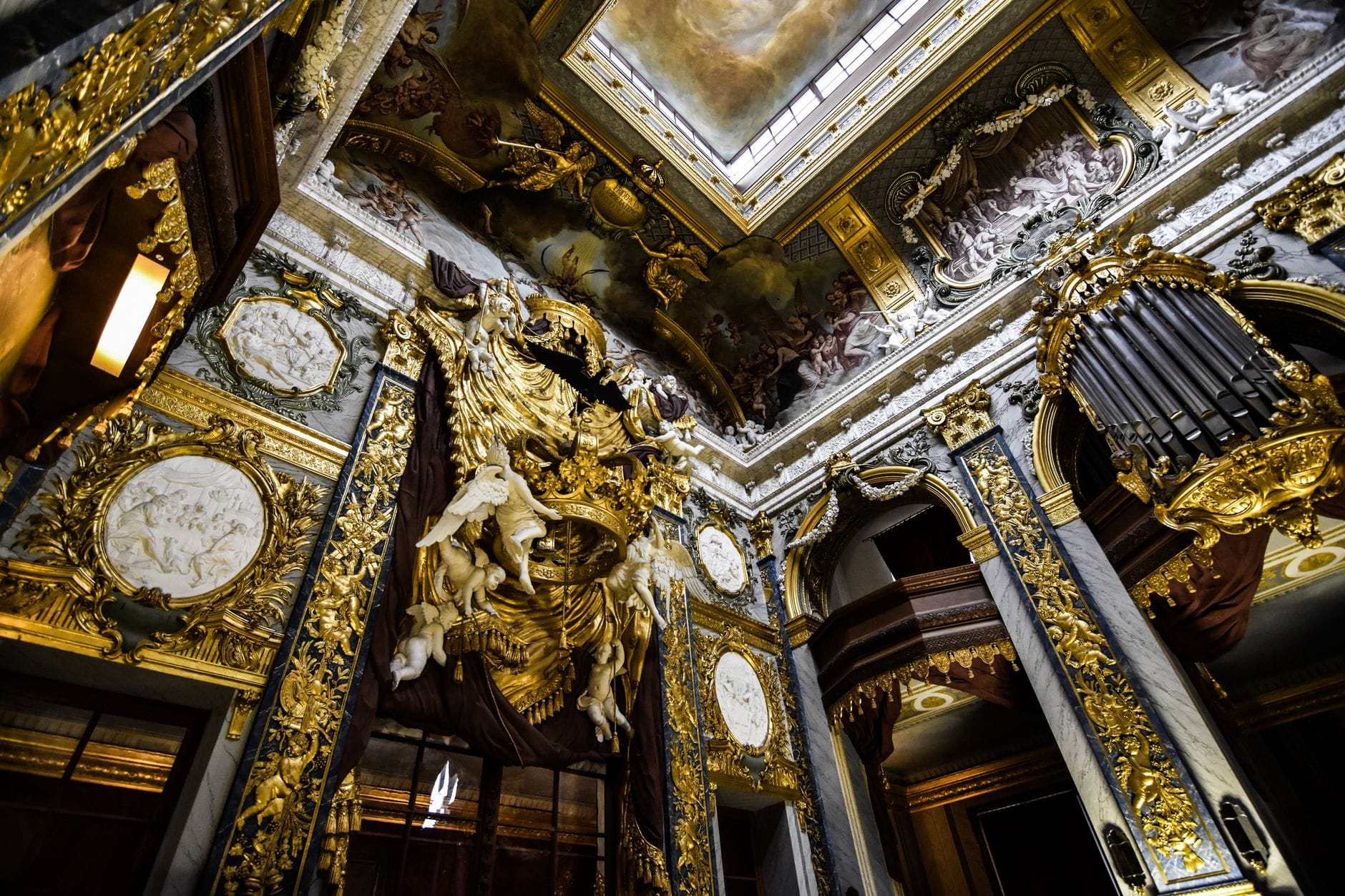
Some of Vienna's most significant architecture is experienced from the inside. The city's great coffeehouses, concert halls, and museum interiors are architectural achievements in their own right, and several belong on any serious architectural tour alongside the palaces and public monuments. Our coffeehouse guide covers the cultural dimension of these spaces in more detail.
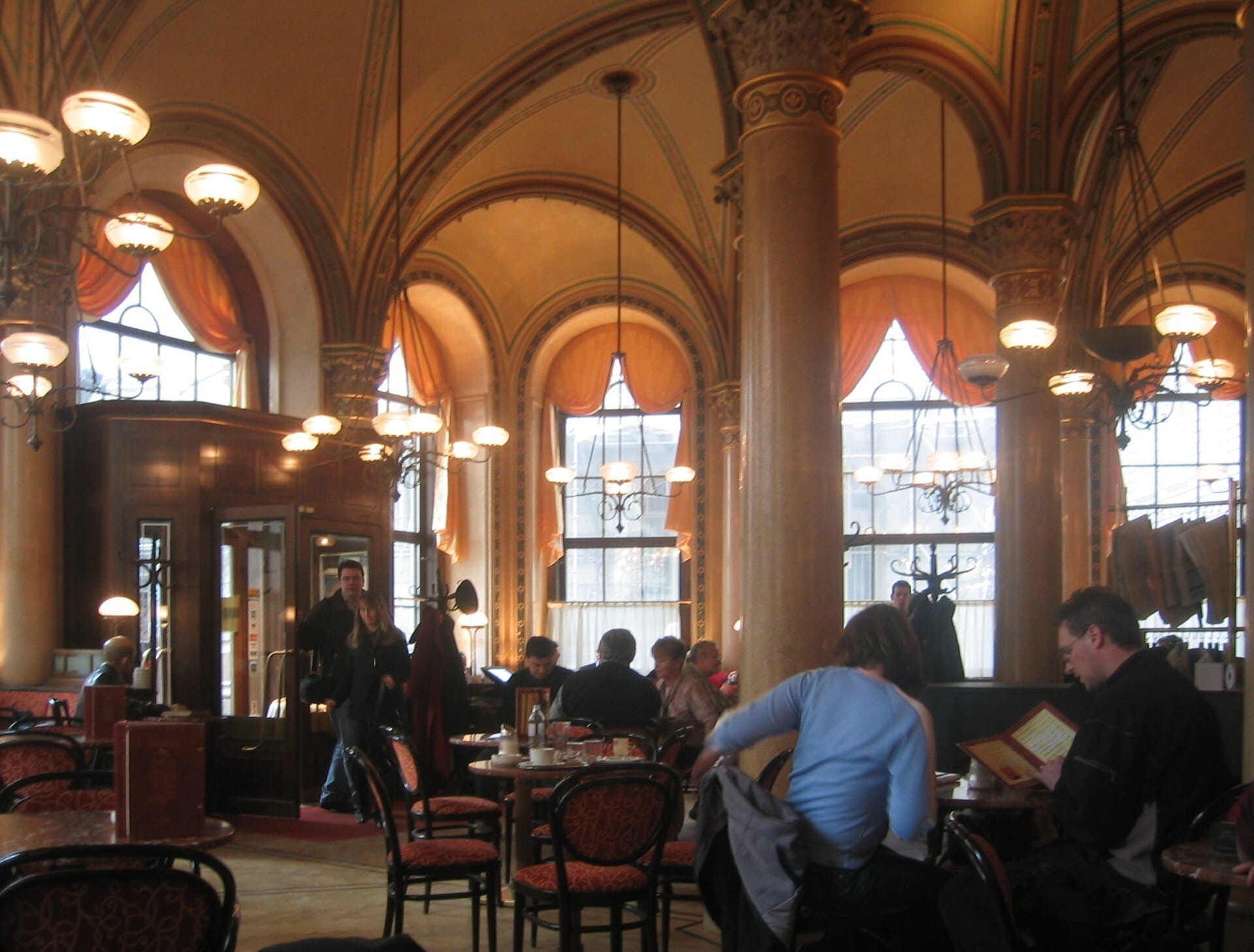
23. Experience a Ringstrasse Palace Arcade as a Working Café
Café Central occupies the vaulted Gothic arcade of the Palais Ferstel, built in 1876. Its pointed arches, marble columns, and ornate ceiling make it one of Vienna's most architecturally impressive interiors you can simply walk into and order coffee. Freud and Trotsky were regulars.
Explore23. Experience a Ringstrasse Palace Arcade as a Working Café
Café Central occupies the vaulted Gothic arcade of the Palais Ferstel, built in 1876. Its pointed arches, marble columns, and ornate ceiling make it one of Vienna's most architecturally impressive interiors you can simply walk into and order coffee. Freud and Trotsky were regulars.
Explore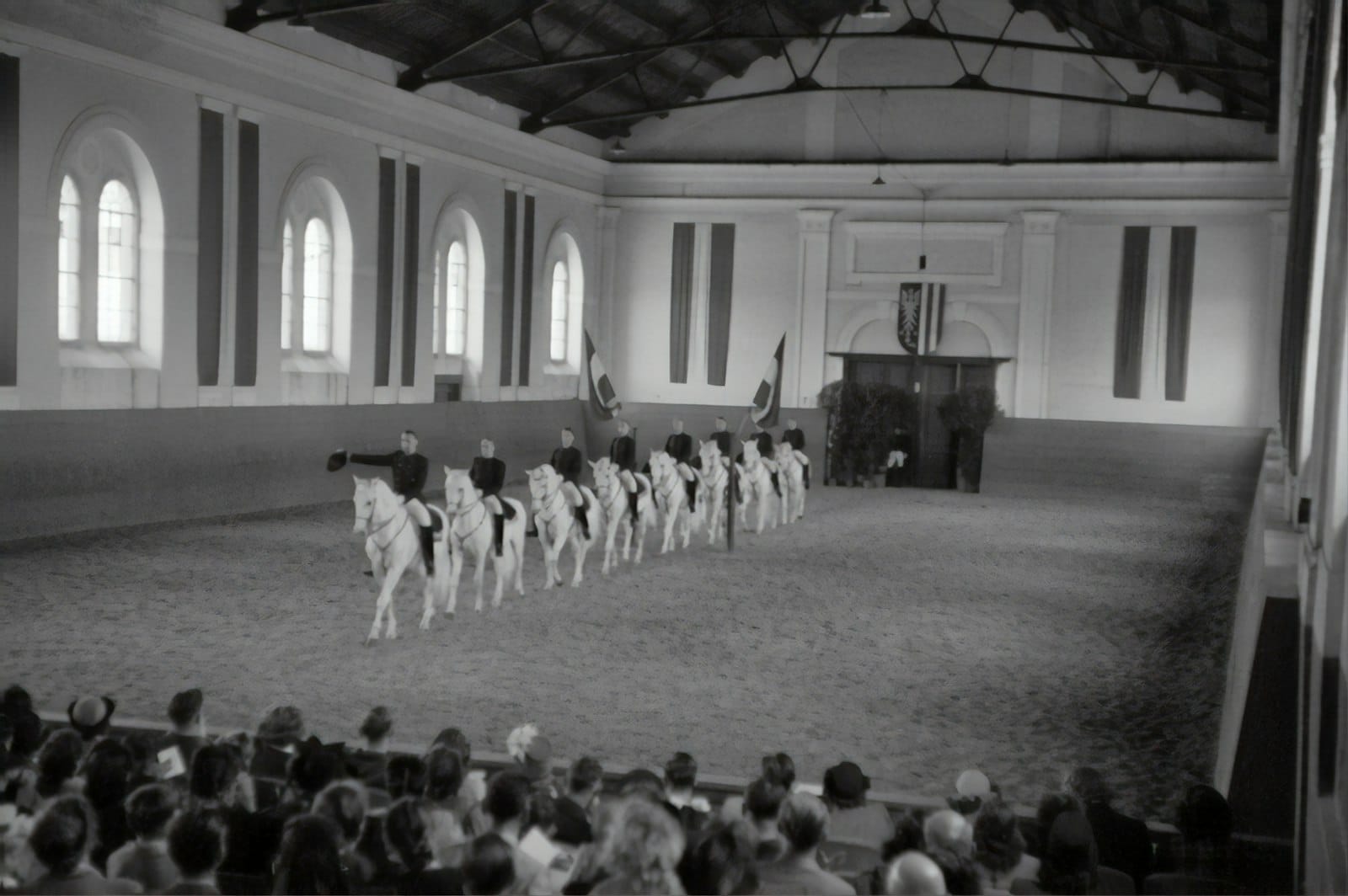
24. See the Baroque Winter Riding School, One of Vienna's Finest Interiors
The Winter Riding School within the Hofburg, completed in 1735 by Josef Emanuel Fischer von Erlach, is one of the most beautiful Baroque rooms in Europe: a white hall with 46 Corinthian columns, three tiers of galleries, and a ceiling portrait of Emperor Charles VI.
Explore24. See the Baroque Winter Riding School, One of Vienna's Finest Interiors
The Winter Riding School within the Hofburg, completed in 1735 by Josef Emanuel Fischer von Erlach, is one of the most beautiful Baroque rooms in Europe: a white hall with 46 Corinthian columns, three tiers of galleries, and a ceiling portrait of Emperor Charles VI.
Explore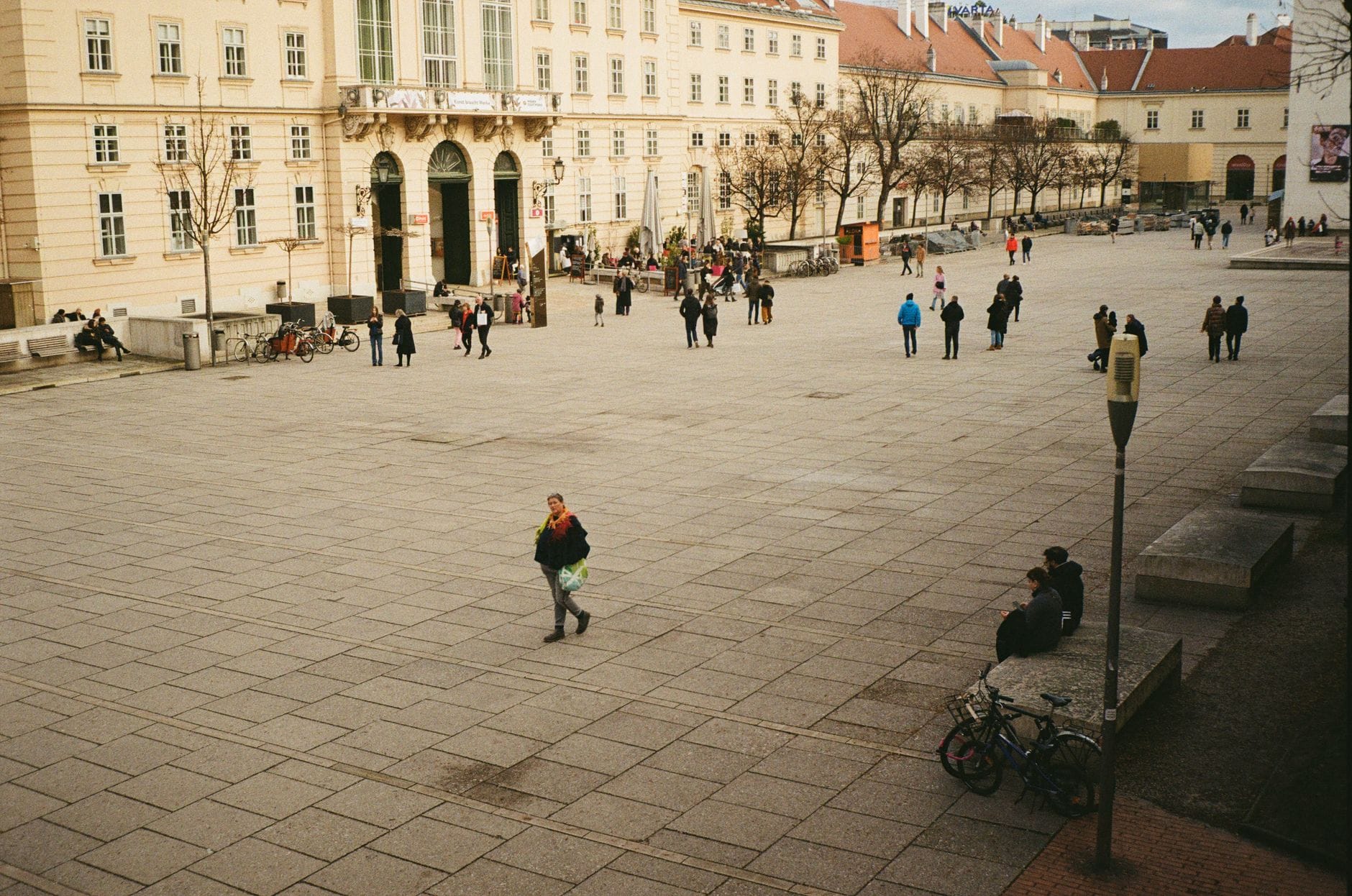
25. See How Vienna Transformed a Baroque Stable into a Contemporary Campus
The MuseumsQuartier conversion completed in 2001 added bold contemporary structures (the basalt MUMOK cube, the Leopold Museum's white limestone) to the Baroque imperial stables facade. The contrast between old shell and new interior is one of Vienna's most instructive adaptive reuse projects.
Explore25. See How Vienna Transformed a Baroque Stable into a Contemporary Campus
The MuseumsQuartier conversion completed in 2001 added bold contemporary structures (the basalt MUMOK cube, the Leopold Museum's white limestone) to the Baroque imperial stables facade. The contrast between old shell and new interior is one of Vienna's most instructive adaptive reuse projects.
Explore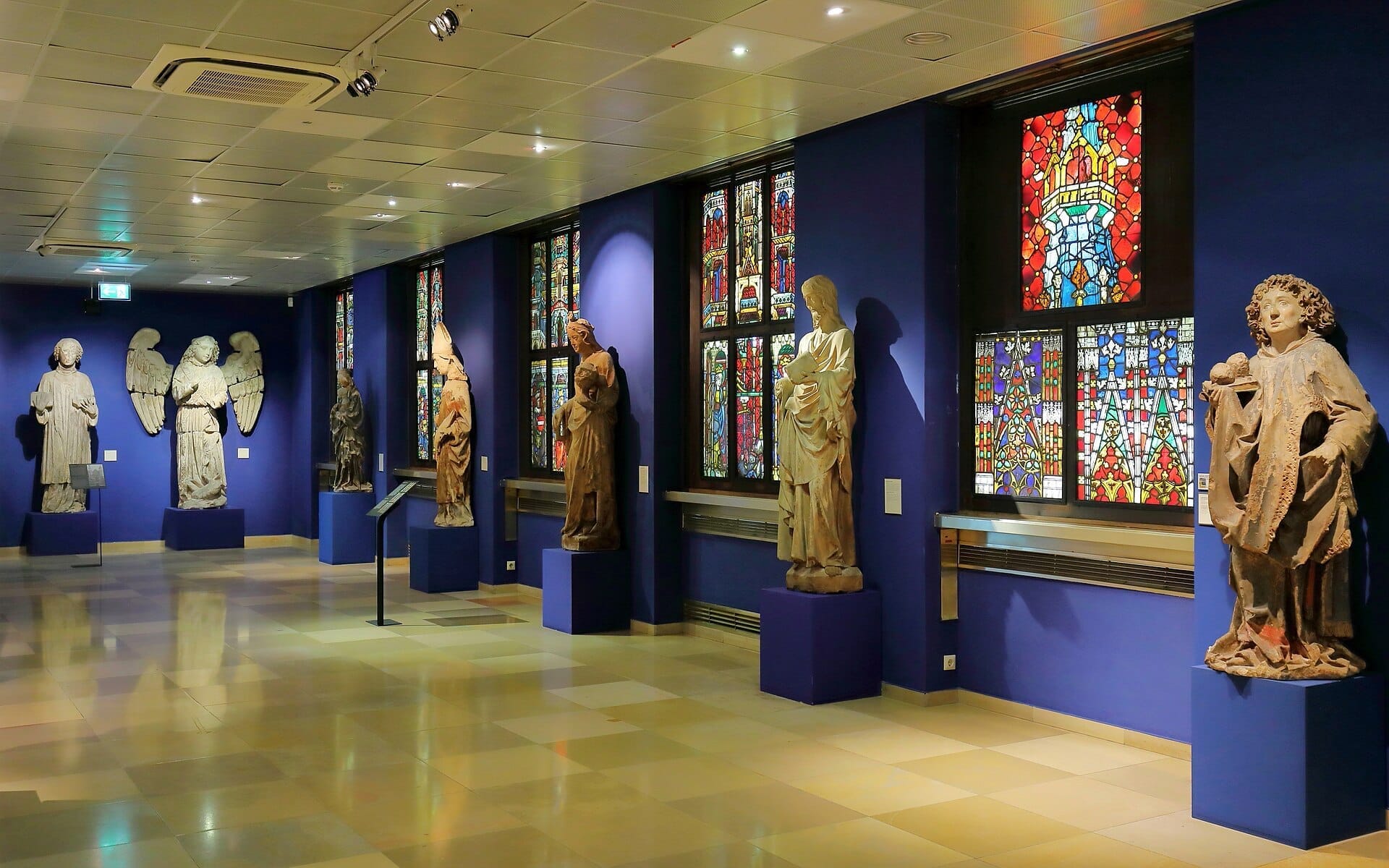
26. Visit the Wien Museum's Acclaimed New Building on Karlsplatz
Reopened in late 2023 after a major expansion by Matti Ragaz Hitz Architekten, the Wien Museum on Karlsplatz doubled its size with a bold new upper floor that cantilevers over the 1959 original. The new building has itself become part of Vienna's ongoing architectural conversation.
Explore26. Visit the Wien Museum's Acclaimed New Building on Karlsplatz
Reopened in late 2023 after a major expansion by Matti Ragaz Hitz Architekten, the Wien Museum on Karlsplatz doubled its size with a bold new upper floor that cantilevers over the 1959 original. The new building has itself become part of Vienna's ongoing architectural conversation.
ExploreBeyond the Centre: Architecture Worth the Extra Trip
Some of Vienna's most architecturally significant buildings sit outside the Ringstrasse circuit. The city's outlying districts contain important Baroque, Jugendstil, and 20th-century structures that most visitors on short trips miss entirely. If you have three or more days, these destinations reward the journey. See our 3-day Vienna itinerary for help structuring your time.
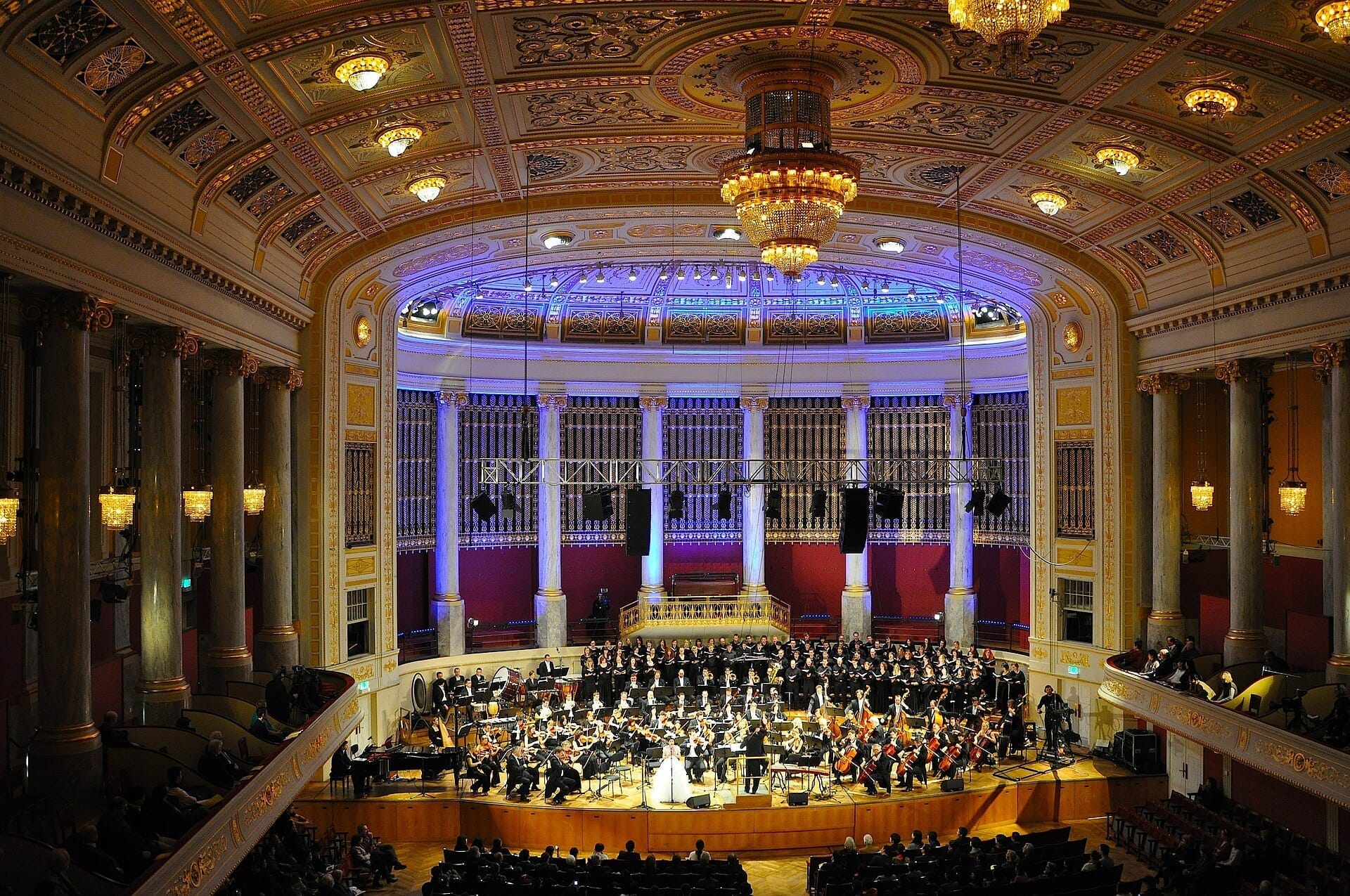
27. Compare Jugendstil Concert Hall Design at the Konzerthaus
The Konzerthaus, built in 1913 in a restrained late-Jugendstil style by Ferdinand Fellner and Hermann Helmer, offers an interesting comparison with Hansen's earlier Musikverein. Its three halls of different sizes show how acoustic architecture was refined in the Secession era.
Explore27. Compare Jugendstil Concert Hall Design at the Konzerthaus
The Konzerthaus, built in 1913 in a restrained late-Jugendstil style by Ferdinand Fellner and Hermann Helmer, offers an interesting comparison with Hansen's earlier Musikverein. Its three halls of different sizes show how acoustic architecture was refined in the Secession era.
Explore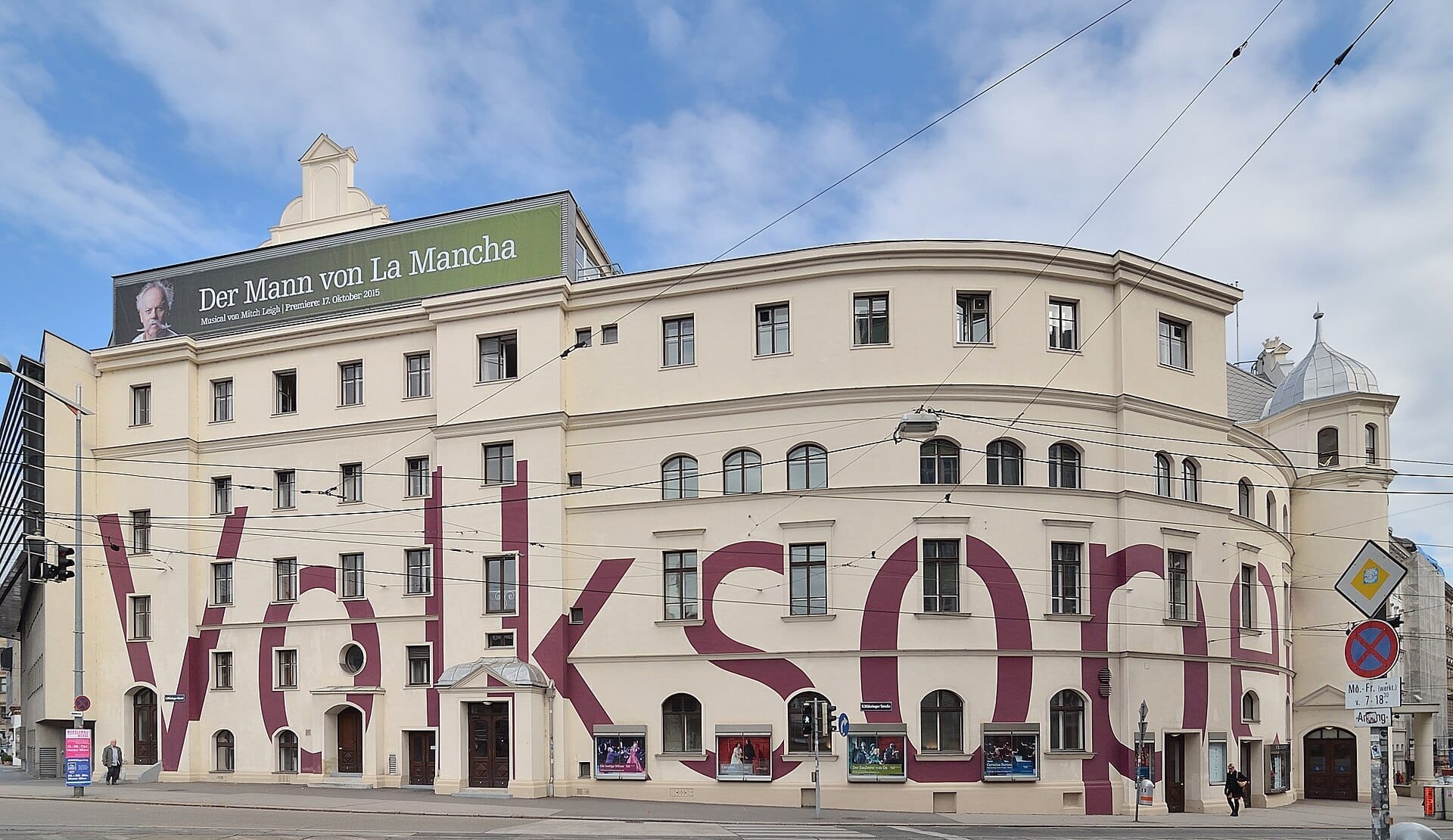
28. See an Early 20th-Century Theater in the 9th District
The Volksoper, built in 1898 as a Jubilee Theater for Franz Joseph's 50th anniversary, combines historicist classicism with emerging Jugendstil ornamental details in its facade. It's a useful example of the transitional style that existed in Vienna just before the Secession's full impact.
Explore28. See an Early 20th-Century Theater in the 9th District
The Volksoper, built in 1898 as a Jubilee Theater for Franz Joseph's 50th anniversary, combines historicist classicism with emerging Jugendstil ornamental details in its facade. It's a useful example of the transitional style that existed in Vienna just before the Secession's full impact.
Explore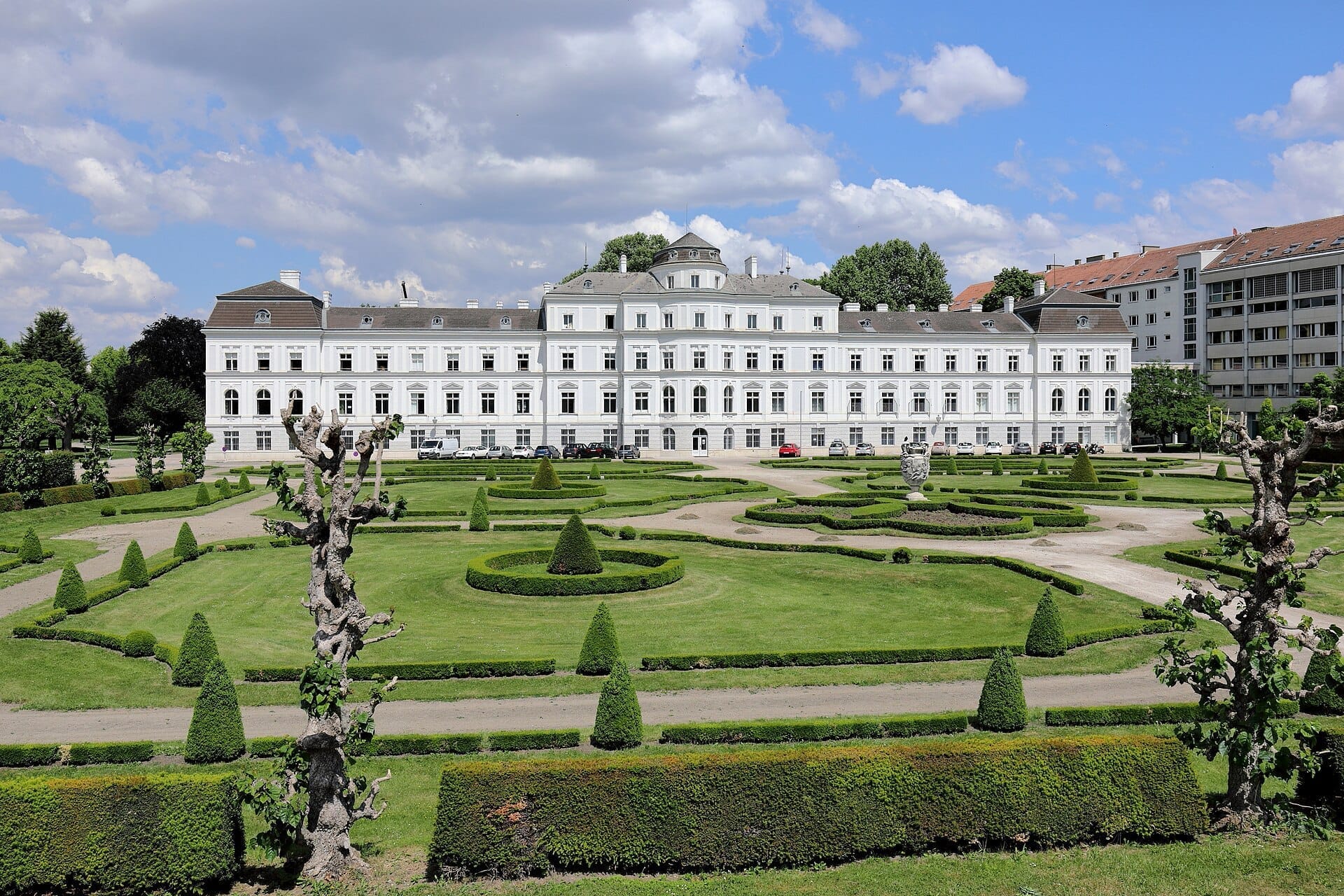
29. See Baroque Park Design Alongside WWII Concrete at Augarten
Vienna's oldest Baroque public park, laid out in the 17th century with formal allées, now contains two massive WWII flak towers that were never demolished. The juxtaposition of Baroque garden geometry with brutalist concrete cylinders is uniquely Viennese and worth seeing.
Explore29. See Baroque Park Design Alongside WWII Concrete at Augarten
Vienna's oldest Baroque public park, laid out in the 17th century with formal allées, now contains two massive WWII flak towers that were never demolished. The juxtaposition of Baroque garden geometry with brutalist concrete cylinders is uniquely Viennese and worth seeing.
ExploreFAQ
What is the difference between Baroque, Ringstrasse, and Art Nouveau architecture in Vienna?
Baroque (17th-18th century) produced Vienna's great palaces and churches, including Schönbrunn and Karlskirche. The Ringstrasse buildings (1860s-1890s) are Historicist, meaning they mimic earlier styles like Neo-Gothic and Neo-Renaissance rather than being genuinely old. Art Nouveau (Jugendstil), from around 1897, was a deliberate break from all historical imitation, using organic ornament and new materials. The Secession building and Otto Wagner's Karlsplatz pavilions are key examples.
Can I walk the Ringstrasse and see the main buildings for free?
Yes. The Ringstrasse is a public boulevard and the exteriors of all its major buildings, including the State Opera, Burgtheater, Rathaus, Parliament, and the twin museums, are free to view from the street. Tram lines 1, 2, and D run along major sections. Interior access requires tickets or tour bookings, which vary by venue and season.
What is the best single building to see for Vienna's Art Nouveau architecture?
The Wiener Secession building, designed by Josef Maria Olbrich in 1897, is the clearest starting point. Its golden sphere, white walls, and programmatic rejection of historicism make it the architectural manifesto of the movement. It also houses Klimt's Beethoven Frieze in the basement. Otto Wagner's Karlsplatz pavilions, a few minutes' walk away, make an excellent follow-up.
Is Kirche am Steinhof (Otto Wagner Church) worth the journey from the city centre?
Strongly yes, for anyone seriously interested in Art Nouveau or architectural history. Completed in 1907, it is Otto Wagner's most fully realized building and one of the most important Jugendstil structures in Europe. It sits on the grounds of the former Steinhof psychiatric hospital, about 20 minutes from the centre by tram and bus. Verify opening hours before visiting as they are limited.
How long do I need to properly explore Vienna's architectural highlights?
A focused two-day itinerary covers the main Ringstrasse buildings, the Secession, the Hofburg exterior, and Schönbrunn. Three days allows you to add Karlskirche, the Jugendstil pavilions at Karlsplatz, and the Liechtenstein Garden Palace. A fourth day enables the trip to Kirche am Steinhof and the Belvedere complex in full.