Upper Belvedere (Oberes Belvedere): Vienna's Most Rewarding Palace Museum
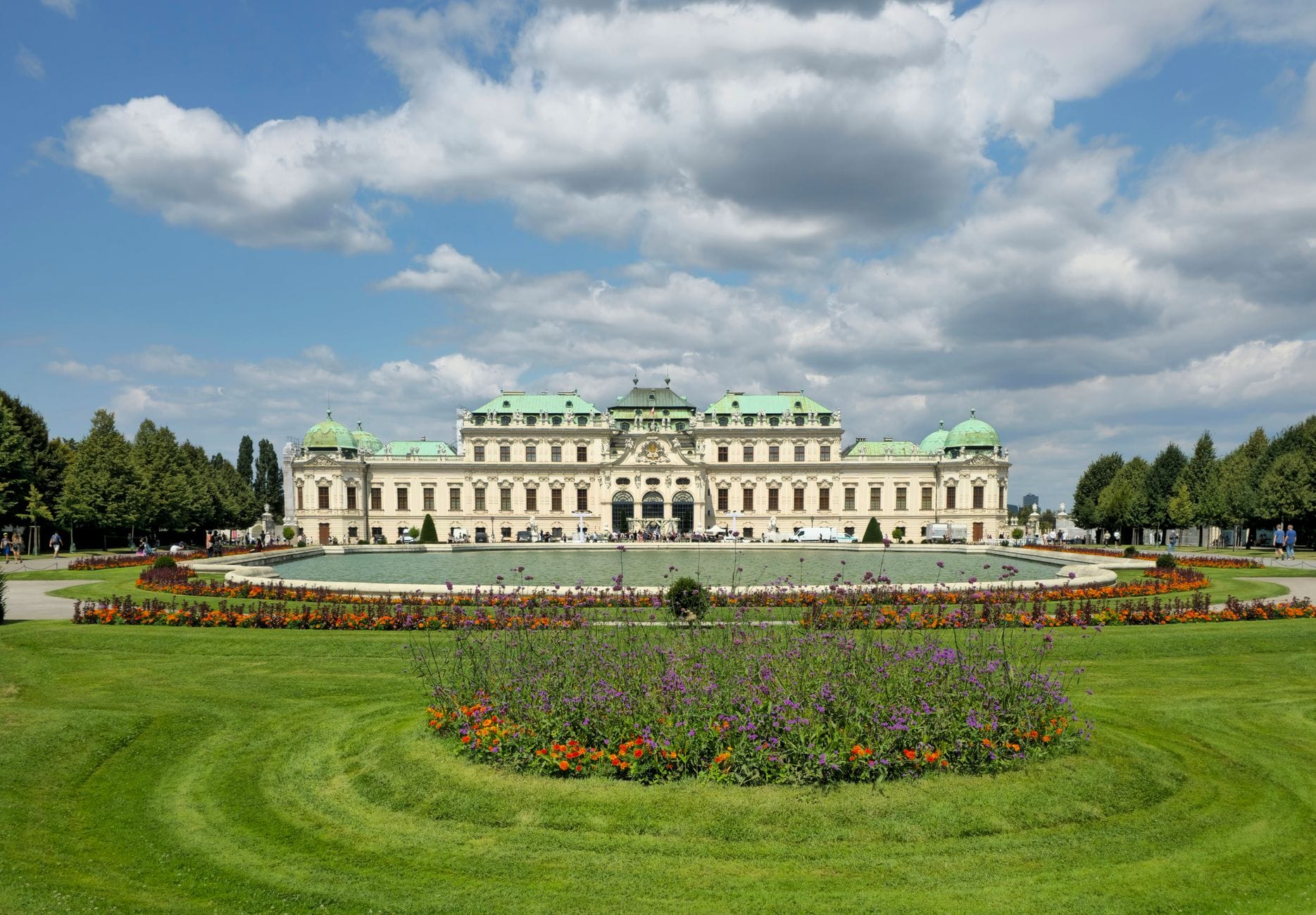
Built between 1717 and 1723 for Prince Eugene of Savoy, the Upper Belvedere is both a baroque architectural landmark and one of Europe's finest art museums. It houses Gustav Klimt's The Kiss, an extensive collection of Austrian art from the Middle Ages to the early twentieth century, and a formal garden that ranks among Vienna's most photographed settings.
Quick Facts
- Location
- Prinz-Eugen-Straße 27, 1030 Vienna (3rd District, Landstraße)
- Getting There
- Tram 18 or Tram O to Schloss Belvedere; or 15-min walk from Südtiroler Platz/Hauptbahnhof (S-Bahn)
- Time Needed
- 2–3 hours for the museum; add 30–45 min for the gardens
- Cost
- Paid admission; verify current ticket prices at belvedere.at before visiting
- Best for
- Art lovers, architecture enthusiasts, couples, history buffs
- Official website
- www.belvedere.at/en
What the Upper Belvedere Actually Is
The Upper Belvedere (Oberes Belvedere) is the larger of two palace buildings that together form the Belvedere complex in Vienna's 3rd district. Completed in 1723 to a design by Johann Lukas von Hildebrandt, it was commissioned as a summer residence and ceremonial palace for Prince Eugene of Savoy, the Habsburg Empire's most celebrated military commander. Today it functions primarily as an art museum under the management of the Belvedere institution, which also oversees the Lower Belvedere and the Orangery a short walk down the garden.
The building is remarkable for combining a working museum with an interior that is itself worth studying closely. The Marble Hall on the piano nobile, with its ceiling fresco by Carlo Carlone and its views across the formal garden toward Vienna's skyline, gives visitors a sense of how baroque power was meant to feel: theatrical, overwhelming, and completely deliberate.
One historical footnote that makes the Upper Belvedere especially significant: the Austrian State Treaty was signed here on May 15, 1955, in the Marble Hall, restoring Austria's full sovereignty after World War II. For anyone interested in twentieth-century European history, that detail transforms the room from a decorative showpiece into something more resonant. The Habsburg imperial history of Vienna runs deep through every room.
The Collection: More Than Just One Famous Painting
Most visitors arrive specifically to see Gustav Klimt's The Kiss (1907–08), and it does not disappoint. The painting is larger than most people expect, displayed in a dedicated room on the first floor where the lighting and wall color are calibrated to reduce glare on the gold leaf surface. Lines form in front of it reliably by mid-morning, but the crowd thins to manageable levels in the final hour before closing.
💡 Local tip
Arrive at 9:00 am when doors open or after 4:30 pm to see The Kiss without a dense crowd. Midday, especially on weekends, can mean 20+ people crammed into that one room.
Beyond Klimt, the collection covers Austrian painting and sculpture from the Middle Ages through roughly 1900, making it the most comprehensive survey of that tradition in existence. The Klimt rooms alone hold several major works beyond The Kiss, including Judith I and the Avenue in Schloss Kammer Park. Egon Schiele is well represented, with raw, angular works that contrast sharply with Klimt's decorative richness. Oskar Kokoschka appears alongside them, completing the Viennese Expressionist picture. Travelers with a serious interest in this period should also consult the Vienna Klimt and Secession guide before their visit.
The medieval and baroque floors are frequently skimmed by visitors in a rush for the Klimt rooms, which is their loss. The collection of Austrian baroque painting on the ground floor includes large-format altarpieces and portraits that convey the visual culture of the Habsburg court far more vividly than any history book. The rooms are quieter and less crowded, and the ceiling heights make the scale of the works legible in a way smaller galleries cannot match.
Tickets & tours
Hand-picked options from our booking partner. Prices are indicative; availability and final rates are confirmed when you complete your booking.
Upper Belvedere ticket and audio tour with self-guided city walk
From 37 €Instant confirmationSkip-the-line Upper Belvedere Palace guided tour
From 51 €Instant confirmationFree cancellationUpper Belvedere entrance tickets
From 0 €Instant confirmationFree cancellationBelvedere Palace and Garden Skip-the-Line Ticket and Guided Tour
From 49 €Instant confirmationFree cancellation
The Gardens: Formal, Photogenic, and Worth Your Time
The formal garden connecting the Upper and Lower Belvedere is one of the best-preserved examples of baroque French garden design in Central Europe. Laid out on a gentle slope, it uses tiered terraces, trimmed hedgerows, reflecting pools, and sculpted fountains to create a sequence of outdoor rooms that become more dramatic as you move uphill toward the Upper Belvedere's facade. From the top terrace, the axial view back down the garden toward Vienna's skyline, with St. Stephen's Cathedral visible in the distance on clear days, is genuinely striking. The Belvedere Gardens are free to enter and accessible year-round.
In spring, the parterre sections fill with tulips and later roses, and the garden becomes notably more colorful from April through June. In summer, the stone reflects heat, and the open areas feel exposed in the early afternoon. Early morning and late afternoon visits offer softer light and cooler temperatures. In winter, the bare hedgerows and pale stone take on a quieter, more architectural quality that serious photographers often prefer to the tourist-season crowds.
ℹ️ Good to know
Photography in the gardens is freely permitted. Inside the museum, photography without flash is generally allowed in permanent collection rooms, but verify the current policy at the entrance, as it can vary by exhibition.
How the Experience Changes Through the Day
At 9:00 am, the Upper Belvedere is genuinely calm. The rooms smell faintly of wood polish and cool air. Security staff are setting up, the café is just opening, and you can stand in front of The Kiss for a minute without anyone in your peripheral vision. The quality of the experience at this hour is substantially higher than at noon.
By 10:30 am, tour groups have typically arrived and the Klimt rooms operate at near-capacity. The Marble Hall fills with smartphone cameras. The garden is moderately busy but not unpleasant. This midday window from roughly 10:30 am to 2:30 pm is the noisiest part of the day throughout the building.
By 4:00 pm, numbers start to thin. The light through the west-facing windows in the upper galleries warms noticeably in summer. The garden becomes pleasant again as shadows from the trimmed hedges lengthen. If you plan to visit both the interior and the garden in a single trip, an afternoon arrival around 3:30 pm allows you to see the garden in good light before the museum closes at 6:00 pm.
Getting There and Practical Logistics
The most direct public transport option is Tram 18 or Tram O, both stopping at the Schloss Belvedere stop, which deposits you directly at the upper garden entrance facing the palace facade. From Vienna Hauptbahnhof (the main railway station), the walk takes approximately 15 minutes through residential streets, passing the Quartier Belvedere development. This walk is flat and straightforward. For visitors already oriented toward the city center, the tram remains the simpler option. For broader context on navigating Vienna's transit network, the getting around Vienna guide covers U-Bahn, tram, and S-Bahn options in detail.
The Upper Belvedere is open daily from 9:00 am to 6:00 pm. Ticket prices should be verified directly at belvedere.at before your visit, as they are subject to change. Combination tickets covering both the Upper and Lower Belvedere are typically available and represent better value if you plan to visit both. The Vienna City Card provides a discount on standard admission.
⚠️ What to skip
Pre-booking tickets online is strongly recommended for weekend visits and during peak tourist season (June through August). Walk-up queues at the ticket desk can be substantial, and some timed-entry slots sell out by late morning.
The main entrance for visitors is on the garden side of the building, facing the formal parterre. Accessibility: the garden paths are paved and generally flat between terraces, though the terraced sections involve steps. The museum interior has elevator access to multiple floors. For specific accessibility requirements, contact the Belvedere directly before your visit, as provisions can vary by section of the building.
The Honest Assessment: Is It Worth Your Time?
The Upper Belvedere earns its reputation. The combination of a genuinely significant art collection housed within an architecturally exceptional building set in well-maintained grounds is rare in any city. The building is not over-restored or theme-park polished. The collection has depth beyond its headline painting. And the garden provides a context that most purely urban museums cannot offer. For anyone with a half-day to spend, it competes favorably with any museum on the list of Vienna's best museums.
That said, visitors who are purely Klimt-focused and uninterested in broader Austrian art history may find that spending 20 minutes in the Klimt rooms satisfies their goal, at which point the admission price feels steep for a partial visit. The baroque and medieval floors genuinely reward attention, but they require patience and some interest in unfamiliar painters. If your travel style skews toward checking off iconic images rather than absorbing collections, you might find the experience shorter than the ticket price justifies.
Travelers with young children should know that the museum is quiet and formal in atmosphere. The collection has limited interactive elements, and the gallery spaces are not designed for restless younger visitors. The garden is better for families, but the museum itself can be a strain with children under ten. For family-specific planning in Vienna, the Vienna with kids guide offers more suitable itinerary suggestions.
Insider Tips
- The café inside the Upper Belvedere serves coffee and light meals in a room with original baroque detailing. It is less crowded than external alternatives and more atmospheric than a generic museum café. Worth using even if just for a short break.
- The view of the garden from the Marble Hall windows on the piano nobile is the single best interior-to-exterior viewpoint in the building. Stand at the central window rather than the side windows for the full axial composition down to the Lower Belvedere.
- Tram O (not just Tram 18) also stops at Schloss Belvedere and tends to run with slightly less crowding during peak hours. Both routes are equally direct.
- The final room before the exit on the Klimt floor often contains important secondary Klimt works displayed with far less foot traffic than the Kiss room. Many visitors turn back at The Kiss and miss them entirely.
- If you are visiting in winter, check the Belvedere's seasonal exhibition program. The permanent collection is consistently strong, but temporary exhibitions (which sometimes require separate tickets) occasionally include major international loans that significantly change the value proposition of a visit.
Who Is Upper Belvedere (Oberes Belvedere) For?
- Art lovers who want depth beyond Klimt, including Schiele, Kokoschka, and Austrian baroque painting
- Architecture and design enthusiasts drawn to baroque palace interiors and formal garden design
- History travelers interested in the Habsburg Empire or the 1955 Austrian State Treaty
- Couples looking for a photogenic setting with a mix of indoor and outdoor experience
- Visitors on a tighter schedule who want a single attraction that combines art, architecture, and outdoor space in one location
Nearby Attractions
Other things to see while in Belvedere & Landstraße (3rd District):
- Albertina Modern
Opened in 2020 inside the landmark Künstlerhaus building at Karlsplatz, Albertina Modern is Vienna's dedicated space for modern and contemporary art. Across 2,500 square metres, it offers a counterpoint to the Habsburgs-and-Old-Masters narrative that dominates so many of the city's museums.
- Belvedere Gardens
Stretching between two palaces built for Prince Eugene of Savoy, the Belvedere Gardens form one of Central Europe's finest Baroque garden compositions. Entry to the main gardens is free, and the grounds shift dramatically in character from early morning calm to afternoon crowds and golden evening light.
- Heeresgeschichtliches Museum (Museum of Military History)
Housed in a striking Moorish-Byzantine arsenal building from the 1850s, the Heeresgeschichtliches Museum is one of the oldest purpose-built military history museums in the world. At just €3.50 admission, it offers an unexpectedly deep dive into Austria's military and political past, including the actual car in which Archduke Franz Ferdinand was assassinated in 1914.
- Hundertwasserhaus
Hundertwasserhaus is a municipal apartment block in Vienna's 3rd district that looks like it was painted by a child and designed by a forest. The exterior is free to view any time, and the adjacent Hundertwasser Village gives you a place to linger. Here is what a visit actually involves.