Lower Belvedere (Unteres Belvedere): Prince Eugene's Intimate Baroque Palace
Built between 1712 and 1716 as the residential summer palace of Prince Eugene of Savoy, the Lower Belvedere is the quieter, more human-scaled half of Vienna's great Baroque estate. While its famous sibling draws crowds for Klimt's 'The Kiss', the Lower Belvedere rewards visitors with gilded ceremonial rooms, a remarkable Baroque museum, and the serene Orangery, all without the queues.
Quick Facts
- Location
- Rennweg 6, 1030 Vienna (Belvedere area, 3rd District)
- Getting There
- Tram 71 to Unteres Belvedere (stop directly opposite entrance); also walkable from Hauptbahnhof (U1), approx. 15 min
- Time Needed
- 1.5 to 2.5 hours for the palace rooms, Baroque museum, and Orangery
- Cost
- Paid admission; combination tickets with Upper Belvedere and Belvedere 21 available. Check belvedere.at for current prices.
- Best for
- Baroque architecture lovers, serious art visitors, travellers who want the Belvedere experience without peak-hour crowds
- Official website
- www.belvedere.at/en/visit/lower-belvedere
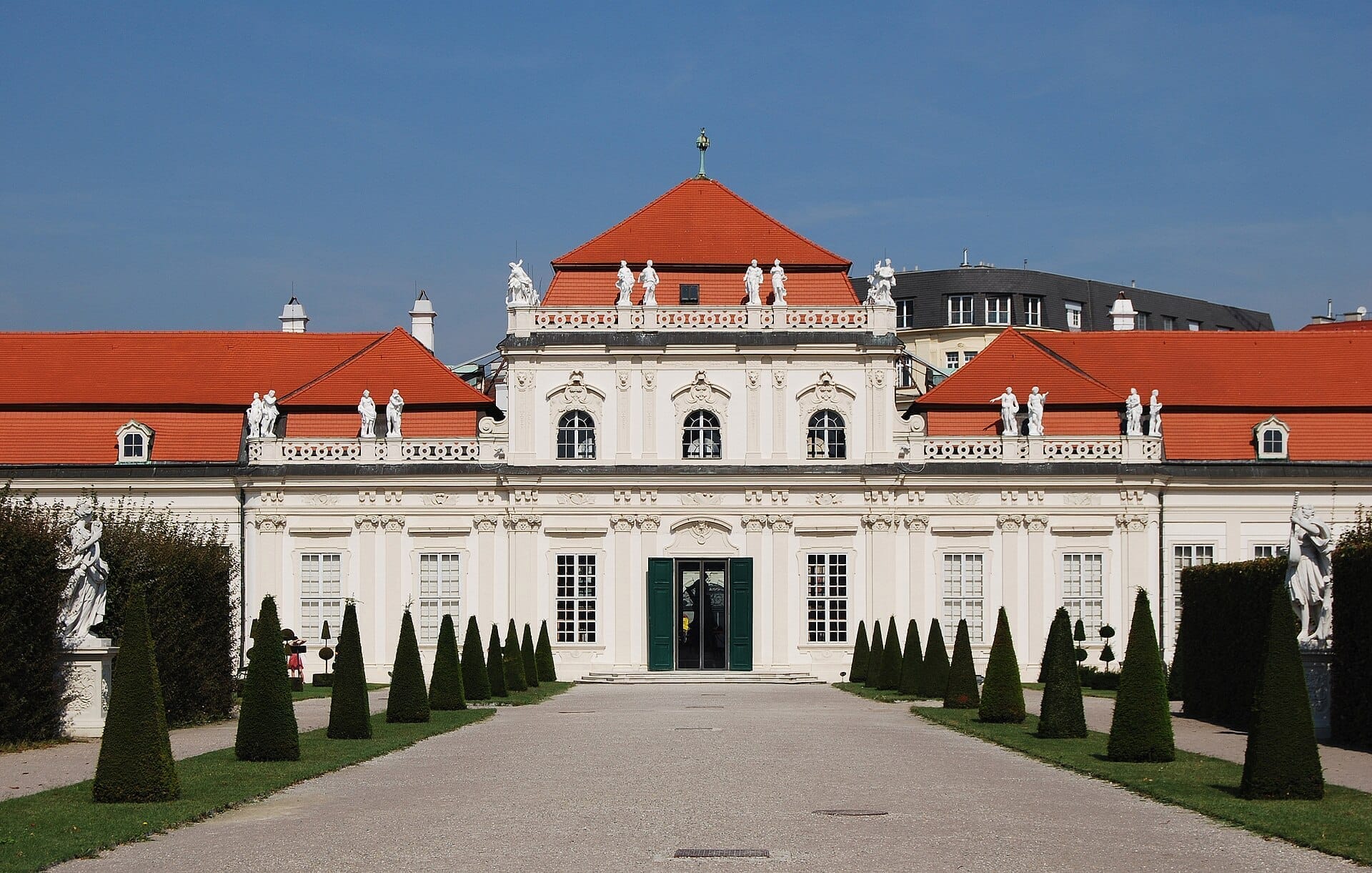
What the Lower Belvedere Actually Is
The Lower Belvedere, known in German as the Unteres Belvedere, sits at the Rennweg end of Vienna's great Baroque garden complex. It was designed by Johann Lucas von Hildebrandt and completed in 1716 as the private residence of Prince Eugene of Savoy, the military commander whose campaigns secured the Habsburg Empire's southern and eastern borders. While the Upper Belvedere, constructed later and on grander terms, was reserved for formal state occasions, this is where Eugene actually lived.
That distinction matters when you walk through it. The rooms are ceremonial but not cold. The ceilings are frescoed, the proportions theatrical, but the scale stays human. You are moving through someone's home, albeit a very powerful someone's, rather than through a monument to institutional power.
The building operates as part of the Belvedere Museum Vienna and sits within the UNESCO-listed Historic Centre of Vienna. If you are planning a broader visit to the complex, read the full breakdown in our guide to the Upper Belvedere and consider whether the Belvedere Gardens between the two palaces deserve time on their own.
💡 Local tip
Tram 71 stops directly in front of the Rennweg entrance, saving you the long walk from the garden side. This is the main entrance for Lower Belvedere visitors and the one most people miss.
Inside the Rooms: What You Will See
The interior divides into three distinct experiences: the State Apartments of Prince Eugene, the Baroque Museum housed in the Orangery and stable wing, and the Orangery itself, which functions as an exhibition space for temporary shows.
The Marble Hall and the Hall of Grotesques are the two rooms most people photograph. The Marble Hall has a ceiling fresco by Martino Altomonte depicting Prince Eugene as Apollo, gold stucco work climbing every surface, and a light quality in the morning that makes the gilding look warm rather than gaudy. It is a room that understands the Baroque principle that excess, handled with precision, becomes magnificence. The Hall of Grotesques uses a different register entirely: painted panels of fantastical creatures, vegetation, and theatrical figures that owe more to Italian Renaissance decoration than to the heavy imperial symbolism found elsewhere in Vienna.
The Baroque Museum holds a collection of Austrian Baroque sculpture and painting from the 17th and 18th centuries, including works by Franz Xaver Messerschmidt, whose character heads are among the most psychologically strange objects in any Viennese collection. These are portrait busts of exaggerated, contorted facial expressions that Messerschmidt produced in the latter part of his career, and they sit in direct, disquieting contrast to the formal court portraiture nearby.
ℹ️ Good to know
The Orangery hosts temporary exhibitions that change several times a year. Before visiting, check the current show on the Belvedere website. Some temporary exhibitions carry a separate or combined ticket.
Tickets & tours
Hand-picked options from our booking partner. Prices are indicative; availability and final rates are confirmed when you complete your booking.
Belvedere Palace and Garden Skip-the-Line Ticket and Guided Tour
From 49 €Instant confirmationFree cancellationUpper Belvedere ticket and audio tour with self-guided city walk
From 37 €Instant confirmationOne hour Vienna night bus tour
From 15 €Instant confirmationFree cancellationSkip-the-line Upper Belvedere Palace guided tour
From 51 €Instant confirmationFree cancellation
How the Experience Changes by Time of Day
The Lower Belvedere opens at 10:00 daily. Arriving at opening means you will have the Marble Hall and the State Apartments largely to yourself for the first thirty to forty minutes. The morning light enters from the garden-facing windows and moves across the stucco in a way that afternoon flat light does not replicate. This is the practical case for an early visit beyond avoiding crowds.
By midday, particularly on weekends and during summer months (June through August), tour groups arrive from the garden side. The rooms are not enormous, and a group of twenty people in the Marble Hall changes the acoustic environment considerably. The space fills with guide commentary in four or five languages, and the intimate quality of the rooms is harder to appreciate.
Late afternoon, roughly from 15:30 onward, sees a second lull as morning visitors clear and the last entry window (typically 17:00, one hour before closing) approaches. The Orangery garden, the formal parterre that connects the two palaces, catches low western light in late afternoon, and the walk between the Lower and Upper Belvedere in that light has a quality that midday cannot match.
The Orangery and Garden: What People Overlook
The Orangery building runs along the western edge of the Lower Belvedere's garden and was used, as its name suggests, to overwinter citrus trees during the era when such things were both status symbols and practical necessities for a noble household. It is a long, barrel-vaulted room with tall windows on one side and plain rendered walls on the other, which gives it an unusual quality as an exhibition space: contemporary art and temporary installations sit in it without fighting the architecture.
The garden immediately adjacent to the Lower Belvedere is formal and geometrically planted. It is smaller and more enclosed than the grand parterre that runs up toward the Upper Belvedere, and it tends to be quiet even when the main garden is busy. In spring, when the box hedges are tightly clipped and the fountain basins reflect the palace facade, the symmetry is precise enough to feel almost surreal.
For visitors who want to understand the broader Baroque estate and its place in Vienna's history, our guide to Vienna's Habsburg imperial history provides the context that makes the architecture legible.
Getting There and Practical Logistics
The address is Rennweg 6, 1030 Wien. Tram 71 stops directly opposite the entrance gate on Rennweg, making this one of the more straightforward Viennese museum journeys by public transport. From Hauptbahnhof (U1 line), you can take Tram D toward Belvedere or walk the approximately fifteen minutes down Arsenalstrasse and Rennweg. Bike parking is available at the Rennweg entrance.
Opening hours are daily from 10:00 to 18:00, year-round, though hours may vary on certain Austrian public holidays. Ticket prices change with exhibitions and special offers, so the most reliable source is the current booking page at belvedere.at. Combination tickets covering Upper Belvedere, Lower Belvedere, and Belvedere 21 (the museum of contemporary art on the opposite side of the grounds) generally represent better value than single-site tickets if you plan to spend a full day at the complex.
⚠️ What to skip
If you are visiting Vienna on a public holiday, check the Belvedere's website for adjusted hours. Austrian holidays can affect opening times significantly, and the website is the most reliable place to confirm.
The complex provides accessible facilities, but visitors with specific mobility requirements, including step-free routing and lift access, should consult the official accessibility section of the Belvedere website or contact the museum directly before their visit, as the historic architecture of some areas may present limitations.
If you are building a full day in this part of the city, the surrounding Belvedere area also rewards time on foot. Our neighbourhood guide to the Belvedere area covers what else is within walking distance.
Photography: What Works and What Does Not
The Marble Hall photographs well in the morning when the angle of light produces warm gradients across the gold stucco. A wide-angle lens captures the ceiling fresco in context, but the room is not large enough for extreme wide angles without distortion of the proportions. Tripods are generally not permitted in the State Apartments.
The Messerschmidt heads in the Baroque Museum are lit for museum viewing rather than photography, and the glass cases create reflection challenges in bright conditions. Polarising filters help if you are shooting through glass. The Orangery, when it is hosting a contemporary exhibition, tends to be better lit for photography than the historic rooms.
The exterior, shot from the garden side with the formal parterre in the foreground, works well in morning or late afternoon light. At midday the facade flattens visually and the garden loses shadow definition. The gate on the Rennweg side, with its Baroque ironwork, is an underused composition point that most visitors walk straight past.
Who Should Consider Skipping This
If you have limited time in Vienna and can only visit one Belvedere, the Upper Belvedere holds the permanent collection of Austrian art including Klimt's most famous works. The Lower Belvedere rewards visitors who are specifically interested in Baroque decoration, 17th and 18th century Austrian sculpture and painting, or the architectural history of the estate. Visitors who find period rooms repetitive after the first two or three may feel that ninety minutes here covers more than enough.
Families with young children will find the Lower Belvedere less immediately engaging than the Prater or the Naturhistorisches Museum. The rooms require a degree of patience with historical context that younger visitors often lack, and the prohibition on touching anything in the State Apartments creates friction.
If Baroque art and architecture genuinely interests you, the Lower Belvedere pairs well with a visit to Karlskirche, Vienna's most ambitious Baroque church, which is about twenty minutes away on foot or by tram.
Insider Tips
- The Rennweg entrance is the correct entrance for Lower Belvedere visitors, not the main gate on Prinz-Eugen-Strasse which is used for the Upper Belvedere. First-time visitors regularly walk to the wrong gate and lose time.
- The Messerschmidt character heads in the Baroque Museum are frequently the most talked-about objects by visitors who were not expecting them. Allocate at least fifteen minutes in that section rather than rushing through to the Orangery.
- Tram 71 runs from the Ring (near the Staatsoper) directly to Unteres Belvedere. It is faster and more direct than the U-Bahn plus walking combination that most tourist maps suggest.
- If you are visiting in spring (April to May), the garden between the two palaces is at its best in terms of planting and light, and the Lower Belvedere crowds are noticeably smaller than in summer.
- The museum shop at the Lower Belvedere tends to stock a different range of prints and publications than the shop at the Upper Belvedere, with a stronger focus on Baroque and temporary exhibition material. Worth a look even if you browse without buying.
Who Is Lower Belvedere (Unteres Belvedere) For?
- Visitors with a specific interest in Baroque architecture, interior decoration, and the ceremonial spaces of 18th-century Vienna
- Art historians and students of Austrian painting and sculpture from the 17th and 18th centuries
- Travellers who want to see the Belvedere complex without the concentrated crowds at the Upper Belvedere
- Photography enthusiasts interested in Baroque interiors and formal garden compositions
- Anyone spending a full day at the Belvedere estate and wanting to cover the complete complex
Nearby Attractions
Other things to see while in Belvedere & Landstraße (3rd District):
- Albertina Modern
Opened in 2020 inside the landmark Künstlerhaus building at Karlsplatz, Albertina Modern is Vienna's dedicated space for modern and contemporary art. Across 2,500 square metres, it offers a counterpoint to the Habsburgs-and-Old-Masters narrative that dominates so many of the city's museums.
- Belvedere Gardens
Stretching between two palaces built for Prince Eugene of Savoy, the Belvedere Gardens form one of Central Europe's finest Baroque garden compositions. Entry to the main gardens is free, and the grounds shift dramatically in character from early morning calm to afternoon crowds and golden evening light.
- Heeresgeschichtliches Museum (Museum of Military History)
Housed in a striking Moorish-Byzantine arsenal building from the 1850s, the Heeresgeschichtliches Museum is one of the oldest purpose-built military history museums in the world. At just €3.50 admission, it offers an unexpectedly deep dive into Austria's military and political past, including the actual car in which Archduke Franz Ferdinand was assassinated in 1914.
- Hundertwasserhaus
Hundertwasserhaus is a municipal apartment block in Vienna's 3rd district that looks like it was painted by a child and designed by a forest. The exterior is free to view any time, and the adjacent Hundertwasser Village gives you a place to linger. Here is what a visit actually involves.