Getting Around Vienna: The Complete Transport Guide (2026)
Vienna's public transport network is one of Europe's most efficient, covering the entire city with U-Bahn, trams, buses, and S-Bahn. This guide covers 2026 ticket prices, airport transfer options, night services, and everything you need to move around the city without a car.
Plan and book this trip
Tools from our partner Travelpayouts help you compare flights and hotels. If you book through them, we may earn a commission at no extra cost to you.
Flights
Hotels map
TL;DR
- Vienna's public transport is run by Wiener Linien and covers the city with 5 U-Bahn lines, ~30 tram routes, and extensive bus services.
- From January 2026, a single ticket costs €3.20 (paper) or €3.00 (online/app). Children under 6 travel free.
- The S7 suburban train connects Vienna Airport (VIE) to Wien Mitte in about 25 minutes. No special ticket needed, just a standard zone ticket.
- U-Bahn runs 05:00–00:30 on weekdays, with 24-hour service on Friday nights, Saturday nights, and public holidays.
- For frequent visitors, the Vienna City Card bundles unlimited transport with museum discounts. See our guide to whether the Vienna Pass is worth it for a full comparison.
Vienna's Public Transport Network at a Glance
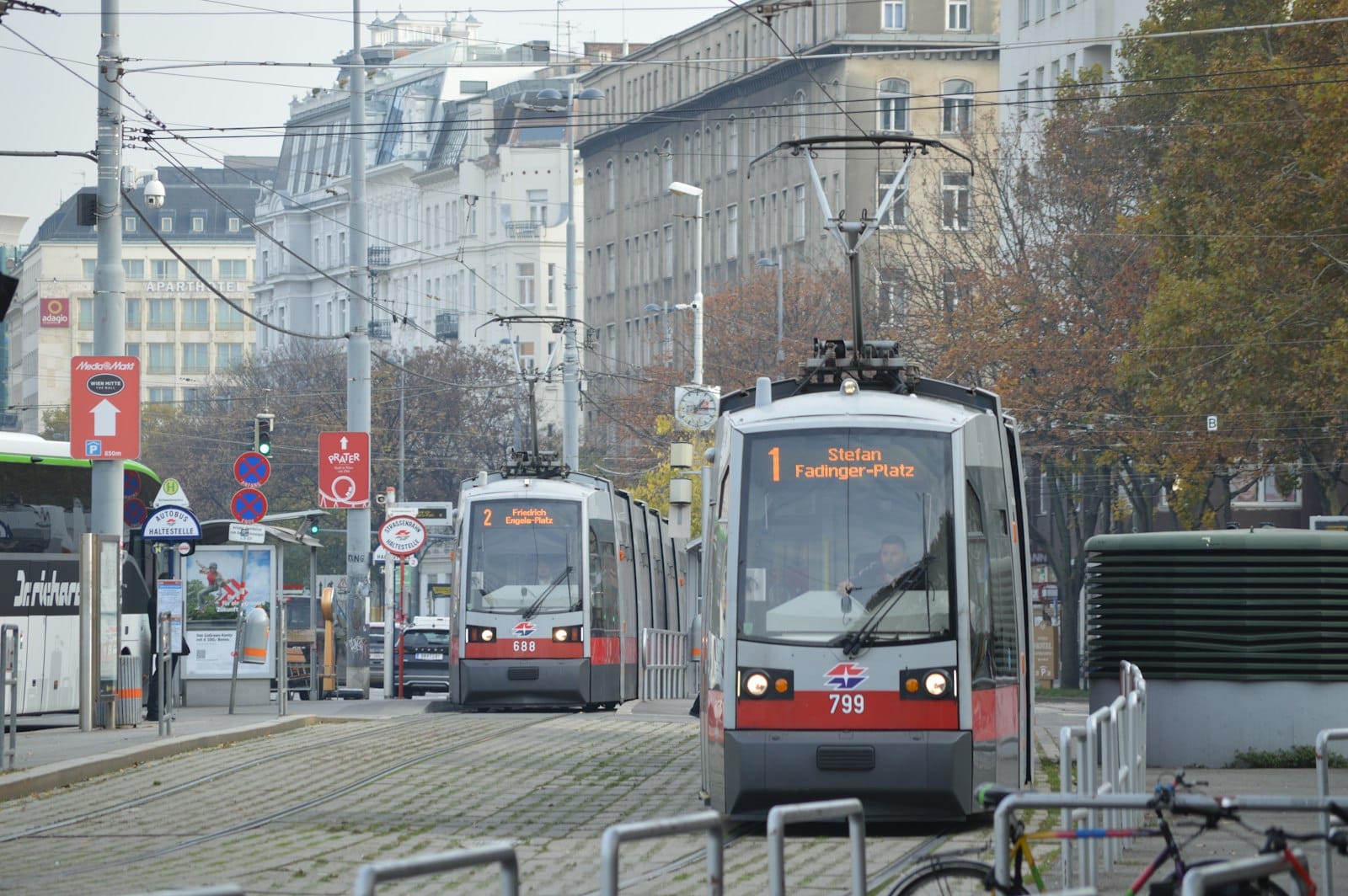
Getting around Vienna is genuinely straightforward. The city operates one of the most integrated urban transit systems in Europe, run almost entirely by Wiener Linien. Within the 415 km² city, you can reach almost any major sight without a taxi or rental car. The core network combines the U-Bahn (metro), trams, and buses into a single ticketing system, with S-Bahn suburban rail extending coverage to the outskirts and the airport.
Vienna's 23 districts (Bezirke) are laid out roughly as concentric rings from the historic Innere Stadt (1st District) outward. The U-Bahn and tram network is dense enough that most tourists rarely need to walk more than 10 minutes between a transit stop and their destination. The network is also barrier-free at most U-Bahn stations, with lifts and level boarding on most tram lines.
- U-Bahn (Metro) 5 lines: U1 (red), U2 (purple), U3 (orange), U4 (green), U6 (brown). Covers all major districts and tourist areas.
- Trams (Straßenbahn) Around 30 routes. Essential for the inner city, especially along the Ringstrasse where no U-Bahn runs directly.
- Buses Fill gaps in tram and U-Bahn coverage, especially in outer districts. Night buses (N-lines) operate 00:30–05:00 on non-24hr nights.
- S-Bahn Suburban rail connecting central stations to the outer districts, Vienna Airport, and neighboring towns.
💡 Local tip
Download the Wiener Linien app or use the official 'WienMobil' app before you arrive. Both provide real-time departure boards, route planning, and the option to buy tickets slightly cheaper than at station machines.
U-Bahn Lines, Routes, and Operating Hours
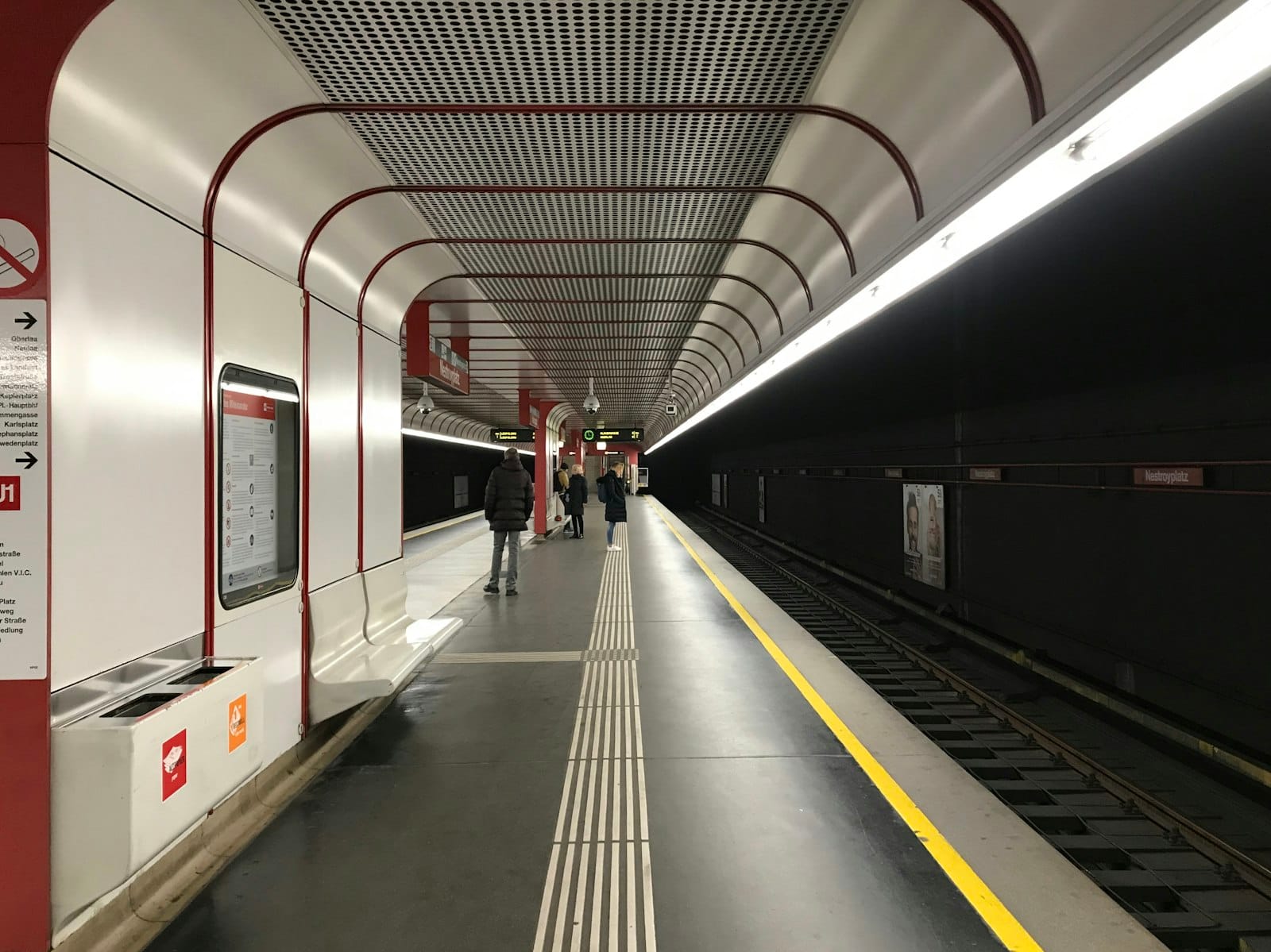
The five U-Bahn lines form the backbone of Vienna's transit system. Each is color-coded and connects key areas of the city. U1 and U3 intersect at Stephansplatz, the heart of the old city. U4 runs along the historic canal and out to Schönbrunn. U2 links the city center with the Prater and stadium areas. U6 runs north-south along the western edge of the city, useful for the Naschmarkt area and Westbahnhof.
Operating hours on weekdays run from approximately 05:00 to 00:30. On Friday and Saturday nights, and on public holidays, the U-Bahn runs 24 hours continuously, which makes Vienna one of the few European capitals with a true overnight metro service. Night buses labeled N1 through N29 cover most routes during the 00:30–05:00 gap on other nights. Trams generally run until around midnight, then hand off to night buses. For exploring Vienna's nightlife, the weekend 24-hour service is genuinely useful.
ℹ️ Good to know
U-Bahn platforms display real-time arrival countdowns in minutes. There's no need to check a printed timetable — trains run every 3–5 minutes during peak hours, and every 7–10 minutes off-peak and late evenings.
Tickets, Fares, and Validation (2026 Prices)
Wiener Linien restructured its fare system from 1 January 2026. The pricing is simple: one zone covers the entire city, and all modes (U-Bahn, tram, bus) use the same ticket. A single adult ticket costs €3.20 in paper form from a machine or tobacconist (Tabak Trafik), or €3.00 if bought online or through the app. Children under 6 travel free on all services. Children under 15 travel free on Sundays, public holidays, and during Vienna school holidays.
A single ticket covers one continuous journey in one direction, with unlimited line changes allowed along the way. You cannot stop, exit, and re-enter on the same ticket. Paper tickets must be validated before boarding, using the blue stamping machines at U-Bahn station entrances or onboard trams and buses. Tickets bought through the Wiener Linien app are activated digitally and do not need a separate stamp. Inspectors check tickets regularly, and fines for riding without a valid ticket are significant.
- Single ticket (paper): €3.20 adult / €1.60 child Available at U-Bahn machines, Tabak Trafik shops, and Wiener Linien offices.
- Single ticket (online/app): €3.00 adult / €1.50 child Around 5% cheaper. No validation stamp needed for app tickets.
- 24-hour, 48-hour, 72-hour passes Unlimited travel within the validity window. Good value for visitors using transit frequently. Verify current prices on the Wiener Linien website before purchasing.
- Vienna City Card Includes unlimited transport plus discounts at selected museums. Available in 24h, 48h, and 72h versions. Sold at tourist information offices and online.
- Weekly pass (Wochenkarte) Runs Monday to Sunday, not 7 rolling days. Cost-effective if arriving on a Monday for a full week.
⚠️ What to skip
The weekly pass is a 7‑day ticket running from activation for seven consecutive days, not tied to calendar weeks. If you arrive mid-week, it still covers a full seven days; compare it against 24‑hour tickets to see which option fits your exact travel dates and usage best.
Getting from Vienna Airport to the City Centre
Vienna International Airport (IATA: VIE), officially called Flughafen Wien-Schwechat, sits in the town of Schwechat, approximately 18–20 km southeast of the city centre. Four main options connect the airport to central Vienna, ranging from budget rail to private transfer. None of them are particularly bad choices; the decision depends on your budget, luggage, and time of arrival.
The most practical option for most travelers is the S7 suburban train. It runs every 30 minutes between the airport and Wien Mitte (Landstraße), with stops at Rennweg and Praterstern. The journey to Wien Mitte takes around 25 minutes. Crucially, the S7 uses standard Wiener Linien zone tickets (you need a ticket covering zone 100 plus the airport zone) rather than a special fare, so if you have a valid multi-day pass, confirm whether it includes the airport zone before assuming it covers this trip. Wien Mitte connects directly to the U3 and U4 lines, putting you minutes from the historic city centre.
- S7 Suburban Train Every 30 minutes. ~25 minutes to Wien Mitte. Uses standard zone tickets (verify airport zone inclusion). Best budget option.
- City Airport Train (CAT) Non-stop service to Wien Mitte in 16 minutes. Higher fare than S7 but faster. Operated by a separate company with its own ticketing. Check current fares on the CAT website.
- ÖBB Railjet / Intercity trains Some ÖBB services stop at the airport en route to/from Vienna Hauptbahnhof and Westbahnhof. Useful if your accommodation is near those stations.
- Airport Bus (Vienna Airport Lines) Coach services to Schwedenplatz, Westbahnhof, and Morzinplatz. Slower than rail but runs frequently and stops at useful city points.
- Taxi / Ride-Hailing (Uber, Bolt) Both Uber and Bolt operate from the airport. Expect around 30–45 minutes depending on traffic. Fixed-rate taxis are also available at official stands. Useful with heavy luggage or late arrivals.
✨ Pro tip
If you arrive late at night and plan to use the city's transit the following morning, buy your first day's transport ticket at the airport train station ticket machines before leaving the terminal. Machines have English interfaces and accept credit cards.
Trams, Bikes, and Moving Around on Foot
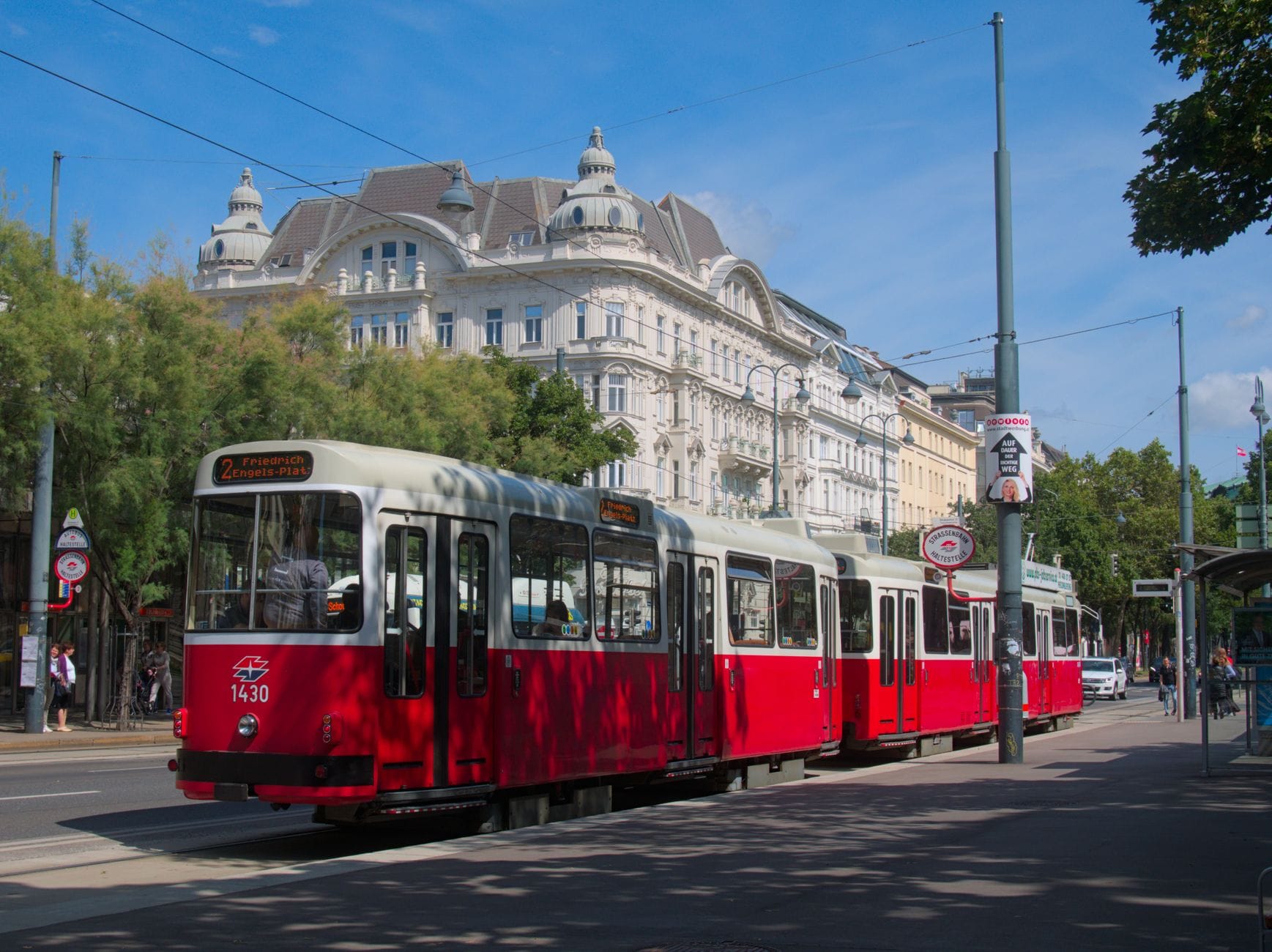
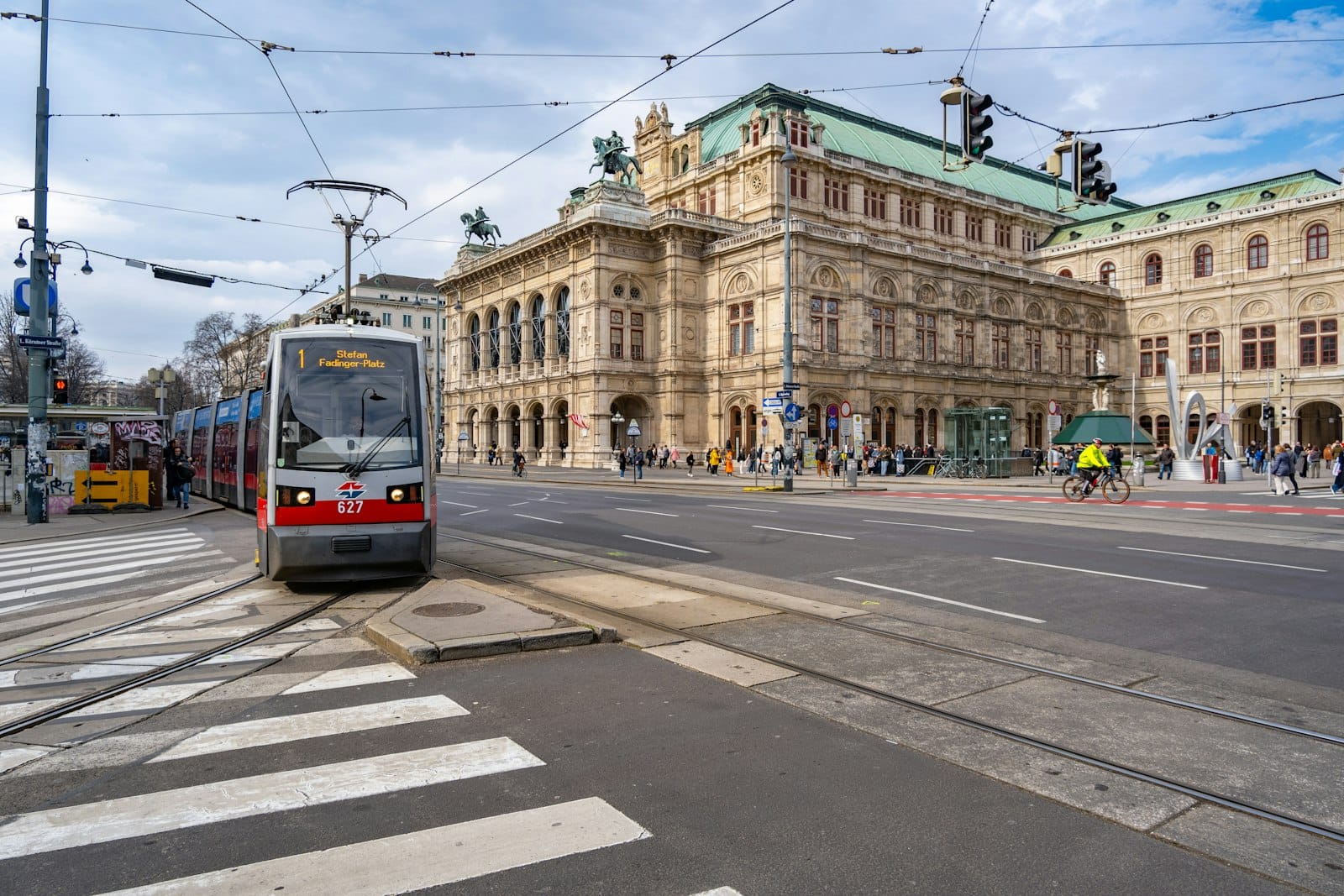
Trams are underused by tourists who tend to default to the U-Bahn, but they are often the more scenic and direct option for inner-city routes. The Ringstrasse, Vienna's grand imperial boulevard encircling the 1st District, has no U-Bahn running along it, but trams do. Lines 1 and 2 (and D) trace parts of this route, giving you views of the Ringstrasse, the Burgtheater, and the Rathaus from street level. Tram D runs from the Hauptbahnhof all the way to the Belvedere area and onward.
Vienna is also an excellent city for cycling. The municipal WienMobil Rad bike-sharing scheme operates across the city, and dedicated cycling lanes cover much of the inner districts. The flat terrain of central Vienna makes cycling genuinely comfortable between April and October. For the outer districts and longer routes, the Danube Canal cycling path and the paths along the Donauinsel are particularly well-maintained.
Walking is feasible for much of the tourist core. The Innere Stadt is compact: St. Stephen's Cathedral to the Hofburg is about a 10-minute walk. From the Hofburg to the MuseumsQuartier takes another 10 minutes on foot. If you are based in the 1st or adjacent districts, you may find you barely need transit during the day. The challenge comes when crossing to the Belvedere, Schönbrunn, or Prater, which are better reached by U-Bahn.
Practical Tips, Common Mistakes, and What to Avoid
Vienna's transit system is reliable and very well-organized, but a few consistent mistakes catch visitors out. The most common is failing to validate a paper ticket before boarding. There are no gates on trams or buses, and even on the U-Bahn the barriers only check for passes with chips. Plain paper single tickets must be stamped at the blue machines before you board, not when an inspector asks. Fines for unvalidated tickets are not negotiable and are issued to tourists and locals alike.
A second common error is assuming that a multi-day tourist pass automatically covers the airport S7. The airport falls in a separate zone, and standard city passes typically do not include it. Always check zone coverage before boarding the train to the airport, or you risk a fine on exit. The City Airport Train (CAT) has its own completely separate ticketing system and cannot be used with any Wiener Linien ticket.
For visitors planning a full trip to Vienna, it is worth reading up on seasonal quirks. Summer sees longer U-Bahn queues at popular stops like Stephansplatz and Karlsplatz. During the Christmas market season (late November through December), trams around the Rathaus and Innere Stadt get very crowded in the early evenings. The ball season in January and February also creates localized surges around venues like the Musikverein and Hofburg late at night, when the 24-hour weekend service proves especially useful.
FAQ
What is the cheapest way to get from Vienna Airport to the city centre?
The S7 suburban train is the most affordable option, using a standard zone ticket (covering city zone plus airport zone) rather than a premium airport-specific fare. The journey to Wien Mitte takes about 25 minutes and trains run every 30 minutes. The City Airport Train (CAT) is faster at 16 minutes but costs significantly more. Buses are cheaper than the CAT but slower overall.
Does the Vienna U-Bahn run all night?
On Friday nights, Saturday nights, and public holidays, the U-Bahn runs 24 hours. On other nights, service typically ends around 00:30 and resumes around 05:00. Night buses (N-lines) cover the city during that gap. Most tram lines run until around midnight.
Do I need to validate my ticket on Vienna's public transport?
Yes, if you have a paper ticket. Paper tickets must be stamped at the blue validation machines before you board — at U-Bahn station entrances, on trams, or on buses. Tickets purchased via the Wiener Linien app or WienMobil app are activated digitally and do not need stamping. Failing to validate is treated the same as travelling without a ticket.
Is the Vienna City Card worth buying?
The Vienna City Card includes unlimited use of the U-Bahn, trams, and buses, plus discounts at a range of attractions and museums. It is worth it if you plan to use transit frequently and visit several paid attractions. If you are focusing mainly on free sights or walking, a 24-hour or 48-hour travel pass alone may be cheaper. Compare against your planned itinerary before purchasing.
Can I use Uber or Bolt in Vienna?
Yes, both Uber and Bolt operate in Vienna and can be booked from the airport or anywhere in the city. They work similarly to other European cities. Fixed-rate licensed taxis are also available and can be hailed at official stands or booked via the taxi apps locals use (such as taxi.eu). For airport trips with heavy luggage, ride-hailing is often the most convenient option, though not the cheapest.