Wiener Secession: The Building That Changed Viennese Art
The Wiener Secession is one of Europe's most architecturally daring exhibition halls, built in 1898 as a deliberate break from the conservative art establishment. Its gilded dome and stark white cube still shock, and inside, Gustav Klimt's Beethoven Frieze remains one of the most powerful works of art you can stand in front of in Vienna.
Quick Facts
- Location
- Friedrichstraße 12, 1010 Wien (near Karlsplatz)
- Getting There
- U1, U2, U4 – Karlsplatz; use 'Ausgang Secession' exit
- Time Needed
- 1–2 hours
- Cost
- Approx. €13 adult (includes Beethoven Frieze); audioguide €3, free with Vienna City Card. Verify current prices before visiting.
- Best for
- Art lovers, architecture enthusiasts, Klimt fans, design history
- Official website
- secession.at
What the Wiener Secession Actually Is
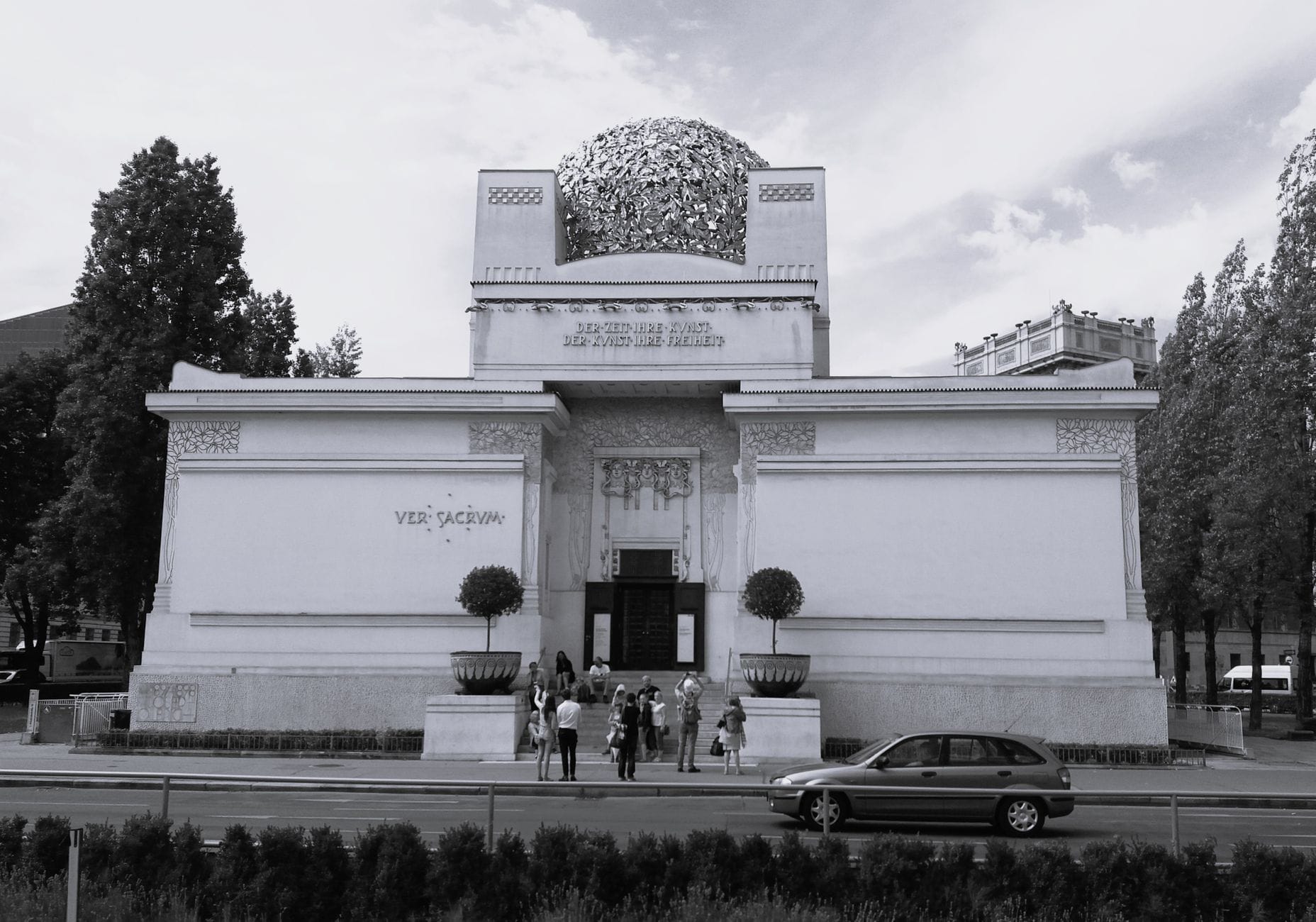
The Secession Building, officially the Ausstellungsgebäude der Wiener Secession, is not a conventional museum. It is a functioning exhibition space for contemporary art that also happens to be a landmark of architectural history. The building was conceived and constructed between 1897 and 1898, designed by Joseph Maria Olbrich at the request of a group of artists who resigned from the Vienna Künstlerhaus in protest against its conservative, commercially driven exhibition policies. The founding group included Gustav Klimt, Koloman Moser, and Josef Hoffmann, and their ambition was nothing less than the total transformation of Austrian visual culture.
That political and artistic context matters when you're standing in front of the building. The white cube geometry, the gilded dome of 2,500 gilded laurel leaves and berries, and the inscription above the entrance, 'Der Zeit ihre Kunst, der Kunst ihre Freiheit' (To every age its art, to every art its freedom), were designed as a public statement rather than just a building. Even after more than a century, the structure still reads as confrontational against its surroundings.
ℹ️ Good to know
The Secession Building was severely damaged by bombing in February 1945. The structure visitors see today is largely a post-war reconstruction that faithfully followed Olbrich's original design, including the iconic dome.
The Architecture: Reading the Building from the Outside
Approach the Secession from Karlsplatz and you'll pass the Naschmarkt on your left, Vienna's open-air market that sprawls along the canal-side. The building appears at the end of a short pedestrian axis, slightly sunken from street level, so your first view is of the dome floating above the roofline rather than the facade in full. This is intentional. Olbrich designed the dome as a signal, visible from a distance, announcing the building's presence before you see its walls.
Up close, the white rendered facade is strikingly austere. Geometric ornament frames the entrance portal, and the contrast between the flat walls and the extravagant golden dome creates a visual tension that feels modern even by current standards. The dome is often described as a 'golden cabbage' by locals, said with affection rather than scorn. Owls, a symbol of wisdom, are integrated into the relief decoration on the exterior, and the three Gorgon heads above the entrance represent the three artistic disciplines: painting, sculpture, and architecture.
For broader context on how the Secession fits into Vienna's architectural story, the Vienna architecture guide covers Jugendstil, Historicism, and the Ringstrasse period in useful sequence.
Tickets & tours
Hand-picked options from our booking partner. Prices are indicative; availability and final rates are confirmed when you complete your booking.
Wiener Melange coffeehouse experience
From 34 €Instant confirmationFree cancellationSelf-guided digital scavenger hunt in Wiener Neustadt
From 13 €Instant confirmationImperial Vienna 72-hour hop-on hop-off bus
From 55 €Instant confirmationFree cancellationSkip-the-Line Entrance with Guide to Schonbrunn Palace and Gardens
From 45 €Instant confirmationFree cancellation
Inside: The Beethoven Frieze
The permanent attraction, and the reason most visitors come specifically to the Secession rather than to any other contemporary art venue in Vienna, is the Beethoven Frieze by Gustav Klimt. It is installed in the basement exhibition room, and admission to the building includes access to it. The frieze is 34 meters long and runs along three walls of the room. Klimt created it in 1902 as a temporary work for a Secession exhibition themed around Beethoven's Ninth Symphony, using casein paint, stucco, graphite, and materials including gold leaf, semi-precious stones, and mother-of-pearl.
The scale is not obvious from photographs. Standing in the narrow basement room with the frieze at close range is a different experience from looking at reproductions. The figures are heavily stylized, the decorative passages almost claustrophobically dense, and the transition between the 'Longing for Happiness' panels and the 'Hostile Powers' section, dominated by a figure representing disease, madness, and death, reads as genuinely unsettling rather than merely ornamental. This is not polite museum art. The frieze was considered scandalous at the time of its exhibition, and that edge is still legible.
Klimt's work in Vienna extends well beyond the Secession. The Vienna Klimt and Secession guide maps out where to find his major works across the city, including the Upper Belvedere and the Kunsthistorisches Museum.
💡 Local tip
The basement frieze room is compact. Arrive when the building opens (Tuesday–Sunday, 10:00) to experience it without other visitors crowding the narrow viewing space. Midday and weekend afternoons tend to be most congested.
The Contemporary Exhibition Floors
Above the basement, the Secession's main halls are used for rotating contemporary art exhibitions. Unlike the permanent Beethoven Frieze, these shows change throughout the year and range from solo exhibitions by international artists to group shows organized around conceptual themes. The quality is consistently high, and the Secession's curatorial program has a reputation for commissioning site-specific work rather than simply presenting traveling exhibitions.
The main hall is a large, sky-lit space with movable walls and excellent natural light. It is flexible by design, reflecting the original intention to provide artists with a neutral venue rather than a fixed institutional context. If you are visiting primarily for the Beethoven Frieze, budget at least an additional 20–30 minutes for the upper exhibitions. Whether they reward that time depends entirely on the current show, so it is worth checking the program on the official website before your visit.
Practical Walkthrough: Getting There and Getting Around
Karlsplatz is one of Vienna's largest U-Bahn interchange points, served by the U1 (red), U2 (purple), and U4 (green) lines. From Stephansplatz on the U1, it is one stop. From Schwedenplatz, also one stop on the U4. When you exit, follow signs for 'Ausgang Secession' and the building is visible within a two-minute walk. The address is Friedrichstraße 12, though in practice most people navigate by the dome rather than the street.
The building is open Tuesday through Sunday from 10:00 to 18:00 and is closed on Mondays. Current adult admission is approximately €13, which includes access to all exhibitions and the Beethoven Frieze. An English audioguide costs around €3, but it is included free for holders of the Vienna City Card. Visitors with disabilities pay a discounted rate, and accompanying persons receive free admission. There are 13 steps at the main entrance; however, all exhibition rooms are accessible via elevator. Assistance dogs are permitted.
If you are planning a full day around this area of Vienna, the Naschmarkt is directly adjacent and worth an hour before or after, particularly on Saturday mornings when the flea market section is active.
⚠️ What to skip
Ticket prices and opening hours can change seasonally. Always verify current information at secession.at before your visit, particularly around public holidays.
Time of Day and Crowd Patterns
The Secession is rarely as crowded as the Kunsthistorisches Museum or the Belvedere, which works in your favor. That said, the basement Beethoven Frieze room is genuinely small, and on Saturday afternoons in high season (June through August), it can feel uncomfortably packed. The most comfortable visit happens on a weekday morning between 10:00 and 12:00, when the light in the main hall is at its best and the frieze room is lightly occupied.
The building's exterior is worth studying at different times. In late afternoon, the gilded dome catches direct sunlight and shifts from a dull gold to something considerably more luminous. If photography is your priority, return to the exterior in the hour before closing on a clear day. The surrounding plaza is also pleasant in the early evening, when the Karlsplatz area quiets down from lunchtime traffic.
Context: The Secession in Vienna's Art World
The founding of the Vienna Secession in 1897 was part of a broader pattern of breakaway art movements across Europe at the end of the nineteenth century, parallel to the Munich Secession (1892) and the Berlin Secession (1898). What distinguished the Viennese version was its breadth, encompassing fine art, applied design, architecture, and typography under a single philosophical umbrella. The journal 'Ver Sacrum', published by the Secession from 1898 to 1903, was an influential document of the whole Gesamtkunstwerk (total artwork) ideal that defined the movement.
Klimt himself resigned from the Secession in 1905, along with a group that included Moser and Hoffmann, in a dispute over the relationship between commercial and fine art. The organization survived and continues to operate today as an artist-run exhibition space, which gives it a different character from a state-run museum. The program is chosen by working artists, and the building retains its original function as a space of creative argument rather than cultural consolidation.
The Habsburg imperial history guide provides useful background on the cultural and political atmosphere the Secession was directly reacting against, including the rigid hierarchy of Vienna's official art institutions at the turn of the twentieth century.
Insider Tips
- The 'Ausgang Secession' exit from Karlsplatz U-Bahn drops you almost directly in front of the building. Other exits deposit you on the wrong side of a busy road, adding several minutes of navigation.
- The Beethoven Frieze room allows photography without flash. Use a wide-angle lens or the panoramic mode on your phone: the only way to capture the full 34-meter span is from the corners of the room, where the angle is most forgiving.
- The Secession publishes its full exhibition program on secession.at several months in advance. If the current temporary show interests you, consider timing your visit around the opening week, when the space is freshly installed and often less crowded than mid-run.
- The Vienna City Card includes a free audioguide for the Beethoven Frieze, saving you €3. If you are already using the card for transit, this is a straightforward saving worth noting before you buy one at the door.
- The exterior plaza has a small seating area that is almost always uncrowded, even when the Naschmarkt nearby is busy. It is a useful rest stop between the market and Karlskirche.
Who Is Wiener Secession (Secession Building) For?
- Art enthusiasts who want direct, close-range access to a major Klimt work without the tour-group density of the Belvedere
- Architecture visitors tracking Vienna's Jugendstil legacy from the Otto Wagner Pavilion to the Secession to the Postsparkasse
- Contemporary art followers interested in a curated, artist-run program with consistently commissioned new work
- Travelers building a half-day route that combines the Naschmarkt, Karlskirche, and the Secession in a walkable triangle
- Design and typography enthusiasts drawn to the Secession's legacy in graphic design and the Gesamtkunstwerk tradition
Nearby Attractions
Other things to see while in Belvedere & Landstraße (3rd District):
- Albertina Modern
Opened in 2020 inside the landmark Künstlerhaus building at Karlsplatz, Albertina Modern is Vienna's dedicated space for modern and contemporary art. Across 2,500 square metres, it offers a counterpoint to the Habsburgs-and-Old-Masters narrative that dominates so many of the city's museums.
- Belvedere Gardens
Stretching between two palaces built for Prince Eugene of Savoy, the Belvedere Gardens form one of Central Europe's finest Baroque garden compositions. Entry to the main gardens is free, and the grounds shift dramatically in character from early morning calm to afternoon crowds and golden evening light.
- Heeresgeschichtliches Museum (Museum of Military History)
Housed in a striking Moorish-Byzantine arsenal building from the 1850s, the Heeresgeschichtliches Museum is one of the oldest purpose-built military history museums in the world. At just €3.50 admission, it offers an unexpectedly deep dive into Austria's military and political past, including the actual car in which Archduke Franz Ferdinand was assassinated in 1914.
- Hundertwasserhaus
Hundertwasserhaus is a municipal apartment block in Vienna's 3rd district that looks like it was painted by a child and designed by a forest. The exterior is free to view any time, and the adjacent Hundertwasser Village gives you a place to linger. Here is what a visit actually involves.