Naschmarkt Vienna: What to Expect at the City's Largest Market
The Naschmarkt is Vienna's longest-running and largest inner-city market, stretching 1.5 km along the Wienzeile through the 6th district. With around 120 stalls selling everything from Austrian cheese to Middle Eastern spices, it rewards early-morning visitors and challenges those who arrive unprepared on a Saturday.
Quick Facts
- Location
- Wienzeile, 1060 Wien (6th district, Mariahilf/Wieden border)
- Getting There
- U4 Kettenbrückengasse (west end) or U1/U2/U4 Karlsplatz (east end)
- Time Needed
- 1–2 hours for a thorough walk; longer if dining
- Cost
- Free entry; budget €10–30 for food and produce
- Best for
- Food lovers, slow morning wanderers, photography, local culture
- Official website
- www.wien.info/en/dine-drink/markets/naschmarkt-353536
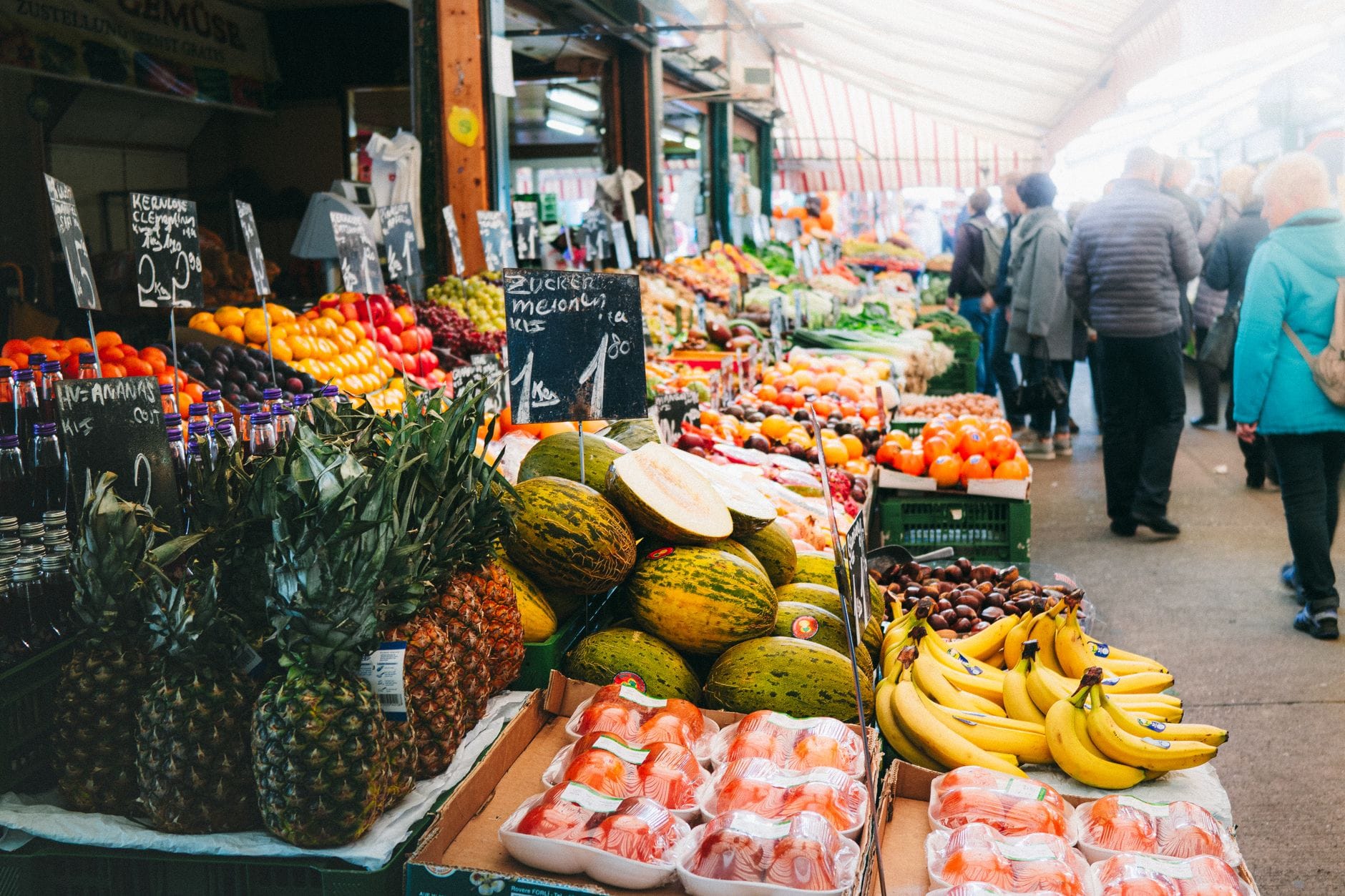
What the Naschmarkt Actually Is
The Wiener Naschmarkt is Vienna's largest inner-city market, running roughly 1.5 km along the Wienzeile between Karlsplatz to the east and Kettenbrückengasse to the west. It covers approximately 2.3 hectares and holds around 120 permanent market stalls alongside a row of restaurants and cafes that line the northern edge. This is not a farmer's market in the weekend-pop-up sense. Most stalls operate Monday through Saturday, making it a functioning daily market that Viennese residents actually use for grocery shopping alongside curious visitors.
The market sits on what was once the bed of the Wien River, which was arched over in the late 19th century. Otto Wagner's Stadtbahn viaducts frame the eastern approach, and the whole corridor has a long, narrow, almost cinematic quality when viewed from either end. If you have any interest in Viennese architecture alongside food culture, walking the full length earns you both.
The surrounding neighborhood fits neatly within the Belvedere area, and the Naschmarkt acts as one of its main daily anchors. Karlskirche and the Musikverein are a short walk east, meaning the market can serve as a logical morning warm-up before moving deeper into the city's cultural core.
How the Market Changes Through the Day
Arriving before 8:00 on a weekday gives you the market at its most functional: stall owners restocking displays, the smell of fresh bread and roasting coffee cutting through cool air, and a clientele that is overwhelmingly local. Older residents with wheeled shopping bags, restaurant buyers selecting produce, and the occasional chef pausing to inspect a particular cut of fish. Conversation happens in German and in a dozen other languages from the stallholders' own backgrounds.
By mid-morning the tourist volume increases noticeably, and by noon the restaurant section along the northern edge begins filling with lunch crowds. The stalls remain accessible but navigation requires more patience. Smells shift: grilling meat from the Turkish and Persian snack stands layers over the earlier freshness of cut herbs and citrus.
💡 Local tip
Arrive on a weekday before 9:00 for the most comfortable experience. Stalls are restocked, staff are not yet rushed, and you can actually browse without a crowd pressing from behind.
Saturday transforms the market significantly. In addition to the regular stalls, a flea market extends along the western end near Kettenbrückengasse from early morning until around 14:00. Antique dealers, vintage clothing sellers, old books, ceramics, and the occasional genuine find fill this stretch. This section draws a different crowd: younger Viennese, antique hunters, and weekend tourists. It is genuinely worth the extra footwork, but Saturday at Naschmarkt is also the most crowded day of the week. Expect shoulder-to-shoulder conditions by 10:00.
Tickets & tours
Hand-picked options from our booking partner. Prices are indicative; availability and final rates are confirmed when you complete your booking.
Vienna food tour at Naschmarkt
From 39 €Instant confirmationVienna food tour at Naschmarkt
From 39 €Instant confirmationImperial Vienna 72-hour hop-on hop-off bus
From 55 €Instant confirmationFree cancellationSkip-the-Line Entrance with Guide to Schonbrunn Palace and Gardens
From 45 €Instant confirmationFree cancellation
What You'll Find: Stalls, Food, and the Flea Market
The product range is legitimately diverse. Austrian staples are present throughout: Bergkäse and Graukäse at the dairy counters, cured meats and Liptauer spread, several stalls dedicated to wine and local schnapps. But the market's character has been shaped significantly by immigration patterns, and a substantial portion of the stalls are run by Turkish, Persian, Greek, and Eastern European vendors. Spice displays at the Persian stalls are some of the most photogenic sections of the market, with dried rose petals, sumac, and saffron arranged in open sacks.
Olive varieties are worth examining closely at the Greek and Middle Eastern stalls, where you can often taste before buying. Fresh fish counters occupy a central stretch, and the produce quality overall is high, though not uniformly so: some stalls are clearly oriented toward visual presentation for tourists rather than competitive pricing for locals. With a little comparison shopping along the length of the market, the difference becomes obvious.
The restaurant strip deserves separate attention. A dozen or more sit-down places operate along the northern edge, ranging from seafood to Vietnamese to Austrian classics. Quality and value vary considerably. The most tourist-visible spots near the Karlsplatz end are not always the best options. Walk further west and the ratio of locals to tourists in any given restaurant shifts in a direction that usually reflects better value.
⚠️ What to skip
On Sundays the entire market is closed. This is non-negotiable and a common disappointment for weekend-only visitors who did not plan around Saturday hours.
Historical and Cultural Context
The Naschmarkt's origins trace back to the 16th century, when milk vendors began trading on the banks of the Wien River near what is now the Freihaus area. The market expanded over subsequent centuries as the city grew, and its current form along the arched-over river bed dates to the late 1800s and early 1900s, when the Wien River was enclosed as part of a major urban infrastructure project.
Otto Wagner's involvement in the adjacent Stadtbahn (city railway) infrastructure left a visible architectural legacy at the eastern end of the market. The Karlsplatz Stadtbahn pavilions, completed around 1899, stand just steps from the market's entrance and represent some of the finest Jugendstil architecture in the city.
For visitors interested in the broader architectural story of this part of Vienna, the Otto Wagner Pavilion at Karlsplatz is worth a brief detour before or after walking the market. The pavilions are small but beautifully detailed, and understanding their context deepens the sense of how deliberately Vienna shaped this corridor in the late imperial period.
The name 'Naschmarkt' is believed to derive from the old German word 'Aschen' or 'Naschen,' related to nibbling or snacking, reflecting the market's long association with food trading. The current mix of vendors reflects Vienna's 20th-century migration history, particularly the arrival of Turkish and other Central Asian communities from the 1960s onward, which reshaped the market's character considerably.
Getting There and Practical Navigation
The U4 line stops directly at Kettenbrückengasse, which deposits you at the market's western end near the flea market section. Coming from the city center or Karlsplatz, the U1, U2, and U4 interchange at Karlsplatz puts you at the eastern entrance. The walk between the two U4 stops along the market itself is pleasant enough that most visitors simply walk the length and exit at the far end. Both ends connect back to the broader network.
If you are combining the Naschmarkt with a broader morning in the area, the Karlskirche and the Musikverein are within a five-minute walk of the eastern entrance, making a logical half-day route that covers both architecture and local market life.
The market runs along a paved central walkway with stalls on both sides. The surface is mostly flat and manageable for prams and wheelchairs, though weekend crowds can make navigation difficult in the narrower sections. Stalls are numbered and the layout is consistent enough that you will develop a mental map quickly after one pass.
ℹ️ Good to know
Market stalls are generally open Monday to Friday 06:00–21:00 and Saturday 06:00–18:00. The Saturday flea market typically runs in the morning hours until around 14:00. The entire market is closed on Sundays. Some restaurants on the northern edge keep later hours independently.
Photography and Sensory Notes
The Naschmarkt photographs well at almost any time of day, but early morning on a weekday offers the cleanest compositions: produce displays fully stocked, soft directional light from the east, and minimal crowd interference in the frame. The spice stalls in the middle section are a consistent highlight for detail shots. The contrast of textures, the labeled containers, and the depth of color in dried goods make for easy material without requiring any particular skill.
Midday light flattens the market somewhat and the central walkway becomes difficult to photograph without strangers walking into frame. If documentary-style crowd photography is what you are after, Saturday morning near the flea market provides excellent material, with genuine energy and varied subjects.
On a sensory level, the Naschmarkt shifts registers as you move from east to west. The eastern section near Karlsplatz opens with cafe seating and a more composed, tourist-facing atmosphere. The middle stretches are denser with produce, fish, and dairy. Toward the western end the smells of grilling food from Turkish and Balkan snack counters become dominant, and the flea market adds a layer of dust, old paper, and metal that is distinctly different from the food sections.
Honest Assessment: Is It Worth Your Time?
The Naschmarkt has a reputation that sometimes outpaces the reality, particularly for visitors who arrive mid-morning on a weekend expecting a serene food market and instead find a packed tourist corridor. It is not overrated as an experience, but it is overcrowded at peak hours, and a significant portion of the tourist-facing stalls have adjusted their pricing and presentation accordingly.
At its best, on a weekday morning with time to walk slowly and buy something to eat on the spot, it is genuinely one of the more interesting urban market experiences in Central Europe. The combination of produce quality, cultural diversity, architectural setting, and sheer length makes it distinctive rather than generic.
Visitors who want to pair a Naschmarkt visit with more structured cultural content should consider reading up on what to eat in Vienna beforehand, which helps contextualize what you are seeing at the Austrian produce and dairy stalls specifically.
Who might skip it: visitors with very limited time who have already seen larger or more specialized food markets elsewhere in Europe may find the experience familiar. Those visiting only on Sunday will find it entirely closed. Travelers uncomfortable with crowds should avoid Saturday mornings.
Insider Tips
- The flea market on Saturday mornings extends west of Kettenbrückengasse U4 and is a separate world from the food stalls. Arrive before 09:00 if you want to browse antiques before the best pieces are picked over.
- For a cheap and genuinely good breakfast, look for the Persian and Turkish snack stalls in the middle section of the market. Börek, flatbread with cheese, and freshly squeezed juice are common and cost a fraction of the sit-down restaurants.
- Walk the full length at least once before stopping to buy anything. Prices and quality vary noticeably between stalls selling similar products. A quick reconnaissance pass pays off.
- The restaurant strip on the northern edge looks uniform from the outside but is not. Walk further west toward Kettenbrückengasse to find places with a higher proportion of local regulars and generally better value.
- On rainy days the market remains open and is significantly less crowded. The produce stalls have overhead cover and the experience shifts to something quieter and more local in character.
Who Is Naschmarkt For?
- Food and produce shoppers who want to cook with quality Austrian and international ingredients
- Travelers interested in multicultural urban life and Vienna's immigration history
- Early-morning walkers who want a non-museum start to the day with coffee and something to eat
- Antique and vintage enthusiasts targeting the Saturday flea market
- Photographers working on street, food, or documentary-style images
Nearby Attractions
Other things to see while in Belvedere & Landstraße (3rd District):
- Albertina Modern
Opened in 2020 inside the landmark Künstlerhaus building at Karlsplatz, Albertina Modern is Vienna's dedicated space for modern and contemporary art. Across 2,500 square metres, it offers a counterpoint to the Habsburgs-and-Old-Masters narrative that dominates so many of the city's museums.
- Belvedere Gardens
Stretching between two palaces built for Prince Eugene of Savoy, the Belvedere Gardens form one of Central Europe's finest Baroque garden compositions. Entry to the main gardens is free, and the grounds shift dramatically in character from early morning calm to afternoon crowds and golden evening light.
- Heeresgeschichtliches Museum (Museum of Military History)
Housed in a striking Moorish-Byzantine arsenal building from the 1850s, the Heeresgeschichtliches Museum is one of the oldest purpose-built military history museums in the world. At just €3.50 admission, it offers an unexpectedly deep dive into Austria's military and political past, including the actual car in which Archduke Franz Ferdinand was assassinated in 1914.
- Hundertwasserhaus
Hundertwasserhaus is a municipal apartment block in Vienna's 3rd district that looks like it was painted by a child and designed by a forest. The exterior is free to view any time, and the adjacent Hundertwasser Village gives you a place to linger. Here is what a visit actually involves.