What to Eat in Vienna: Traditional Food & Dishes Explained
Vienna's food culture runs deep: centuries of imperial cooking, Central European comfort food, and a coffee house tradition unlike anywhere else. This guide covers the dishes you should actually order, where to find the best versions, realistic prices, and the misconceptions that trip up first-time visitors.
Tickets & tours
Live prices and dates from our booking partner. If you book, we may earn a commission at no extra cost to you.
TL;DR
- Wiener Schnitzel is the flagship dish — always order veal (Kalbsschnitzel) for the authentic version; pork is cheaper but a different product.
- Tafelspitz (slow-boiled beef) is what locals consider equally important, especially at lunch in a traditional Beisl.
- Budget roughly €22–35 for a quality schnitzel, €15–20 for a café lunch, and €3.50–5 for sausages at a Würstelstand; see our Vienna on a budget guide for cost-saving strategies.
- The Naschmarkt is the best all-in-one spot for ingredients, quick bites, and sitting-down meals — go on a weekday morning to avoid the tourist rush.
- Vienna's coffeehouse culture is a UNESCO-listed tradition — pairing coffee with a pastry at a historic café is not optional; it is the point. See the complete Vienna coffeehouse guide for where to go.
The Dishes You Actually Need to Know
Viennese cuisine is not especially wide in range, but it is exceptionally deep in quality when done properly. The food evolved from centuries of Habsburg court cooking, absorbing influences from across the old empire: Hungarian stews, Bohemian dumplings, Italian pastry techniques. What came out is a cuisine built around slow-cooked meats, rich sauces, bread dumplings, and a dessert culture that borders on obsessive.
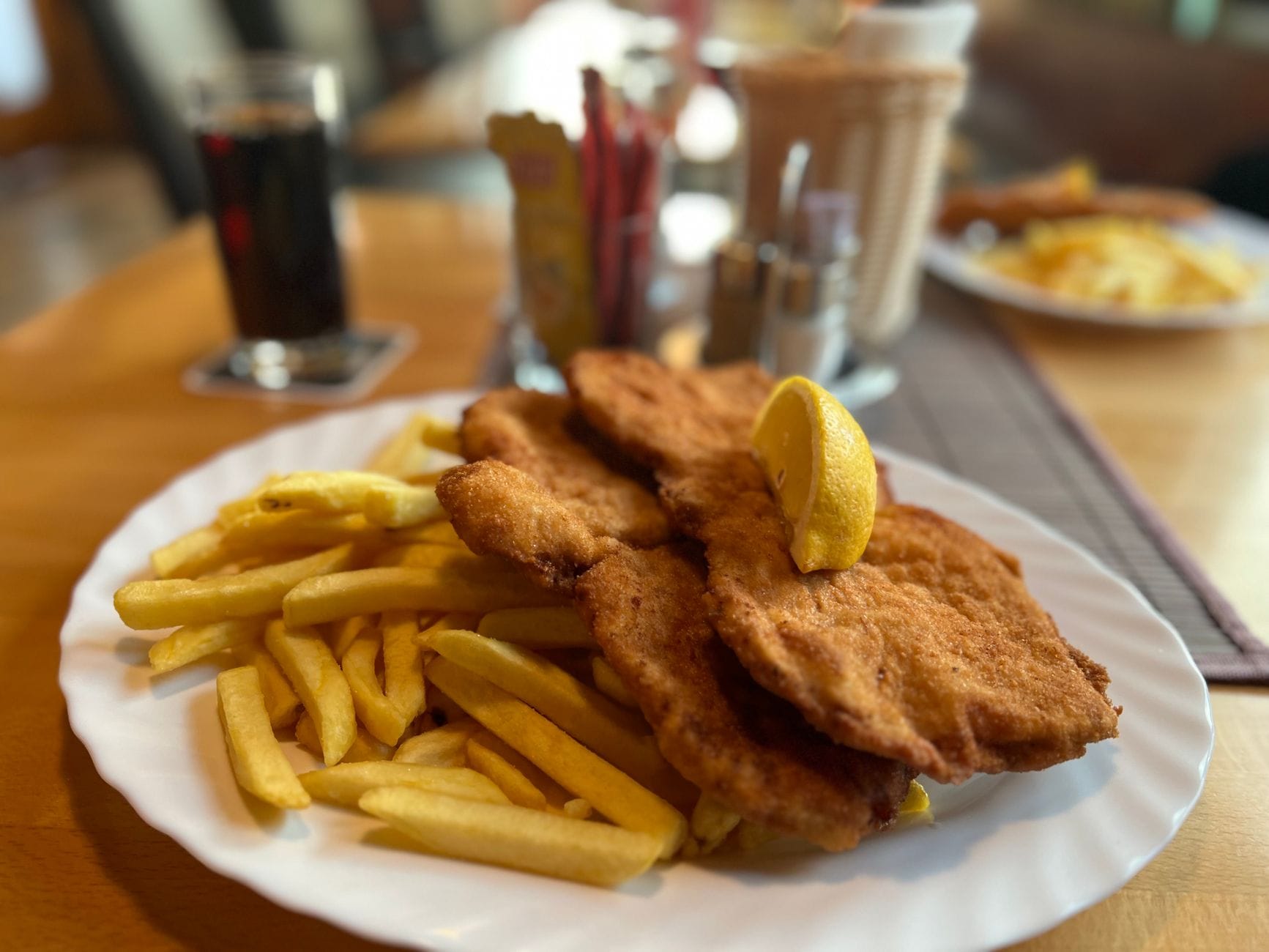
- Wiener Schnitzel A thin veal cutlet, pounded flat, coated in breadcrumbs, and pan-fried in clarified butter or lard until golden. Legally, a dish labeled 'Wiener Schnitzel' in Austria must use veal. Pork versions exist and are cheaper, but they are sold as 'Schnitzel Wiener Art' (Viennese-style) — a meaningful distinction. Expect to pay €22–35 at a proper restaurant.
- Tafelspitz Boiled beef (typically rump or topside) served in broth with horseradish, apple sauce, and roasted potatoes. It sounds plain but the quality depends entirely on the cut and the patience of the cook. Plachutta on Wollzeile is the benchmark. Prices run €26–38 depending on the cut.
- Gulasch Imported from Hungary and fully adopted by Vienna, this is a slow-braised beef stew heavy with paprika and onions. The Viennese version is darker and thicker than the Hungarian original, served with bread rolls or Semmelknödel. It is the definitive cold-weather comfort dish and is significantly cheaper than schnitzel — usually €12–18.
- Käsespätzle Egg noodles tossed with melted cheese and topped with crispy onions. The Viennese answer to mac and cheese, and one of the few genuinely filling vegetarian options in traditional restaurants.
- Apfelstrudel Paper-thin pastry wrapped around spiced apple and raisin filling, served warm with vanilla sauce or whipped cream. The Naschmarkt and most traditional cafés do a solid version. Avoid the pre-wrapped slices sold at airport-style tourist shops — they are rarely worth it.
- Sachertorte A dense chocolate sponge layered with apricot jam and covered in hard chocolate glaze. The original recipe is disputed between Hotel Sacher and Café Demel, but both sell excellent versions. Expect to pay around €7–10 per slice. It is rich and not particularly sweet — some visitors expecting a lighter dessert find it underwhelming.
- Kaiserschmarrn Shredded, caramelized pancake dusted with icing sugar, served with plum compote (Zwetschkenröster). It was allegedly a favourite of Emperor Franz Joseph I. Large portions — it doubles as a main course in Alpine regions.
⚠️ What to skip
Do not confuse Wiener Schnitzel with 'Schnitzel Wiener Art.' The first uses veal and commands a premium price; the second uses pork and is cheaper. Both are legitimate — but if you order schnitzel and receive pork without being told, that is a red flag about the restaurant's honesty.
Street Food, Markets, and Sausage Stands
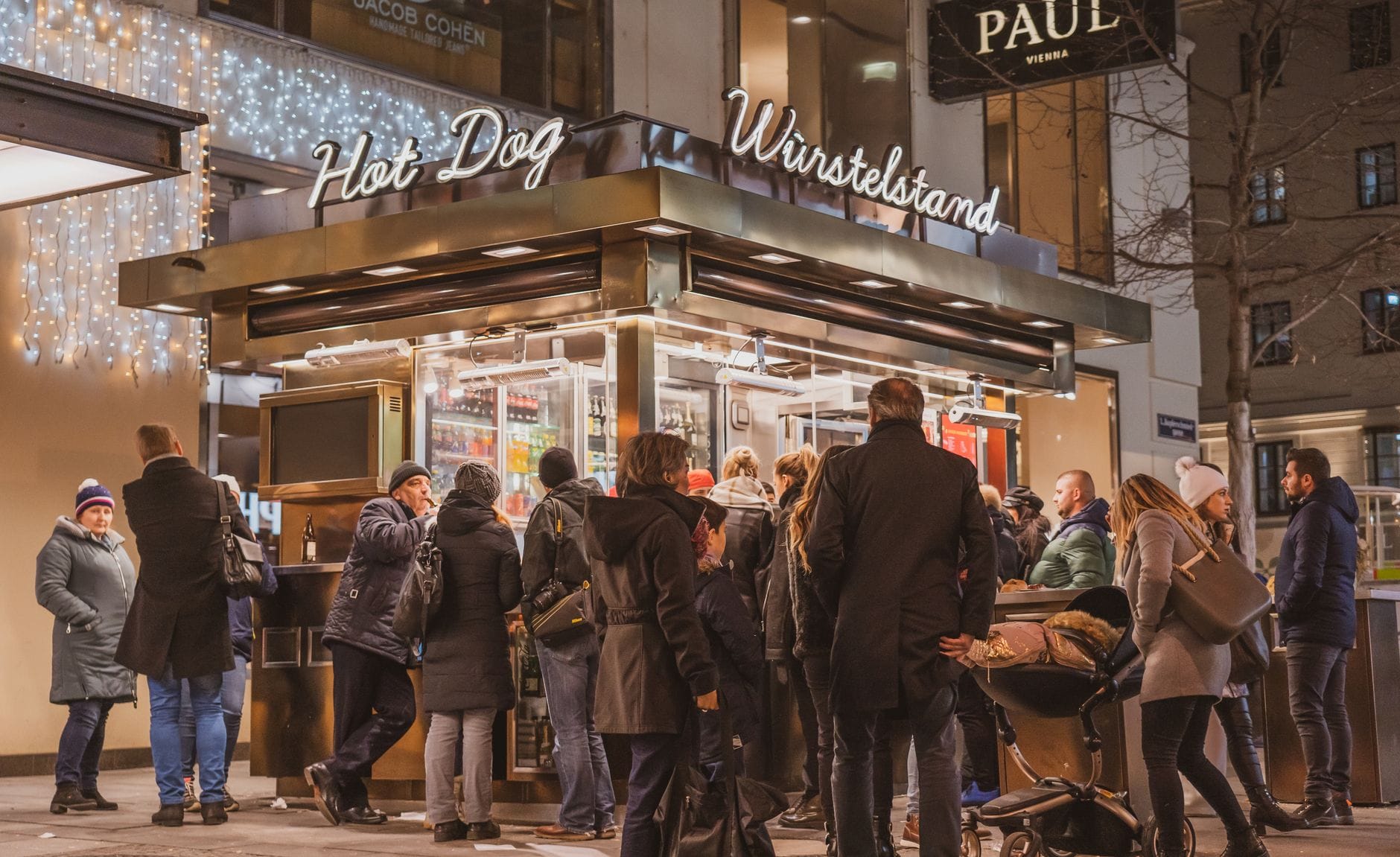
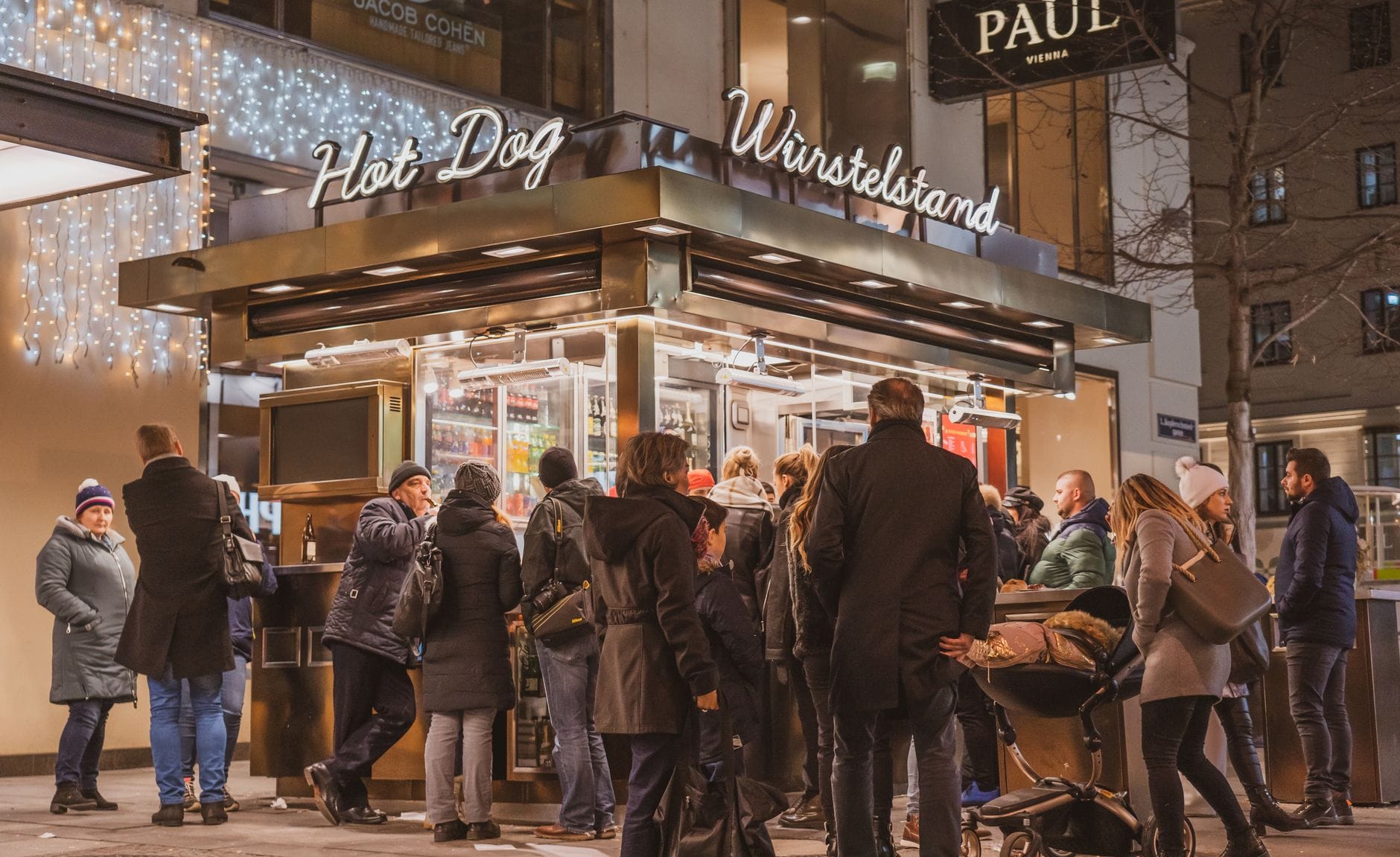
Vienna's street food scene is anchored by the Würstelstand — the sausage stand — which operates at street corners and metro exits across the city, often into the early hours of the morning. They are a genuine institution, used by everyone from office workers at lunch to club-goers at 2am. Prices are low: a Käsekrainer (a pork sausage stuffed with melted cheese) runs around €3.50–5. A Bosna, an Austrian-Balkan hybrid of a spiced sausage in a white roll with onions and curry sauce, is similarly priced and entirely underrated.
The Naschmarkt is the city's main open-air market and runs along the Wienzeile from the U4 Kettenbrückengasse stop toward Karlsplatz. On weekday mornings it functions as a proper working market: produce stalls, cheese vendors, Middle Eastern spice traders, fishmongers. By Saturday afternoon it skews heavily toward tourism. The restaurants and wine bars around the market serve food from roughly 11:00 onward, and a few open for breakfast earlier. Saturday also brings a flea market on the outer edge worth browsing.
💡 Local tip
At the Naschmarkt, the vendors nearest the Karlsplatz end tend to charge more and push samples aggressively. Walk 10 minutes toward Kettenbrückengasse for better prices and a more local crowd. Arrive before 10:00 on a weekday for the best selection of fresh produce.
At Christmas market season (roughly late November to late December), baked potatoes with various toppings become a dominant street food option priced at around €6–10. Roasted chestnuts and Glühwein (mulled wine) are equally omnipresent. The food at Christmas markets is genuinely good value compared to restaurants and provides a practical way to eat well while moving between stalls.
Where to Eat: From Traditional Restaurants to Coffee Houses
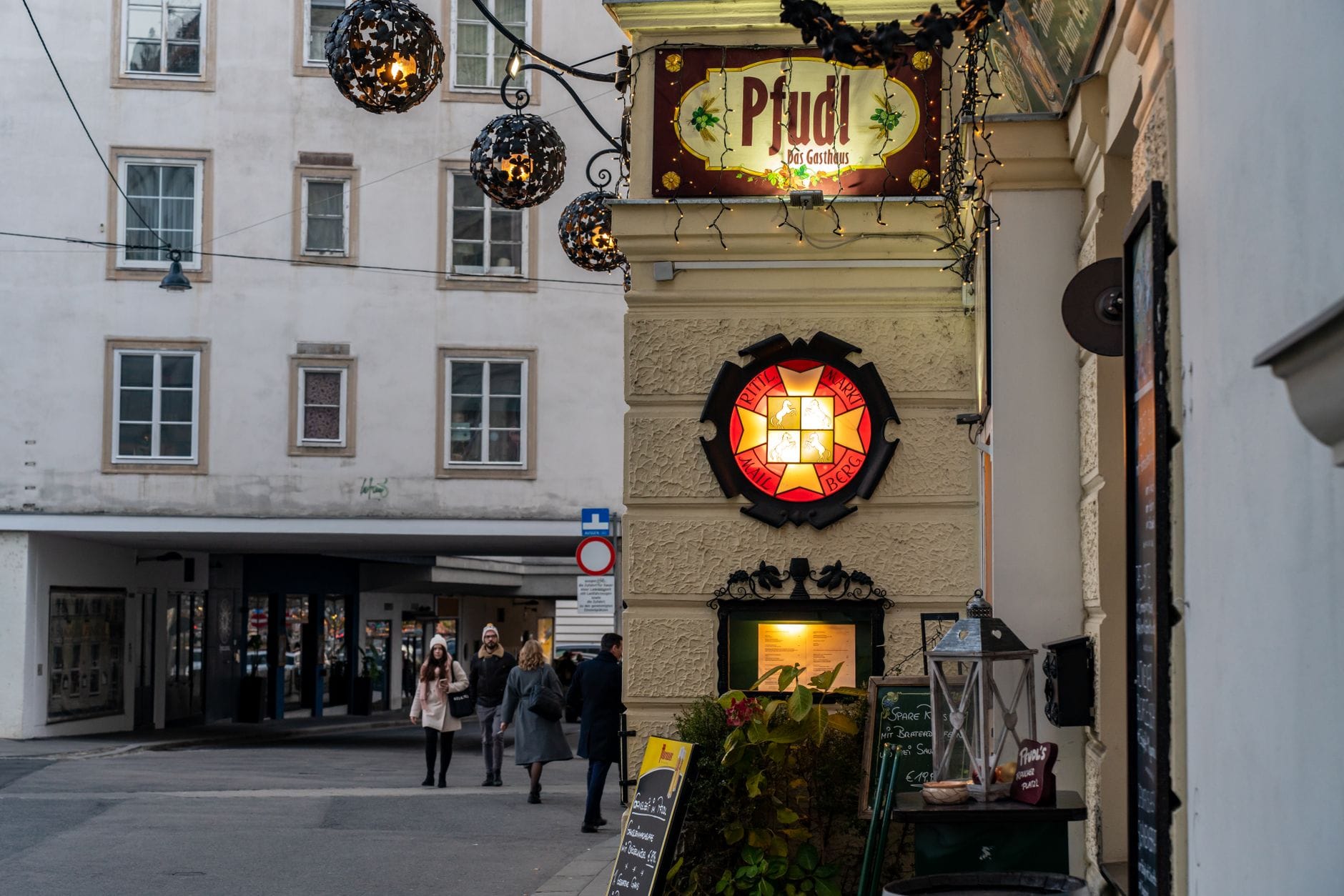
Vienna's dining vocabulary has its own logic. A Beisl is the equivalent of a neighborhood pub-restaurant: unpretentious, serving traditional food, with paper tablecloths and no-fuss service. These are where locals actually eat on weekdays. A Gasthaus or Gasthof is slightly more formal but still traditional. Heurigen are wine taverns on the edges of the city, traditionally operated by winemakers selling their own wine alongside cold food platters. Proper restaurants run from mid-range to high-end and typically require booking in advance.
- Figlmüller (Wollzeile or Bäckerstrasse) The benchmark for schnitzel in Vienna. The Wollzeile location is the original; the Bäckerstrasse branch opened later. Schnitzels famously overhang the plate. Expect queues without a booking, especially at dinner. Book in advance at figlmueller.at. Mains around €25–35.
- Plachutta (multiple locations) The authority on Tafelspitz, with multiple cuts on the menu and proper bone-marrow accompaniments. The Wollzeile location is the most traditional. Book ahead; this is a lunch destination as much as a dinner one. Mains €26–38.
- Café Central (Innere Stadt) One of the grand Viennese coffeehouses, set in a vaulted former banking hall. Excellent for breakfast (€8–15) or afternoon cake. It does get busy with tourists mid-morning; arrive before 9:00 or after 15:00 for a calmer experience.
- A classic Beisl for Gulasch The best gulasch in Vienna often comes from places with no English menus and handwritten daily specials. Café Hawelka (Dorotheergasse) is iconic for late-night Buchteln (sweet dumplings with jam). Gasthaus Pöschl near Stephansplatz is a reliable traditional choice for hearty weekday lunches.
If you want a broader understanding of wine drinking alongside food in Vienna, the Heuriger wine taverns on the northern outskirts of the city (particularly in Grinzing and Nussdorf) offer a different format entirely: cold buffet platters of bread, cheese, pickles, and smoked meats, eaten alongside glasses of the current year's wine. It is an afternoon-into-evening experience rather than a structured dinner.
Vienna's Coffee House Culture and Pastry Tradition
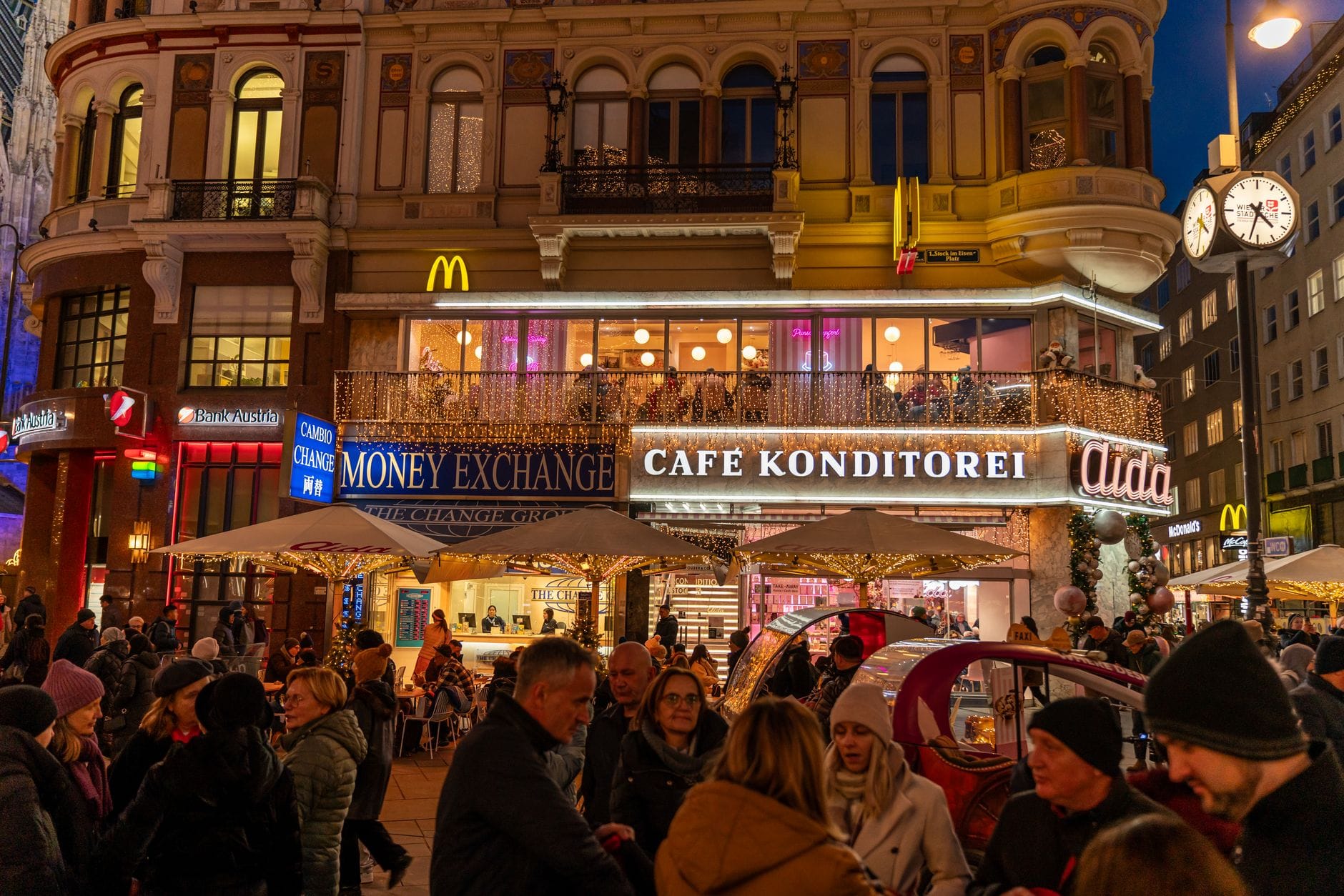
The Viennese coffeehouse is not a café in the modern sense. You are not expected to order quickly, drink up, and leave. Historically, these were places where writers, intellectuals, and artists spent entire afternoons with a single coffee and a newspaper. That culture still exists, and the better coffeehouses stock international newspapers (including English-language ones) on wooden holders for customers to read.
The signature drink is the Melange: espresso topped with steamed milk and milk foam, similar to a cappuccino but typically served in a glass. Other common orders include Verlängerter (long espresso with hot water), Einspänner (espresso in a glass topped with whipped cream), and Mocca (straight black espresso). A Melange with a pastry slice runs around €6–9 in most traditional coffeehouses, though Hotel Sacher charges a premium for the atmosphere.
✨ Pro tip
When your coffee arrives, it will come with a small glass of water on the side. This is standard Viennese practice, not a upsell. In traditional coffeehouses, the waiter will refill your water glass unprompted. If you plan to stay a while, nobody will rush you — that is the entire point.
On the pastry side: beyond Sachertorte and Apfelstrudel, look for Topfenstrudel (quark-filled strudel), Linzer Torte (a latticed tart with redcurrant jam and almond pastry), and Punschkrapfen (a rum-soaked pink cake unique to Austrian bakeries). The Sachertorte and chocolate cake guide goes deeper into where to find the best versions and what separates them.
Seasonal Eating and What Changes by Time of Year
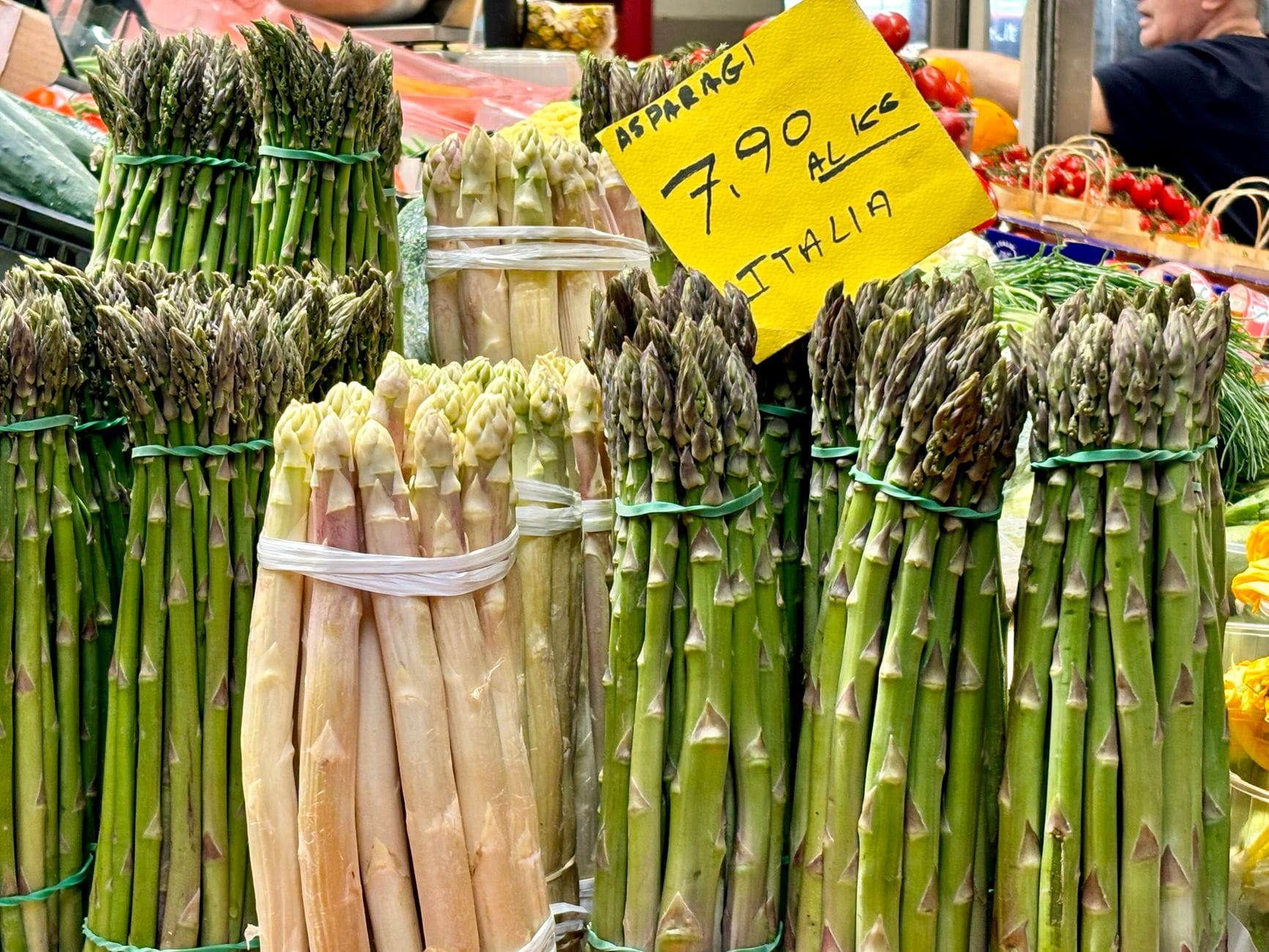
Vienna's traditional restaurants track the seasons more faithfully than most cities. In spring (roughly April to June), Spargel (white asparagus) appears on almost every menu: served with melted butter and Hollandaise, alongside boiled potatoes and sometimes sliced ham. It is a serious seasonal event in Austrian food culture. Quality white asparagus from the Marchfeld region east of Vienna is among the best in Central Europe.
Summer shifts the focus to lighter dishes, outdoor restaurant terraces, and cold drinks. Look for Erdbeerbowle (strawberry punch) in wine gardens and fresh berry-topped Topfen desserts at patisseries. Autumn brings game dishes: venison, wild boar, and pheasant appear on specials boards from September onward, often in rich red-wine reductions. Winter is the season for Gulasch, dense dumplings, and warming strudels, eaten before or after an evening at the Vienna State Opera or a Christmas market.
If you are visiting in winter, the Vienna Christmas markets guide covers the food stalls in detail, including which markets have the best hot food beyond the standard Glühwein and Bratwurst. For summer dining and terrace eating, see the Vienna in summer guide for timing and neighbourhood recommendations.
Practical Dining Tips: Prices, Tipping, and Timing
Lunch is significantly cheaper than dinner in most mid-range restaurants. A Mittagsmenü (daily lunch menu) typically offers a starter and main course for €10–18, which is the most efficient way to eat well on a budget. The same dishes ordered à la carte at dinner can run 30–50% more. Most traditional restaurants stop serving lunch at 14:00 sharp, so do not arrive at 13:45 expecting a leisurely start.
- Tipping is customary but moderate: rounding up the bill or adding 5–10% is standard. For full table service at dinner, 10–15% is appropriate. You pay by telling the server the total you want to pay (e.g., 'Mach' fünfzig' — 'make it fifty'), not by leaving cash on the table.
- Card payments are accepted in most restaurants but Würstelstände and market stalls are often cash only. Carry small coins and notes.
- Reservations are necessary at Figlmüller, Plachutta, and most well-regarded restaurants for Friday and Saturday dinner. Mid-week lunch rarely requires booking.
- Most restaurants print menus in German with English translation, especially in the 1st district. In outer neighborhoods, German-only menus are common — Google Translate's camera function handles them well.
- Dining hours are relatively fixed: lunch 12:00–14:00, dinner service typically from 18:00 or 18:30 onward. Kitchens close earlier than in southern European cities — 21:30–22:00 is standard.
ℹ️ Good to know
Vienna has excellent tap water — it comes from Alpine mountain springs via a dedicated gravity-fed pipeline and is among the best municipal drinking water in Europe. Ordering tap water ('Leitungswasser') at a restaurant is perfectly acceptable, though some traditional establishments will bring sparkling water unless you specify otherwise.
For a broader orientation on eating, drinking, and getting around the city's neighborhoods, the things to do in Vienna guide pairs well with this food overview. If you are trying to plan meals around a two or three day itinerary, see the 3 days in Vienna itinerary which maps restaurant recommendations alongside sightseeing.
FAQ
What is the most traditional food to eat in Vienna?
Wiener Schnitzel (breaded veal cutlet) and Tafelspitz (slow-boiled beef with horseradish) are the two dishes most deeply associated with Viennese cuisine. For dessert, Apfelstrudel and Sachertorte are the standard. A Würstelstand sausage is the authentic street food experience.
Is Wiener Schnitzel always made with veal?
By Austrian law, a dish labeled 'Wiener Schnitzel' must use veal. Pork versions must be called 'Schnitzel Wiener Art.' Both are widely served, but they taste different and are priced differently — veal is more expensive and has a finer texture. If you want the authentic version, ask specifically for Kalbsschnitzel (veal schnitzel).
How much does eating out in Vienna typically cost?
Budget roughly €3.50–5 for a sausage at a street stand, €10–18 for a weekday lunch menu at a mid-range restaurant, and €25–40 per person for dinner at a traditional restaurant with drinks. A slice of Sachertorte and a coffee at a historic coffeehouse runs around €13–18 combined. Fine dining can reach €80–120 per person.
Where is the best place to try Sachertorte in Vienna?
The two main contenders are Hotel Sacher (in the Sacher Café on Philharmonikerstrasse) and Café Demel on Kohlmarkt. Both sell their own version with slightly different recipes — the dispute over the 'original' dates back to the 19th century. Both are genuinely excellent. Hotel Sacher has more atmosphere; Demel has a slightly less crowded setting and superb patisserie selection overall.
Are there good vegetarian options in traditional Viennese cuisine?
Traditional Viennese food is heavily meat-focused, but there are reliable vegetarian options. Käsespätzle (cheese noodles with crispy onions) and Apfelstrudel are both naturally meat-free. Most coffeehouses have extensive pastry menus with no meat. Modern restaurants and the Naschmarkt area have strong vegetarian and international options if you need variety beyond the traditional menu.
Tickets & tours
Live prices and dates from our booking partner. If you book, we may earn a commission at no extra cost to you.
Planning a trip? Discover personalized activities with the Nomado app.