Palmenhaus Schönbrunn: Inside Vienna's Grand Imperial Greenhouse
Built for Emperor Franz Joseph in 1882, the Palmenhaus Schönbrunn is one of Europe's largest and most architecturally striking glasshouses. Stretching 111 metres across the Schönbrunn Palace Gardens, it shelters tropical and subtropical plants beneath nearly 5,000 square metres of glass. Whether you visit in summer heat or winter chill, the interior world it contains feels genuinely removed from the city outside.
Quick Facts
- Location
- Schlosspark Schönbrunn, 1130 Wien — entrance at Hietzinger Tor
- Getting There
- U4 Hietzing (Hietzinger Tor entrance, a short walk through the park)
- Time Needed
- 45–75 minutes inside; allow extra time if exploring the wider palace gardens
- Cost
- Standard €9; reduced €1. Last entry 30 minutes before closing
- Best for
- Architecture lovers, rainy-day escapes, botanical interest, photography
What the Palmenhaus Actually Is
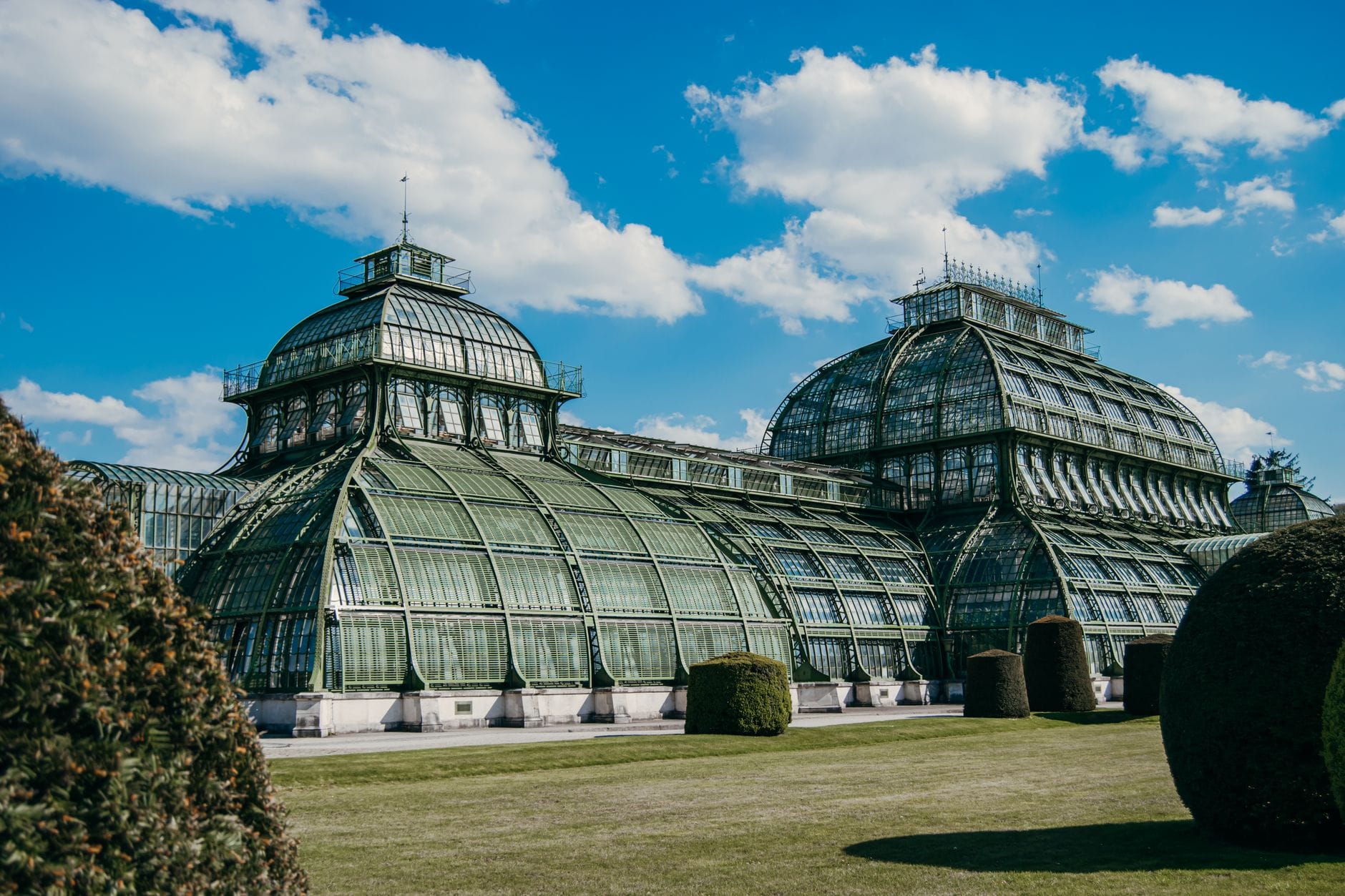
The Palmenhaus Schönbrunn is an imperial greenhouse commissioned by Emperor Franz Joseph and completed in 1882. At 111 metres long, with a total floor area of 2,500 square metres and a glass surface of 4,900 square metres, it is one of the largest surviving 19th-century glasshouses in the world. The structure divides into three interconnected pavilions, each maintaining a different climate zone: a temperate central section flanked by a warmer tropical wing and a cooler subtropical one. The result is that a single visit takes you through genuinely distinct botanical environments in the space of a slow walk.
From the outside, the building reads as confident Victorian engineering translated into Austrian imperial taste. Wrought iron ribs curve upward into barrel vaults, the metal painted in muted green-grey that deliberately echoes the surrounding park foliage. In morning light, when low sun hits the glass at an angle, the façade shifts between transparency and mirror-like opacity depending on where you stand. It is an architectural object worth a few minutes of study before you go in.
ℹ️ Good to know
Opening hours: 1 May–30 September, 10:00–18:00; 1 October–30 April, 10:00–17:00. Last entry is 30 minutes before closing. Verify current hours at schoenbrunn.at before your visit, as seasonal schedules can shift.
The Experience Inside: Light, Humidity, and Living Architecture
The moment you push through the entrance door, the air changes. In summer, the interior is only marginally warmer than outside, but it carries a density — moisture, chlorophyll, the faint sweetness of tropical flowering plants — that the city air doesn't have. In winter, crossing the threshold from cold grey Viennese air into the green warmth of the central pavilion is a genuinely affecting contrast. Your glasses fog. The temperature climbs noticeably. The soundscape shifts: footsteps echo differently, and the background noise of the city disappears.
The central section contains the largest specimens, including palms that push toward the apex of the vaulted iron-and-glass ceiling, some tall enough that you tilt your head back to find the top. Pathways are kept deliberately narrow, so at quieter times you're walking through vegetation rather than alongside display cases. The planting is dense without being chaotic. Labels are present but not intrusive.
Move into the tropical wing and the heat becomes more pronounced, the foliage thicker, the light filtered through denser canopy. The subtropical section is cooler and tends to house more sculptural, structural plants. Each transition between zones is subtle but perceptible if you pay attention. The design rewards a slow pace.
💡 Local tip
Photography tip: The best interior light falls in the morning, when sun enters from the east face of the glasshouse. By early afternoon in summer, the light becomes flatter and the glass surface can create distracting reflections in close-up shots. A wide-angle lens or a phone camera with a wide mode handles the height of the central vault well.
Tickets & tours
Live prices and dates from our booking partner. If you book, we may earn a commission at no extra cost to you.
Skip-the-Line Entrance with Guide to Schonbrunn Palace and Gardens
From 45 €Instant confirmationFree cancellationSchonbrunn Palace and gardens guided tour
From 43 €Instant confirmationFree cancellationClassic Vienna guided bike tour
From 47 €Instant confirmationFree cancellationSelf-guided grand tour of Schonbrunn Palace entrance ticket
From 45 €Instant confirmation
Historical Context: Why Franz Joseph Built This
The Palmenhaus was not an isolated project. It was part of a broader reorganisation and expansion of the Schönbrunn Palace Gardens under Franz Joseph, who reigned from 1848 until 1916 and oversaw a remarkable physical transformation of Vienna. The 1880s were a decade of intense construction ambition for the Habsburg capital: the Ringstrasse boulevard was nearing completion, and imperial institutions were competing in architectural scale and ambition.
Monumental glasshouses were prestige objects in 19th-century Europe, signalling a state's capacity to command exotic flora from across its empire and the world. The Palmenhaus sits within that tradition while also serving a genuine scientific purpose: the Austrian Federal Gardens (Bundesgärten), which still manage the building, maintain it as a living botanical collection, not simply a decorative one. For more on how the Habsburg imperial project shaped the city's physical fabric, the Vienna Habsburgs and imperial history guide provides useful background.
How It Changes by Time of Day and Season
Morning visits, ideally on a weekday, offer the quietest experience. Crowds at the Palmenhaus are never on the scale of the palace itself, but weekend afternoons in peak summer do draw families and tour groups, and the narrower pathways can feel congested. By mid-morning on a weekday, you may have entire sections largely to yourself.
The attraction's most compelling season is arguably winter. From November through February, the palace gardens outside are stripped back and grey, the fountains switched off, the lawns empty. Walking from that landscape into the Palmenhaus delivers a contrast that summer cannot match: warmth, green, and life against a backdrop of frost and bare trees. This is when the building earns its keep most clearly as an experience, not just as an architectural exhibit.
Spring and autumn are reliable, lower-crowd alternatives. April and October offer mild outdoor temperatures for exploring the wider Schönbrunn gardens before or after your visit, without the summer queues at the palace ticket offices nearby.
⚠️ What to skip
The Palmenhaus is warm and humid year-round. In summer, it can feel genuinely hot in the tropical wing. Wear light, breathable layers and consider that cameras and phones brought in from cold outdoor air will take a few minutes to acclimatise before condensation clears.
Getting There and Finding the Entrance
The most direct approach is via U4 to Hietzing, then entering the palace grounds through the Hietzinger Tor gate, which is the official listed entrance for the Palmenhaus. From the gate, the building is visible within a few minutes' walk into the park, positioned in the western section of the gardens, not immediately adjacent to the palace itself. If you're approaching from the main Schönbrunn Palace entrance, allow an extra 10 minutes to walk through the grounds.
The Palmenhaus is fully wheelchair accessible, and WC facilities are located next to the ticket desk. An additional accessible toilet is available at the nearby Desert House (Wüstenhaus) entrance. This level of access is notably good compared to many historic Vienna attractions, where 19th-century architecture can make mobility difficult.
There is no dedicated parking immediately at the Hietzinger Tor, and the Schönbrunn area becomes congested with coach traffic in summer. Public transport is the practical choice. The U4 line connects directly with the city centre and with Schwedenplatz, making combinations with other central attractions straightforward.
Combining the Palmenhaus With the Rest of Schönbrunn
The Palmenhaus sits within one of Europe's most rewarding palace-and-garden complexes, and most visitors combine it with at least one other element of the site. The Tiergarten Schönbrunn, the world's oldest continuously operating zoo, is a short walk away within the same grounds and makes a logical pairing, particularly for families. The Gloriette on the hill above the palace offers a panoramic view across the whole complex and the city beyond, which contextualises the scale of the gardens and the Palmenhaus's position within them.
If your interest is specifically in Viennese architecture, the Palmenhaus pairs well with a broader look at 19th-century engineering and civic ambition in the city. The Vienna architecture guide covers the broader context of how iron-and-glass construction fit into the city's development during this period.
A full Schönbrunn day, covering the palace state rooms, gardens, Gloriette, Palmenhaus, and zoo, requires five to six hours at a comfortable pace. The Palmenhaus alone, for a visitor primarily interested in the building and botanical content, is a 45 to 75-minute stop.
Honest Assessment: Is It Worth the Entry Fee?
At €9, the Palmenhaus is not expensive by Vienna attraction standards, but it is a specialist interest rather than a universal priority. If you have a genuine interest in botanical gardens, Victorian glasshouse architecture, or simply want a warm, quiet, photogenic space removed from the tourist circuit of the palace itself, it fully justifies the ticket. The building is architecturally significant, the plant collection is serious, and on the right day at the right time, the experience is quietly extraordinary.
If your Vienna itinerary is short and tightly focused on the city's major art and history institutions, the Palmenhaus is reasonable to skip in favour of the palace interior or the Belvedere. It does not tell you something essential about Vienna's history or culture that you cannot access elsewhere. But for travellers who move slowly, appreciate living collections, and enjoy architecture that serves a practical purpose, it is one of the more rewarding hours the Schönbrunn grounds have to offer.
Children who have already been through a zoo or palace and are losing patience with structured touring sometimes respond well to the sensory change the Palmenhaus provides. The warmth, unusual smells, and scale of the plants hold attention in a different way from display cases and audio guides.
Insider Tips
- Arrive within the first 30 minutes of opening on a weekday. The central pavilion is at its quietest then, and you'll have the height of the palm vault largely to yourself for photographs.
- The Hietzinger Tor entrance on the park's western edge is far less crowded than the main palace gate. Even on summer weekends, you typically bypass any queue and walk straight in.
- The Desert House (Wüstenhaus) is adjacent and operates as a separate ticketed attraction. If you're buying a Palmenhaus ticket, ask about combination pricing at the desk, as options can change seasonally.
- In winter, the contrast between the cold park and the warm interior is the Palmenhaus's strongest argument. Time your visit for a cold, clear day rather than a mild one for the fullest effect.
- The narrowest and most atmospheric section is the transition corridor between the central and tropical pavilions, where the foliage is densest and the ceiling curves lowest. Slow down here rather than walking straight through.
Who Is Palmenhaus Schönbrunn For?
- Architecture and engineering enthusiasts interested in 19th-century iron-and-glass construction
- Botanical garden visitors who want a serious living collection in an imperial setting
- Photographers looking for interior light, scale, and greenery without a photography fee
- Winter visitors seeking warmth and contrast from the cold palace grounds outside
- Families combining the visit with the nearby Tiergarten Schönbrunn zoo
Nearby Attractions
Other things to see while in Schönbrunn & Hietzing (13th District):
- Imperial Carriage Museum (Kaiserliche Wagenburg)
Housed within the grounds of Schönbrunn Palace, the Imperial Carriage Museum preserves around 170 vehicles once used by Habsburg emperors and empresses. From gilded coronation coaches to simple children's sleighs, the collection offers a concrete, often surprising window into court life across four centuries of Austrian imperial history.
- Lainzer Tiergarten
Covering 24.5 square kilometres on Vienna's western fringe, the Lainzer Tiergarten is a walled nature reserve where wild boar roam ancient oak forests and the Habsburg Hermesvilla rises unexpectedly from the trees. Entry is free, the crowds are thin, and the silence is genuine.
- Schönbrunn Gloriette
Perched on the ridge above Schönbrunn Palace, the Gloriette is a triumphal colonnade built in 1775 that offers the widest, most unobstructed panorama over central Vienna. You earn the view with a climb up 76 steps, and the reward is a rooftop terrace that stretches the full width of the structure. It is the visual anchor of the entire Schönbrunn estate.
- Schönbrunn Palace
Schönbrunn Palace is Vienna's most visited historic site and one of Europe's finest examples of Baroque architecture. With 1,441 rooms, 120 hectares of free gardens, and centuries of Habsburg history layered into every room, it rewards both a quick morning visit and a full day of exploration.
Planning a trip? Discover personalized activities with the Nomado app.