Imperial Carriage Museum (Kaiserliche Wagenburg): Vienna's Royal Coach Collection
Housed within the grounds of Schönbrunn Palace, the Imperial Carriage Museum preserves around 170 vehicles once used by Habsburg emperors and empresses. From gilded coronation coaches to simple children's sleighs, the collection offers a concrete, often surprising window into court life across four centuries of Austrian imperial history.
Quick Facts
- Location
- Schönbrunner Schloßstraße 47, 1130 Vienna (Schönbrunn Palace grounds)
- Getting There
- U4 to Schönbrunn or Hietzing; Tram 10/60 or Bus 10A to Schloss Schönbrunn
- Time Needed
- 1 to 1.5 hours for most visitors
- Cost
- €14 adults (on-site), €12 online; €12 reduced; free for under-20s (ID required)
- Best for
- History lovers, design and craft enthusiasts, families with older children
- Official website
- www.kaiserliche-wagenburg.at/en
What the Imperial Carriage Museum Actually Is
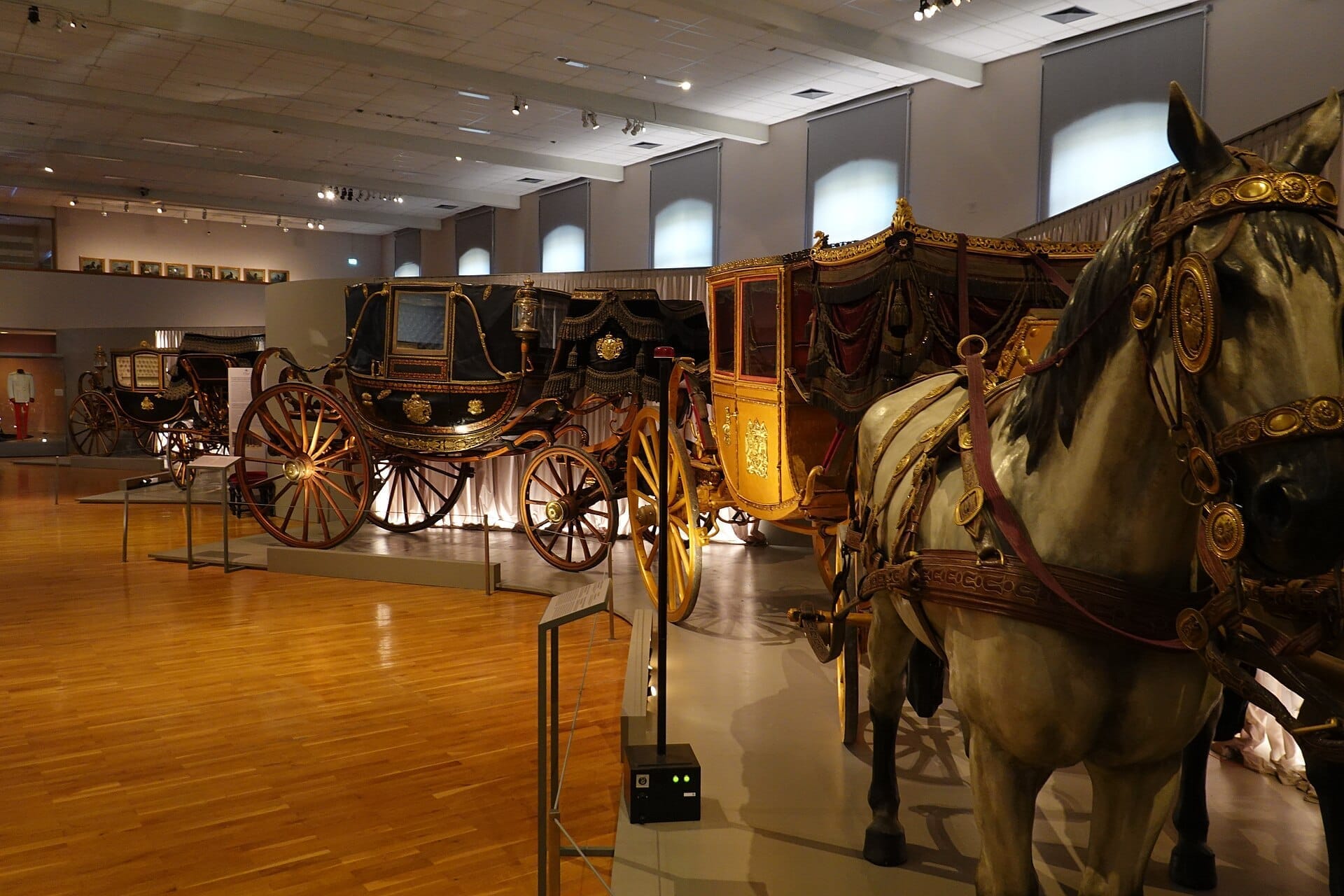
The Kaiserliche Wagenburg Wien, or Imperial Carriage Museum Vienna, is a specialist collection of roughly 170 vehicles that once served the Habsburg imperial court. It sits in the west wing of the Schönbrunn Palace complex, in a purpose-built imperial coach house that has stored royal vehicles since the 18th century. This is not a recreation or a themed attraction; these are the actual objects used to transport emperors, empresses, and their children across Europe for centuries.
The collection spans everything from the monumental to the intimate: a six-ton coronation carriage encrusted with gold leaf alongside a modest wicker pushchair made for the King of Rome, Napoleon's infant son. That range is what makes the museum more interesting than its niche subject might suggest. You are looking at functional objects shaped by both extreme wealth and precise protocol.
The museum is managed under the umbrella of the Kunsthistorisches Museum and is closely tied to the broader Habsburg story that runs through Schönbrunn Palace and the Imperial Treasury. If you are spending a day in the Schönbrunn area, combining two or three of these sites makes practical sense.
The Collection: What You Will See
The centrepiece of the museum is the Imperial Coronation Coach, built around 1763 for Emperor Joseph II. It is one of the largest and most ornate vehicles in existence: the wooden body is covered in gilt carvings, the interior upholstered in red velvet, and eight figures representing virtues support the roof in sculptural relief. The coach was used for coronation processions well into the 19th century. Standing next to it, the scale is genuinely striking.
Beyond the showpiece carriages, the collection breaks down into several categories worth paying attention to: mourning coaches finished in black lacquer and silver used for imperial funerals; everyday town coaches that reveal how routine court transport was organised; children's vehicles including miniature carriages and sleighs built to scale for young archdukes and archduchesses; and the functional riding equipment that underpinned court ceremony. The Sisi connection is well-represented too, including a travelling coach associated with Empress Elisabeth.
💡 Local tip
Pick up the free floor plan at the entrance before you start. The hall layout is not immediately intuitive, and the floor plan marks the key highlight pieces with their historical context. Audio guides are available for an additional fee.
The craftsmanship throughout is extraordinary in a way that photographs rarely convey. Look closely at the painted panels on the carriage doors, the leather harness work, and the metalwork on axles and wheel rims. These vehicles were made by dozens of specialist artisans working under court commission, and the variety of techniques on display in a single coach — painting, gilding, upholstery, ironwork, woodcarving — is closer to architecture than to what most people think of as a vehicle.
Tickets & tours
Live prices and dates from our booking partner. If you book, we may earn a commission at no extra cost to you.
Hours, Tickets, and Getting There
The museum is open daily year-round, with seasonal hours. From 15 March to 30 November, opening hours are 09:00 to 17:00. From 1 December to 14 March, the museum opens at 10:00 and closes at 16:00. Last entry is 15 minutes before closing. Given the shorter winter hours, arriving by mid-afternoon is the safe play if you are combining this with a visit to the palace.
Adult tickets cost €14 on-site or €12 if purchased in advance online. Reduced tickets (for students up to age 25, seniors, people with disabilities, and others with qualifying status) are €12 on-site or €9 online. Children and young people aged 19 and under enter free, though ID may be required. Vienna City Card holders pay €13. Buying online saves a few euros and occasionally avoids a short queue at the ticket counter, particularly on weekend mornings in summer.
The nearest U-Bahn stop is Schönbrunn or Hietzing on the U4 line, both a short walk from the museum entrance. Trams 10 and 60, and Bus 10A, also stop at Schloss Schönbrunn. The museum has its own entrance separate from the main palace ticket office, so follow signs for Wagenburg rather than walking through the main palace courtyard.
ℹ️ Good to know
The museum entrance is on the western side of the Schönbrunn complex, not through the main palace gates. First-time visitors occasionally walk past it. Look for the signage near the palace wing closest to Hietzing.
When to Visit and What to Expect at Different Times
The Kaiserliche Wagenburg receives far fewer visitors than the palace itself, which means it is rarely crowded. Weekday mornings between opening and around 11:00 are the quietest window, and the large hall feels genuinely spacious at those times. The light inside is artificial and consistent throughout the day, so unlike an outdoor site or a picture gallery with skylights, time of day has little effect on what you can see. The hall maintains an even temperature that can feel cool relative to a hot Vienna summer day — useful to know if you are midway through a long sightseeing day.
Summer weekend afternoons bring more visitors, partly from tour groups that combine the palace and the carriage museum in a single block. Even then, the space handles crowds reasonably well because the central hall is wide and the vehicles themselves create natural circulation around the perimeter. If you want extended time in front of the coronation coach without other visitors in your frame, aim for a weekday or arrive at opening.
Winter visits have their own quiet logic. With shorter hours and lower overall tourist numbers in Vienna, the museum in December or January can feel almost private. If you are in the city for the Christmas markets and want a half-day of indoor culture, this is one of the more undervisited options.
Historical Context: Why This Collection Exists
The Habsburg court operated according to a rigid system of ceremonial rules, and vehicles were central to that system. The type of carriage used for a specific occasion, the number of horses harnessed, the livery of the postilions — all of these communicated rank and occasion to anyone who watched a procession pass. This was not decoration for its own sake; it was a language of power that every subject was expected to read.
When the Habsburg monarchy ended in 1918, the question of what to do with the imperial property was urgent and politically charged. Around 100 court vehicles were preserved in the immediate aftermath of the dissolution. The collection has since grown to approximately 170 vehicles through careful conservation and acquisition, and it now represents one of the most complete records of European royal transport anywhere. Many comparable collections in other countries were dispersed, sold, or destroyed in the upheavals of the early 20th century. Vienna's survival of this material is partly luck, partly the specific character of Austrian institutional memory.
Understanding this context adds weight to what you are looking at. The carriages are not just beautiful objects; they are evidence of a court system that shaped Central European politics for centuries. For a broader introduction to that world, the Habsburg imperial history guide offers useful background before or after your visit.
Accessibility and Practical Notes
The majority of the museum is considered accessible for wheelchair users and visitors with mobility limitations. The main exhibition hall is on a single level, and the flooring is smooth. Visitors with a disability card qualify for the reduced ticket price, and accompanying assistants enter free. Guided tours adapted for visitors with specific needs are available on request; contact the museum in advance to arrange.
Photography is permitted throughout the museum without flash. The large vehicles and the tall hall make wide-angle lenses or the standard camera on a recent smartphone more effective than a telephoto. For detail shots of carriage panels and decorative elements, get close: the paintwork and gilding are best appreciated at arm's length. Tripods are generally not permitted.
⚠️ What to skip
The museum has no dedicated café or restaurant on-site. If you are spending several hours in the Schönbrunn complex, plan to eat at one of the cafés near the palace before or after your visit, rather than expecting food facilities inside the Wagenburg itself.
Honest Assessment: Is It Worth Your Time?
For visitors with a genuine interest in Habsburg history, decorative arts, or the material culture of European courts, the Kaiserliche Wagenburg is genuinely rewarding and consistently underrated. The quality of the objects is exceptional, the crowds are manageable, and the context — inside the Schönbrunn grounds — adds to the experience rather than competing with it.
For visitors who are primarily interested in painting, architecture, or broader cultural history, this museum is not the highest priority in Vienna. The city's art and history offer is dense, and the Kunsthistorisches Museum or the Upper Belvedere might deliver more within the same time window. The carriage museum rewards curiosity about a specific subject; those without that curiosity may find it repetitive after the first thirty minutes.
Children under ten often engage well with the large, colourful coaches, particularly the gilded coronation carriage and the children's sleighs. Older children with some background in European history tend to get the most from it. Very young children in pushchairs are accommodated by the accessible layout.
Insider Tips
- Buy tickets online in advance to save €2 on the adult price and avoid any queue at the ticket window, particularly on summer weekends when Schönbrunn as a whole is busy.
- The coronation coach is best viewed from both sides, not just the approach angle. Walk around to the far side to see the painted door panels and the wheel detail that most visitors miss.
- If you are combining this with a Schönbrunn Palace tour, visit the Wagenburg first. By mid-morning, palace tour groups move into the complex, and the carriage museum stays quieter for longer.
- The children's vehicles — including the miniature carriage built for Napoleon's son, the King of Rome — are displayed near the back of the hall and are among the most affecting objects in the collection. They are easy to walk past if you follow the main coronation coaches and stop there.
- The museum sells a well-produced illustrated catalogue at the ticket desk that functions as a better long-term reference than the standard audio guide. Worth considering if you want to look up the vehicles in more detail after your visit.
Who Is Imperial Carriage Museum (Kaiserliche Wagenburg) For?
- Habsburg and European imperial history enthusiasts who want to see the actual objects, not reproductions
- Design and decorative arts visitors interested in 17th to 19th century craft at the highest level
- Families with children aged seven and above who can engage with the scale and variety of the vehicles
- Visitors combining a full day at Schönbrunn and looking for a quieter, less crowded companion site to the palace
- Winter visitors in Vienna who want substantial indoor culture during the quieter off-season
Nearby Attractions
Other things to see while in Schönbrunn & Hietzing (13th District):
- Lainzer Tiergarten
Covering 24.5 square kilometres on Vienna's western fringe, the Lainzer Tiergarten is a walled nature reserve where wild boar roam ancient oak forests and the Habsburg Hermesvilla rises unexpectedly from the trees. Entry is free, the crowds are thin, and the silence is genuine.
- Palmenhaus Schönbrunn
Built for Emperor Franz Joseph in 1882, the Palmenhaus Schönbrunn is one of Europe's largest and most architecturally striking glasshouses. Stretching 111 metres across the Schönbrunn Palace Gardens, it shelters tropical and subtropical plants beneath nearly 5,000 square metres of glass. Whether you visit in summer heat or winter chill, the interior world it contains feels genuinely removed from the city outside.
- Schönbrunn Gloriette
Perched on the ridge above Schönbrunn Palace, the Gloriette is a triumphal colonnade built in 1775 that offers the widest, most unobstructed panorama over central Vienna. You earn the view with a climb up 76 steps, and the reward is a rooftop terrace that stretches the full width of the structure. It is the visual anchor of the entire Schönbrunn estate.
- Schönbrunn Palace
Schönbrunn Palace is Vienna's most visited historic site and one of Europe's finest examples of Baroque architecture. With 1,441 rooms, 120 hectares of free gardens, and centuries of Habsburg history layered into every room, it rewards both a quick morning visit and a full day of exploration.
Planning a trip? Discover personalized activities with the Nomado app.