Kunsthistorisches Museum Vienna: Art, Empire, and Seven Millennia Under One Dome
The Kunsthistorisches Museum in Vienna is one of the great art museums of the world, housing the imperial collections of the Habsburg dynasty in a Neo-Renaissance palace purpose-built for the purpose. From Vermeer and Bruegel to ancient Egyptian treasures, the breadth is staggering. The building itself is as much of the experience as the art inside.
Quick Facts
- Location
- Maria-Theresien-Platz, 1010 Vienna (Innere Stadt)
- Getting There
- U2/U3 Volkstheater; Tram D, 1, 2 to Burgring/Kunsthistorisches Museum
- Time Needed
- 3–5 hours for highlights; a full day for serious collections
- Cost
- Paid admission; check current prices at khm.at/en/visit
- Best for
- Art lovers, history enthusiasts, architecture admirers, families with older children
- Official website
- www.khm.at/en
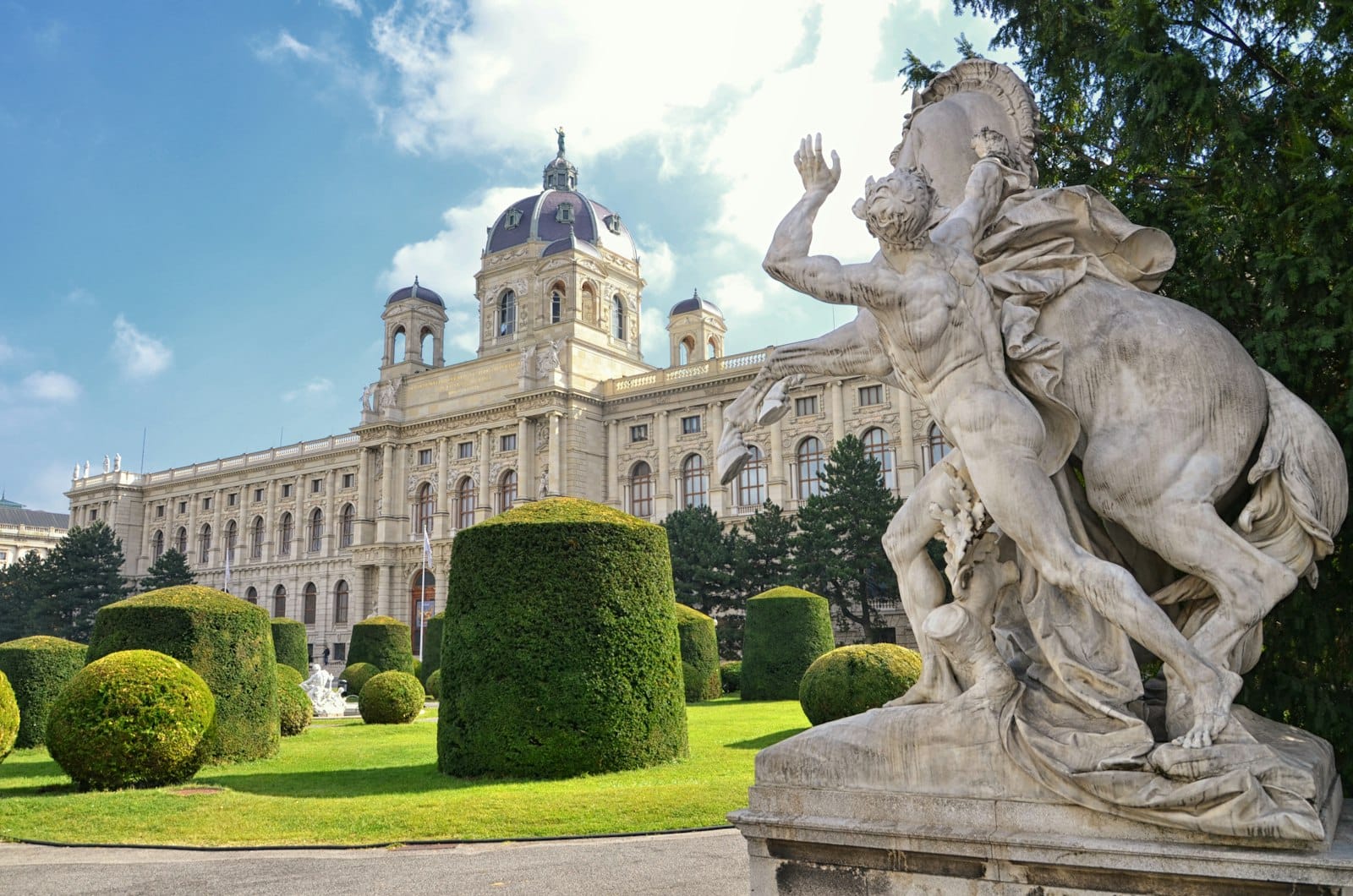
What the Kunsthistorisches Museum Actually Is
The Kunsthistorisches Museum Wien, or KHM, is not a municipal art gallery or a converted palace. It was conceived from the ground up as a monument to imperial collecting. Emperor Franz Joseph I commissioned the building in the 1870s to house the Habsburg dynasty's centuries-old accumulation of paintings, sculpture, decorative objects, coins, arms, and antiquities. When it opened in 1891, it was one of the most ambitious museum projects in European history, and that ambition is still visible in every corridor.
The collections span roughly seven millennia, from pre-dynastic Egyptian artifacts through the late 18th century. The Picture Gallery alone contains one of the finest concentrations of Flemish, Dutch, German, and Italian old masters anywhere in the world. But the museum is also home to the Egyptian and Near Eastern Collection, the Greek and Roman Antiquities, the Cabinet of Curiosities, and the Imperial Coin Cabinet. Each is effectively a world-class collection in its own right.
ℹ️ Good to know
Thursday evenings the museum stays open until 21:00, which is the quietest and most atmospheric time to visit the Picture Gallery. Visitor numbers drop significantly after 18:00.
The Building: Architecture Worth Stopping For
The KHM sits on Maria-Theresien-Platz, facing its twin, the Naturhistorisches Museum, across a formal square anchored by a monument to Empress Maria Theresa. Both buildings were designed by Gottfried Semper and Carl von Hasenauer between 1871 and 1891 as part of a planned imperial forum on the Ringstrasse. The Neo-Renaissance facades are dense with allegory: sculpted figures representing different artistic traditions, ornamental friezes, and an octagonal dome that dominates the roofline.
The interior matches the exterior in ambition. The entrance hall rises to a coffered ceiling with lunette paintings by Hans Makart and, notably, by a young Gustav Klimt, who was commissioned along with his brother Ernst and Franz Matsch to paint the staircase ceiling spandrels. If you know to look up at the right moment, you will see early Klimt work in a context most visitors walk straight past. For deeper context on Klimt's career and legacy in Vienna, the Vienna Klimt and Secession guide covers this well.
The central cupola hall, with its marble columns, gilded balustrades, and soaring coffered dome, is one of the most impressive interior spaces in Vienna. The museum's cafe operates here, beneath the dome, which means you can sit at a table and stare up at the ceiling over coffee. That combination of setting and function is difficult to find anywhere else in the world.
Tickets & tours
Hand-picked options from our booking partner. Prices are indicative; availability and final rates are confirmed when you complete your booking.
Art History Museum Vienna private guided tour
From 95 €Instant confirmationFree cancellationKunsthistorisches Museum Vienna guided highlight tour
From 89 €Instant confirmationFree cancellationVienna Kunsthistorisches Museum tickets
From 21 €Instant confirmationImperial Vienna 72-hour hop-on hop-off bus
From 55 €Instant confirmationFree cancellation
The Picture Gallery: What to Prioritize
The second floor Picture Gallery is where most visitors spend the majority of their time, and with good reason. The Habsburg collection of old masters is exceptional. The Bruegel holdings are among the largest in existence: around a dozen paintings by Pieter Bruegel the Elder hang in a single room, including The Tower of Babel, The Peasant Wedding, and Hunters in the Snow. Standing in that room, surrounded by those paintings, is a different experience from encountering a single Bruegel in a mixed collection.
The collection continues through Venetian Renaissance masters including Titian, Tintoretto, and Veronese. There are rooms of Rubens and Van Dyck. Vermeer's The Art of Painting, considered by many scholars to be the artist's most significant work, hangs here. Dürer's portrait of a young man and a large collection of Cranach the Elder are also part of the permanent holdings. The sheer density of genuinely important works in adjacent rooms can be overwhelming. Seasoned museum visitors often recommend choosing two or three rooms to examine carefully rather than walking through all of them quickly.
💡 Local tip
Pick up a floor plan at the entrance and identify three or four rooms you want to spend real time in. The Bruegel room (Room X) and the Vermeer room are the two most important for most visitors. Do not try to see everything in one visit.
Beyond the Picture Gallery: The Collections Most Visitors Miss
The Egyptian and Near Eastern Collection on the ground floor is often underestimated. The holdings include genuine Old Kingdom Egyptian artifacts, mummies with intact wrappings, and a reconstructed burial chamber. The presentation is clear and well-organized, and the objects are of a quality that surprises visitors who came primarily for the paintings.
The Kunstkammer, or Cabinet of Curiosities, occupies a significant portion of the ground floor and represents the Habsburg collections in their original, pre-modern form: a mixture of naturalia, artificialia, and scientific instruments that emperors and archdukes accumulated as demonstrations of wealth, curiosity, and universal knowledge. The centerpiece is Benvenuto Cellini's Saliera, a gold salt cellar created for Francis I of France, which is widely considered one of the finest surviving examples of Renaissance goldsmithing. It was famously stolen from the museum in 2003 and recovered four years later, a story that is now part of the object's strange history.
The Greek and Roman Antiquities include the Gemma Augustea, a large cameo from around the first century AD depicting Augustus Caesar, and a substantial collection of bronze and marble sculpture. The Imperial Coin Cabinet is specialist territory, though the number and variety of coins on display can give a useful material overview of ancient and medieval monetary history. For visitors interested in the broader history of imperial Vienna, the Habsburg imperial history guide provides essential background.
How the Experience Changes by Time of Day
Weekday mornings, particularly Tuesday and Wednesday, the museum is relatively quiet. School groups arrive around 10:00 but tend to cluster in the Egyptian and Greek collections. The Picture Gallery can be serene by 10:30 on those mornings, with natural light coming through the clerestory windows in some rooms. That light is not consistent: some rooms face the interior courtyard and are lit artificially, while others face the street and shift through the day.
Weekend afternoons are significantly busier. The Bruegel room in particular draws crowds. If you visit on a Saturday, arrive early or plan to visit on the Thursday evening opening. The dome cafe becomes crowded after noon on weekends, but the upper gallery surrounding the dome, accessible from the stairs, offers a less occupied place to rest with the same view upward.
Summer weekdays in June, July, and August bring the additional benefit of Monday opening. The Monday crowd tends to be lighter than the weekend, making it a useful day for visitors with limited time. Note that standard hours apply: 10:00 to 18:00.
Getting There, Tickets, and Practical Details
The museum is accessible by U-Bahn via the U2 and U3 lines to Volkstheater station, a short walk across the Ringstrasse. Tram lines D, 1, and 2 stop directly at Burgring/Kunsthistorisches Museum. The getting around Vienna guide covers the full public transport network if you are planning multiple stops in the city.
The main entrance is on Maria-Theresien-Platz and involves five steps with no ramp. Visitors with reduced mobility should use the barrier-free entrance at Burgring 5, where visitor services staff will assist with elevator access into the building. Disabled parking is available on the nearby Heldenplatz.
Tickets are purchased online through the official KHM ticket shop or at the entrance. Buying in advance is not strictly necessary except during peak summer weekends, but it does allow you to skip the queue at the counter. Check the official site at khm.at for current adult prices, concession rates, and any combined tickets covering other KHM-managed venues including the Imperial Armory and the Theseustempel.
⚠️ What to skip
The museum is closed on Mondays from September through May. The Monday opening in June, July, and August is seasonal and should be confirmed on the official website before planning your visit.
Who This Museum Suits, and Who It May Not
The KHM rewards visitors who arrive with some preparation. Knowing roughly what you want to see, and having a basic sense of the history of European painting and the Habsburg dynasty, makes the experience substantially richer. Visitors who walk through without context may find the sheer volume of paintings overwhelming and the labels insufficient for orientation. The audio guide is worth considering as a supplement.
Families with children under about ten may find the visit challenging. The collection is not designed with young children in mind, and the building's scale and layout can be tiring for small visitors. For family-focused activity options in Vienna, the Vienna with kids guide includes more appropriate alternatives.
Visitors primarily interested in modern and contemporary art will find little here. The collection ends in the late 18th century. For 19th and 20th century Austrian art, the Upper and Lower Belvedere and the Leopold Museum in the MuseumsQuartier are the relevant institutions.
For those building a broader museum itinerary, the best museums in Vienna guide places the KHM in the context of the city's wider cultural offer and helps with prioritization.
Insider Tips
- The cafe under the central dome is one of the finest cafe settings in any museum in Europe. Go at an off-peak time, around 15:00 on a weekday, when it is quiet enough to appreciate the architecture without the crowd noise.
- Look up at the staircase spandrels as you enter. The ceiling paintings by Klimt, executed in his pre-Secession style around 1890, are easy to miss but historically significant as early examples of his work in a public commission.
- The Cellini Saliera in the Kunstkammer is displayed in a case that allows close viewing from multiple angles. Take time with it. At about 26 centimeters long, the detail is extraordinary at close range.
- Thursday evening after 18:00 is the most peaceful time to visit the Picture Gallery. The main visitor flow has thinned, the lighting is consistent, and standing alone in front of Vermeer's The Art of Painting is genuinely possible.
- The museum shop has a notably good selection of art history publications, including scholarly catalogs for major collections. If you are interested in buying serious books rather than souvenirs, it is one of the better museum shops in Vienna for that purpose.
Who Is Kunsthistorisches Museum For?
- Art history enthusiasts who want to see old masters in depth, not just in passing
- Architecture and interior design admirers drawn to monumental 19th-century public buildings
- Visitors with a specific interest in the Habsburg dynasty and its material culture
- Travelers on a longer Vienna stay who want to devote a full day to a single cultural institution
- Anyone who has already seen the major national galleries in London, Paris, or Amsterdam and wants to compare
Nearby Attractions
Other things to see while in Innere Stadt (1st District):
- Albertina Museum
Housed in a former Habsburg palace at the edge of the Ringstrasse, the Albertina holds one of the largest and finest graphic art collections in the world. With over one million drawings and prints alongside rotating exhibitions of modern masters, it rewards both the casual visitor and the serious art traveler.
- Austrian National Library (Prunksaal State Hall)
The Prunksaal, or State Hall of the Austrian National Library, is a Baroque masterpiece built for Emperor Charles VI between 1723 and 1726. At roughly 80 metres long and crowned by Daniel Gran's sweeping ceiling frescoes, it is one of the most visually arresting interiors in central Europe, and still holds around 200,000 historic volumes in its carved walnut shelves.
- Burgtheater
The Burgtheater is Austria's national theatre and one of the most significant German-language stages in the world. Its Neo-Renaissance building on Vienna's Ringstraße dates to 1888, and its institutional history stretches back to the court of Empress Maria Theresa. Whether you come for a performance or a guided tour, it rewards attention.
- Café Central
Housed inside the Palais Ferstel in Vienna's historic first district, Café Central has been serving coffee and conversation since 1876. Once the gathering point for Freud, Trotsky, and a constellation of Central European intellectuals, it remains one of the most architecturally remarkable coffeehouses in the world.