Albertina Museum: Vienna's Grand Palace of Art
Housed in a former Habsburg palace at the edge of the Ringstrasse, the Albertina holds one of the largest and finest graphic art collections in the world. With over one million drawings and prints alongside rotating exhibitions of modern masters, it rewards both the casual visitor and the serious art traveler.
Quick Facts
- Location
- Albertinaplatz 1, 1010 Vienna (Innere Stadt)
- Getting There
- U1/U2/U4 Karlsplatz; U3 Stephansplatz; Tram 1, 2, D to Oper
- Time Needed
- 2–3 hours for main collection and one temporary exhibition
- Cost
- €19.90 adults; under-19 free with ID; reduced rates for seniors, students, and visitors with disabilities
- Best for
- Art lovers, architecture admirers, rainy-day culture, Habsburg history
- Official website
- www.albertina.at/en
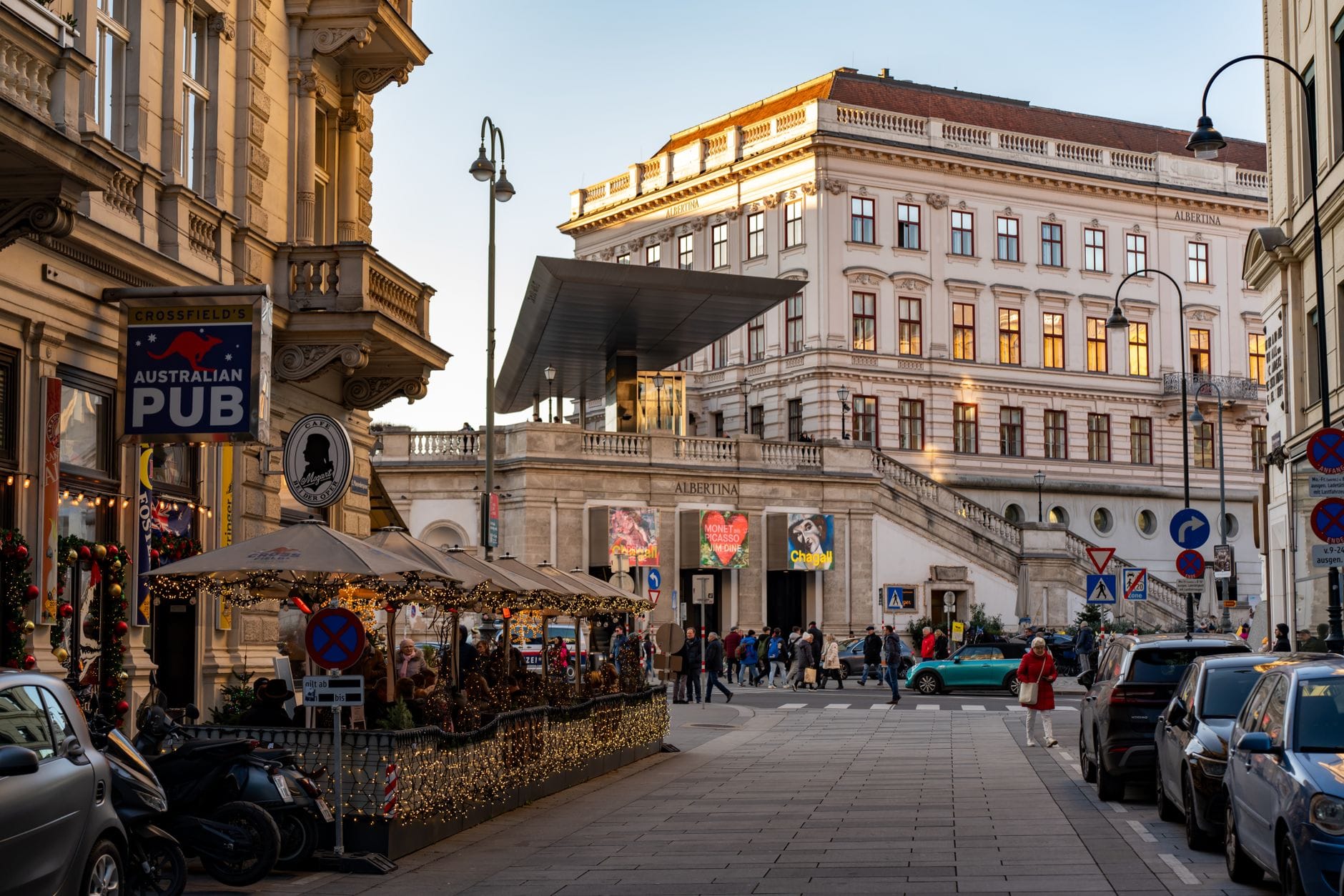
What the Albertina Actually Is
The Albertina Museum is not simply an art gallery. It is a former imperial residential palace, an architectural monument in its own right, and the custodian of one of the largest and most significant graphic art collections on earth. Founded in 1776 by Duke Albert of Saxe-Teschen and his wife Archduchess Marie Christine, the collection grew through aristocratic patronage and imperial acquisition into a holdings of over one million drawings and prints. That number is worth sitting with: one million works on paper, by artists ranging from Dürer and Raphael to Schiele and Klimt.
In practice, only a fraction of that collection is on display at any given time, but what is shown is consistently exceptional. The permanent Batliner Collection covers Impressionism through Picasso, Monet, and into late 20th-century art. Temporary exhibitions, which rotate several times a year, have covered everyone from Michelangelo to contemporary photographers. If you are already visiting Vienna for its art, this is not a stop you can reasonably skip.
ℹ️ Good to know
The Albertina is open until 21:00 on Wednesdays and Fridays — a genuine advantage if you want to avoid the afternoon rush. These evening slots are consistently less crowded than weekend daytimes.
The Building Itself: A Palace Worth Examining
The museum occupies the Palais Erzherzog Albrecht, a late-baroque palace built against the old city fortification bastion, which explains why the building sits noticeably elevated above the surrounding street level. The approach from Albertinaplatz gives you a clear sense of this: you either climb a broad flight of steps or take a glass-and-steel lift addition that signals, without apology, that the 21st century has arrived here too. That contrast between the white neoclassical facade and the modern interventions (including an angular roof terrace canopy by architect Hans Hollein, added during the 2003 renovation) is not universally loved, but it is at least honest about the building's layers.
The Habsburg State Rooms on the first floor are as much a reason to visit as any painting. Nineteen rooms restored to their early 19th-century appearance, with red damask walls, gilded consoles, and painted ceilings, show what the private apartments of an imperial residence actually looked like when someone lived in them. The contrast with, say, the more ceremonial rooms of the Hofburg Palace is instructive: the Albertina's rooms feel domestic in scale, intimate rather than theatrical. They are usually included in the standard ticket.
Tickets & tours
Hand-picked options from our booking partner. Prices are indicative; availability and final rates are confirmed when you complete your booking.
Imperial Vienna 72-hour hop-on hop-off bus
From 55 €Instant confirmationFree cancellationALBERTINA and ALBERTINA modern combo ticket
From 25 €Instant confirmationFree cancellationBig Bus tour of Vienna
From 0 €Instant confirmationSelf-guided tour of Albertina Museum including staterooms
From 31 €Instant confirmation
The Collection: What You Will Actually See
Because the graphic collection is primarily works on paper, light-sensitive and fragile, many of the most famous individual pieces, including Dürer's Young Hare and Praying Hands, are not on permanent public display. They appear only in special exhibitions, and reproductions serve as stand-ins in the permanent presentation. This disappoints some visitors who arrive expecting to stand in front of the originals freely. It is worth knowing in advance, rather than discovering it after you have bought your ticket.
What is reliably on display is the Batliner Collection, a permanent loan of around 500 works tracing the arc from Monet and Degas through the German Expressionists, Picasso, Chagall, and into figures like Francis Bacon and Georg Baselitz. The hanging is generous, with good wall space around each work, and the flow through the rooms is logical. You can read the story of modern European art from roughly 1870 to 2000 in a single sustained walk.
For those specifically interested in the Viennese modernist tradition — Klimt, Schiele, Kokoschka — the Albertina holds significant works, and these often appear in temporary exhibitions or the graphic collection displays. The Klimt and Secession movement is woven through much of what the Albertina holds. If that is your primary interest, it is worth checking the current exhibition calendar before you go, since the most famous individual drawings rotate in and out.
How the Visit Changes by Time of Day
Mornings from opening at 10:00 are reliably calmer, particularly on weekdays. Tour groups tend to arrive between 10:30 and 11:30, filling the State Rooms with commentary in a dozen languages. If you are sensitive to noise, arriving exactly at 10:00 gives you roughly 30 minutes of relative quiet in the Habsburg apartments before the first wave. Weekends between 11:00 and 14:00 are the most crowded periods. The galleries are large enough that crowding rarely becomes genuinely uncomfortable, but the State Rooms in particular feel better with fewer people in them.
The Wednesday and Friday evening openings until 21:00 are worth seeking out. By 17:00 the school groups and tour buses have gone. The permanent collection galleries take on a different quality in the evening, the lighting becoming more gallery-like and less fluorescent-institutional. The rooftop terrace, if you take five minutes to step outside, offers a particular view over the Staatsoper roof and along the Ringstrasse as the city lights come on.
💡 Local tip
The Albertina's rooftop terrace is free to access once you are inside the museum. On a clear evening, the view south toward the Vienna State Opera and along the Ringstrasse is one of the better informal viewpoints in the inner city.
Practical Walkthrough: Getting There and Getting In
The museum sits at Albertinaplatz 1 in the Innere Stadt, Vienna's first district. It is positioned at the junction of several major tram and metro lines, making it one of the easiest major museums in the city to reach without a car. U-Bahn lines U1, U2, and U4 all stop at Karlsplatz, from which the Albertina is a five-minute walk north along the Opera. Trams 1, 2, D, and 62 stop at Oper/Karlsplatz, essentially at the museum's doorstep. If you are coming from Stephansplatz, U3 deposits you about eight minutes on foot to the southwest.
Standard adult admission is €19.90 for the all-inclusive ticket covering both the permanent collection and temporary exhibitions. Under-19s enter free with valid ID, which makes the museum genuinely accessible for families. Reduced rates apply for seniors, students aged 19–26, and visitors with disabilities. The museum is fully barrier-free, with lift access throughout and accessibility information available on request. If you hold a Vienna City Card or are considering the Vienna Pass, the Albertina is included in both, and the arithmetic works out in your favor if you plan to visit three or more major sights.
Opening hours are 10:00–18:00 Monday, Tuesday, Thursday, Saturday, Sunday, and public holidays. Wednesday and Friday extend to 21:00. On 24 December the museum closes at 14:00. Audio guides are available for hire and are worth considering for the graphic collection presentations, where context adds considerably to what you see. The museum shop, located near the exit on the ground floor, stocks a genuinely good selection of art books and print reproductions, better curated than many comparable museum shops in Vienna.
Albertina Modern: The Second Site
Since 2020, the Albertina has operated a second location called Albertina Modern, housed in the Künstlerhaus building at Karlsplatz 5, about a ten-minute walk from the main museum. Albertina Modern focuses on post-1945 art and is open daily 10:00–18:00. It has its own separate admission. If the main Albertina leans toward classical modernism, Albertina Modern tilts toward Abstract Expressionism, Pop Art, and contemporary work. Whether you visit both depends on your interests and available time, but it is worth knowing they exist as distinct experiences.
Who Will Find This Worth Their Time, and Who Might Not
The Albertina rewards visitors with a genuine interest in art history, particularly those curious about European modernism or the Habsburg world. The combination of the State Rooms and the Batliner Collection is genuinely distinctive: very few museums in the world allow you to walk through an intact imperial apartment and then stand in front of a Monet within the same building and the same ticket price. That pairing is unusual and worth experiencing even if you would not normally seek out either type of attraction individually.
Those hoping to see the most famous Dürer works in the open permanent collection may be disappointed without prior research into what is currently on display. If your Vienna itinerary is focused on imperial grandeur rather than art, the Sisi Museum and Imperial Treasury at the Hofburg may better serve that interest. Visitors with very limited time who can only fit one major art museum into their schedule should consider whether their taste runs more toward old masters (in which case the Kunsthistorisches Museum a few minutes away may take priority) or modern art, where the Albertina is harder to beat in Vienna.
Children under 19 enter free, and the State Rooms can hold genuine fascination for curious young visitors, but there is little in the way of interactive programming or child-oriented display. The museum is quieter and more contemplative in character than a natural history or science museum. It suits older children and teenagers with an interest in art far better than very young children.
Insider Tips
- Book tickets online in advance for temporary blockbuster exhibitions, which regularly sell out on weekends. The permanent collection rarely requires prebooking, but popular shows draw serious queues at the door.
- The café on the ground floor is serviceable but overpriced for what it is. The Café Café restaurant in the basement offers better value, and the State Opera area nearby has several good coffee options within a three-minute walk.
- Wednesday and Friday evening visits (open until 21:00) are the single best way to see the museum without crowds. The light in the painting galleries feels more controlled and flattering after the afternoon visitors have cleared out.
- If you are specifically interested in Dürer's Praying Hands or Young Hare, check the current exhibition schedule on the official website before visiting. These works are not in the permanent display and only appear during dedicated graphic collection exhibitions.
- The exterior terrace on the elevated bastion level, accessible from the main entrance plaza, gives a clear sightline toward the Staatsoper and down the Ringstrasse. It costs nothing and takes two minutes. Most visitors walk past it entirely.
Who Is Albertina Museum For?
- Art lovers with a focus on European modernism from Impressionism through mid-20th century
- Habsburg history enthusiasts who want to see intact imperial apartments rather than ceremonial halls
- Travelers visiting on a Wednesday or Friday evening, when the museum stays open late
- Families with teenagers or older children who have an existing interest in art history
- Visitors on a rainy day who need a full afternoon of indoor culture within walking distance of the city center
Nearby Attractions
Other things to see while in Innere Stadt (1st District):
- Austrian National Library (Prunksaal State Hall)
The Prunksaal, or State Hall of the Austrian National Library, is a Baroque masterpiece built for Emperor Charles VI between 1723 and 1726. At roughly 80 metres long and crowned by Daniel Gran's sweeping ceiling frescoes, it is one of the most visually arresting interiors in central Europe, and still holds around 200,000 historic volumes in its carved walnut shelves.
- Burgtheater
The Burgtheater is Austria's national theatre and one of the most significant German-language stages in the world. Its Neo-Renaissance building on Vienna's Ringstraße dates to 1888, and its institutional history stretches back to the court of Empress Maria Theresa. Whether you come for a performance or a guided tour, it rewards attention.
- Café Central
Housed inside the Palais Ferstel in Vienna's historic first district, Café Central has been serving coffee and conversation since 1876. Once the gathering point for Freud, Trotsky, and a constellation of Central European intellectuals, it remains one of the most architecturally remarkable coffeehouses in the world.
- Hofburg Palace
Hofburg Palace is one of the largest palace complexes in Europe, covering 24 hectares in Vienna's historic First District. From the Sisi Museum to the Spanish Riding School, this is where Habsburg power played out for over six centuries, and where the Austrian president still works today.