Hofburg Palace: Vienna's Imperial Heart, Room by Room
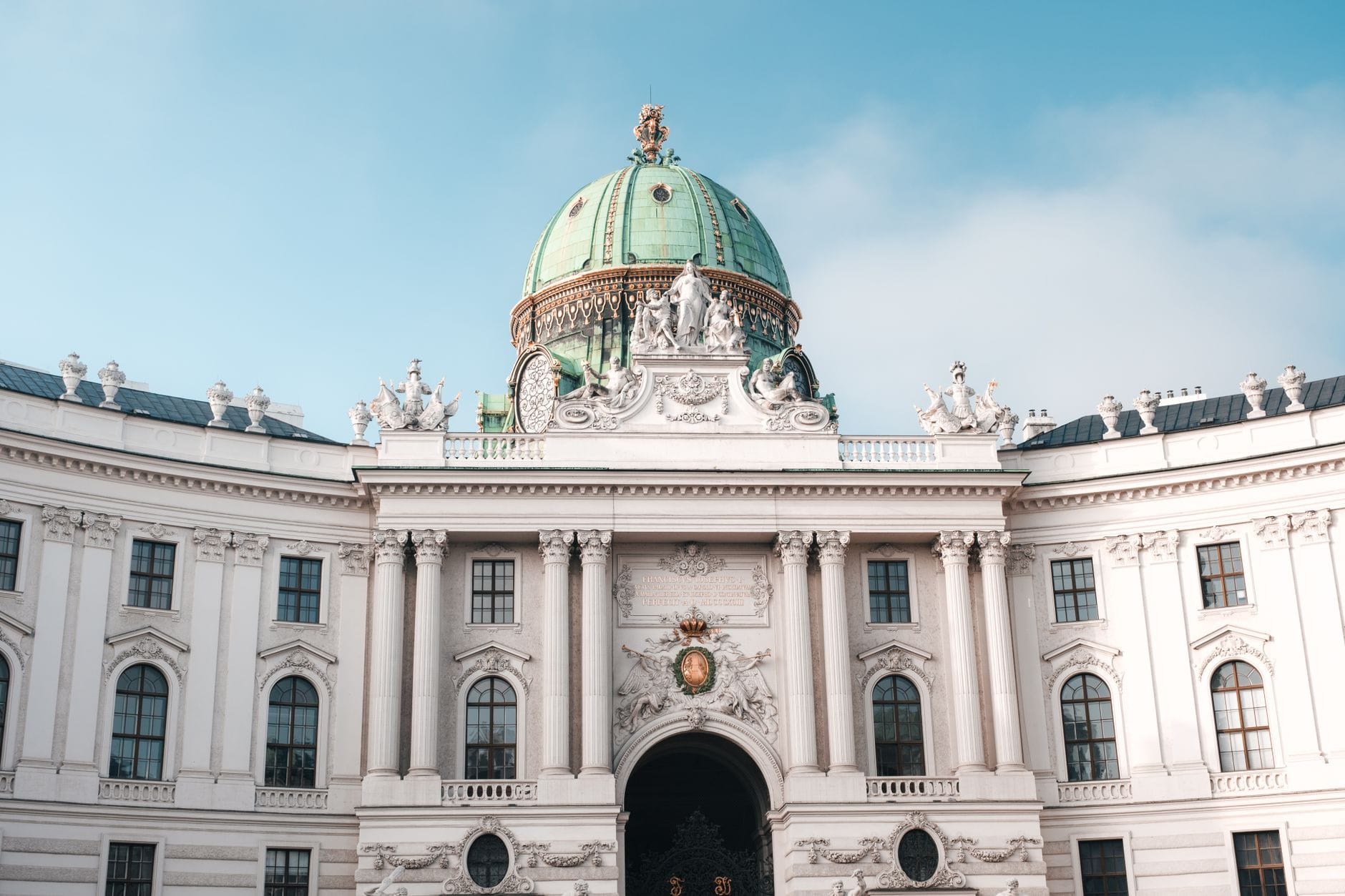
Hofburg Palace is one of the largest palace complexes in Europe, covering 24 hectares in Vienna's historic First District. From the Sisi Museum to the Spanish Riding School, this is where Habsburg power played out for over six centuries, and where the Austrian president still works today.
Quick Facts
- Location
- Hofburg Michaelerkuppel, 1010 Vienna, Austria (1st District, Innere Stadt)
- Getting There
- U3 Herrengasse (metro); Trams 1, 2, D, 71 to Burgring; Buses 1A, 2A to Hofburg
- Time Needed
- 2–5 hours depending on which sections you visit
- Cost
- Combined ticket (Sisi Museum + Imperial Apartments + Silver Collection) charged in EUR; under-19s free. Verify current prices at sisimuseum-hofburg.at
- Best for
- History lovers, architecture enthusiasts, Habsburg fans, and first-time visitors to Vienna
- Official website
- www.sisimuseum-hofburg.at
What the Hofburg Actually Is (And Why It Takes Time to Understand)
Hofburg Palace is not a single building with a single entrance. That is the most important thing to grasp before you arrive. The complex is a city within a city: 18 wings, 19 courtyards, over 2,000 rooms, and roughly 24 hectares of ground spreading across some of Vienna's most central squares, including Heldenplatz, Michaelerplatz, Josefsplatz, and Ballhausplatz. Construction began in the 13th century and never really stopped, with each Habsburg ruler adding, demolishing, or reconfiguring until the dynasty collapsed in 1918. The result is an architectural timeline spanning Gothic, Renaissance, Baroque, and Neoclassical styles, all pressed together without a guiding plan.
Today, the Hofburg functions simultaneously as a museum complex, a presidential residence, a federal administrative center, and a conference venue. The Austrian Federal President has had offices here since 1946. Much of the palace is not accessible to tourists, but the main visitor attractions, particularly the Sisi Museum, the Imperial Apartments, and the Imperial Silver Collection, are open daily and represent the most coherent way to understand what Habsburg court life looked like at its peak.
💡 Local tip
The visitor entrance for the Sisi Museum and Imperial Apartments is through the Michaelerkuppel (the large copper-domed gatehouse on Michaelerplatz). This is not the main ceremonial entrance to the Heldenplatz side. If you walk around the outside of the complex first, it helps you understand the scale before going in.
The Sisi Museum and Imperial Apartments: What You'll Actually See Inside
The combined ticket covers three interlocking attractions. The Imperial Silver Collection comes first as you walk through, displaying the extraordinary tableware, porcelain, and centrepieces used at Habsburg state banquets. A bronze-and-gold centerpiece stretching over 30 meters in its full dining configuration is among the standouts. The level of curatorial detail is high: labels explain which pieces were used for which kind of event, and the collection gives you a clear sense of how theatrical court dining was under Franz Joseph.
The Sisi Museum is dedicated entirely to Empress Elisabeth, known universally as Sisi, who lived from 1837 to 1898. It is a thoughtful exhibition that avoids simple romanticism. The displays address her obsession with her figure, her strained relationship with court protocol, her athletic training routines, and her assassination in Geneva. Personal objects, including her gymnastic rings, her travel pharmacy, and the black fan she began carrying after her hair began to thin, make her feel genuinely present rather than legendary. For visitors who arrive expecting the Hollywood version of Sisi, the museum is a corrective as much as a celebration.
The Imperial Apartments that follow are the actual rooms where Franz Joseph and Elisabeth lived and worked. Franz Joseph's apartments are spartan by palace standards: a simple iron camp bed, a basic washstand, and a desk covered in paperwork. He reportedly rose at 3:30 AM and worked until late. His modesty in private life, contrasted with the baroque splendor of the state rooms, is one of the more striking things about the Hofburg up close. Elisabeth's apartments, by contrast, were modified repeatedly to accommodate her exercise equipment and her need to escape court obligations.
ℹ️ Good to know
Opening hours for the Sisi Museum and Imperial Apartments are generally 09:00 to 17:30 daily, with last admission one hour before closing, but hours can vary seasonally. Verify current times at sisimuseum-hofburg.at before your visit.
Tickets & tours
Hand-picked options from our booking partner. Prices are indicative; availability and final rates are confirmed when you complete your booking.
Skip-the-line Sisi Museum, Imperial Apartments and Hofburg tour
From 52 €Instant confirmationFree cancellationSkip-the-Line Sisi Museum, Hofburg and Gardens Tour Vienna in French
From 52 €Instant confirmationFree cancellationVienna private city center and hills tour with a van
From 108 €Free cancellationPrivate panoramic tour of Vienna in a vintage electric vehicle
From 140 €Instant confirmationFree cancellation
Architecture and History: Six Centuries in One Complex
The Hofburg's oldest documented reference dates to around 1278, when Rudolph I of the House of Habsburg used it as a base after defeating the Bohemian king Ottokar II. The Babenbergs had a fortification here before that. Over the following six centuries, each major ruler left a physical mark. The Schweizerhof (Swiss Court), the oldest surviving courtyard, dates to the 16th century. The Baroque Leopoldine Wing added by Emperor Leopold I in the 17th century now houses the Federal President's offices. The Neue Burg, the massive neoclassical wing curving along Heldenplatz, was completed only in 1913, just five years before the Habsburg Empire ended.
The Michaelerplatz entrance, built between 1889 and 1893 under Franz Joseph, is the most dramatic approach. The copper dome sits above arched passageways flanked by large sculptural groups representing Austria's sea power and land power. Standing in Michaelerplatz and looking back from the dome entrance, you can also see the Adolf Loos House directly across the square, built in 1911 with its famously ornament-free facade. Franz Joseph reportedly refused to look out any window that faced it. That architectural confrontation, imperial grandeur versus modernist austerity, compressed into a single city square, is one of Vienna's more telling juxtapositions.
The Hofburg's role within the broader story of Habsburg imperial ambition is covered in depth in the Habsburg imperial history guide, which places the palace within the wider narrative of the dynasty's rise and collapse.
The Spanish Riding School and Other Hofburg Institutions
The Spanish Riding School operates from within the Winter Riding Hall, a Baroque hall built between 1729 and 1735 to designs by Joseph Emanuel Fischer von Erlach. Performances featuring the Lipizzaner stallions take place on a regular schedule, though the horses travel and training schedules can affect availability. Tickets for full performances should be booked well in advance, particularly between April and June and in September. Morning training sessions are also open to visitors and offer a less expensive way to watch the horses work without the ceremonial formality of a full performance.
The Spanish Riding School is technically a separate ticketed attraction within the Hofburg complex and is not included in the Sisi Museum combined ticket. Plan it as a separate visit or as an add-on to a longer Hofburg day.
How the Experience Changes by Time of Day
Michaelerplatz fills with tour groups by 10:00 AM, and the entrance queue for the Sisi Museum can extend visibly by mid-morning in high season. Arriving at opening time, 09:00, makes a practical difference: the first hour in the Imperial Apartments has a quieter quality, and it is easier to spend time with individual cases in the Silver Collection without having to navigate around groups. By early afternoon, particularly in summer, the courtyards are at their most crowded and the ticket hall can feel pressured.
Late afternoon is a reasonable compromise if you cannot arrive at opening. After 15:30, group tours tend to thin out and the light through the Schweizerhof becomes warmer and more photogenic. The outside of the Hofburg, especially Heldenplatz and the view toward the Neue Burg, works well in the early morning, when the equestrian statues of Archduke Charles and Prince Eugene of Savoy stand against an almost empty plaza. The exterior is free to walk at any hour and genuinely worth the time even for visitors who do not buy tickets.
⚠️ What to skip
In July and August, the combined ticket queues can be significant even online. Book tickets in advance through the official site to avoid losing the first 30 to 45 minutes of your visit standing in line. The Vienna City Card and Vienna PASS both include entry, so check whether you already have access before buying separately.
Navigating the Area Around the Hofburg
The Hofburg sits at the center of the Innere Stadt, Vienna's historic First District, and the surrounding streets are dense with worthwhile stops. Josefsplatz, directly accessible from the Augustinerkeller passage, leads to the Austrian National Library. The Prunksaal reading room inside is one of the most ornate Baroque interiors in Europe and is often overlooked by visitors focused entirely on the palace.
The Austrian National Library's Prunksaal is one of the great architectural interiors of Central Europe and takes less than an hour to visit. It shares the Josefsplatz square with the Hofburg and makes a natural pairing.
The Hofburg is also the starting point for the Ringstrasse, the grand boulevard commissioned by Franz Joseph in 1857 to reshape Vienna's outer ring. Walking south from Heldenplatz brings you past the Kunsthistorisches Museum and the Naturhistorisches Museum within ten minutes on foot.
For a broader walk through the Innere Stadt that connects the Hofburg with St. Stephen's Cathedral, the Graben, and the Judenplatz, the Innere Stadt walking tour guide maps a logical sequence that avoids backtracking.
Accessibility and Practical Details
The Hofburg's visitor areas have barrier-free access provisions, though the historic nature of the building means that some courtyards have uneven stone paving that can be difficult for wheelchairs and mobility aids. The Sisi Museum and Imperial Apartments are more consistently accessible, with lifts available in the main visitor wing. Visitors with specific access requirements are advised to check the individual museum pages on the official Hofburg website before visiting, as conditions vary by wing.
Photography is permitted in most areas of the Sisi Museum and Imperial Apartments without flash. Tripods are generally not allowed inside. Audio guides in multiple languages are included in the combined ticket price, and the English version is detailed enough to make the visit self-guided without needing a tour group. The complex has cloakrooms and toilets within the visitor entrance area, which matters on a longer visit.
Insider Tips
- Walk through Michaelerplatz at night after the museums close. The dome is lit from below, the square is quiet, and you get a sense of how theatrical the Habsburg self-presentation was designed to look, even in the dark.
- The Schweizerhof (Swiss Court), accessible through the Swiss Gate on Rennweg side, is one of the oldest parts of the complex and is often overlooked because visitors head directly to the Michaelerkuppel entrance. The 16th-century Swiss Gate is worth a slow look.
- If you are visiting with children, the Imperial Silver Collection tends to hold attention better than the Imperial Apartments. The sheer scale of the tableware and centerpieces reads as spectacular rather than academic, and there is enough visual variety to keep younger visitors engaged.
- The Hofburg's outer courtyards, including Heldenplatz and the passage through Michaelertor, are public and free to walk through at any hour. A 20-minute walk through the exterior without buying a ticket still gives you a meaningful sense of the complex's scale and history.
- Combine the Hofburg visit with the Imperial Treasury (Schatzkammer), which is housed within the Schweizerhof and holds the Habsburg crown jewels and the Burgundian treasure. It is a separate ticket but one of the most significant collections in Europe and rarely as crowded as the Sisi Museum.
Who Is Hofburg Palace For?
- First-time visitors to Vienna wanting the single most concentrated dose of Habsburg history
- Architecture enthusiasts interested in how different European styles accumulated across 700 years on one site
- Travelers with an interest in Empress Elisabeth beyond the film mythology
- Visitors planning a full day in the Innere Stadt who want a central anchor point around which to organize other stops
- Families with older children (roughly 10 and up) who can engage with the historical context of the Imperial Apartments
Nearby Attractions
Other things to see while in Innere Stadt (1st District):
- Albertina Museum
Housed in a former Habsburg palace at the edge of the Ringstrasse, the Albertina holds one of the largest and finest graphic art collections in the world. With over one million drawings and prints alongside rotating exhibitions of modern masters, it rewards both the casual visitor and the serious art traveler.
- Austrian National Library (Prunksaal State Hall)
The Prunksaal, or State Hall of the Austrian National Library, is a Baroque masterpiece built for Emperor Charles VI between 1723 and 1726. At roughly 80 metres long and crowned by Daniel Gran's sweeping ceiling frescoes, it is one of the most visually arresting interiors in central Europe, and still holds around 200,000 historic volumes in its carved walnut shelves.
- Burgtheater
The Burgtheater is Austria's national theatre and one of the most significant German-language stages in the world. Its Neo-Renaissance building on Vienna's Ringstraße dates to 1888, and its institutional history stretches back to the court of Empress Maria Theresa. Whether you come for a performance or a guided tour, it rewards attention.
- Café Central
Housed inside the Palais Ferstel in Vienna's historic first district, Café Central has been serving coffee and conversation since 1876. Once the gathering point for Freud, Trotsky, and a constellation of Central European intellectuals, it remains one of the most architecturally remarkable coffeehouses in the world.