Naturhistorisches Museum Wien: Vienna's Grand Natural History Museum
One of Europe's great natural history museums, the Naturhistorisches Museum Wien occupies a monumental neo-Renaissance building on Maria-Theresien-Platz. With 30 million objects spanning dinosaur skeletons, meteorites, and the 25,000-year-old Venus of Willendorf, it rewards far longer than the average museum visit.
Quick Facts
- Location
- Maria-Theresien-Platz, 1010 Vienna (Innere Stadt)
- Getting There
- U2/U3 Volkstheater; trams 1, 2, D along the Ringstraße
- Time Needed
- 2.5 to 4 hours; a full day for serious visitors
- Cost
- Adults €18, reduced €14, under-19s free; annual pass €44
- Best for
- Science and history lovers, families, architecture admirers, rainy-day escapes
- Official website
- www.nhm.at
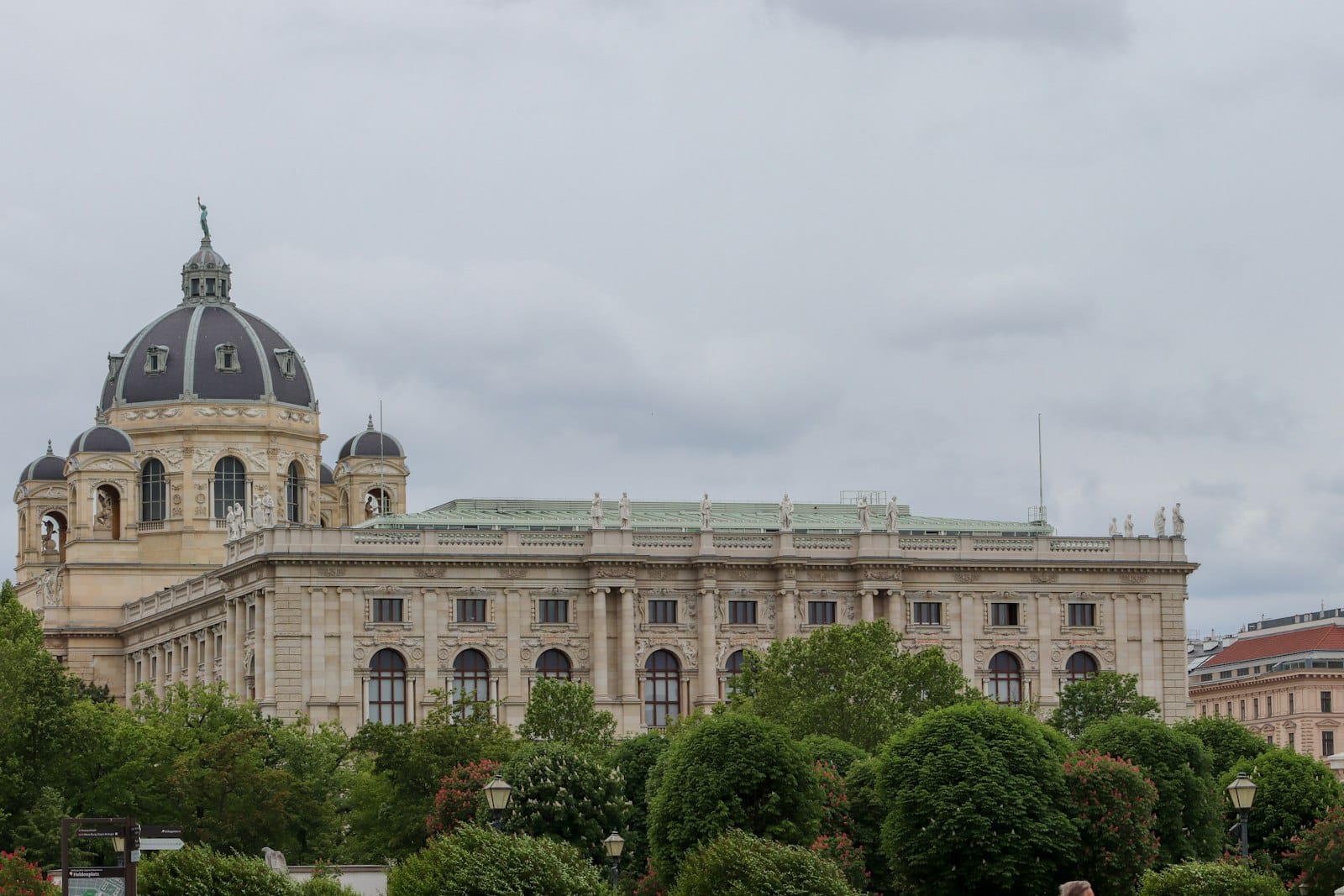
What the Naturhistorisches Museum Wien Actually Is
The Naturhistorisches Museum Wien, known in English as the Natural History Museum Vienna, is one of the largest and oldest natural history institutions in the world. Its collections number around 30 million objects, built up over more than 250 years, covering mineralogy, meteorites, dinosaur paleontology, human evolution, and zoology. This is not a regional curiosity cabinet. It is a scientific institution of genuine global importance.
The building itself is part of the story. Constructed between 1871 and 1889 as part of Emperor Franz Joseph's grand Kaiserforum project, the neo-Renaissance structure sits directly opposite the Kunsthistorisches Museum across Maria-Theresien-Platz, the two buildings nearly mirror images of each other. The symmetry is deliberate: both were conceived as temples of imperial knowledge, designed to project Habsburg cultural and scientific authority to the world.
The museum opened in 1889 and has occupied this building ever since. It sits squarely within the Innere Stadt, Vienna's first district and historic core, just steps from the Ringstraße boulevard. Visitors coming from the direction of the Kunsthistorisches Museum will find the two institutions face each other across a formal plaza anchored by the Maria Theresa monument.
The Building: Before You Even Go Inside
Arriving at Maria-Theresien-Platz on a clear morning, the facade stops you before you reach the entrance. The building is monumental in the precise sense: it was designed to make you feel the weight of natural and imperial history simultaneously. The ochre stone exterior is detailed with sculptural friezes referencing science and exploration, and the central dome is topped with a figure of Helios, the sun god, an apt symbol for a museum dedicated to illuminating the natural world.
The entrance hall inside continues the spectacle. High vaulted ceilings are painted with allegorical frescoes, marble columns line the stairwells, and the spatial grandeur alone justifies a few minutes of simply standing still and looking up. The architecture is a genuine part of the experience, not just a container for the exhibits.
💡 Local tip
Photography tip: The entrance hall and grand staircase offer some of the best interior architectural shots in Vienna. Come early on weekday mornings when tour groups are minimal and natural light from the dome overhead is at its softest.
Tickets & tours
Hand-picked options from our booking partner. Prices are indicative; availability and final rates are confirmed when you complete your booking.
Imperial Vienna 72-hour hop-on hop-off bus
From 55 €Instant confirmationFree cancellationSkip-the-Line Entrance with Guide to Schonbrunn Palace and Gardens
From 45 €Instant confirmationFree cancellationLuggage Storage in Vienna
From 6 €Instant confirmationFree cancellationStrauss Dinner Show
From 99 €Instant confirmationFree cancellation
The Collections: What to Actually See
The museum is organized across two floors and 39 exhibition rooms. The ground floor focuses primarily on geology, mineralogy, and meteorites. The meteorite collection is one of the finest in the world and deserves unhurried attention: cases of iron meteorites, chondrites, and lunar samples sit alongside some of the oldest solid material humans have ever found. The Ahnighito meteorite fragment and the famous Tissint Mars meteorite are among the scientific highlights.
The upper floor escalates into paleontology and biological evolution. The dinosaur hall is the most reliably crowd-pleasing room: full skeletal mounts of Diplodocus and other large theropods occupy the central space, and children often press against the barriers with a focused attention they rarely give anything else. But the single most significant object in the entire building is smaller and far older: the Venus of Willendorf, a limestone figurine dating to approximately 25,000 BCE, displayed in a case in the prehistory galleries. At just 11 centimeters tall, it commands the room.
The zoological collections on the upper floor are vast and somewhat underappreciated. Rooms dedicated to insects, marine invertebrates, and deep-sea specimens reveal scientific depth that most visitors walk past quickly. If you have more than three hours, these quieter galleries reward slower attention.
ℹ️ Good to know
Under-19s enter free at all times, which makes this one of Vienna's most practical family destinations. No pre-booking is required for general admission.
How the Experience Changes by Time of Day
Weekday mornings before 11:00 are the most comfortable window for visiting. The entrance hall is calm, school groups have not yet arrived in force, and you can spend real time with the mineralogy rooms and meteorite hall without the press of bodies that accumulates by early afternoon. The lighting in these rooms is carefully calibrated for display, but the upper floor gallery windows allow some natural light in the morning that changes the feel of the paleontology halls noticeably.
Wednesday evenings are worth highlighting specifically. The museum stays open until 20:00 on Wednesdays, and by 17:00 onward, the crowds thin substantially. The entrance hall feels different at dusk, with artificial lighting bringing out the warmth of the marble and fresco colors in a way daylight does not. If your schedule allows, a Wednesday late visit to the Venus of Willendorf gallery can feel almost private by 18:30.
Weekend afternoons are the most crowded, particularly the dinosaur and prehistory halls. The museum is large enough that the zoological and geological rooms remain relatively calm, but if you are visiting on a Saturday or Sunday, either arrive at opening (09:00) or accept that the popular galleries will require patience.
⚠️ What to skip
The museum is closed every Tuesday. This is a firm weekly closure, not seasonal. Always check the official website for public holiday exceptions before planning around a Tuesday visit.
Practical Visit Information
Opening hours are Thursday through Monday from 09:00 to 18:00, with Wednesday extended to 20:00. Last entry is 30 minutes before closing. Tickets cost €18 for adults and €14 for reduced admission (students, groups, visitors with disabilities and their registered companion, who enters free with valid documentation). Anyone under 19 enters at no charge.
The museum is accessed from Maria-Theresien-Platz, 1010 Vienna, though the formal postal address is Burgring 7. The nearest U-Bahn stop is Volkstheater on lines U2 and U3, a short walk away. Trams 1, 2, and D run along the Ringstraße and stop very close to the entrance. Bus 48A also serves the Volkstheater area. The location is walkable from a wide range of central districts.
Visitors planning a broader day of museum-going should note that the Kunsthistorisches Museum is literally across the plaza. The MuseumsQuartier complex, containing the Leopold Museum and MUMOK, is a five-minute walk behind the Naturhistorisches Museum. A single day can reasonably combine two of these, though three would be exhausting.
Wear comfortable shoes: the building has a lot of stone floors and the full circuit of 39 rooms covers significant distance. There is a cafe on the ground floor for breaks. The museum shop near the exit stocks scientific books, mineral specimens, and replica casts of the Venus of Willendorf, which are among the better museum-shop purchases in Vienna.
Honest Assessment: Who This Suits and Who Might Struggle
For anyone with a genuine interest in natural science, paleontology, geology, or prehistoric human cultures, the Naturhistorisches Museum Wien is among the most rewarding half-days in Vienna. The collections have real scientific depth, the building is extraordinary, and the Venus of Willendorf alone justifies the entrance fee. Visitors following Vienna's museum circuit will find this a serious counterpoint to the art-focused institutions nearby.
Visitors who find natural history museums dry, or who are primarily interested in art, opera, or imperial history, may feel this is not the best use of limited time in Vienna. The museum does not cross over much into human cultural history beyond the prehistoric period. If your Vienna priorities are palaces, concert halls, and coffeehouses, this may sit lower on the list.
Families with children from about age 5 upward tend to respond well, especially in the dinosaur and mineralogy rooms. The free under-19 admission removes the sting of a speculative visit. For families building a wider day out, the Vienna with kids guide covers how to structure the surrounding area into a full afternoon.
Accessibility: the museum provides a disability ticket discount and free entry for a registered companion. The building was constructed in the 19th century and has been adapted over time; visitors with specific mobility requirements should check the accessibility section of the official website before arrival for current lift and ramp information.
The Wider Context: Ringstraße Architecture and the Kaiserforum
Standing between the two mirror-image museum buildings on Maria-Theresien-Platz, it is worth pausing on what this urban arrangement was designed to communicate. The Kaiserforum project envisioned the Naturhistorisches Museum and the Kunsthistorisches Museum as twin institutions flanking a grand ceremonial forecourt to the Hofburg. The full project was never completed as originally planned, but what remains is still one of the most coherent examples of 19th-century imperial urban design in Europe. The Ringstraße boulevard of which this ensemble is part was built at extraordinary speed between the 1860s and 1900s, and represents Vienna's deliberate reinvention of itself as a modern imperial capital.
Visitors interested in the architectural and political ambitions behind this district will find more context in the Vienna architecture guide. The building's neo-Renaissance style, designed by architects Gottfried Semper and Karl von Hasenauer, places it squarely in the tradition of grand 19th-century cultural institutions, a style shared with institutions like the Kunsthistorisches Museum and the Burgtheater further along the Ring.
Insider Tips
- Wednesday evenings after 17:00 are the least crowded time to visit. The late opening is underused by tourists, and the emptier galleries feel completely different from weekend afternoons.
- The meteorite collection on the ground floor is one of the finest in the world and is consistently overlooked by visitors rushing upstairs to see the dinosaurs. Budget at least 20 minutes here.
- The Venus of Willendorf display room is small and can feel cramped when tour groups pass through. Arrive when a group is leaving rather than arriving for a less pressured look.
- The museum shop sells actual mineral and crystal specimens at reasonable prices, along with quality scientific books in German and English. It is worth 10 minutes after your visit.
- If you are visiting on a budget, the under-19 free admission applies to anyone born within the last 19 years, no student card required, just age verification if asked.
Who Is Naturhistorisches Museum (Natural History Museum) For?
- Natural science and paleontology enthusiasts who want genuine scientific depth
- Families with children aged 5 and up, particularly those interested in dinosaurs and minerals
- Architecture lovers interested in Ringstraße neo-Renaissance design and imperial urban planning
- Travelers visiting on a rainy day who need several quality hours indoors
- Anyone with a specific interest in prehistoric human cultures and the Venus of Willendorf
Nearby Attractions
Other things to see while in Innere Stadt (1st District):
- Albertina Museum
Housed in a former Habsburg palace at the edge of the Ringstrasse, the Albertina holds one of the largest and finest graphic art collections in the world. With over one million drawings and prints alongside rotating exhibitions of modern masters, it rewards both the casual visitor and the serious art traveler.
- Austrian National Library (Prunksaal State Hall)
The Prunksaal, or State Hall of the Austrian National Library, is a Baroque masterpiece built for Emperor Charles VI between 1723 and 1726. At roughly 80 metres long and crowned by Daniel Gran's sweeping ceiling frescoes, it is one of the most visually arresting interiors in central Europe, and still holds around 200,000 historic volumes in its carved walnut shelves.
- Burgtheater
The Burgtheater is Austria's national theatre and one of the most significant German-language stages in the world. Its Neo-Renaissance building on Vienna's Ringstraße dates to 1888, and its institutional history stretches back to the court of Empress Maria Theresa. Whether you come for a performance or a guided tour, it rewards attention.
- Café Central
Housed inside the Palais Ferstel in Vienna's historic first district, Café Central has been serving coffee and conversation since 1876. Once the gathering point for Freud, Trotsky, and a constellation of Central European intellectuals, it remains one of the most architecturally remarkable coffeehouses in the world.