Augarten Vienna: The City's Oldest Baroque Park
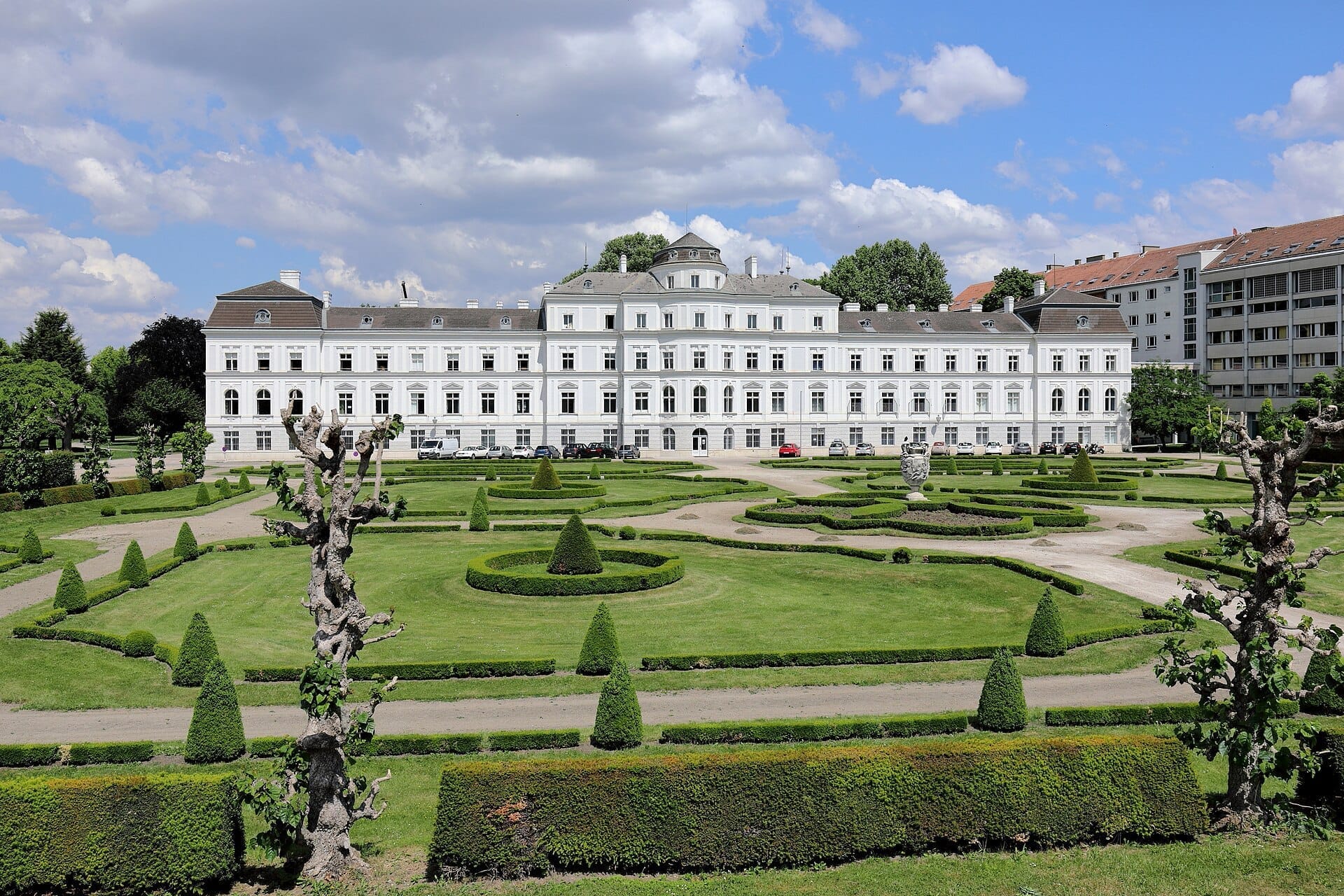
Augarten is Vienna's oldest Baroque park, a 52.2-hectare public green space in Leopoldstadt that has been open to the public since 1775. Alongside formal allées and open lawns, it houses the Vienna Porcelain Manufactory, a contemporary arts center, and two hulking World War II flak towers that make this one of the most historically layered parks in any European capital.
Quick Facts
- Location
- Obere Augartenstraße 1, 1020 Vienna (Leopoldstadt, 2nd District)
- Getting There
- U2 Taborstraße, Tram 31, Bus 5A/5B
- Time Needed
- 1–3 hours depending on interests
- Cost
- Park: free. Porcelain Manufactory tour: €21 (€19 with Vienna City Card)
- Best for
- Morning walkers, history enthusiasts, design lovers, families with space to run
- Official website
- www.bundesgaerten.at/augarten.html
What Augarten Actually Is
Augarten is not a manicured showpiece. It is a working park, in the truest sense: locals bring dogs, children kick footballs, and joggers loop the long central allées at dawn. At 52.2 hectares, it is one of Vienna's largest inner-city green spaces, and it carries more history per square metre than almost any park in the country.
The grounds were laid out in the French Baroque style, with straight tree-lined paths radiating from central axes. Emperor Joseph II opened them to the public in 1775, making this the oldest Baroque park in Vienna accessible to ordinary citizens — a significant gesture in an era when imperial spaces were tightly controlled. That public spirit persists today. There are no fences, no admission booths, no velvet ropes.
The park sits within the Leopoldstadt district, just north of the Danube Canal and easily walkable from the city center. It is the kind of place Viennese residents use without making a trip of it — and that is precisely what makes it interesting to visit.
ℹ️ Good to know
The park has seasonal opening hours. Wien.info lists hours as 10:00–17:00, with the park closed on Sundays and public holidays. Verify current times before visiting, as hours may change by season.
The Two Flak Towers: The Sight Nobody Talks About
Walk far enough into the park and you will see them: two massive concrete towers, each around 55 metres tall, rising above the tree canopy. These are G-Tower (the combat tower) and L-Tower (the lead tower) from Vienna's World War II anti-aircraft defense network, built between 1944 and 1945 under Nazi occupation. They are among six such structures still standing in Vienna, and the Augarten pair is perhaps the most striking because of the contrast: Baroque symmetry below, brutal wartime engineering above.
The towers cannot be entered by the public. They have resisted all demolition attempts because the cost and structural complexity of removal have proved prohibitive. Their presence in a public park is not a commemoration — it is simply an unresolved fact of history. Standing beneath one of them and looking up at the rough, unadorned concrete is a different kind of historical experience than any museum offers.
Visitors interested in Vienna's wartime history will find the towers useful context alongside other sites. The Vienna World War history guide covers the broader picture.
Tickets & tours
Hand-picked options from our booking partner. Prices are indicative; availability and final rates are confirmed when you complete your booking.
Imperial Vienna 72-hour hop-on hop-off bus
From 55 €Instant confirmationFree cancellationSkip-the-Line Entrance with Guide to Schonbrunn Palace and Gardens
From 45 €Instant confirmationFree cancellationLuggage Storage in Vienna
From 6 €Instant confirmationFree cancellationStrauss Dinner Show
From 99 €Instant confirmationFree cancellation
How the Park Changes Through the Day
Early morning is when Augarten belongs to the neighbourhood. Between 7:00 and 9:00, the long straight paths fill with joggers, cyclists, and dog walkers. The light through the chestnut and linden trees is flat and green, the air carries the smell of damp grass, and the park is almost entirely quiet. If you want to understand why Viennese residents are attached to this place, this is the hour to see it.
By late morning, particularly on weekdays, the park opens up to a broader mix: families with young children use the open lawns, the occasional school group passes through, and visitors begin to appear near the manufactory entrance. In summer, the grassy areas become informal picnic spots from early afternoon onward. Weekends bring noticeably more people, though the park is large enough that it rarely feels overcrowded.
Late afternoon in autumn, when the chestnut leaves turn and fall across the gravel paths, is probably the most photogenic time to visit. The formal allées read beautifully at that hour and in that season. In winter, the park is atmospheric but sparse — cold, quiet, and worth a short walk if you are already in the area, but not worth a dedicated trip.
💡 Local tip
The long central allée running the length of the park is ideal for photography early or late in the day when the light angles through the trees. Bring a wide lens if you have one — the avenue is long and symmetrical.
The Vienna Porcelain Manufactory
On the northern edge of the park sits the Augarten Porcelain Manufactory, founded in 1718 and one of the oldest porcelain manufacturers in Europe. The manufactory is still operational, producing hand-painted pieces in the Vienna tradition. A guided tour (€21, or €19 with the Vienna City Card) takes visitors through the production workshops where craftspeople can be observed painting and finishing pieces by hand.
The tour is genuinely worth the admission if you have an interest in craft, design history, or the Habsburg decorative arts tradition. The scale is small, the access is close, and the guides tend to be knowledgeable about both the techniques and the history. It is not a performative experience — this is an active workshop, and the work happening around you is real.
The on-site shop sells current production pieces. Prices reflect the hand-made quality and are not low — but the pieces are authentic and traceable to the workshop you will have just walked through. If you are interested in Viennese design more broadly, this pairs well with a visit to the Museum of Applied Arts.
The Museum of Applied Arts (MAK) is a 20-minute tram ride south and covers decorative arts across a much wider historical span — a natural companion visit.
Contemporary Arts: Augarten Contemporary
The park also houses Augarten Contemporary, a satellite exhibition space of the Belvedere museum group. It occupies a Baroque orangery building and presents rotating contemporary art exhibitions. The programming tends to be smaller in scale than the main Belvedere venues, and the setting — a formal garden building repurposed for modern work — creates an unusual visual tension that the curators often lean into.
Opening hours and current exhibitions should be checked directly with the Belvedere, as programming is seasonal and the space is not always open. Do not travel specifically for this without confirming in advance.
If you are building an art-focused day, the Upper Belvedere and its main collection is the more reliable anchor, with Augarten Contemporary as an add-on if timing works.
Getting There and Practical Notes
The most straightforward route is the U2 to Taborstraße, from where the park entrance on Obere Augartenstraße is a 10-minute walk north. Tram 31 also stops nearby, and bus lines 5A and 5B serve the area. From the city center (1st district), it is also a reasonable walk across the Danube Canal — roughly 20 minutes on foot from Schwedenplatz.
The park paths are flat and predominantly gravel-surfaced, making them manageable for pushchairs and most mobility aids. The Baroque allées are wide and even. The manufactory tour may involve steps — check with them directly if step-free access is required.
There are no large cafes or restaurants inside the park itself. In warmer months, a small kiosk sometimes operates near the main entrance. For a proper post-visit coffee, the nearest options are along Taborstraße or back toward the Danube Canal. Vienna's coffeehouse culture is best experienced slightly further into the city.
⚠️ What to skip
The park is listed as closed on Sundays and public holidays. Verify current opening hours via wien.info or bundesgaerten.at before visiting, especially if planning around the manufactory tour, which operates on its own schedule.
Who Should Think Twice
If you are on a short trip to Vienna focused on the grand imperial sights, Augarten is probably not where your time is best spent. The Schönbrunn palace gardens and the Belvedere grounds are more visually spectacular and carry more visitor infrastructure. Augarten rewards curiosity and a slower pace — it is not a highlight in the conventional sense.
Visitors expecting manicured formal beds and color displays will also be somewhat disappointed. The park is more naturalistic in feel than its Baroque origins might suggest, and the dominant palette is green on green. This is a place that earns its appeal through atmosphere, history, and the particular pleasure of being somewhere that has not been arranged for tourism.
Insider Tips
- Enter from the Obere Augartenstraße gate for the longest and most impressive Baroque allée view — the full length of the park opens in front of you immediately.
- The flak towers are most visible in winter and early spring, before the tree canopy fills in. In summer, you have to walk right up to them to grasp the full scale.
- Book the porcelain manufactory tour in advance, especially in summer and around public holidays. Walk-in availability is not guaranteed.
- The park is used by the Vienna Boys' Choir for rehearsals — their home, the Palais Augarten, is on the park grounds, though it is not open for public tours.
- Bring your own food and drink if you plan to spend time in the park. The internal kiosk is seasonal and unreliable. The long allées make for an excellent picnic setting on a dry day.
Who Is Augarten For?
- Travelers who want to see how Vienna residents actually use their city, outside the tourist circuit
- History enthusiasts interested in World War II infrastructure and layered urban history
- Design and craft lovers who want to see the Vienna porcelain tradition in its original workshop setting
- Families looking for open, unstructured outdoor space without admission fees
- Photographers who want symmetrical Baroque compositions without the crowds of Schönbrunn
Nearby Attractions
Other things to see while in Leopoldstadt (2nd District):
- Prater
The Wiener Prater is one of Europe's great urban parks: 6 square kilometres of chestnut-lined avenues, meadows, and a working amusement park that has been entertaining Viennese since the 18th century. Entry to the park is free, the Riesenrad is unmistakable on the skyline, and the Hauptallee is one of the finest walking and cycling corridors in any capital city.
- Wiener Riesenrad (Giant Ferris Wheel)
Standing 64.75 metres above the Prater since 1897, the Wiener Riesenrad is one of Europe's oldest surviving ferris wheels and one of Vienna's most recognisable landmarks. This guide covers what the experience actually feels like, the best times to ride, how to get there, and whether it lives up to the price.