Volksoper Vienna: The People's Opera House Worth Your Evening
The Volksoper Wien is Vienna's most accessible opera house, staging opera, operetta, dance, and musical theatre in a historic building in the 9th district. Less formal than the State Opera, it offers serious artistic quality at a broader range of price points, making it one of the most rewarding evening experiences in the city.
Quick Facts
- Location
- Währinger Straße 78, 1090 Vienna (Alsergrund, 9th District)
- Getting There
- U6 line, trams 40/41/42, bus 40A — all stop at Währinger Straße / Volksoper
- Time Needed
- 2.5 to 3.5 hours per performance; arrive 30–45 min early
- Cost
- Ticket prices vary by production and seating; check volksoper.at for current listings
- Best for
- First-time opera-goers, operetta fans, lovers of musical theatre, anyone wanting a genuine Viennese cultural evening without extreme formality
- Official website
- www.volksoper.at
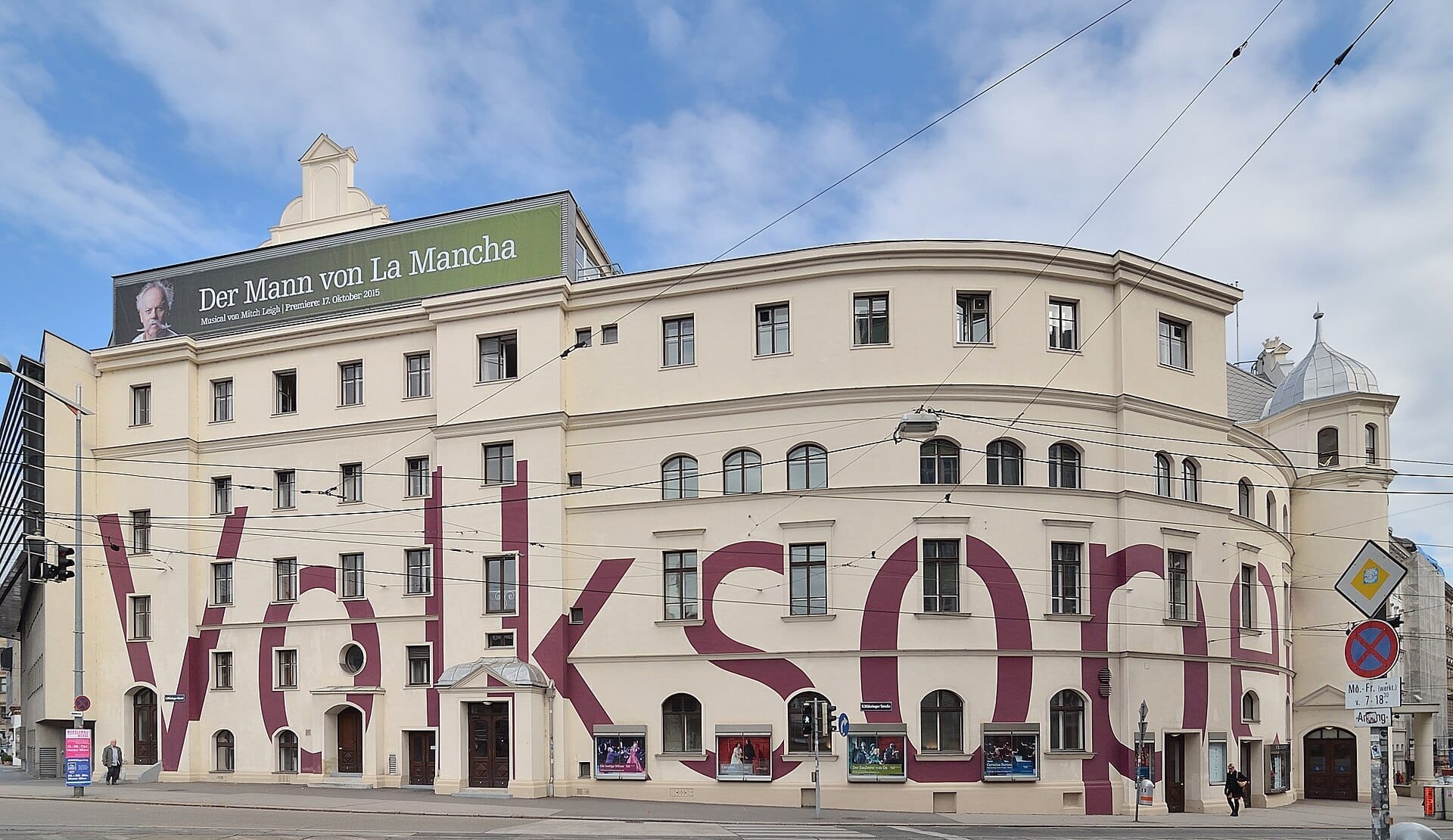
What the Volksoper Actually Is
The Volksoper Wien, officially Vienna's People's Opera, sits at Währinger Straße 78 in the 9th district of Alsergrund. It opened in 1898 and has spent more than 125 years offering musical entertainment to Viennese audiences who may not have been drawn to the grander, more ceremonial atmosphere of the Vienna State Opera. It is the youngest of Vienna's three major opera houses, and that youth shows in its programming philosophy: broader, more varied, and noticeably warmer in tone.
The repertoire spans opera, operetta, dance productions, and full-scale musical theatre. On any given week during the September-to-June season, you might find a Lehár operetta running alongside a Verdi opera and a classic Broadway-style musical. This is not a compromise or a lesser institution. The Volksoper has its own permanent ensemble of singers, a full orchestra, and a production standard that regularly draws critical attention from across Europe.
For visitors, the practical upshot is this: if you want one evening of live performing arts in Vienna and you're uncertain whether the full-dress atmosphere of the State Opera suits you, the Volksoper is the smarter first choice. You'll get comparable musical quality, a more relaxed dress code, and generally a wider selection of seats at accessible prices.
The Building: What to Expect When You Arrive
The Volksoper's exterior is a late-19th-century historicist building, solid and handsome rather than overwhelming. It lacks the imperial grandeur of the Ringstrasse's flagship institutions, which is precisely the point. The facade faces a busy tram stop, and on performance nights, the street takes on a specific kind of atmosphere: groups of regulars who clearly know each other, families with older children, younger couples in a range of dress from smart-casual to semiformal.
💡 Local tip
The box office and doors open approximately one hour before curtain. Arrive at least 30 to 45 minutes early if you want time to find your seat, collect pre-purchased tickets, and visit the bar. The cloakroom fills up fast in winter.
Inside, the auditorium is warm and relatively intimate compared to larger European opera houses. The red-and-gold interior has the texture of old velvet and worn wood that speaks to generations of use rather than recent renovation. Sightlines are generally good across most seating zones, though the upper galleries steep enough that balance-sensitive visitors should take note. The acoustic quality is considered one of the house's strengths, particularly for operetta repertoire.
Tickets & tours
Hand-picked options from our booking partner. Prices are indicative; availability and final rates are confirmed when you complete your booking.
Imperial Vienna 72-hour hop-on hop-off bus
From 55 €Instant confirmationFree cancellationLuggage Storage in Vienna
From 6 €Instant confirmationFree cancellationStrauss Dinner Show
From 99 €Instant confirmationFree cancellationJewish Museum Vienna tickets
From 15 €Instant confirmationFree cancellation
The Programming: Opera, Operetta, and More
What distinguishes the Volksoper from most opera houses is the genuine parity between genres on its stage. Operetta, particularly the Viennese variety from composers like Franz Lehár and Johann Strauss II, is taken seriously here rather than treated as light filler. Productions of works like Die Fledermaus or Die lustige Witwe (The Merry Widow) are performed with real conviction, and they represent one of the most culturally specific experiences you can have in the city.
If you're trying to understand Vienna's relationship with music, the operetta repertoire at the Volksoper is arguably more illuminating than a single evening at the symphony. The form was born here, shaped by the city's particular taste for sentiment layered over irony. It connects directly to the broader classical music culture of Vienna in ways that a concert program alone won't reveal.
Opera productions at the Volksoper tend toward the standard repertoire: Italian and German works that audiences know well. Musical theatre productions range from classic American shows to European works, and they're performed in German, which surprises some visitors but rarely diminishes enjoyment if you follow the storyline beforehand. The house provides surtitles in German and English for most productions.
Planning Your Visit: Tickets, Timing, and Getting There
The season runs from September through June. There are no performances in July and August, so if you're visiting in midsummer, the Volksoper is not an option. During the season, the schedule is dense, with multiple productions running in weekly rotation. Booking ahead is strongly recommended for popular titles and weekend dates, though last-minute tickets are sometimes available at the box office on the night.
Ticket prices vary depending on production and seat category. The range is meaningfully wider than at the State Opera, with some seats available at prices accessible to students and budget-conscious travellers. The official website at volksoper.at lists current programming and pricing and allows direct booking. Avoid third-party resellers, which often charge significant markups.
ℹ️ Good to know
The Volksoper is directly served by the U6 underground line and by trams 40, 41, and 42. The stop is called Währinger Straße / Volksoper and sits right in front of the building. This is one of the most transit-accessible performing arts venues in the city. Journey times from the historic center (Innere Stadt) are typically 15 to 20 minutes.
The surrounding 9th district of Alsergrund is worth arriving early to explore. The neighborhood has a quiet, residential character quite different from the tourist-facing streets around the Hofburg Palace. There are good cafés and a handful of wine bars along Währinger Straße for a pre-performance drink or dinner.
Atmosphere by Time of Day and Season
The Volksoper's rhythm is nocturnal: performances typically begin in the evening, and the building is essentially closed during the day except for box office hours. On weekday evenings, the crowd skews toward subscribers and regulars, people who treat the Volksoper the way others treat a favourite restaurant, returning often and knowing the staff. Weekend performances attract more visitors and first-timers, and the atmosphere is slightly more animated in the foyer.
In autumn and winter, the area around the theatre takes on a particular quality after dark. The tram lights, the coated audiences arriving from the cold, the glow from the foyer windows: it's one of those moments where Vienna's reputation for civilised urban life feels genuinely earned rather than performed for tourists. In spring, the evenings are mild enough to linger outside during the interval, and the neighbourhood feels looser.
If you're visiting during the winter months and planning multiple cultural evenings, it's worth reading about what Vienna offers in winter to understand how the performing arts calendar intensifies between October and February.
Honest Assessment: Is It Worth Your Evening?
Yes, for most visitors who have any interest in music or theatre, and especially for those who have been uncertain about whether they'd enjoy opera. The Volksoper removes most of the intimidation factors: dress codes are relaxed, the programme is varied, and the building itself is approachable. You don't need to be a classical music specialist to follow the action or appreciate the performance.
That said, if you're specifically hoping for the full imperial grandeur of Vienna's opera tradition, the experience here is deliberately more democratic. The production values are high but the setting is not lavish in the way the State Opera is. If sheer visual splendour of the house itself is part of what you're after, temper your expectations accordingly.
Visitors who have already attended the State Opera and want to compare Vienna's performance culture will find the Volksoper a genuinely different experience rather than a lesser one. For context on how Vienna's performing arts fit into the city's broader cultural identity, the guide to Habsburg imperial history provides useful background on why the city developed such a layered, class-conscious relationship with music.
⚠️ What to skip
If you're visiting between July and August, the Volksoper is closed for the summer break. Plan accordingly, or look into other musical options in the city during that period.
Accessibility and Practical Notes
The Volksoper's official website includes an accessibility section. Visitors with mobility requirements should check directly at volksoper.at or contact the box office before booking, as seat categories and physical access arrangements vary. The tram and U6 stop directly outside is well-served by public transport, which generally meets accessibility standards across Vienna's network, but verifying specific in-venue arrangements in advance is the sensible approach.
Photography inside the auditorium during performances is not permitted. Phones should be silenced before the performance begins. Late arrivals may be held at the entrance until a suitable break, which is standard practice at most European opera houses. The cloakroom use is strongly encouraged and sometimes expected, particularly for coats and large bags.
Insider Tips
- Standing room tickets (Stehplatz) are available at the Volksoper for some performances at significantly reduced prices. These sell out quickly for popular productions, so arrive early if you're hoping to secure one on the night.
- The programme is performed in German, including works originally written in other languages. Reading a synopsis beforehand takes fifteen minutes and substantially improves the experience. The official website provides production information in English.
- Weekday performances often have slightly better seat availability than weekend shows and attract a more local crowd. If you want to feel less like a tourist and more like a regular, a Tuesday or Wednesday evening is your best bet.
- The foyer bar serves Austrian wines and light food before the performance and during the interval. The interval is typically 20 to 30 minutes, long enough for a proper drink and a look at the crowd rather than a rushed sprint to the bar.
- If you're planning multiple cultural evenings in Vienna, consider checking whether the Vienna Pass covers the Volksoper or offers discounts during your visit window. Check current pass terms at volksoper.at and the pass provider's site before assuming coverage.
Who Is Volksoper Vienna For?
- First-time opera or operetta audiences who want quality without the high-formality atmosphere of the State Opera
- Travellers with a genuine interest in Viennese musical culture, particularly the operetta tradition
- Couples looking for a memorable evening that goes beyond restaurants and tourist attractions
- Visitors staying for a week or more who want to experience Vienna's performing arts at a resident rather than tourist level
- Music students and enthusiasts interested in comparing European opera house traditions
Nearby Attractions
Other things to see while in Alsergrund & Josefstadt (8th–9th Districts):
- Liechtenstein Garden Palace (Gartenpalais Liechtenstein)
The Gartenpalais Liechtenstein is one of Vienna's most remarkable Baroque palaces, set in the quiet 9th district with a princely art collection still in private hands. Access is limited to guided tours and special exhibitions, making every visit feel genuinely rare.
- Sigmund Freud Museum
For 47 years, Berggasse 19 was where Sigmund Freud lived, practiced, and developed the ideas that reshaped modern thinking. Today the Sigmund Freud Museum preserves that address as one of Vienna's most intellectually charged cultural spaces, reopened after major renovation in 2020 with expanded exhibitions and sharper curatorial focus.