Sigmund Freud Museum: Inside the Apartment Where Psychoanalysis Was Born
For 47 years, Berggasse 19 was where Sigmund Freud lived, practiced, and developed the ideas that reshaped modern thinking. Today the Sigmund Freud Museum preserves that address as one of Vienna's most intellectually charged cultural spaces, reopened after major renovation in 2020 with expanded exhibitions and sharper curatorial focus.
Quick Facts
- Location
- Berggasse 19, 1090 Wien (9th District, Alsergrund)
- Getting There
- Tram D (Schlickgasse); U2 Schottentor; U4 Roßauer Lände
- Time Needed
- 1.5 to 2.5 hours
- Cost
- €15 regular; €9.50 students; €5.50 pupils under 18; free under 12. Vienna PASS accepted.
- Best for
- History of ideas, psychology enthusiasts, literary travelers, architecture fans
- Official website
- www.freud-museum.at/en
What the Sigmund Freud Museum Actually Is
The Sigmund Freud Museum is not a reconstruction or a themed exhibit built around a famous name. It occupies the actual apartment at Berggasse 19 where Freud lived and ran his psychoanalytic practice from 1891 until June 1938, when he fled Vienna after the Nazi annexation of Austria. That is 47 years in a single address. The rooms, the staircase, the brass plates beside the door: the building itself carries weight that no replica could replicate.
The museum was founded in 1971, and after 18 months of extensive renovation and spatial expansion, it reopened on 23 September 2020 with a significantly rethought layout. The renovation added new exhibition spaces and improved the way archival material, film, and original objects are presented. What visitors encounter today is a serious cultural institution, not a dusty shrine.
ℹ️ Good to know
Opening hours: Wednesday to Monday (and public holidays) 10:00 to 18:00. Closed Tuesdays. Last admission is 30 minutes before closing; exhibitions close 10 minutes before closing. Verify current hours at freud-museum.at before visiting.
The Building and What Remains
Berggasse 19 sits on a quiet, moderately sloped residential street in Alsergrund, Vienna's 9th district. The neighborhood is largely academic and medical in character: the General Hospital and the University of Vienna medical campus are nearby, and the street itself feels unhurried, lined with late-19th-century apartment buildings of the kind Freud would have passed every morning. The building does not announce itself dramatically. The original brass doorbell plates, including the one marked 'Prof. Dr. Freud,' have survived and are among the first things visitors notice.
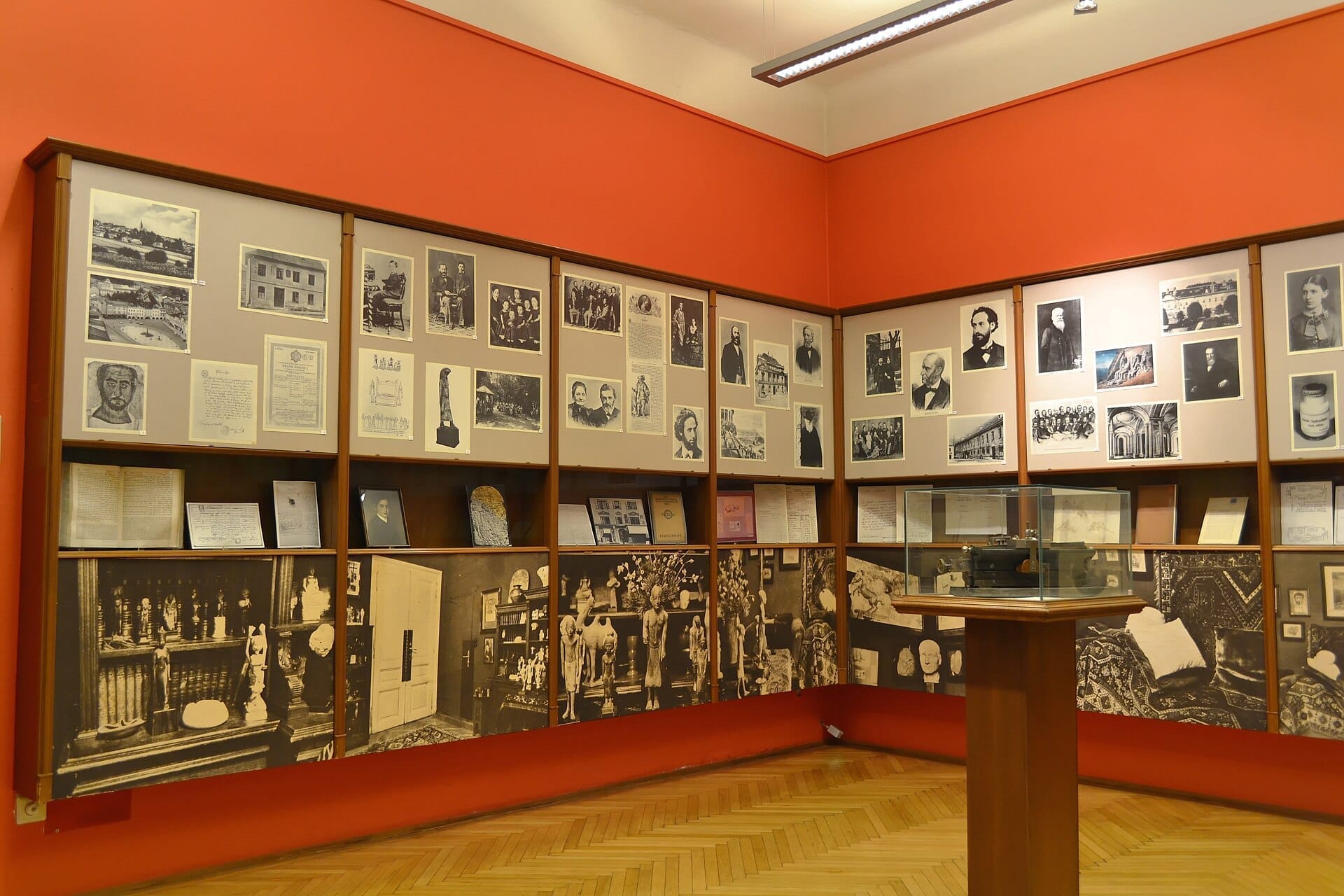
When Freud left Vienna in 1938, most of his furniture, the famous couch, and much of his extensive collection of antiquities went with him to London, where they remain at the Freud Museum London. What stayed in Vienna is more fragmentary: architectural fabric, personal documents, photographs, early editions of his publications, film footage, and objects that could not or were not taken. The curatorial approach at the Vienna museum works honestly with this absence. Rather than papering over the gaps, the exhibition uses them as a subject. The emptied consulting room is itself an artifact.
The renovation created a new staircase and gallery space that connects the original apartment floor to an expanded exhibition area. Note that this new staircase and gallery section is not wheelchair accessible, though all of the main museum rooms are.
Tickets & tours
Hand-picked options from our booking partner. Prices are indicative; availability and final rates are confirmed when you complete your booking.
Guided tour Sigmund Freud Museum Vienna
From 20 €Instant confirmationFree cancellationSkip-the-line entrance tickets Sigmund Freud museum Vienna
From 16 €Instant confirmationFree cancellationFreud, Mozart, Beethoven exploration game and tour in Vienna
From 10 €Instant confirmationFree cancellationImperial Vienna 72-hour hop-on hop-off bus
From 55 €Instant confirmationFree cancellation
Moving Through the Rooms: What You See
Visitors enter through the original apartment entrance and move through several distinct spaces. The waiting room retains original door hardware and wall surfaces. The consulting room, where patients reclined and Freud sat out of their line of sight, is now empty of furniture but lined with documentary photography and contextual material that makes its dimensions and former use legible. Standing in it produces a particular stillness that most visitors seem to feel without being instructed to.
The study, where Freud wrote, is better preserved in atmospheric terms, with period fittings and original detailing. The museum uses archival film footage throughout, including rare moving images of Freud, which give the rooms a biographical depth that static display alone could not achieve. Exhibition texts are written in both German and English, and multilingual versions (French, Italian, Spanish, Portuguese, Turkish, and Bosnian/Croatian/Serbian) are available via smartphone QR codes at display points.
The wider exhibitions cover the development of psychoanalysis, the intellectual circle around Freud, the Vienna he inhabited, and the forced emigration of 1938. For visitors with deeper interest in that period of Viennese cultural history, the museum connects naturally to a broader picture of the city documented in the Habsburg and imperial history of Vienna and the upheavals that followed it.
💡 Local tip
Audio guides are available. Given the density of the written material and the number of archival documents on display, first-time visitors benefit from either the audio guide or a dedicated pre-visit read of the museum's printed introduction. Rushing through takes about 45 minutes but leaves most of the content unread.
When to Visit and How Crowds Behave
The museum is not among Vienna's highest-footfall attractions, which is one of its genuine advantages. On weekday mornings, particularly Wednesdays through Fridays, visitor numbers are low enough that you can spend ten minutes in the consulting room without another person in it. Weekend afternoons draw more visitors, including group tours, and the waiting room and main exhibition can feel congested for a small apartment space.
The building receives natural light differently depending on time of day. Morning visits give the rooms a cooler, more contemplative quality. The space is not large enough that lighting dramatically transforms the experience, but the absence of crowds in off-peak hours has a real effect on how the rooms read. Summer brings higher overall visitor numbers to Vienna, and the museum is no exception, though it never reaches the queue lengths of, say, the Kunsthistorisches Museum or Schönbrunn Palace.
The museum is open year-round with no seasonal closure, which makes it a practical option during the colder months when Vienna's outdoor attractions are less appealing. If you are planning a winter trip, consider pairing it with other indoor cultural stops in the area. The guide to Vienna in winter covers how to structure those days effectively.
Getting There: Transit, Walking, and Practical Notes
Berggasse 19 is straightforward to reach by public transport. Tram D stops at Schlickgasse, which places you about a two-minute walk from the entrance. Trams 37, 38, 40, 41, and 42 stop at Schwarzspanierstraße, a similar distance. Bus 40A stops at Berggasse directly. If arriving by U-Bahn, U2 to Schottentor involves roughly a ten-minute walk through the neighborhood, which is pleasant enough in most weather. U4 to Roßauer Lände is a shorter walk from a different direction.
The walk from Schottentor passes through a section of Alsergrund that gives you a feel for the residential character of the district. There are no major tourist infrastructure clusters between the U-Bahn stop and Berggasse, which reinforces the impression that you are entering something that exists slightly apart from the main tourist circuit.
Parking in the 9th district is limited and metered during business hours. Driving is not recommended. For orientation on getting around Vienna more broadly, the Vienna public transport guide covers ticketing and network basics.
Tickets, Combined Offers, and Practical Logistics
Standard adult admission is €15. Students under 27 pay €9.50; pupils under 18 pay €5.50; children under 12 enter free. A combined ticket covering both the Sigmund Freud Museum and the Leopold Museum (which holds major collections of Klimt and Schiele) is available for €29, a meaningful saving if both are on your list.
The Vienna PASS covers admission, as does the Niederösterreich-CARD, though neither applies to guided tours. Groups of more than ten people should book in advance by contacting the museum at tours@freud-museum.at. For those weighing whether the Vienna PASS makes financial sense across multiple attractions, the Vienna PASS breakdown runs the numbers.
Photography policy: verify current rules at the entrance, as museum photography policies in Vienna vary and can change with temporary exhibitions. The shop at the exit carries a thoughtful selection of publications, including academic and popular works on Freud, psychoanalysis, and Viennese cultural history. It is worth a few minutes even if you are not a committed book buyer.
⚠️ What to skip
The museum is closed every Tuesday. This catches visitors by surprise more often than it should. If Tuesday is your only free day in Vienna, this is not an option. Double-check current hours at freud-museum.at, as public holiday schedules can vary.
How This Fits Into Vienna's Cultural Landscape
Vienna at the turn of the 20th century produced an unusual concentration of intellectual and artistic rupture: Freud in psychoanalysis, Klimt and Schiele in painting, Loos and Wagner in architecture, Mahler and Schoenberg in music. The Sigmund Freud Museum is one of the few places in the city where you can stand in the physical space of that generation and think about what it actually meant to work here, in these rooms, under the specific pressures of that period. That specificity is what distinguishes it from a generalist history museum.
Visitors with interest in the visual arts side of this same cultural moment will find the Leopold Museum and the Wiener Secession natural companions, though they are located in a different part of the city. The Freud Museum belongs firmly to Alsergrund, and spending the surrounding hours in the 9th district rather than rushing back to the center is a better use of the visit.
Who should consider skipping this: visitors primarily drawn to visual spectacle or grand architectural interiors will likely find the museum underwhelming. The rooms are not lavish. The experience is text-heavy and conceptually dense. Children under about 12 will find little to engage with unless they have specific interest. Those with limited mobility should note that the new gallery section is not wheelchair accessible, though the main rooms are.
Insider Tips
- Book a guided English-language tour in advance if your visit falls on a weekend. The curatorial interpretation adds layers that the static displays alone cannot convey, particularly around the 1938 emigration and what was left behind.
- The combined ticket with the Leopold Museum is available at the desk and saves money if Egon Schiele or Gustav Klimt are also on your itinerary. The two museums are not within walking distance of each other, so plan accordingly.
- Bring a phone with a QR code reader if you want to access the multilingual exhibition texts. The German and English versions are printed, but French, Italian, Spanish, Portuguese, Turkish, and Bosnian/Croatian/Serbian require the smartphone scan.
- The street itself is worth a slow look before you enter. Berggasse is a well-preserved example of late-19th-century Viennese residential architecture, and the building's undemonstrative exterior is part of what makes arriving here feel different from visiting a purpose-built museum.
- Weekday mornings between opening time and noon reliably offer the quietest conditions. If you want extended time alone in the consulting room, Wednesday or Thursday morning is your best window.
Who Is Sigmund Freud Museum For?
- Travelers with interest in the history of ideas, psychology, or 20th-century intellectual history
- Literary and academic visitors who want to engage with primary-source environments
- Anyone researching Vienna's fin-de-siècle cultural period alongside the visual arts and architecture of the same generation
- Winter visitors looking for serious indoor cultural content outside the main tourist corridor
- Travelers combining it with the Leopold Museum under the joint ticket offer
Nearby Attractions
Other things to see while in Alsergrund & Josefstadt (8th–9th Districts):
- Liechtenstein Garden Palace (Gartenpalais Liechtenstein)
The Gartenpalais Liechtenstein is one of Vienna's most remarkable Baroque palaces, set in the quiet 9th district with a princely art collection still in private hands. Access is limited to guided tours and special exhibitions, making every visit feel genuinely rare.
- Volksoper Vienna
The Volksoper Wien is Vienna's most accessible opera house, staging opera, operetta, dance, and musical theatre in a historic building in the 9th district. Less formal than the State Opera, it offers serious artistic quality at a broader range of price points, making it one of the most rewarding evening experiences in the city.