Leopold Museum Vienna: The Definitive Guide to Austrian Modernism
Housed in a striking limestone cube at the heart of the MuseumsQuartier, the Leopold Museum holds the world's largest Egon Schiele collection alongside major works by Gustav Klimt, Oskar Kokoschka, and Richard Gerstl. For anyone drawn to the raw, unsettling beauty of Viennese fin-de-siècle art, this is one of the most concentrated and rewarding museum experiences in Central Europe.
Quick Facts
- Location
- Museumsplatz 1, 1070 Vienna (MuseumsQuartier, 7th District)
- Getting There
- U2 MuseumsQuartier; U2/U3 Volkstheater; Bus 57A MuseumsQuartier
- Time Needed
- 2–3 hours for the permanent collection; longer with a temporary exhibition
- Cost
- €19 standard adult; €17 with Vienna City Card (prices subject to change — verify before visiting)
- Best for
- Art lovers, Schiele and Klimt enthusiasts, architecture admirers, rainy-day culture seekers
- Official website
- www.leopoldmuseum.org
What the Leopold Museum Actually Is
The Leopold Museum is a dedicated art museum occupying a purpose-built limestone-clad cube within Vienna's MuseumsQuartier cultural complex. It opened in 2001, designed by the architectural firm Ortner & Ortner, and its collection of over 8,000 artworks traces Austrian art from the late 19th century through the early decades of the 20th. The core of that collection is something found nowhere else on earth: the world's largest holding of works by Egon Schiele, running to several hundred paintings and drawings. Around that nucleus, the museum builds a comprehensive picture of the Viennese Secession, Jugendstil, and Austrian Expressionism, with significant works by Gustav Klimt, Oskar Kokoschka, and Richard Gerstl.
The collection was assembled across four decades by Rudolf Leopold, a Viennese ophthalmologist and obsessive collector who began acquiring Schiele's work in the 1950s when it was still deeply unfashionable. The Austrian government purchased the collection from Leopold in 1994 and created a private foundation to house it. Understanding this backstory matters because it explains the museum's distinctive character: this is a personal, even eccentric vision of Austrian Modernism rather than a neutral survey. For deeper context on the Schiele holdings, the Vienna Egon Schiele guide covers the painter's life, key works, and other sites connected to him across the city.
ℹ️ Good to know
Opening hours change seasonally. From July to August the museum opens daily 10:00–18:00. From January through June and September through December it is closed on Tuesdays. It opens on public holidays year-round. Always check leopoldmuseum.org before your visit.
The Building: A Limestone Cube in a Cultural Complex
The Leopold Museum's exterior is immediately recognizable: a large, almost windowless cube finished in Waldviertel limestone, a pale, chalky stone quarried from Lower Austria. The material is the same used for many of Vienna's historic buildings, giving the structure a quiet historical resonance despite its contemporary geometry. The cube sits within the MuseumsQuartier, one of the largest cultural districts in Europe at roughly 60,000 square metres, and it occupies the western flank of the central courtyard alongside the dark basalt lava facade of the MUMOK.
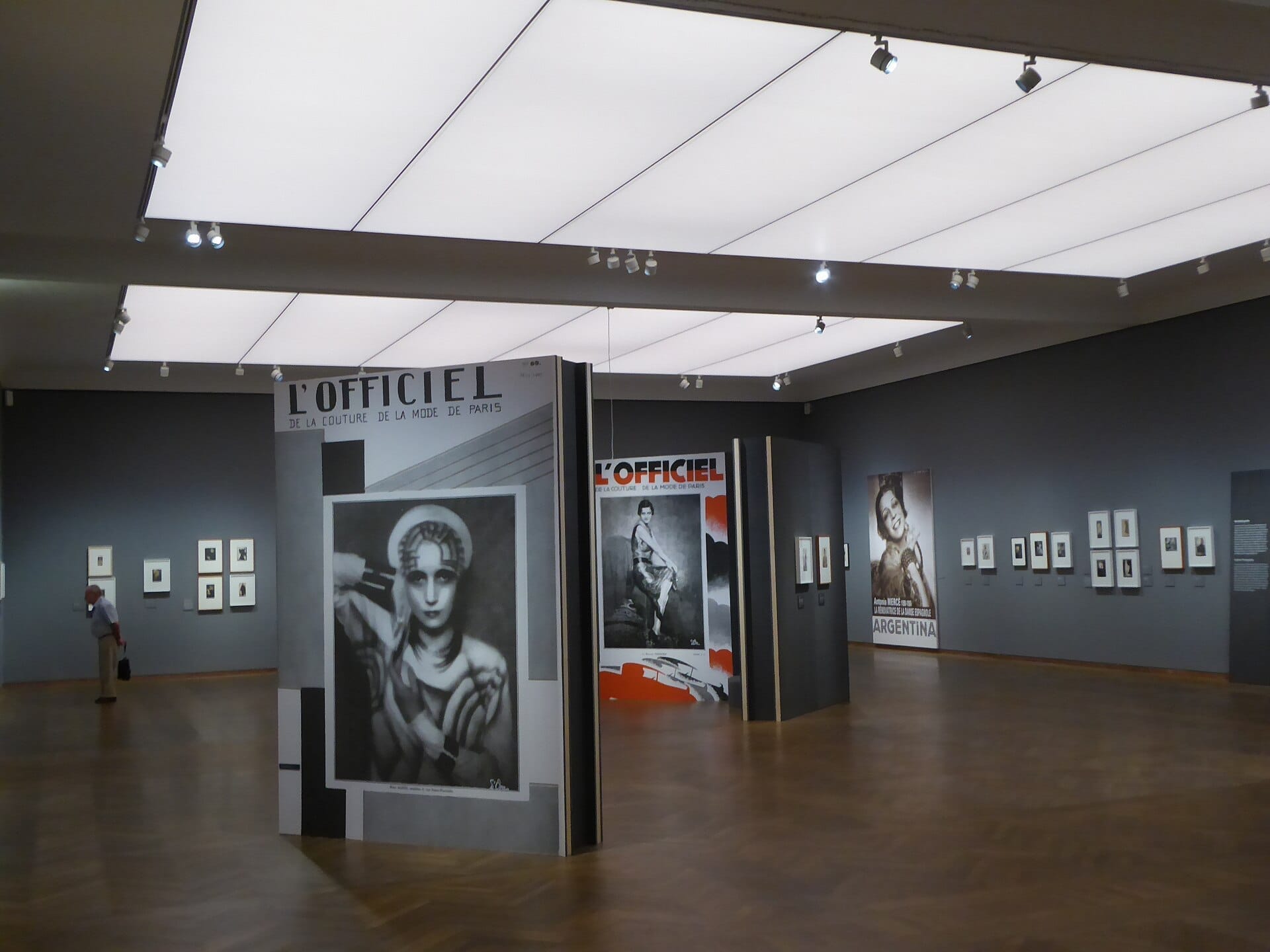
Inside, the building organizes its galleries around a central atrium that rises the full height of the structure. Natural light enters through a large skylight above, falling through the levels in a way that makes orientation surprisingly intuitive. The white walls and clean lines of the galleries keep the focus on the work rather than the architecture, which is the correct priority given the density and emotional intensity of much of what hangs here. On the lower floors, the permanent Schiele collection occupies a series of interconnected rooms. Temporary exhibitions typically take up the upper levels.
The MuseumsQuartier courtyard outside deserves at least thirty minutes of your time, particularly in warmer months when the large curved benches called Enzis are occupied by a mix of visitors, students, and locals eating lunch. The square functions as a public space as much as a museum forecourt. The MuseumsQuartier complex as a whole is covered in a separate guide if you are planning a full day in the area.
Tickets & tours
Hand-picked options from our booking partner. Prices are indicative; availability and final rates are confirmed when you complete your booking.
Leopold Museum Vienna Skip-the-line Tickets
From 19 €Instant confirmationFree cancellationFlexi PASS for 2, 3, 4, 5, 6, 7 or 8 attractions in Vienna
From 49 €Instant confirmationFree cancellationVienna self-guided audio tour
From 10 €Instant confirmationImperial Vienna 72-hour hop-on hop-off bus
From 55 €Instant confirmationFree cancellation
The Permanent Collection: What You Will Actually See
The Schiele rooms are the reason most visitors come, and they do not disappoint. Dozens of paintings and a significant number of drawings are displayed here, spanning the artist's short career from his early academic training through to the mature works completed before his death from Spanish flu in 1918 at the age of 28. The paintings are hung at close intervals, which creates an almost claustrophobic accumulation of angular bodies, scraped earth tones, and raw unfinished canvas. Schiele's habit of leaving large areas of bare ground around his figures, treating the support itself as part of the composition, becomes immediately legible when you can move between works at this density.
Specific works change position over time as loans go out and return, but the collection consistently includes major self-portraits, figure studies, and landscape paintings from Schiele's time in Krumau and the Wachau Valley. The drawings, often displayed in dedicated cabinets or cases, show the nervous, unrelenting line that made his draughtsmanship so distinctive. If you have time, slow down for these. They reward attention in a way that reproductions never quite convey.
The Klimt holdings complement the Schiele rooms without overshadowing them. The Leopold's Klimt works tend toward his earlier symbolist paintings and decorative panel works rather than the gold-ground portraits, which are concentrated in the Upper Belvedere and the Kunsthistorisches Museum. This makes the Leopold a genuinely different Klimt experience rather than a repetition. Kokoschka's expressionist portraits and the small but powerful group of works by Richard Gerstl round out a picture of Viennese Modernism that feels coherent and argued rather than merely comprehensive.
The museum also holds applied arts, furniture, and decorative objects from the Wiener Werkstätte, the craft workshop founded in 1903 that brought Jugendstil aesthetics into everyday objects. These are displayed alongside the paintings and provide useful material context for visitors new to the period. For a broader survey of the Secession movement and its architectural legacy, the Vienna Klimt and Secession guide is worth reading before or after your visit.
How the Experience Changes by Time of Day
Arriving at opening time, around 10:00, gives you the best chance of moving through the Schiele rooms without competing for wall space. The galleries are not vast, and by late morning on weekends, particularly in July and August when the museum stays open daily, the lower floors can become crowded enough that you are waiting for other visitors to move before you can stand close to a work. The skylit atrium fills with diffuse light on bright mornings, which is pleasant but does not dramatically affect the gallery experience since most rooms rely on controlled artificial lighting.
Mid-afternoon, roughly 13:00–15:00, is the most congested window. If you are visiting on a weekday, this is manageable. On summer weekends it can feel genuinely cramped in the permanent collection rooms. Late afternoon, from around 16:00 onward, sees crowds thin as visitors head to dinner or nearby cafes, and the galleries take on a quieter quality that suits the work well. The museum closes at 18:00, so a 15:30 arrival gives you time for a focused visit if you know which works you want to prioritize.
💡 Local tip
Tuesday is the museum's regular closing day outside July and August. If your Vienna trip spans only a few days, verify the date before building your itinerary around a Tuesday visit.
Practical Walkthrough: Getting There and Getting Around
The museum sits at Museumsplatz 1 in Vienna's 7th district. The most direct public transport is the U2 to MuseumsQuartier, which deposits you at the main entrance to the complex, roughly two minutes' walk from the Leopold Museum's entrance on the courtyard side. The U2/U3 interchange at Volkstheater is a short walk away and useful if you are connecting from lines that do not stop at MuseumsQuartier directly. Bus 57A also stops at MuseumsQuartier for visitors coming from the 6th district or Mariahilfer Strasse direction.
Bag storage lockers are available at the museum entrance, which is worth using if you are carrying a daypack, as large bags are typically not permitted in the galleries. The museum has a shop near the exit that stocks a solid selection of Schiele and Klimt monographs, exhibition catalogues, and prints. It is better stocked than many comparable museum shops and worth a look even if you are not a committed art-book buyer.
Accessibility within the building is handled via lifts connecting all gallery floors. The MuseumsQuartier courtyard itself is at ground level with no significant steps at the main approach. Visitors with specific accessibility requirements, including wheelchair users or those needing additional assistance, should contact the museum directly before their visit, as detailed provisions are best confirmed through official channels.
💡 Local tip
The Vienna City Card reduces admission from €19 to €17 and includes fast-lane access, which can save time on busy days. If you are already planning to use public transport extensively, the card often pays for itself across a multi-day visit.
Photography, Atmosphere, and Honest Caveats
Photography policies within the Leopold Museum's permanent collection should be confirmed on arrival or at the ticket desk, as rules vary between permanent and temporary exhibitions and can change. As a general observation across comparable European art museums, flash photography and tripods are typically restricted. If you intend to photograph specific works for personal documentation, ask at the entrance rather than assuming either permission or prohibition.
One honest caveat worth stating: the Leopold Museum is not the easiest introduction to Viennese art if you arrive with no prior exposure to Schiele or the Secession. The collection assumes a certain engagement with the subject. Visitors who come specifically for Schiele will leave satisfied; those expecting a broad panoramic survey of Austrian cultural history may find the focus narrow. The permanent collection covers roughly 1880 to 1940 with depth but little breadth beyond Austrian Modernism. If you want a more encyclopedic experience, the Kunsthistorisches Museum across the Ringstrasse serves that purpose.
The museum also runs a changing program of temporary exhibitions that typically address Austrian Modernism, its European context, or specific aspects of the collection. These are worth factoring into your visit planning. Check the official website for current shows. For travelers building a wider art itinerary across Vienna, the best museums in Vienna guide provides a useful comparative framework.
Insider Tips
- The museum's basement level occasionally hosts events and screenings. Check the Leopold Museum's own program calendar, not just the MuseumsQuartier general listings, for events that run alongside temporary exhibitions.
- If the Schiele drawing cabinets are open during your visit, take the time to read the date and medium labels closely. The range from 1910 to 1918 is short but the development in his line and his use of colour is visible even to a non-specialist eye.
- Combine the Leopold with MUMOK next door for a full day of modern and contemporary art, but visit MUMOK first if you are arriving in the morning as it tends to be quieter than the Leopold until midday.
- The MuseumsQuartier courtyard has a cafe directly outside. It is a reasonable option for a coffee mid-visit if the museum's own cafe is crowded, and the courtyard seating is pleasant in dry weather.
- The Vienna City Card fast-lane entry is genuinely useful on weekend afternoons in summer when ticket queues can stretch into the courtyard. Book online in advance if you are visiting between late June and late August.
Who Is Leopold Museum For?
- Art history enthusiasts with a specific interest in Egon Schiele, Gustav Klimt, or Viennese Expressionism
- Travelers on a broader Austrian Modernism itinerary covering the Secession building, Kunst Haus Wien, and the Belvedere
- Rainy or cold days when outdoor sightseeing is unappealing and you want a sustained indoor experience
- Architecture admirers interested in how contemporary museum design responds to historic urban fabric
- First-time Vienna visitors who have already covered the Kunsthistorisches Museum and want to go deeper into Austrian art
Nearby Attractions
Other things to see while in MuseumsQuartier & Mariahilf (6th–7th Districts):
- Haus des Meeres (Aqua Terra Zoo)
A former World War II anti-aircraft tower in central Vienna now houses over 10,000 animals across 600 species. Haus des Meeres blends serious conservation with genuine spectacle, and the rooftop view over the 6th district alone justifies the climb.
- MUMOK (Museum of Modern Art)
mumok, the Museum of Modern Art Ludwig Foundation Vienna, houses the largest collection of modern and contemporary art in Central Europe. Set inside a striking basalt lava cube in the MuseumsQuartier, it spans Viennese Actionism, Pop Art, Fluxus, and beyond. Here is everything you need to plan a worthwhile visit.
- MuseumsQuartier
The MuseumsQuartier Wien is one of the largest cultural complexes in the world, converting the Habsburg imperial court stables into a sprawling campus of modern art museums, independent galleries, and open public courtyards. Entry to the grounds is free around the clock, while individual institutions charge their own admission. Whether you want to spend three hours or an entire day, this is the cultural center of gravity for contemporary Vienna.