Haus des Meeres (Aqua Terra Zoo): Vienna's Most Unusual Aquarium
A former World War II anti-aircraft tower in central Vienna now houses over 10,000 animals across 600 species. Haus des Meeres blends serious conservation with genuine spectacle, and the rooftop view over the 6th district alone justifies the climb.
Quick Facts
- Location
- Fritz-Grünbaum-Platz 1, Esterházypark, 1060 Vienna (6th district)
- Getting There
- U3 Neubaugasse; buses 13A, 14A, 57A to Haus des Meeres stop
- Time Needed
- 2–3 hours; allow more with children
- Cost
- Adults €23.50 / Children 6–15 €9.80 / Under 3 free. Verify before visiting.
- Best for
- Families, rainy days, history lovers, first-time visitors to Vienna
- Official website
- www.haus-des-meeres.at
What Haus des Meeres Actually Is
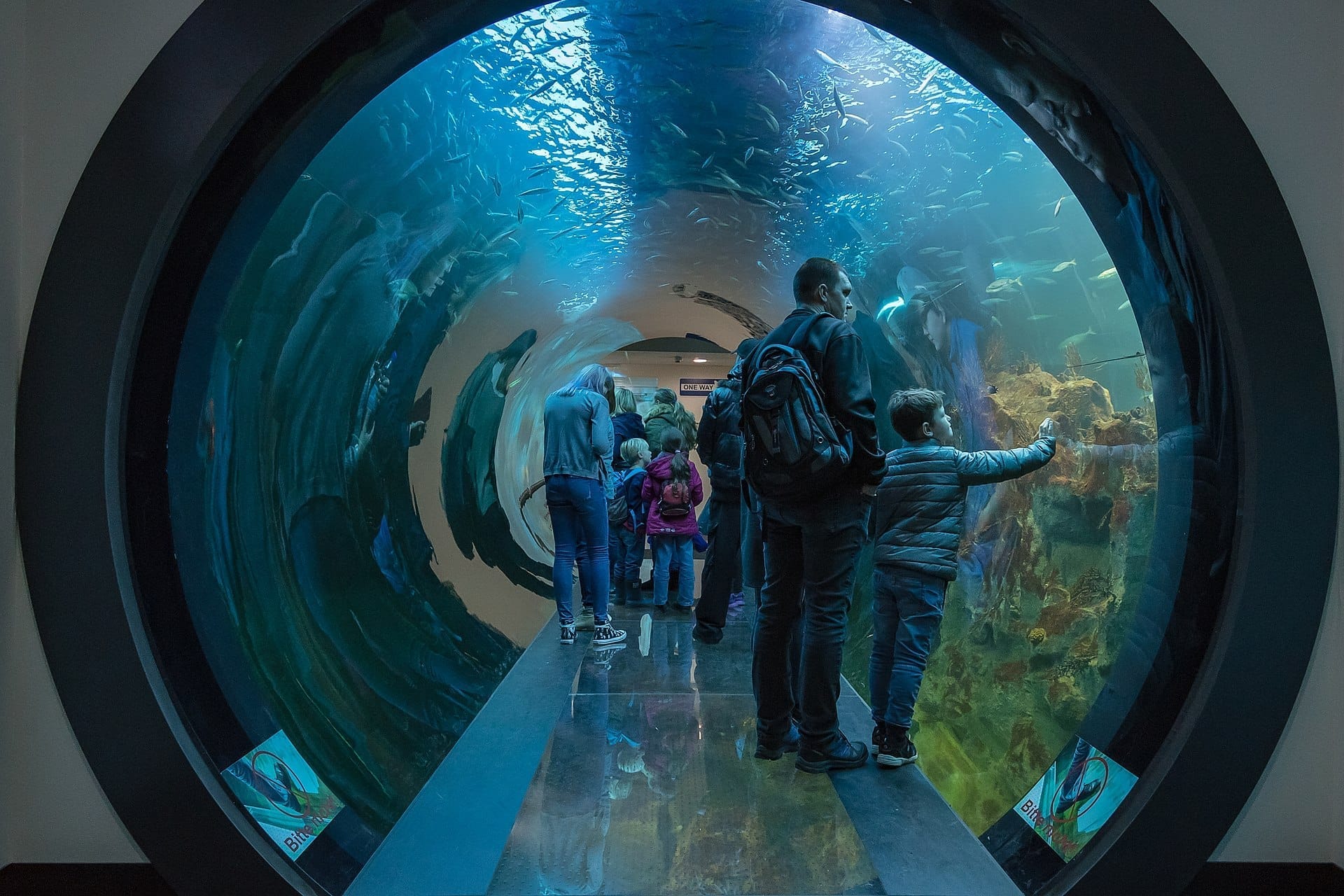
Haus des Meeres – Aqua Terra Zoo is an aquarium and terrarium zoo spread across roughly 8,000 square metres of exhibition space inside and around one of Vienna's surviving World War II flak towers. That single fact tells you almost everything you need to know: this is not a conventional aquarium, and the building itself is as interesting as most of what lives inside it. Since opening in 1958, the institution has grown into a serious zoological facility housing over 10,000 animals from approximately 600 species, ranging from poison dart frogs to nurse sharks, green anacondas to tropical birds.
The building is a Hochbunker, a reinforced concrete anti-aircraft gun tower built by the Nazi regime between 1943 and 1945. Vienna has several of these towers still standing, and the one in Esterházypark is among the most intact. Its walls are several metres thick in places, which makes the interior feel simultaneously cave-like and monumental. The zoo has worked with that unusual architecture rather than against it, using the tower's floors as vertical exhibit layers and extending outward with glass-covered tropical greenhouse sections at the base.
💡 Local tip
Ticket office and online entry close 30 minutes before the 20:00 daily closing time. Arriving before 17:00 gives you the most relaxed experience, especially on weekends.
The Building's History: From Flak Tower to Fish Tank
The Esterházypark flak tower is one of six such structures built in Vienna during the war. These towers were designed to house anti-aircraft artillery above the rooflines, making them extremely difficult to destroy from the air, and nearly impossible to demolish afterward given their reinforced concrete mass. After the war, Austrian authorities found themselves with immovable structures in public parks and had to decide what to do with them.
The Esterházypark tower's transformation into a zoo began in the late 1950s, part of a broader civic effort to repurpose what was otherwise a concrete monument to destruction. The name 'Haus des Meeres' (House of the Sea) reflected the original focus on marine life, though the institution has since expanded into a full aqua terra zoo covering both aquatic and terrestrial species.
Visitors interested in the broader story of Vienna's wartime infrastructure should look into the Vienna World War history guide, which covers the flak towers and other surviving structures across the city.
Tickets & tours
Hand-picked options from our booking partner. Prices are indicative; availability and final rates are confirmed when you complete your booking.
Shuttle bus from Vienna to Designer Outlet Parndorf with free time
From 21 €Instant confirmationFree cancellationMauthausen Concentration Camp Memorial daytrip from Vienna
From 148 €Instant confirmationFree cancellationVienna Mozart and Strauss concert with ballet at Konzerthaus
From 55 €Instant confirmationFree cancellationMozarthaus Vienna tickets
From 14 €Instant confirmationFree cancellation
Inside the Zoo: What to Expect Floor by Floor
The layout is vertical rather than horizontal. You enter at ground level and work your way up through successive floors, each dedicated to different ecosystems or taxonomic groups. The early floors tend to focus on freshwater species, reptiles, and tropical insects, while the middle and upper sections introduce larger marine tanks and the impressive shark exhibit. The greenhouse extensions at the base house free-flying tropical birds in warm, humid enclosures that smell of damp moss and soil, a jarring contrast to the cold concrete walls just metres away.
The shark tank, located midway up the tower, draws the most crowds and deservedly so. The tank is large enough to give the animals genuine swimming room, and feeding demonstrations, when scheduled, gather substantial audiences. Check the day's program board at the entrance for feeding times.
The anaconda enclosure is another reliable highlight. Green anacondas are often partially submerged and motionless, so patience helps, but even a partially visible specimen of that scale makes an impression. The reptile sections also include large crocodilian species and a good range of venomous and non-venomous snakes.
ℹ️ Good to know
The tropical bird greenhouse near the base is heated and humid year-round. In winter, it doubles as a welcome warm break from Vienna's cold. Bring a layer you can remove.
The Rooftop: Vienna from a Flak Tower
The top of the flak tower is open to visitors and provides a 360-degree panorama over central Vienna that most tourists never find. The view spans the 6th district's dense residential blocks westward toward the Mariahilf ridge, south toward the Belvedere, and north toward the spire of St. Stephen's Cathedral cutting above the rooflines. It is not the highest point in the city, but the unobstructed view from a structure this distinctive carries a particular weight.
In good weather the rooftop is genuinely useful for orientation. On clear winter days the Alps are visible on the southern horizon. In summer the platform fills up quickly, especially on weekends, so visit midweek or arrive early in the morning for a quieter experience. At around 19:00 in summer, the low light turns the surrounding rooftops amber, and the crowds have thinned enough to move freely.
If architecture and elevated viewpoints interest you, the Vienna architecture guide covers the Ringstrasse buildings, the Secession, and other structures visible from the tower platform.
Practical Walkthrough: Getting There and Getting In
Haus des Meeres sits in Esterházypark in Vienna's 6th district (Mariahilf), a short walk from the U3 metro line at Neubaugasse. The walk from the station takes roughly five to eight minutes through a quiet residential area. Buses 13A, 14A, and 57A stop directly at the Haus des Meeres stop if you prefer not to walk from the U-Bahn.
The zoo is open every day of the year from 09:00 to 20:00, which makes it one of the more reliably accessible attractions in Vienna for early or late visitors. The last entry is 30 minutes before closing, so plan accordingly. Ticket prices as of 2026 are €23.50 for adults, €9.80 for children aged 6 to 15, €6.50 for children aged 3 to 5, and free for children under 3. Seniors, students, and people with disabilities pay €16.50 on weekdays with valid ID. All prices are subject to change; verify on the official website before visiting.
The zoo is listed as accessible on Vienna's official tourism platform. The ground-floor greenhouse sections and lower exhibit floors are reachable by lift, though the concrete tower steps are narrow in places. Visitors with significant mobility limitations should check specific accessibility details directly via the official website or contact the venue before visiting. For a broader look at family-friendly attractions in Vienna, the Vienna with kids guide offers additional context.
When to Visit and What Affects the Experience
Haus des Meeres is genuinely useful on a rainy day, which sets it apart from many Vienna attractions. The interiors are fully enclosed, the greenhouse sections are warm, and you can spend two to three hours without checking the weather once. That reputation means rainy weekends attract noticeably higher visitor numbers, particularly families with children. If you are visiting Vienna during a summer weekend and rain is forecast, book tickets in advance if possible or arrive at opening time.
Weekday mornings between 09:00 and 11:00 are consistently the quietest period. School groups occasionally visit during term time on weekday mornings, which can crowd the larger exhibit floors, but they tend to move in structured groups and clear quickly. Late afternoon on weekdays, roughly 15:00 to 18:00, offers a good balance of manageable crowds and sufficient time to cover the full building.
⚠️ What to skip
The concrete stairwells between floors are steep and narrow. Visitors with strollers should use the lift, which is available but may have queues during busy periods. The rooftop has no shelter: avoid in thunderstorms.
Vienna's shoulder seasons, roughly late March through May and September through October, tend to offer the most comfortable visiting conditions citywide. For more detail on timing your trip, the best time to visit Vienna guide covers seasonal trade-offs in useful detail.
Photography and Sensory Notes
The interior lighting in the tank sections is low and blue-tinted, optimised for the animals rather than cameras. Most smartphone cameras struggle in these conditions without night mode. A dedicated camera with a fast lens or good low-light capability will produce much better results in the shark and tropical fish areas. Flash is not permitted in most sections.
The greenhouse sections smell of humidity, soil, and the faintly metallic tang of large bird enclosures. The sound of tropical birds calling across the glass-enclosed space is striking on quiet mornings. The upper floors of the tower are cooler and quieter, with the acoustic echo of feet on concrete steps and the occasional bubbling of filtration systems. It is a sensory mix that no conventional aquarium replicates.
Insider Tips
- The rooftop is often overlooked by visitors focused on the animals. Make it your last stop on the way out: the late afternoon light in summer is particularly good for photography, and the crowd thins considerably after 17:00 on weekdays.
- Feeding demonstrations at the shark tank are not listed on a fixed public schedule. Check the program board at the entrance immediately after arriving, as demonstrations can sell out seating if the space is busy.
- The tropical bird greenhouse is a warm, quiet space on winter visits and often far less crowded than the main tank floors. Birds fly freely overhead, and patience near the feeding areas rewards close observation.
- Esterházypark itself is a pleasant green space immediately surrounding the tower. In good weather, the park benches make a useful rest stop before or after your visit, and the park is free to enter.
- Visitors using the Vienna City Card or similar discount passes should verify whether Haus des Meeres is included before purchasing, as the zoo's discount partnerships change periodically.
Who Is Haus des Meeres (Aqua Terra Zoo) For?
- Families with children aged 4 and up who want a full indoor day regardless of weather
- History-focused visitors interested in Vienna's World War II infrastructure alongside the zoological experience
- Repeat visitors to Vienna who have covered the main imperial and art museum circuit and want something different
- Photographers seeking unusual architectural and wildlife subjects in a single location
- Budget-conscious travelers who want a half-day activity with a clear entry price and no additional hidden costs
Nearby Attractions
Other things to see while in MuseumsQuartier & Mariahilf (6th–7th Districts):
- Leopold Museum
Housed in a striking limestone cube at the heart of the MuseumsQuartier, the Leopold Museum holds the world's largest Egon Schiele collection alongside major works by Gustav Klimt, Oskar Kokoschka, and Richard Gerstl. For anyone drawn to the raw, unsettling beauty of Viennese fin-de-siècle art, this is one of the most concentrated and rewarding museum experiences in Central Europe.
- MUMOK (Museum of Modern Art)
mumok, the Museum of Modern Art Ludwig Foundation Vienna, houses the largest collection of modern and contemporary art in Central Europe. Set inside a striking basalt lava cube in the MuseumsQuartier, it spans Viennese Actionism, Pop Art, Fluxus, and beyond. Here is everything you need to plan a worthwhile visit.
- MuseumsQuartier
The MuseumsQuartier Wien is one of the largest cultural complexes in the world, converting the Habsburg imperial court stables into a sprawling campus of modern art museums, independent galleries, and open public courtyards. Entry to the grounds is free around the clock, while individual institutions charge their own admission. Whether you want to spend three hours or an entire day, this is the cultural center of gravity for contemporary Vienna.