St. Stephen's Cathedral (Stephansdom): Vienna's Gothic Landmark
Standing at the geographic and spiritual center of Vienna since 1137, St. Stephen's Cathedral is the city's defining silhouette. From its 136-meter south tower to its tile-covered roof and Habsburg catacombs beneath, Stephansdom rewards visitors who look beyond the obvious and understand what they're looking at.
Quick Facts
- Location
- Stephansplatz, 1010 Vienna (Innere Stadt / 1st District)
- Getting There
- U1 / U3 to Stephansplatz — exits open directly onto the cathedral square
- Time Needed
- 45 min for the nave; 2–3 hours if adding tower climb, catacombs, and treasury
- Cost
- Front nave: free. Tower climbs, catacombs, and altar zone require tickets — verify current prices at stephanskirche.at
- Best for
- Architecture lovers, history seekers, travelers wanting Vienna's central landmark
- Official website
- www.stephanskirche.at
Why Stephansdom Still Stops People in Their Tracks
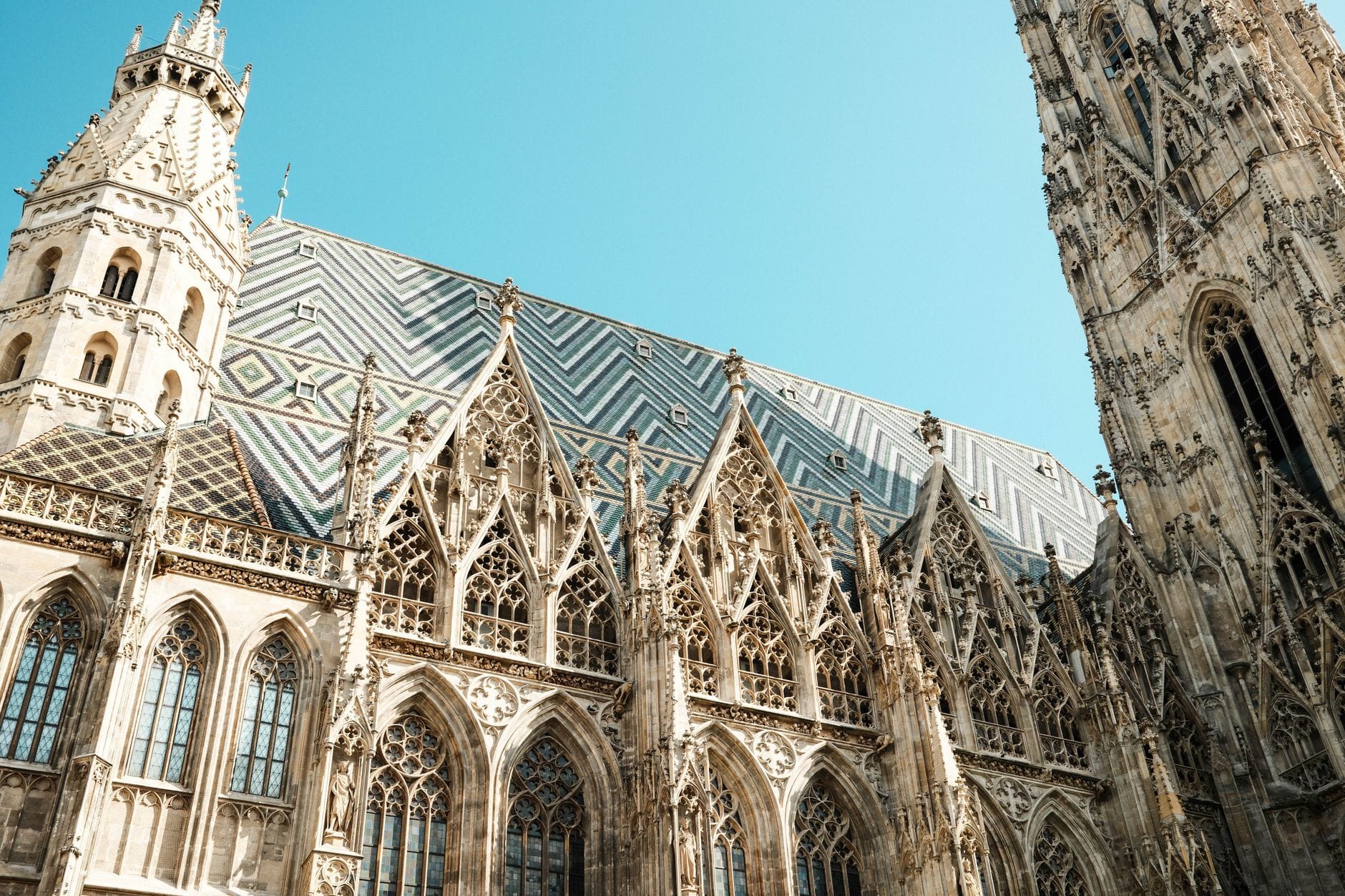
St. Stephen's Cathedral has anchored Vienna's identity for nearly nine centuries. Its Gothic south tower, completed in 1433 and rising 136.4 meters above Stephansplatz, is visible from neighborhoods across the city and has served as a navigational landmark long before there were maps on phones. The cathedral is 107 meters long and 34 meters wide, built on a Romanesque foundation consecrated in 1147, with the Gothic nave taking shape between 1304 and 1450. What you see today is the result of layered centuries of construction, damage, and careful reconstruction — the cathedral was badly damaged in the final days of World War II and rebuilt by 1952.
Most visitors arrive on foot through Stephansplatz, where the full south facade hits you as you emerge from the surrounding streets. The geometric tile roof — roughly 230,000 glazed tiles arranged in chevron patterns, including the double-headed Habsburg eagle on the south slope — is best appreciated from a slight distance or from an elevated vantage point. At ground level, you're simply too close. That said, standing directly beneath the south tower and craning your neck upward gives a disorienting sense of the building's vertical ambition that no photograph quite captures.
💡 Local tip
The cathedral's front nave is free to enter. The ticketed areas — the central altar zone, tower climbs, and catacombs — require separate tickets purchased at on-site desks or in advance. Budget your time accordingly if you plan to see more than the nave.
What the Cathedral Looks and Feels Like Inside
Inside, your eyes take a moment to adjust. The nave is tall, narrow, and dark in the way that Gothic architecture was deliberately designed to be: light filtered through stained glass rather than flooding in, shadows pooling between the clustered pillars, and the eye pulled toward the high altar at the far end. The stone is cool to the touch even on the hottest summer days, and the smell is a familiar Gothic church combination of old limestone, candle wax, and the faint residue of incense.
The cathedral is an active place of worship, not a museum, and that distinction matters. Masses are held regularly, and visitors who wander in during services are expected to observe quietly and stay in designated areas. On weekday mornings, especially early, you may find the nave nearly empty except for a handful of worshippers and the occasional verger. This is when the building's atmosphere is at its strongest. By late morning on any day from spring through autumn, tour groups begin filling the space and the acoustic quality shifts noticeably.
Specific interior highlights include the late-Gothic stone pulpit carved around 1515, attributed to Anton Pilgram, which features portraits of the four Church Fathers on the parapet and a self-portrait of the sculptor peering from a window beneath the stairs. The Wiener Neustadt altarpiece (1447) on the north wall is another often-overlooked piece: a painted triptych with detailed panels that reward slow looking. The tomb of Holy Roman Emperor Frederick III, a massive red marble sarcophagus in the Apostles' Choir, gives a concrete sense of the cathedral's role in Habsburg power.
Tickets & tours
Hand-picked options from our booking partner. Prices are indicative; availability and final rates are confirmed when you complete your booking.
Secrets of the St. Stephen's Cathedral in Vienna guided tour
From 57 €Instant confirmationFree cancellationVienna's cathedral district self-guided audio tour
From 8 €Instant confirmationImperial Vienna 72-hour hop-on hop-off bus
From 55 €Instant confirmationFree cancellationSkip-the-Line Entrance with Guide to Schonbrunn Palace and Gardens
From 45 €Instant confirmationFree cancellation
The Tower Climb and the Pummerin Bell
There are two ways up, and they are very different experiences. The south tower climb is done on foot: 343 steps in a narrow spiral staircase that winds up through the tower's interior. The stairs are worn smooth and the ascent is genuinely demanding, particularly in warm weather when the lack of ventilation becomes obvious. The reward at the top is an open-air platform 72 meters up with a close-up view of the roof tiles, the city grid below, and on clear days a reach toward the Vienna Woods to the west and the Leopoldsberg to the north.
The north tower takes an elevator rather than stairs. It houses the Pummerin, one of the largest bells in Europe, recast after the original was destroyed in 1945 and rehung in 1952. The elevator runs year-round: January through March from 09:00 to 17:30, April through December from 09:00 to 20:30. The bell is rung on New Year's Eve and certain major feast days. The north tower platform offers a slightly different angle on the square below and a good look at the Gothic detailing of the south tower from across the roofline.
⚠️ What to skip
The south tower staircase is not accessible for visitors with limited mobility. The north tower elevator provides an alternative, though it reaches a different platform. Neither option is fully equivalent to the other in terms of views or experience.
The Catacombs: What Lies Beneath
Below the cathedral, accessible only by guided tour, are the catacombs. These are not merely atmospheric stone passages. They contain the remains of thousands of Viennese buried there between the 13th and 18th centuries, as well as the Habsburg ducal crypt, which holds the internal organs of Habsburg rulers in copper urns — a separate arrangement from the imperial sarcophagi at the Kapuzinergruft nearby, where their bodies are interred, and from the Augustinian church, which holds their hearts.
The catacomb tours run regularly throughout the day and last approximately 30 minutes. The space is confined, the lighting is low, and the temperature drops noticeably compared to the cathedral above. It is worth doing if the Habsburg history and the specifics of funerary practice interest you. If enclosed spaces or the presence of actual skeletal remains is not something you want, skip it. For more on how this fits into the broader Habsburg story, the Habsburg imperial history guide covers the full picture across Vienna's sites.
When to Go and How Crowds Behave
The cathedral is open Monday through Saturday from 06:00 to 22:00, and Sundays and public holidays from 07:00 to 22:00. These are the general opening hours for the building; individual ticketed areas have their own schedules. The south tower climb runs daily from 09:00 to 19:00.
Early morning visits, before 09:00, are dramatically quieter. The square is used by commuters crossing between the U-Bahn exits, and the interior is accessible to worshippers before the tourist day begins. The light at this hour, particularly in spring and summer, comes through the east-facing windows in a way that the midday crush of visitors never allows you to appreciate. Between roughly 10:00 and 16:00 on any day from April through October, the square and the nave are at their most crowded. Group tours cluster near the entrance, audio guide holders move slowly through the nave, and the ambient noise level rises significantly.
Winter visits have their own logic. The Christmas market on Stephansplatz adds a layer of activity and the smell of mulled wine to the surrounding area. The interior of the cathedral in December, lit differently and with fewer summer tourists, can feel genuinely contemplative. For a fuller picture of when to time a Vienna trip overall, the best time to visit Vienna guide covers seasonal trade-offs across the city.
Getting There and Practical Logistics
The cathedral sits at Stephansplatz in Vienna's 1st District, the Innere Stadt. The U1 and U3 metro lines both stop at Stephansplatz station; the exits deposit you directly onto the square in front of the cathedral's main facade. Buses 1A, 2A, and 3A also serve the Stephansplatz stop. If you are arriving from the airport, the City Airport Train (CAT) and S-Bahn S7 connect to Wien Mitte/Landstraße, from which U3 takes you directly to Stephansplatz. More detail on navigating the city is in the getting around Vienna guide.
The main entrance has no steps and doors approximately 120 centimeters wide. A side entrance involves three steps. Assistance dogs are permitted. The catacombs and south tower staircase are not accessible to visitors using wheelchairs or with significant mobility limitations.
Photography is permitted in most areas of the cathedral. Flash photography and tripods are generally not allowed inside, and during services, photography should be suspended as a matter of basic respect. The roof tile pattern and south tower profile are best photographed from the far end of the Graben or from a window at the Haas Haus across the square. The interior benefits from a wide-angle lens if you want to capture the full height of the nave.
Context: How Stephansdom Fits Into Vienna's Wider Scene
Stephansdom is the starting point for most serious explorations of the Innere Stadt. The Graben pedestrian street and Kohlmarkt lead west toward the Hofburg Palace, while Rotenturmstraße takes you north toward the Danube Canal. The cathedral's immediate surroundings repay slow walking: the Baroque and Biedermeier facades on side streets, the narrow lanes like Blutgasse and Domgasse (where Mozart lived for several years at what is now the Mozarthaus Vienna), and the Judenplatz memorial a short walk north all add depth to the area.
If you are building a coherent day around the cathedral, the Innere Stadt walking tour gives a structured route. For those interested specifically in Vienna's ecclesiastical architecture beyond Stephansdom, the Vienna churches guide covers the full range from Baroque to Jugendstil.
Who Should Temper Their Expectations
The cathedral's exterior is genuinely impressive. The interior, while historically rich, is darker and more austere than many visitors expect, particularly compared to the flamboyant Baroque interiors of other Central European churches. If you arrive hoping for gilded altars and frescoed ceilings, the Gothic restraint of Stephansdom may feel underwhelming. Similarly, if your interest is primarily in spectacular panoramic views, the south tower platform at 72 meters is good but not the highest viewpoint in Vienna. The Donauturm or the Leopoldsberg offer broader cityscape vistas.
Travelers who are particularly sensitive to crowds in enclosed spaces should plan carefully. The nave during peak hours becomes genuinely compressed, and the south tower staircase is a single-file spiral that feels claustrophobic to some visitors. None of this makes the cathedral a lesser experience — it makes preparation worthwhile.
Insider Tips
- Enter through the Giant's Gate (Riesentor) on the west facade rather than the side entrances — it is the original Romanesque portal from the 12th century and the most historically significant threshold in the building.
- The tile roof is best viewed from a room or window in the Haas Haus directly across Stephansplatz, or from the upper floors of nearby buildings along the Graben. Ground-level viewing gives you no real sense of the geometric pattern.
- The catacomb tours run in both German and English; ask at the ticket desk for the next English-language departure rather than joining the next available tour in German.
- If you plan to climb the south tower, go before 10:00 or after 17:00. The staircase becomes a slow one-directional queue at peak hours and the wait at the top has no seating.
- The cathedral's evening hours (open until 22:00) are rarely taken advantage of by tourists. The square and the lit facade after dark, with far fewer people present, offer a very different experience from the daytime rush.
Who Is St. Stephen's Cathedral (Stephansdom) For?
- Architecture and Gothic history enthusiasts who want to understand the building's layered construction across three centuries
- Habsburg history travelers building a route that connects Stephansdom with the Kapuzinergruft, Hofburg, and Augustinian church
- Photographers seeking the iconic Vienna rooftop tile pattern and the vertical drama of the south tower
- Early-morning walkers who want the cathedral nave to themselves before the tour groups arrive
- Travelers on a budget, since the nave and exterior are fully accessible without paying anything
Nearby Attractions
Other things to see while in Innere Stadt (1st District):
- Albertina Museum
Housed in a former Habsburg palace at the edge of the Ringstrasse, the Albertina holds one of the largest and finest graphic art collections in the world. With over one million drawings and prints alongside rotating exhibitions of modern masters, it rewards both the casual visitor and the serious art traveler.
- Austrian National Library (Prunksaal State Hall)
The Prunksaal, or State Hall of the Austrian National Library, is a Baroque masterpiece built for Emperor Charles VI between 1723 and 1726. At roughly 80 metres long and crowned by Daniel Gran's sweeping ceiling frescoes, it is one of the most visually arresting interiors in central Europe, and still holds around 200,000 historic volumes in its carved walnut shelves.
- Burgtheater
The Burgtheater is Austria's national theatre and one of the most significant German-language stages in the world. Its Neo-Renaissance building on Vienna's Ringstraße dates to 1888, and its institutional history stretches back to the court of Empress Maria Theresa. Whether you come for a performance or a guided tour, it rewards attention.
- Café Central
Housed inside the Palais Ferstel in Vienna's historic first district, Café Central has been serving coffee and conversation since 1876. Once the gathering point for Freud, Trotsky, and a constellation of Central European intellectuals, it remains one of the most architecturally remarkable coffeehouses in the world.