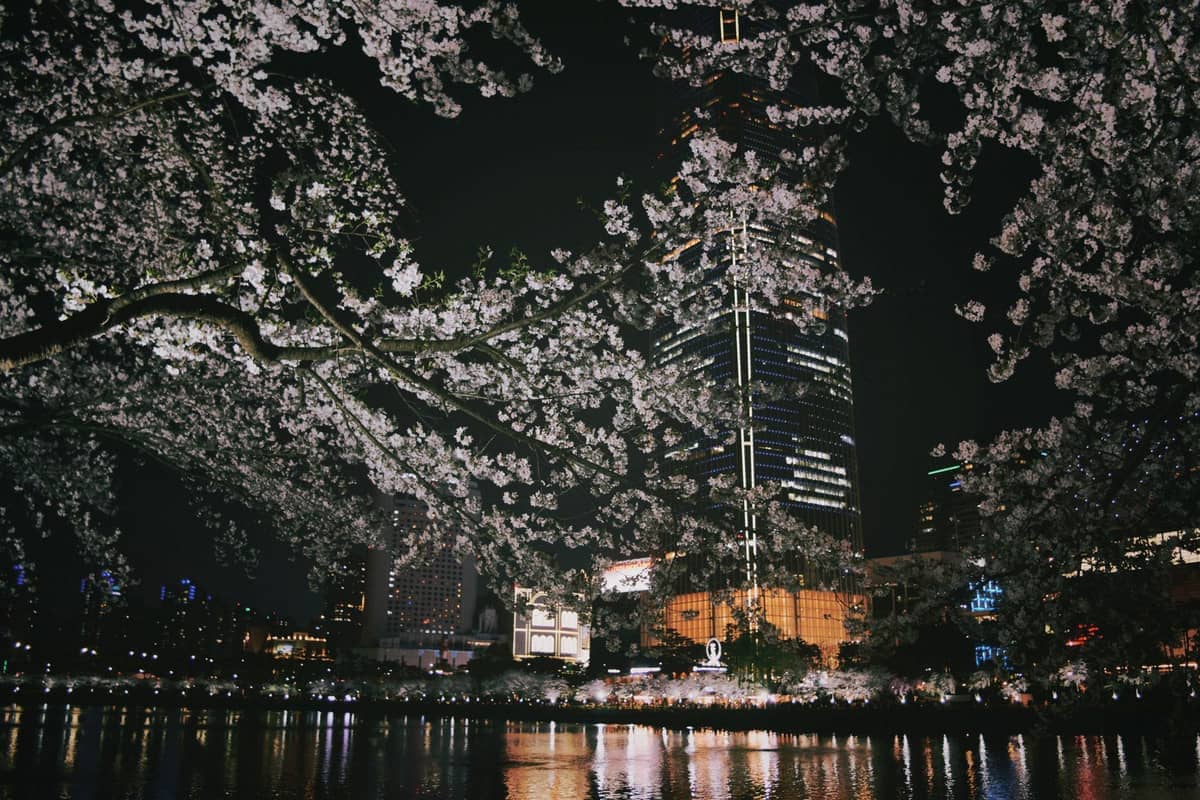
Jamsil and Songpa sit on the south bank of the Han River in eastern Seoul, anchored by the Lotte World Tower skyline and the legacy of the 1988 Olympics. The area mixes large-scale commercial energy with surprisingly calm lakeside walks, making it one of Seoul's most distinctive districts for visitors who want something beyond the historic city center.
Jamsil and Songpa are where Seoul goes big: the tallest tower in Korea, a sprawling indoor theme park, one of Asia's most impressive urban parks, and a lake that looks almost too picturesque to be real. Yet step one block from the main attractions and you find residential streets, neighborhood restaurants, and a pace of life that feels entirely local.
Orientation
Jamsil and Songpa Jamsil and Songpa occupy the southeastern part of Seoul, within the administrative boundaries of Songpa-gu. The area sits on the south bank of the Han River. To the west lies Gangnam, connected by subway Line 2 in under 15 minutes. To the north, across the river, are Gwangjin-gu and Gwangnaru. To the south and east, Songpa-gu extends into quieter residential neighborhoods before giving way to the outer city.
The practical heart of the area is Jamsil Station, one of Seoul's busiest interchange points, where Line 2 (the green loop line) meets Line 8. Most visitors use these two terms interchangeably, and on the ground the distinction matters less than understanding which cluster of streets you're heading to. Olympic-ro, the main east-west artery, runs through the area and connects Lotte World Tower in the west to Olympic Park in the east.
Seokchon Lake sits centrally, separating the Lotte World complex from the older Songpa-dong streets to the east and south. Songpa-daero runs along the western edge of the lake, while the calmer residential grid of Songpa-dong stretches south toward Seokchon Lake Park. For context on how this area fits into the wider city, the Gangnam neighborhood is the closest major district to the west, and the two areas together form the commercial and entertainment spine of southern Seoul.
Character & Atmosphere
Jamsil has the energy of a district that was built for scale. The streets around Jamsil Station are wide, the buildings are tall, and the volume of foot traffic on weekend afternoons rivals anything in Myeongdong. This is not a neighborhood of narrow alleyways and quiet courtyard cafés, at least not at its commercial core. It is a district of flagship stores, multiplex cinemas, department stores, and a theme park that draws tens of thousands of visitors on a busy Saturday.
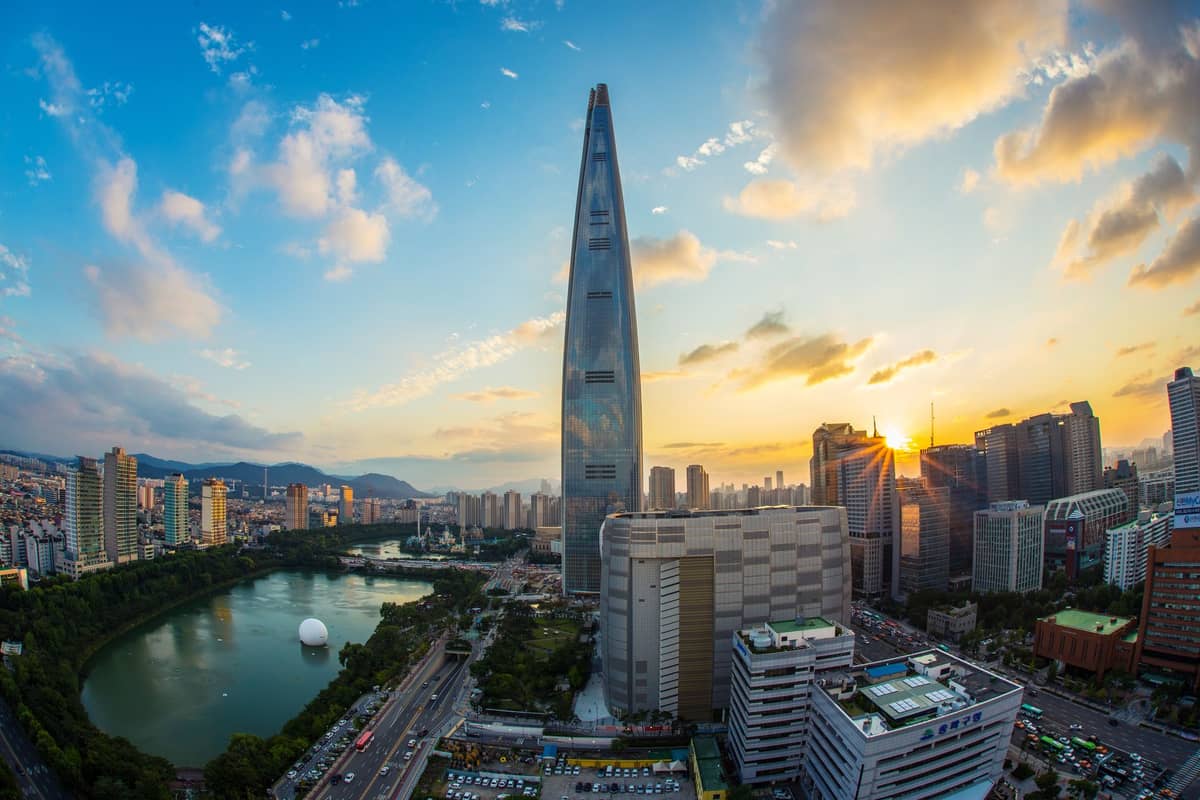
Mornings feel different. Before 9am, the streets around the lake are taken over by joggers, elderly residents doing group exercises, and couples walking small dogs along the Seokchon Lake path. The light in early spring and late autumn falls low across the water and catches the cherry blossoms or the golden ginkgos depending on the season, creating one of the most photographed scenes in Seoul. The Lotte Tower reflects in the lake on still mornings, and the contrast between the glass skyscraper and the quiet water is genuinely striking.
By midday and into the evening, the commercial areas dominate. The underground concourse beneath Jamsil Station and the adjacent Lotte World Mall fill steadily with shoppers and tourists. The streets along Olympic-ro get busy with tour buses and private cars. If you're looking for the slower, more residential side of Songpa-gu, walk south and east from the lake toward Songpa-dong, where the streets narrow, local restaurants outnumber chain stores, and the neighborhood feels closer to everyday Seoul.
💡 Local tip
Seokchon Lake is one of the best spots in Seoul for cherry blossoms, usually peaking in late March to early April. Arrive before 8am on weekdays if you want to walk the full loop without crowds. Weekends during peak bloom are extremely busy.
What to See & Do
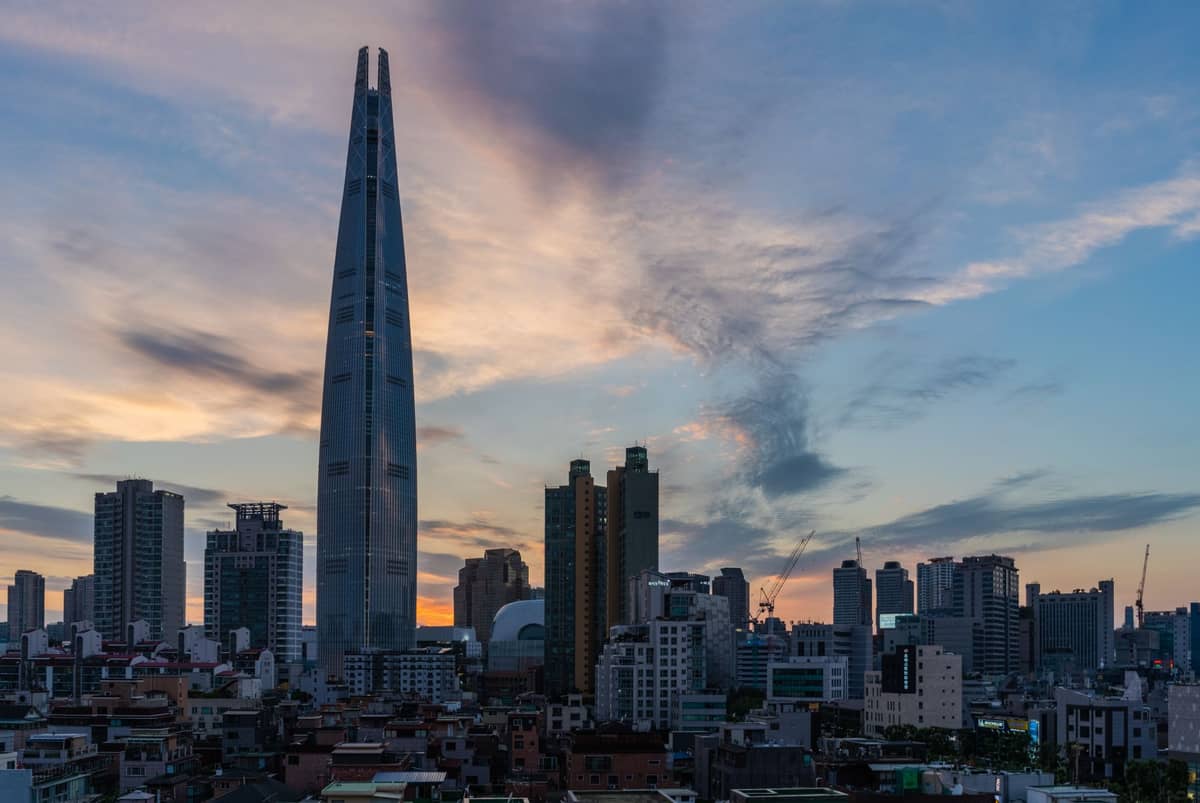
The Lotte World Tower is the undeniable centerpiece of the area. At 555 meters, it is the tallest building in Korea and one of the tallest in the world. The observation deck on floors 117 to 123 offers views that stretch to The is the undeniable centerpiece of the area. At 555 meters, it is the tallest building in Korea and one of the tallest in the world. The observation deck on floors 117 to 123 offers panoramic views across Seoul. The tower also contains a luxury hotel, an aquarium, several restaurant floors, and the Lotte World Mall at its base. Even if you skip the observation deck, the mall is worth walking through for its sheer architectural ambition.
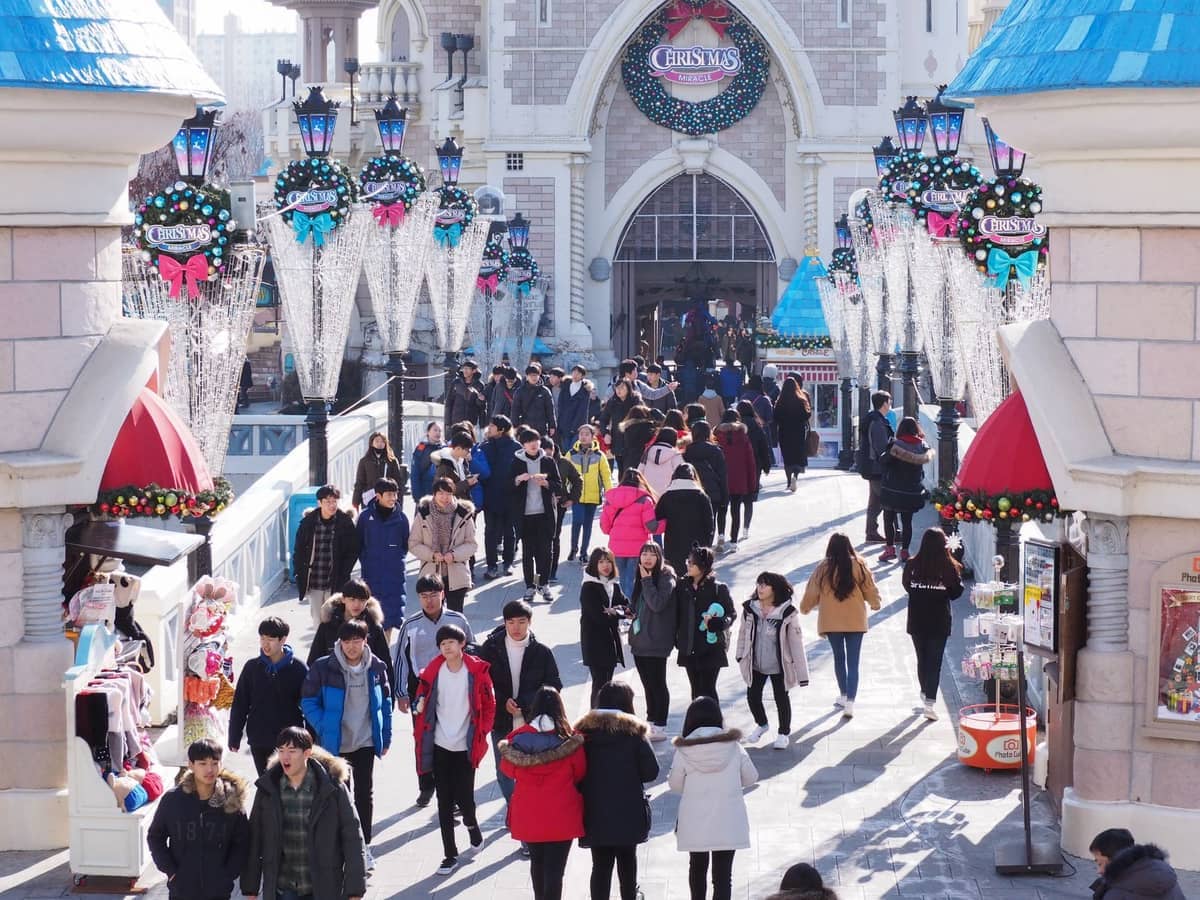
Adjacent to the tower, Lotte World Adventure is Adjacent to the tower, is a large indoor theme park. It is built primarily around a covered atrium, with an outdoor island section connected by a moving walkway over the lake. It caters heavily to families and couples, with rides, a parade, an ice skating rink, and seasonal events. Lines for popular rides can be long on weekends; weekday visits or purchasing fast passes in advance makes a real difference.
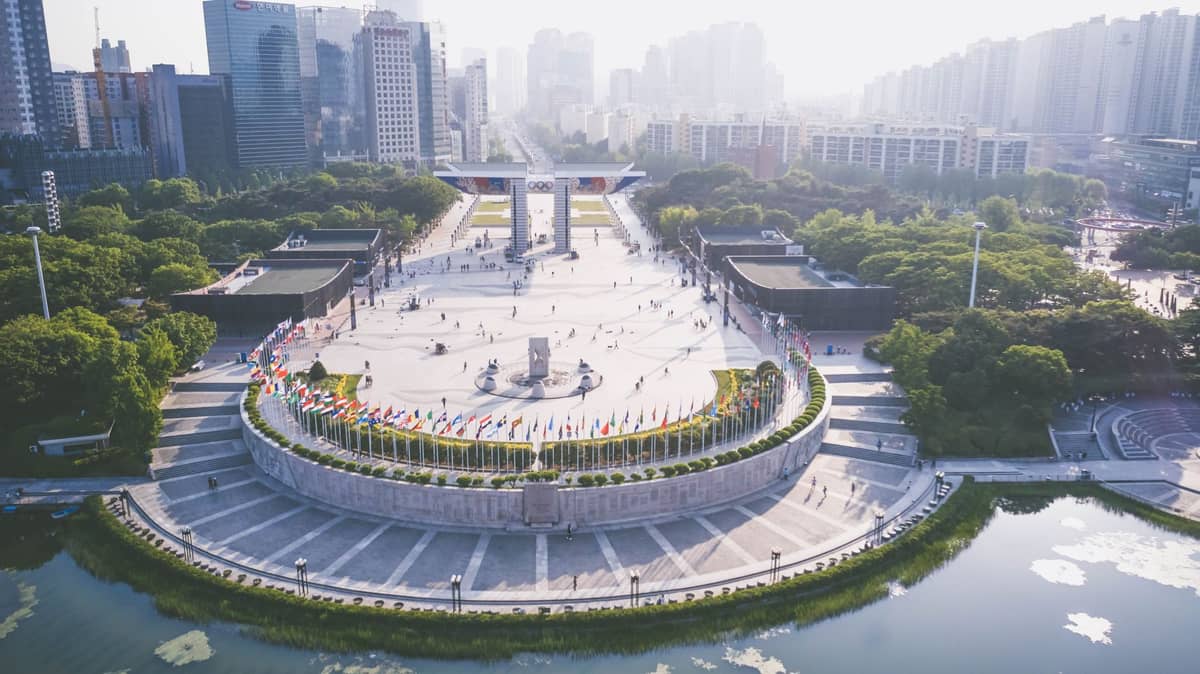
A short walk east along Olympic-ro brings you to Olympic Park, built for the 1988 Seoul Summer Olympics. This is one of the largest urban parks in Seoul, spanning about 1.45 square kilometers, and it functions as a genuine public space rather than just a memorial site., and it functions as a genuine public space rather than just a memorial site. The park contains multiple sports arenas still in active use, a large outdoor sculpture garden with works by artists from around the world, and a network of walking and cycling paths. The grassy slopes around the velodrome are a popular spot for picnics. The park also hosts major outdoor concerts and the annual Seoul Jazz Festival, making it an unexpectedly lively cultural venue.
Seokchon Lake itself deserves more than a passing mention. The two interconnected lakes are remnants of an old branch of the Han River, and the walking path around the full circuit is about 2.5 kilometers. The western lake sits directly in the shadow of the Lotte Tower, while the eastern lake is quieter and lined with older trees. Seokchon LakeSeokchon Lake itself deserves more than a passing mention. The two interconnected lakes are remnants of an old branch of the Han River, and the walking path around the full circuit is about 2.5 kilometers. The western lake sits directly in the shadow of the Lotte Tower, while the eastern lake is quieter and lined with older trees. Seokchon Lake is free to access at all hours and is as good a spot as any in the city to spend an unhurried hour.
Lotte World Tower observation deck (Seoul Sky): best visited late afternoon for daylight-to-sunset views
Lotte World Adventure: allow a full day; better on weekdays
Olympic Park: best for morning walks, cycling, and outdoor events
Seokchon Lake: free, all-day access; best in early morning or at dusk
Seoul Sports Complex (Jamsil Sports Complex): home to baseball games and occasional concerts
Eating & Drinking
The food scene in Jamsil covers a wide spectrum. The Lotte World Mall and the floors surrounding Jamsil Station contain every major Korean and international chain, from Korean fried chicken franchises to Japanese ramen, Western fast food, and upscale Korean dining. These are convenient and consistent but not the reason to eat in the neighborhood.
The more interesting eating is in the residential streets south and east of Seokchon Lake, where local restaurants serve samgyetang (ginseng chicken soup), dakgalbi (spicy stir-fried chicken), and hearty Korean stews at prices aimed at neighborhood regulars rather than tourists. The streets around Songpa-dong and the quieter side streets near Olympic Park have a good density of these kinds of spots: small, no-frills, and often excellent.
For coffee, the area around Seokchon Lake has seen a wave of independent cafés open in recent years, particularly on the side streets facing the eastern lake. Many have large windows overlooking the water, making them popular regardless of season. Seoul's café culture is worth understanding as a distinct local phenomenon, and the Seoul café culture guide explains what makes it different from café scenes elsewhere.
Nightlife is relatively subdued by Seoul standards. The area around Jamsil Station has bars and pojangmacha (street-side tented bars) that fill up after work hours, particularly on weekends, but the neighborhood does not have the concentrated nightlife density of Hongdae or Itaewon. It is a place people come to eat and drink after the theme park or the baseball game, not a destination for a long night out.
ℹ️ Good to know
If there is a Doosan Bears or LG Twins baseball game at Jamsil Baseball Stadium, the restaurants and pojangmacha in the surrounding streets fill up quickly before and after the game. The atmosphere is worth experiencing, but expect to wait for a table if you arrive around game time without a plan.
Getting There & Around
Jamsil Station is the main entry point for the neighborhood. It is served by Seoul Metro Line 2 and Line 8. Jamsil Station is the main entry point for the neighborhood. It is served by Line 2 and Line 8. Line 2 connects directly to Gangnam (about six stops west) and the broader city loop. Line 8 runs south through Songpa into the outer districts and north toward Seongdong-gu. The station exits are well-signed, and the underground concourse connects directly to Lotte World Mall without requiring you to surface.
Olympic Park is served by its own station: Olympic Park Station on Line 5, and Mongchontoseong Station on Line 8. Both are a short walk into the park from different entry gates. If you are planning to visit both Lotte World and Olympic Park in the same day, note that they are about 2 kilometers apart along Olympic-ro. The walk takes around 25 minutes and is flat and straightforward, or you can take a short taxi or bus ride.
Buses serve the Jamsil corridor well, particularly along Olympic-ro and Songpa-daero. Taxis are readily available at the station exits and outside Lotte World. The Kakao T app is the most reliable way to book one. Cycling is a reasonable option around Seokchon Lake and into Olympic Park, and rental bikes are available nearby, including through Seoul's public Ttareungi bike-share system.
⚠️ What to skip
Traffic around Jamsil Station and the Lotte World area on weekend afternoons and during major events at the Sports Complex can be severe. If you are arriving by taxi or private car, allow extra time. The subway is consistently faster and more predictable.
Where to Stay
Jamsil is a reasonable base for visitors whose priorities center on the southeastern side of Seoul: Olympic Park, the Han River parks, Lotte World, or day trips toward the outer city. It is not a central location for covering the historic districts north of the Han River. From Jamsil, reaching Gyeongbokgung Palace by subway takes around 40 to 50 minutes with a transfer.
Accommodation ranges from the Signiel Seoul in the Lotte World Tower itself, which is among the most prestigious hotel addresses in the city, down to midrange business hotels clustered near Jamsil Station and budget options further south in Songpa-dong. Travelers doing a broader Seoul itinerary might find a more central location in Jongno or Bukchon or in Myeongdong more convenient, since those neighborhoods sit closer to the majority of Seoul's historical sites. Jamsil makes the most sense as a base if your trip revolves specifically around this part of the city, or if you are traveling with children who will spend significant time at Lotte World.
For a comprehensive overview of where different traveler types are best served across the city, the where to stay in Seoul guide breaks down each district by traveler profile, budget, and proximity to attractions.
Honest Drawbacks
Jamsil is not for everyone. The scale of the commercial development around the station and the tower can feel overwhelming, particularly if you have come to Seoul for its historic character or its quieter café-lined alleyways. The neighborhood lacks the layered, walkable intimacy of areas like Seochon or Ikseon-dong. Its appeal is largely tied to specific attractions rather than general atmosphere.
Weekend crowds at Lotte World and around Seokchon Lake during cherry blossom season are significant. The streets in the immediate vicinity of the theme park entrance manage a constant flow of tour groups, school excursions, and families with strollers. If you prefer exploring Seoul at your own pace without navigating large crowds, plan your visit for weekday mornings.
The area is also less compelling for travelers focused on food culture. It has good restaurants, but it does not have the concentration of independently operated, character-rich dining that you find in neighborhoods like Seongsu or Mangwon. The best eating here requires knowing where to look beyond the main commercial corridors.
TL;DR
Best for: families, first-time visitors who want major attractions, travelers interested in Olympic history, and anyone staying in southeastern Seoul.
Key attractions: Lotte World Tower, Lotte World Adventure, Olympic Park, and Seokchon Lake all sit within easy walking distance of Jamsil Station.
Transit: excellent subway access via Line 2 and Line 8; Line 5 also connects Olympic Park.
Honest caveat: the commercial core around Jamsil Station is large-scale and crowded on weekends; this is not the neighborhood for a quiet, atmospheric Seoul experience.
Best time to visit: spring (late March to April) for cherry blossoms at Seokchon Lake, or autumn (October) for Olympic Park foliage and the outdoor concert season.
Three days is enough to get a real feel for Seoul, if you plan by neighborhood instead of trying to crisscross the city. This itinerary covers historic Joseon-era Seoul, the commercial and cultural center, and the newer districts that define the city's contemporary identity, with practical logistics at every step.
Five days is enough to experience historic Seoul, its modern neighborhoods, and at least one compelling excursion beyond the city. This guide organizes each day by district to minimize transit time, with a clear take on what's worth it and what isn't.
Seoul has a deep museum scene, from Korea's vast national collection in Yongsan to cutting-edge contemporary art spaces and sobering historical sites. Whether you have a day or a week, these are the essential museums to put on your itinerary.
Seoul rewards visitors differently depending on the season. Spring brings cherry blossoms and mild temperatures, autumn delivers golden foliage and clear skies, summer is hot and monsoon-affected, and winter is cold but cheap. Here is exactly what to expect, month by month.
Seoul rewards those who look up, climb high, and stay out past sunset. This guide covers the city's finest panoramic viewpoints — from paid observation decks at record-breaking towers to free hilltop parks where locals gather at dusk to watch the city lights come on.
Bukhansan National Park sits inside Seoul's city limits yet delivers genuine mountain terrain, granite ridges, and a 836-meter summit. This guide covers the best trails, transit access, seasonal closures, and practical tips for first-timers and returning hikers alike.
Seoul's location in northwestern South Korea makes it a surprisingly strong base for day trips. From UNESCO fortresses reachable by subway to ancient capital cities served by KTX, this guide covers the best options with honest travel times, costs, and seasonal advice.
The Demilitarized Zone is one of the most visited sites in South Korea, yet most travelers arrive underprepared. This guide covers tour types, current prices, booking logistics, what you'll actually see, and the honest drawbacks before you commit.
Seoul is one of the most rewarding cities in the world to explore on a tight budget. From UNESCO-listed palaces and ancient city walls to world-class museums and sprawling riverside parks, an enormous amount of what makes Seoul great costs absolutely nothing to experience.
Seoul has one of the most efficient urban transit networks in the world, covering virtually every corner of the city by subway and bus. This guide breaks down fares, card options, airport connections, and the practical details that make the difference between a smooth trip and an expensive mistake.
Gwangjang Market is one of Seoul's oldest and most celebrated food destinations, known for bindaetteok, mayak gimbap, and raw beef yukhoe. This guide covers every dish worth ordering, how much to pay, when to go, and how to navigate the market like someone who has been there before.
Renting a hanbok in Seoul is one of the most photogenic things you can do in the city, and it costs less than a decent lunch. This guide covers where to rent, how much to pay, what to expect, and how to get the most out of your few hours in traditional dress.
Seoul preserves several distinct hanok districts, each with its own character. This guide covers the main options, practical logistics, seasonal crowd patterns, and a clear picture of what to expect before you visit.
Seoul rewards curious travelers who look past the obvious. This guide covers the city's lesser-visited neighborhoods, transformed industrial spaces, street art villages, and local markets — with practical logistics, seasonal advice, and a clear take on what's worth your time.
Seoul is one of the few world capitals where you can summit a real mountain, walk a 600-year-old fortress wall, and be back in the city for dinner. This guide covers the best trails for every level, from challenging granite peaks to gentle hilltop park strolls.
Seoul's jjimjilbangs are far more than bathhouses. They are all-hours social institutions where locals come to soak, sweat, eat, sleep, and decompress. This guide covers how they work, what everything costs, the unwritten rules of etiquette, and how to make the most of your visit whatever the season.
Seoul is the global epicenter of skincare innovation, and shopping for beauty products here is a genuinely different experience from buying Korean brands abroad. This guide covers the best stores, the smartest districts, what to prioritize buying, and how to avoid the common traps that leave tourists overpaying at airport duty-free.
Korean BBQ in Seoul is one of the city's defining food experiences, but navigating it well takes more than just showing up hungry. This guide covers the best restaurants by type, how to order confidently, what everything costs, and the etiquette mistakes that mark out first-timers.
Seoul is the undisputed capital of K-pop, but knowing where to actually go matters more than the hype suggests. This guide covers free landmarks, fan-friendly museums, live show recordings, shopping districts, and bookable experiences — with a clear take on what's worth your time.
From palatial five-star hotels in the historic north to slick Gangnam towers, this guide covers where to stay, eat, and spend at the top end — with a clear take on what's special and what's just expensive.
Seoul nightlife runs later, harder, and more diversely than almost any other city in Asia. From Hongdae's student club strips to Gangnam's bottle-service mega-clubs and Itaewon's underground electronic scene, this guide breaks down every major district, what to expect, and how to navigate a night out without the rookie mistakes.
Noraebang are private karaoke rooms at the heart of Seoul's nightlife culture. This guide covers the difference between coin and standard noraebang, where to find the best venues, what to expect, and how to get the most out of the experience without overpaying.
Seoul preserves five Joseon-era royal palaces within its city limits, each with a distinct character and history. This guide covers all five in depth, plus the essential sites, shrines, and neighborhoods that complete a palace-focused visit to the city.
Seoul's café scene is one of the most developed in Asia, divided across distinct neighborhoods where each district has its own personality. This guide breaks down the best coffee districts and concept cafés by area, with honest advice on timing, crowds, and what to actually order.
Seoul offers far more romantic depth than its reputation for K-pop and street food suggests. This guide covers the best things to do in Seoul for couples, from iconic landmarks and scenic parks to low-key neighborhood strolls, with seasonal advice and practical logistics throughout.
Autumn is widely considered the best time to visit Seoul, with crisp temperatures, golden ginkgo avenues, blazing maple trails, and a packed cultural calendar. This guide covers peak foliage timing, the top spots to see autumn color, seasonal festivals, practical logistics, and what most visitors overlook.
Spring is Seoul's most photogenic season, with cherry blossoms peaking in early April and festivals filling the city's parks and riversides. This guide covers bloom timing, the best viewing locations, what the weather is really like, and how to plan around the crowds.
Seoul winters are cold, dry, and genuinely rewarding for travelers who come prepared. From palace snow views to late-night pojangmacha street food, this guide covers everything you need to know about visiting Seoul from December through February.
Seoul's market scene spans centuries and neighborhoods, from ancient covered halls serving mung bean pancakes to weekend flea markets spilling out under highway overpasses. This guide covers the best traditional, flea, and night markets in the city, with practical details on what to buy, what to eat, and when to go.
Seoul is far more affordable than most people expect. This guide breaks down real daily costs, the cheapest ways to get around, where to eat well for under ₩10,000, and which world-class attractions cost nothing at all.
Seoul ranks among the safest major cities in the world for international visitors, but that does not mean zero risks. This guide covers emergency contacts, common scams, neighborhood dynamics, seasonal hazards, and practical precautions so you can travel confidently in Seoul Special Metropolitan City.
Seoul's street food scene is one of the best reasons to visit the city. This guide breaks down the top markets, the snacks worth lining up for, what things actually cost, and the practical details that most guides skip.
Seoul holds a remarkable concentration of sacred sites within its modern boundaries. This guide covers the city's finest Buddhist temples, Confucian shrines, shamanist sites, and other places of spiritual significance — from the lantern-lit courtyards of central Jogyesa to the granite ridges of Inwangsan.
The Seoul to Busan corridor is one of the most-traveled routes in South Korea. This guide breaks down every realistic option, from the KTX high-speed train to intercity buses and flights, with fares, journey times, and practical booking advice.
Seoul is one of Asia's most practical cities for family travel, with a deep mix of free outdoor parks, indoor rainy-day backups, cultural experiences, and full-day theme parks. This guide covers the top family activities across every age group, with real advice on pricing, crowd timing, and seasonal planning.
Seoul's shopping scene is one of the most varied in Asia, spanning underground mega-malls, centuries-old traditional markets, and indie streetwear boutiques. This guide breaks down every major district by what you'll actually find there, how much to spend, and when to go.
Seoul rewards first-time visitors and repeat travelers equally. This guide covers the city's essential experiences across history, food, neighborhoods, and nature, with practical details on costs, timing, and what to skip.
Seoul is one of the world's great eating cities, and knowing what to order makes all the difference. This guide covers the essential Korean food you need to try, from market snacks under ₩5,000 to slow-cooked soups worth planning your day around.
Choosing where to stay in Seoul shapes your entire trip. This guide breaks down the top neighborhoods by traveler type, covering transit access, hotel options, price ranges, and the trade-offs so you can pick the right base before you book.