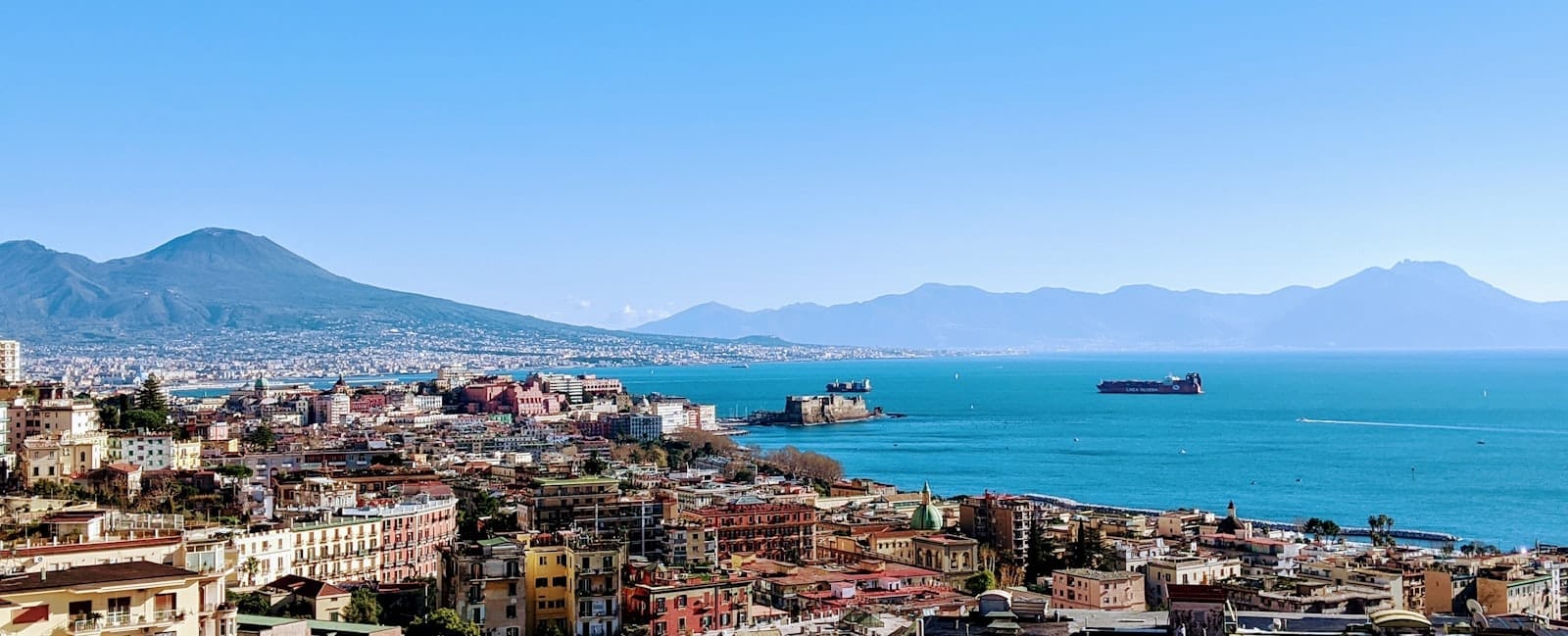
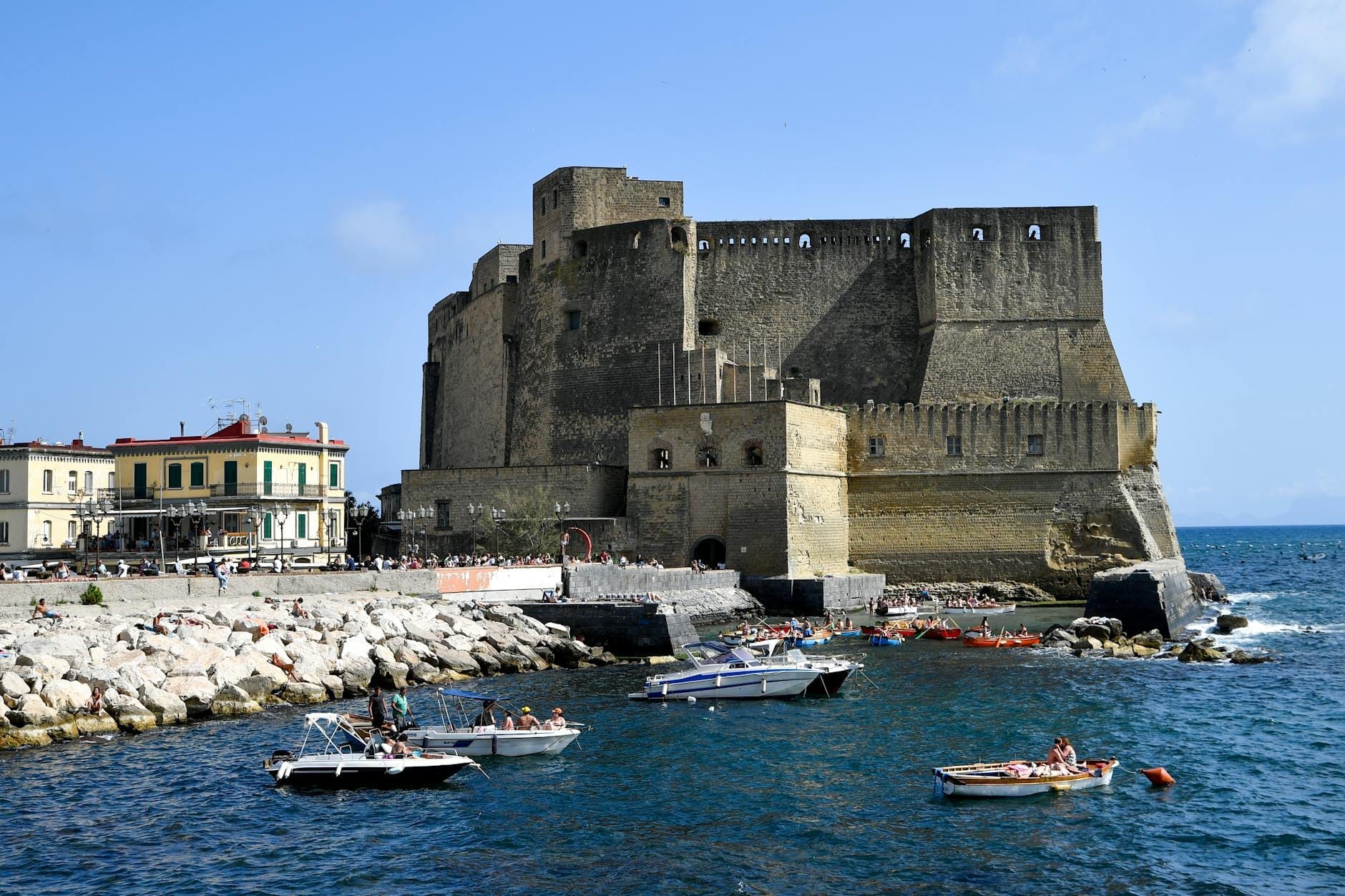
The Lungomare is Naples at its most open and unhurried. Stretching about 3.9 kilometres along the Bay of Naples, this seafront promenade connects the ancient Castel dell'Ovo to the residential calm of Mergellina, with Mount Vesuvius rising across the water at every turn. It is the city's great outdoor room, used by runners, families, fishermen, and anyone who needs a lungful of salt air.
The Lungomare Caracciolo is one of southern Italy's great urban waterfronts: a long, flat arc of coastline where the entire city seems to exhale. Here, the chaos of central Naples gives way to open skies, the smell of the sea, and one of the most iconic views on the Mediterranean, with Vesuvius framed perfectly across the bay.
Orientation: Where the Lungomare Sits
The Naples waterfront runs along the southwestern edge of the city, tracing the Bay of Naples for about 3.9 kilometres. The route follows two main roads in sequence: Via Francesco Caracciolo, which cuts west from the historic port area through the Chiaia district, and Via Partenope, which curves east around the promontory of Castel dell'Ovo toward the port of Santa Lucia. Together they form the backbone of what Neapolitans simply call the Lungomare.
At the western end, the promenade fades into Mergellina, a quieter harbour neighbourhood with its own railway station and ferry dock. Moving east, it passes through the affluent Chiaia district, skirting the edge of Villa Comunale park before reaching Borgo Marinari and Castel dell'Ovo. Beyond the castle, the road curves north toward Piazza Municipio and the main port. The whole stretch is flat, which is notable in a city otherwise defined by steep hills and staircases.
To the north, the Lungomare is backed by the Chiaia neighbourhood, whose elegant streets climb gradually toward Vomero. To the south, there is only the bay. The promenade sits between these two worlds, making it feel genuinely liminal: part of the city, yet separate from it.
Character & Atmosphere
Walk the Lungomare at seven in the morning and you will find a different city from the one most visitors see. Runners thread past retired men fishing from the rocks. Dog walkers move slowly. The light on the bay is pale and flat, Vesuvius sitting perfectly still on the horizon. The kiosks are just opening, pulling up steel shutters to reveal coffee machines and cornetti. There is noise, but it is the right kind: waves, seagulls, the distant rumble of a ferry leaving port.
By midday in summer, the promenade is warm and busy. Families occupy the concrete ledges above the water. Teenagers lean against the railings. Tourists photograph the castle. The road itself, while technically open to traffic, carries relatively little of it along certain stretches, and the wide pavement on the sea side functions as a genuine public space rather than simply a walkway. In winter, the crowd thins dramatically, the light turns cinematic, and the whole place takes on an elegiac quality that many travellers find more appealing than the high-season version.
After dark, the Lungomare becomes a different proposition depending on where you are. Around Borgo Marinari and Via Partenope, restaurants fill up and the area around Castel dell'Ovo is well-lit and lively. Further west along Caracciolo, it is quieter and less trafficked, though not threatening. The famous view of the illuminated castle reflected in the water at night is one of those images that genuinely lives up to its reputation.
💡 Local tip
The stretch of Lungomare Caracciolo is closed to cars on Sundays and public holidays, turning the road into a wide pedestrian and cycling zone. This is the best time to walk or hire a bike and cover the full length without interruption.
What to See & Do
The centrepiece of the waterfront is Castel dell'Ovo, Naples' oldest surviving fortification, built on a small peninsula known as the Borgo di Santa Lucia. The castle's origins go back to the sixth century, though the structure visitors see today is largely medieval and Aragonese. Entry is free, and the views from the upper battlements across the bay toward Capri and the Sorrento peninsula are among the finest in the city. Below the castle walls, the Borgo Marinari marina is lined with small restaurants and the boats of local fishermen. It is touristy, but genuinely picturesque.
Between the castle and Mergellina, the Villa Comunale park runs parallel to the promenade for several hundred metres. Laid out in the late eighteenth century as a royal garden and opened to the public in 1869, it is shaded, green, and well maintained. Inside the park, the Stazione Zoologica Anton Dohrn operates what is considered one of Europe's oldest public aquariums, founded in 1872. It is a serious marine research institution, not a theme park, and its collection of Mediterranean sea life is presented in an authentically nineteenth-century setting.
The western end of the promenade dissolves into Mergellina, a harbour with its own character: smaller than the main port, less commercial, popular with locals for evening passeggiata. The waterside here is dotted with kiosks selling taralli, fried food, and fresh coconut slices. A few boats offer short cruises on the bay. From Mergellina, paths continue uphill into the Posillipo district if you want to extend the walk into one of Naples' quieter residential hillsides.
Walk or run the full 3.9 km end to end, ideally on a Sunday when traffic is excluded
Visit Castel dell'Ovo (free entry) and climb the ramparts for bay views
Explore Borgo Marinari for the marina atmosphere and evening dining
Stop in Villa Comunale for shade and the Stazione Zoologica aquarium
Watch the sunset from the western end of Via Caracciolo, facing Vesuvius
Hire a bike from one of the rental points near Villa Comunale on weekends
ℹ️ Good to know
The Lungomare was created through a significant land reclamation project carried out between 1869 and 1880. Before that, much of what is now the promenade and Villa Comunale was either water or marshy shoreline. The seafront you walk today is an engineered public space, built deliberately as a civic amenity for the newly unified Italian city.
Eating & Drinking
The waterfront has a wide spread of eating options, ranging from disposable kiosk food to serious sit-down seafood restaurants. Around Borgo Marinari, the restaurants are positioned to capture tourist traffic and sea views simultaneously. Prices reflect that reality: expect to pay more here than in the centro storico for equivalent quality. That said, the setting, especially at outdoor tables looking toward the castle, is hard to argue with.
Via Partenope, the road running in front of the castle, has a concentration of higher-end fish restaurants that have been serving Neapolitan seafood for decades. The local approach to seafood is direct: good product, minimal fuss. Dishes like pasta con le vongole, grilled orata, or spaghetti al riccio di mare appear on most menus. For pizza, you are better served heading a few blocks inland toward Chiaia or further into the city. The waterfront is seafood territory.
For something cheaper and more immediate, the kiosks along Caracciolo and around Mergellina are the move. Taralli (ring-shaped biscuits) dusted with pepper and lard, fried cuoppo (a paper cone of mixed fried seafood and vegetables), and sliced fresh coconut sold from carts are all standard waterfront snacks. In summer, granita and gelato vendors also operate along the route. At Mergellina specifically, a cluster of kiosks near the harbour are known locally for seafood snacks eaten standing up, which is both cheaper and more authentic than most restaurant options on this strip.
For a broader sense of where to eat well across the city, the where to eat in Naples guide covers neighbourhoods beyond the waterfront. And if pizza is the priority, the Naples pizza guide will point you toward the right addresses.
Getting There & Around
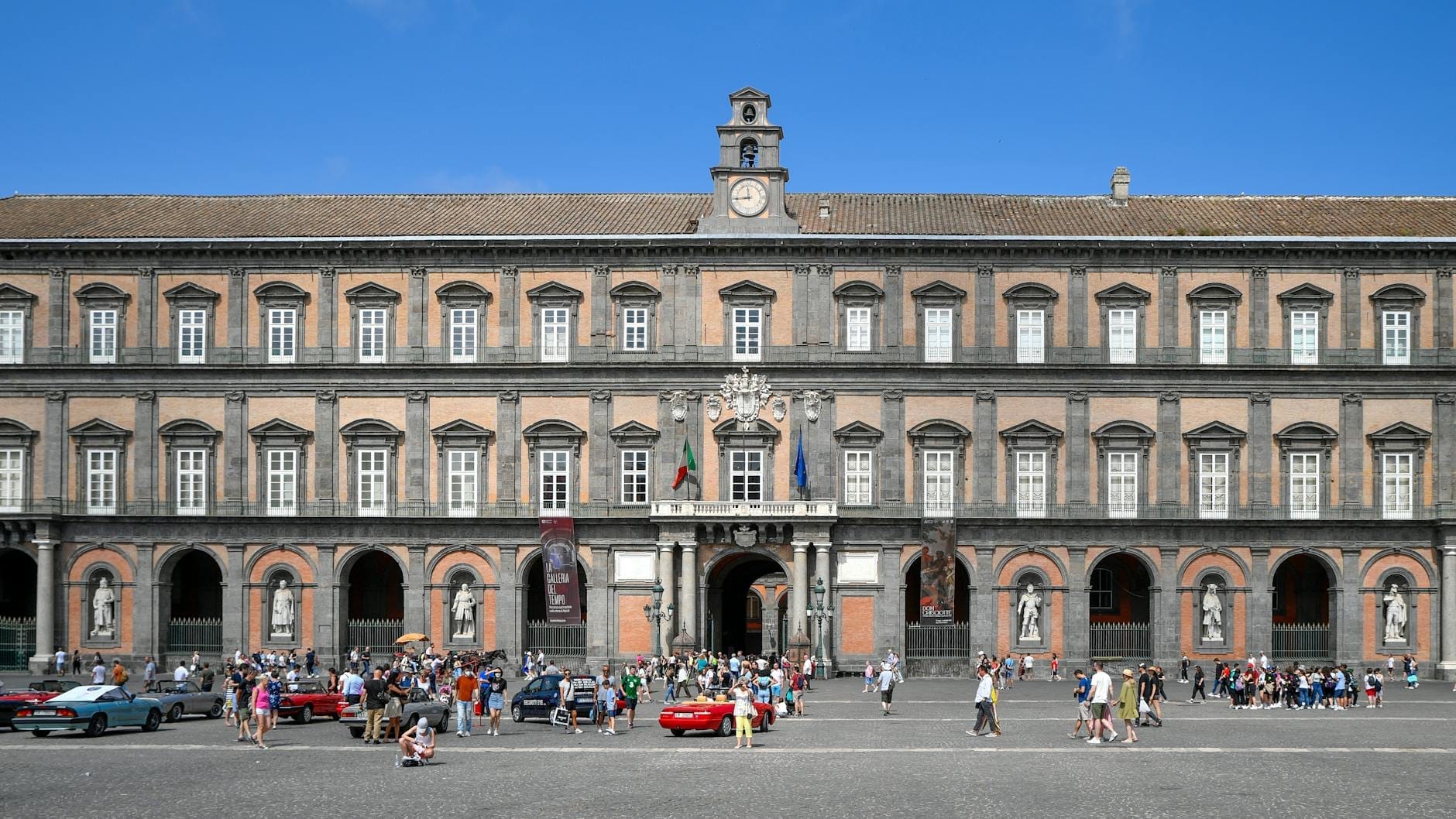
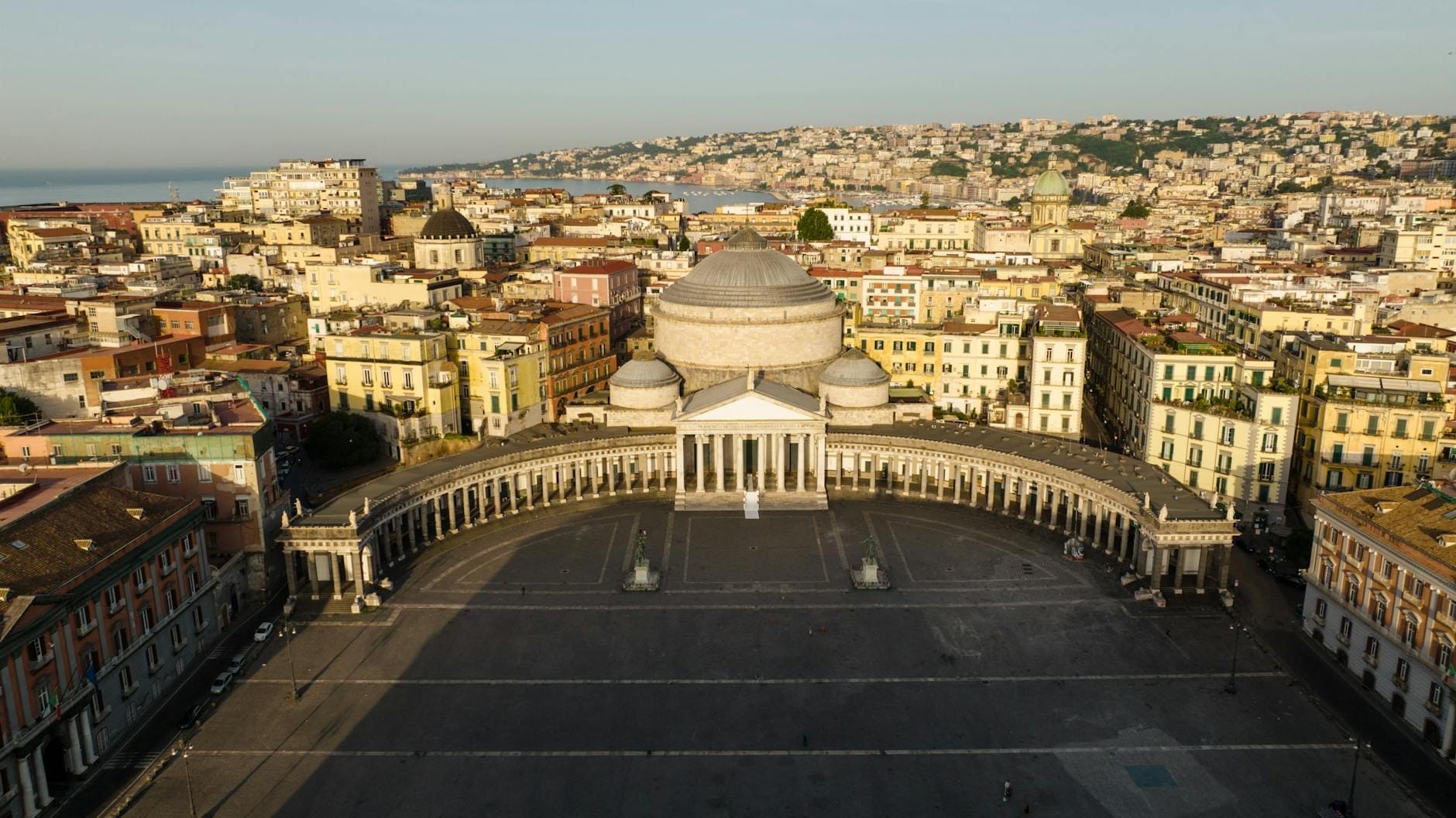
The eastern end of the waterfront, near Castel dell'Ovo and Piazza del Plebiscito, is the most accessible by public transit. Metro Line 6 stops at Municipio station, which deposits you near the main port and a short walk from Via Partenope. From Piazza del Plebiscito, it is a few minutes on foot downhill to the seafront. This makes the eastern end of the Lungomare easy to combine with visits to the Royal Palace or the historic centre.
For the middle section of the promenade, around Villa Comunale and Riviera di Chiaia, the R3 bus line runs along Riviera di Chiaia, one block inland from the seafront. Piazza Amedeo on Line 2 is a gentle walk downhill to the promenade, while Line 6 is useful from nearby waterfront stops such as San Pasquale and Mergellina. From the western end, Mergellina's Line 2 station provides the simplest connection back toward Piazza Garibaldi and the main rail hub.
The promenade itself is entirely flat and walkable. The full length from Mergellina to Castel dell'Ovo takes roughly 45 to 55 minutes at a comfortable pace. On Sundays, when parts of the road are pedestrianised, bike hire is available near Villa Comunale. There are no dedicated cycle lanes during the rest of the week, though the wide pavement on the sea side accommodates most activity.
💡 Local tip
If you are coming from the historic centre, the walk from Piazza del Plebiscito down to the Lungomare takes about 8 minutes. This is one of the most satisfying transitions in Naples: you step out of the dense, narrow streets of the old city and suddenly the bay opens up in front of you.
Where to Stay
Staying directly on the waterfront puts you in one of the quieter and more upscale parts of Naples. The hotels along Via Partenope and in the Chiaia district behind it tend to be four and five-star properties, many with sea-facing rooms and roof terraces. This is not a budget accommodation zone. For those seeking value, the historic centre or areas near Piazza Garibaldi offer cheaper options with easy transit connections to the waterfront.
The Lungomare is best suited to travellers who want to use the waterfront as a base for easy morning walks and evening seafront dining, without needing to be in the thick of the city's more chaotic central districts. It is a good choice for couples and anyone prioritising a calmer environment. Families will appreciate Villa Comunale and the wide pedestrian space. For a full breakdown of where different types of travellers should base themselves in Naples, the where to stay in Naples guide provides neighbourhood-by-neighbourhood comparisons.
Day Trips & Connections
The Mergellina end of the Lungomare is a departure point for ferry services to the islands of the bay. Hydrofoils run from here to Capri, Ischia, and Procida. The main ferry terminal at Molo Beverello is slightly further east, closer to Piazza Municipio, and handles larger car ferries as well as additional hydrofoil routes.
For those planning to explore beyond the waterfront, the Lungomare connects naturally to several of Naples' key districts. Walking north from any point on the promenade takes you into Chiaia within minutes. From there, the funicular at Piazza Amedeo climbs to Vomero and the Castel Sant'Elmo, which offers some of the best panoramic views over the bay. On clear days from the Lungomare itself, you can see all the way to the Sorrento peninsula and, depending on conditions, the outline of Capri's Monte Solaro.
TL;DR
The Lungomare Caracciolo is Naples' main seafront promenade, running 3.9 km from Mergellina to Castel dell'Ovo along the Bay of Naples.
Best experienced on Sunday mornings when the road is car-free, though early weekday mornings offer the most authentic local atmosphere.
Castel dell'Ovo (free entry) and Villa Comunale park are the headline attractions; Borgo Marinari is the place for waterfront dining.
Not a budget-friendly dining zone: food prices on Via Partenope are higher than the rest of the city. Head to the kiosks near Mergellina for affordable waterfront snacks.
Best suited to couples, architecture enthusiasts, runners, and travellers who want open space and sea air alongside the intensity of the city. Not recommended as a base for those on tight budgets or prioritising nightlife access.
Naples has more historic churches per square kilometer than almost any city in Europe. This guide covers the finest: from the Duomo's blood relic ceremony to Caravaggio's most important altarpiece, and the majolica-tiled cloister that stops every visitor cold.
Naples holds more great art per square kilometer than almost any city in Europe. This guide covers the 14 best museums in Naples, from world-class archaeological collections to intimate chapels hiding the most technically astonishing sculptures ever carved.
Planning a trip to Naples, Italy? This guide breaks down every season honestly — temperatures, crowd levels, prices, and local events — so you can choose the right time for your trip, whether you're chasing warm weather, cultural festivals, or the lowest hotel rates.
Naples is one of Italy's most dramatic cities to look at, and where you stand changes everything. This guide covers the finest viewpoints in the city, from Vomero hilltop fortresses to waterfront promenades, boat trips, and volcanic summits.
Naples sits at the center of one of Italy's richest travel regions. Within two hours you can stand inside a Roman city frozen in time, swim off a glamorous island, or walk past 2,500-year-old Greek temples. These are the best day trips from Naples, organized by type.
Naples is one of Europe's most rewarding cities for budget travelers. From UNESCO-listed streets and free castle ramparts to extraordinary public art in metro stations and chaotic street markets, here's how to experience the best of Napoli without opening your wallet.
Naples has a surprisingly functional public transport network once you know how it works. This guide covers metro lines, funiculars, buses, taxis, the airport Alibus, and everything in between, with current fares, schedules, and honest advice on what to skip.
Naples rewards every traveler differently depending on how much time they give it. This guide breaks down the ideal number of days in Naples based on your pace, interests, and whether you plan day trips to Pompeii, Capri, or the Amalfi Coast.
Naples is one of Italy's most debated destinations: raw, overwhelming, and unlike anywhere else in the country. This guide cuts through the clichés to give you a clear-eyed look at what Naples actually offers, who it suits, and whether it deserves a place on your itinerary.
Naples International Airport (Capodichino, NAP) sits just 6 km from the city center, but knowing which transfer option to take can save you time, money, and frustration. This guide breaks down every option from the €5 Alibus to fixed-rate taxis and private door-to-door transfers, with honest advice on what actually works.
Caravaggio spent two turbulent periods in Naples and left behind three surviving masterpieces that transformed Baroque painting in southern Italy. This guide locates every work, gives you current admission prices, practical visiting tips, and the context to understand why these paintings still matter.
Naples at Christmas is unlike anywhere else in Italy. From the centuries-old presepe workshops of Via San Gregorio Armeno to candlelit piazzas and December markets at Castel dell'Ovo, this guide covers everything you need to experience the city's most theatrical season.
Naples is one of the world's great eating cities, and knowing what to order makes all the difference. This guide covers every dish worth tracking down, from the perfect margherita to street food you won't find anywhere else in Italy, with practical tips on where to eat, what to pay, and what to avoid.
Naples, Italy surprises couples at every turn: candlelit trattorias in the historic centre, golden sunsets over Vesuvius from the waterfront, and ferry rides to islands that feel like a world away. This guide covers the city's most romantic spots, experiences, and seasonal tips so you can plan the perfect couples trip to Napoli.
Naples rewards those who look beyond the obvious. This guide uncovers the city's most overlooked sites, from an ossuary filled with skulls to a metro station voted the most beautiful in Europe. These are the places that make Naples genuinely unlike anywhere else.
Napoli is not a city you can absorb from a single vantage point. This guide breaks down every major neighborhood, plots the key attractions on a logical mental map, and tells you exactly how to move between them, whether on foot, by metro, or by funicular.
Naples frames some of the most dramatic sunsets in Europe, with Vesuvius, the Bay of Naples, and the islands of Capri and Ischia providing a backdrop that few cities can match. Whether you want a hilltop panorama, a waterfront stroll, or a boat ride into the golden hour, this guide covers the best spots.
Three days is enough time to get a real feel for Naples, Italy — one of Europe's oldest, most layered cities. This itinerary covers the UNESCO-listed historic centre, the seafront, the underground city beneath your feet, and the hilltop views that put it all in perspective. No filler, no tourist traps — just a practical day-by-day plan that works.
Naples, Italy rewards luxury travelers with a combination few European cities can match: grand historic hotels overlooking the Bay of Naples, world-class fine dining rooted in one of Italy's most serious food cultures, and private experiences ranging from underground archaeological tours to boat charters beneath Vesuvius. This guide cuts through the noise to identify what genuinely delivers at the top end of Napoli.
Naples, Italy comes alive after dark in ways that few Italian cities can match. From the elegant cocktail bars of Chiaia to the packed dance floors of Bagnoli, this guide breaks down exactly where to go, when to go, and what to expect from Neapolitan nightlife.
Naples is the cheapest major city in Italy to visit, with €1 espressos, €3 street pizza, and a UNESCO historic centre you can explore for free. This guide breaks down real daily costs, the best free attractions, smart transport choices, and exactly how to stretch your euros further in Napoli.
Choosing between Naples and Sorrento as your southern Italy base shapes your entire trip. This guide breaks down the real differences in cost, atmosphere, transport access, and day-trip logistics so you can make the right call for your travel style.
Naples is the birthplace of pizza, and eating it here is nothing like eating it anywhere else. This guide covers the best pizzerias across the city, from legendary institutions to neighbourhood favourites, with honest rankings, practical logistics, and advice on what actually separates great Neapolitan pizza from a tourist-trap imitation.
Naples Italy has a reputation that outpaces its reality. Petty crime exists, but with the right awareness you can explore freely. This guide covers the neighborhoods to know, the scams actually targeting tourists, and the practical habits that make the difference.
The Feast of San Gennaro is the spiritual and cultural heartbeat of Naples, drawing tens of thousands to witness a ritual that has defined the city for over 1,700 years. This guide covers all three annual dates, the blood liquefaction ceremony, crowd logistics, and what the festival reveals about Neapolitan identity.
Naples rewards shoppers who go beyond the tourist trinket stalls. This guide covers the city's best shopping streets by district, its most authentic markets, and the foods and crafts worth carrying home — with honest advice on where not to waste your time or money.
Queues at Naples' top attractions can cost you hours of your trip. This guide breaks down exactly which sites offer genuine skip-the-line access, where to book, what it costs, and which 'skip-the-line' products are misleading marketing.
Naples has one of the great street food cultures in Europe, built on centuries of feeding dock workers, market sellers, and anyone who needed a meal without a table. This guide covers the essential dishes, the best neighborhoods to eat them, and the practical details that separate a great food walk from a disappointing tourist detour.
Getting from Naples to the Amalfi Coast involves more choices than most guides admit. This breakdown covers every realistic option, from the cheapest bus combination to the fastest ferry, with honest assessments of what works in different seasons.
Getting from Naples to Capri is simpler than most visitors expect, but the details matter: which port, which operator, how early to book, and what to do once you arrive. This guide covers all of it, from ferry prices and schedules to practical day trip planning.
Pompeii is 25 kilometers from Naples and one of the most visited archaeological sites in the world. This guide breaks down every transport option, the exact station you need, what tickets cost, and how to make the most of the trip without the usual tourist pitfalls.
Beneath the streets of Naples Italy lies one of Europe's most extraordinary subterranean worlds: 450 kilometers of Greek-carved tunnels, Roman aqueducts, and WWII shelters. This guide covers everything you need to visit Napoli Sotterranea, from ticket prices and tour logistics to what you'll actually see underground.
Choosing between Naples and Rome is one of the most common dilemmas for Italy first-timers. This guide breaks down both cities across food, cost, culture, day trips, and logistics so you can make the right call for your itinerary.
Naples rewards walkers more than almost any city in Italy. This guide covers the best self-guided walking routes through the historic center, royal quarter, and waterfront, with practical details on timing, distances, costs, and what to skip.
Naples, Italy has a Mediterranean climate that rewards visitors who time their trip carefully. This guide breaks down what the weather actually looks like each month, which seasons to avoid, and what to throw in your bag depending on when you arrive.
Naples is a far better family destination than its reputation suggests. From hands-on science museums and underground Roman tunnels to pizza-making workshops and boat trips on the Bay of Naples, this guide covers the best activities for families traveling to Napoli, with honest advice on what works for different ages and how to plan your visit.
Both sites were buried by Mount Vesuvius in 79 AD, but they offer very different experiences. This guide breaks down the key differences in size, preservation, visitor experience, and logistics so you can choose the right one — or make a case for visiting both.
Naples rewards curious travelers with layers of history, art, street food, and coastal scenery that few Italian cities can match. This guide covers the essential experiences, practical logistics, honest advice on what to skip, and how to structure your time in Napoli.
Naples is one of the great eating cities of Italy, and knowing where to go separates a memorable meal from a mediocre tourist trap. This guide covers the best neighborhoods for dining, top restaurant picks across every budget, essential dishes to order, and practical tips for eating like a local.
Choosing where to stay in Naples Italy can make or break your trip. This guide breaks down every major neighbourhood by vibe, price, location, and who it actually suits, so you can book with confidence.