Procida Island: The Gulf of Naples Without the Crowds
A volcanic island of just 4.1 square kilometers, Procida sits between Naples and Ischia with stacked pastel houses, a medieval fortified hilltop, and one of the most photographed fishing harbors in southern Italy. It can be done as a day trip from Naples, but one night changes the experience entirely.
Quick Facts
- Location
- Gulf of Naples, between Cape Miseno and Ischia, Campania, Italy
- Getting There
- Ferry from Naples Molo Beverello or Pozzuoli; approx. 1 hour from Naples, 35 min from Pozzuoli
- Time Needed
- 6–8 hours for a day trip; overnight strongly recommended
- Cost
- Ferry ticket (return) approx. €20–25; the island itself is free to explore
- Best for
- Slow travel, photography, seafood, escaping summer crowds
What Procida Actually Is
Procida is a volcanic island covering roughly 4.1 square kilometers in the Gulf of Naples, positioned between Cape Miseno on the mainland and the larger island of Ischia to the northwest. With just over 10,000 permanent residents, it is the smallest and least touristed of the three main islands in the gulf, and that contrast with Capri is precisely what draws travelers who have already done the obvious things.
In 2022, Procida was designated Italy's Capital of Culture, a distinction that brought national attention without triggering the infrastructure overload that sometimes follows. The island remains largely residential, its lanes too narrow for tour buses, its harbor too small for cruise ships. What you find here is a working Italian island where locals actually live, fish, and argue over coffee, and where the famous painted facades of Corricella are still occupied by the families who built them.
Procida makes a logical addition to any Naples itinerary, particularly for travelers who have already visited Pompeii or the main city museums and want something that feels genuinely different.
Arriving: Marina Grande and First Impressions
Ferries and hydrofoils dock at Marina Grande, the island's main commercial harbor and the first thing you see when you arrive. The waterfront here is functional rather than pretty: stacked plastic crates, fishing nets drying on the quay, a few cafes facing the water. It is not the postcard shot you came for, and that is fine. Marina Grande is the island's working center, and it sets an honest tone for what Procida actually is.
💡 Local tip
Morning ferries from Naples (departing around 7:00–9:00) arrive before the island wakes up. You will have the lanes largely to yourself for the first hour or two, which makes a significant difference for photography and general atmosphere.
From the harbor, the island fans out in multiple directions. Scooter and electric golf cart rentals are available near the dock for those who want to cover ground quickly, but the island is compact enough to walk entirely. Most visitors instinctively turn toward Corricella, which is the right instinct.
Tickets & tours
Live prices and dates from our booking partner. If you book, we may earn a commission at no extra cost to you.
Corricella: The Fishing Village Worth the Walk
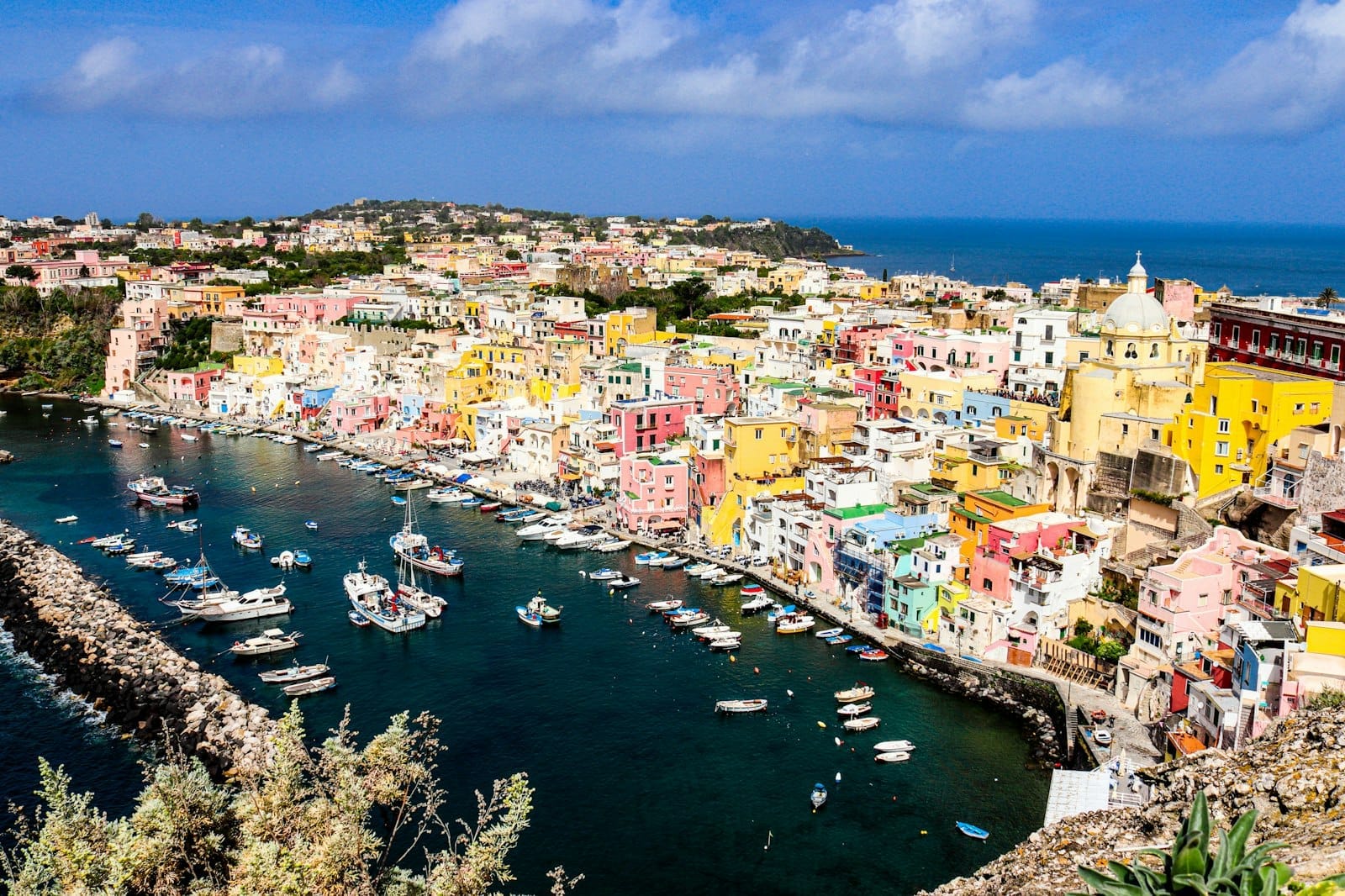
Corricella is the reason most people come to Procida. It is a crescent-shaped fishing harbor, accessible only on foot down a long staircase from the road above, ringed by tightly packed houses in yellow, orange, pink, and terracotta. The boats in the harbor are small and weathered. The restaurants lining the waterfront set out tables directly on the stone quay. In terms of pure visual composition, it is one of the most striking harbors in Italy.
The light here changes dramatically through the day. In the morning, the eastern-facing facades catch direct sun and the water is calm and reflective. By midday, the harbor sits in partial shade and the scene flattens somewhat. Late afternoon, around 16:00–18:00, is when the warm light returns from a lower angle and the whole harbor takes on the glow that photographers come specifically to capture. If you are visiting in summer, staying through early evening is worth adjusting your ferry time for.
The restaurants at Corricella tend to serve straightforward seafood: spaghetti alle vongole, grilled fish, fried anchovies. Prices are higher than the mainland but lower than Capri. Booking ahead is advisable in July and August, when the harbor fills up quickly at lunchtime.
⚠️ What to skip
Do not confuse Corricella with Marina Grande. They are connected by road and stairs but are distinct parts of the island. Corricella is car-free and reached only on foot.
Terra Murata: The Medieval Hilltop
Rising above Corricella is Terra Murata, the medieval fortified settlement that crowns the highest point of the island at 91 meters. The name translates literally as 'walled land,' and the fortifications were built during the Middle Ages specifically to protect residents from the coastal pirate raids that plagued southern Italian islands for centuries. The walls are still intact, and the approach through the arched gateway gives a clear sense of how defensive the logic was.
Inside Terra Murata, the lanes are stone-paved and very narrow, flanked by churches, a former Bourbon prison now being slowly converted for cultural use, and panoramic terraces that look out over the gulf toward Ischia, the mainland coast, and on clear days the profile of Vesuvius to the east. The Abbazia di San Michele Arcangelo, the island's patron saint church, sits within the walls and is worth a brief visit for its painted ceiling and the collection of ex-votos inside.
The views from Terra Murata rival the best panoramic spots around Naples. If you are comparing options, the perspective here is different from what you get at Castel Sant'Elmo on the mainland: from Procida's hilltop, you are looking back at the city across open water, which gives you a rare sense of the full geography of the gulf.
The Rest of the Island: Beaches, Chiaiolella, and What to Skip
Procida has several beaches, most of them small and rocky with a few patches of dark volcanic sand. Chiaiolella, on the southwestern tip of the island, is the largest and most accessible beach area and also the most crowded in summer. The lagoon here faces Vivara, a small uninhabited island connected to Procida by a footbridge that has been closed and reopened periodically as a nature reserve. Check locally whether access to Vivara is permitted during your visit.
Spiaggia della Silurenza and Pozzo Vecchio (used as a filming location for the 1994 film Il Postino) are smaller and quieter, with cleaner water and fewer facilities. These suit visitors who are content to bring their own water and snacks and spend a few hours away from the main circuits.
ℹ️ Good to know
Procida's beaches are best visited on weekdays. On summer weekends, day-trippers from Naples and Pozzuoli fill the island significantly, and the small beaches become very crowded by midday.
Travelers who are primarily beach-focused and want facilities, beach clubs, and organized water sports will likely find Procida too limited. Those seeking a looser, more exploratory day on an island that still feels connected to everyday Italian life will find it well-suited to that.
Historical and Cultural Context
Procida's human history is remarkably long. Mycenaean Greek objects from the 16th to 15th centuries BC have been found on the island and on its satellite island Vivara, making it one of the earliest documented points of Greek contact in the western Mediterranean. Greek settlers established a formal presence in the 8th century BC, and Roman-era sources record the island being used as a holiday retreat. The Romans, who developed coastal villas throughout the Gulf of Naples, recognized the same qualities visitors notice today: isolation, mild climate, and proximity to the mainland.
That layered history connects Procida to the broader archaeological world of the region. If the ancient context interests you, pairing a Procida visit with a day at Naples' National Archaeological Museum gives you both the artifacts and the lived landscape that produced them.
The island's designation as Italy's Capital of Culture for 2022 was built around the theme 'La cultura non isola' (Culture does not isolate), a deliberate play on the word 'island.' That phrase captures something real about Procida: despite its physical separation from the mainland, it has always been deeply connected to Naples through fishing, trade, and daily ferry traffic. Many Procidani commute to the city for work. The island is not remote in any meaningful sense; it is simply quiet.
Getting There and Getting Around
Ferries and faster hydrofoils depart from Naples Molo Beverello in the city center, with a crossing time of approximately one hour by ferry or slightly less by hydrofoil. Slower, cheaper ferry service also runs from Pozzuoli, west of Naples, taking around 35 minutes and costing less. The Pozzuoli route is worth considering if you are also planning to explore the Campi Flegrei area.
Return tickets typically cost in the range of €20–25, depending on the operator and vessel type. Schedules vary seasonally and are updated regularly, so check directly with ferry operators (Medmar, Caremar, and SNAV all serve the route) or a consolidated booking site before travel. For context on planning the wider trip, the day trips from Naples guide covers Procida alongside other gulf and coastal options.
On the island, walking is the most practical option for the main sights. Scooter and electric cart rentals are available near Marina Grande for those who want to reach the beaches faster or cover more ground. There is a local bus service, but routes are infrequent and primarily useful for reaching Chiaiolella. The entire island can be crossed on foot in under 30 minutes.
💡 Local tip
Book return ferries in advance for summer weekends. The last boats back to Naples fill up, and missing the final sailing means an unplanned overnight stay.
Insider Tips
- The best light for photographing Corricella is late afternoon (16:00–18:00), when the sun drops low and catches the colored facades directly. Morning light is also good but from a flatter angle.
- The Pozzuoli ferry is cheaper, faster, and often less crowded than the Naples route. If you are traveling by metro, Line 2 or the Cumana railway connects Naples to Pozzuoli in under 30 minutes.
- Terra Murata is significantly cooler than the harbor in summer, thanks to the elevation and sea breeze. If you are visiting in July or August, time your hilltop walk for the warmest part of the afternoon.
- Most restaurants at Corricella do not take reservations online. Either book by phone (Italian helpful) or arrive before 12:30 to secure a waterfront table at lunch.
- The island has a notably strong lemon culture: granita di limone and lemon liqueur produced locally are worth trying and make practical, light gifts that fit in a bag.
Who Is Procida For?
- Photographers looking for the colored harbor and narrow lane compositions without Capri-level foot traffic
- Travelers on a second or third Naples trip who have covered the main sites and want slower, quieter experience
- Couples looking for a relaxed half-day or overnight away from the city
- Food-focused visitors who want straightforward Campanian seafood in a working waterfront setting
- History readers interested in the layered Greek, Roman, and medieval presence in the gulf
Nearby Attractions
Combine your visit with:
- Amalfi Coast
The Amalfi Coast stretches 40 kilometres along one of Italy's most dramatic shorelines, linking 13 cliff-side towns between Vietri sul Mare and Positano. A UNESCO World Heritage Site since 1997, it rewards visitors with layered history, vertiginous views, and some of the most photographed coastline in the Mediterranean. Getting there from Naples takes planning, but the payoff is considerable.
- Capri
Capri is one of the most recognized islands in the Mediterranean, sitting at the southern edge of the Gulf of Naples. It offers dramatic limestone cliffs, the famous Blue Grotto, elegant piazzas, and views that justify the journey. But it comes with crowds, costs, and logistical quirks that every visitor should understand before boarding the ferry.
- Cimitero delle Fontanelle
Carved into volcanic tuff in the Sanità district, the Cimitero delle Fontanelle holds the remains of roughly 40,000 people, many of them victims of the 1656 plague. Reopened in April 2026 after a five-year closure, it is one of the most historically dense and atmospheric places in all of southern Italy.
- Città della Scienza
Città della Scienza is Naples' premier interactive science museum, set on a former industrial waterfront in the Bagnoli district. With hands-on exhibits spanning the human body, sea life, insects, and space, plus a full planetarium, it delivers a genuinely engaging half-day for families, curious adults, and school groups alike.
Planning a trip? Discover personalized activities with the Nomado app.