Città della Scienza Naples: The Complete Visitor's Guide to the City of Science
Città della Scienza is Naples' premier interactive science museum, set on a former industrial waterfront in the Bagnoli district. With hands-on exhibits spanning the human body, sea life, insects, and space, plus a full planetarium, it delivers a genuinely engaging half-day for families, curious adults, and school groups alike.
Quick Facts
- Location
- Via Coroglio 57/104, Bagnoli, Naples
- Getting There
- Metro line Gianturco - Pozzuoli (Campi Flegrei stop), then bus 607 or C1. Parking available at €3/day (250m from entrance).
- Time Needed
- 3–4 hours for Science Centre; add 45–60 minutes for a planetarium show
- Cost
- €14 full access adults; €11 reduced; lower if skipping the planetarium.
- Best for
- Families with children, science enthusiasts, rainy-day visits, school trips
- Official website
- www.cittadellascienza.it/en
What Città della Scienza Actually Is
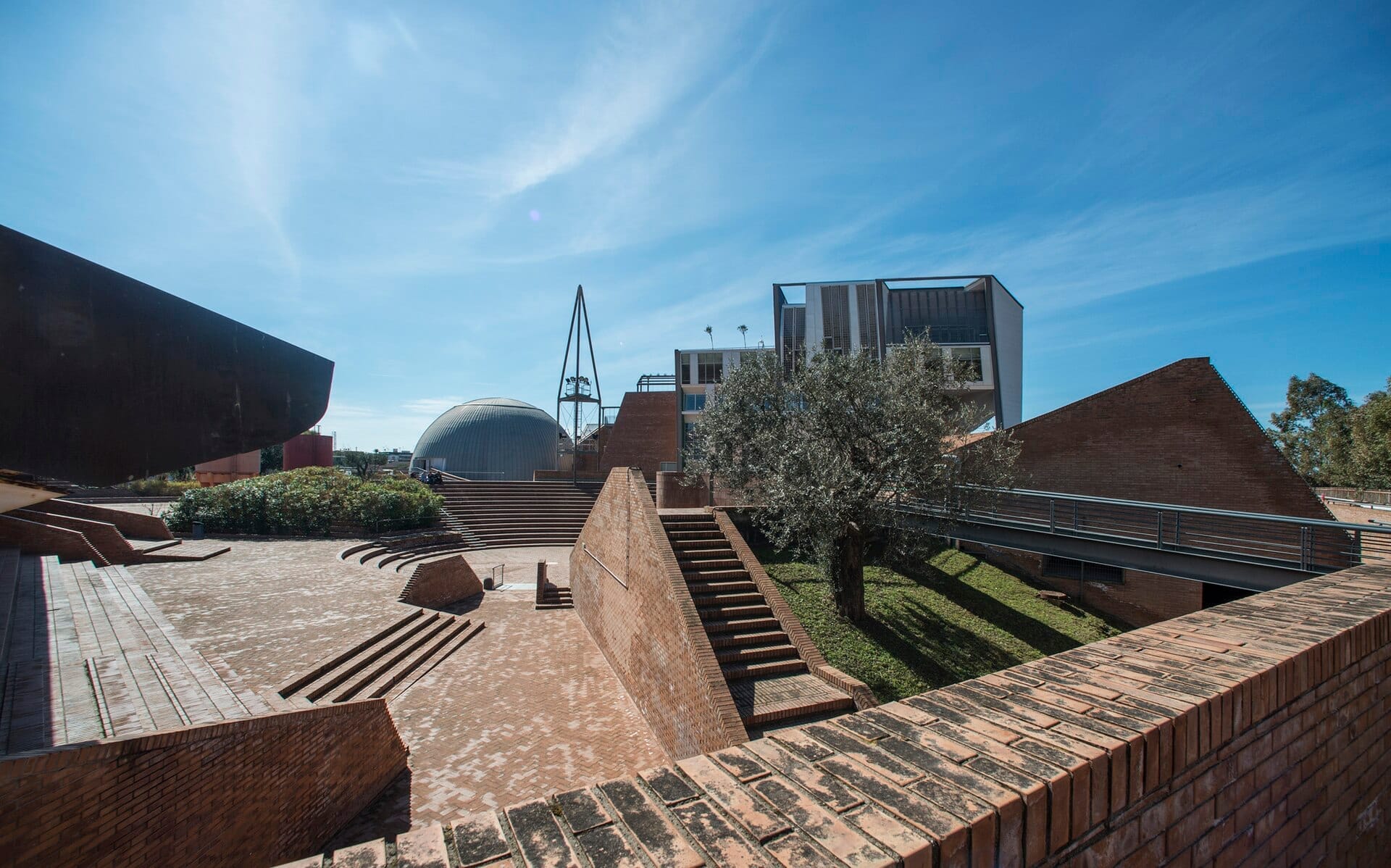
Città della Scienza (City of Science) is Naples' largest interactive science museum, occupying a converted industrial complex on the Bagnoli waterfront, roughly 8 km west of the city centre. It is not a traditional museum of objects behind glass. The experience is built around hands-on interaction: you press, turn, lift, and experiment your way through themed exhibition zones covering human biology, marine ecosystems, physics, and the cosmos.
The flagship permanent exhibit is Corporea, a dedicated exploration of the human body that uses models, light installations, and digital interactives to walk visitors through anatomy, health, and physiology. Alongside Corporea, the Science Centre hosts rotating and permanent exhibitions on insects, ocean life, and natural science. The on-site planetarium runs scheduled shows throughout the day, and the combination ticket is worth taking if you have time.
💡 Local tip
Book planetarium show times in advance, especially on weekends and school holidays. Shows sell out independently of the Science Centre admission, and the planetarium schedule is fixed rather than continuous.
The Setting: Bagnoli's Industrial Past and Waterfront Location
Understanding the location adds something real to the visit. The Bagnoli district was for most of the 20th century one of southern Italy's major industrial zones, home to steelworks and chemical plants. After the factories closed in the 1990s, the area began a slow transformation. Città della Scienza opened in 1996 as part of that regeneration effort, occupying former industrial buildings directly on the bay.
A catastrophic fire in March 2013 destroyed large sections of the complex. The rebuilding took years, and the museum that exists today is in many ways a rebuilt and updated version of the original. The location retains an industrial character: exposed steel, wide open spaces, and a waterfront promenade that runs beside the complex. On clear days, you can see across the Bay of Naples toward Vesuvius and Capri from the outdoor terraces. It is not a pretty, manicured setting, but it has a particular atmosphere that contrasts sharply with the baroque density of the city centre.
The Bagnoli waterfront is part of a broader area of western Naples that includes the volcanic Campi Flegrei fields nearby. If you are combining Città della Scienza with other western Naples sites, the Naples Underground tunnels in the historic centre make for a completely different but complementary half-day.
Tickets & tours
Live prices and dates from our booking partner. If you book, we may earn a commission at no extra cost to you.
Inside the Science Centre: What to Expect Floor by Floor
Corporea is the largest and most polished zone in the building. It is structured as a journey through the human body at different scales, from cellular biology to full organ systems. The exhibits use a mix of physical models, mirror installations, and digital screens. Children tend to gravitate toward the movement and reflex stations; adults often spend more time at the nutrition and neuroscience sections. The lighting is deliberately atmospheric, which creates an immersive feel but means the space can feel dim if you are there with younger children who want to read labels.
Beyond Corporea, the Science Centre's other exhibition areas cover sea life (with aquarium-style tanks and ocean ecology panels), the insect world (with live specimens and magnified displays), and physics and engineering principles through interactive machines. The quality of these zones is more variable than Corporea. Some sections feel well-maintained and current; others show their age and rely on older, less intuitive displays. Come with the expectation that you are navigating a working science museum rather than a theme park.
The planetarium occupies a separate domed structure within the complex. Shows run on a fixed schedule and cover topics from solar system basics to deep space narratives. The dome projection is high quality, and even a straightforward astronomical show gains something from the immersive format. Check the day's schedule at the ticket office on arrival.
ℹ️ Good to know
Exhibits are labeled in Italian, with English available in Corporea and selected zones. If English is your primary language, Corporea will be the most accessible part of the visit. Consider downloading the museum's app or checking the official website for any English-language guided tours before you arrive.
When to Visit and How the Experience Changes
Città della Scienza is strongly oriented toward families and school groups, and that shapes the crowd dynamic significantly. Tuesday through Thursday mornings during the school year are the quietest times for adult visitors, but they are also when organized school trips fill the Corporea halls with groups of children on class excursions. The noise level can be considerable. If you are visiting without children and prefer a calmer atmosphere, Friday or Saturday mornings when it opens tend to be more manageable.
Weekends in spring and school holidays, particularly around Easter and in May, are the busiest periods. The museum can feel genuinely crowded in the Corporea section, where the corridors are not especially wide. Arrive at or just after opening to get ahead of the main wave. The late afternoon, particularly the final hour before closing, is quieter, but you risk not finishing the full circuit.
As a largely indoor attraction, Città della Scienza is one of the more logical choices for a rainy day in Naples. The city's weather can be unpredictable between October and April, and having an indoor half-day option that is genuinely engaging, rather than just a way to stay dry, is useful. Summer visits are also comfortable since the building is air-conditioned, which matters when Naples temperatures climb past 30°C in July and August.
For a full picture of how to time your Naples trip around weather and crowds, the best time to visit Naples guide covers seasonal patterns in detail.
Getting There: Transit, Parking, and Practical Logistics
The museum's address is Via Coroglio 57/104, in the Bagnoli district on Naples' western waterfront. From the city centre, Metro Line 2 runs to the Campi Flegrei stop, from where bus 607 or C1 connects to the museum. The bus journey adds roughly 10–15 minutes to the metro ride. The full journey from the historic centre or central train station typically takes 30–45 minutes depending on connections.
If you are driving, parking is available near the entrance at approximately €3 per day, which is notably cheap by Italian city standards. The 250-metre walk from the car park to the entrance crosses the edge of the industrial waterfront area and is flat and straightforward. Taxis and ride-hailing services (Uber, Free Now, and local apps like IT Taxi) can drop you directly at the entrance.
⚠️ What to skip
Opening hours change seasonally. From June 15th to September 15th: 10:00 am - 4:00 pm (closed Mondays); from September 16th to June 14th: 9:00 am - 5:00 pm (closed Mondays). Always check the official website before you travel, especially if visiting in summer or around public holidays.
Opening Hours and Tickets: The Current Picture
As of 2026, the museum runs different seasonal schedules. From February 23 to May 31: open daily 9:00–17:00. From June 1 to June 14: closed Mondays, open Tuesday–Sunday 9:00–17:00. From June 15 onward: closed Mondays, open Tuesday–Sunday 10:00–16:00. The museum closes on December 25 and January 1, with reduced hours on December 24 and December 31.
Full access tickets covering both the Science Centre and the Planetarium cost €14 for adults and €11 for the reduced rate, which applies to children aged 3–17, students, and visitors over 65. If you only want the Science Centre without the planetarium, tickets are €11 for adults and €8 reduced. Children under 3 enter free. ICOM cardholders and residents of the 80124 postal code (Bagnoli) also qualify for free entry, with some exclusions.
For visitors trying to balance a Naples trip across multiple major attractions, it is worth comparing the relative time investment here against the Naples National Archaeological Museum or the Capodimonte Museum. Città della Scienza is the clear first choice if you are traveling with children or have a specific interest in science.
Honest Assessment: Who Will Get the Most From This Visit
Città della Scienza delivers best for families with children roughly aged 5 to 14. The interactive format, scale, and variety keep that age group genuinely occupied, and the Corporea exhibit in particular is well-designed enough to hold adult attention too. Science enthusiasts, educators, and visitors making a point of seeing Naples beyond its historic and artistic centre will also find this worthwhile.
The museum is less satisfying for visitors with limited time in Naples who are primarily interested in art, history, or architecture. The Bagnoli location means you are committing 30 to 45 minutes of travel each way, and the setting, while interesting in context, is not beautiful. Visitors who come to Naples for its churches, street life, and food culture should be honest with themselves about whether a science museum in a former industrial district is the right use of a limited day.
If your interest leans toward Naples' cultural and historical depth, the best museums in Naples guide offers a wider comparison of options across different interests.
Insider Tips
- Buy combination tickets (Science Centre + Planetarium) online in advance during peak season. The planetarium shows have fixed capacities and can fill up, especially on Saturday mornings and during school holidays.
- The Corporea exhibit has a logical sequence that starts at the entrance and moves through the body system by system. Following this flow rather than wandering randomly makes the experience significantly more coherent.
- The outdoor terrace on the waterfront side of the building offers a clear view across the bay toward Vesuvius and Capri on clear days. It is easy to miss if you stay entirely indoors. Worth stepping out midway through your visit.
- The museum café is a practical option for lunch but not notable for quality. Bringing snacks is sensible if you are visiting with children and planning a full half-day. The nearest alternative dining options are a short bus ride away in Fuorigrotta.
- Bagnoli residents (postal code 80124) enter free with ID. If you are staying in that part of Naples, this is genuinely worth knowing.
Who Is Città della Scienza For?
- Families with children aged 5–14 looking for a full half-day activity
- Visitors who want to see Naples beyond its historic and artistic core
- Rainy-day alternatives when outdoor sightseeing is not viable
- Science and STEM enthusiasts seeking an Italian perspective on interactive education
- Travelers spending multiple days in Naples who have already covered the main historic-centre highlights
Nearby Attractions
Combine your visit with:
- Amalfi Coast
The Amalfi Coast stretches 40 kilometres along one of Italy's most dramatic shorelines, linking 13 cliff-side towns between Vietri sul Mare and Positano. A UNESCO World Heritage Site since 1997, it rewards visitors with layered history, vertiginous views, and some of the most photographed coastline in the Mediterranean. Getting there from Naples takes planning, but the payoff is considerable.
- Capri
Capri is one of the most recognized islands in the Mediterranean, sitting at the southern edge of the Gulf of Naples. It offers dramatic limestone cliffs, the famous Blue Grotto, elegant piazzas, and views that justify the journey. But it comes with crowds, costs, and logistical quirks that every visitor should understand before boarding the ferry.
- Cimitero delle Fontanelle
Carved into volcanic tuff in the Sanità district, the Cimitero delle Fontanelle holds the remains of roughly 40,000 people, many of them victims of the 1656 plague. Reopened in April 2026 after a five-year closure, it is one of the most historically dense and atmospheric places in all of southern Italy.
- Herculaneum (Ercolano)
Buried by Vesuvius in 79 AD and only partially excavated, Herculaneum is the most intact Roman city on earth. Smaller than Pompeii, quieter, and significantly better preserved, it rewards visitors who want to feel rather than just see ancient Rome. Located 8 km from Naples, it is reachable in under 30 minutes by Circumvesuviana train.
Planning a trip? Discover personalized activities with the Nomado app.