Museo e Real Bosco di Capodimonte: Naples' Royal Palace Museum and Park
Built for King Carlo di Borbone in 1738 to house the legendary Farnese collection, the Museo e Real Bosco di Capodimonte is Italy's most comprehensive royal art museum outside Rome. The palace holds 47,000 works spanning seven centuries, while its 134-hectare park offers sweeping views over Naples and the Bay of Naples — free to enter, year-round.
Quick Facts
- Location
- Via Miano 2, 80131 Naples – hilltop north of the city centre
- Getting There
- Metro Line 1 (Museo metro station) or Line 2 (Piazza Cavour), then bus 3M, 168, 178, C63, or 204 to the park entrance
- Time Needed
- 2–3 hours for the museum; add 1–2 hours for the park
- Cost
- Museum from €15; Campania Artecard discounts apply. The Royal Park (Bosco) is free.
- Best for
- Art lovers, families wanting green space, panoramic views of the Bay of Naples
- Official website
- capodimonte.cultura.gov.it
What Capodimonte Actually Is
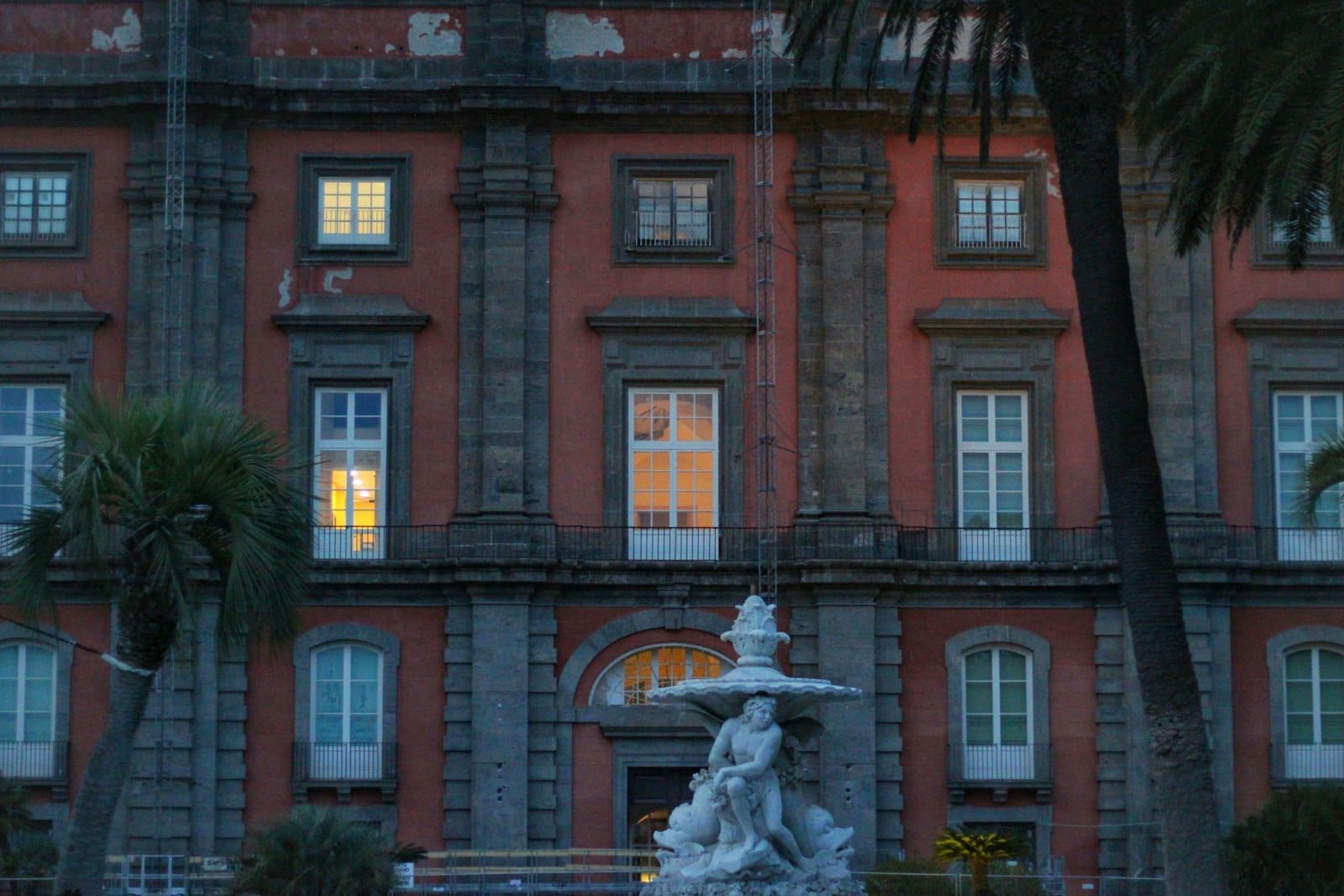
The Museo e Real Bosco di Capodimonte is two experiences in one: a monumental Bourbon royal palace turned art museum, and one of Italy's largest urban parks wrapped around it. Most visitors come for one and discover the other. The palace is not a compact highlights museum — it is a full-day institution covering over 15,000 square meters of galleries across multiple floors. The park, free to all, stretches 134 hectares down the hill toward the city, offering the kind of breathing room that Naples' dense historic centre rarely provides.
The scale can be surprising. Travelers expecting a tidy Florentine-style gallery will find instead a sprawling royal residence where Italian masters, Spanish court portraits, Flemish works, Neapolitan paintings, and contemporary installations share space across dozens of rooms. If you approach it with a plan and some patience, it rewards both.
💡 Local tip
Pick up the free museum map at the entrance and identify your priorities before climbing to the upper floors. Without a plan, it is easy to spend an hour in the wrong wing and miss masterworks like Titian's Danae or Caravaggio's Flagellation of Christ.
History: From Farnese Inheritance to Public Museum
The palace was commissioned in 1738 by King Carlo di Borbone — later Charles III of Spain — after he inherited the celebrated Farnese collection through his mother, Elisabeth Farnese of Parma. The Farnese were among the most powerful Renaissance patrons in Europe, and their holdings included works by Raphael, Titian, and Annibale Carracci. Carlo needed a purpose-built home for the collection and chose the hill above Naples, then open farmland, as the site. The architect Giovanni Antonio Medrano drew up the plans for a three-story palace in pale yellow stone.
Construction stretched across most of the 18th century. The Bourbon kings used Capodimonte as a hunting lodge and summer residence before it became a center for the royal porcelain manufactory, which produced the distinctive Capodimonte ware now displayed in the museum's decorative arts section. After Italian unification in the 1860s, the palace changed hands repeatedly — military use, private lease, legal disputes — before the Italian state acquired it and formally opened it as a public museum in 1957.
The collection has continued to grow since then. Today it holds approximately 47,000 artworks, making Capodimonte one of the largest repositories of art in Italy. It is also the primary museum for Neapolitan painting — a tradition spanning from the Angevins through the Baroque period that gets little international attention despite its scale and ambition. For context on how this fits into Naples' broader artistic heritage, the best museums in Naples guide covers where Capodimonte sits relative to the city's other major collections.
Tickets & tours
Live prices and dates from our booking partner. If you book, we may earn a commission at no extra cost to you.
Capodimonte National Gallery tour with an art historian
From 220 €Instant confirmationFree cancellationSmall Group Tour of Capodimonte Museum in Naples
From 39 €Instant confirmationFree cancellationCapodimonte Museum admission tickets
From 20 €Instant confirmationSan Martino National Museum and Charterhouse
From 9 €Instant confirmation
The Collection: What to See and Where
Farnese Gallery and Italian Masters
The first floor houses the Farnese collection, the historical core of the museum. Here you will find Titian's Danae (1545), a reclining nude of extraordinary quality, and his portrait of Pope Paul III with his nephews, one of the most psychologically acute portraits of the Renaissance. Raphael's contribution is a portrait of Cardinal Alessandro Farnese. Annibale Carracci's large-format mythological scenes show what late Renaissance painting looked like before Caravaggio changed everything.
The rooms themselves carry the weight of royal taste: high ceilings, original parquet floors in some sections, and a sequence of spaces that reflects 18th-century ideas about how art should be arranged — by patron family, then by school, then by prestige. It feels more like a royal residence than a neutral white-cube museum, which adds to the experience rather than detracting from it.
Caravaggio and the Neapolitan Baroque
The second floor is where Neapolitan painting dominates. Caravaggio spent time in Naples in 1606 and again in 1609, and the city's painters were transformed by the encounter. Capodimonte holds his Flagellation of Christ, a large canvas of raw physical drama painted for the church of San Domenico Maggiore. If you want deeper context on how Caravaggio shaped the city's artistic identity, the Naples Caravaggio guide traces his works across several sites.
Around it hangs a dense survey of Neapolitan Baroque: Jusepe de Ribera, Luca Giordano, Artemisia Gentileschi, Mattia Preti. These are painters who rarely appear in northern European museums and whose scale and ambition consistently surprises first-time visitors. This section alone justifies the museum's reputation.
Decorative Arts, Porcelain, and the Royal Apartments
The third floor contains the royal apartments, reopened after restoration in recent years, and the Capodimonte porcelain collection. The porcelain manufactory, established here by Charles III in 1743, produced some of the finest soft-paste pieces in 18th-century Europe before the king transferred the kilns to Spain. The room devoted to the so-called Porcelain Parlour, originally created for the Royal Palace of Portici, is a period interior of almost overwhelming decorative intensity — every wall surface covered in hand-modeled porcelain figures and foliage.
The Royal Park: 134 Hectares Above the City
Entry to the Real Bosco di Capodimonte is free, and that free access attracts around one million visitors a year — most of them Neapolitans rather than tourists. On weekend mornings, the lower paths fill with families, joggers, and groups of older men playing cards at the benches near the main gate. By mid-morning, the upper sections near the palace are quieter. On weekday mornings, you can walk under the plane trees with almost no company.
The park was designated Italy's most beautiful urban park in 2014, and the title is not undeserved. It is formally divided into zones: English-style landscape garden near the museum, more structured Italian garden sections toward the lower gates, and semi-wild woodland paths where centuries-old oaks and ilexes block out the city noise entirely. There are fountains, a small lake, historic structures including hunting lodges and a water reservoir, and several viewpoints looking south over the city toward Vesuvius and the bay.
The views from the upper terrace near the museum's north facade are among the least-photographed great panoramas in Naples. The angle gives you the city's roofline in the foreground, the curve of the bay behind it, and on clear days Vesuvius to the right and the islands of Procida and Ischia further west. Morning light falls across the bay particularly well.
ℹ️ Good to know
The park has multiple entrances. The main entrance on Via Miano is closest to the museum. If you plan to walk the park first and then visit the museum, confirm you have your ticket before going deeper into the grounds — the museum entrance is separate from the park gates.
Visiting by Time of Day: When to Go
The museum opens at 8:30 AM and early arrivals (before 10:00 AM) have the Farnese gallery largely to themselves. The quality of light in the upper rooms is also better before midday, when direct sun reaches some of the west-facing windows. By 11:00 AM, school groups and guided tours begin arriving, and the Caravaggio room in particular can become crowded.
If you prefer the park, go in the late afternoon. The crowds thin from around 4:00 PM, the light becomes warmer and more photogenic, and the temperature drops to something manageable in summer. Note that the museum closes on Wednesdays, but the park remains accessible on its own schedule — check current hours before visiting, as the park's gate times can vary seasonally.
⚠️ What to skip
The museum is closed on Wednesdays. Last admission is at 6.30pm; galleries begin closing at 7pm. Do not arrive late expecting a full visit.
Getting There and Practical Details
Capodimonte sits on a hill roughly 3 km north of Naples' historic centre, and getting there requires a bus or taxi leg regardless of how you approach it. From the Museo stop on Metro Line 1, or from Piazza Cavour on Line 2, take one of several bus lines: 3M, 168, 178, C63, or 204 all serve stops near the park gates. The bus ride adds 15–20 minutes to the journey. Taxis are straightforward and the fixed-rate fare system in Naples keeps surprises minimal.
For visitors combining multiple sites in a single day, the Campania Artecard offers multi-day passes covering public transport and several major attractions. Details on how to plan efficient routing across the city are covered in the getting around Naples guide.
Wear comfortable shoes. The museum involves significant walking across multiple floors with no shortcuts, and the park paths include uneven surfaces and moderate slopes. In summer, bring water — the park has drinking fountains but the museum does not always have them accessible mid-visit. A light layer is useful year-round because the palace's thick stone walls keep the interior noticeably cool even in August.
Photography is permitted throughout the museum without flash. The Titian and Caravaggio rooms are popular locations, but the lesser-visited rooms — particularly the decorative arts sections on the upper floors — often offer better light and no competition for a clean frame.
Who This Is Not For
Visitors with limited mobility should be aware that the museum spans multiple floors with no guarantee of fully accessible routes to all galleries. Check with the museum directly regarding elevator access before visiting. Travelers with only a half-day in Naples and a preference for concentrated highlights might find the scale of Capodimonte overwhelming compared to a more focused experience at the National Archaeological Museum, which covers Pompeii and Roman antiquity in a tighter space.
Those primarily interested in ancient history rather than Renaissance and Baroque painting should consider the Naples National Archaeological Museum as their priority, and treat Capodimonte as an add-on if time allows. The two museums address completely different historical periods and artistic traditions.
Insider Tips
- Book tickets online in advance at the official site, especially between April and October. The ticket office can have queues that eat into your visiting time, and the online system allows you to select a timed entry.
- The museum café on the ground floor has a terrace with a partial view toward the city. It is a reasonable place for a mid-visit break, but bring cash — card payment at smaller museum facilities in Naples is not always reliable.
- The contemporary art section, spread across parts of the upper floors, includes large-scale installations by major Italian and international artists that most visitors walk past without realizing they are there. The juxtaposition with the Baroque collection is genuinely interesting and not accidental.
- If you are visiting the park for free and want the best panoramic viewpoint, walk uphill toward the palace's north facade rather than staying on the lower paths near the main entrance. The elevated terrace here is overlooked by most park visitors.
- The Campania Artecard (3-day or 7-day) can significantly reduce entry costs if you plan to visit multiple major sites. Capodimonte is one of the card's participating venues, and the card also covers public transport — useful given the bus journey required to reach the hill.
Who Is Museo e Real Bosco di Capodimonte For?
- Art enthusiasts with a specific interest in Italian Renaissance and Baroque painting, especially the Neapolitan school
- Families who want to combine a cultural visit with outdoor space — the free park gives children room to move between gallery rooms
- Photographers seeking uncrowded viewpoints over Naples and the Bay of Naples
- Visitors spending three or more days in Naples who have already covered the historic centre and want to add depth
- Anyone interested in royal interiors, decorative arts, and the history of Bourbon rule in southern Italy
Nearby Attractions
Combine your visit with:
- Amalfi Coast
The Amalfi Coast stretches 40 kilometres along one of Italy's most dramatic shorelines, linking 13 cliff-side towns between Vietri sul Mare and Positano. A UNESCO World Heritage Site since 1997, it rewards visitors with layered history, vertiginous views, and some of the most photographed coastline in the Mediterranean. Getting there from Naples takes planning, but the payoff is considerable.
- Capri
Capri is one of the most recognized islands in the Mediterranean, sitting at the southern edge of the Gulf of Naples. It offers dramatic limestone cliffs, the famous Blue Grotto, elegant piazzas, and views that justify the journey. But it comes with crowds, costs, and logistical quirks that every visitor should understand before boarding the ferry.
- Cimitero delle Fontanelle
Carved into volcanic tuff in the Sanità district, the Cimitero delle Fontanelle holds the remains of roughly 40,000 people, many of them victims of the 1656 plague. Reopened in April 2026 after a five-year closure, it is one of the most historically dense and atmospheric places in all of southern Italy.
- Città della Scienza
Città della Scienza is Naples' premier interactive science museum, set on a former industrial waterfront in the Bagnoli district. With hands-on exhibits spanning the human body, sea life, insects, and space, plus a full planetarium, it delivers a genuinely engaging half-day for families, curious adults, and school groups alike.
Planning a trip? Discover personalized activities with the Nomado app.