Caravaggio in Naples: A Complete Guide to His Works in the City
Caravaggio spent two turbulent periods in Naples and left behind three surviving masterpieces that transformed Baroque painting in southern Italy. This guide locates every work, gives you current admission prices, practical visiting tips, and the context to understand why these paintings still matter.
Tickets & tours
Live prices and dates from our booking partner. If you book, we may earn a commission at no extra cost to you.
TL;DR
- Only three authenticated Caravaggio paintings survive in Naples: The Seven Works of Mercy, The Flagellation of Christ, and The Martyrdom of Saint Ursula.
- The Seven Works of Mercy at Pio Monte della Misericordia is the single most important Caravaggio destination in the city, and still hangs in the chapel it was painted for.
- Admission across all three venues totals around €20, and all three can be visited in a single day on a logical walking or transit route.
- Visit Pio Monte when it opens at 9am to see the painting without tour groups crowding the small chapel.
- For more on Naples's broader art scene, see the best museums in Naples guide.
Why Caravaggio Came to Naples (Twice)
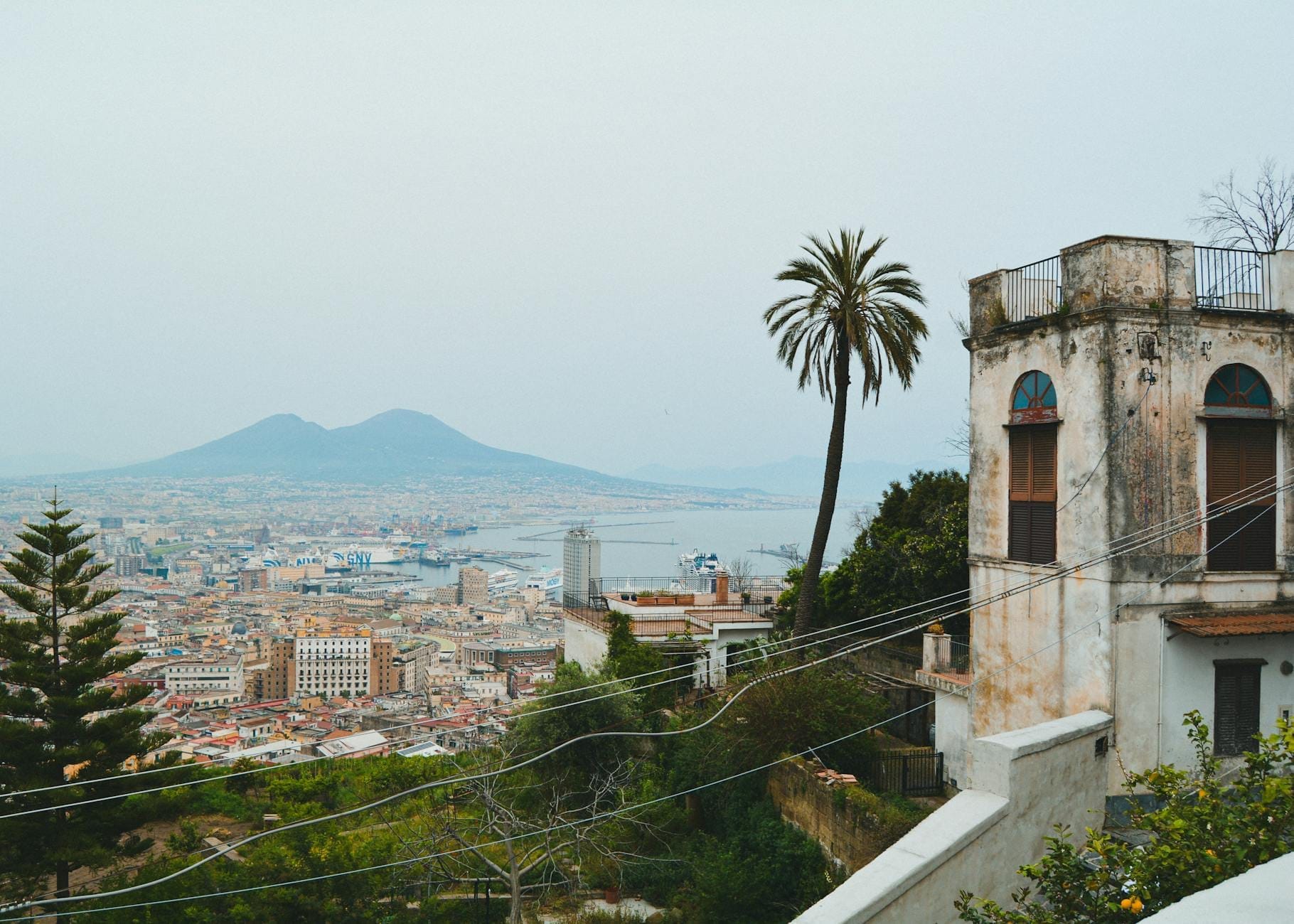
Michelangelo Merisi da Caravaggio arrived in Naples in 1606 as a fugitive. He had killed a man in Rome during a brawl and needed to flee papal jurisdiction. Naples, then the largest city in Europe under Spanish rule, was beyond the Pope's reach. It was also a city hungry for ambitious religious art, with powerful patrons who could pay well and ask few questions about a painter's past.
His first stay lasted about a year, from late 1606 into 1607. He produced several large-scale works, including The Seven Works of Mercy and the first version of The Flagellation of Christ. He then traveled to Malta and Sicily before returning to Naples in late 1609, badly wounded in a violent attack whose perpetrators were never confirmed. He died in 1610 on a beach in Porto Ercole, apparently from fever, while attempting to reach Rome where a papal pardon was expected. His final dated work, The Martyrdom of Saint Ursula, was completed just weeks before his death.
ℹ️ Good to know
Caravaggio was prolific during his time in Naples but most of those works were subsequently lost, destroyed, or relocated elsewhere in Italy and Europe. Only three authenticated paintings by his hand remain in the city today.
The Three Surviving Works: Location, Hours, and Prices
Knowing exactly where each painting lives and what it costs to see it removes the main logistical barrier to a focused Caravaggio day in Naples. Here is the current information for all three venues.
- Pio Monte della Misericordia (The Seven Works of Mercy, 1607) Via Tribunali 253, near Piazza Riario Sforza. Open Monday to Saturday 9am–6pm, Sunday 9am–2:30pm. Admission €7. The painting hangs above the altar of the small private chapel exactly where it was installed in 1607, making this the only one of the three in its original location.
- Museo di Capodimonte (The Flagellation of Christ, 1607) Via Miano 2, in the Bosco di Capodimonte park north of the city centre. Open Thursday to Tuesday 8:30am–7:30pm, closed Wednesday. Admission €8. The painting was originally commissioned for San Domenico Maggiore church and was moved to Capodimonte in the 20th century.
- Palazzo Zevallos Stigliano / Gallerie d'Italia (The Martyrdom of Saint Ursula, 1610) Via Toledo 185, in the banking district. Open Tuesday to Sunday 11am–7pm, closed Monday. Admission €5. This is Caravaggio's last known completed work, delivered to the patron Marcantonio Doria just days before the artist died.
⚠️ What to skip
Hours and prices at Italian museums can change without much notice. Verify with each venue's official website before you visit: museocapodimonte.beniculturali.it for Capodimonte, gallerieditalia.com for Palazzo Zevallos, and piomontedellamisericordia.it for Pio Monte.
The Seven Works of Mercy: Why It Matters Most
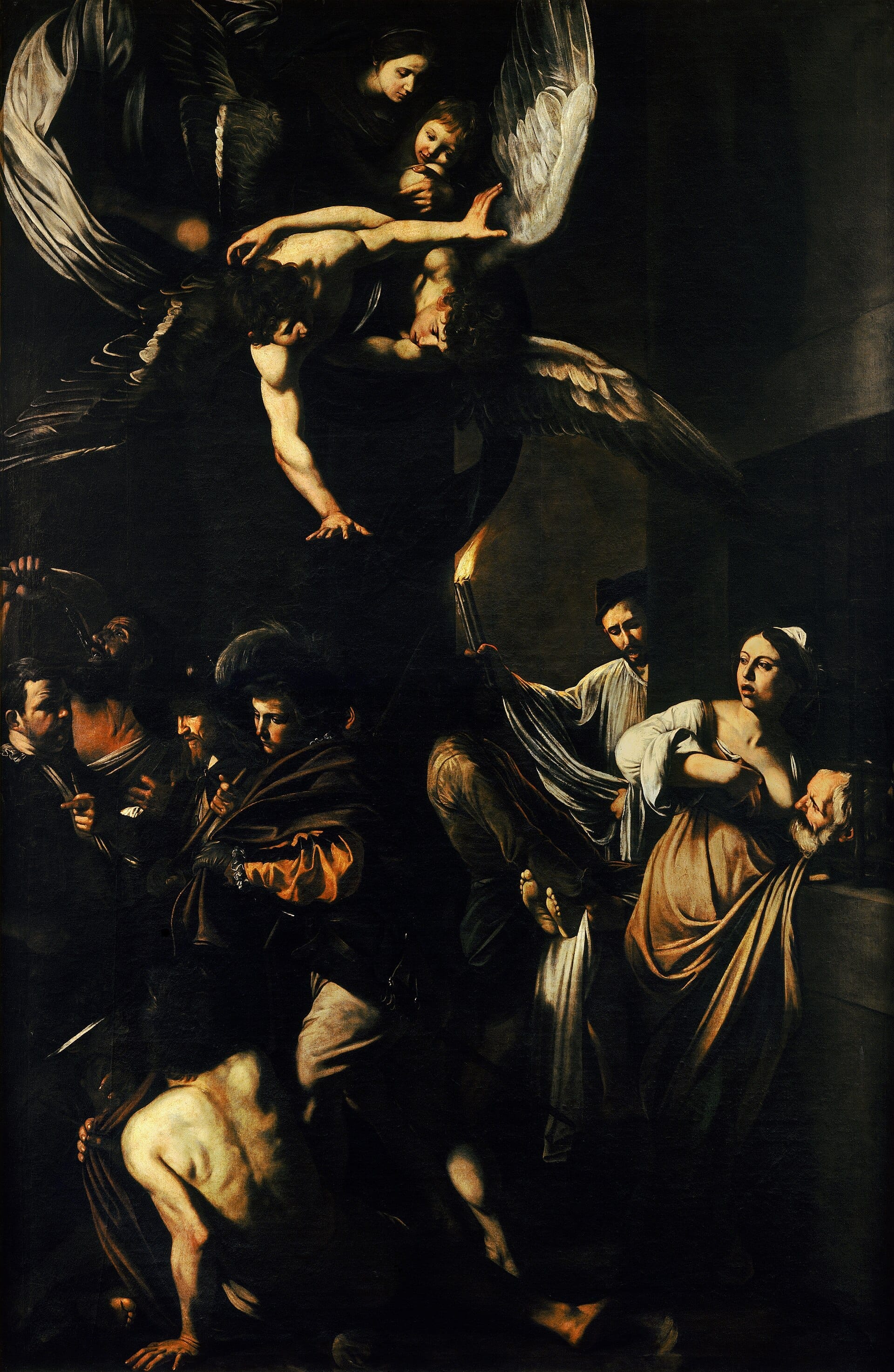
The painting at Pio Monte della Misericordia is the one Caravaggio scholars rank as his most ambitious single composition. Commissioned in 1606 by a confraternity dedicated to charitable works, it compresses all seven acts of mercy (feeding the hungry, giving drink to the thirsty, clothing the naked, sheltering pilgrims, visiting the sick, ransoming prisoners, and burying the dead) into a single chaotic street scene set in a Neapolitan alley, with the Virgin and Child hovering above on angels' wings.
What makes it structurally extraordinary is how Caravaggio avoids allegory entirely. There are no symbolic halos, no celestial clouds, no polite distance between the divine and the desperate. A woman breastfeeds an old man through prison bars (a reference to the Roman tale of Cimon and Pero). A torchbearer lights a burial scene on the right. A pilgrim with a scallop shell pushes into the crowd from the left. The Virgin above is not serene, she is leaning forward to see what is happening below.
The chapel itself is tiny. On busy mornings in July and August, tour groups fill it completely. Arrive at 9am on a weekday if you want five or ten minutes alone with the painting. The light inside is dim and the work is large (390 x 260 cm), so your eyes need a moment to adjust before the composition reveals itself fully.
The Flagellation of Christ at Capodimonte
The trip to Museo di Capodimonte requires more effort than the other two stops. The museum sits in a royal palace on a hill north of the city centre, about 5 km from Via Toledo. Bus routes 204 and C63 connect the waterfront and historic centre to the park entrance, or you can take a taxi (roughly €10-15 from Piazza Garibaldi).
The journey is worth making even if you are not a specialist in Caravaggio, because the Capodimonte collection surrounding the Flagellation is exceptional: works by Titian, Raphael, Bruegel the Elder, and a remarkable collection of Neapolitan Baroque painters who were directly influenced by Caravaggio's time in the city. You can see, in adjacent rooms, how local painters like Jusepe de Ribera absorbed and adapted his use of chiaroscuro and low-life subjects.
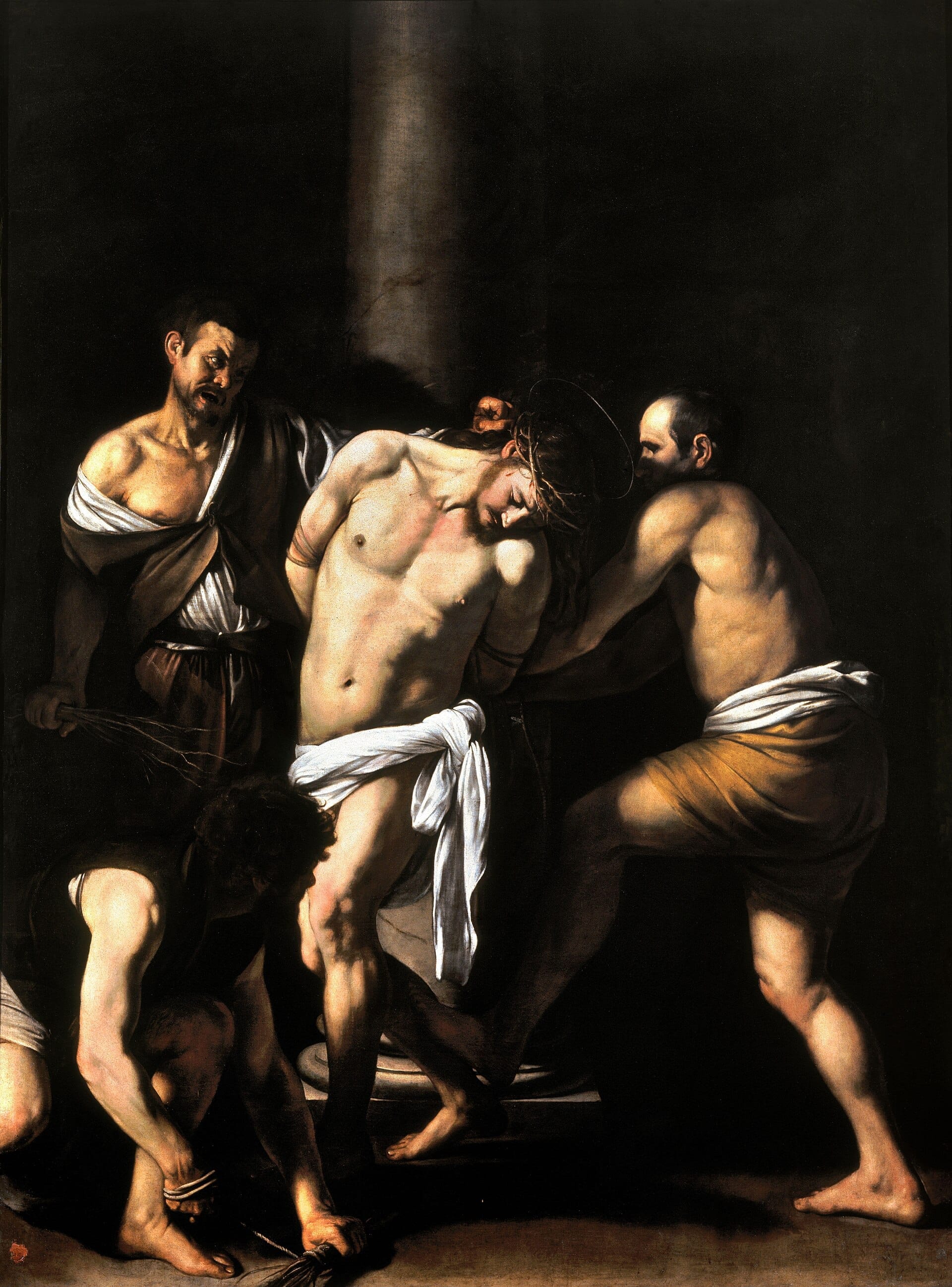
The Flagellation itself (286 x 213 cm) shows Christ bound to a column, his tormentors working in near-darkness. It was painted for the De Franchis family chapel in San Domenico Maggiore and later acquired by the Bourbon royal collection. The figure of Christ is illuminated from above left, his body dramatically pale against the murk around him. It is quieter than The Seven Works of Mercy, more focused, and arguably technically superior in its handling of flesh and shadow.
The Martyrdom of Saint Ursula: Caravaggio's Final Work
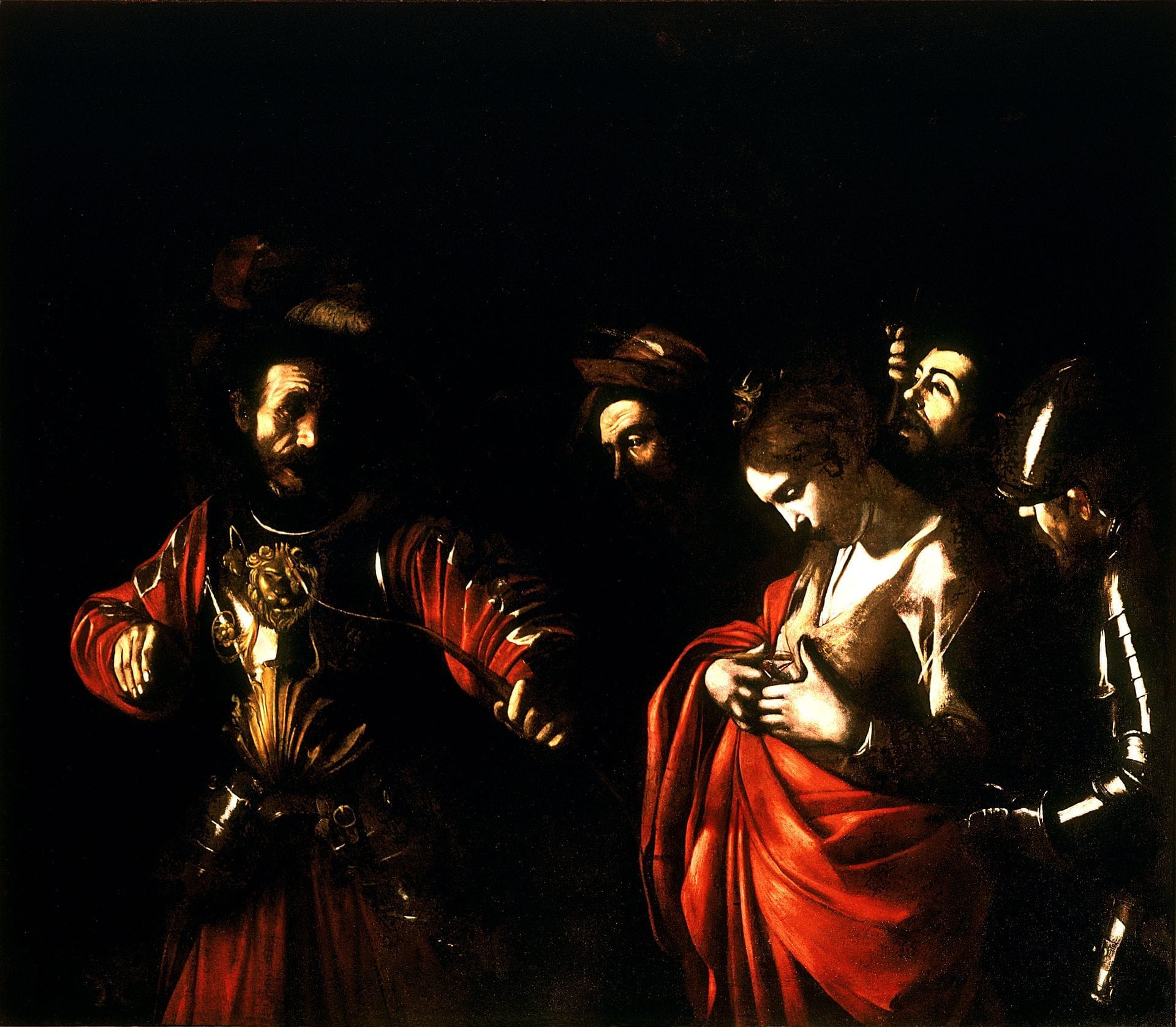
Palazzo Zevallos Stigliano on Via Toledo is the easiest of the three to reach and the least visited. The building is owned by Intesa Sanpaolo bank and operates as a small gallery. The Caravaggio hangs in a dedicated room on the upper floor, displayed with conservation lighting.
The painting shows the moment the king of the Huns shoots Saint Ursula with an arrow after she refuses his marriage proposal. What is remarkable is how understated it is. There is no martyrdom crowd, no theatrical agony. Ursula looks down at the arrow in her chest with an expression closer to puzzlement than pain. Caravaggio appears in the background, looking on. This self-portrait in a death scene, painted by a man who knew he was dying, gives the work an intensity that pure technique cannot explain.
The admission price of €5 is the lowest of the three venues and the gallery is rarely crowded, making it a relaxed final stop on a Caravaggio circuit. The palazzo itself is worth a few minutes: it is a fine 17th-century building with decorated ceilings, and the ground floor regularly hosts temporary exhibitions.
✨ Pro tip
If you want expert context for all three paintings, book a dedicated Caravaggio walking tour through a licensed Naples guide. A good guide will connect the paintings to the political and religious climate of Spanish-ruled Naples in 1607, which transforms how you read the imagery. GetYourGuide and Airbnb Experiences both list Caravaggio-specific tours in Naples starting around €25-40 per person.
How to Plan a Caravaggio Day in Naples
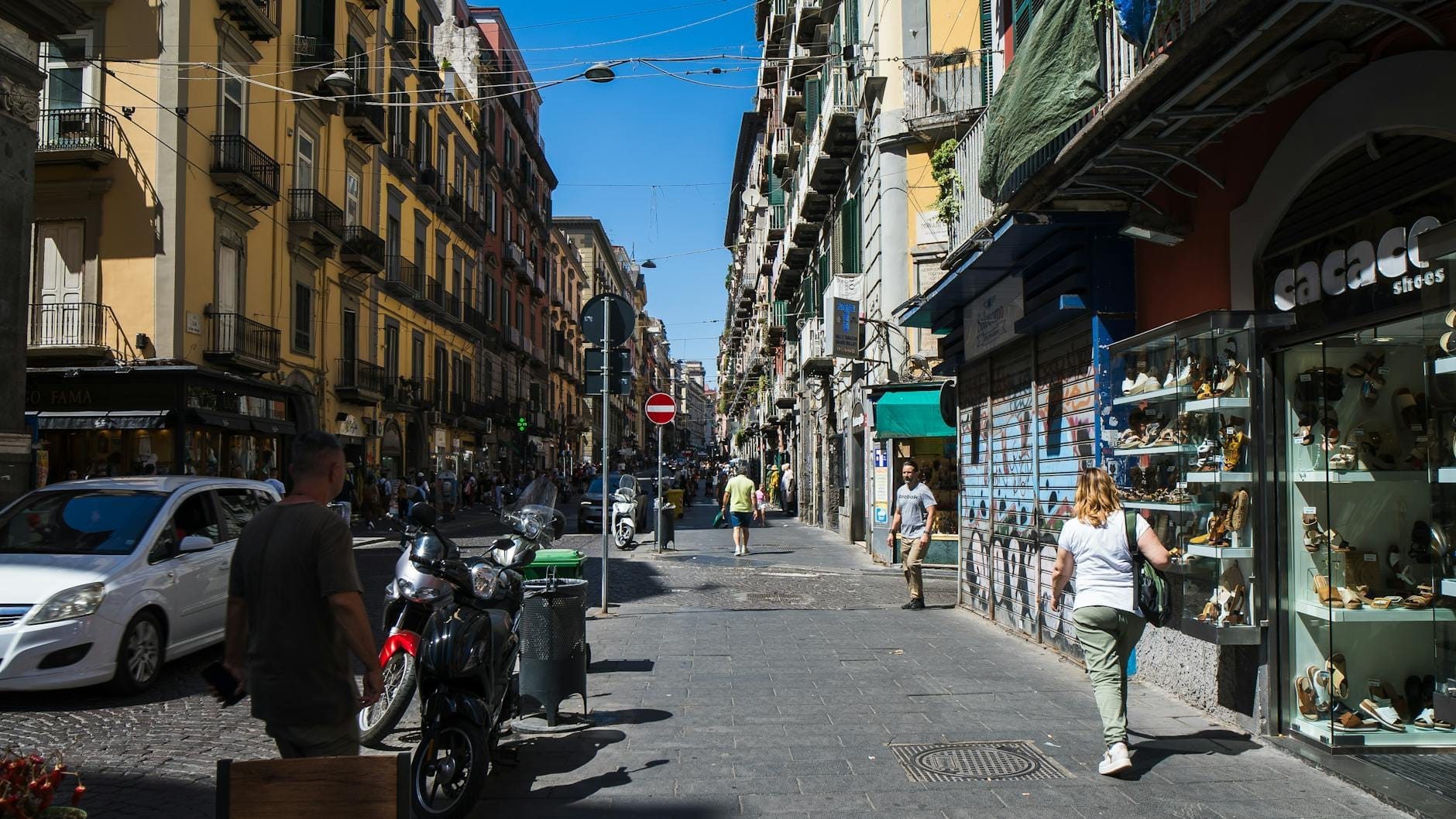
The most logical order starts in the historic centre and works outward. Begin at Pio Monte della Misericordia at 9am, when the chapel opens. Via Tribunali is also a good place to have a coffee beforehand at one of the bars near the street's western end.
After Pio Monte, walk or take a short taxi to Palazzo Zevallos on Via Toledo (about 1 km south). Spend 45 minutes to an hour there. Then decide whether to visit Capodimonte in the afternoon. The museum is a significant additional journey and the collection inside is large enough to occupy two or three hours. If you are combining this with other Naples sightseeing, it may make more sense to visit Capodimonte on a separate day.
- Start at Pio Monte at 9am (Monday to Saturday) to avoid tour group arrivals around 10-10:30am
- Palazzo Zevallos opens at 11am Tuesday to Sunday, so it fits naturally as a mid-morning second stop
- Capodimonte closes on Wednesdays, so plan that visit on any other day of the week
- April, May, September, and October give you the best walking conditions between the three sites
- All three venues are indoors with air conditioning, making them viable options even in July and August when outdoor sightseeing is exhausting
- If you use public transport, Line 1 metro stops at Toledo (for Palazzo Zevallos) and Montesanto or Materdei (for buses to Capodimonte and Pio Monte area)
For travelers who want to extend the art itinerary, the Naples National Archaeological Museum is a short walk from Pio Monte and gives essential context for understanding the ancient city that shaped Caravaggio's setting. The Cappella Sansevero is also nearby, with Giuseppe Sanmartino's veiled Christ sculpture, which shows the continuing influence of Caravaggio's naturalism on Neapolitan art into the 18th century.
💡 Local tip
Church dress codes apply at Pio Monte della Misericordia because it is an active chapel, even though the primary reason for visiting is the painting. Cover your shoulders and knees or carry a scarf. This rule is enforced, not just suggested.
FAQ
How many Caravaggio paintings are in Naples?
Three authenticated works by Caravaggio survive in Naples today: The Seven Works of Mercy at Pio Monte della Misericordia, The Flagellation of Christ at Museo di Capodimonte, and The Martyrdom of Saint Ursula at Palazzo Zevallos Stigliano. Other works attributed to his Naples period were lost, destroyed, or are now held in collections outside Italy.
Is The Seven Works of Mercy in its original location?
Yes. The painting hangs above the altar of the private chapel at Pio Monte della Misericordia, where it was installed after its completion in 1607. It has remained there ever since, making it unusual among Caravaggio's works, which were frequently moved after his death.
Can you see all three Caravaggio works in one day?
Yes, though it requires some planning. Pio Monte and Palazzo Zevallos are within walking distance of each other in the historic centre and along Via Toledo. Capodimonte is further north and takes 20-30 minutes by bus or taxi. If you start at 9am, you can reach all three by late afternoon. However, Capodimonte's collection is large enough to reward a separate half-day visit.
What is the best time of year to see Caravaggio's works in Naples?
All three venues are indoors, so the season matters less than for outdoor sightseeing. That said, April to June and September to October are ideal if you are combining the Caravaggio circuit with walking around Naples's historic centre. Summer heat between the sites can be draining, and the small chapel at Pio Monte gets crowded with tour groups from June through August.
Are there guided tours focused on Caravaggio in Naples?
Yes. Several licensed Naples guides offer Caravaggio-specific walking tours that cover Pio Monte, Palazzo Zevallos, and the artistic context of 17th-century Neapolitan painting. Tours are bookable through platforms like GetYourGuide and typically last 2-3 hours at prices starting around €25-40 per person. Group sizes vary, so if you want a more personal experience, look for small-group options capped at 8-10 participants.
Tickets & tours
Live prices and dates from our booking partner. If you book, we may earn a commission at no extra cost to you.
Planning a trip? Discover personalized activities with the Nomado app.