Naples to Capri: The Complete Ferry & Day Trip Guide
Getting from Naples to Capri is simpler than most visitors expect, but the details matter: which port, which operator, how early to book, and what to do once you arrive. This guide covers all of it, from ferry prices and schedules to practical day trip planning.
Tickets & tours
Live prices and dates from our booking partner. If you book, we may earn a commission at no extra cost to you.
TL;DR
- Ferries depart from Molo Beverello in central Naples; the trip takes 50 minutes by hydrofoil or up to 90 minutes by conventional ferry.
- One-way tickets cost roughly €14 to €27 per adult foot passenger depending on operator and season; book via Ferryhopper, Direct Ferries, or operator websites.
- Peak season (May to September) has 20+ daily sailings; winter sailings are fewer and more subject to cancellation.
- Capri pairs naturally with a broader day trip from Naples if you plan your return ferry carefully.
- Arrive at the port at least 30 minutes before departure; summer queues at ticket offices can be long.
Which Port to Use in Naples

Almost every visitor to Capri should head to the Molo Beverello area, which sits directly below Castel Nuovo and is easily reachable on foot from Piazza del Plebiscito. This is where the majority of high-speed hydrofoil services depart, including SNAV and NLG. It is also where you will find the main ticketing offices if you have not booked in advance.
Calata Porta di Massa, a few hundred metres east of Molo Beverello, handles some Caremar conventional ferry services. These slower boats are cheaper but add 40 minutes to your crossing. If you are travelling as a foot passenger with a tight day trip schedule, the hydrofoil from Molo Beverello is almost always the better choice.
⚠️ What to skip
There is no direct ferry from Naples Airport (Capodichino) to Capri. You must first reach the city centre port. Allow at least 45 minutes from the airport to Molo Beverello using the Alibus shuttle (€5 to Piazza Garibaldi) plus walking time, or a taxi at the fixed rate of around €25.
Getting to Molo Beverello from central Naples is straightforward. From Via Toledo or Piazza del Plebiscito it is a 10 to 15 minute walk along the waterfront. Metro Line 1 stops at Toledo, which is roughly the same distance. Taxis drop off directly at the port entrance.
Ferry Operators, Prices, and Schedules
Three main operators run the Naples to Capri route: SNAV, NLG (Navigazione Libera del Golfo), and Caremar. Each has slightly different pricing, vessel types, and departure times. Understanding the differences saves both money and frustration.
- SNAV One of the most frequent operators, running high-speed hydrofoils from Molo Beverello. One-way adult fares start at around €26.50. First departures around 7:00 AM in peak season.
- NLG (Navigazione Libera del Golfo) Hydrofoil service departing Molo Beverello; fares from around €23.50 one-way. Popular with locals and generally punctual. Earliest departures typically around 8:35 AM.
- Caremar Operates both hydrofoils and conventional ferries, with the widest price range: roughly €14 to €25 one-way. The cheapest option but conventional ferries are slower (up to 90 minutes). Some sailings depart as early as 5:35 AM. The only major operator that also carries vehicles, though cars add significant cost (averaging around €267 one-way).
In late April and throughout summer, combined departures from all operators give you a boat roughly every 30 to 60 minutes from early morning until around 9:00 PM, with some late-night sailings extending to 11:00 PM in peak July and August. Outside of peak season, the schedule thins considerably. In winter (November to March), expect fewer than half the sailings and a higher likelihood of cancellations due to rough seas in the Bay of Naples.
✨ Pro tip
The cheapest fares generally appear in May and on Saturdays. If your travel dates are flexible, this combination can save several euros per person each way. Booking 1 to 2 weeks ahead in summer is strongly advisable since popular morning departures sell out.
For booking, the most reliable platforms are Ferryhopper, Direct Ferries, and Capri.com, all of which aggregate schedules across operators and let you compare prices in real time. You can also book directly through each operator's website. Avoid booking via third-party apps that are not explicitly authorized resellers, as price markups can be significant and cancellation policies vary.
What to Expect on the Crossing
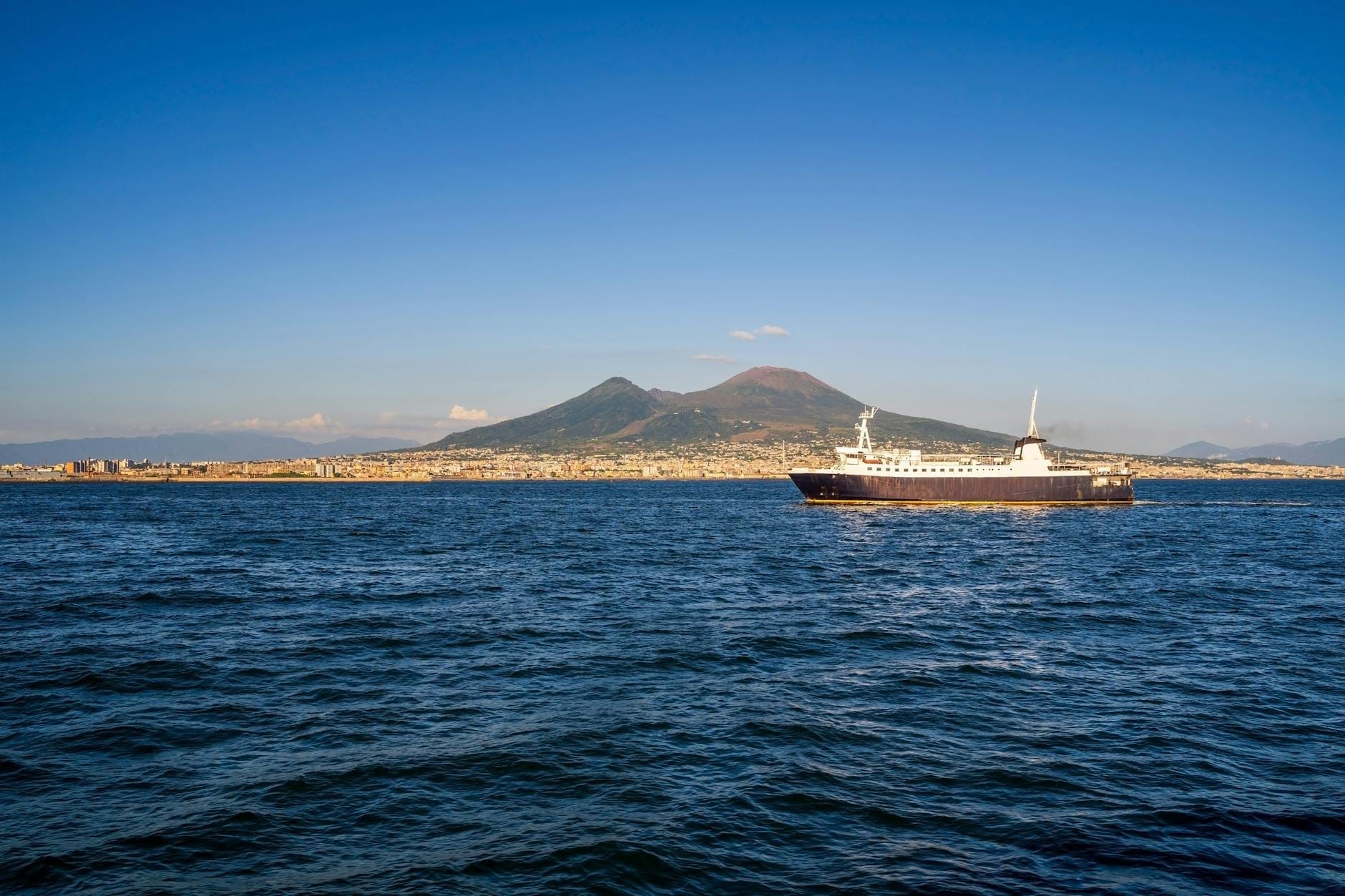
The hydrofoil crossing takes around 50 minutes and is generally smooth in calm weather. In rough conditions, which are most common October through March, the ride can be noticeably choppy. If you are prone to seasickness, sit near the middle of the vessel and avoid eating a heavy meal beforehand. Conventional ferries are slower but often more stable due to their larger hull.
Hydrofoils are enclosed cabins with limited deck access, so you will not get the sweeping Bay of Naples views you might expect during the crossing itself. For a more scenic approach with open water views and a look at Mount Vesuvius from the sea, a guided boat tour is a better option than the standard ferry.
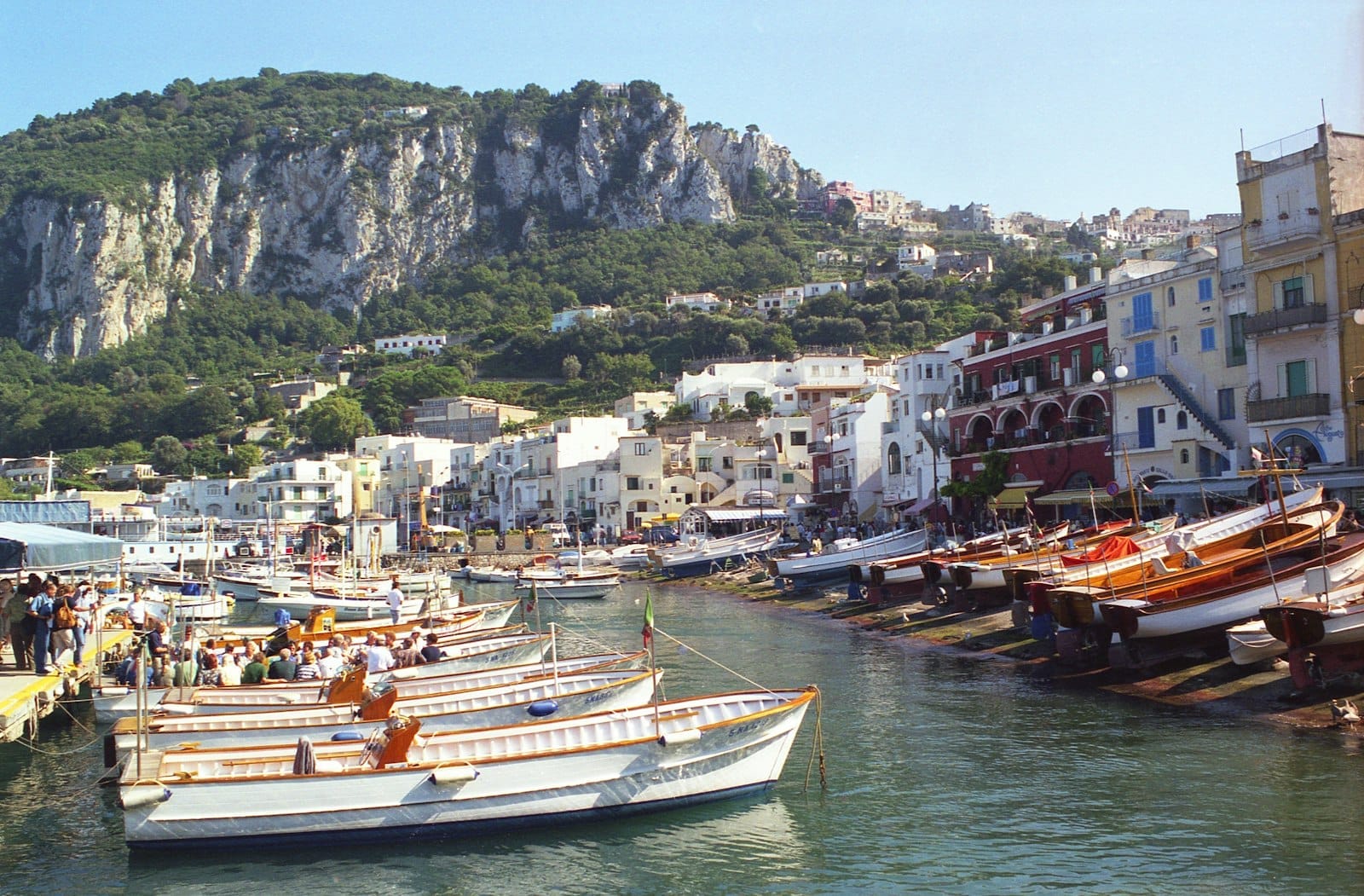
All ferries arrive at Marina Grande, Capri's main harbor. From there you can take the funicular up to Capri town (around €2.20 each way), taxis, or local buses to reach Anacapri and other areas of the island. Marina Grande itself is worth a few minutes of your time before heading up: it has a handful of good seafood restaurants right at the waterfront and offers your first real look at the island's dramatic cliffs.
Planning Your Day Trip to Capri
Capri is a full day well spent, but it requires some planning to avoid wasting hours in queues. The island is small (about 10 square kilometres) but extremely popular, particularly between late June and August. If you are combining Capri with other things to do in Naples, consider whether a full day on the island or a half-day suits your itinerary better.
- Take the first or second hydrofoil of the day (7:00 to 9:00 AM) to beat the crowds at the Blue Grotto and Capri town.
- Book the Blue Grotto (Grotta Azzurra) boat tickets in advance or arrive before 10:00 AM; queues can stretch to 2 hours by midday in summer.
- Anacapri, the quieter hilltop village, is reached by local bus and is considerably less crowded than Capri town.
- The chairlift from Anacapri to Monte Solaro (589 meters) offers the best panoramic views on the island; the ride takes about 12 minutes.
- Last return ferries leave Capri around 9:00 PM in peak season, earlier in winter. Missing the last boat means an unplanned overnight stay.
- Most restaurants in Capri town are tourist-priced. For a more honest meal, walk a few streets back from the main piazzetta.
💡 Local tip
Book your return ferry from Capri to Naples when you book your outbound crossing. In high season, return boats fill up by early afternoon, and you do not want to be stuck waiting for a later sailing after a long day on the island.
Capri is not a beach destination in the traditional sense. There are bathing areas, but they are rocky and often crowded. The real appeal is the scenery, the walking paths, and the overall atmosphere of the island. If beaches are your priority, Ischia or Procida are better-suited alternatives from Naples, with calmer waters and more accessible sandy shores.
Common Mistakes and Honest Drawbacks
Capri in July and August is genuinely overcrowded. The Piazzetta in Capri town, which is the central square, becomes almost impassable by midday. Prices for food, drinks, and accommodation reflect the island's luxury reputation and tourist volume. A coffee near the Piazzetta can cost three times what you would pay in Naples. This is not necessarily a reason to skip Capri, but it is a reason to go with clear expectations.
Many visitors overestimate how much ground they can cover in a day. Getting between Capri town, Anacapri, the Blue Grotto, and the Villa Jovis (Tiberius's ancient villa on the island's eastern tip) requires good timing. The Blue Grotto alone, including the boat ride in, can take 90 minutes of your morning if you arrive after 10:00 AM. Be selective rather than trying to see everything.
One thing worth noting: Capri is significantly more expensive than Naples across the board. If your budget is tight, a day trip to Herculaneum or a morning at the Naples National Archaeological Museum offers comparable cultural depth at a fraction of the cost. Capri is a rewarding destination, but not an essential one for every traveller visiting the region.
ℹ️ Good to know
Capri imposes a day-visitor tax (contributo di sbarco) during peak season, typically a few euros per person. This is usually collected at the port on arrival. The amount and exact dates vary year to year, so check current rates before your visit.
Practical Details Before You Go
Currency on Capri is the Euro, as throughout Italy. Card payments are accepted at most restaurants and shops, but carry some cash for small vendors, the funicular, and local buses. Most services on the island are in Italian and English; other languages are less consistently available.
If you are arriving in Naples by air, the full logistics chain is: Naples Airport (NAP) to city centre via Alibus shuttle or taxi, then to Molo Beverello by foot or taxi, then ferry to Capri. Add buffer time and consult the Naples airport transfer guide for up-to-date transport options and current fares.
For overall trip planning and understanding how Capri fits into a broader itinerary, the 3-day Naples itinerary maps out how to balance time in the city with day trips to the islands and the coast. Most travellers find that one full day on Capri, combined with two days exploring Naples itself, makes for a well-rounded visit.
FAQ
How long is the ferry from Naples to Capri?
High-speed hydrofoils take approximately 50 minutes. Conventional ferries take up to 90 minutes. Most day-trippers take the hydrofoil from Molo Beverello for the faster crossing.
How much does the ferry from Naples to Capri cost?
One-way adult foot passenger tickets start from around €14 with Caremar on their slower ferry service, and around €23 to €26.50 with NLG and SNAV hydrofoils. Prices rise in peak season and vary by booking platform. Return fares are simply two one-ways; there are no standard return tickets on most operators.
Do I need to book the Naples to Capri ferry in advance?
In peak season (June to August), booking at least a week ahead for popular morning departures is strongly advisable. In shoulder season (April, May, September, October) a few days' notice is usually sufficient, though earlier is always safer. In winter, same-day tickets are generally available but check schedules carefully as sailings are limited.
Can I take a car on the ferry to Capri?
Most ferries on this route are foot-passenger only. Caremar operates some vehicle-capable services, but taking a car to Capri is expensive (around €267 average one-way) and largely unnecessary since the island has its own local transport. Private vehicles are also heavily restricted once on the island. Leave your car in Naples.
Is Capri worth visiting as a day trip from Naples?
Yes, for most visitors, particularly those who prioritise dramatic scenery, iconic Mediterranean island atmosphere, and easy logistics. That said, it is crowded in summer, expensive relative to Naples, and not ideally suited to those seeking beaches or budget travel. If you have limited time, prioritise the morning ferry to avoid peak crowds at the main sights.
Tickets & tours
Live prices and dates from our booking partner. If you book, we may earn a commission at no extra cost to you.
Planning a trip? Discover personalized activities with the Nomado app.