Ischia Island: Thermal Springs, Ancient Castles, and Real Southern Italy
Ischia (Isola d'Ischia) is the largest island in the Gulf of Naples, a volcanic landmass shaped by millennia of geological activity and 2,800 years of human history. Less polished than Capri, more substantial than Procida, it rewards travelers who want thermal baths, genuine village life, and dramatic coastal scenery without fighting crowds at every corner.
Quick Facts
- Location
- Gulf of Naples, Campania, Italy — 30 km west of Naples, accessible by ferry
- Getting There
- Ferries from Naples (Molo Beverello or Pozzuoli) to Ischia Porto or Casamicciola; roughly 1 hour by standard ferry, faster by hydrofoil
- Time Needed
- Minimum 1 full day; 2–3 days to cover beaches, the Aragonese Castle, and at least one thermal park
- Cost
- Ferry round-trip approx. €20–30; Aragonese Castle €12 (free under 9); thermal parks vary — Poseidon Gardens and Negombo charge separate entry fees
- Best for
- Thermal spa seekers, history lovers, beach days away from Capri's prices, couples looking for a slower pace
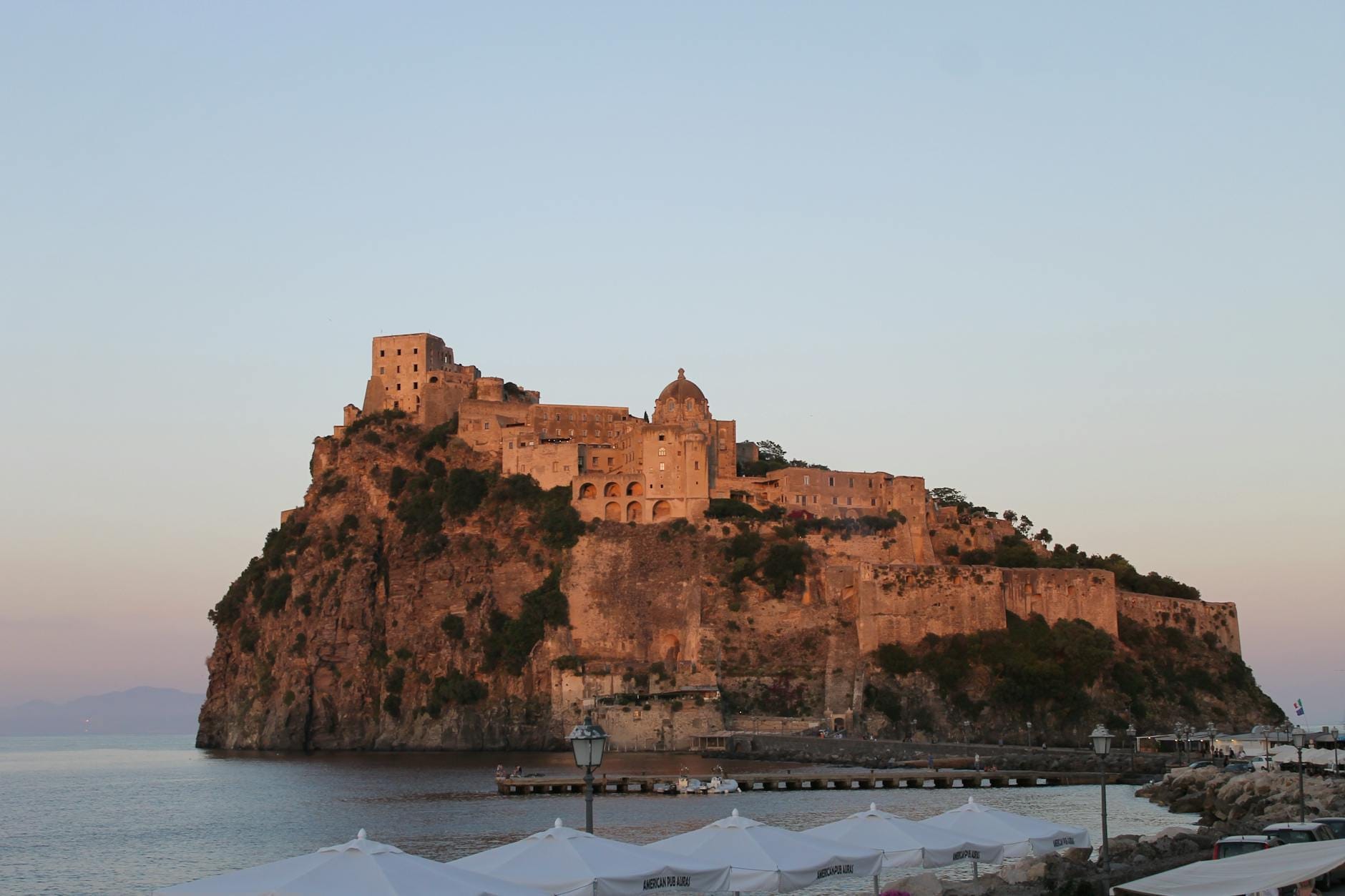
What Ischia Actually Is
Isola d'Ischia is the largest island in the Gulf of Naples, covering 46.3 square kilometers with a 34-kilometer coastline. It sits roughly 30 kilometers west of Naples and owes its entire character to volcanic geology. The island's last eruption was in 1302, but the heat never went away — it redirected underground into the thermal springs that now feed dozens of spas, pools, and private beach facilities. That geothermal energy is the central fact of Ischia: it shapes what people come here to do, and it gives the landscape an otherworldly quality, with steam rising near the shore in certain spots and mineral-scented air around the spa zones.
Historically, Ischia holds the distinction of hosting one of the earliest Greek colonies in the western Mediterranean. The settlement of Pithekoussai was established on the island in the 8th century BC, predating even the founding of Cumae on the nearby mainland. That long history of human occupation layered onto a volcanic base produces an island that feels both ancient and alive. The six municipalities — Ischia, Casamicciola Terme, Lacco Ameno, Forio, Serrara Fontana, and Barano d'Ischia — each have their own character, from the port activity of Ischia Porto to the quieter, greener slopes of the interior.
💡 Local tip
Day-trippers from Naples tend to crowd the island in July and August, especially on weekends. If you can visit on a Tuesday or Wednesday in late May, early June, or September, the thermal parks are significantly less busy and ferry queues are manageable.
The Aragonese Castle: Ischia's Defining Landmark
The Castello Aragonese sits on a small volcanic islet connected to the main island by a narrow stone bridge at Ischia Ponte. The walk across that bridge, with the sea on both sides and the fortress walls rising ahead of you, is one of the more striking approaches to any monument in southern Italy. The structure's origins date to the 5th century BC, though the Aragonese reconstruction under Alfonso I of Aragon in the 15th century gave it the form visible today. The castle complex once housed a cathedral, convents, residences, and enough infrastructure to shelter the island's entire population during coastal raids.
The castle is open daily from 9:00 AM to sunset. Admission is €12 for adults, free for children under 9. There is no skip-the-line system for the castle, but it rarely sells out — the main bottleneck is the lift (elevator) inside the rock, which carries visitors from the bridge level up to the castle proper. During peak summer afternoons, the queue for the lift can stretch 20 to 30 minutes. Going early in the morning or in the last two hours before closing largely avoids this.
Inside, the complex rewards slow exploration. The partially ruined cathedral of the Assunta still has visible frescoes despite centuries of exposure. The former convent of the Poor Clares contains a room used by the nuns as a charnel house — a confronting but historically significant space where decomposing bodies were seated in stone chairs during the medieval period. It is not for everyone, but it is genuinely unlike anything else in the region. The castle also offers some of the best elevated views of the Bay of Naples, with Vesuvius visible on clear days to the east.
⚠️ What to skip
The Aragonese Castle involves steep paths and many stairs inside the complex. While a lift handles the main elevation gain from the bridge to the upper level, mobility-impaired visitors will find significant portions of the interior inaccessible. Check current accessibility options before planning.
Tickets & tours
Live prices and dates from our booking partner. If you book, we may earn a commission at no extra cost to you.
Thermal Parks: What to Expect and How to Choose
Thermal bathing is the primary reason most visitors come to Ischia rather than another island in the Gulf. The two most established parks are Poseidon Gardens (Giardini Poseidon) near Forio and Negombo near Lacco Ameno. Both charge separate admission, with prices varying by season and day of the week — check their official websites before visiting, as prices change annually. These are not small operations: Poseidon, for example, has over a dozen pools at different temperatures, a private beach, restaurants, and lounge areas. Plan to spend at least half a day.
Negombo takes a different approach, positioning itself as a botanical garden and spa hybrid. The landscape design is deliberate and quite beautiful, with plants from around the world creating a Mediterranean-tropical atmosphere that contrasts with the more purely functional thermal pools found elsewhere. It tends to attract visitors looking for a slightly more curated, quieter experience. Neither park is cheap by local standards, but when compared to spa prices in other European countries, the value is reasonable.
For a lower-cost thermal experience, the free naturally heated beach at Spiaggia dei Maronti in Barano d'Ischia has fumaroles — vents releasing warm gas and steam directly through the sand. You can dig a small hole and feel the heat. It is a genuinely strange, memorable experience that costs nothing beyond the bus fare to reach it. Fumarole activity has been present here for centuries and is a tangible reminder of the island's volcanic reality.
Getting to Ischia from Naples
Ferries depart from two main points in Naples: Molo Beverello (central, near Piazza del Plebiscito) and the Pozzuoli port on the western edge of the metro area. The journey to Ischia Porto takes roughly 1 hour on a standard car ferry and around 45 minutes by hydrofoil (aliscafo). Ferry companies including Caremar, Medmar, and SNAV operate routes throughout the day, with frequency dropping sharply in the evening. Round-trip fares for foot passengers are approximately €20–30 depending on the operator and season.
Getting to Molo Beverello from central Naples is straightforward. The port is walkable from Piazza del Plebiscito and accessible via the R2 bus or taxi. Allow at least 30 minutes before departure to handle ticketing and any queues, particularly in summer. If you are arriving into Naples by air, the ferry port is a reasonable distance from the airport — budget an hour for the journey during busy periods.
Ischia has two main arrival ports: Ischia Porto (the largest, with the most amenities) and Casamicciola Terme on the northern coast. Most day-trippers arrive at Ischia Porto, which puts you within walking distance of the main town and a short bus or taxi ride from most attractions. The island has a functioning bus network (operated by EAV), though services can be slow during peak season due to narrow roads and summer traffic. Renting a scooter or small car is practical for covering multiple areas in a day.
💡 Local tip
Book ferry tickets in advance during July and August, especially for weekend travel. Return sailings fill quickly on Sunday evenings as day-trippers head back to Naples.
Beaches, Villages, and What Changes by Time of Day
Ischia's coastline has genuine variety. The beach at Citara near Forio is broad and faces west, which makes it one of the best spots on the island for watching the sun drop toward the sea in the late afternoon. The water is clear and the bottom sandy — no particularly dramatic rock formations, but reliably good swimming. Spiaggia dei Maronti in Barano is the island's longest beach, reached most easily by taxi-boat from Sant'Angelo.
Sant'Angelo itself is worth visiting independently of the beach. The village sits on a promontory connected to a small islet, and vehicles are banned, which makes it one of the quietest corners of the island. In the morning before 10:00 AM, when day-trip boats have not yet arrived, the narrow lanes and waterfront terraces have a pace closer to what Ischia looked like before mass tourism. By early afternoon, it fills with thermal spa visitors and beach-goers. By early evening, it quiets again as the day-trippers leave, and the village's restaurants become genuinely pleasant places to eat.
The interior of the island, around Monte Epomeo (the extinct volcanic peak at 789 meters), is almost entirely overlooked by day-trippers. A hiking path from Fontana village leads to the summit in roughly 45 to 60 minutes. The rock is tufa, porous and pale, and the upper section passes carved-out cave hermitages used by monks centuries ago. The view from the top on a clear day covers the entire Bay of Naples, Capri, Procida, and the mainland as far as the Amalfi coast.
Practical Notes: What to Bring, What to Know
Ischia is hilly. Even without hiking ambitions, moving between the port, a beach, and the Aragonese Castle involves meaningful amounts of walking and elevation change. Comfortable shoes with grip are more useful than sandals for anything beyond a beach day. If you plan to use the thermal parks, bring a towel (or pay to rent one), a swimsuit, and sunscreen. The reflective surfaces of the pools magnify UV exposure noticeably.
For context on how Ischia fits into a wider Bay of Naples itinerary, the island pairs naturally with a day in Naples itself before or after. The Naples National Archaeological Museum holds artifacts directly linked to the Greek settlement of Pithekoussai, which gives the island's ancient history a tangible reference point before you visit. If you are comparing island options, Procida offers a more intimate, less-developed alternative with fewer facilities but arguably more authentic village character.
Travelers working through a broader regional itinerary will find Ischia a logical complement to mainland day trips. The island is different enough in character from sites like Pompeii or the Amalfi Coast that it does not feel repetitive — it occupies a distinct category between thermal resort and archaeological destination.
ℹ️ Good to know
Tap water on Ischia, as in Naples, is technically drinkable but heavily chlorinated in some areas. Most visitors prefer bottled water. The thermal parks and beaches all have water available for purchase.
Who Should Skip Ischia
Ischia is not a compact, walkable island that reveals itself in three hours. Visitors with only a half-day or who expect Capri-level glamour and infrastructure will be disappointed. The island is larger and more spread out, the roads can be slow, and the visual drama is quieter — volcanic greens and thermal pools rather than limestone cliffs and designer boutiques. Budget travelers may also find that the thermal parks, which are the island's central offering, eat into a day's budget quickly once entry fees, sunbed rentals, and a meal are added up.
Visitors primarily interested in archaeology or art history will find more concentrated content in Naples itself. The best museums in Naples cover far more ground per hour than Ischia's historical sites can. The island is at its best for people who want to slow down, not those trying to maximize cultural output per day.
Insider Tips
- The public beach at Spiaggia dei Maronti has natural thermal fumaroles in the sand — you can heat food or simply feel the volcanic warmth for free. Arrive by taxi-boat from Sant'Angelo rather than the long bus route.
- The last ticket entry for the Aragonese Castle is one hour before closing. Visiting in the final two hours of the day means the light is softer for photography and the lift queue is almost gone.
- If you want to eat well and cheaply, head to the residential neighborhoods behind Ischia Porto rather than the waterfront restaurants. The further from the port, the more the menus shift from tourist pricing to local pricing.
- Mont Epomeo is almost entirely absent from day-tripper itineraries. The hike from Fontana is short but steep, and the carved-rock hermitages near the summit are genuinely atmospheric with almost no other visitors present.
- The Pozzuoli ferry terminal on the Naples mainland is less crowded than Molo Beverello and the crossing to Casamicciola is slightly shorter. If you are coming from the western side of Naples, this option saves meaningful time in summer queues.
Who Is Ischia For?
- Couples and solo travelers wanting thermal spa access without the formality of a luxury resort
- History-focused visitors interested in ancient Greek colonization and medieval military architecture
- Hikers and walkers who want volcanic terrain and sea views without the crowds of the Amalfi Coast
- Families comfortable with a ferry journey who want a beach day with thermal pools as a novelty
- Travelers extending a Naples itinerary beyond three days who want a full change of pace
Nearby Attractions
Combine your visit with:
- Amalfi Coast
The Amalfi Coast stretches 40 kilometres along one of Italy's most dramatic shorelines, linking 13 cliff-side towns between Vietri sul Mare and Positano. A UNESCO World Heritage Site since 1997, it rewards visitors with layered history, vertiginous views, and some of the most photographed coastline in the Mediterranean. Getting there from Naples takes planning, but the payoff is considerable.
- Capri
Capri is one of the most recognized islands in the Mediterranean, sitting at the southern edge of the Gulf of Naples. It offers dramatic limestone cliffs, the famous Blue Grotto, elegant piazzas, and views that justify the journey. But it comes with crowds, costs, and logistical quirks that every visitor should understand before boarding the ferry.
- Cimitero delle Fontanelle
Carved into volcanic tuff in the Sanità district, the Cimitero delle Fontanelle holds the remains of roughly 40,000 people, many of them victims of the 1656 plague. Reopened in April 2026 after a five-year closure, it is one of the most historically dense and atmospheric places in all of southern Italy.
- Città della Scienza
Città della Scienza is Naples' premier interactive science museum, set on a former industrial waterfront in the Bagnoli district. With hands-on exhibits spanning the human body, sea life, insects, and space, plus a full planetarium, it delivers a genuinely engaging half-day for families, curious adults, and school groups alike.
Planning a trip? Discover personalized activities with the Nomado app.