3 Days in Naples: The Perfect Itinerary for First-Time Visitors
Three days is enough time to get a real feel for Naples, Italy — one of Europe's oldest, most layered cities. This itinerary covers the UNESCO-listed historic centre, the seafront, the underground city beneath your feet, and the hilltop views that put it all in perspective. No filler, no tourist traps — just a practical day-by-day plan that works.

Tickets & tours
Live prices and dates from our booking partner. If you book, we may earn a commission at no extra cost to you.
TL;DR
- Book the Cappella Sansevero (home of the Veiled Christ sculpture) weeks in advance — tickets at Cappella Sansevero sell out fast.
- Day 1 focuses on the seafront (Castel dell'Ovo, Villa Comunale, Chiaia); Day 2 dives into the historic centre (Spaccanapoli, Duomo, Naples Underground); Day 3 covers the grand civic Naples (Piazza del Plebiscito, Castel Nuovo) plus optional Vomero.
- The National Archaeological Museum is non-negotiable — it holds the best Pompeii and Herculaneum artifacts in the world. See the Naples National Archaeological Museum for opening times and ticket prices.
- Wear comfortable walking shoes. The historic centre's basalt streets are uneven and distances are longer than they look on a map.
- Three days in Naples can also serve as a base for day trips to Pompeii or the Amalfi Coast — but only if you have already covered the city essentials.
Before You Arrive: What to Know and Book in Advance

Naples (Napoli) is the regional capital of Campania, sitting on the Bay of Naples between Mount Vesuvius to the east and the volcanic Campi Flegrei caldera to the northwest. With a city population of around 900,000-908,000 and a metro area approaching 3 million, it is Italy's third-largest city — and one of its most dense. Its historic centre has been a UNESCO World Heritage Site since 1995, covering over 2,700 years of continuous urban history. Getting oriented before you land makes a meaningful difference. Read the getting around Naples guide to understand the metro, funiculars, and bus network before your first morning.
Naples International Airport (Capodichino, IATA: NAP) sits about 6 km northeast of the city centre. The Alibus shuttle runs directly to Piazza Garibaldi (the main train station area) for around €5 and takes 15-30 minutes depending on traffic. A metered taxi to the centre runs a fixed €25 from the official rank. Ride-hailing apps including Free Now and Uber operate in the city if you prefer to book ahead.
⚠️ What to skip
Book Cappella Sansevero tickets online before your trip — not when you arrive. The chapel holds Giuseppe Sanmartino's Veiled Christ (1753), one of the most extraordinary sculptures in Europe, and capacity is strictly limited. Tickets often sell out two to three weeks ahead in high season. Official booking: museosansevero.it.
- Cappella Sansevero Book online at museosansevero.it. Sells out weeks ahead in spring and summer.
- Naples Underground (Napoli Sotterranea) Tours run regularly but pre-booking at napolisotterranea.org avoids queues, especially on weekends.
- National Archaeological Museum Open Tuesday to Sunday, 9:00 AM to 7:30 PM. Entry around €15-20 for adults. No advance booking required, but arrive early in summer.
- Castel Nuovo and Castel Sant'Elmo Tickets typically €6-10 each. No advance booking needed for most of the year.
- Napoli Card A city pass covering public transport and some museum entries. Check visitnaples.eu for current pricing and inclusions before deciding if it saves you money.
Day 1: The Seafront, Castel dell'Ovo, and Chiaia
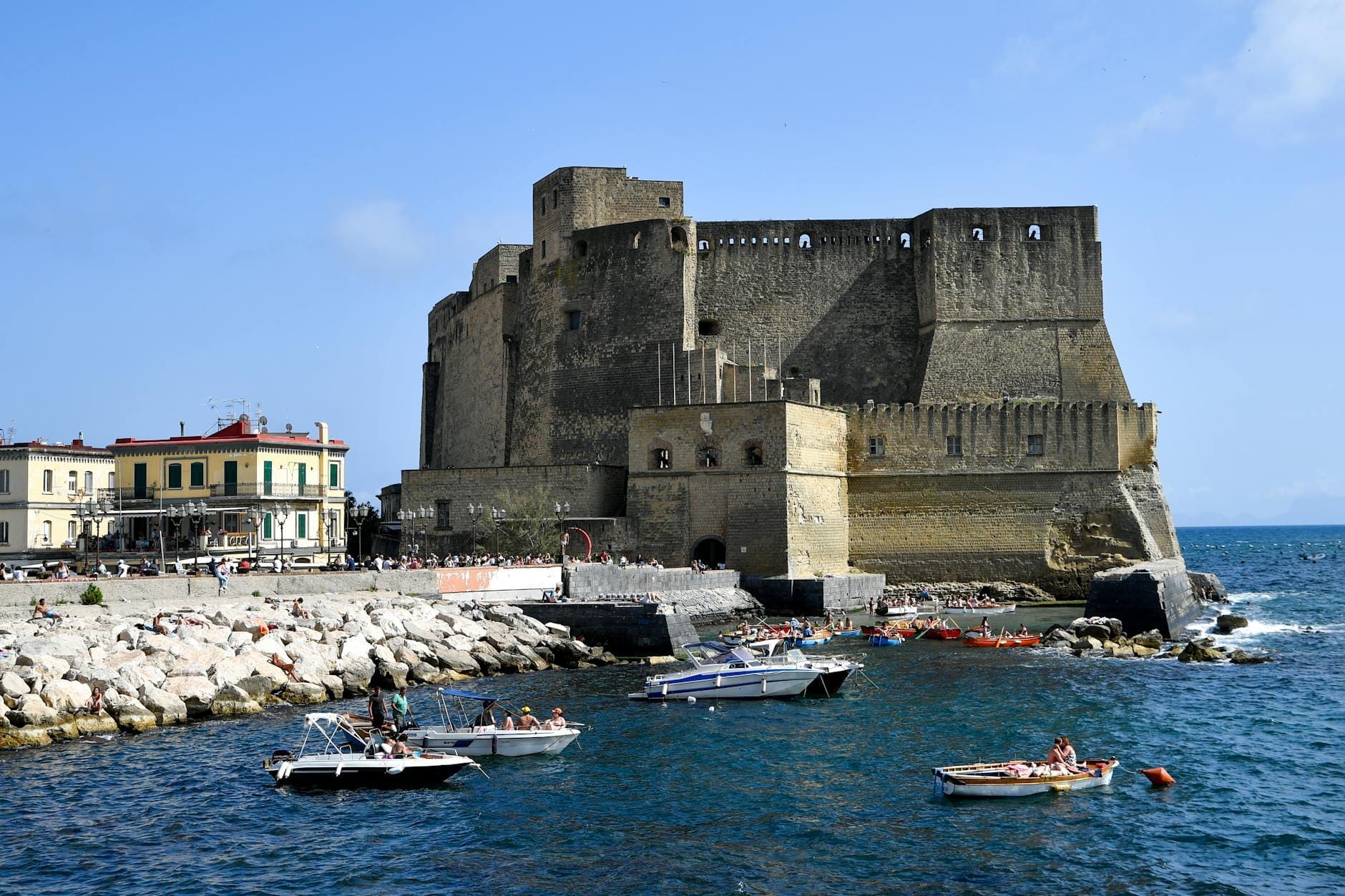
Start your first morning at the waterfront. The seafront promenade (Lungomare) stretches from Santa Lucia to Mergellina and gives you an immediate sense of Naples' scale and position on the bay. Walk it early — before 9 AM in summer — and you get the light on Vesuvius without the crowds. Head first to Castel dell'Ovo, the egg-shaped castle on the promontory of Megaride. Entry to the exterior and courtyard is free; interior access is limited and depends on ongoing events. The views across the bay justify the short walk even if you cannot go inside.
From Castel dell'Ovo, walk north along the waterfront into the Chiaia district. This is the most polished neighbourhood in Naples: wide boulevards, quality restaurants, and the Villa Comunale, a long public garden running parallel to the sea. It is a good place to rest and recalibrate after a morning of walking. The Aquarium (Stazione Zoologica) inside the Villa Comunale is among Europe's oldest, established in 1872, and worth a brief stop if you have children in tow or an interest in Mediterranean marine life.
Spend the afternoon in the Chiaia shopping streets around Via dei Mille and Via Filangieri, or take the funicular up to Vomero for panoramic views if you want to save Day 3 for something else. By evening, return to the seafront for one of Naples' most rewarding free experiences: sunset over the bay. The light turns the water copper and Vesuvius goes dark against the sky. There are bars and restaurants along the Lungomare at every price point.
💡 Local tip
For dinner on Day 1, stay in Chiaia or the Santa Lucia waterfront area. It is slightly more expensive than the historic centre but the quality is consistently high and the atmosphere is more relaxed. Budget around €30-50 per person for a full meal with wine at a mid-range restaurant.
Day 2: The Historic Centre, Underground Naples, and the Duomo
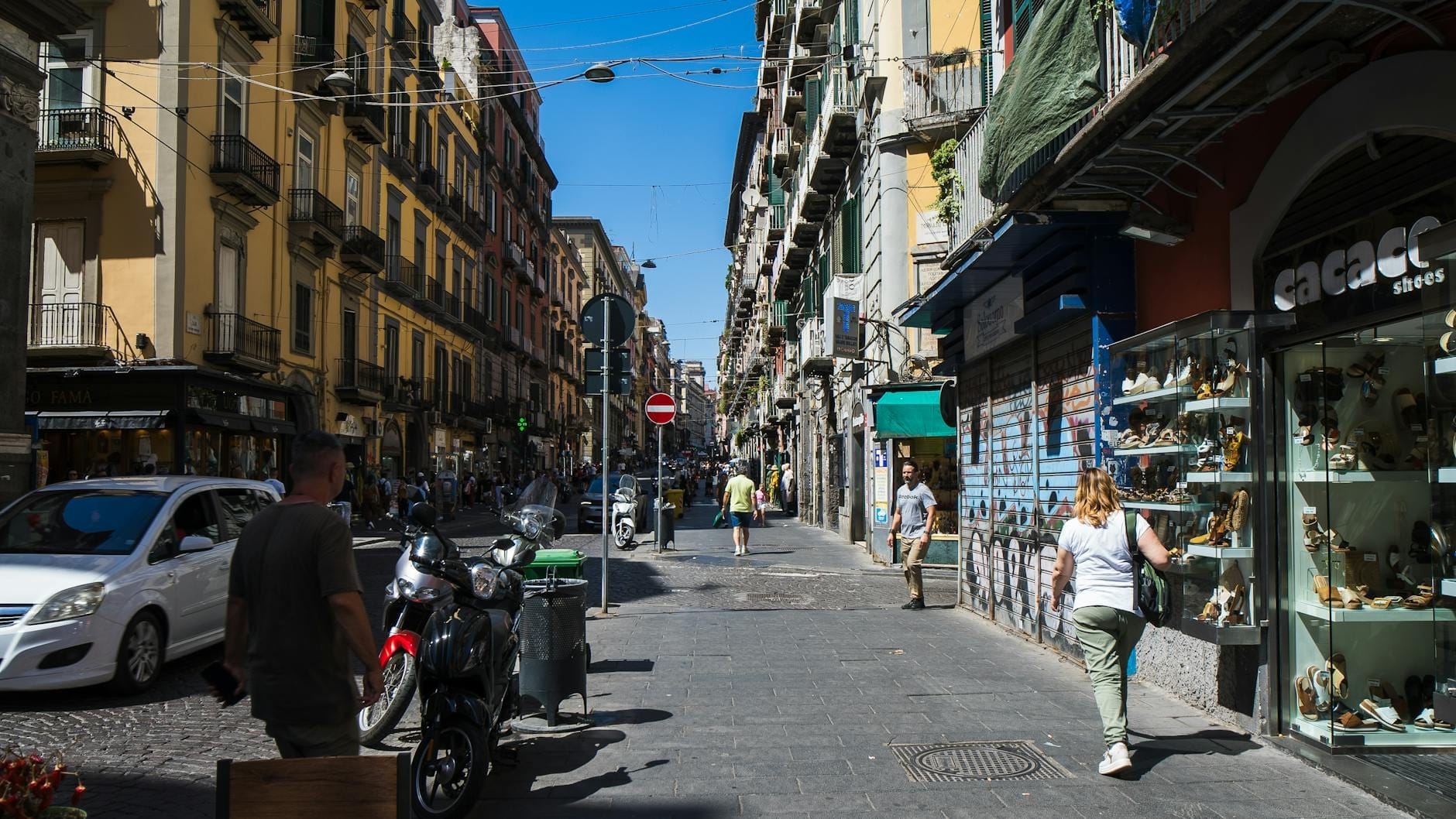
Day 2 is the densest day in terms of history and walking distance. The historic centre follows the ancient Greek street grid laid out by the colony of Neapolis around the 5th century BC. The three main east-west decumani (ancient Roman road axes) still define the neighbourhood. Spaccanapoli — literally 'Naples-splitter' — is the most famous of these, a dead-straight street that cuts through the lower historic centre and is dense with churches, workshops, and street life.
Start at Cappella Sansevero (on Via Francesco De Sanctis, just off Spaccanapoli) first thing in the morning when your time slot allows. After the chapel, walk along Spaccanapoli east toward the Cathedral of Naples (Duomo). Most visitors underestimate the Duomo. The main nave is impressive, but the real interest is underground: excavations beneath the cathedral have revealed Greek and Roman layers including structures from earlier periods. The Chapel of San Gennaro (the city's patron saint) holds a reliquary of his dried blood, which supposedly liquefies twice a year — in May and September — drawing enormous crowds. Entry to the Duomo is free; the treasury museum costs around €10.
After the Duomo, make your way to the Naples Underground (Napoli Sotterranea). The entrance is on Piazza San Gaetano, right in the middle of the historic centre. Tours run regularly and take you approximately 40 metres below street level into a network of Greek-era cisterns and Roman tunnels that were used as air-raid shelters in World War II. The temperature underground is a constant 15°C — bring a layer even in summer. Tours last around 80 minutes.
Work in San Gregorio Armeno before or after the underground — it is just a few streets away. This narrow lane is Naples' famous street of nativity scene (presepe) workshops and shops. It operates year-round, not just at Christmas, and the craftsmanship on display is genuinely impressive. Do not buy at the first stall; prices vary significantly. End Day 2 with pizza. The historic centre has several of Naples' most credible pizzerias within walking distance of each other.
✨ Pro tip
Naples pizza is eaten standing at a counter or sitting at tight tables. A margherita or marinara at a serious pizzeria in the historic centre costs €4-8. If a place is charging €15+ for a basic pizza, it is pricing for tourists. The queue outside a good pizzeria at 7:30 PM is a reliable quality signal.
Day 3: Piazza del Plebiscito, Castel Nuovo, and Vomero

Begin Day 3 at Piazza del Plebiscito, the grand civic square at the heart of Naples. Flanked by the Royal Palace (Palazzo Reale) on one side and the neo-classical church of San Francesco di Paola on the other, the square is one of the largest in Italy. The Palazzo Reale has been a royal residence since the early 17th century and its state apartments are open to visitors. The square itself is free and best seen in morning light before tour groups arrive.
Walk ten minutes north to reach Castel Nuovo (also called Maschio Angioino), the 13th-century fortress with five cylindrical towers that dominates the port area. Inside, the Civic Museum contains medieval frescoes and a collection of Neapolitan art. It is not as dramatic as the Castel dell'Ovo but gives you a stronger sense of the Angevin and Aragonese political history that shaped southern Italy. Budget about 90 minutes for the full visit.
After Castel Nuovo, take the funicular up to Vomero. There are four funicular lines; the Centrale from Via Toledo is the most central. At the top, the Certosa di San Martino (a former Carthusian monastery turned national museum) offers the best curated view of Naples and the bay from any point in the city. The museum itself covers Neapolitan history from the Baroque period onward, with a significant collection of nativity scene figures and 17th-century art. The terrace alone is worth the visit. Nearby, Castel Sant'Elmo provides 360-degree views for a modest entry fee.
Practical Logistics: Getting Around and Staying on Schedule
The historic centre is best navigated on foot. Most of Day 2 can be done without any public transport if you are staying centrally. For Days 1 and 3, the metro, funiculars, and buses run frequently and are inexpensive (single tickets around €1.50-2.00). The ANM network (Line 1 metro, four funicular lines, buses) covers all the areas in this itinerary.
- Stay in the historic centre or Chiaia for maximum walkability. Piazza Garibaldi is cheaper but requires transit for most sights.
- The National Archaeological Museum (open Tuesday to Sunday, 9:00 AM to 7:30 PM, last entry 6:30 PM) can replace or supplement Day 2 if ancient history is your priority. It is 15 minutes on foot from Spaccanapoli.
- If you want to add a day trip, Pompeii is 35 minutes by Circumvesuviana train from Garibaldi station, with trains running every 30-40 minutes.
- Dress modestly for church visits: covered shoulders and knees. This applies to Cappella Sansevero, the Duomo, Gesù Nuovo, and Santa Chiara.
- Tipping is not mandatory but rounding up is common. In restaurants, 5-10% is appropriate if service is not already included in the bill.
- The emergency number across Italy (and the EU) is 112. The country dialing code is +39.
ℹ️ Good to know
April to June and September to October are the best months for this itinerary. Summer (July-August) is hot (25-30°C), crowded, and logistically harder for outdoor sites. Winter is quiet and mild (8-14°C) but some smaller sites reduce hours or close temporarily. The San Gennaro blood miracle days (May and September) bring large crowds to the Duomo area — worth witnessing if you time it right, but plan for delays.
Where to Eat and What Not to Miss on the Plate

Naples is the origin city of pizza as we know it, and the Neapolitan pizza guide runs deep. The DOC-protected Neapolitan pizza (Pizza Napoletana) must use specific dough techniques, San Marzano tomatoes, and fior di latte or buffalo mozzarella. Expect to pay €4-10 for a pizza at a serious local place. Beyond pizza, the street food scene — fried pizza (pizza fritta), cuoppo (paper cone of fried seafood), and sfogliatella pastry — is excellent and cheap. The Naples street food guide covers the best spots by neighbourhood.
For coffee, Naples is serious. An espresso at the bar costs around €1-1.20 and should be drunk standing. Caffè sospeso (suspended coffee, where you pay for an extra one for whoever needs it) is a Neapolitan tradition worth knowing. Do not order a cappuccino after 11 AM unless you want to mark yourself immediately as a tourist.
FAQ
Is 3 days enough time to see Naples?
Three days covers the essential Naples: the seafront, the UNESCO historic centre, the underground city, the key museums, and the main squares. It does not leave time for a day trip to Pompeii, Capri, or the Amalfi Coast unless you sacrifice a city morning. If day trips matter to you, consider four days minimum or use this three-day itinerary as a strict city-only plan.
Is Naples safe for tourists?
The historic centre, Chiaia, Vomero, and the seafront areas covered in this itinerary are generally safe for tourists. Like any large city, petty theft (particularly moped bag-snatching) happens. Keep bags on the inside, avoid flashing expensive cameras in narrow alleys, and use official taxis from marked ranks rather than unlicensed drivers. The 'Naples is dangerous' reputation is significantly overstated relative to the actual visitor experience in the central neighbourhoods.
What is the best neighbourhood to stay in for a 3-day Naples trip?
The historic centre (Centro Storico) puts you within walking distance of almost every Day 2 sight and close to everything else. Chiaia is quieter, more upscale, and better for the seafront days. Avoid basing yourself around Piazza Garibaldi (the main train station) unless budget is the primary concern — it is noisier and requires transit for most sights.
Do I need to book Naples attractions in advance?
For Cappella Sansevero: yes, always, regardless of season. For Naples Underground: booking online is recommended on weekends and in summer. The National Archaeological Museum, Castel Nuovo, and the Certosa di San Martino generally do not require advance booking, though the museum does get crowded on summer mornings. The Palazzo Reale on Piazza del Plebiscito is also usually walk-in.
Can I do Pompeii as a day trip during a 3-day Naples itinerary?
Technically yes, but it costs you an entire day in the city. The Circumvesuviana train from Napoli Garibaldi to Pompeii Scavi takes about 35 minutes and runs every 30-40 minutes. Plan for a full day at the site (4-6 hours minimum for the highlights). If you want both Naples and Pompeii properly, budget four days, not three.
Tickets & tours
Live prices and dates from our booking partner. If you book, we may earn a commission at no extra cost to you.
Planning a trip? Discover personalized activities with the Nomado app.