Villa Comunale Naples: The Bay-Side Park That Belongs to Everyone
Stretching nearly a mile along the Lungomare Caracciolo waterfront in Chiaia, Villa Comunale is Naples' most beloved public park. Free to enter, lined with century-old trees and classical sculptures, and home to Europe's oldest public aquarium, it rewards visitors at any hour of the day.
Quick Facts
- Location
- Piazza della Vittoria, Chiaia, Naples (80121)
- Getting There
- Metro Line 2 Amedeo (10-min walk); Funicular Chiaia Funicular (Parco Margherita); buses C27, C82, R2
- Time Needed
- 1–2 hours for the park; add 1 hour for the aquarium
- Cost
- Free (park); Stazione Zoologica aquarium €10–15 adults (verify on-site)
- Best for
- Families, solo walkers, sunset-watchers, morning joggers
What Villa Comunale Actually Is
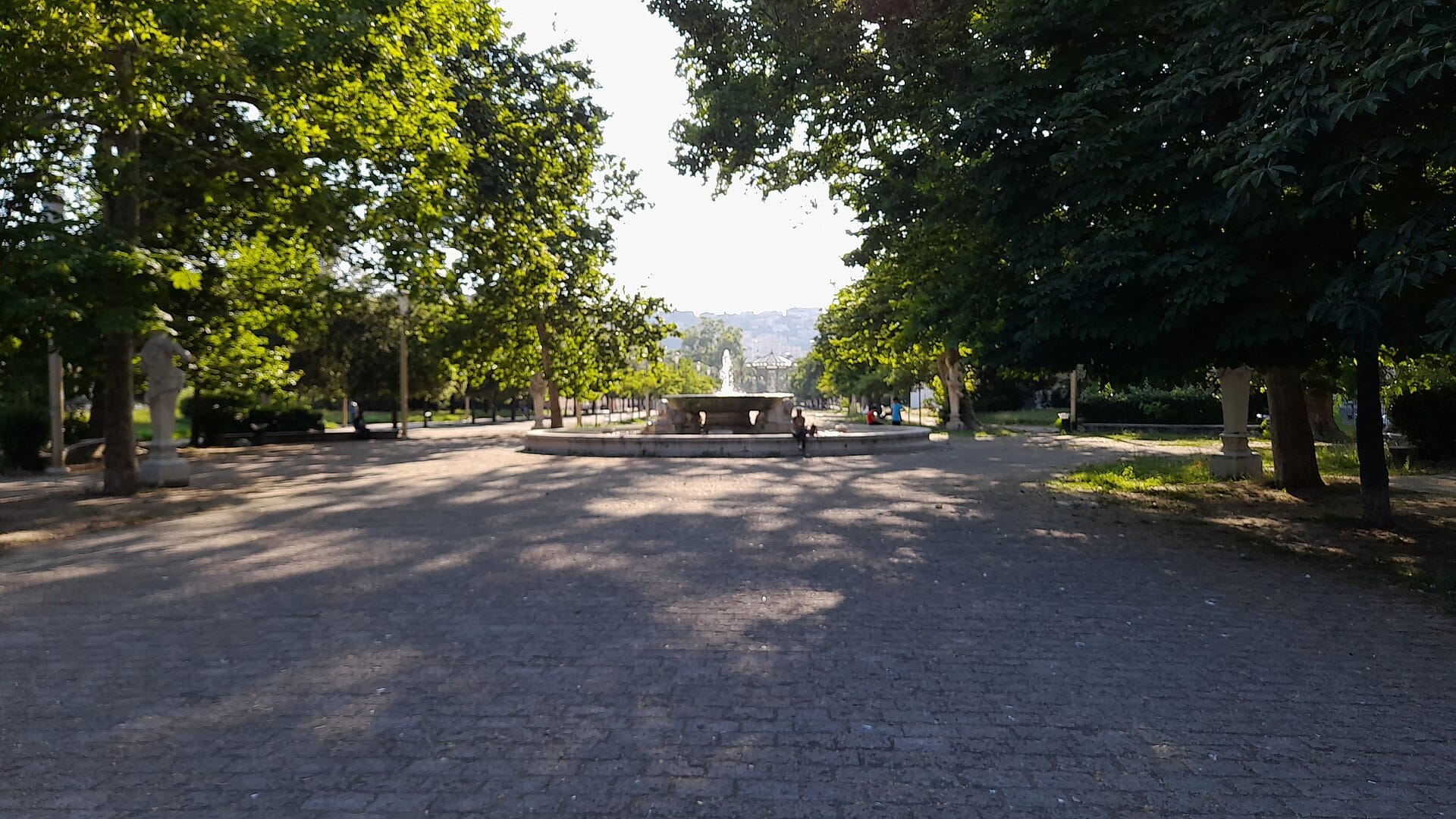
Villa Comunale is a long, narrow public park running roughly 1 kilometre along the waterfront in the Chiaia district, pressed between the tree-lined Viale Dohrn promenade and the seafront road of Lungomare Caracciolo. It is not a manicured botanical showpiece in the manner of Rome's Villa Borghese. It is a lived-in neighbourhood park: pensioners on benches, children chasing pigeons, couples sharing gelato, and the occasional jogger working the flat gravel paths at dawn. That unpretentious quality is exactly what makes it worth your time.
The park stretches from Piazza Vittoria in the east to near Mergellina in the west, and nearly every metre of it opens onto unobstructed views of the Bay of Naples. On clear days you can see the dark cone of Mount Vesuvius across the water. The bay view is not incidental — it is the park's defining feature, and the reason Neapolitans have been coming here for generations.
💡 Local tip
Arrive between 7am and 9am on weekdays to experience the park at its most peaceful: light filtering through the canopy, fishermen on the breakwater outside, and almost no other tourists in sight.
History: From Royal Promenade to Public Park
The origins of Villa Comunale reach back to 1697, when the Duke of Medinaceli commissioned a formal promenade along this stretch of shore. The park in its current form was laid out in the 1780s under Ferdinand IV of Naples, who wanted a classical green space in the manner of the great European royal gardens. For most of its early existence, however, it was not truly public. Ordinary Neapolitans were only granted free access in 1871, after Italian unification reshuffled the city's aristocratic geography.
That history explains the park's architectural vocabulary: iron fountains, neoclassical busts, decorative kiosks, and manicured hedgerows speak to a design ambition shaped in the late 18th century. Look closely and you will find statues and stone fragments scattered along the paths, some original, some restored after the park fell into neglect in the late 20th century. Large-scale restoration work completed in the 2000s brought the gardens back from a genuinely sorry state, replanting trees, repairing pathways, and reintroducing the iron lampposts that frame the promenade at night.
Tickets & tours
Live prices and dates from our booking partner. If you book, we may earn a commission at no extra cost to you.
Origins and legends of Naples walking tour
From 28 €Instant confirmationFree cancellationGuided walking tour of Naples city and Naples underground
From 45 €Instant confirmationFree cancellationCaserta Royal Palace day-trip from Naples
From 100 €Instant confirmationFree cancellationSafe and Convenient 24-7 Luggage Storage in Naples
From 6 €Instant confirmationFree cancellation
The Stazione Zoologica Anton Dohrn: Italy's Oldest Aquarium
Inside Villa Comunale sits one of Europe's most historically significant marine research institutions. The Stazione Zoologica Anton Dohrn was founded in 1872 by German biologist Anton Dohrn, making it Europe's oldest marine research station and one of the first in the world. The building itself, designed in Neo-Renaissance style, is worth a look from the outside even if you skip the interior.
The public aquarium section inside the Stazione houses tanks of Mediterranean sea life: octopuses, moray eels, seahorses, and various reef species. It is genuinely old-school — the tanks are deep, the lighting is dim, the atmosphere has not been modernised into a theme-park experience. Children tend to love it precisely for that reason. Admission was around €10–15 for adults at last check, but prices are subject to change; verify at the Stazione Zoologica aquarium directly before visiting.
ℹ️ Good to know
The Stazione Zoologica is a still-active research institution, not just a tourist site. Opening hours for the public aquarium section can be limited — check ahead rather than assuming it will be open on arrival.
How the Park Changes Through the Day
Morning, roughly 7am to 10am, is the time for walkers and joggers. The flat, shaded paths make Villa Comunale one of the few places in Naples where you can walk a significant distance in a straight line without navigating traffic or uneven cobblestones. The scent of salt air and damp earth is strong at this hour, and the bay light, especially in the hour after sunrise, hits the water in a way that photographers will find worth the early start.
Midday in summer is the one time to avoid if comfort matters. The park has good tree cover along the central paths, but temperatures in July and August regularly exceed 30°C, and the lack of buildings means the sea breeze can disappear for hours at a time. The benches fill with local residents seeking shade; the atmosphere is still pleasant but slow.
Late afternoon through early evening is when Villa Comunale is at its most Neapolitan. From around 5pm, the park fills with families. Children use the open grass areas; street vendors work the perimeter selling corn on the cob, coconut slices, and drinks. By 7pm in summer, the light on the bay is golden and the benches facing the water are fully occupied. This is the classic passeggiata hour, and the park is central to it in Chiaia. If you want to see how the city actually relaxes, this is your window.
💡 Local tip
For sunset photography, position yourself on the western end of the park near Mergellina. Vesuvius sits to the east, but the best colour fills the sky above the open bay to the southwest, especially in autumn when the light is horizontal and warm.
Walking the Park: A Practical Orientation
Villa Comunale is long and narrow, so most visitors end up walking the length of it at least once. The main path runs parallel to the water for the full extent of the park. Benches face the bay at regular intervals. Branching paths cut through the interior to the road-side entrances, and several of these pass the ornamental fountains and sculpture clusters that break up the green space.
The park sits at the heart of the Chiaia neighbourhood, which means the surrounding streets are full of cafés, restaurants, and shops. Entering the park from the Via Caracciolo side gives you immediate bay access. Entering from the Via Nazario Sauro or Via Santa Lucia side puts you closer to the interior paths and the aquarium building. Either approach works; the park is freely accessible at multiple points along its length.
The surface underfoot is a mixture of compacted gravel and paved stone. It is manageable for pushchairs and wheelchairs on the main central path, though some of the narrower internal routes are uneven. The park is flat throughout, which is unusual in a city that otherwise demands serious footwear.
What the Park Is Not: Setting Expectations
Villa Comunale is not a world-class botanical garden. Plant labelling is minimal, the species variety is limited, and the garden design is straightforward rather than spectacular. Visitors who come expecting the botanical density of, say, Naples' own Orto Botanico will be disappointed. The appeal here is the setting, the people-watching, and the waterfront, not horticultural drama.
It is also worth being honest about the park's condition. While the restoration work of the 2000s improved things considerably, maintenance is uneven. Some areas are well-kept; others look tired. Litter appears near the vendor areas in the evening. If your standard for a public park is the manicured perfection of a northern European city, this one will not meet it. If your standard is a genuinely lived-in urban space with a spectacular natural backdrop, it absolutely will. Travellers who prefer structured sightseeing might find more reward at nearby Certosa di San Martino or the archaeological riches of the Naples National Archaeological Museum.
Getting There and Practical Notes
The most straightforward approach from the city centre is Metro Line 2 to Amedeo station, followed by a roughly 10-minute walk downhill toward the waterfront. The Funicular F1 (Chiaia line) stops at Parco Margherita, which deposits you very close to the park's eastern entrance. Buses C27, C82, and R2 all stop along or near Viale Dohrn, which runs parallel to the park on the inland side.
Driving to Villa Comunale is not recommended. Parking in Chiaia is scarce and controlled. Public transport is reliable for this district. For a broader overview of moving around the city, the getting around Naples guide covers all your options.
The park is open daily from 7am to midnight, with no entry fee for the green space itself. There are no bag checks, no ticket barriers, and no queues. You simply walk in. On weekends, an antique and collectibles market sometimes occupies sections near the entrances; timing varies seasonally.
Insider Tips
- The western end of the park near Mergellina is noticeably quieter than the Piazza Vittoria entrance area, even on busy weekend afternoons. Walk the full length before settling on a bench.
- The ornamental iron kiosks inside the park occasionally operate as small bars or refreshment stands in summer. Opening is irregular, but if one is running, the espresso is cheap and the setting is excellent.
- On the seafront road just outside the park (Lungomare Caracciolo), the traffic is closed to cars on Sunday mornings, turning it into a wide pedestrian promenade that effectively doubles the usable space and transforms the atmosphere entirely.
- The antique market that appears near the park on weekends can be genuinely interesting for ceramic pieces and old Neapolitan prints, but prices are not fixed. Bargaining is expected.
- If you are visiting in late September or October, the morning light on the bay is exceptional and the temperatures drop enough to make a full-length walk comfortable. This is arguably the best month for the park.
Who Is Villa Comunale For?
- Families with young children looking for open space and a low-cost afternoon activity
- Travellers who want to observe everyday Neapolitan life rather than consume another ticketed attraction
- Morning walkers and joggers wanting a flat, scenic route
- Anyone building a longer Chiaia waterfront walk toward Mergellina
- Photography-focused visitors who want bay light and Vesuvius in the same frame
Nearby Attractions
Other things to see while in Chiaia:
- Mergellina Harbor
Mergellina Harbor sits at the western edge of the Lungomare Caracciolo, where the city's grand seafront promenade meets Posillipo's rocky hills. It's a free, open harbor serving as both a working ferry port and a beloved local gathering place, best experienced in the early morning or at dusk when the light off the Bay of Naples turns the scene cinematic.
- Stazione Zoologica Anton Dohrn (Aquarium)
Founded in 1872 and open to the public since 1874, the Stazione Zoologica Anton Dohrn is the oldest continuously operating aquarium of the 19th century. Set inside the Villa Comunale park in Chiaia, it remains a working marine research station as much as a visitor attraction, dedicated entirely to Mediterranean sea life.
Planning a trip? Discover personalized activities with the Nomado app.