Chiaia is Naples' most polished neighborhood, stretching along the Bay of Naples between Piazza Vittoria and Mergellina. It trades the chaos of the historic centre for wide seafront promenades, upscale boutiques, neoclassical palaces, and a nightlife scene that draws the city's young professionals every evening.
Chiaia sits where Naples dresses up. It is the city's wealthiest district, a long ribbon of elegant streets running between the sea and the hills of Vomero and Posillipo, where designer boutiques, candlelit wine bars, and leafy public gardens share space with 19th-century palaces and one of Italy's finest waterfront promenades.
Orientation: Where Chiaia Sits in Naples
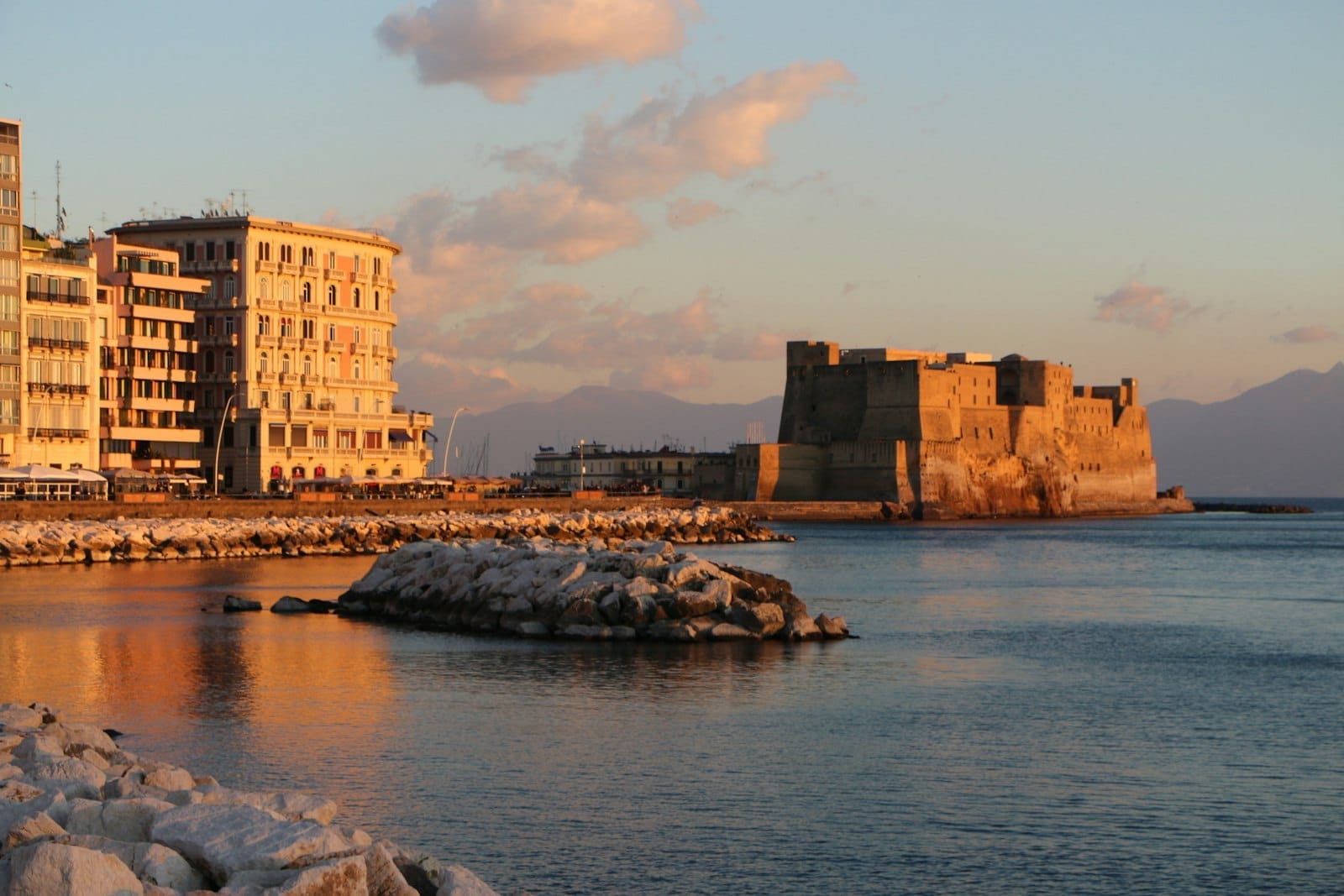
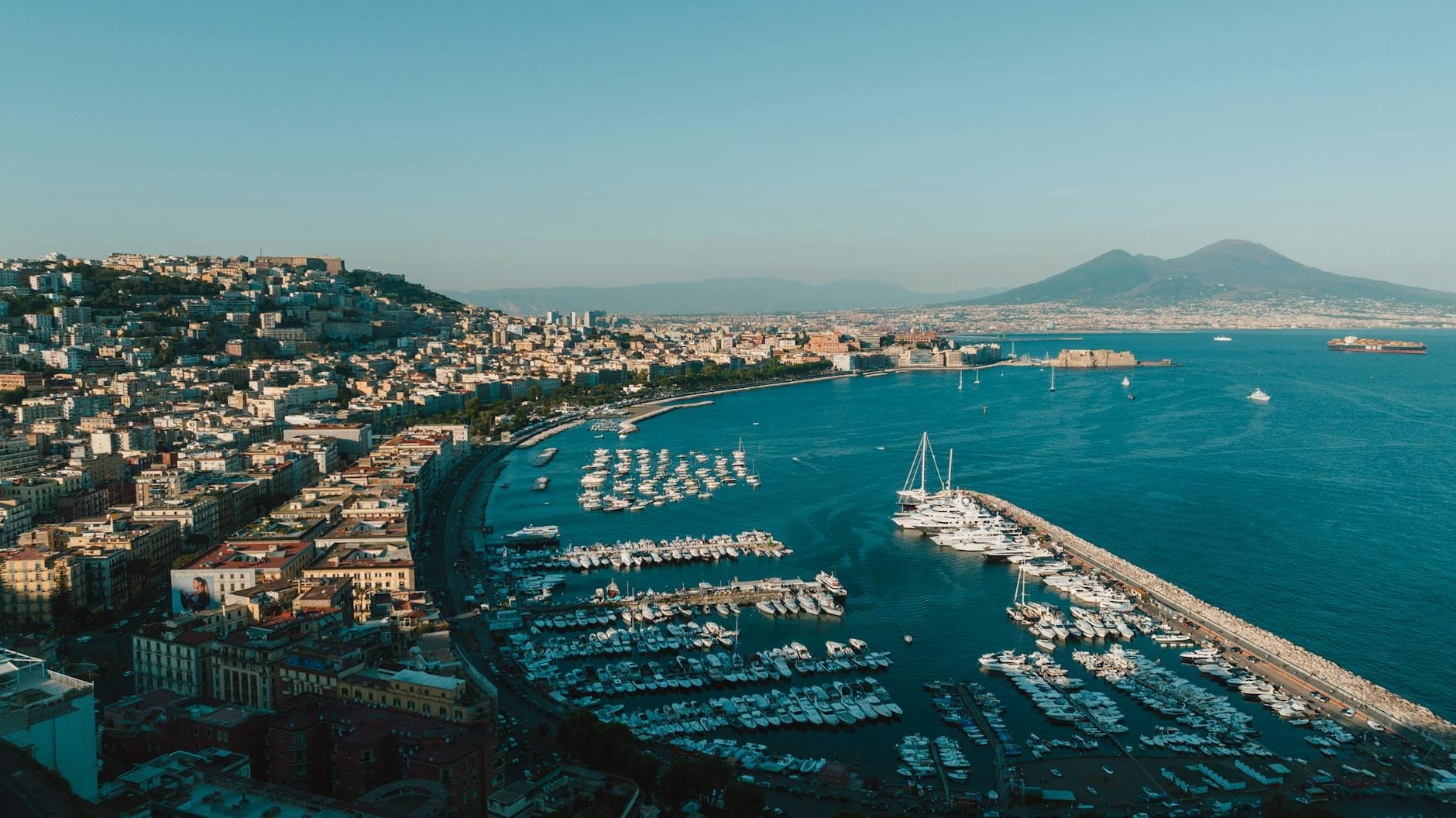
Chiaia occupies the central stretch of Naples' western seafront, running roughly 2.5 kilometres from Piazza Vittoria in the east to Mergellina harbour in the west. To the north, the neighborhood climbs the lower flanks of the hill before giving way to Vomero. To the south, it faces the Bay of Naples directly, with the Riviera di Chiaia road running along the shore.
Understanding how Chiaia connects to the rest of the city is key to using it well as a base. Piazza Vittoria, at its eastern edge, is just a few minutes' walk from Piazza del Plebiscito and the Royal Palace. Via Chiaia, the neighborhood's main commercial artery, runs north from Piazza Trieste e Trento (directly beside Piazza del Plebiscito) up to Piazza dei Martiri, making the transition between the civic centre and the residential district feel seamless.
Further west, Chiaia merges into Posillipo, the cliff-top district of sea views and aristocratic villas. To the north, the funicular from Mergellina climbs to Vomero, giving residents and visitors easy access between the two hillside neighborhoods. This central position means Chiaia functions as a quiet, comfortable anchor point from which to reach almost every major site in Naples on foot or by a short metro ride.
Character and Atmosphere
Chiaia is the neighborhood that makes you wonder, briefly, whether you are still in Naples. The streets are cleaner than the centro storico, the buildings are restored rather than crumbling romantically, and people walk more slowly. There is an ease here that the rest of the city does not always offer. But Chiaia is not sanitized or dull. It has its own distinct energy, one that shifts noticeably depending on the hour.
Mornings in Chiaia belong to locals. Bar counters along Via Filangieri and Via dei Mille fill early with residents taking espresso standing up, the quick ritual observed before the working day begins. The Villa Comunale, the long public garden that runs along the seafront between Via Caracciolo and the bay, attracts joggers and dog walkers. Light comes off the water at a low angle and the silhouette of Vesuvius across the bay is at its sharpest before midday haze softens it.
Afternoons heat up in summer and the shaded alleys off Piazza dei Martiri become welcome retreats. The piazza itself, with its 19th-century column and marble lions commemorating the Neapolitan martyrs of various revolutions, functions as a social hub. Boutiques along Via dei Mille and Via Filangieri draw a well-dressed crowd. These are not tourist-trap souvenir shops but genuine retail streets where Neapolitans buy clothes, shoes, and homeware.
After 7pm, the real Chiaia emerges. The alleys collectively known as i barretti di Chiaia, particularly Vico Belledonne a Chiaia, Via Bisignano, Via Giuseppe Fiorelli, and Via Cavallerizza a Chiaia, fill with small bars spilling tables onto narrow cobblestone streets. The crowd is young, professional, and Neapolitan. Aperitivo is serious business here: a spritz or a local wine accompanied by a plate of small bites. It is loud, social, and completely authentic. This is not a tourist nightlife district but a neighborhood where people genuinely live and go out.
💡 Local tip
The barretti, the small bar-lined alleys of Chiaia, are at their best on Thursday through Saturday evenings between 8pm and midnight. Arrive before 9pm if you want to get a table outside. After 10pm the streets become genuinely crowded and the atmosphere shifts from aperitivo to late-night drinking.
What to See and Do in Chiaia
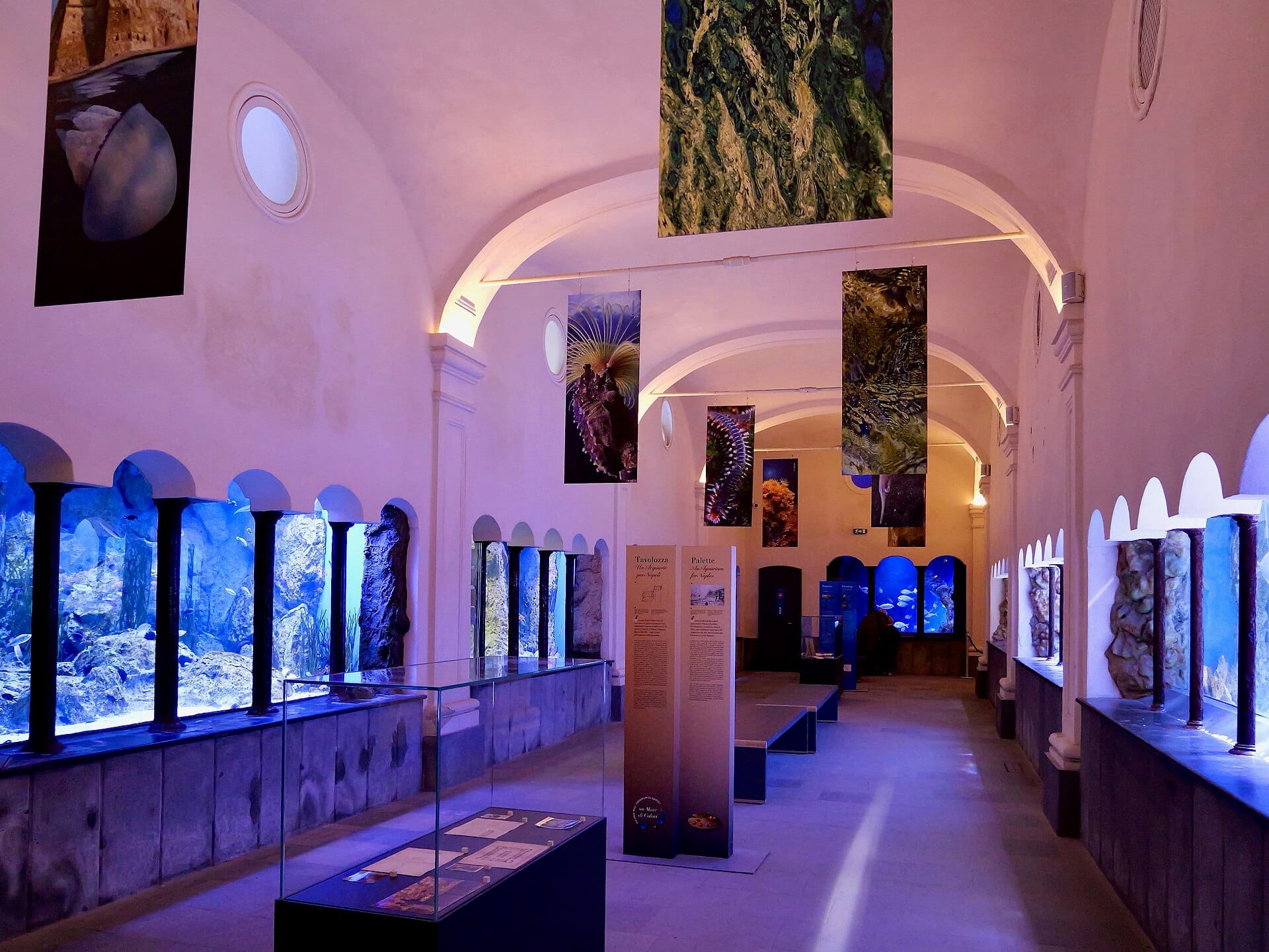
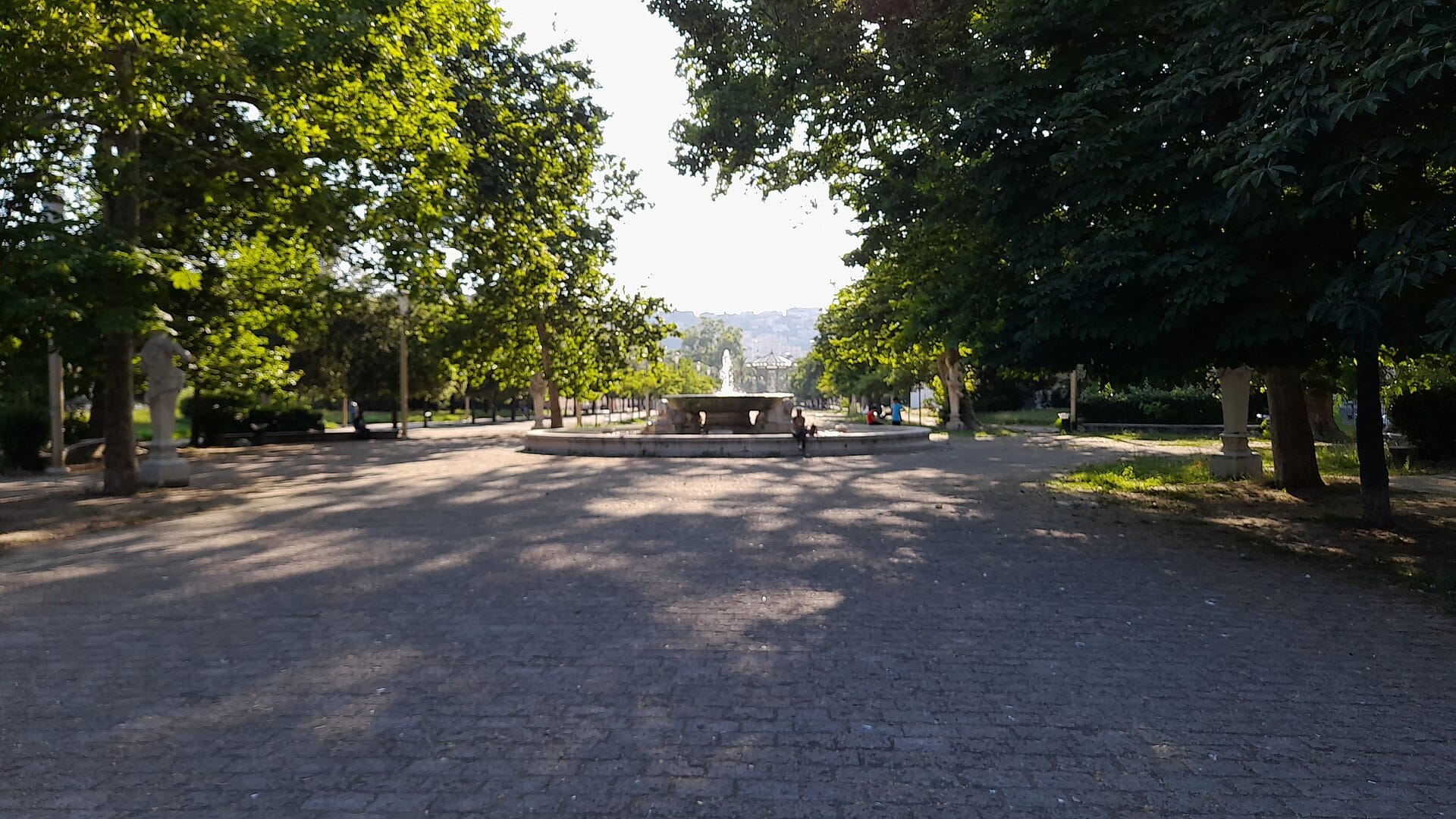
The Villa Comunale is the neighborhood's green backbone. This long, narrow public garden stretches along the Riviera di Chiaia for nearly a kilometre, filled with neoclassical fountains, benches, and centuries-old trees. Inside it sits the Stazione Zoologica Anton Dohrn Aquarium, one of the oldest working marine research aquariums in the world, founded in 1872. It is a small but genuinely remarkable institution, worth visiting for its historic tanks and collection of Mediterranean species.
Villa Pignatelli, at the eastern end of the Riviera di Chiaia, is a 19th-century neoclassical villa set in a private garden that once belonged to one of Naples' most powerful aristocratic families. Today it operates as a museum with period furniture, porcelain collections, and a carriage museum in the grounds. It sees far fewer visitors than the major city museums, which makes it one of the more undervisited sites in Naples.
Piazza dei Martiri is the neighborhood's social and architectural centrepiece. The square is anchored by the Column of the Martyrs, erected in 1866, with four lions at its base representing the four Neapolitan uprisings against the Bourbon monarchy. The surrounding buildings include some of Chiaia's most elegant 19th-century palazzo facades. Sitting at a café here on a weekday morning, when the square is quiet and the light falls cleanly on the stone, is one of the more understated pleasures the neighborhood offers.
Via Chiaia itself, the street connecting Piazza Trieste e Trento to Piazza dei Martiri, passes under the distinctive neoclassical Chiaia Bridge, built in 1636 and rebuilt in its current form in the 18th century. The bridge spans a deep ravine that once marked the edge of the city. Walking under it is one of those small architectural moments that Naples does quietly and without ceremony.
Villa Comunale garden and seafront promenade along Riviera di Chiaia
Stazione Zoologica Aquarium inside the Villa Comunale
Villa Pignatelli museum and carriage collection
Piazza dei Martiri and the Column of the Martyrs
Chiaia Bridge (Ponte di Chiaia) on Via Chiaia
Palazzo Cellamare, a 16th-century palace on Via Chiaia
Teatro Sannazzaro, one of Naples' historic private theatres
Church of Santa Caterina a Chiaia and Church of Sant'Orsola
ℹ️ Good to know
The Riviera di Chiaia road runs along the seafront and can be noisy with traffic. For the best walking experience, use the pedestrian paths inside the Villa Comunale rather than the road itself. In the evening, the stretch of Via Caracciolo further west becomes a popular promenade, especially on weekends when it is partially closed to traffic.
Eating and Drinking
Chiaia's food scene is the most consistently high-quality in Naples, though it comes at a price that is noticeably above the centro storico average. This is where the city's established restaurant culture lives: proper wine lists, attentive service, and kitchens that take Campanian cuisine seriously without needing to shout about it. For an overview of where to eat across the whole city, the Naples eating guide covers all the main neighborhoods in depth.
The aperitivo culture here is the best entry point for first-time visitors. The alleys behind Piazza dei Martiri, particularly Vico Belledonne a Chiaia, host a concentration of wine bars and small bars that offer the kind of evening that Neapolitans actually spend most of their socializing hours in. Glasses of Falanghina, Greco di Tufo, or Aglianico del Taburno from the Campania wine region are the standard order. Many bars include a spread of bruschette, small fried snacks, or charcuterie with the drink at no extra charge during aperitivo hours.
Pizza in Chiaia tends to be slightly more expensive than in the centro storico, but the quality is high and the experience is generally calmer. For travelers focused on pizza, the dedicated Naples pizza guide has specific recommendations across all neighborhoods. For street food, Chiaia is not the place to hunt for the cheapest frittura: the fried street snacks are better sought in the historic centre, though Via Chiaia has a handful of spots serving good fried pizza and cuoppo (paper cones of mixed fried seafood and vegetables).
Restaurants in Chiaia skew toward seafood, which makes sense given the proximity to the bay. Fish and shellfish from the Bay of Naples, including locally caught seppie (cuttlefish), vongole (clams), and impepata di cozze (mussels with black pepper), feature heavily on menus. The price range across the neighborhood runs from around 10-15 euros for a casual lunch to 40-60 euros per person at the more serious evening restaurants around Piazza dei Martiri.
Getting There and Around
The most convenient metro access to Chiaia is via Amedeo station on Line 2, which deposits passengers near the upper part of the neighborhood close to Via dei Mille and Piazza Amedeo. Mergellina station, also on Line 2, serves the western end of the neighborhood and connects to the Mergellina harbour area. Both stations are on the same line, so it is easy to enter at one and exit at the other if walking the full length of Chiaia. For more detail on the metro system and all transport options, the guide to getting around Naples covers routes, fares, and ticketing.
From the centro storico and Piazza del Plebiscito, Chiaia is walkable in under 10 minutes. Via Chiaia, starting from Piazza Trieste e Trento beside the Royal Palace, leads directly into the heart of the neighborhood. From Piazza del Plebiscito, it takes about 8 minutes on foot to reach Piazza dei Martiri, making it practical to combine a morning visit to the historic civic centre with an afternoon in Chiaia without needing any public transport.
From Vomero, the Chiaia funicular descends directly into the neighborhood, running from Via Cimarosa at the top to Via Parco Margherita near Piazza Amedeo at the bottom. It is one of four funiculars in Naples and one of the most useful for travelers moving between the two neighborhoods. The journey takes roughly 3 minutes and runs on the standard ANM transit ticket.
Walking is the best way to explore Chiaia once you are inside it. The neighborhood is compact enough to cover on foot, and most of the interesting streets, including the barretti alleys, the Villa Comunale, and Via dei Mille, are within a 15-minute walk of each other. Taxis and ride-hailing services are easy to find along the Riviera di Chiaia road and around Piazza dei Martiri.
⚠️ What to skip
The Riviera di Chiaia is a busy two-lane road that can be difficult to cross at peak hours. Use designated pedestrian crossings, particularly when accessing the Villa Comunale gardens from the north. At night, the seafront road remains active and well-lit, but traffic moves fast.
Where to Stay in Chiaia
Chiaia is one of the best neighborhoods in Naples for accommodation, particularly for travelers who want comfort and a genuine residential atmosphere rather than proximity to the main tourist sights. Hotels and apartments here are generally more expensive than in the centro storico, but the trade-off is quieter streets, better-maintained buildings, and immediate access to the city's most pleasant evening scene. For a full comparison of Naples neighborhoods for accommodation, the where to stay in Naples guide covers the practical differences in detail.
The most convenient part of Chiaia for first-time visitors is the area around Piazza dei Martiri and Via dei Mille, which keeps you close to both the aperitivo alleys and the main shopping streets, while remaining walkable to Piazza del Plebiscito. Staying near the Amedeo metro stop gives you easy access to both Line 2 metro stations and the Chiaia funicular, which connects directly to Vomero. The seafront strip along Riviera di Chiaia has some larger hotels with bay views, though the road noise can be a factor for lighter sleepers.
Chiaia suits couples, solo travelers, and anyone who values a quieter base over maximum proximity to the main sights. Families with children will find it comfortable and safe, though it is less immediately entertaining for young children than the animated streets of the historic centre. Travelers on tight budgets will find accommodation costs here stretch the wallet: this is the most expensive residential neighborhood in Naples.
Practical Considerations
Chiaia is one of the safer parts of Naples for walking at night. The streets are well-lit, regularly frequented, and the neighborhood has a permanent residential population rather than being primarily tourist-facing. Standard city precautions apply: keep valuables out of sight and be aware on busy pedestrian streets during evening hours. For general advice, the Naples safety tips guide is a useful starting point.
The neighborhood operates on a distinctly Neapolitan schedule. Most shops do not open until 10am and observe a midday break between roughly 1:30pm and 4:30pm. Restaurants do not typically seat for dinner until 7:30 or 8pm. The aperitivo bars in the alleys start filling around 7pm and remain lively until midnight or later on weekends. Trying to eat dinner at 6pm or find open shops at 3pm will be frustrating: work with the local rhythm rather than against it.
For day trips from Chiaia, the neighborhood's position near Mergellina harbour is useful. Hydrofoils to Capri and ferries to the islands depart from Mergellina and the main port, both accessible by metro from Chiaia. The western position of the neighborhood also makes it a sensible starting point for exploring the Posillipo coastal road, one of Naples' most scenic drives.
TL;DR
Chiaia is Naples' most elegant and liveable neighborhood, ideal for travelers who want comfort, good food, and a genuine local atmosphere without sacrificing access to the main sights.
Best for: couples, design-conscious travelers, food and wine enthusiasts, and anyone who wants to experience Neapolitan nightlife at its most sophisticated.
Key strengths: exceptional aperitivo scene in the barretti alleys, beautiful seafront gardens at Villa Comunale, walkable to Piazza del Plebiscito and the centro storico, well-connected by metro and funicular.
Honest drawbacks: accommodation and restaurant prices are the highest in the city, street food and budget options are limited compared to the historic centre, and the seafront road can be noisy.
Not ideal for: travelers on tight budgets, those primarily focused on UNESCO-listed historic sites, or anyone who wants to be inside the heart of the old city.
Naples has more historic churches per square kilometer than almost any city in Europe. This guide covers the finest: from the Duomo's blood relic ceremony to Caravaggio's most important altarpiece, and the majolica-tiled cloister that stops every visitor cold.
Naples holds more great art per square kilometer than almost any city in Europe. This guide covers the 14 best museums in Naples, from world-class archaeological collections to intimate chapels hiding the most technically astonishing sculptures ever carved.
Planning a trip to Naples, Italy? This guide breaks down every season honestly — temperatures, crowd levels, prices, and local events — so you can choose the right time for your trip, whether you're chasing warm weather, cultural festivals, or the lowest hotel rates.
Naples is one of Italy's most dramatic cities to look at, and where you stand changes everything. This guide covers the finest viewpoints in the city, from Vomero hilltop fortresses to waterfront promenades, boat trips, and volcanic summits.
Naples sits at the center of one of Italy's richest travel regions. Within two hours you can stand inside a Roman city frozen in time, swim off a glamorous island, or walk past 2,500-year-old Greek temples. These are the best day trips from Naples, organized by type.
Naples is one of Europe's most rewarding cities for budget travelers. From UNESCO-listed streets and free castle ramparts to extraordinary public art in metro stations and chaotic street markets, here's how to experience the best of Napoli without opening your wallet.
Naples has a surprisingly functional public transport network once you know how it works. This guide covers metro lines, funiculars, buses, taxis, the airport Alibus, and everything in between, with current fares, schedules, and honest advice on what to skip.
Naples rewards every traveler differently depending on how much time they give it. This guide breaks down the ideal number of days in Naples based on your pace, interests, and whether you plan day trips to Pompeii, Capri, or the Amalfi Coast.
Naples is one of Italy's most debated destinations: raw, overwhelming, and unlike anywhere else in the country. This guide cuts through the clichés to give you a clear-eyed look at what Naples actually offers, who it suits, and whether it deserves a place on your itinerary.
Naples International Airport (Capodichino, NAP) sits just 6 km from the city center, but knowing which transfer option to take can save you time, money, and frustration. This guide breaks down every option from the €5 Alibus to fixed-rate taxis and private door-to-door transfers, with honest advice on what actually works.
Caravaggio spent two turbulent periods in Naples and left behind three surviving masterpieces that transformed Baroque painting in southern Italy. This guide locates every work, gives you current admission prices, practical visiting tips, and the context to understand why these paintings still matter.
Naples at Christmas is unlike anywhere else in Italy. From the centuries-old presepe workshops of Via San Gregorio Armeno to candlelit piazzas and December markets at Castel dell'Ovo, this guide covers everything you need to experience the city's most theatrical season.
Naples is one of the world's great eating cities, and knowing what to order makes all the difference. This guide covers every dish worth tracking down, from the perfect margherita to street food you won't find anywhere else in Italy, with practical tips on where to eat, what to pay, and what to avoid.
Naples, Italy surprises couples at every turn: candlelit trattorias in the historic centre, golden sunsets over Vesuvius from the waterfront, and ferry rides to islands that feel like a world away. This guide covers the city's most romantic spots, experiences, and seasonal tips so you can plan the perfect couples trip to Napoli.
Naples rewards those who look beyond the obvious. This guide uncovers the city's most overlooked sites, from an ossuary filled with skulls to a metro station voted the most beautiful in Europe. These are the places that make Naples genuinely unlike anywhere else.
Napoli is not a city you can absorb from a single vantage point. This guide breaks down every major neighborhood, plots the key attractions on a logical mental map, and tells you exactly how to move between them, whether on foot, by metro, or by funicular.
Naples frames some of the most dramatic sunsets in Europe, with Vesuvius, the Bay of Naples, and the islands of Capri and Ischia providing a backdrop that few cities can match. Whether you want a hilltop panorama, a waterfront stroll, or a boat ride into the golden hour, this guide covers the best spots.
Three days is enough time to get a real feel for Naples, Italy — one of Europe's oldest, most layered cities. This itinerary covers the UNESCO-listed historic centre, the seafront, the underground city beneath your feet, and the hilltop views that put it all in perspective. No filler, no tourist traps — just a practical day-by-day plan that works.
Naples, Italy rewards luxury travelers with a combination few European cities can match: grand historic hotels overlooking the Bay of Naples, world-class fine dining rooted in one of Italy's most serious food cultures, and private experiences ranging from underground archaeological tours to boat charters beneath Vesuvius. This guide cuts through the noise to identify what genuinely delivers at the top end of Napoli.
Naples, Italy comes alive after dark in ways that few Italian cities can match. From the elegant cocktail bars of Chiaia to the packed dance floors of Bagnoli, this guide breaks down exactly where to go, when to go, and what to expect from Neapolitan nightlife.
Naples is the cheapest major city in Italy to visit, with €1 espressos, €3 street pizza, and a UNESCO historic centre you can explore for free. This guide breaks down real daily costs, the best free attractions, smart transport choices, and exactly how to stretch your euros further in Napoli.
Choosing between Naples and Sorrento as your southern Italy base shapes your entire trip. This guide breaks down the real differences in cost, atmosphere, transport access, and day-trip logistics so you can make the right call for your travel style.
Naples is the birthplace of pizza, and eating it here is nothing like eating it anywhere else. This guide covers the best pizzerias across the city, from legendary institutions to neighbourhood favourites, with honest rankings, practical logistics, and advice on what actually separates great Neapolitan pizza from a tourist-trap imitation.
Naples Italy has a reputation that outpaces its reality. Petty crime exists, but with the right awareness you can explore freely. This guide covers the neighborhoods to know, the scams actually targeting tourists, and the practical habits that make the difference.
The Feast of San Gennaro is the spiritual and cultural heartbeat of Naples, drawing tens of thousands to witness a ritual that has defined the city for over 1,700 years. This guide covers all three annual dates, the blood liquefaction ceremony, crowd logistics, and what the festival reveals about Neapolitan identity.
Naples rewards shoppers who go beyond the tourist trinket stalls. This guide covers the city's best shopping streets by district, its most authentic markets, and the foods and crafts worth carrying home — with honest advice on where not to waste your time or money.
Queues at Naples' top attractions can cost you hours of your trip. This guide breaks down exactly which sites offer genuine skip-the-line access, where to book, what it costs, and which 'skip-the-line' products are misleading marketing.
Naples has one of the great street food cultures in Europe, built on centuries of feeding dock workers, market sellers, and anyone who needed a meal without a table. This guide covers the essential dishes, the best neighborhoods to eat them, and the practical details that separate a great food walk from a disappointing tourist detour.
Getting from Naples to the Amalfi Coast involves more choices than most guides admit. This breakdown covers every realistic option, from the cheapest bus combination to the fastest ferry, with honest assessments of what works in different seasons.
Getting from Naples to Capri is simpler than most visitors expect, but the details matter: which port, which operator, how early to book, and what to do once you arrive. This guide covers all of it, from ferry prices and schedules to practical day trip planning.
Pompeii is 25 kilometers from Naples and one of the most visited archaeological sites in the world. This guide breaks down every transport option, the exact station you need, what tickets cost, and how to make the most of the trip without the usual tourist pitfalls.
Beneath the streets of Naples Italy lies one of Europe's most extraordinary subterranean worlds: 450 kilometers of Greek-carved tunnels, Roman aqueducts, and WWII shelters. This guide covers everything you need to visit Napoli Sotterranea, from ticket prices and tour logistics to what you'll actually see underground.
Choosing between Naples and Rome is one of the most common dilemmas for Italy first-timers. This guide breaks down both cities across food, cost, culture, day trips, and logistics so you can make the right call for your itinerary.
Naples rewards walkers more than almost any city in Italy. This guide covers the best self-guided walking routes through the historic center, royal quarter, and waterfront, with practical details on timing, distances, costs, and what to skip.
Naples, Italy has a Mediterranean climate that rewards visitors who time their trip carefully. This guide breaks down what the weather actually looks like each month, which seasons to avoid, and what to throw in your bag depending on when you arrive.
Naples is a far better family destination than its reputation suggests. From hands-on science museums and underground Roman tunnels to pizza-making workshops and boat trips on the Bay of Naples, this guide covers the best activities for families traveling to Napoli, with honest advice on what works for different ages and how to plan your visit.
Both sites were buried by Mount Vesuvius in 79 AD, but they offer very different experiences. This guide breaks down the key differences in size, preservation, visitor experience, and logistics so you can choose the right one — or make a case for visiting both.
Naples rewards curious travelers with layers of history, art, street food, and coastal scenery that few Italian cities can match. This guide covers the essential experiences, practical logistics, honest advice on what to skip, and how to structure your time in Napoli.
Naples is one of the great eating cities of Italy, and knowing where to go separates a memorable meal from a mediocre tourist trap. This guide covers the best neighborhoods for dining, top restaurant picks across every budget, essential dishes to order, and practical tips for eating like a local.
Choosing where to stay in Naples Italy can make or break your trip. This guide breaks down every major neighbourhood by vibe, price, location, and who it actually suits, so you can book with confidence.